Artwork
Judith
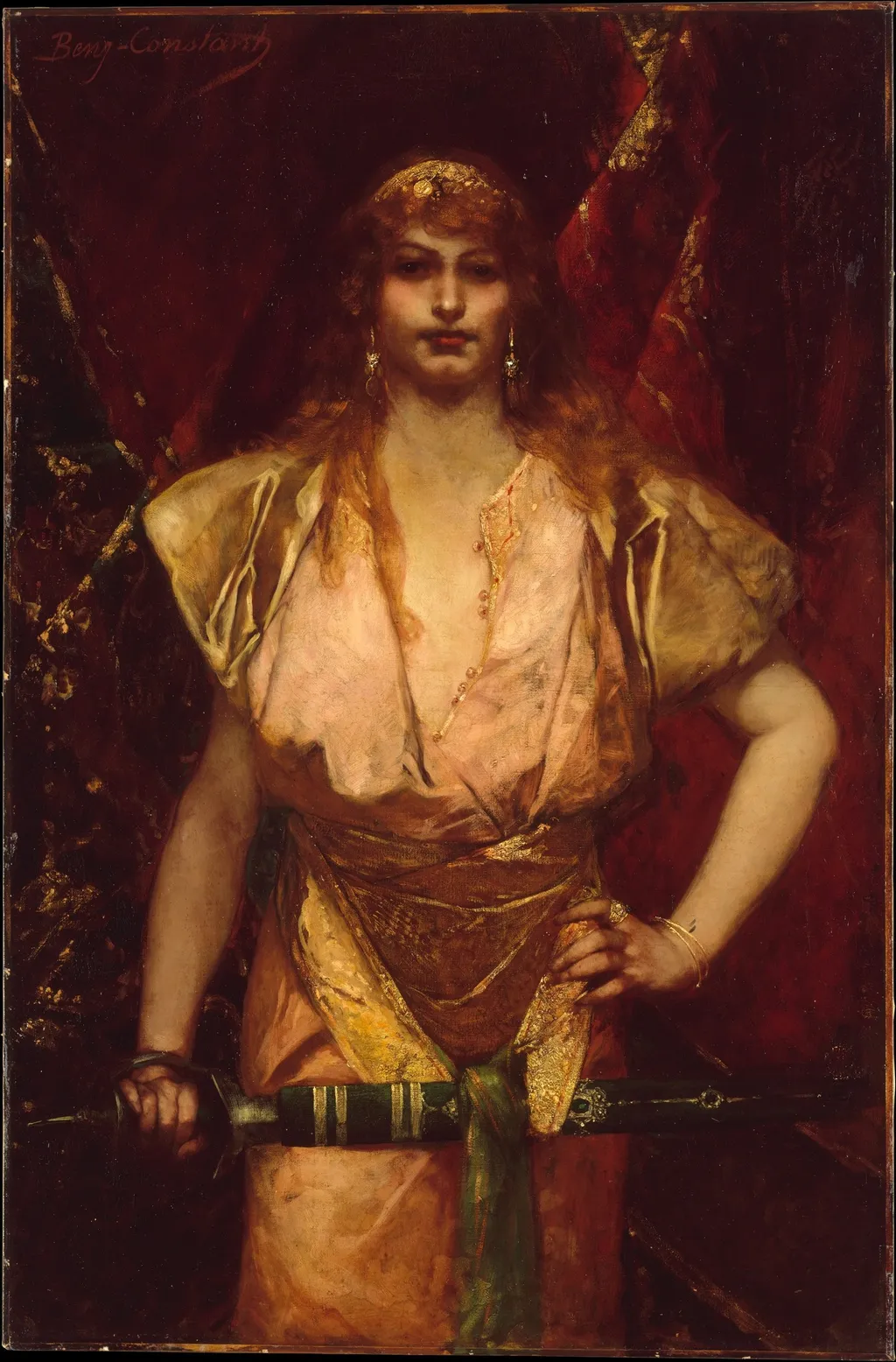
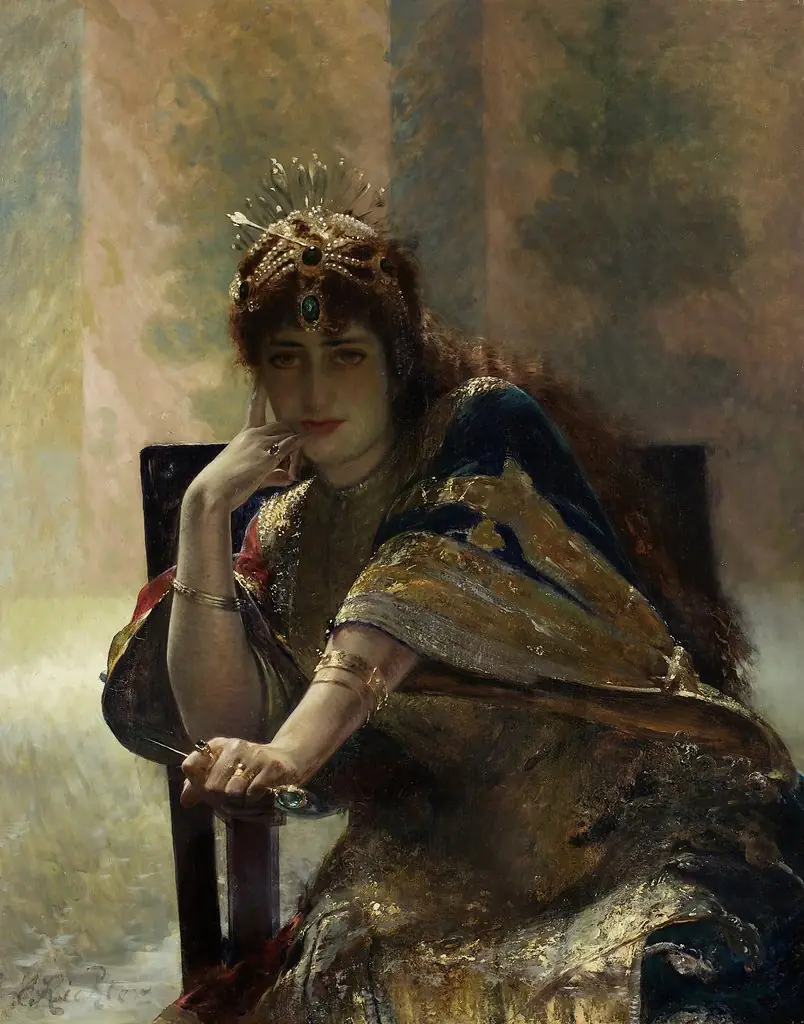
Judith is an oil painting by the Post-Impressionist artist Jean-Joseph Benjamin-Constant. It dates from 1894 and is held in the collection of the Metropolitan Museum of Art.
About this work
Subject & Meaning
Jean-Joseph Benjamin-Constant's 1886 oil painting, Judith, depicts the biblical narrative of Judith and Holofernes, a central theme in religious art.
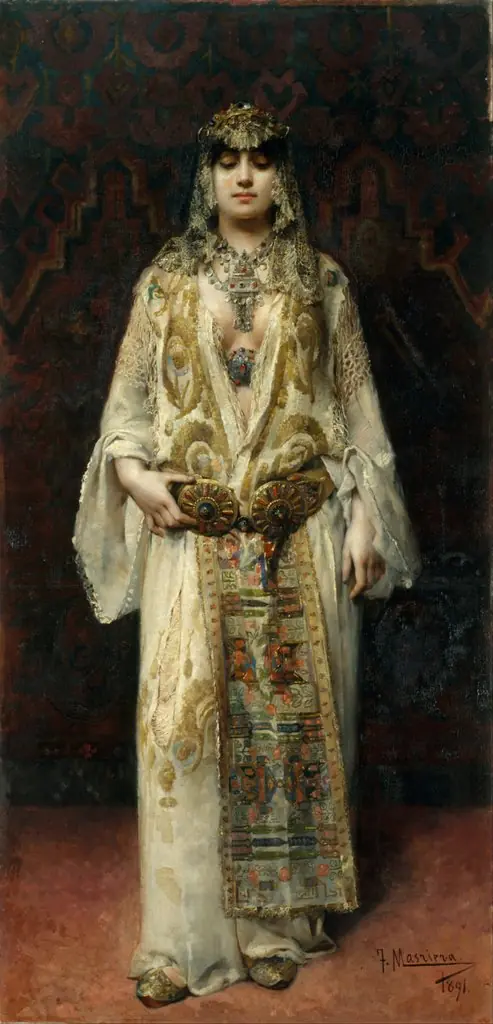
Jean-Joseph Benjamin-Constant's 1886 oil painting, Judith, depicts the biblical narrative of Judith and Holofernes, a central theme in religious art. The composition focuses on the titular heroine, explicitly showing her holding a sword, which serves as the primary symbol of her agency and the instrument of her victory over the Assyrian general. As a work of religious genre, the piece represents the triumph of virtue and faith over tyranny and oppression.
The visual emphasis on the sword alongside the figure of Judith underscores the moment of decisive action within the story, where the protagonist saves her people through courage and strategic deception.
History & Provenance
Jean-Joseph Benjamin-Constant created the oil-on-canvas painting Judith in 1886. The work, which depicts the biblical figure Judith holding a sword, is classified as religious art. While the specific commission details and early ownership chain are not documented in the available sources, the painting's provenance leads to its current residence in the collection of the Metropolitan Museum of Art.
The artwork measures approximately 120.7 centimeters in height and 80 centimeters in width. It entered the museum's holdings as a significant example of the artist's Orientalist and religious themes from the late nineteenth century.
The painting is held by the Metropolitan Museum of Art, New York, where it is inventoried as accession number 1975.1.224. It entered the museum’s collection in 1975 through gift or purchase; specific acquisition details are not provided in the cited sources. The work has no recorded exhibition history in the provided references.
Context
Jean-Joseph Benjamin-Constant's Judith (1886) occupies a distinct position within the artist's broader exploration of religious and Orientalist themes. Executed in oil on canvas, the work depicts the biblical narrative of Judith and Holofernes, aligning with the 19th-century academic interest in dramatic religious subjects. Currently held in the collection of the Metropolitan Museum of Art, the painting measures 120.7 by 80 centimeters.
While specific critical reception or detailed scholarly analysis of this particular canvas is not provided in the available records, its inclusion in a major public institution underscores its recognition as a significant example of Benjamin-Constant's output during the late 1880s. The work serves as a concrete artifact of the artist's engagement with historical and scriptural storytelling through the lens of academic realism.
Overview
Jean-Joseph Benjamin-Constant, a French painter recognized for his Orientalist subjects and portraits, completed Judith in 1894. This oil painting depicts the biblical heroine Judith and is part of the collection at The Metropolitan Museum of Art. The work is categorized within the Post-Impressionist movement, reflecting a period of diverse artistic exploration at the close of the 19th century.
Technique & Style
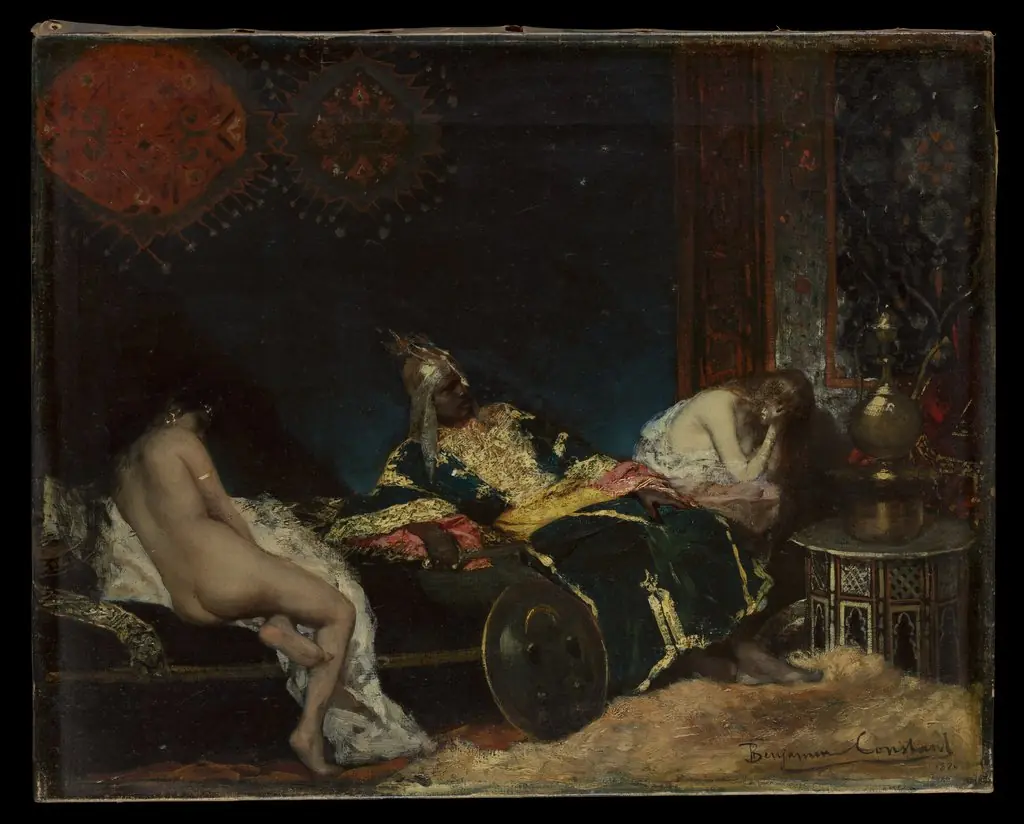
Executed in oil, Benjamin-Constant's Judith employs a dramatic use of chiaroscuro, a strong contrast between light and dark, to highlight the central figure. The background is rendered in dark, indistinct tones, allowing Judith, brightly illuminated in her golden attire, to emerge sharply. This compositional choice emphasizes the figure's presence and emotional intensity, aligning with the work's classification within the Post-Impressionist style.
Own this work as a print
Artist & collection
Artist
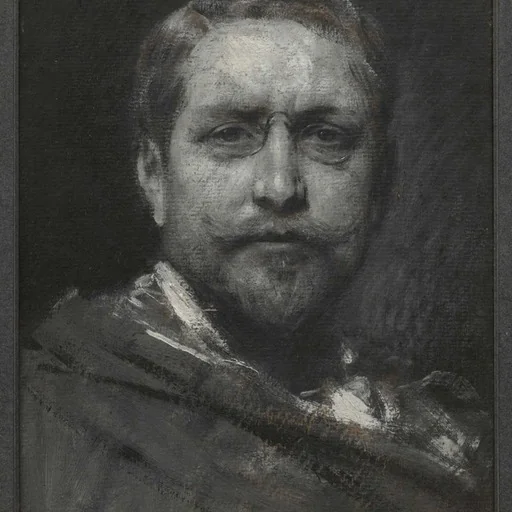
Jean-Joseph Benjamin-Constant (also known as Benjamin-Constant), born Jean-Joseph Constant (10 June 1845 – 26 May 1902), was a French painter and etcher best known for his Oriental subjects and portraits.