Artwork
Salome
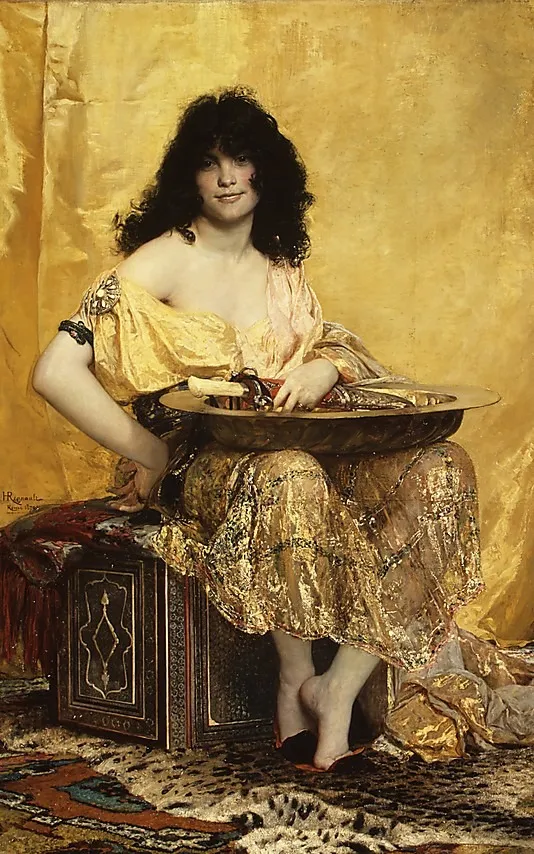
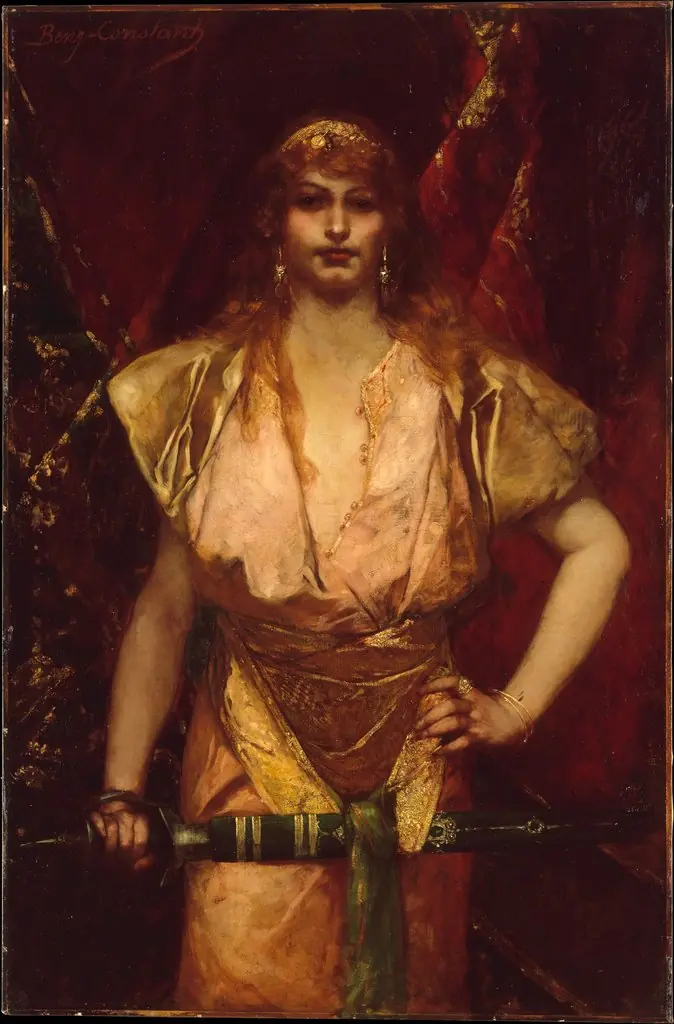
Salome is an oil painting by the Academic Art artist Henri Regnault. It dates from 1870 and is held in the collection of the Metropolitan Museum of Art.
About this work
In the spring of 1870, Paris caught a kind of yellow fever: a craze for golden gowns and yellow porcelain, all set off by one painting.
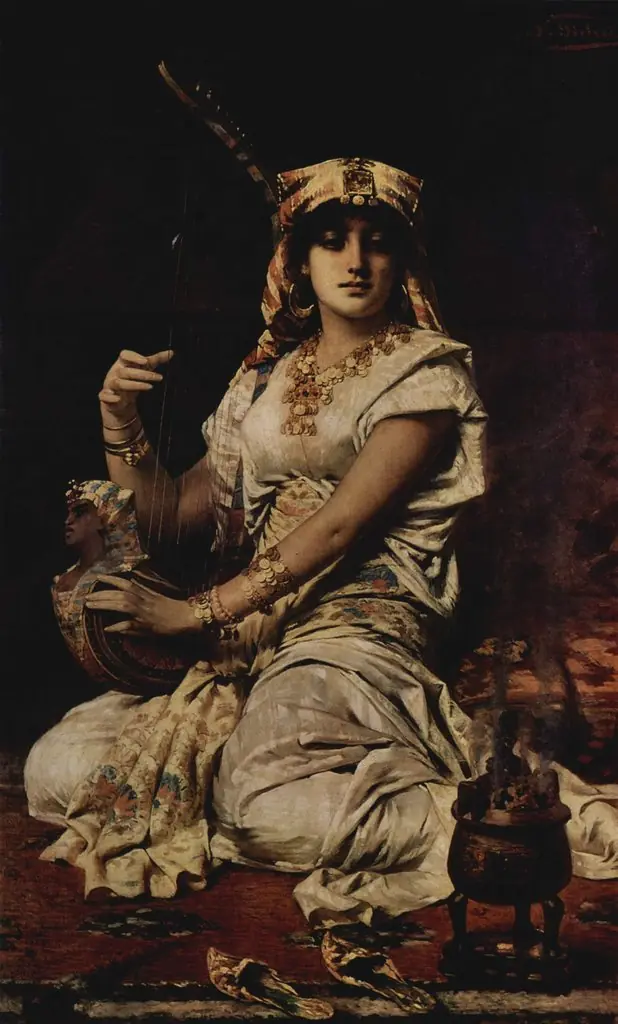
In the spring of 1870, Paris caught a kind of yellow fever: a craze for golden gowns and yellow porcelain, all set off by one painting. Henri Regnault's Salomé had just debuted at the Salon, its surfaces built from layers of luminous yellow. The model was Maria Latini, a friend's fiancée he had first painted in Rome. Months later Regnault was dead at the Battle of Buzenval, and the canvas eventually reached the Met.
Subject & Meaning
The painting depicts Salome, the biblical figure, holding the severed head of John the Baptist on a platter. Iconographic elements include a sword, an executioner, and a tray, representing the moment after her dance before King Herod. The work is classified as religious genre, illustrating the New Testament story of Salome's request for the Baptist's head.
The composition centers on the gruesome presentation, with Salome positioned against a dark background, emphasizing the dramatic narrative of betrayal and martyrdom.
Technique & Style
Executed in oil on canvas, Henri Regnault's Salome (1870) measures 160 by 101 centimeters, a painting that reflects both Orientalist and Academic stylistic currents. The oil medium allows rich, opaque color and subtle tonal modeling; the canvas support is typical of the period. The work's formal qualities blend the precise draftsmanship and polished finish of academic painting with the exoticized figures and decorative details characteristic of Orientalism, in keeping with the religious genre subject. No specific condition or handling details are provided in the sources.
Overview
Henri Regnault's 1870 oil painting, Salome, portrays the biblical figure with a striking palette. This work debuted at the Paris Salon, garnering significant attention before the artist's premature death during the Franco-Prussian War later that year. Now part of the Metropolitan Museum of Art's collection, the canvas is recognized for its vibrant color scheme and its association with a brief but influential period in French art.
History & Provenance
Salome was first exhibited to the public at the Paris Salon in 1870, where it quickly became a focal point of discussion. Tragically, just months after its successful debut, the twenty-seven-year-old artist, Henri Regnault, was killed in action at the Battle of Buzenval during the Franco-Prussian War. The painting eventually crossed the Atlantic, entering the collection of the Metropolitan Museum of Art in 1916.
Artist & collection
Artist
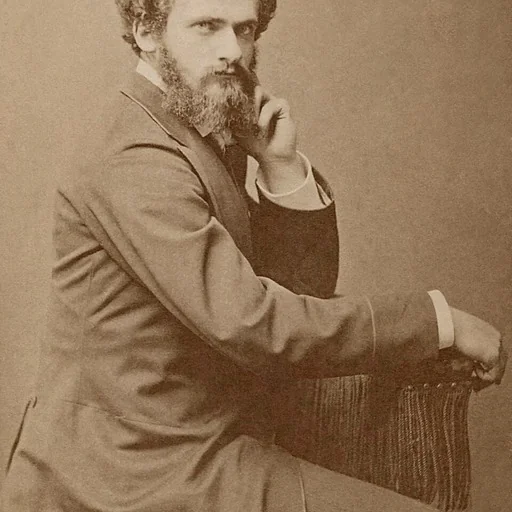
Born in Paris on October 31, 1843, Henri-Georges-Alexandre Regnault was the son of Henri Victor Regnault, the celebrated chemist and professor at the Collège de France.