Artwork
Philip V on Horseback
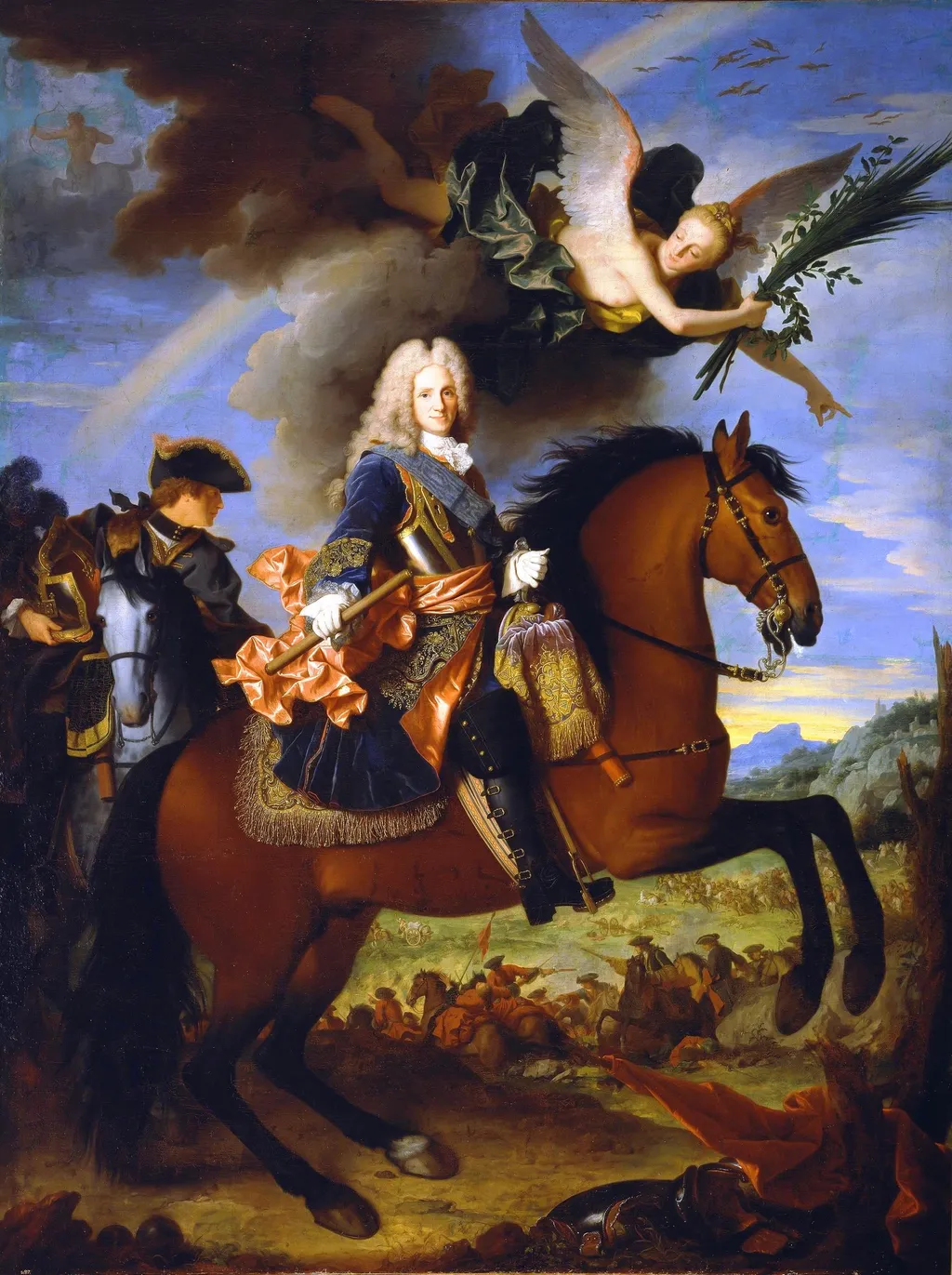
Philip V on Horseback is an oil painting by the Rococo painting artist Jean Ranc. It dates from 1723 and is held in the collection of the Museo del Prado.
About this work
Subject & Meaning
The equestrian format elevates his status, while the rearing horse suggests both power and control, reinforcing the image of a sovereign asserting command.
The painting depicts Philip V of Spain in military attire mounted on a rearing horse, conveying regal authority and martial readiness. He wears the blue mantle of the Order of the Holy Spirit, a French chivalric order, and is equipped with body armor and a sword, underscoring his dual role as king and warrior. The equestrian format elevates his status, while the rearing horse suggests both power and control, reinforcing the image of a sovereign asserting command.
The setting and insignia align with Bourbon propaganda that linked Philip’s legitimacy to French traditions and military virtue during his reign.
Technique & Style
Created in 1723 by Jean Ranc, Philip V on Horseback is an oil-on-canvas painting measuring 335 cm in height and 270 cm in width. The work functions as a grand equestrian portrait, utilizing the oil medium to render the monarch in full body armor while holding a sword and displaying the insignia of the Order of the Holy Spirit. The composition adheres to the formal traditions of royal portraiture, emphasizing the stature of Philip V through the scale of the support and the detailed depiction of regalia.
The painting remains part of the collection at the Museo del Prado, having been historically associated with the Royal Palace of Madrid.
History & Provenance
The equestrian portrait of Philip V was painted by Jean Ranc in 1723 and originally commissioned for the Spanish court. It entered the collection of Ferdinand VII of Spain before being installed in the Museo del Prado, where it remains on display.
The work measures 335 cm in height and 270 cm in width and is executed in oil paint on canvas, depicting Philip V in body armor with a sword and the insignia of the Order of the Holy Spirit. Its creation history is tied to the artistic program of the Spanish monarchy in the early 18th century, reflecting both diplomatic and dynastic ambitions. The painting is held in the Museo del Prado collection, historically associated with the Royal Palace of Madrid.
Context
The work belongs to the broader tradition of European equestrian portraiture that served dynastic propaganda in the eighteenth century, as demonstrated by its depiction of Philip V wearing the Order of the Holy Spirit and body armor while holding a sword. This iconography aligns with the monarch's efforts to project authority and legitimacy during the early Bourbon period in Spain. The painting's presence in the Museo del Prado's collection, originally assembled for the Royal Palace of Madrid, underscores its historical association with the Spanish court, particularly through its early ownership by Ferdinand VII.
Its classification as an equestrian portrait within the broader corpus of Jean Ranc's output highlights his role in advancing courtly imagery that blended realism with symbolic grandeur, situating the work at the intersection of artistic practice and political representation in early eighteenth-century Europe.
Legacy
The equestrian portrait of Philip V by Jean Ranc influenced later depictions of Spanish monarchs in ceremonial attire, particularly shaping royal portraiture in 18th-century Europe. Its representation of Philip V in armor adorned with the Order of the Holy Spirit established visual conventions adopted by subsequent court artists. The work's presence in the Museo del Prado's collection underscores its enduring significance in art historical narratives.
Overview
Jean Ranc’s 1723 oil painting portrays Philip V of Spain mounted on a brown horse, set against a dramatic sky populated by angels and a celestial figure bearing a palm branch. The composition combines a regal equestrian portrait with a mythic backdrop, emphasizing the monarch’s authority through elaborate costume and symbolic elements.
Own this work as a print
Artist & collection
Artist
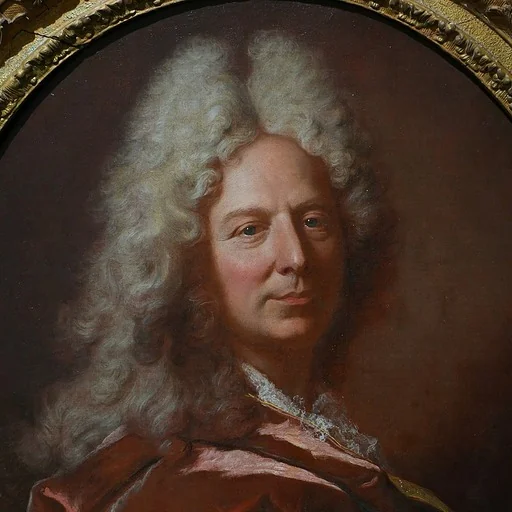
Jean Ranc (28 January 1674 – 1 July 1735) was a French painter, mainly active in portraiture.

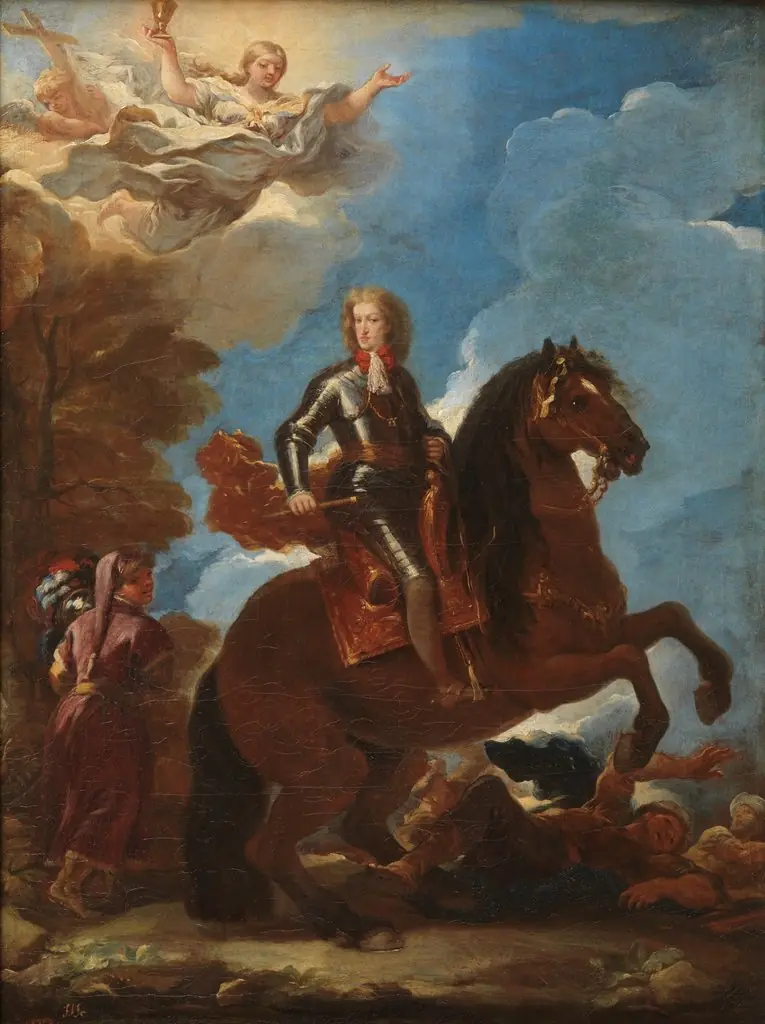 Charles II, King of Spain, on Horseback
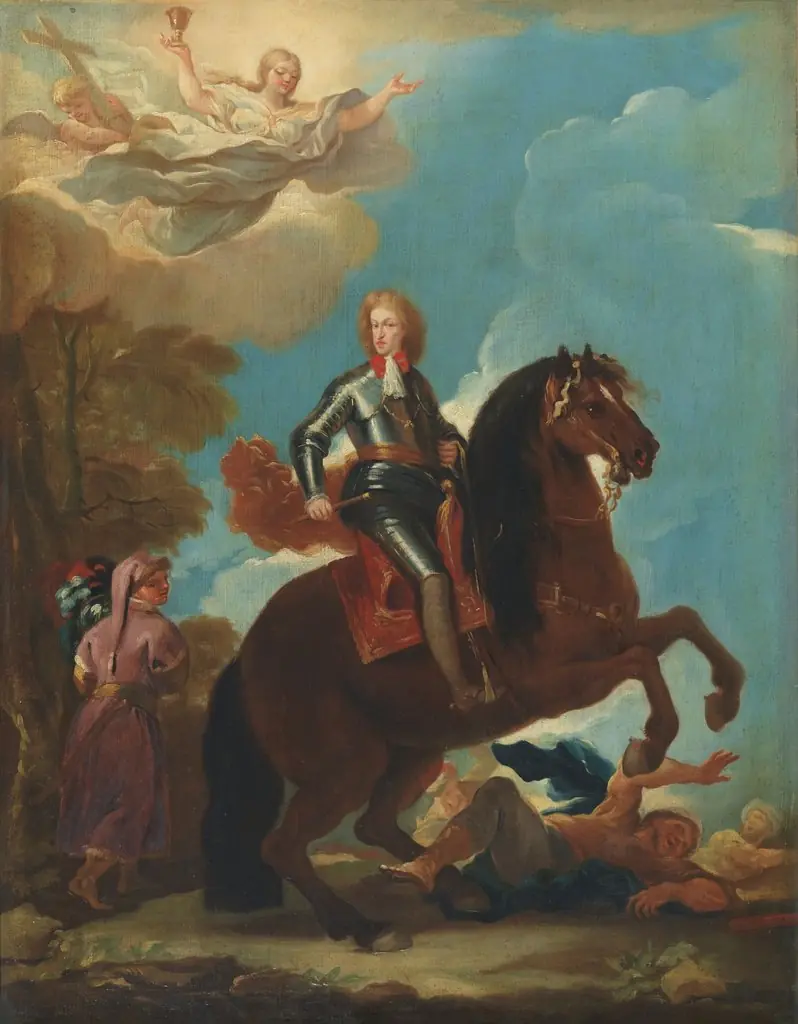 King Carlos II of Spain on Horseback
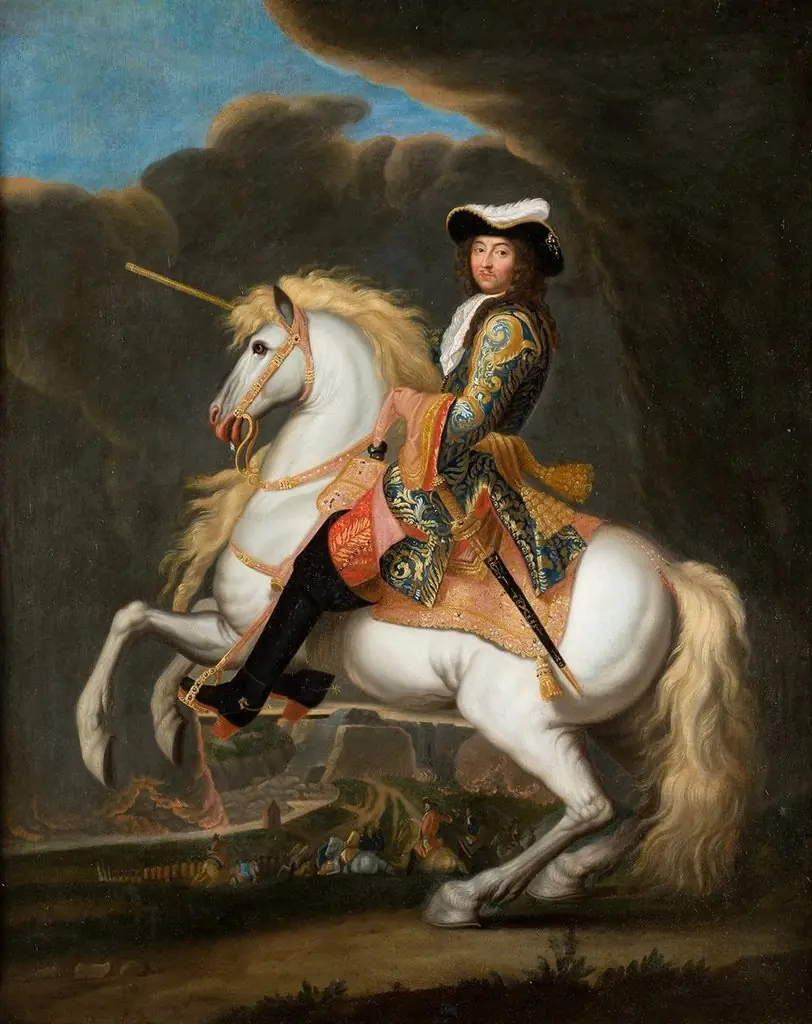 Retrato equestre de Luís XIV
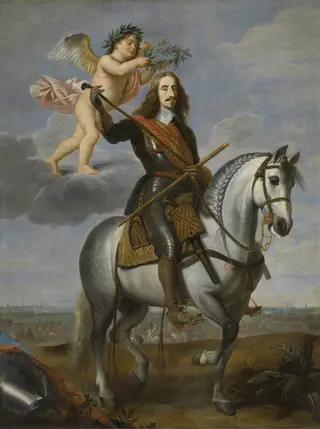 Equestrian portrait of Archduke Leopold Wilhelm
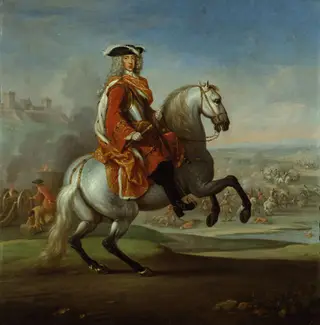 Herzog Karl V. von Lothringen (1643-1690) als Feldherr zu Pferd
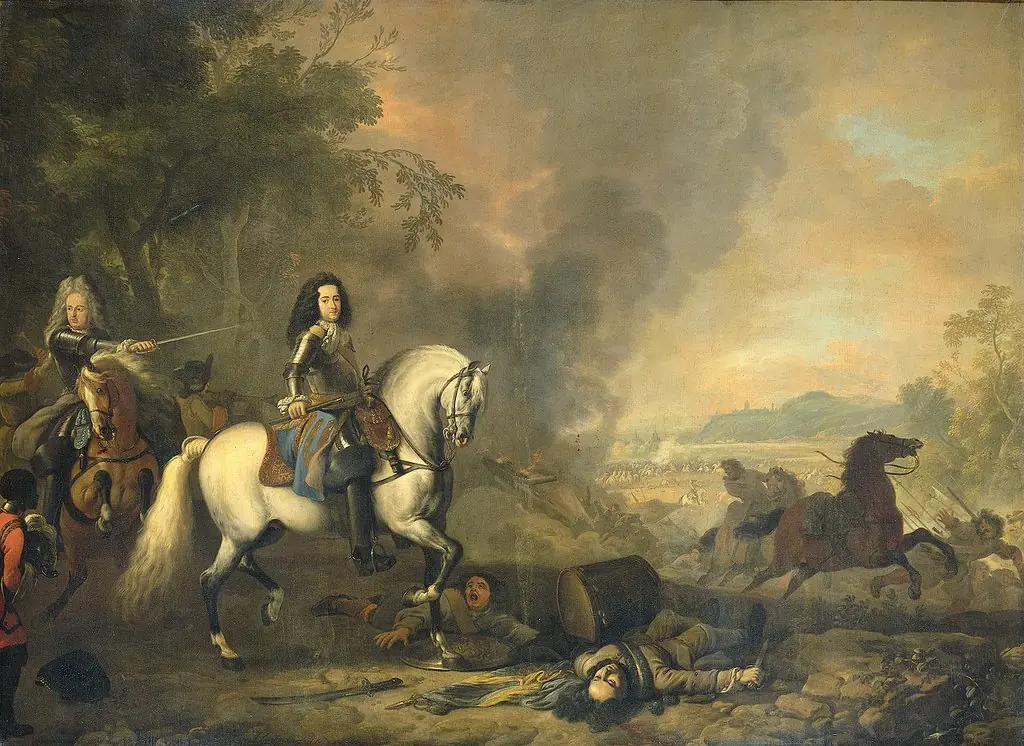 Equestrian Portrait of Hendrik Casimir II (1657-1696)
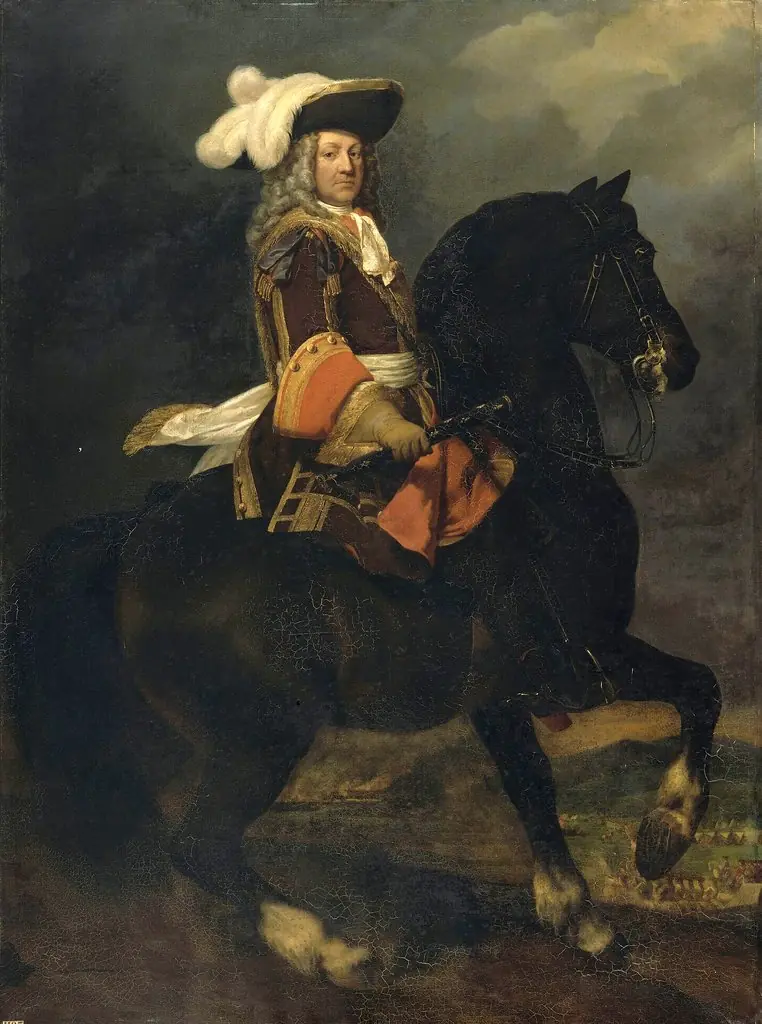 Louis-Joseph, Duke of Vendôme, Marshal of France
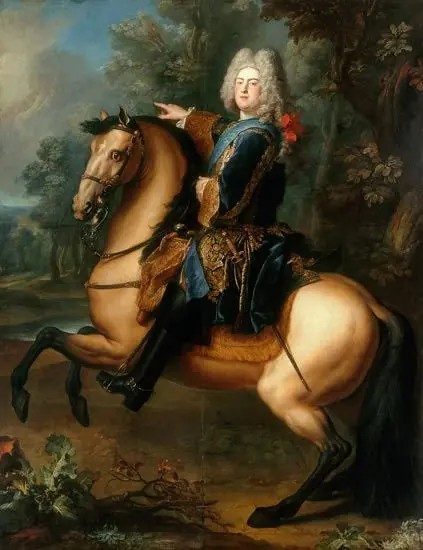 Kurprinz Friedrich August von Sachsen (1696-1763) zu Pferde