Artwork
Equestrian Portrait of Philip IV
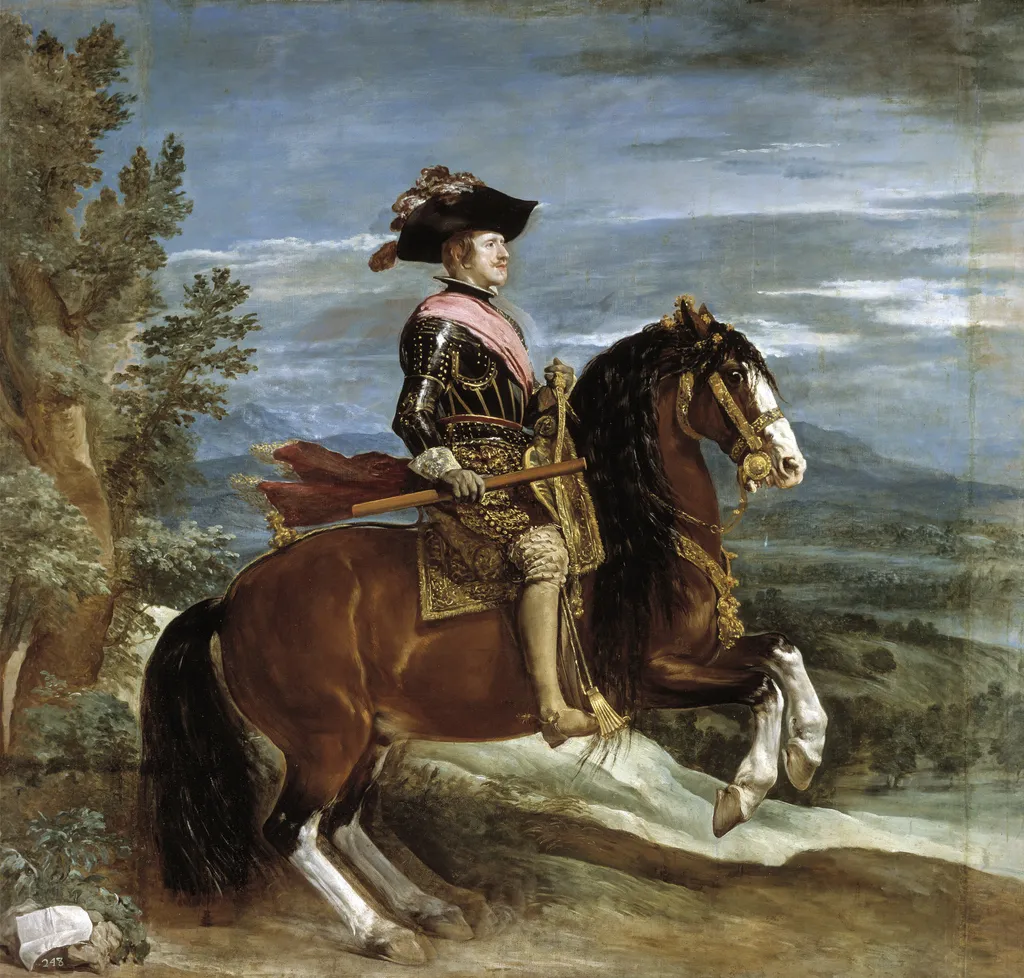
Equestrian Portrait of Philip IV is an oil painting by the Early Baroque Italian artist Diego Velázquez. It dates from 1634 and is held in the collection of the Museo del Prado.
About this work
Subject & Meaning
The Equestrian Portrait of Philip IV portrays the Spanish monarch Philip IV of Spain in a dynamic equestrian stance, rendered in oil on canvas around 1634–1635.
The Equestrian Portrait of Philip IV portrays the Spanish monarch Philip IV of Spain in a dynamic equestrian stance, rendered in oil on canvas around 1634–1635. The composition emphasizes royal authority through a profile view of the king in brined steel half-armor adorned with gold accents, crimson sash fluttering in the wind, and a command baton held in his right hand while his left grips the bridle. The charging chestnut horse, noted for its white legs and flowing mane and tail, exemplifies Velázquez’s blend of spirited and robust equine forms, a motif also seen in his portrait of Prince Balthasar Charles.
The figure is elevated to foreground prominence, framed by an oak trunk and a distant landscape of the Pardo forest and the Sierra de Guadarrama, beneath a characteristic Velázquez sky occupying nearly half the canvas. This work functioned as the preparatory model for the sculptural equestrian statue of Philip IV by Pietro Tacca, commissioned between 1634 and 1640, and was part of a royal series of equestrian portraits displayed in the Hall of Realms at the Buen Retiro Palace in Madrid.
Technique & Style
Created between 1634 and 1636, this oil-on-canvas work measures 303 cm by 317 cm. The support consists of a central panel flanked by two vertical strips of canvas added during the artist's lifetime to accommodate the painting's original placement over a door in the Hall of Realms. These lateral additions exhibit uneven tonal aging, an effect recently attenuated by restoration work in 2025. To facilitate the door's operation, the lower left corner was originally cut away and later reattached.
Stylistically, the composition features a 'Velazquean sky' of characteristic blues and grays occupying nearly half the canvas, set against the landscape of the Pardo forest and Guadarrama mountains. The king is depicted in profile wearing burnished steel half-armor with gold ornaments, while the chestnut horse is portrayed in a rearing corveta posture, blending Frisian vigor with heavy, resistant forms.
History & Provenance
The Equestrian Portrait of Philip IV was commissioned by Philip IV of Spain as part of a series of equestrian portraits intended for the Hall of Realms in the Buen Retiro Palace, Madrid. Velázquez painted the work around 1634–1635, contemporaneously with the royal statue project by Pietro Tacca.
By 1819 the painting entered the Museo del Prado’s founding collection, where it has remained. Before that, it hung in the Hall of Realms alongside portraits of other royal family members. An 1843 relocation moved the related equestrian statue to the Plaza de Oriente, but the painting stayed at the Prado.
The Equestrian Portrait of Philip IV is housed in the Museo del Prado in Madrid, where it has been part of the collection since the museum's founding in 1819. It was originally created as part of a series of equestrian portraits commissioned for the Hall of Realms in the Buen Retiro Palace, intended to adorn the royal apartments. The work was painted by Diego Velázquez between 1634 and 1635, depicting King Philip IV of Spain mounted on a horse, dressed in half-armor with golden ornaments, a crimson sash fluttering in the wind, and holding a command baton in his right hand while gripping the reins with his left.
The painting measures 303 cm in height and 317 cm in width, and is executed in oil on canvas. It was first owned by Ferdinand VII of Spain and has remained in the Prado since its acquisition. The artwork was displayed in the Hall of Realms alongside other royal equestrian portraits, including that of Philip IV's son, Prince Balthasar Charles.
The portrait served as a model for the equestrian statue of Philip IV sculpted by Pietro Tacca between 1634 and 1640, which was later relocated to the center of the Plaza de Oriente in Madrid in 1843. The painting has been included in exhibitions such as the Velázquez exhibition catalog from The Metropolitan Museum of Art, and its history is documented in sources from the Museo del Prado and scholarly publications.
Context
The Equestrian Portrait of Philip IV stands as a pivotal work within Diego Velázquez's oeuvre and the broader trajectory of Spanish Baroque painting. Created between 1634 and 1636 as part of a decorative program for the Hall of Realms at the Buen Retiro Palace in Madrid, it functioned as a visual assertion of royal authority and dynastic continuity, forming part of a series of equestrian portraits commissioned by Philip IV himself to project an image of majestic leadership. This portrait, alongside its companion piece depicting Philip's son Baltasar Charles on horseback, represents the culmination of Velázquez's innovative approach to equestrian imagery, blending naturalistic horse depiction with a carefully constructed spatial environment that integrates landscape and sky as integral compositional elements.
Scholarship emphasizes its significance as a technical and compositional bridge between earlier Habsburg portraiture and the more psychologically complex state portraits of the later 17th century, influencing both contemporary court artists and later generations, notably the Spanish Rococo painter Francisco de Goya, who made a direct reference to this work in his 1778 etching 'Philippe IV. Roi d'Espagne'. Its enduring presence in the Museo del Prado since the early 19th century, following its acquisition from the Royal Collections, has cemented its status as a cornerstone of the museum's Spanish Baroque collection and a frequently studied exemplar of Velázquez's mastery of genre-defying portraiture within the context of Counter-Reformation visual politics.
Legacy
The Equestrian Portrait of Philip IV established a lasting model for royal equestrian imagery in Western art. Its composition and portrayal of authority influenced later depictions of monarchs on horseback, particularly inspiring Baroque and Neoclassical artists to emulate its blend of realism and grandeur. The work served directly as the reference for Pietro Tacca’s 1634–1640 equestrian statue of Philip IV in Florence’s Piazza della Signoria, demonstrating its cross-medium impact.
Additionally, Francisco de Goya produced a 1778 etching after the painting, underscoring its enduring compositional relevance. The portrait’s technical innovations in rendering horse anatomy and atmospheric space were studied by artists throughout the 18th and 19th centuries, contributing to evolving standards of portraiture and state imagery.
The painting’s provenance within the Spanish royal collection and its permanent display at the Museo del Prado since 1819 reinforced its status as a national artistic emblem. Its inclusion in the Hall of Realms at the Buen Retiro Palace highlighted its political function in shaping Habsburg dynastic identity, while its influence extended to decorative arts and public monuments, cementing its legacy as both an artistic and symbolic cornerstone of Spanish cultural heritage.
Overview
Diego Velázquez executed this oil painting between 1635 and 1636, depicting King Philip IV of Spain mounted on a dark brown horse. The work formed part of a set of equestrian portraits intended for the Hall of Realms, a gallery within the Buen Retiro Palace in Madrid. It was displayed alongside a companion portrait of the king’s son, Prince Balthasar Charles.
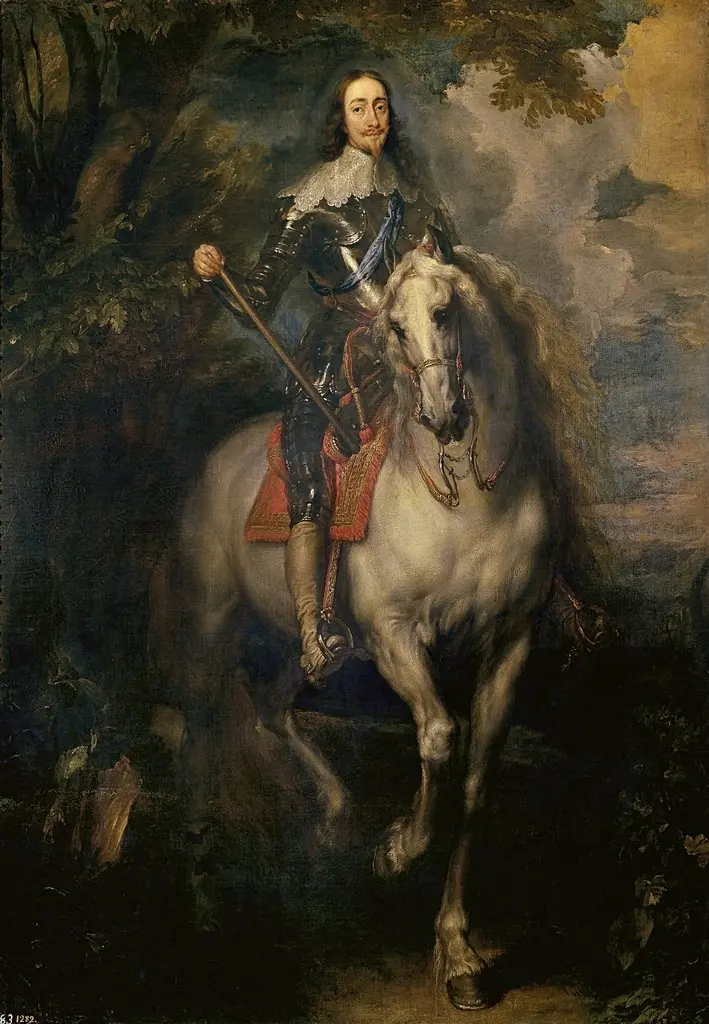
Own this work as a print
Artist & collection
Artist
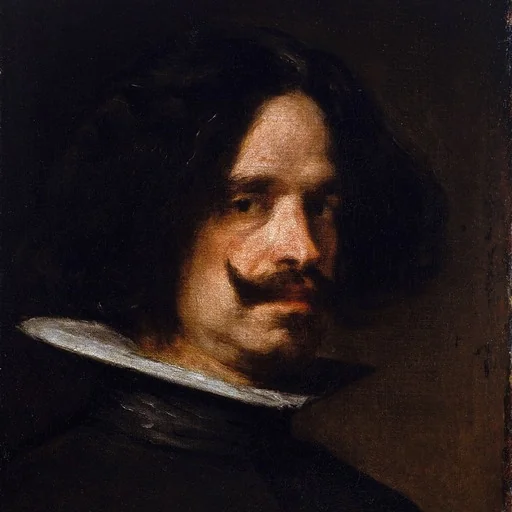
Diego Rodríguez de Silva y Velázquez was a Spanish Baroque painter, the leading artist in the court of King Philip IV of Spain and Portugal, and of the Spanish Golden Age.

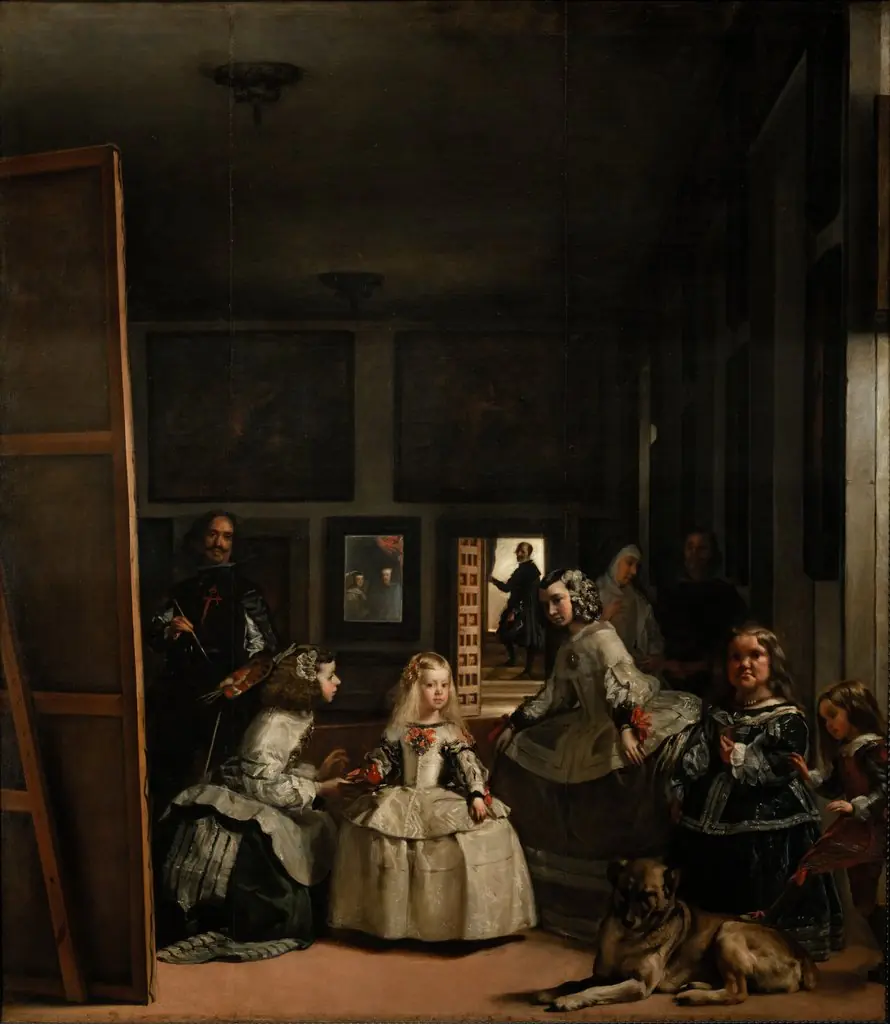
- Equestrian portrait of Charles I of England
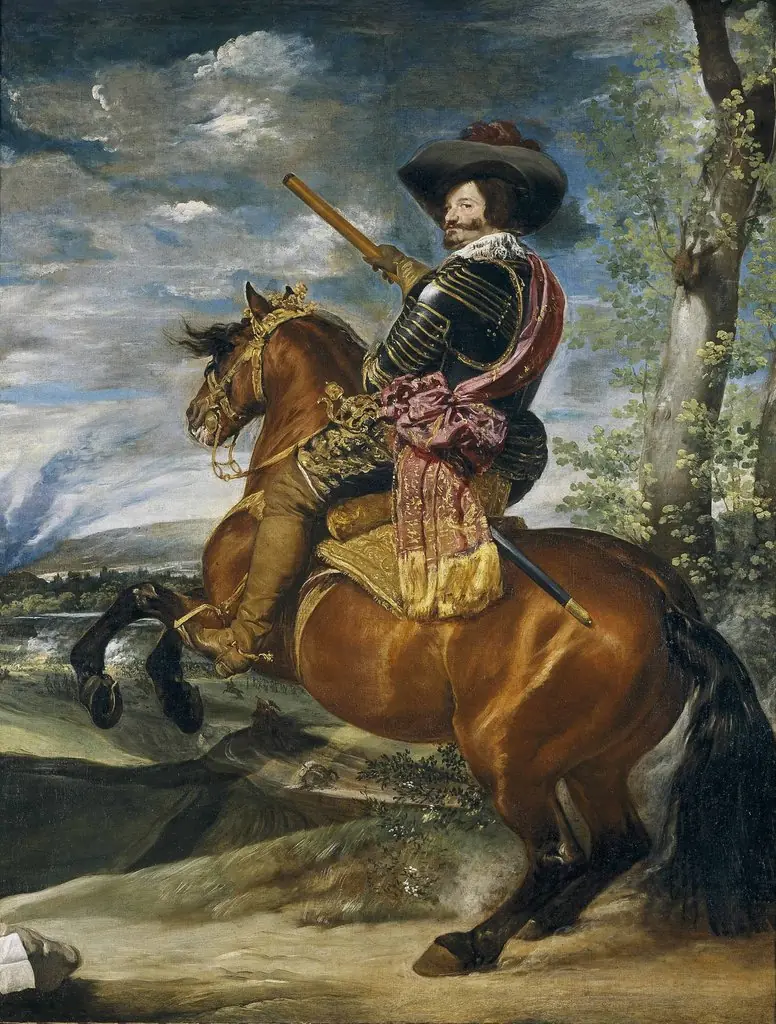 Equestrian Portrait of the Count-Duke of Olivares
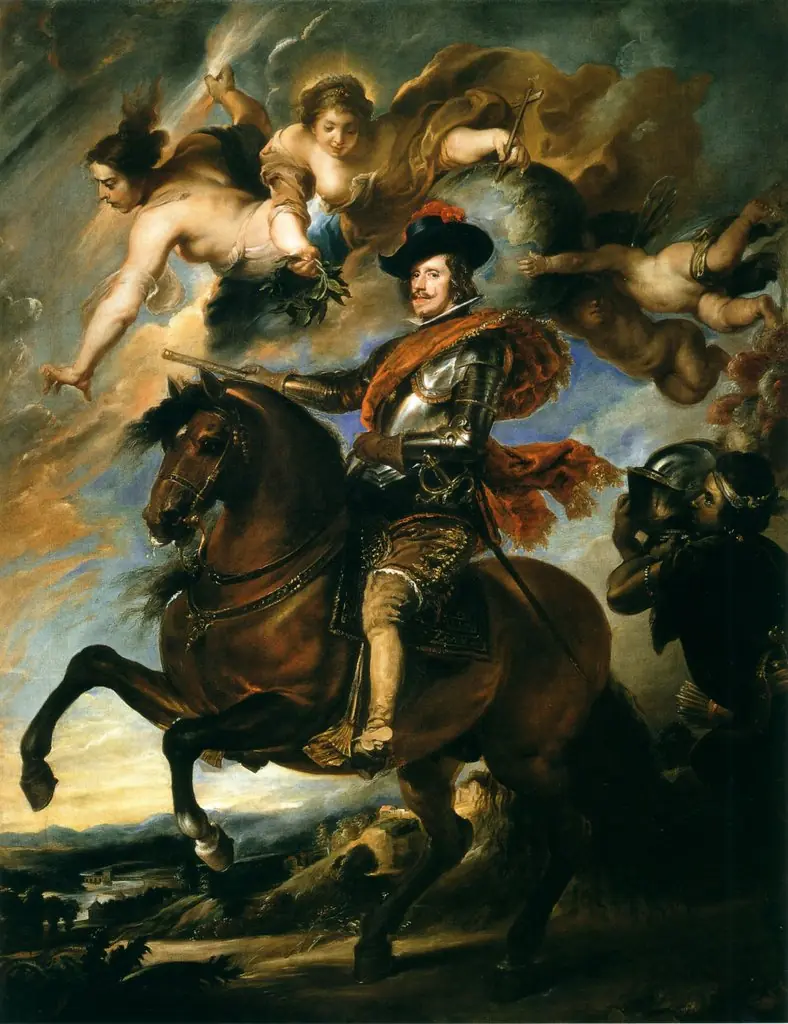 Portrait of Philip IV of Spain on horseback
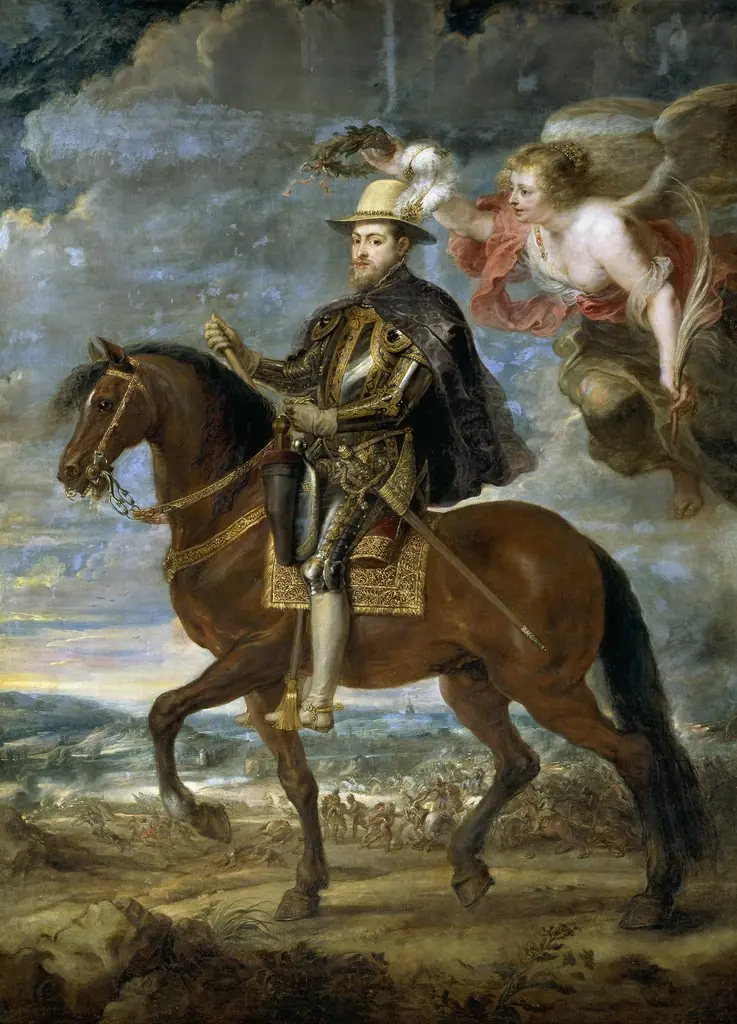 Philip II on Horseback
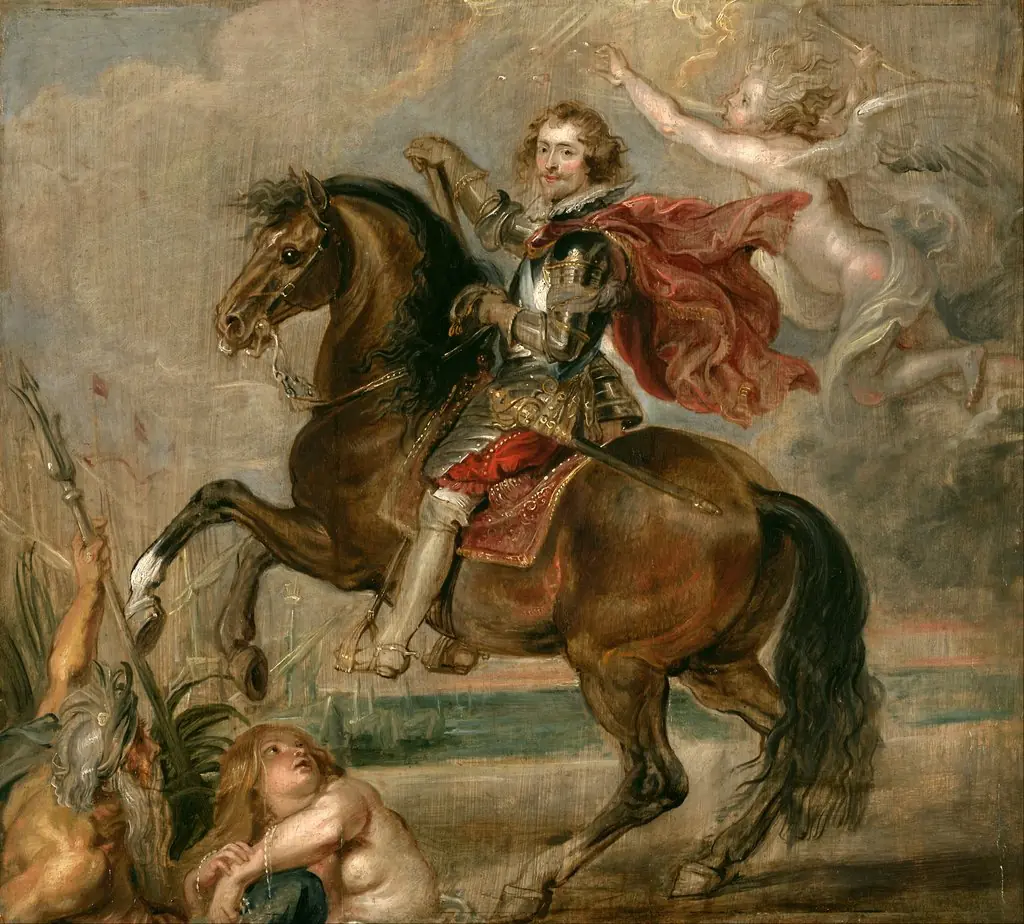 Equestrian Portrait of the Duke of Buckingham
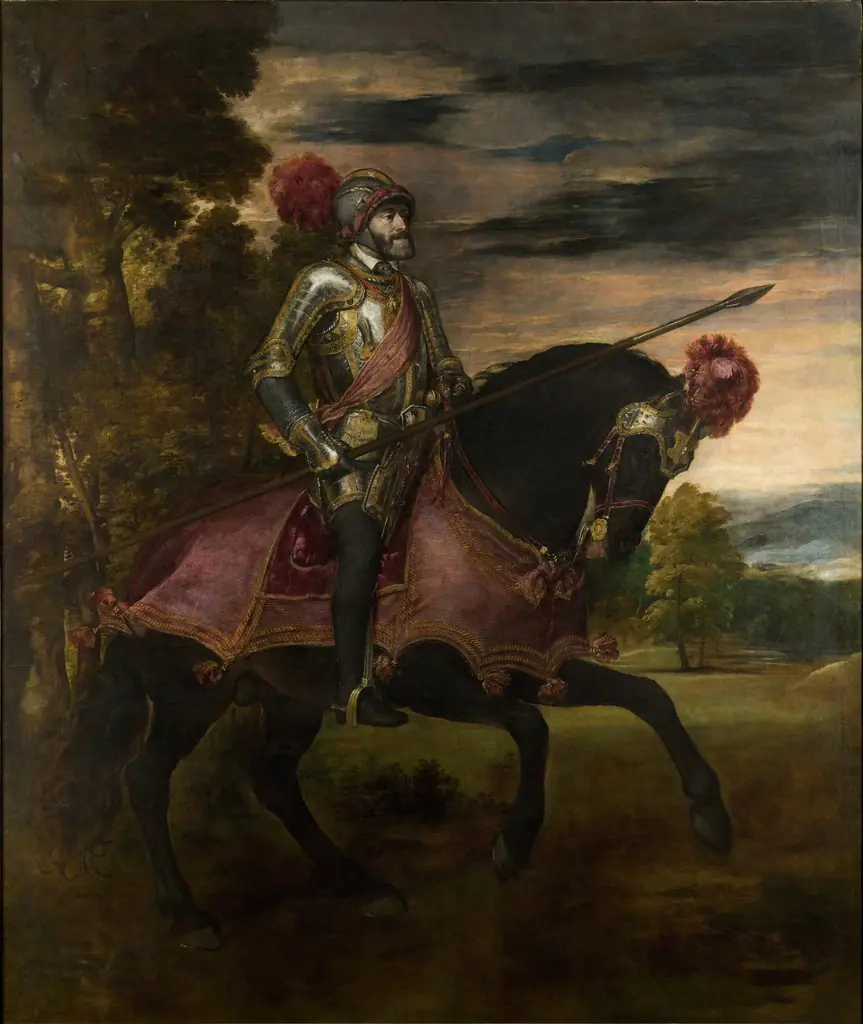 Equestrian Portrait of Charles V
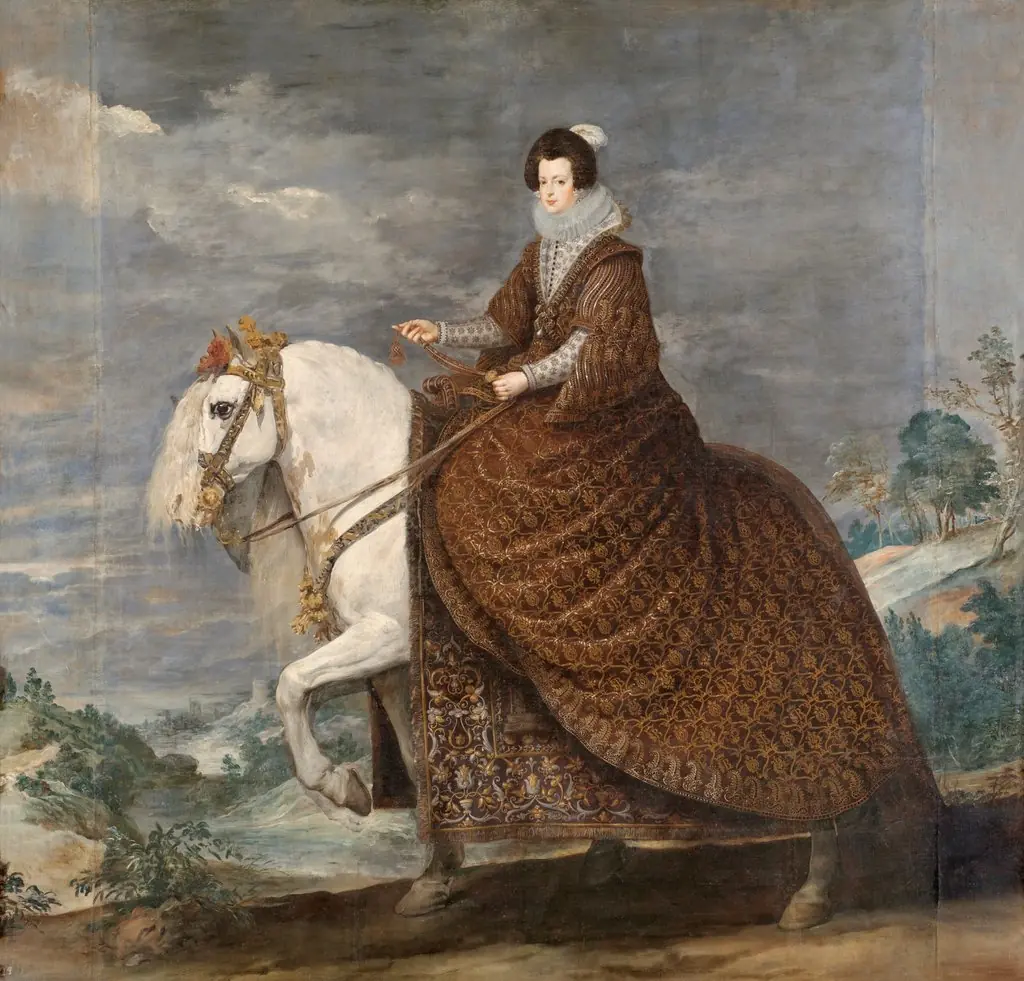 Equestrian Portrait of Elisabeth of France
 Equestrian Portrait of Empress Elizabeth