Artwork
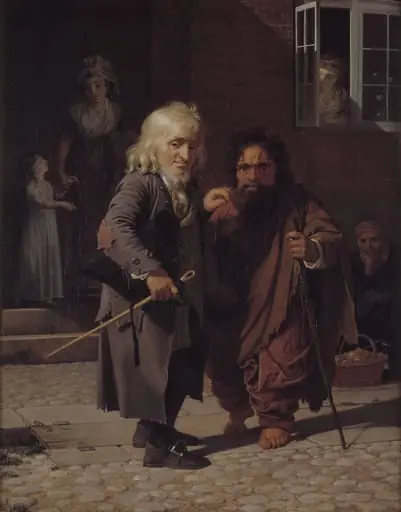
Two Dwarfs: Obligeert, a Jewish pigtail-ribbon Vendor, beside the Roman Dwarf Bajocco in one of the Streets of Copenhagen
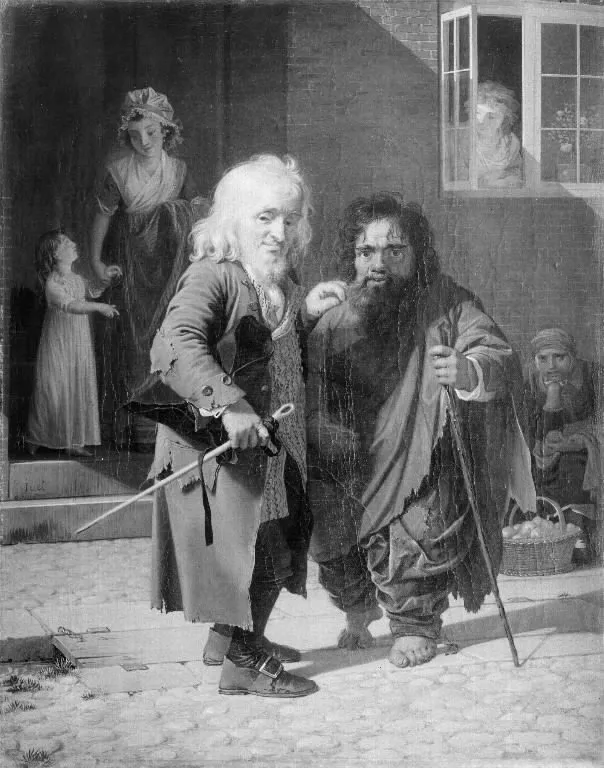
Two Dwarfs: Obligeert, a Jewish pigtail-ribbon Vendor, beside the Roman Dwarf Bajocco in one of the Streets of Copenhagen is an oil painting by the Neoclassicist artist Jens Juel. It dates from 1798 and is held in the collection of the Statens Museum for Kunst.
About this work
Overview
Painted in 1798 by Jens Juel, this oil-on-canvas work captures two dwarf figures in a Copenhagen street scene. Juel, then Denmark’s foremost portraitist, rendered the pair with attention to individual presence rather than caricature. The painting belongs to the Statens Museum for Kunst’s collection and reflects the artist’s engagement with everyday urban life during the late Enlightenment.
Subject & Meaning
The inclusion of bystanders, a woman and child, grounds the scene in ordinary life, subtly challenging contemporary stereotypes about physical difference.
The two figures are identified as Obligeert, a Jewish vendor of pigtail ribbons, and Bajocco, a dwarf from Rome. Their placement in a public thoroughfare suggests a documentary intent, portraying them not as curiosities but as residents of the city. The inclusion of bystanders, a woman and child, grounds the scene in ordinary life, subtly challenging contemporary stereotypes about physical difference.
Technique & Style
Juel employed chiaroscuro to model the figures with soft, directional light, enhancing their three-dimensionality against a muted urban backdrop. His brushwork is controlled, aligning with neoclassical ideals of clarity and restraint. The background buildings and window suggest depth without distraction, focusing attention on the subjects’ postures and expressions while maintaining atmospheric realism.
History & Provenance
Commissioned during Juel’s mature period, the painting entered the Danish national collection shortly after its completion. Its survival and continued display reflect an early institutional interest in documenting social diversity. No records indicate it was exhibited publicly in Juel’s lifetime, but its preservation suggests recognition of its unusual subject matter within Danish cultural circles.
Context
In late 18th-century Denmark, dwarfs often served in royal courts or performed in public spectacles. Yet Juel’s depiction avoids theatricality, situating the figures in a mundane street setting. This aligns with broader European shifts toward observing ordinary life with empathy, influenced by Enlightenment thought and the rise of civic portraiture beyond aristocratic patrons.
Legacy
The painting remains one of the few 18th-century Danish works to portray marginalized individuals with quiet dignity. It offers a rare visual record of Jewish and foreign performers in Copenhagen’s streets. While not widely reproduced, its presence in the national collection affirms its role as a document of social observation rather than spectacle.
Artist & collection
Artist
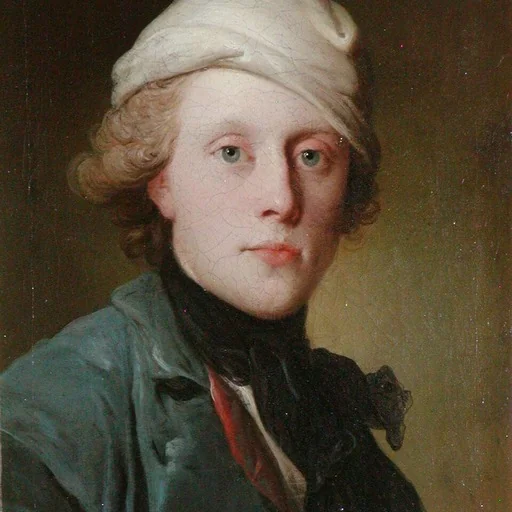
Jens Juel (12 May 1745 – 27 December 1802) was a Danish painter, primarily known for his many portraits, of which the largest collection is on display at Frederiksborg Castle.

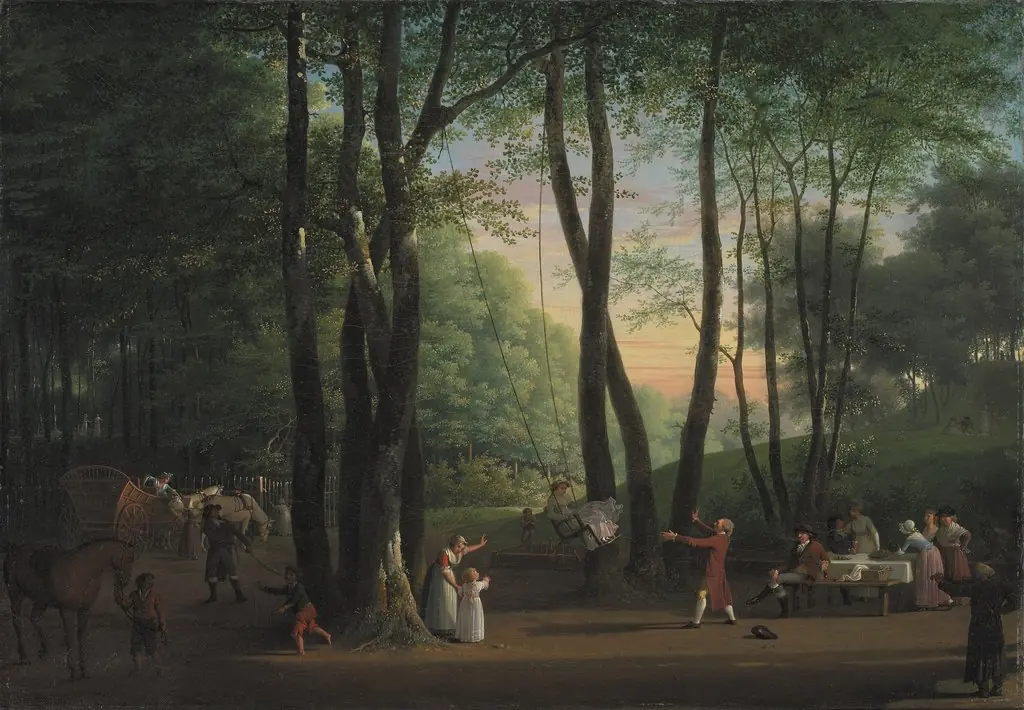 The Dancing Glade at Sorgenfri
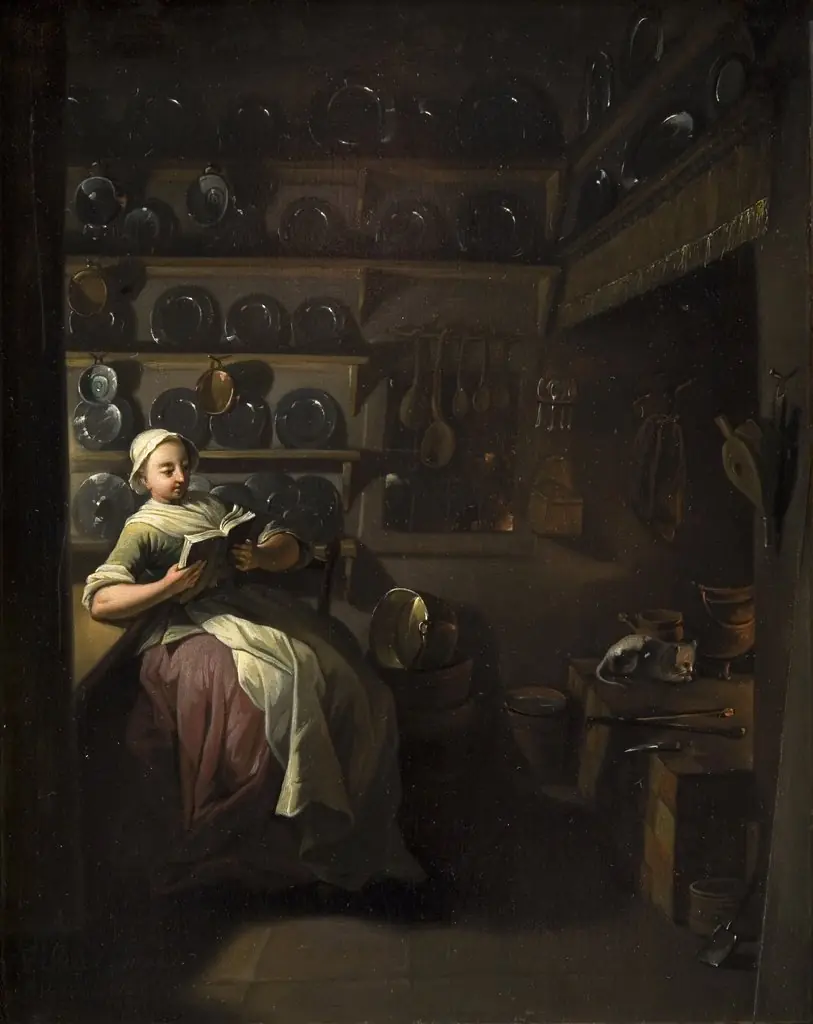 Kitchen Interior with a Girl Reading
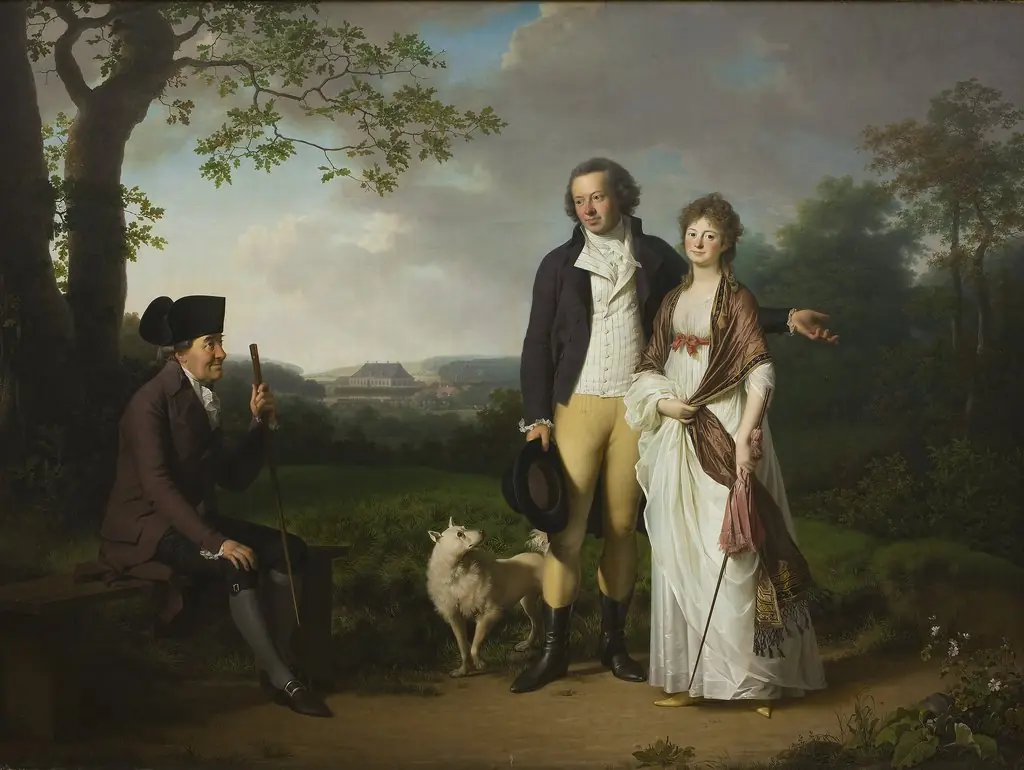 Niels Ryberg with his Son Johan Christian and his Daughter-in-Law Engelke, née Falbe
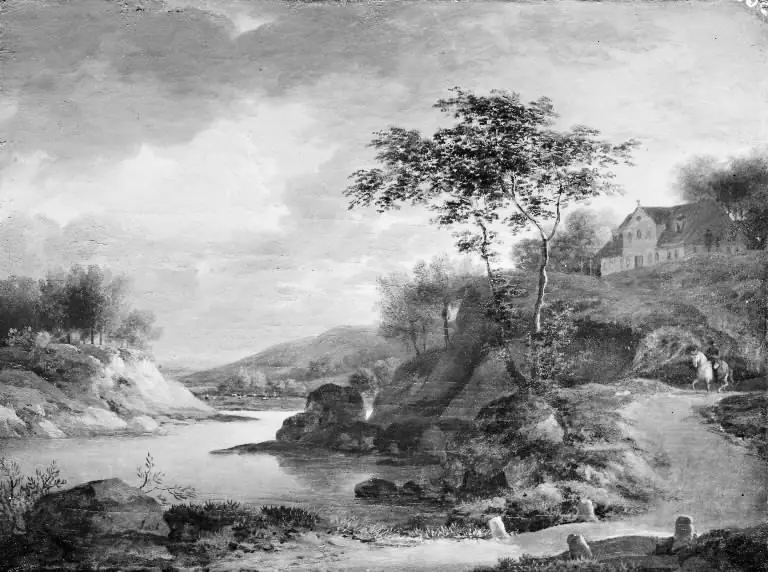 An Autumn Landscape by the Rhine
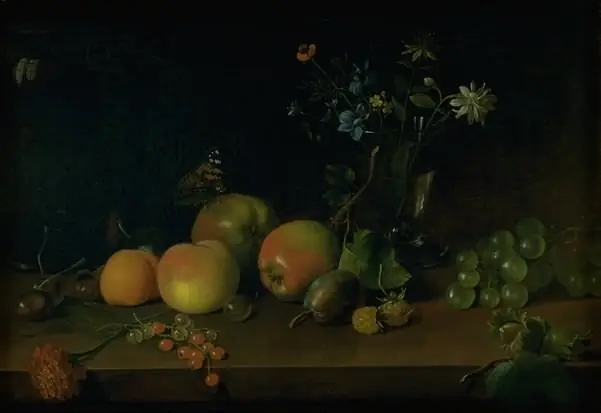 Flowers and Fruit on a Table
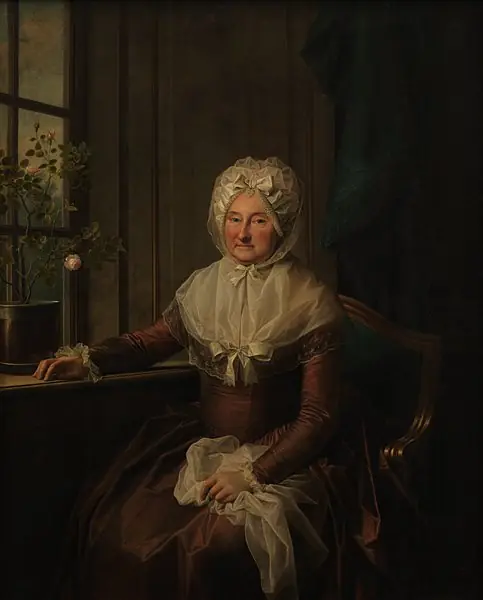 Countess Anna Joachima Danneskiold-Laurvigen, née Ahlefeldt
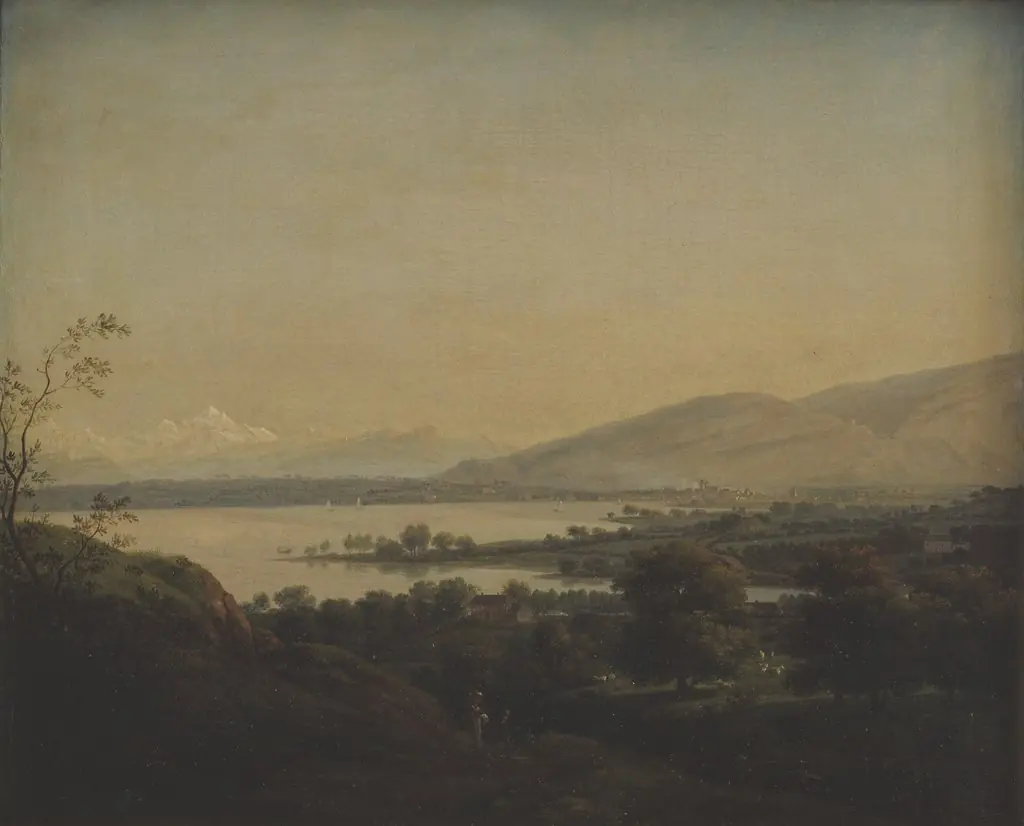 A View Across Lake Leman Towards Mont Blanc and Geneva
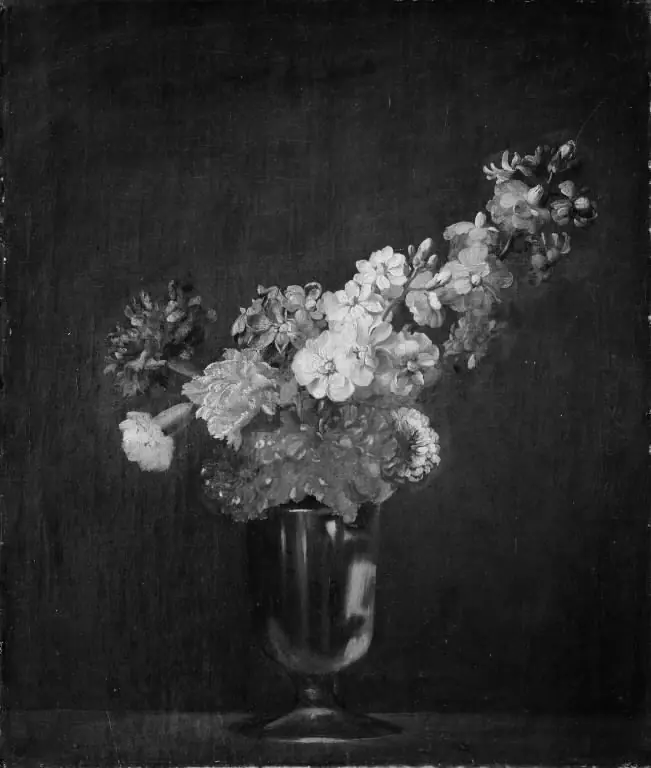 Stocks and Carnations