Artwork
Noli Me Tangere
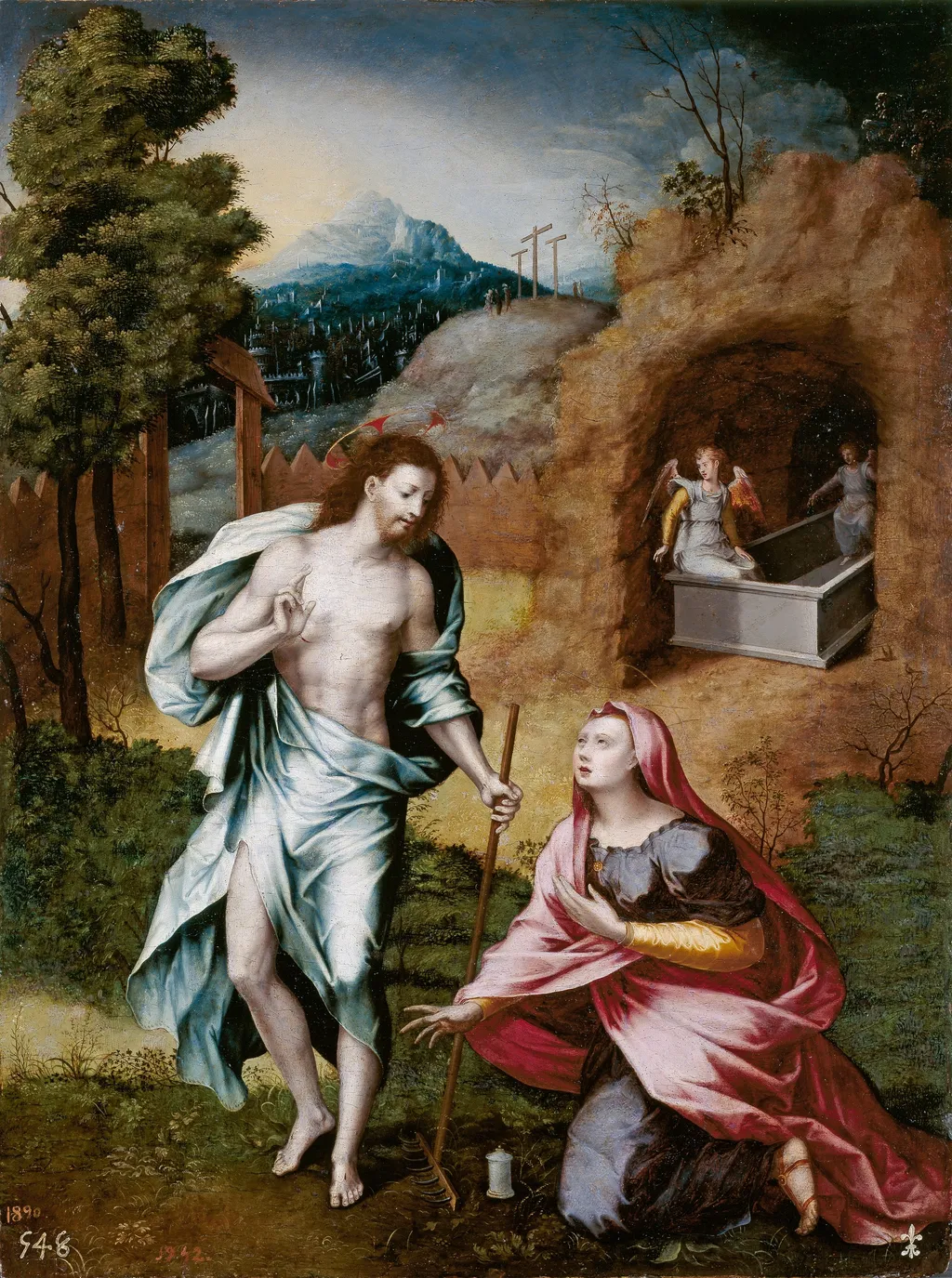
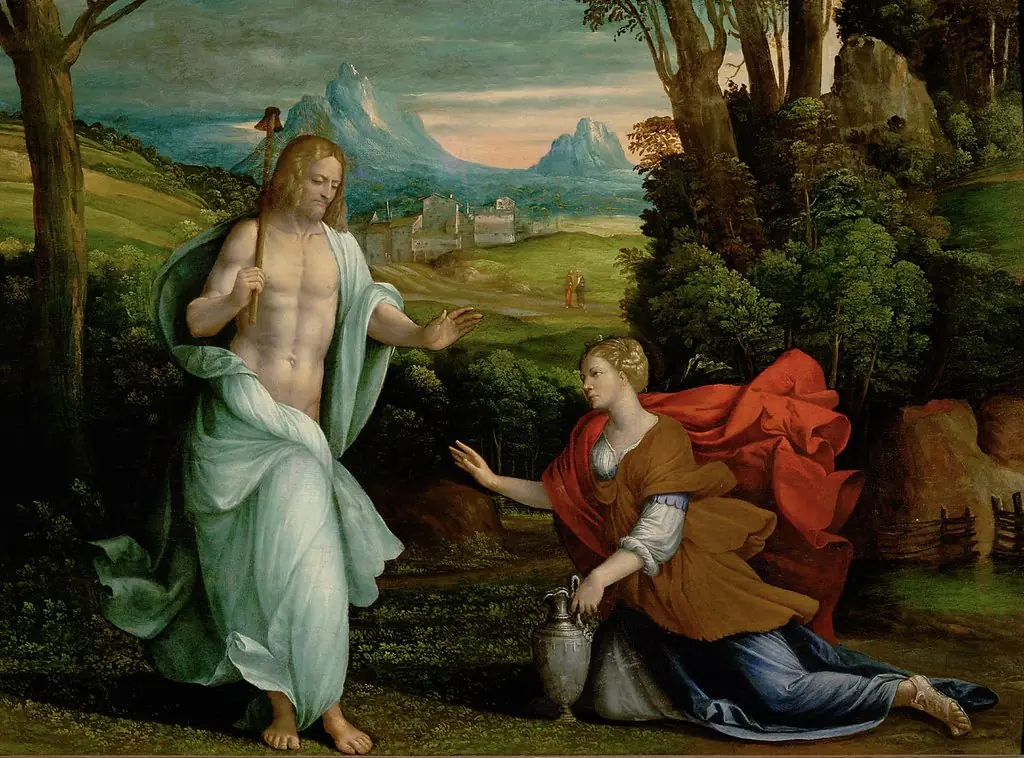
Noli Me Tangere is an unspecified painting by the Mannerist artist Jerónimo Cosida. It dates from 1570 and is held in the collection of the Museo del Prado.
About this work
Subject & Meaning
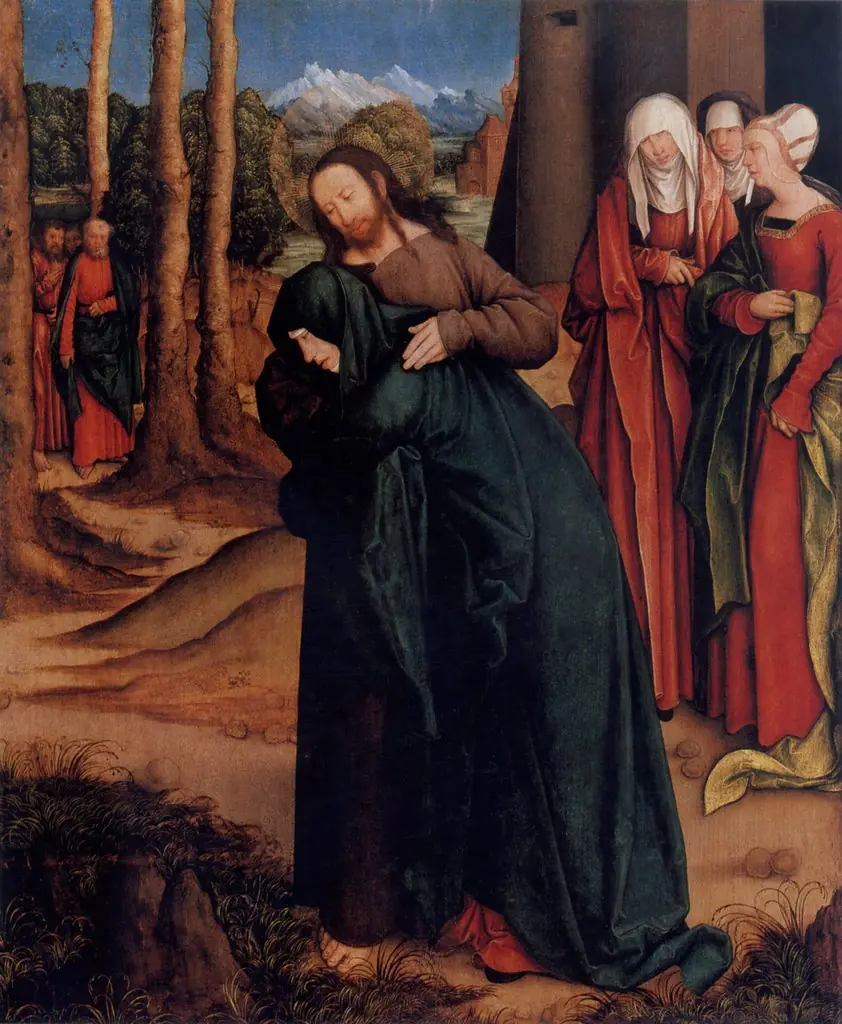
Mary Magdalene, visiting the empty tomb with other women, encounters a figure she believes to be the gardener and asks where Christ's body has been taken.
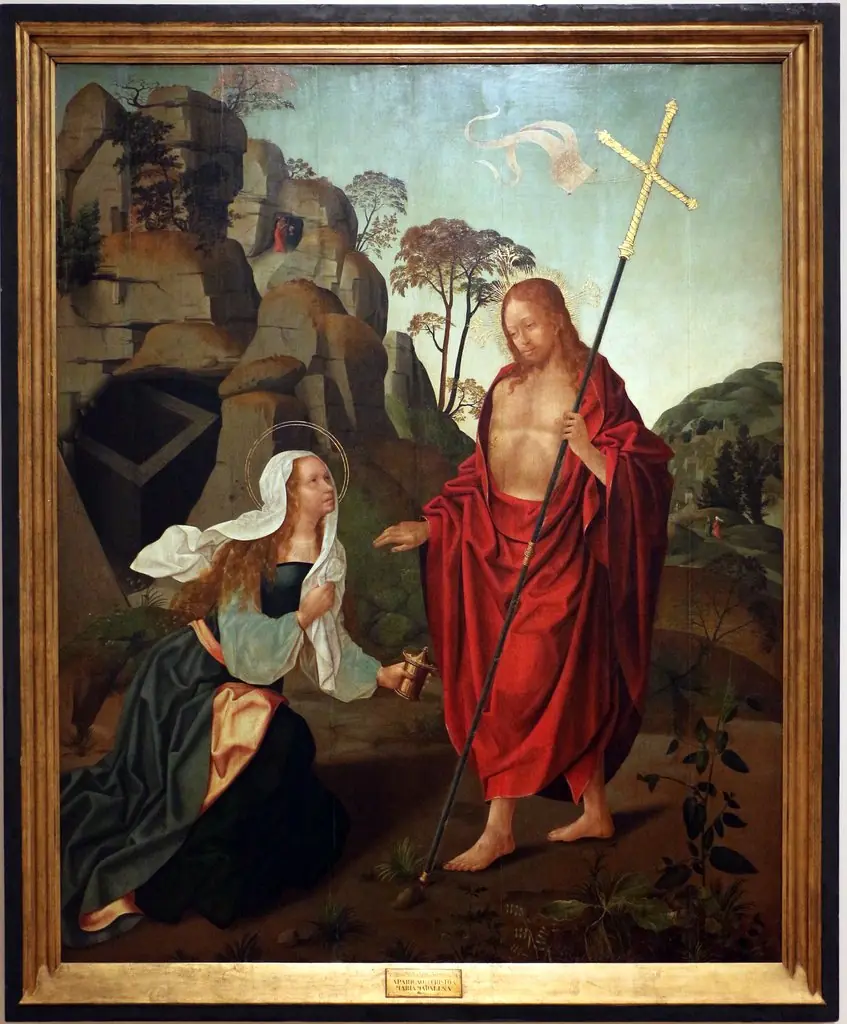
The painting depicts the biblical episode of the Resurrection of Christ as recounted in the Gospel of John. Mary Magdalene, visiting the empty tomb with other women, encounters a figure she believes to be the gardener and asks where Christ's body has been taken. When Jesus reveals himself, she reaches toward him, and he responds with the words "Do not touch me", the Latin phrase Noli me tangere, while raising his right hand in a gesture of blessing. To signal his disguised identity as a gardener, Christ holds a rake, a device Cósida employs in the same way that Titian and Botticelli used a hoe in their treatments of the scene. The background reinforces the narrative: Christ's empty tomb is shown guarded by two angels, with Calvary and its crosses visible beyond, and the city of Jerusalem closing the composition in the distance. The work's main subject is identified as the Noli me tangere episode, with Mary Magdalene as the figure depicted.
Technique & Style
Executed in 1570, this religious work is an oil painting on panel measuring 61 by 47 units. The artist's technique displays a highly detailed brushstroke, a quality consistent with a practitioner experienced in miniature painting and drawing. Stylistically, the composition adheres to traditional iconography while introducing specific variations; Jesus is depicted holding a rake rather than the hoe found in versions by Titian or Botticelli. The background features a complex landscape including the empty tomb guarded by two angels, the Calvary with execution crosses, and the city of Jerusalem in the distance. The scene captures the biblical moment where Jesus blesses with his right hand while speaking to Mary Magdalene.
History & Provenance
The *Noli Me Tangere* by Jerónimo Cosida was painted in 1570 and is recorded as a religious work depicting the biblical episode of Christ’s appearance to Mary Magdalene after the Resurrection. It entered the Museo del Prado collection as part of the Spanish Royal Collection, having been acquired during the reign of Elisabeth Farnese and later held at the Palacio de La Granja de San Ildefonso in Segovia. The painting passed through successive royal owners, including Charles III and Ferdinand VII, before entering the Prado’s holdings. Its creation history aligns with Cosida’s documented activity in Aragon during the 1560s, 1570s, and the work reflects his training in miniature and detailed draftsmanship.
Context
Jerónimo Cósida's *Noli Me Tangere* (1570) stands as a significant work of Aragonese Renaissance religious art, currently held by the Museo del Prado. The painting's inclusion in the Royal Collection, specifically acquired by Queen Elisabeth Farnese, signals the high regard in which the artist was held by the Spanish monarchy during the sixteenth century. Art historical analysis highlights Cósida's meticulous technique, characterized by a detailed brushwork style derived from his background in miniature painting and drawing. The composition reflects broader Renaissance traditions in depicting the biblical resurrection narrative, notably the depiction of Christ holding a gardening tool similar to works by Titian and Botticelli, while incorporating specific iconographic elements such as the empty tomb guarded by angels and a distant view of Jerusalem.
Own this work as a print
Artist & collection
Artist
Jerónimo Vicente Vallejo Cósida (1510 – 5 April 1592) was a Spanish Renaissance painter, sculptor, goldsmith and architect.