Artwork
The Virgin and Child on a Throne of Angels
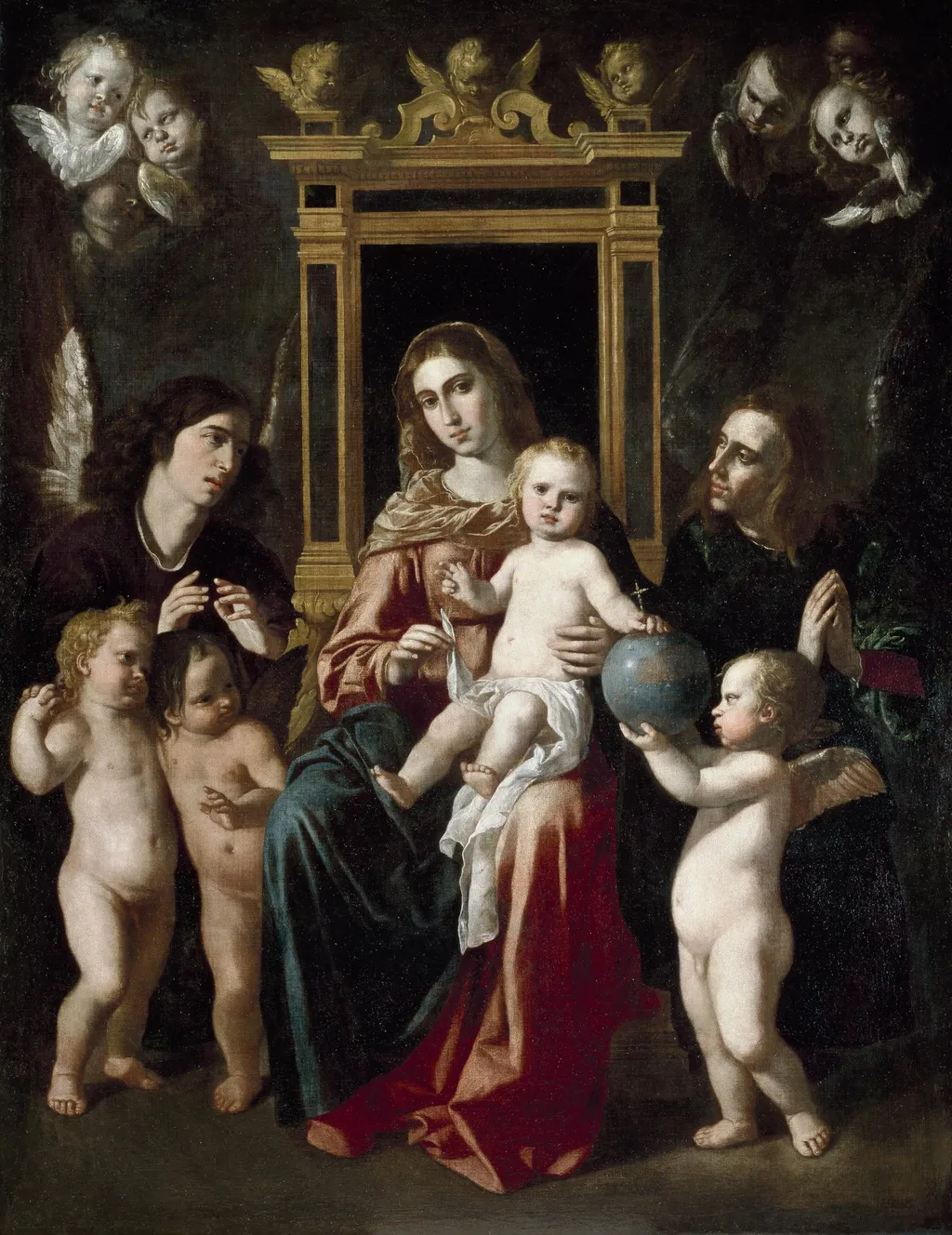
The Virgin and Child on a Throne of Angels is an oil painting by the Early Baroque Italian artist Jerónimo Jacinto de Espinosa. It dates from 1661 and is held in the collection of the Museo del Prado.
About this work
Subject & Meaning
Created in 1661, the painting presents the holy figures in a traditional devotional arrangement intended for religious contemplation.
The work depicts the Virgin Mary seated on a throne with the Christ Child, a composition within religious art. The throne is described as one of angels, establishing a celestial setting. The Christ Child holds an orb, traditionally symbolizing his dominion over the world.
Created in 1661, the painting presents the holy figures in a traditional devotional arrangement intended for religious contemplation.
Technique & Style
The work is an oil painting on canvas, reflecting the Baroque emphasis on rich color and ordered composition. Jerónimo Jacinto de Espinosa rendered the Virgin seated on a celestial throne surrounded by angels, with the Christ Child holding an orb, combining sacred iconography with a sense of spatial depth. The canvas support and oil medium contribute to a luminous surface characteristic of the artist's devotional paintings.
History & Provenance
The work was created in 1661 by Jerónimo Jacinto de Espinosa as an oil painting on canvas, a religious composition depicting the Virgin and Child seated on a throne surrounded by angels. It measures 191.5 cm in height and 148 cm in width. The painting is held by the Museo del Prado, Madrid. No documented commission or earlier ownership history is recorded in the available sources.
Context
Jerónimo Jacinto de Espinosa created The Virgin and Child on a Throne of Angels in 1661, a religious painting now in the Museo del Prado. Executed in oil on canvas, it depicts the Virgin Mary seated on a celestial throne surrounded by angels, holding the infant Christ as he grasps a globus cruciger. The composition belongs to the Spanish Baroque tradition and is noted for its devotional intensity and ornamental complexity as characteristic of mid-17th-century Spanish religious imagery.
Overview
Jerónimo Jacinto de Espinosa, a Spanish painter of the Baroque era, completed The Virgin and Child on a Throne of Angels in 1661. Executed in oil on canvas, the composition places the Virgin Mary and the infant Christ upon an elevated throne, surrounded by a group of cherubic figures. The work is part of the Museo del Prado’s permanent collection.
Own this work as a print
Artist & collection
Artist
Jerónimo Jacinto de Espinosa (18 July 1600 – 20 February 1667) was a Spanish Baroque painter.

- The Virgin of the Chair
 The Holy Family
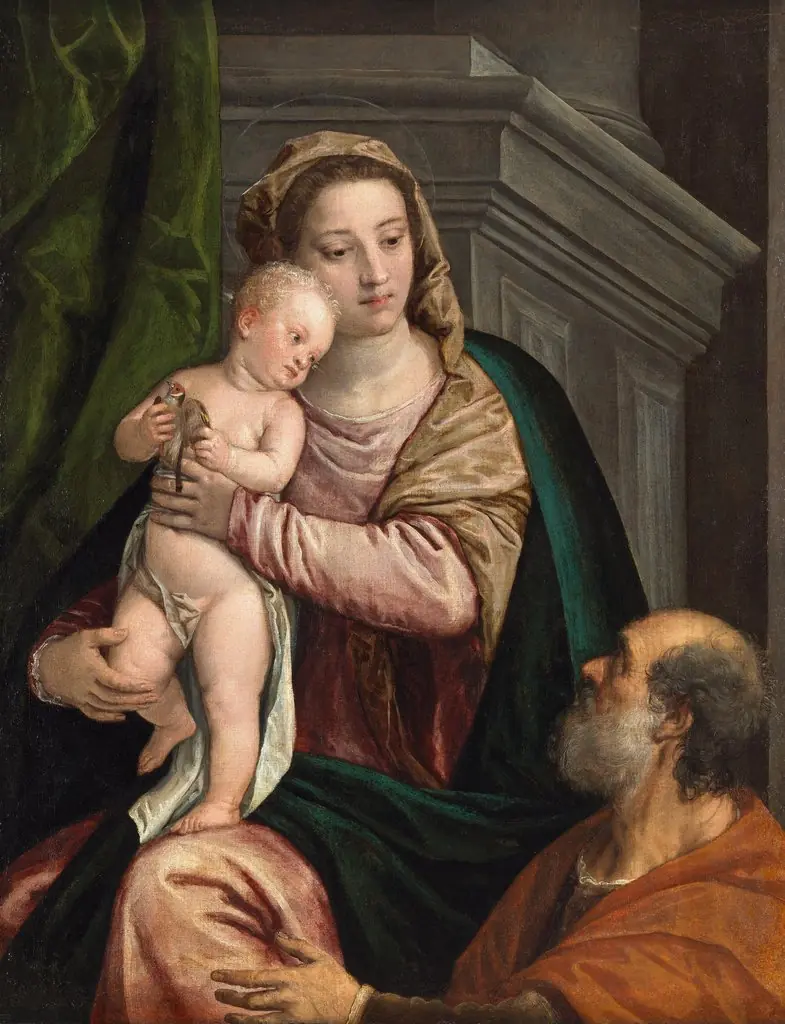 Die Heilige Familie
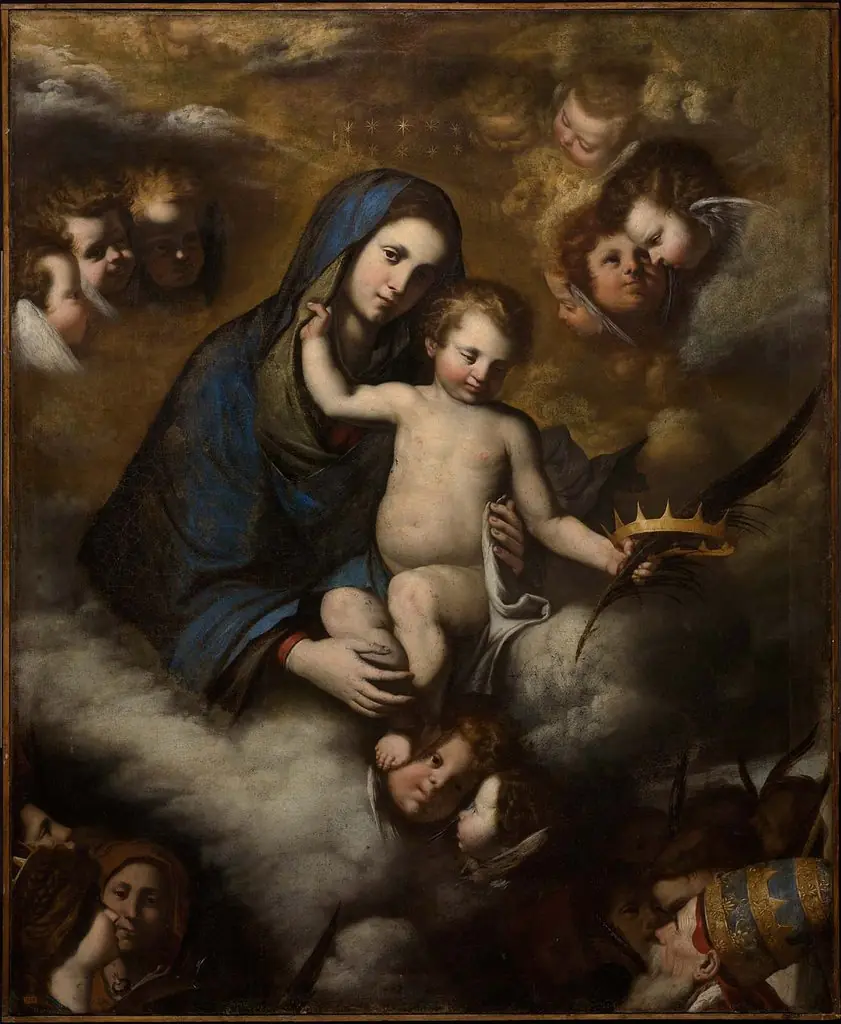 The Virgin and Child in Glory
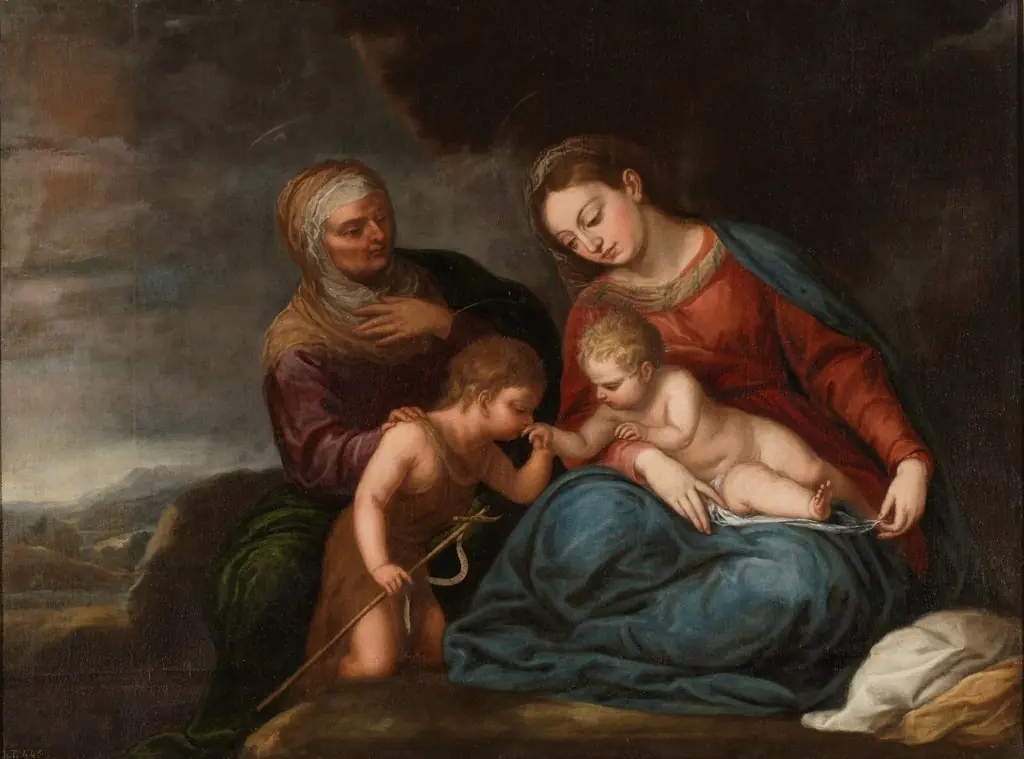 The Virgin and Child with Saints Elizabeth and John
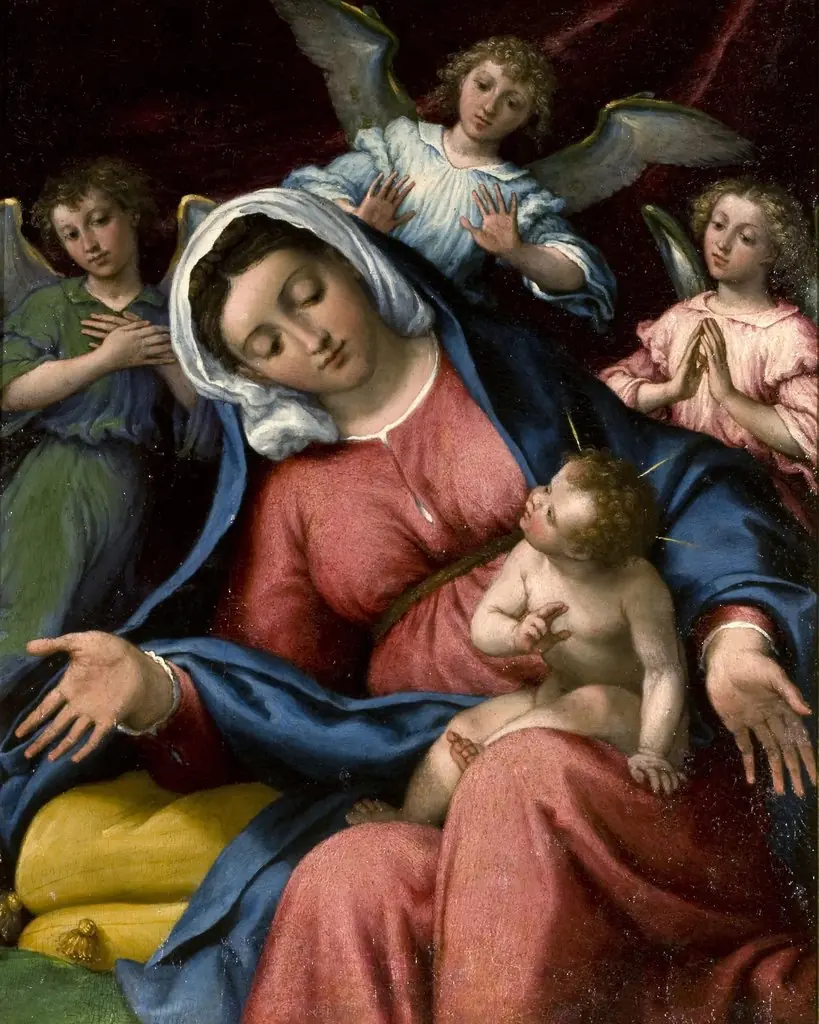 Madonna della Grazie
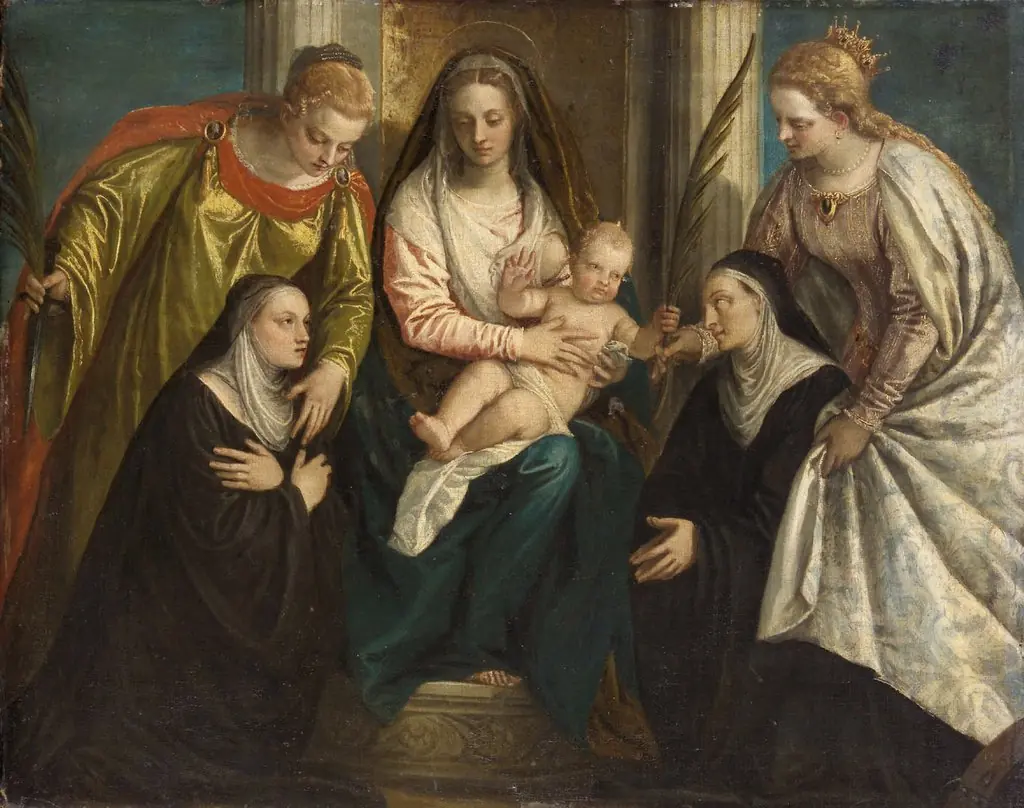 Madonna and Child with Saints Lucy and Catherine and 2 Nuns
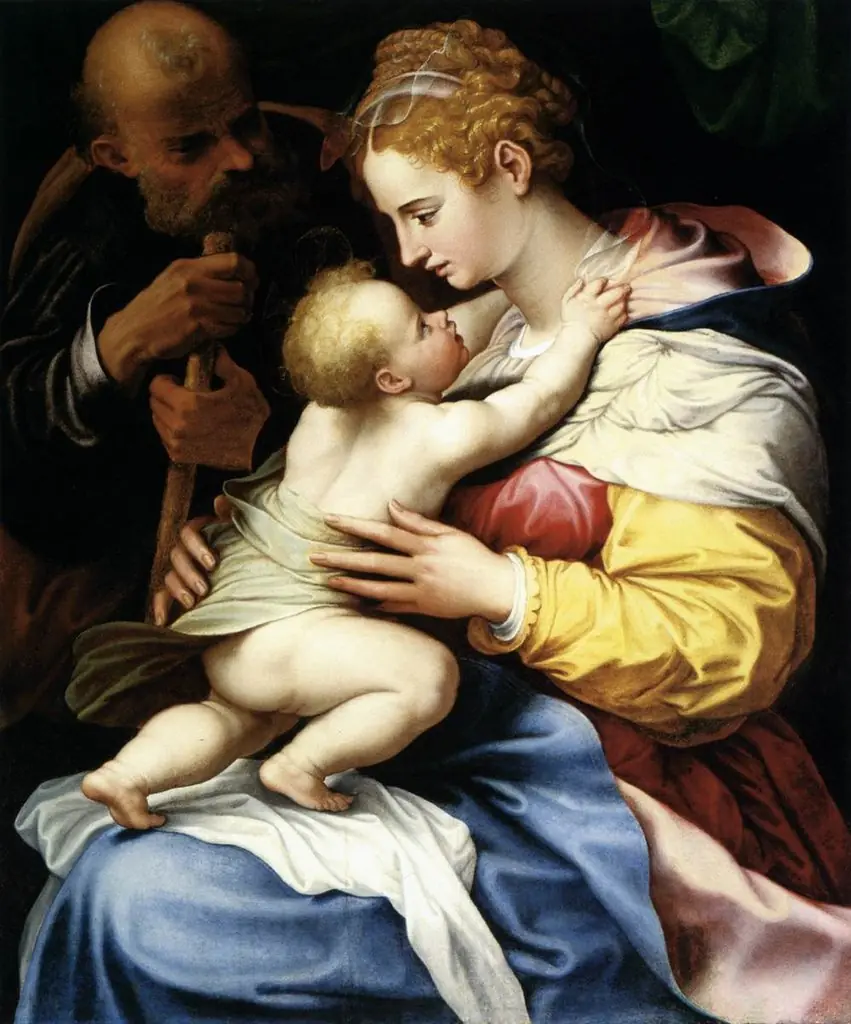 The Holy Family
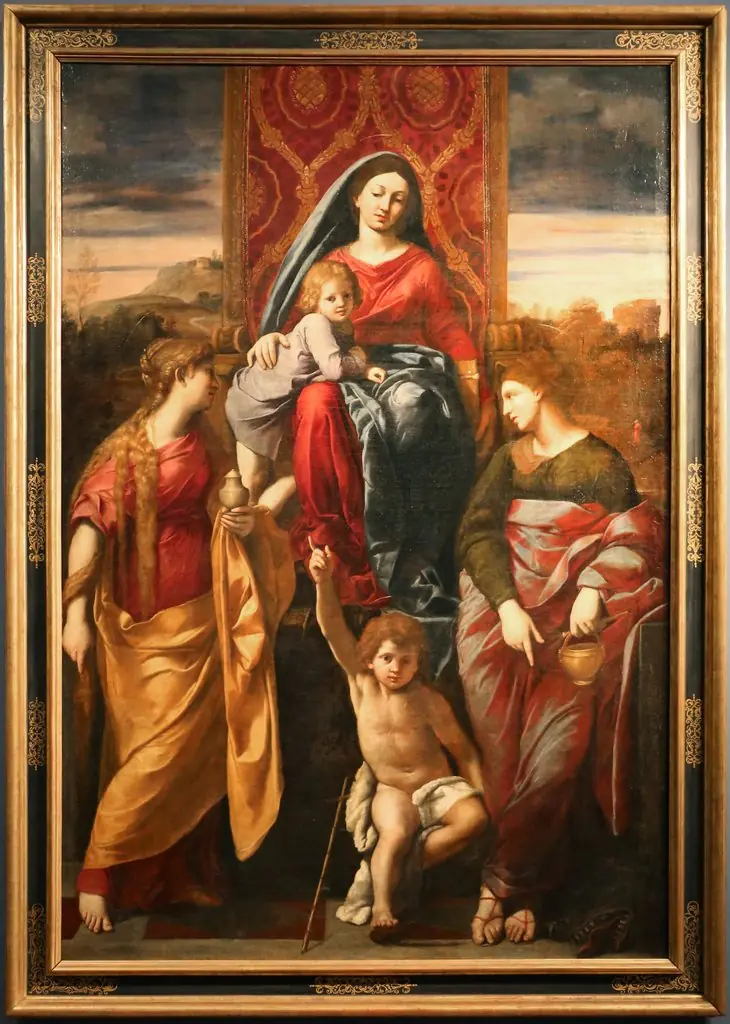 Thronende Maria mit dem Kind und den Heiligen Martha, Magdalena und Johannes dem Täufer
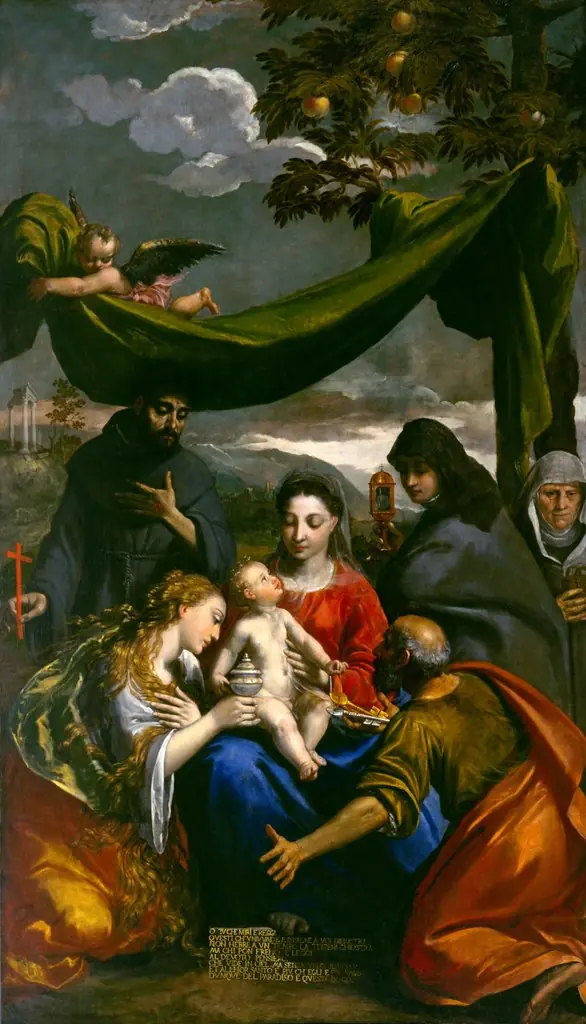 Virgin and Child with Saints Mary Magdalene, Peter, Clare, Francis, and an Abbess
 The Virgin and Child
 Virgin of the Stairs