Artwork
The Holy Family
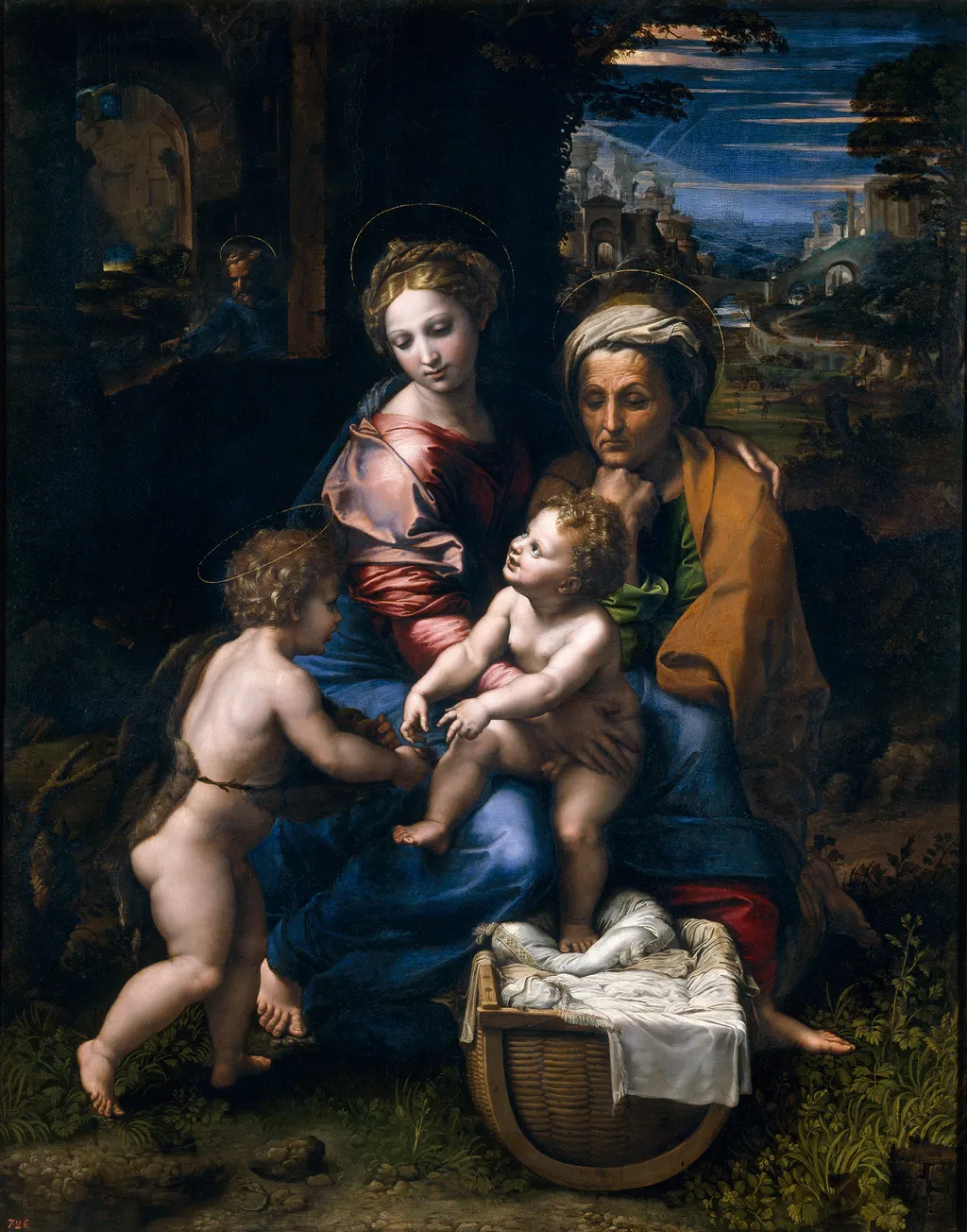
The Holy Family is an oil painting by the High Renaissance artist Raphael. It dates from 1518 and is held in the collection of the Museo del Prado.
About this work
Technique & Style
The handling of the medium displays a sophisticated use of glazes, particularly in the Virgin's robes, where reds, blues, and pinks are layered to create depth.
Created between 1518 and 1520, this work is executed in oil paint on a wooden panel support. The composition features a pyramidal arrangement of figures, a stylistic trait reflecting the artist's engagement with Leonardo da Vinci's techniques regarding light and landscape realism. X-ray analysis reveals significant changes from the initial underdrawing, indicating a two-phase execution where the artist altered the figures to increase dramatic tension.
Specific modifications included adding curls to the children's heads, sharpening the Virgin's features, and complicating the drapery folds to enhance the contrast between light and shadow. The handling of the medium displays a sophisticated use of glazes, particularly in the Virgin's robes, where reds, blues, and pinks are layered to create depth. The landscape background combines classical ruins with a sunset atmosphere, utilizing golden reflections against blue shadows to heighten the work's mysterious tone.
History & Provenance
Executed circa 1518 to 1520, this oil on panel was likely commissioned by Ludovico Canossa, Bishop of Bayeux. The work subsequently entered the collection of the Gonzaga family in Mantua, possibly through a transaction involving Vincenzo I Gonzaga around 1604. In 1627, it was acquired by Charles I of England as part of the Gonzaga holdings.
Following the king's execution, the painting was sold at auction and purchased in 1649 by Alonso de Cárdenas on behalf of Luis de Haro for Philip IV of Spain. The monarch nicknamed the piece "La Perla," regarding it as the finest gem of his collection. It was displayed at the Monastery of El Escorial from 1656 until Joseph Bonaparte removed it to Paris in 1813.
The artwork was returned to Spain in 1815 and formally entered the Museo del Prado's collection in 1857.
The Holy Family, known as "La Perla," has been in the collection of the Museo del Prado in Madrid since 1857. The painting entered the Spanish royal collection when Luis de Haro acquired it on behalf of Philip IV of Spain, who regarded it as the finest work in his holdings and gave it the name "La Perla." It was displayed at the Monasterio de El Escorial from 1656, where the traveler Antonio Ponz later recorded seeing it.
Joseph Bonaparte removed the panel to Paris in 1813 as part of the Napoleonic seizures of Spanish art; it remained there until 1815 and was returned to Spain by 1818.
The work was featured in the 2012 exhibition "El último Rafael," jointly organized by the Museo del Prado and the Louvre, where specialists Tom Henry and Paul Joannides reaffirmed its full autograph status by Raphael.
Context
The Holy Family, widely known as La Perla, occupies a pivotal place in Raphael’s late Roman oeuvre and in the broader discourse on High Renaissance religious painting. Scholars highlight its synthesis of Leonardo’s chiaroscuro and pyramidal composition with Raphael’s characteristic harmony, noting how preparatory changes shifted the mood from serene calm to heightened tension through adjusted lighting and figural contours. Technical studies confirm two distinct phases of execution: an initial adherence to underdrawing followed by substantial revisions, including tightened curls in the children’s hair, sharpened drapery, and intensified light–shadow contrasts.
The work’s layered genesis and iconographic complexity, juxtaposing maternal tenderness with intimations of Christ’s Passion via symbolic motifs such as the pomegranate, have prompted sustained art-historical analysis of Raphael’s evolving synthesis of naturalism and devotional narrative.
Its reception crystallizes in Vasari’s Lives and Castiglione’s correspondence, anchoring its early modern renown. Later, Philip IV of Spain’s designation of the painting as “the pearl” of his collection underscored its status as a coveted exemplar of Italian Renaissance art, a reputation reinforced by its turbulent provenance from Mantua through London to Madrid and its restitution after the Napoleonic Wars.
Overview
Raphael's "The Holy Family," often referred to as "La Perla," is an oil on panel painting created around 1518. This work presents a traditional religious scene, showcasing the artist's mature style. It is a significant example of his output from the High Renaissance period, demonstrating his mastery of composition and figure arrangement within a devotional context.
Subject & Meaning
The painting centers on the Madonna and Child, who are accompanied by other key figures from Christian tradition. John the Baptist is present, typically depicted as a young boy alongside Christ. Saint Anne, the mother of the Virgin Mary, also appears, while Saint Joseph is subtly included in the background, completing the familial grouping within a sacred narrative.
Own this work as a print
Artist & collection
Artist
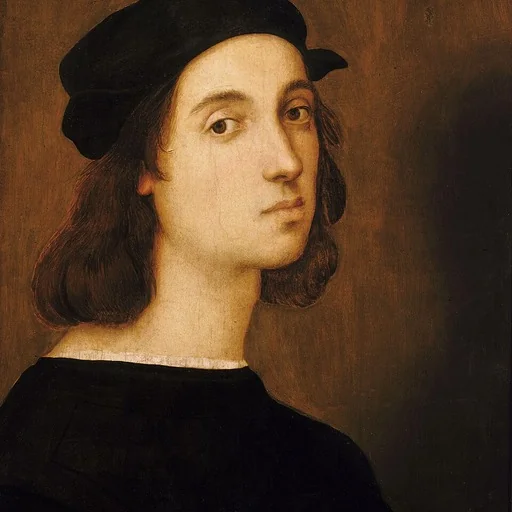
Raphael was born Raffaello Sanzio in Urbino on April 6, 1483, the son of Giovanni Santi, a painter and poet attached to the ducal court.


- The Holy Family
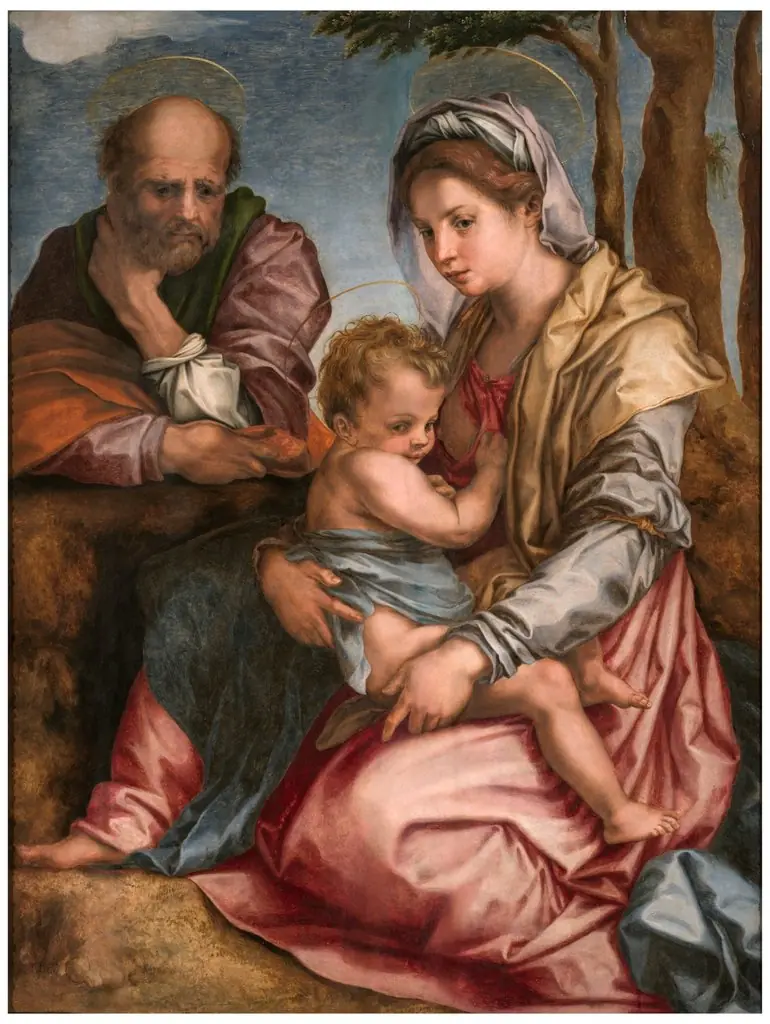 The Holy Family
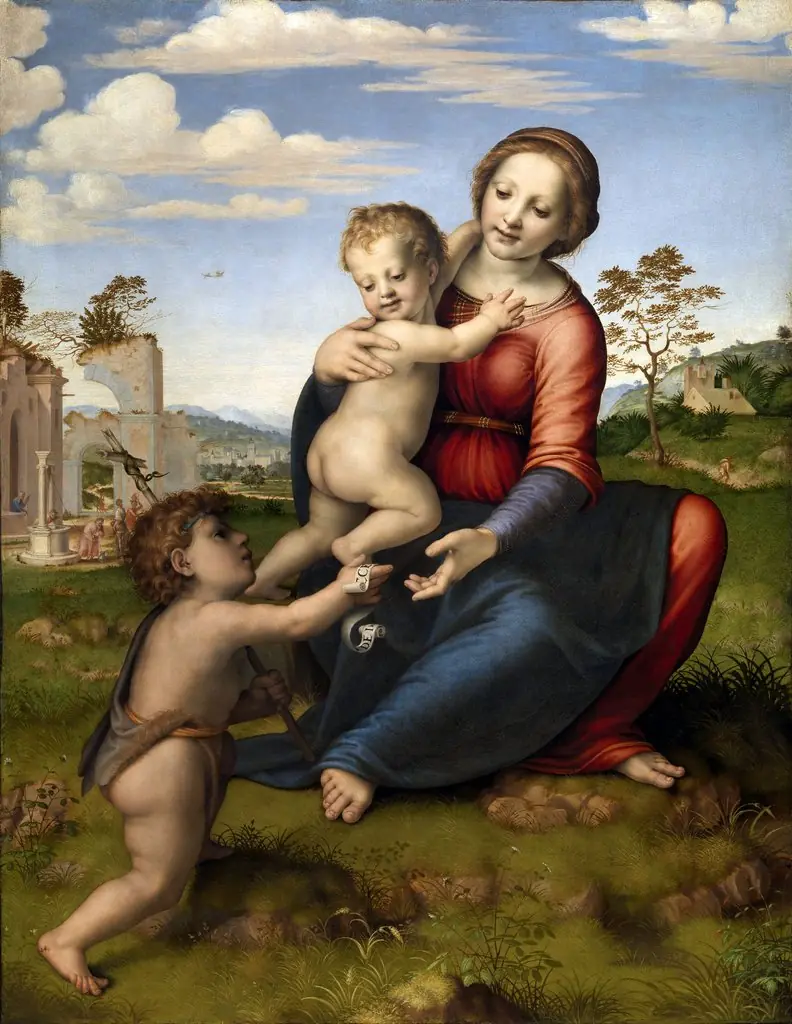 Madonna of the Well or Madonna and Child with the young St. John the Baptist
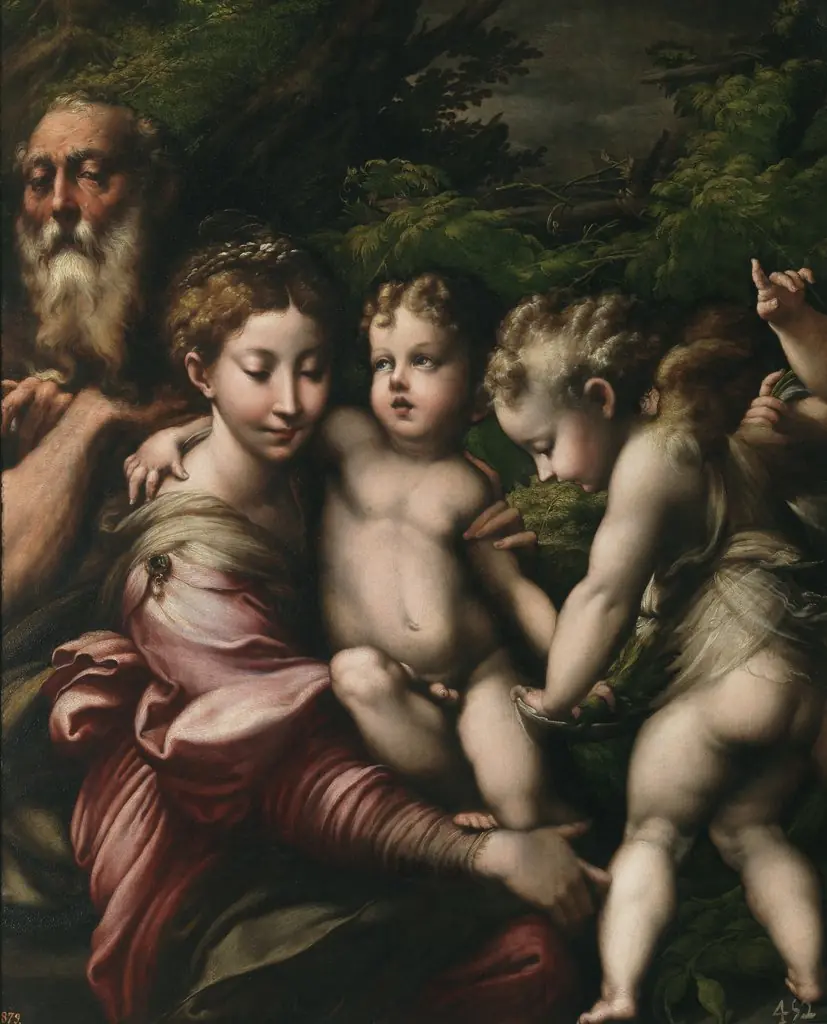 The Holy Family with Angels
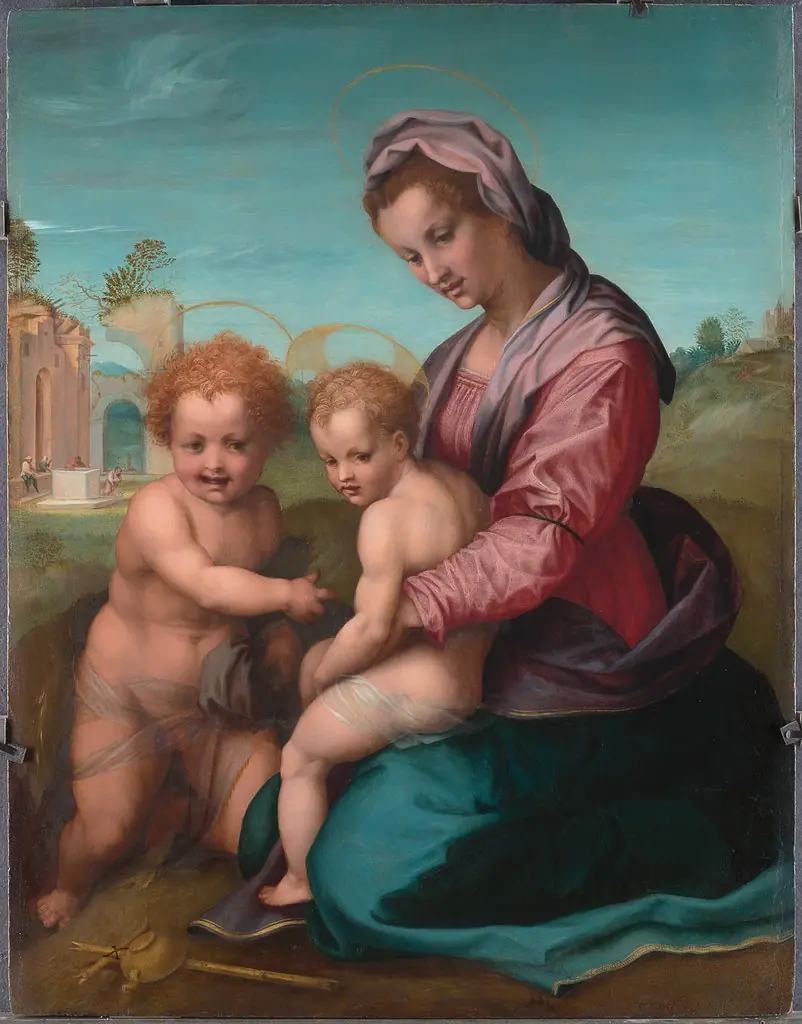 Madonna and Child with John the Baptist
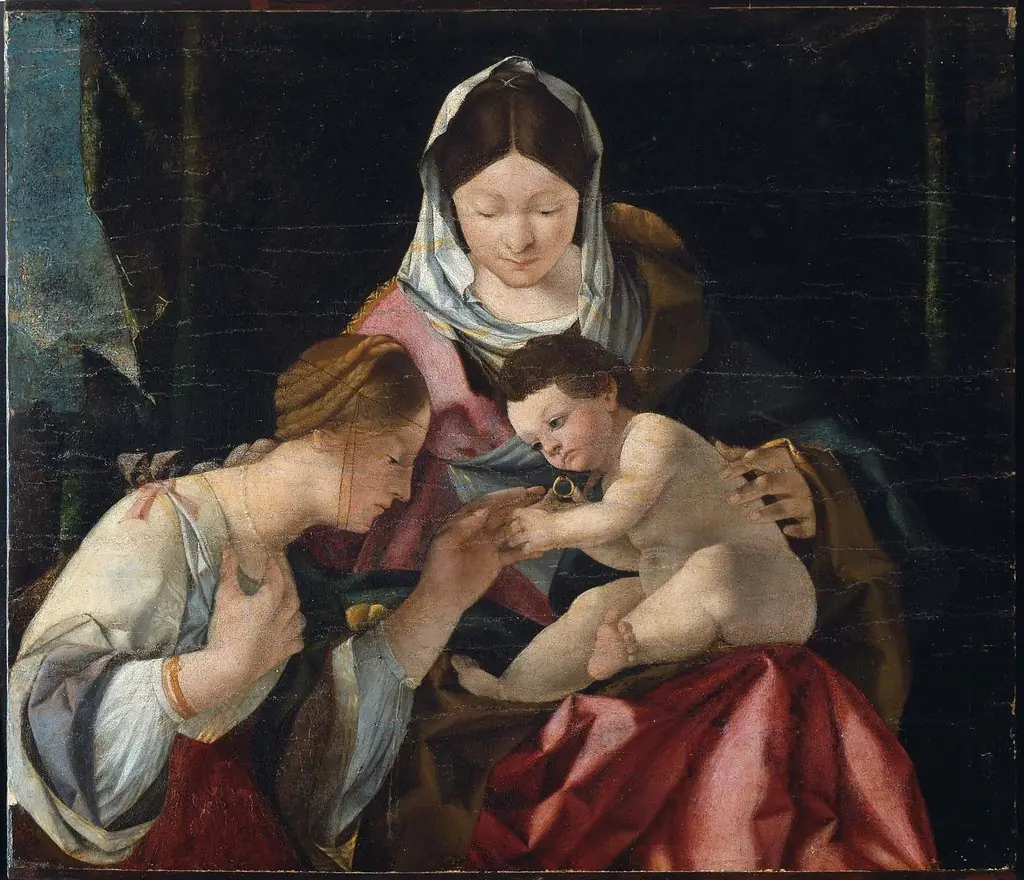 The Mystic Marriage of Saint Catherine
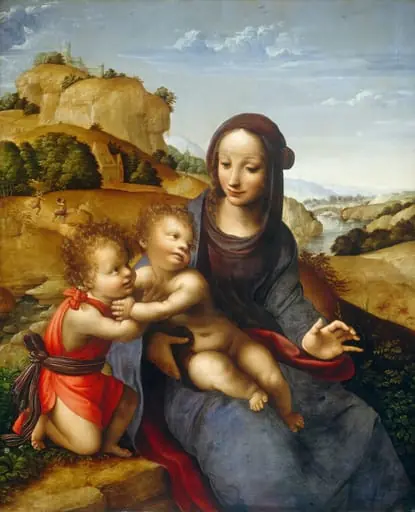 Madonna and Child with the Infant Saint John
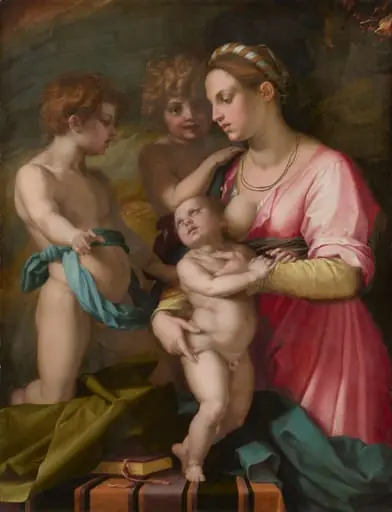 Charity
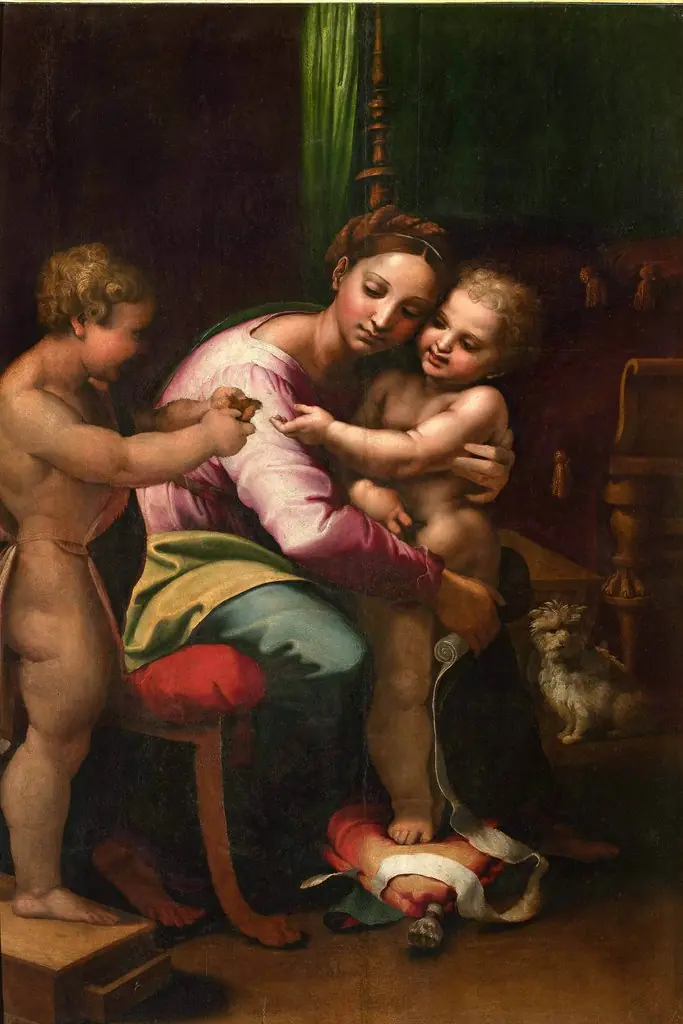 Madonna and Child with The Infant Saint John the Baptist
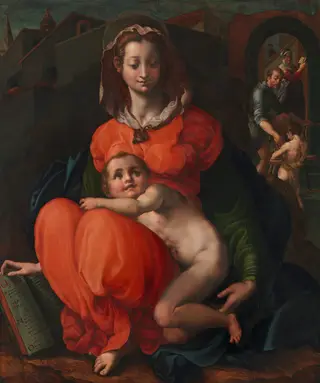 Maria mit dem Kinde (Werkstatt)
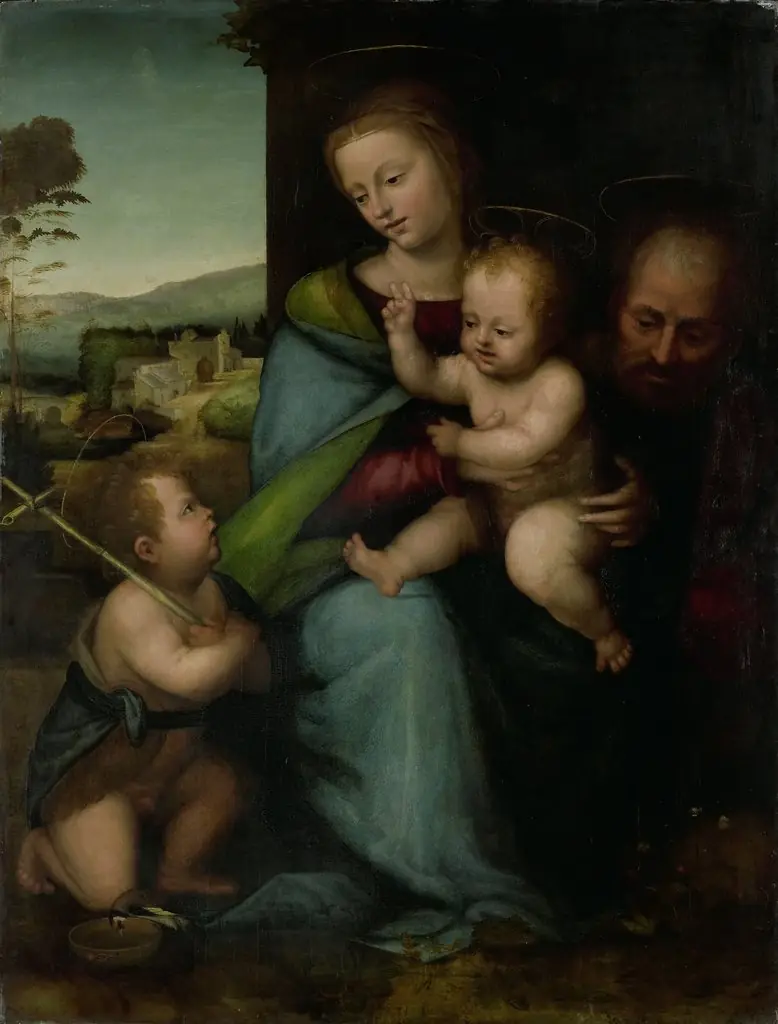 The Holy Family with the Infant John the Baptist
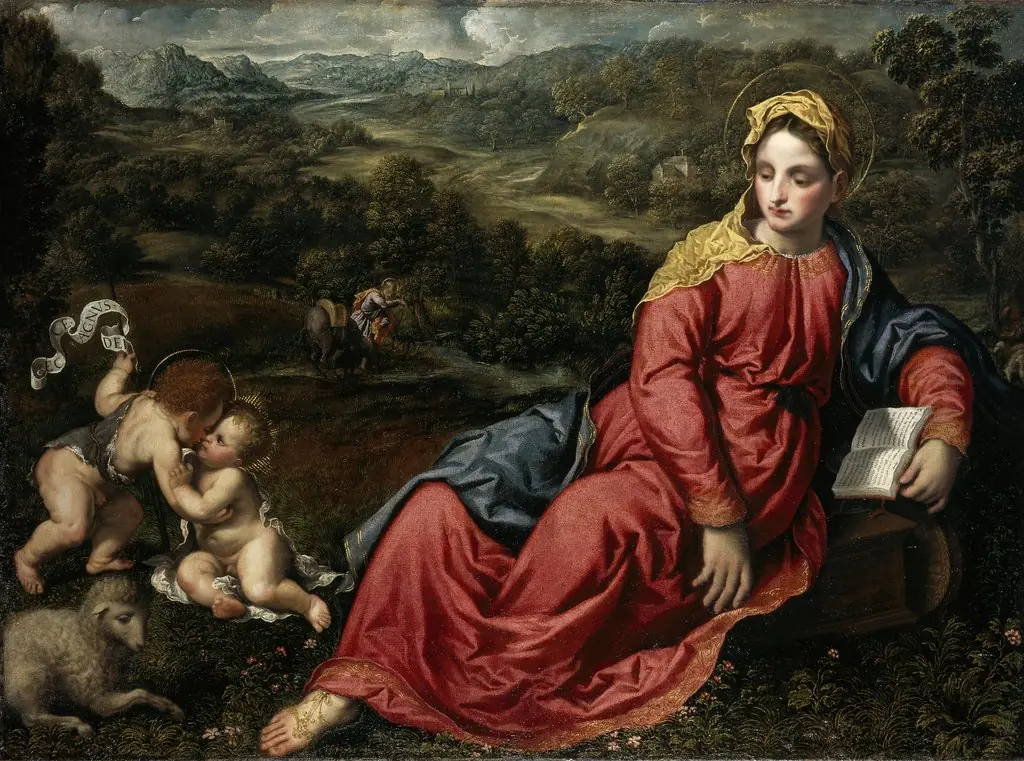 The Rest on the Return from Egypt