Artwork
Virgin of the Stairs
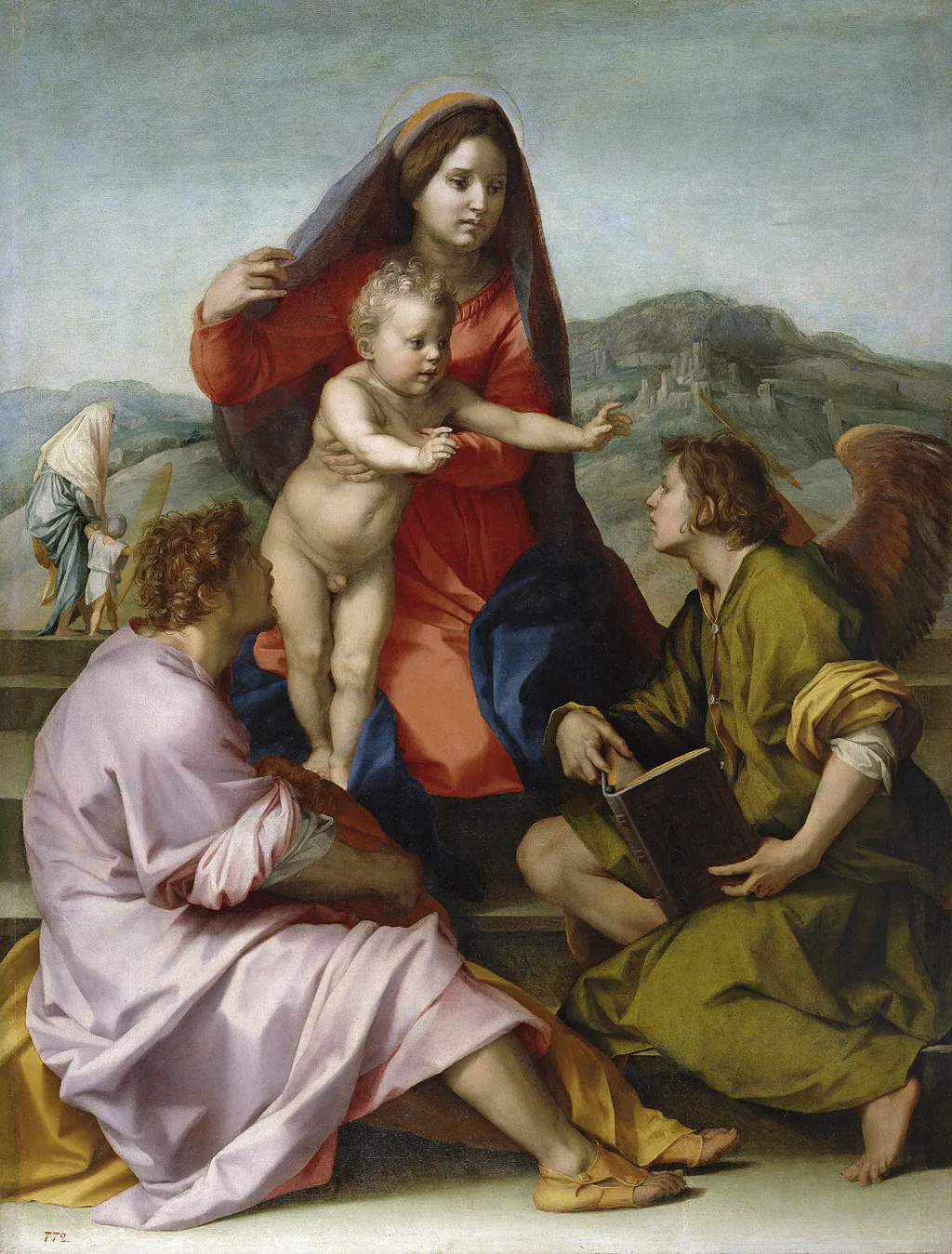
Virgin of the Stairs is an oil painting by the High Renaissance artist Andrea del Sarto. It dates from 1522 and is held in the collection of the Museo del Prado.
About this work
Subject & Meaning
In the background, a woman and child walk away from a fortified city, representing the Flight into Egypt and the Massacre of the Innocents.
The Virgin of the Stairs depicts the Virgin Mary kneeling on a staircase while holding the Christ Child, who stands on a higher step. A billowing veil frames her head and upper body, lending a sense of movement and grace. At her feet are the apostle Matthew, identifiable as the patron saint of bankers, and an angel.
In the background, a woman and child walk away from a fortified city, representing the Flight into Egypt and the Massacre of the Innocents. A secondary scene shows the Virgin and Child seated on the steps of a pagan temple during the journey, an episode drawn from the apocryphal Pseudo-Matthew Gospel. The composition builds a pyramidal structure, echoing High Renaissance models by Raphael and Michelangelo while integrating them into del Sarto's balanced idiom.
Technique & Style
The work is executed in oil on a wooden panel measuring 177 × 135 cm, dated to 1522–1523. The paint layer shows numerous pentimenti; infrared examination revealed an early version of the Christ Child holding a lamb that was later altered to a book, indicating revisions during execution. The composition follows a pyramidal arrangement, with the Virgin seated on a stair, cradling the infant while a veil caught by wind is steadied with one hand.
Stylistically the figure of the Virgin recalls Raphael's Madonna di Foligno, and the robust presence of Saint Matthew evokes Michelangelo's Sistine Chapel figures, though these references are integrated into Andrea del Sarto's balanced High Renaissance manner.
History & Provenance
Commissioned by the banker Lorenzo di Bernardo Jacopi, this oil on panel was created circa 1522–1523. The inclusion of Saint Matthew, the patron saint of bankers, directly references the patron's profession. By the early seventeenth century, the painting belonged to the Gonzaga family in Mantua.
In 1627, it was sold to King Charles I of England as part of a larger collection. Following the monarch's execution and the subsequent dispersal of his holdings, the Spanish ambassador Alonso de Cárdenas acquired the work for Luis de Haro y Guzmán, the 6th Marquis of Carpio, who gifted the painting to the royal collection of Philip IV of Spain. The artwork entered the Museo del Prado in 1819, having been transferred from the monastery of El Escorial.
Context
Painted by Andrea del Sarto around 1522–1523, the Virgin of the Stairs is a High Renaissance oil on panel now in the Museo del Prado. It was commissioned by the banker Lorenzo di Bernardo Jacopi, whose profession explains the inclusion of Saint Matthew, formerly a Roman tax collector. The panel entered the Spanish royal collections in the seventeenth century via the Gonzaga family, Charles I of England, and the Marquis del Carpio, before arriving at the Prado in 1819 from El Escorial.
Stylistically, the composition follows the classic pyramidal structure and assimilates references to Raphael, the veiled Virgin echoes the Madonna di Foligno, and to Michelangelo, whose monumental figures in the Sistine Chapel lunettes inform the figure of Saint Matthew. These citations are absorbed into Andrea del Sarto's own balanced idiom. Infrared analysis has revealed extensive revisions, including the substitution of a book for an originally intended lamb held by the Christ Child.
Legacy
The work's artistic reputation is defined by its synthesis of High Renaissance masters through its pyramidal composition, which integrates references to Raphael and Michelangelo. The Virgin's wind-swept veil echoes Raphael's Madonna di Foligno, while the monumental figure of Saint Matthew recalls the frescoes of the Sistine Chapel. These influences are skillfully amalgamated into Andrea del Sarto's own balanced style.
Historically, the painting's legacy is marked by its prestigious provenance within European royalty. It entered the Gonzaga collection in Mantua before being sold to King Charles I of England in 1627. Following the execution of the monarch in 1649, the work was acquired by the Spanish ambassador Alonso de Cárdenas for Luis de Haro, eventually entering the Spanish royal collection as a gift from the Marquis del Carpio.
Since 1819, it has been housed in the Museo del Prado, having originated from the monastery of El Escorial.
Overview
Andrea del Sarto's "Virgin of the Stairs," painted in oil in 1522, is a High Renaissance work. This religious painting depicts the Virgin Mary and Christ Child, surrounded by other figures, and is currently housed at the Museo del Prado. It exemplifies the period's focus on devotional imagery and classical influences.
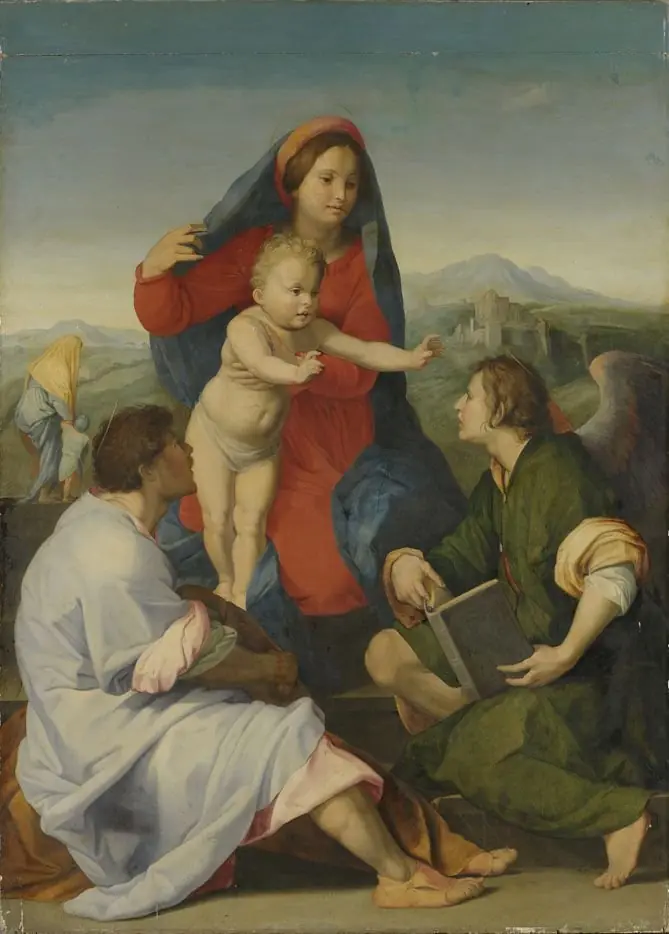
Own this work as a print
Artist & collection
Artist
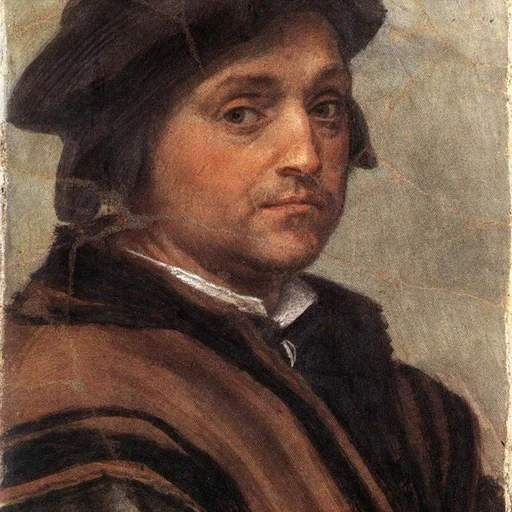
Andrea del Sarto was an Italian painter from Florence, whose career flourished during the High Renaissance and early Mannerism.

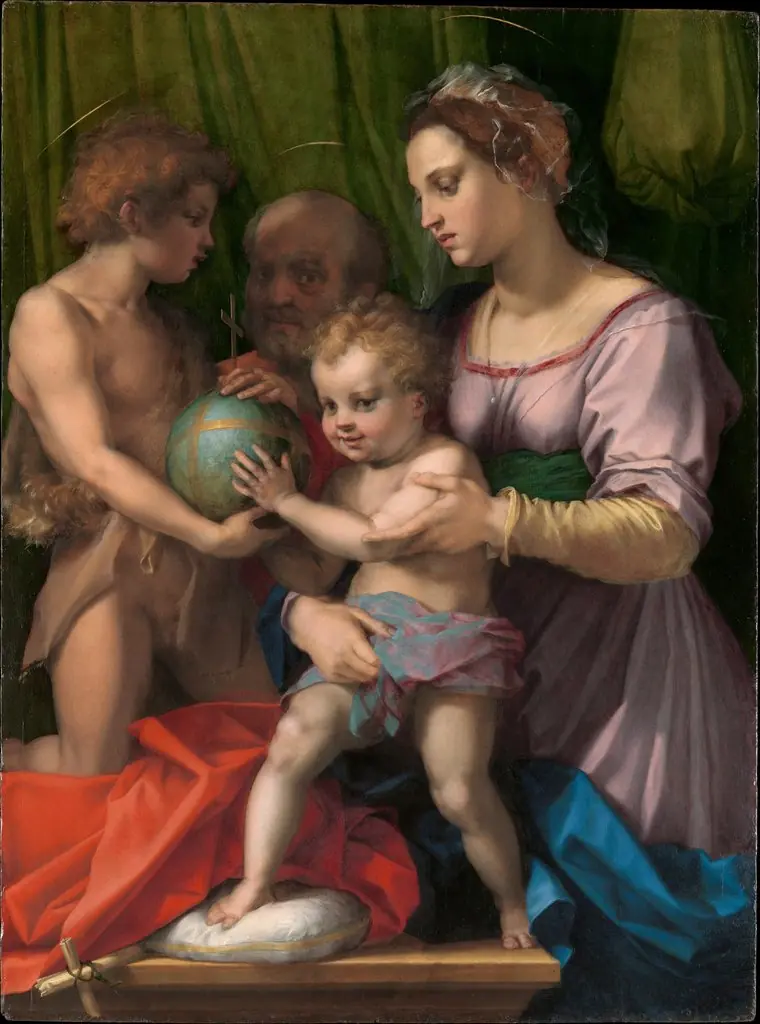
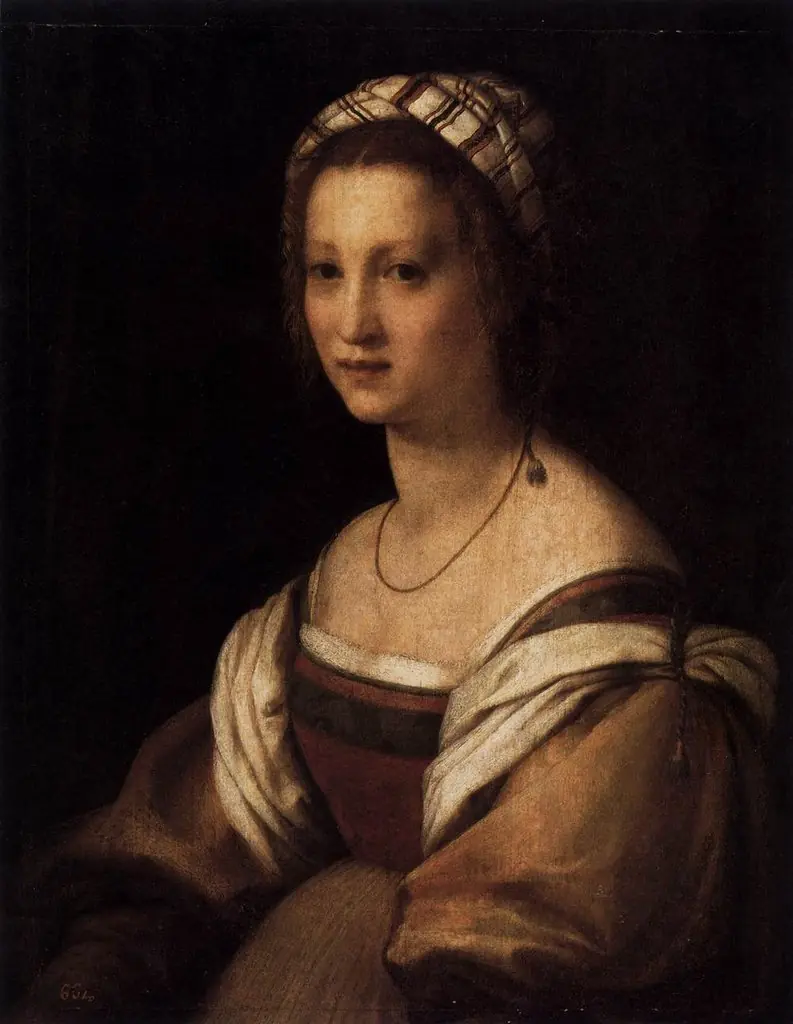
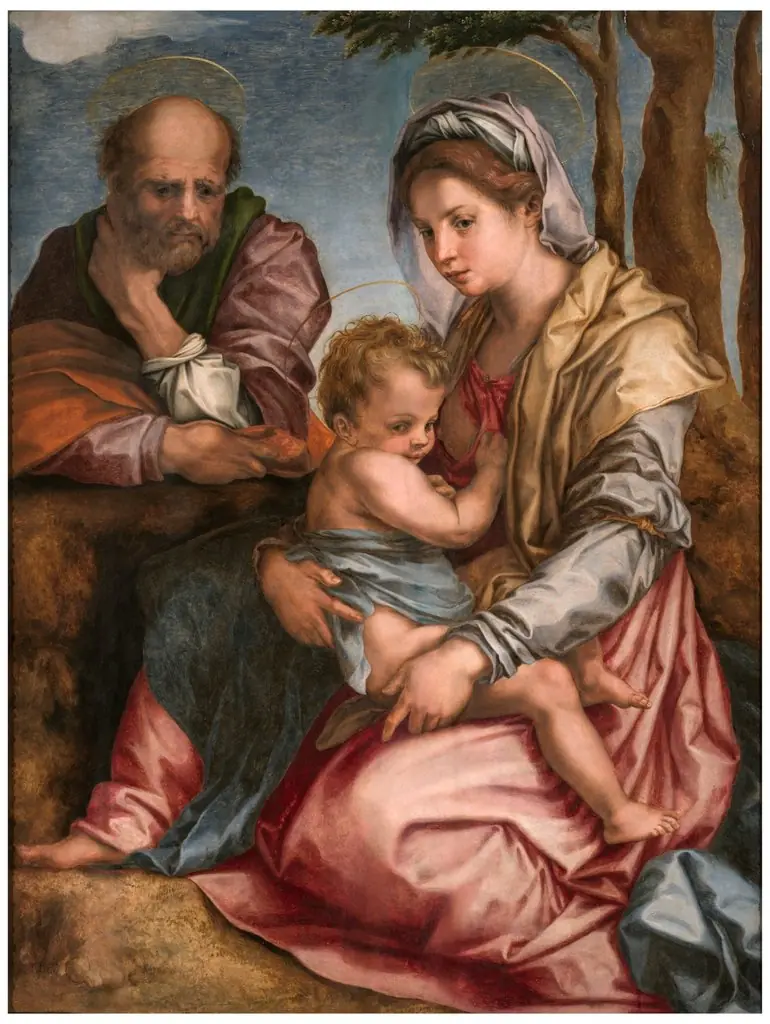
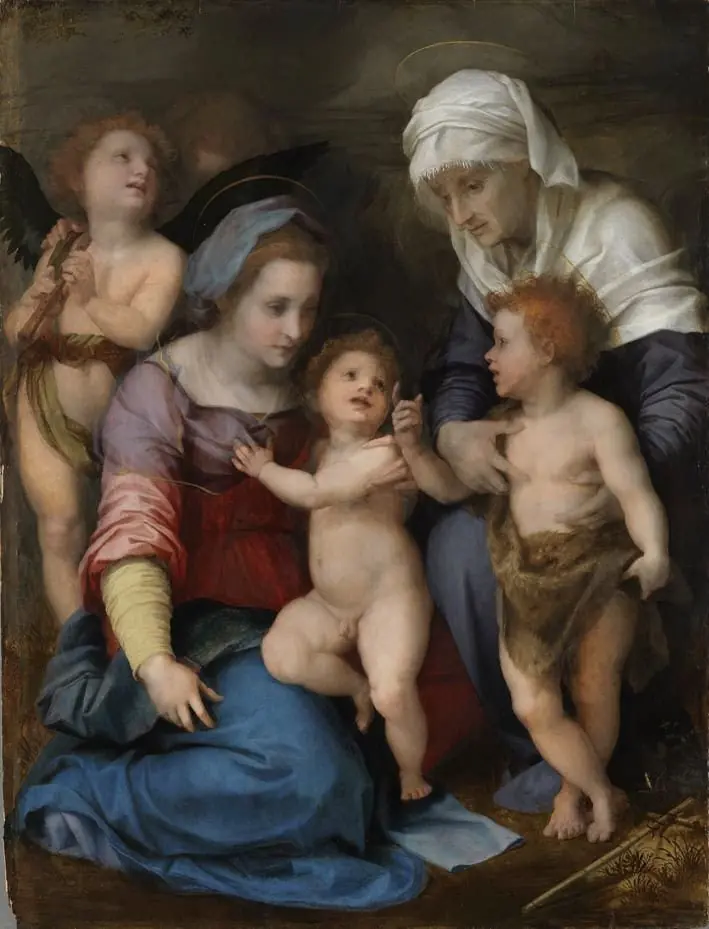
- Holy family
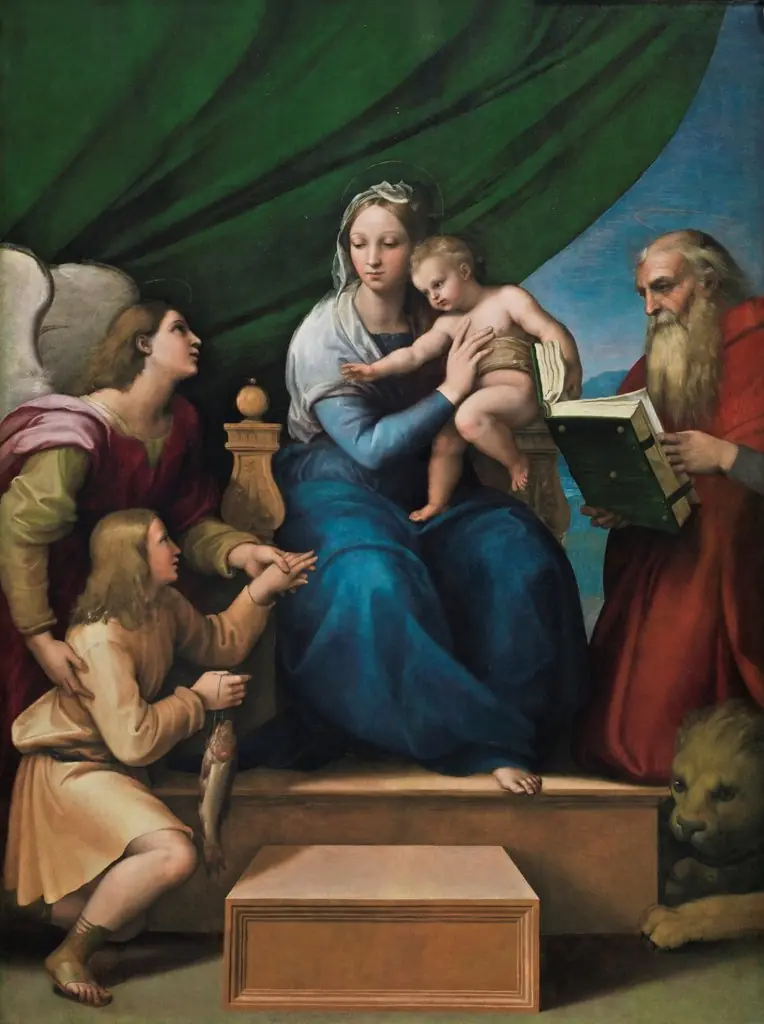 Madonna with the Fish
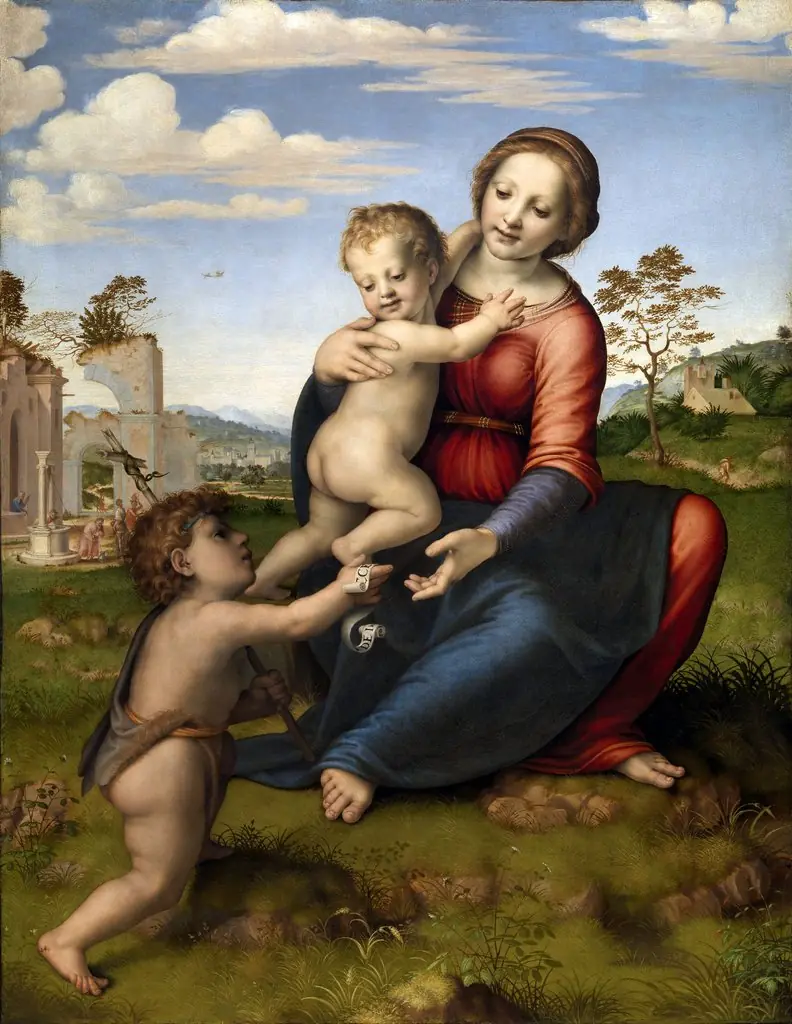 Madonna of the Well or Madonna and Child with the young St. John the Baptist
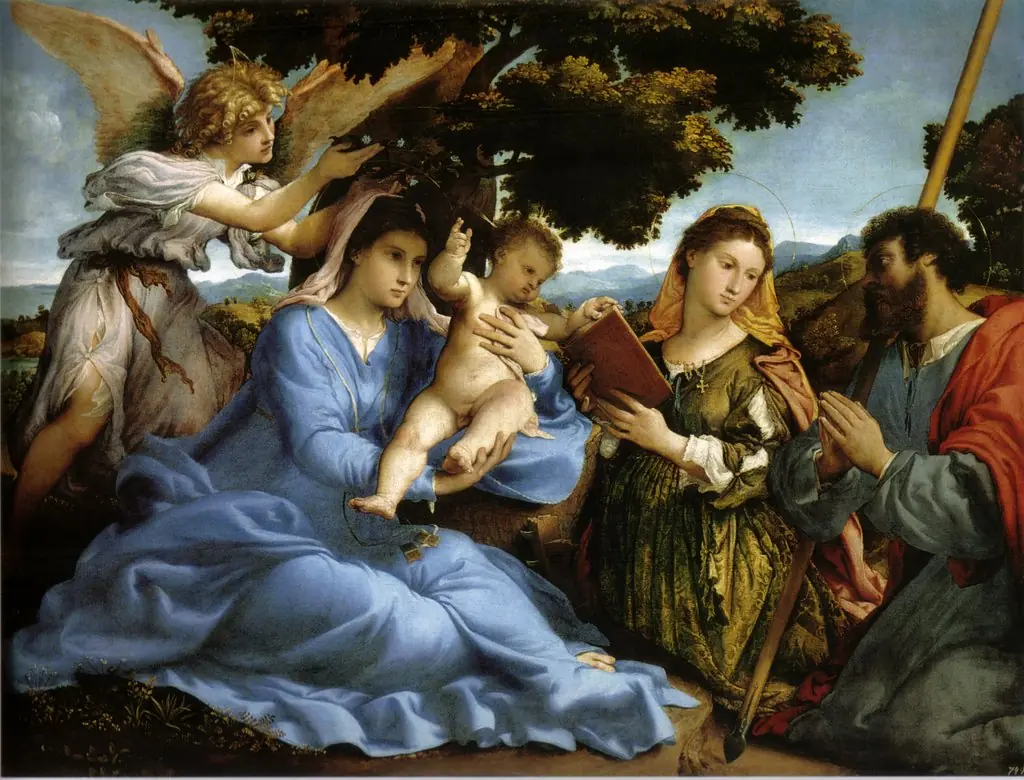 Madonna and child with Saint Catherine, Saint James the Greater, and an angel
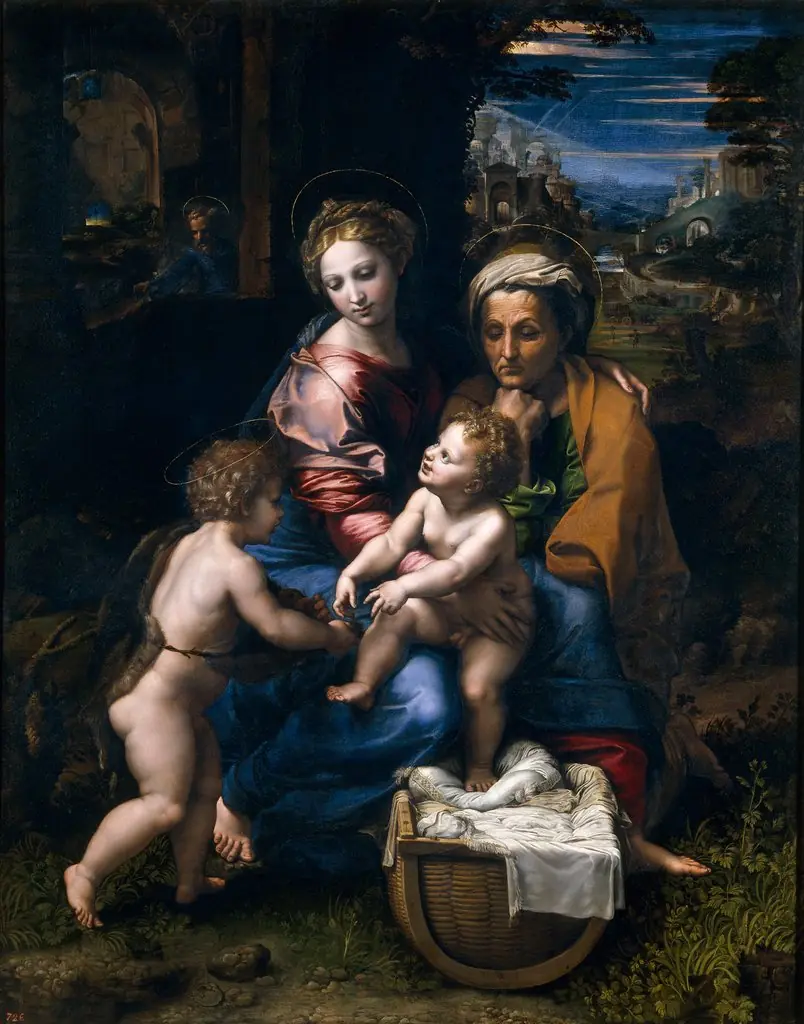 The Holy Family
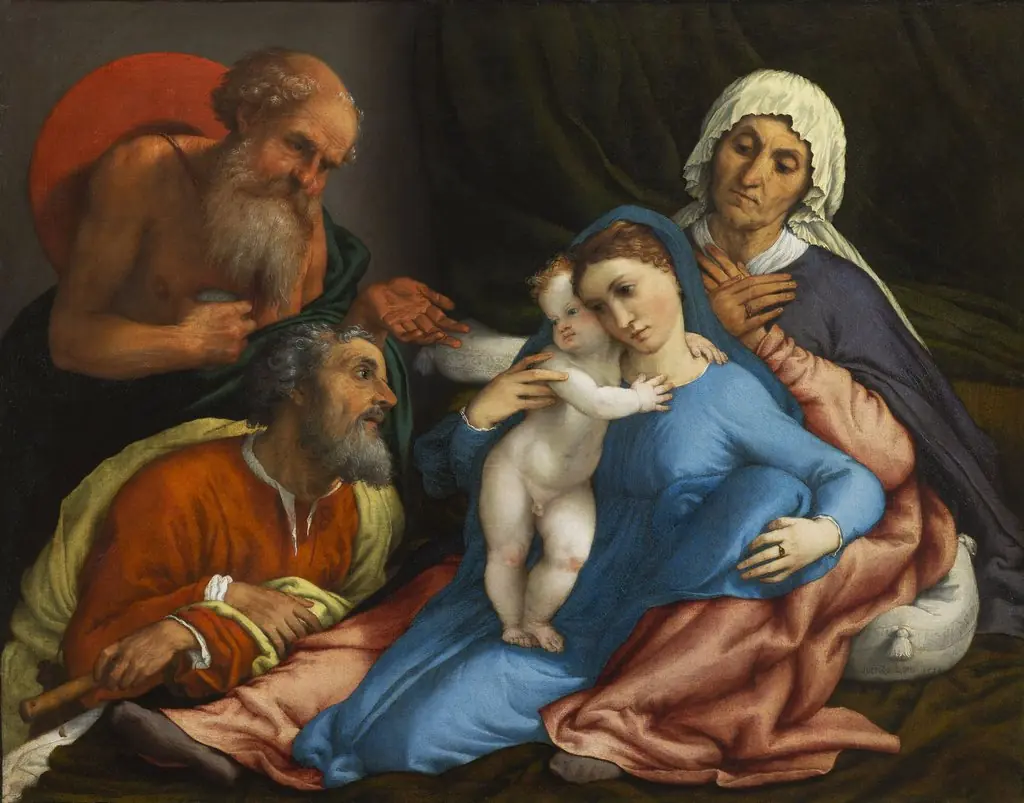 Madonna and Child with Saints
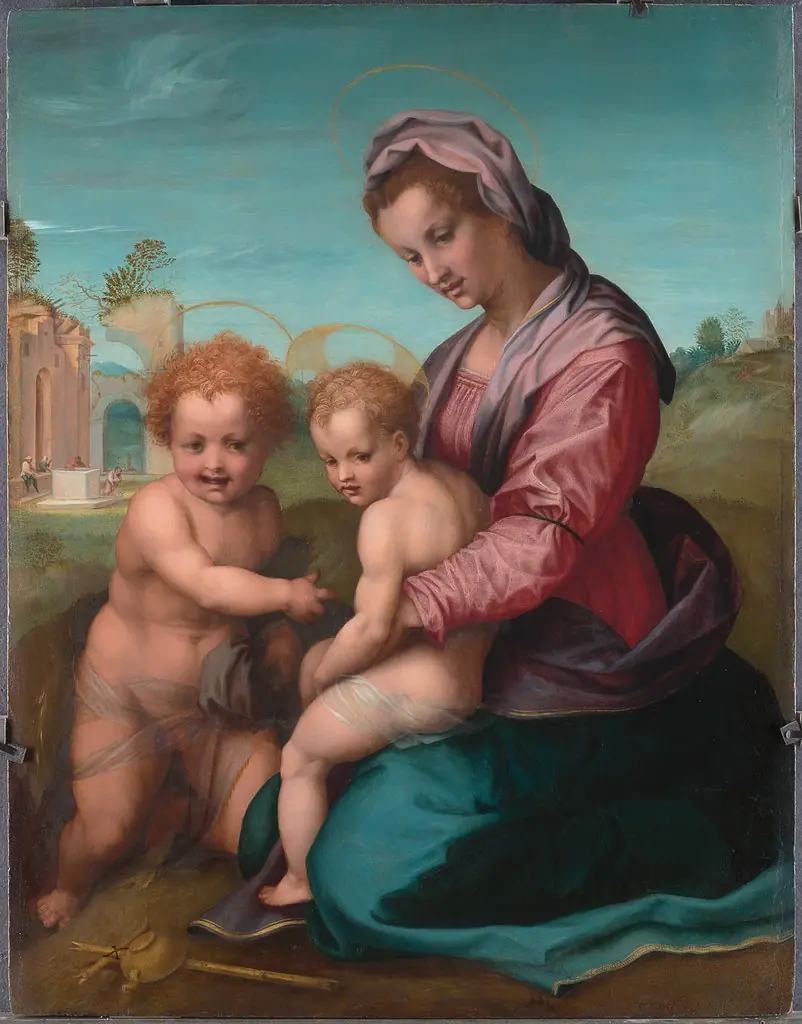 Madonna and Child with John the Baptist
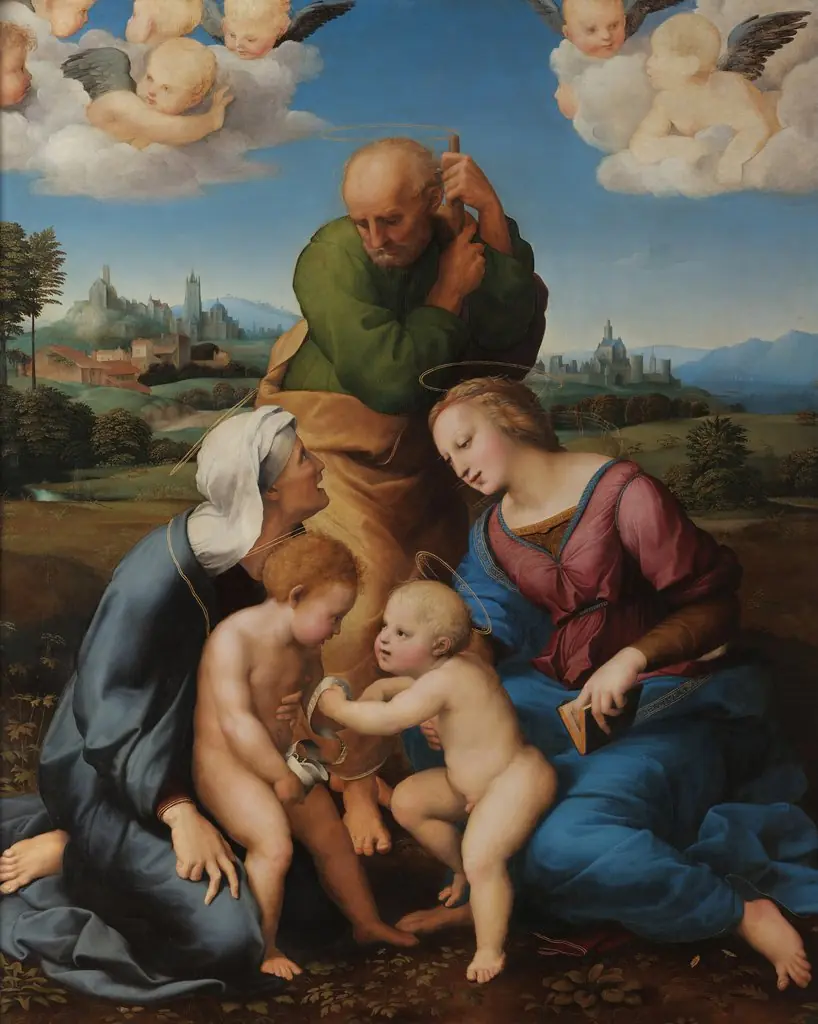 Canigiani Holy Family
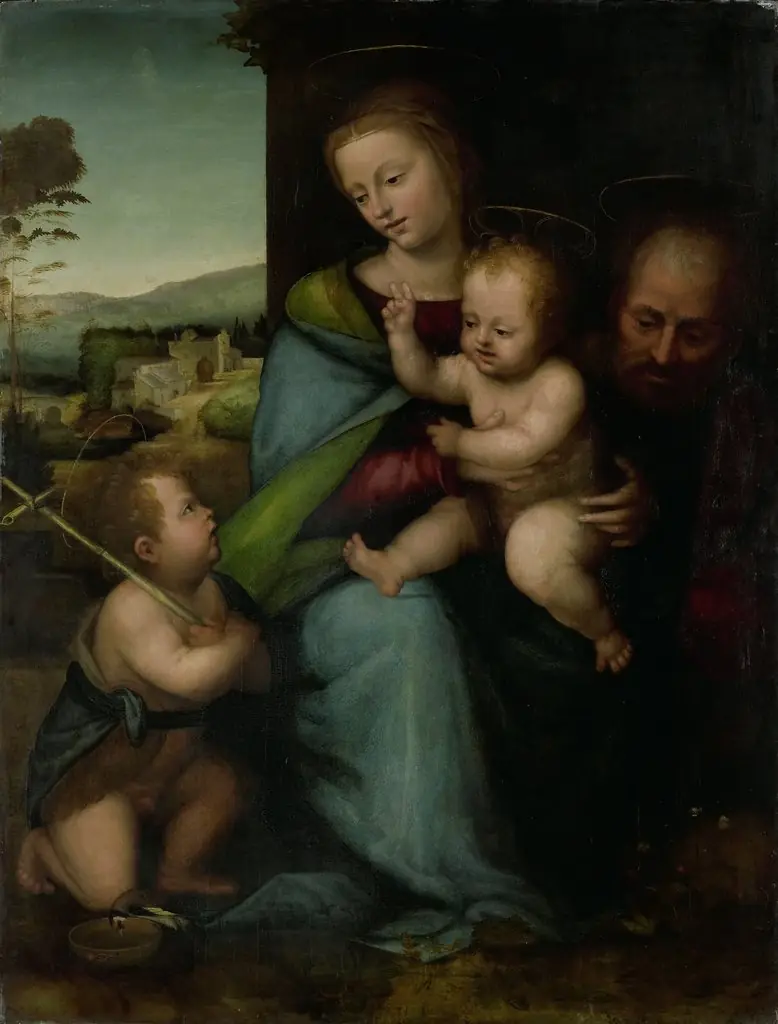 The Holy Family with the Infant John the Baptist
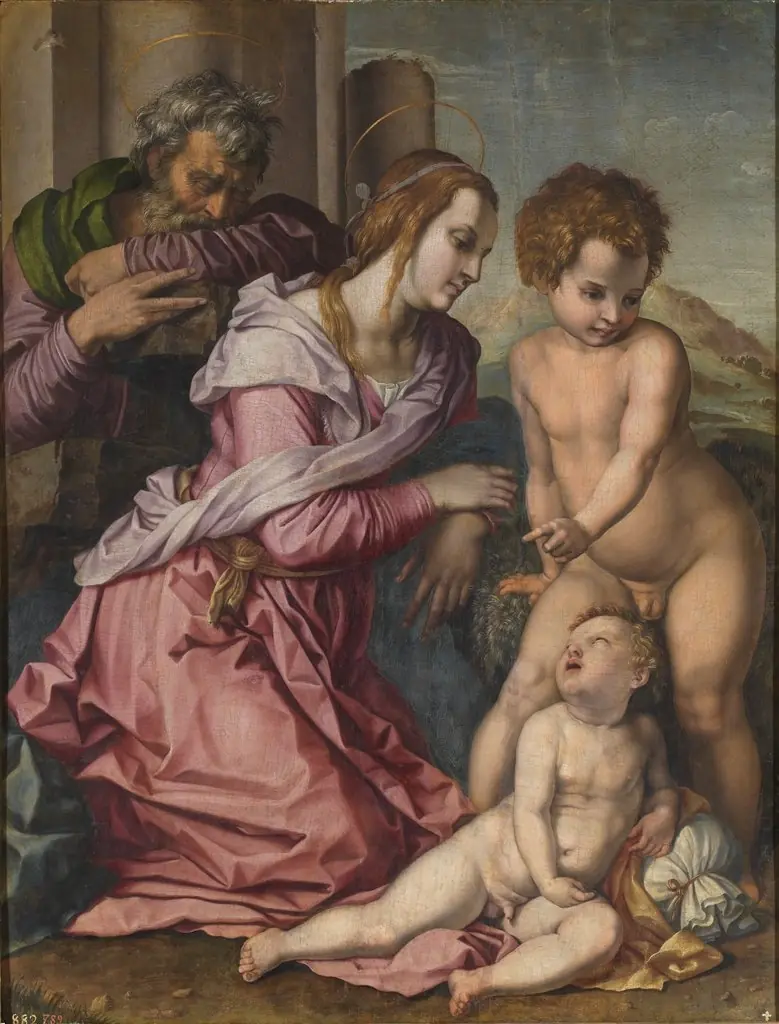 The Holy Family with the Infant Saint John the Baptist
 Madonna and Child
 Holy Family with the Mystic Marriage of Saint Catherine