Artwork
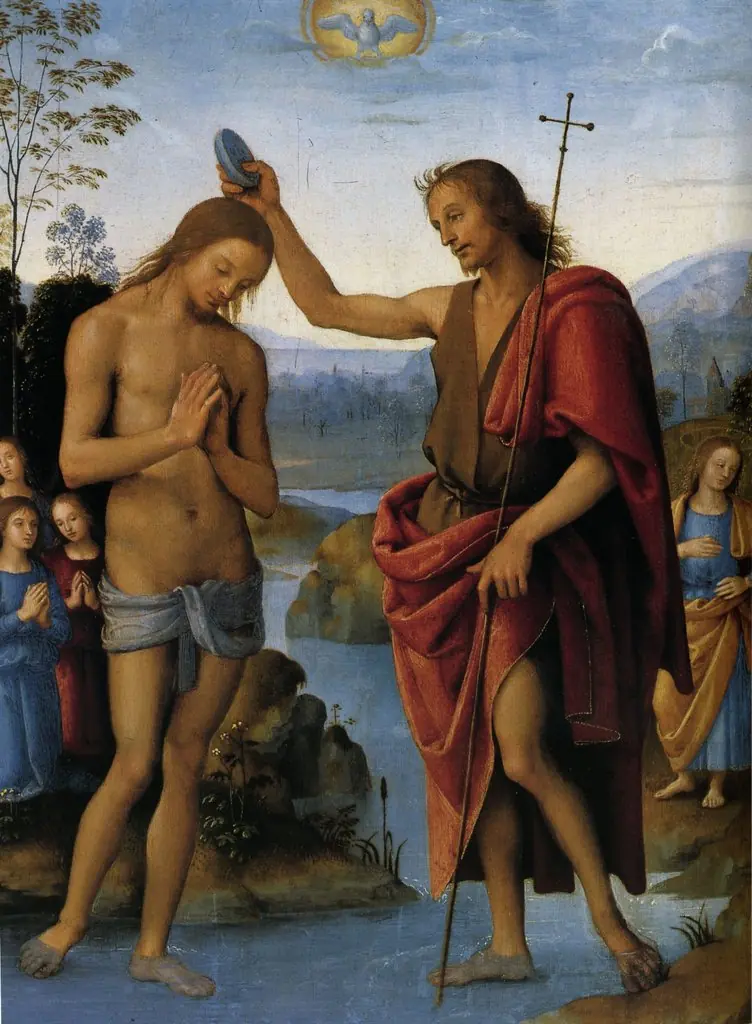
The Baptism of Christ
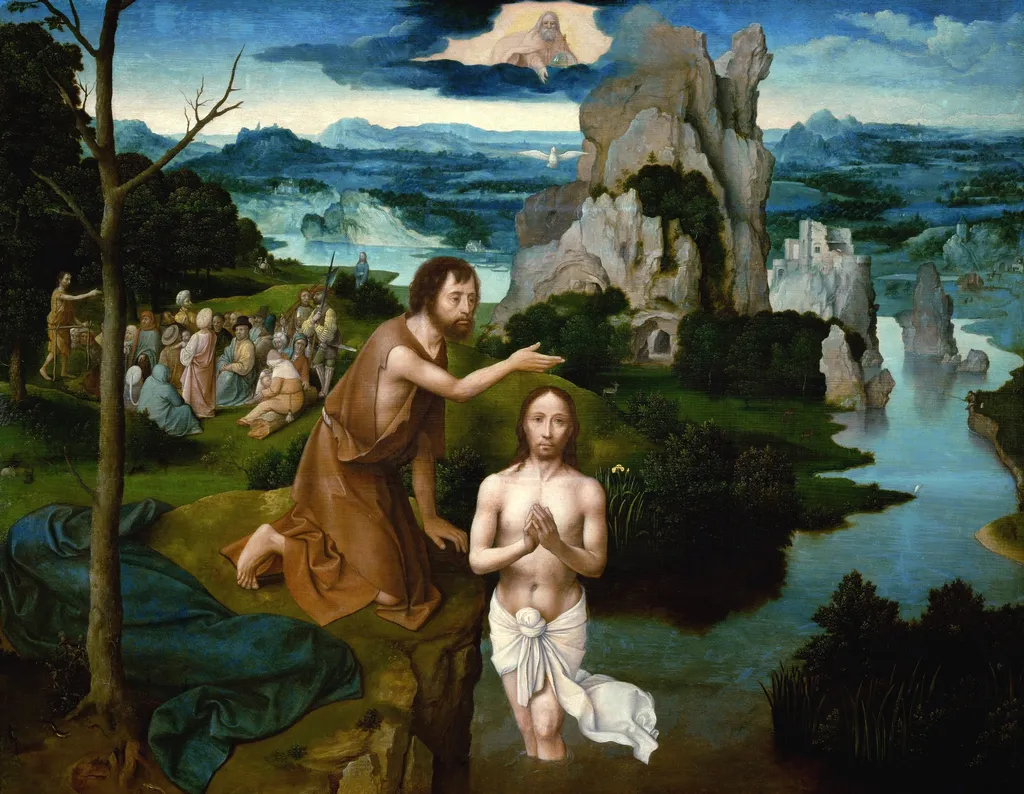
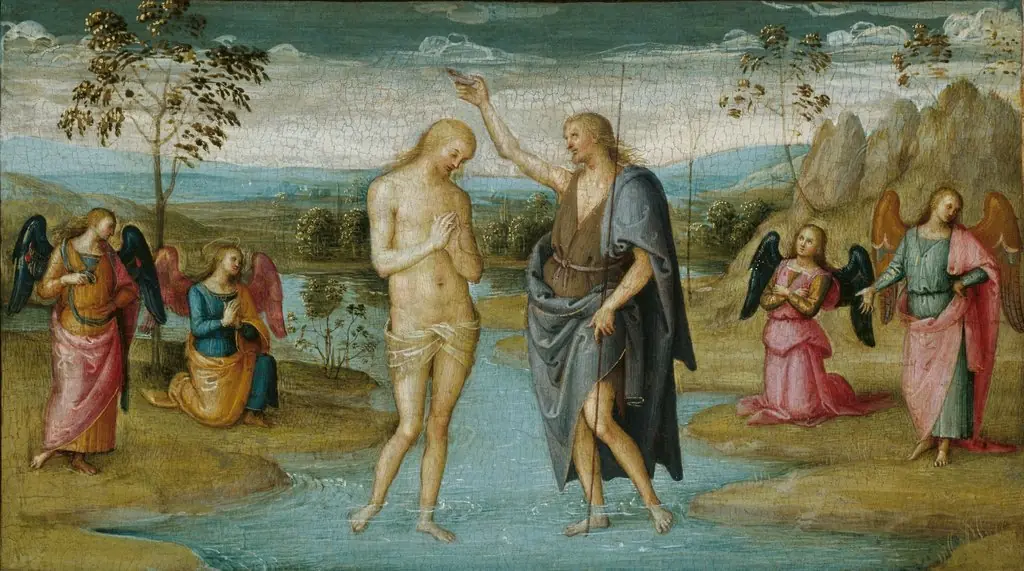
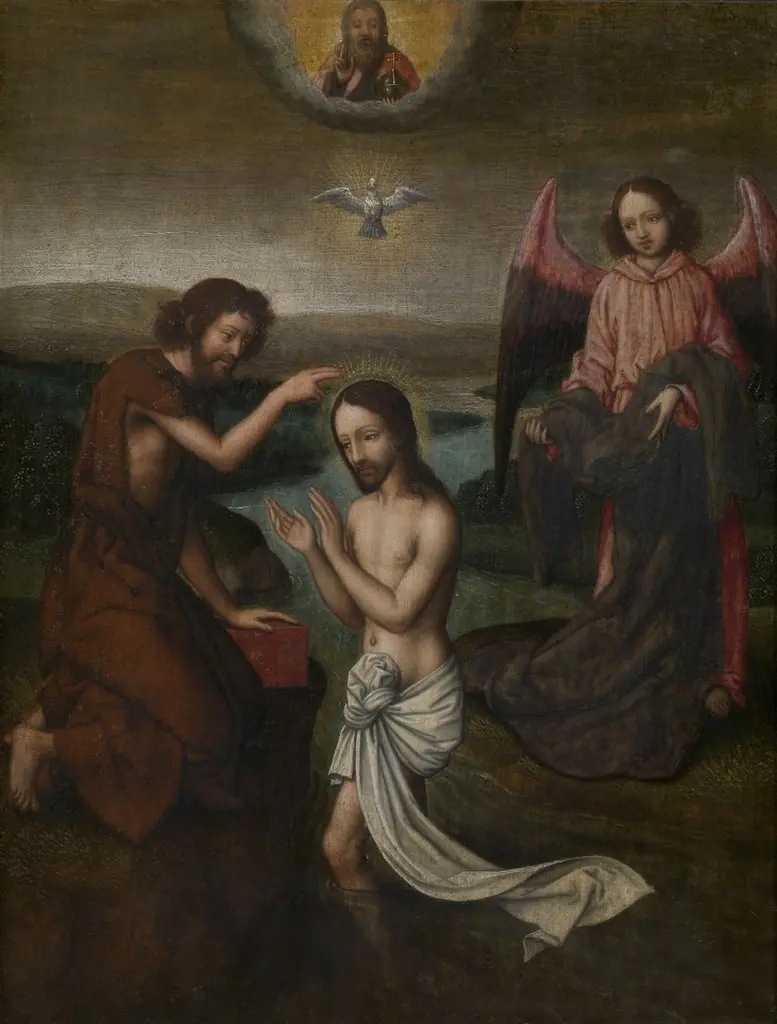
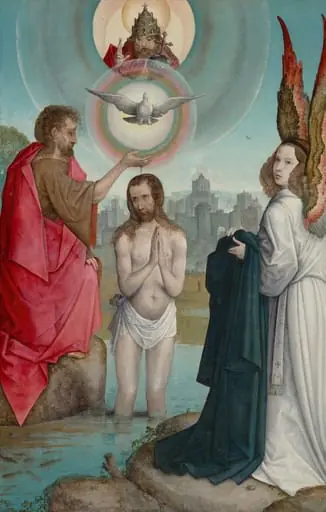
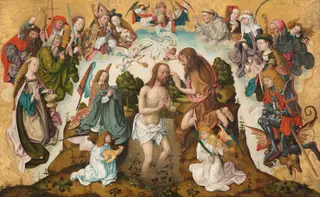
The Baptism of Christ is an oil painting by the Northern Renaissance artist Joachim Patinir. It dates from 1510 and is held in the collection of the Kunsthistorisches Museum.
About this work
This painting shows Jesus being baptized by John the Baptist. It’s an oil on wood piece from around 1515 by Flemish artist Joachim Patinir.
Patinir liked to paint wild landscapes behind religious scenes. This one keeps the focus on the holy moment but adds nature all around.
Its home is the Kunsthistorisches Museum in Vienna. Take a look at their Northern Renaissance collection next.
Subject & Meaning
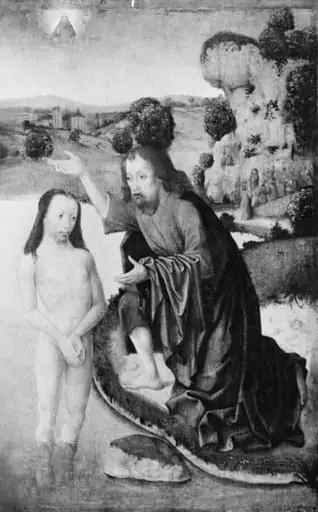
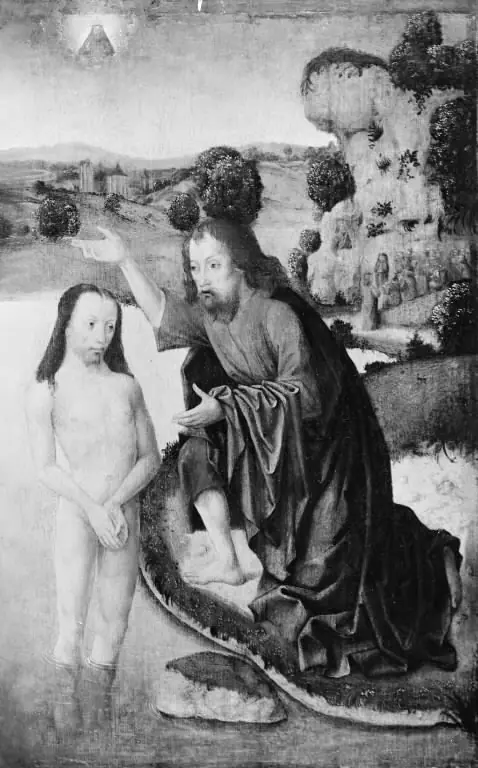
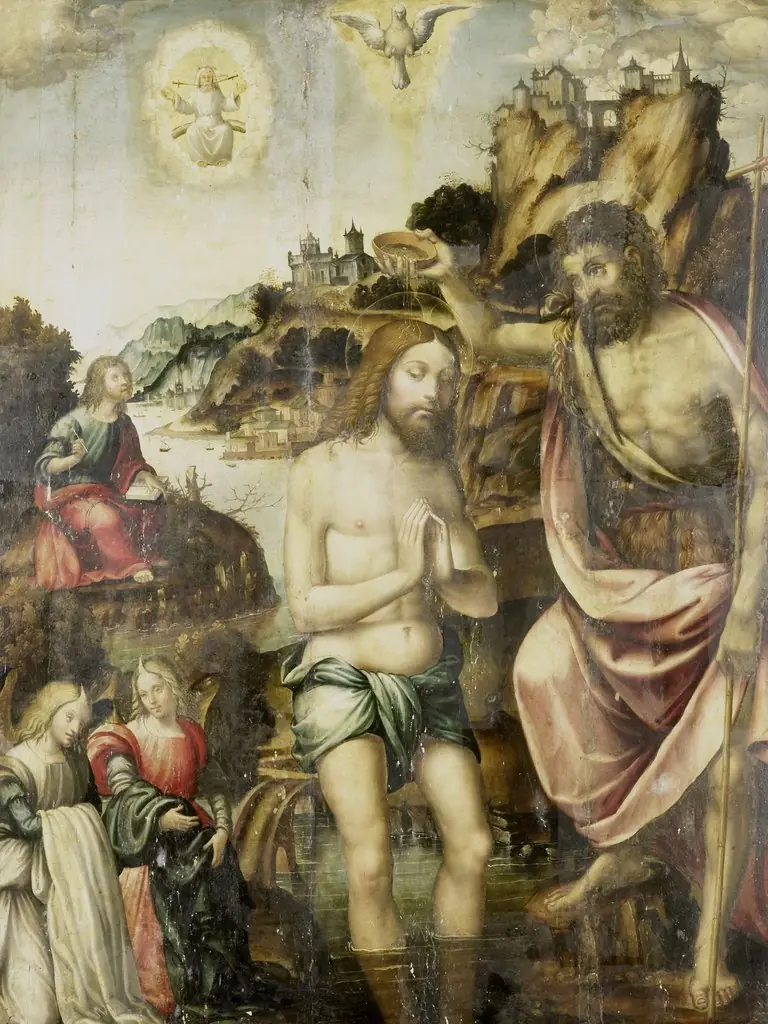
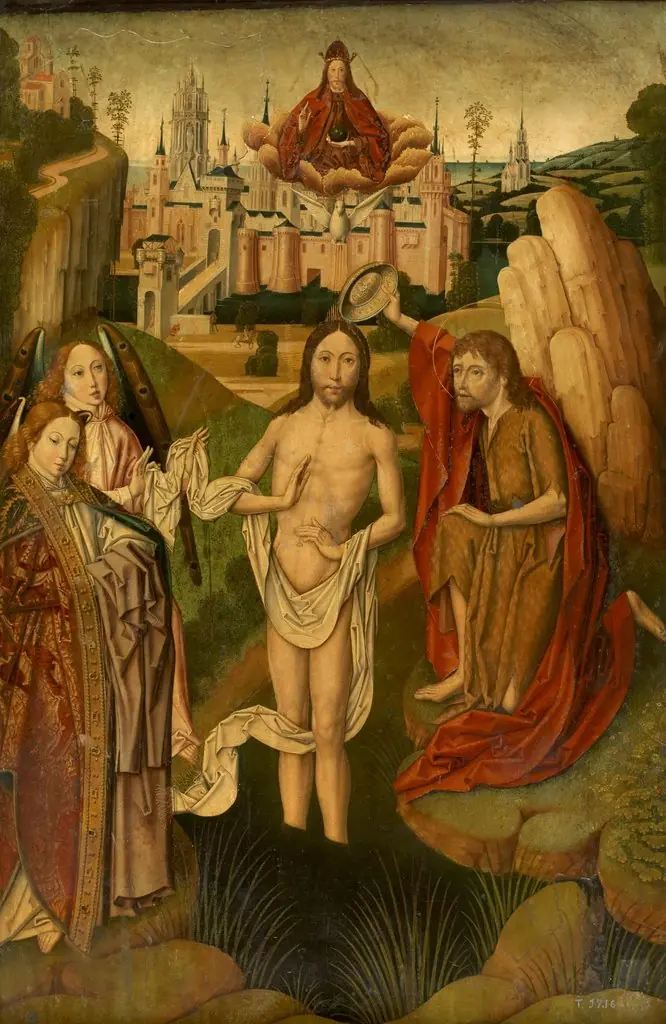
John, dressed in camel-hair robes and a leather belt, stands on the riverbank pouring water over the head of Jesus, who stands in the Jordan.
The painting depicts the biblical episode of the Baptism of Christ by John the Baptist as recounted in Matthew 3:13-17. John, dressed in camel-hair robes and a leather belt, stands on the riverbank pouring water over the head of Jesus, who stands in the Jordan. Above them a white dove descends to represent the Holy Spirit, while God the Father appears in clouds issuing the declaration “This is my son, whom I love; with him I am well pleased.” Patinir situates the sacred scene within a sweeping Flemish landscape, using a muted palette of greys, greens, and blues to create a luminous yet somber atmosphere. The composition balances the religious narrative with an innovative, almost autonomous landscape that would influence later Netherlandish painters such as Henri Bles.
History & Provenance
The Baptism of Christ was created around 1515 by the Flemish Renaissance painter Joachim Patinir. It was painted on oak wood using oil paint and originally entered the collection of Archduke Leopold Wilhelm of Austria in 1659. The work was subsequently acquired by the Kunsthistorisches Museum in Vienna, where it remains on display. The painting measures 59.7 cm in height and 76.3 cm in width.
Context
Within Joachim Patinir's output, The Baptism of Christ stands as an early example of his integration of a biblical narrative into an expansive landscape, a compositional strategy that shaped the evolution of Flemish landscape painting. The work is held to have directly influenced Patinir's first successor, the Antwerp-based painter Herri met de Bles, who carried forward the balance between religious episode and panoramic scenery. The figures of John the Baptist and Christ are rendered with coarse, almost archaic features that contrast with the vitality of the surrounding environment, a tension characteristic of Northern Renaissance practice. The painting's cool palette of grey, green, and especially blue produces a leaden, surreal luminosity typical of the period. Its later provenance included the collection of Archduke Leopold Wilhelm of Austria by 1659, before entering the holdings of the Kunsthistorisches Museum in Vienna, where it has been catalogued in standard museum guides.
Own this work as a print
Artist & collection

Artist
Joachim Patinir, also called Patenier, was a Flemish Renaissance painter of history and landscape subjects.

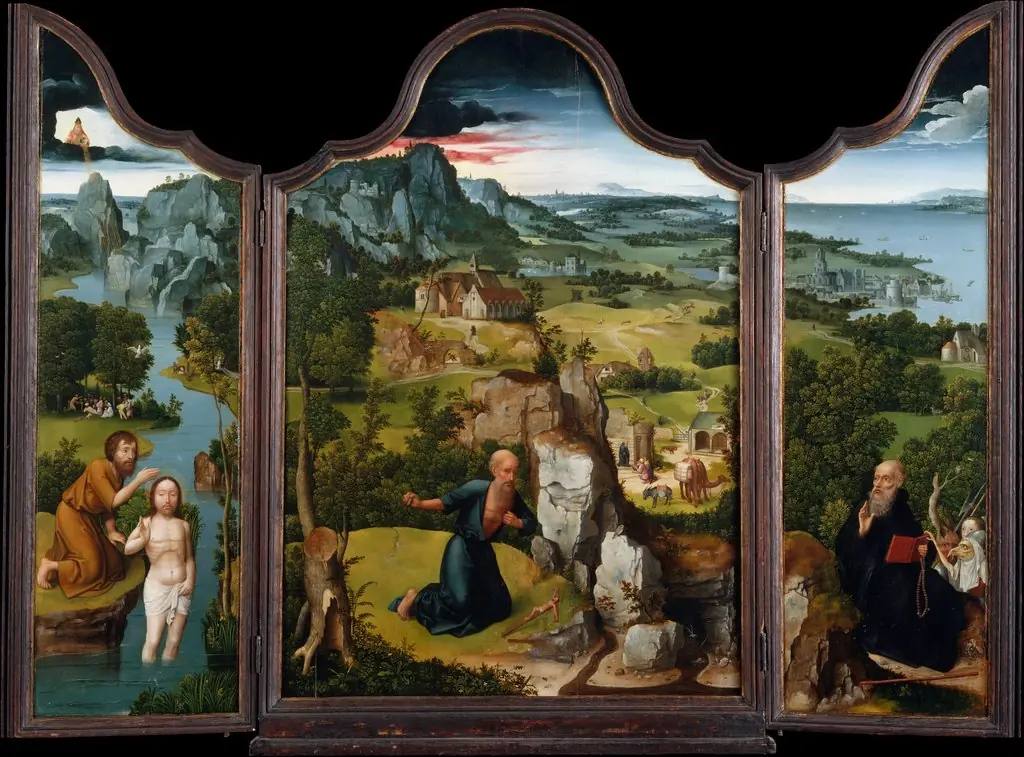 The Penitence of Saint Jerome
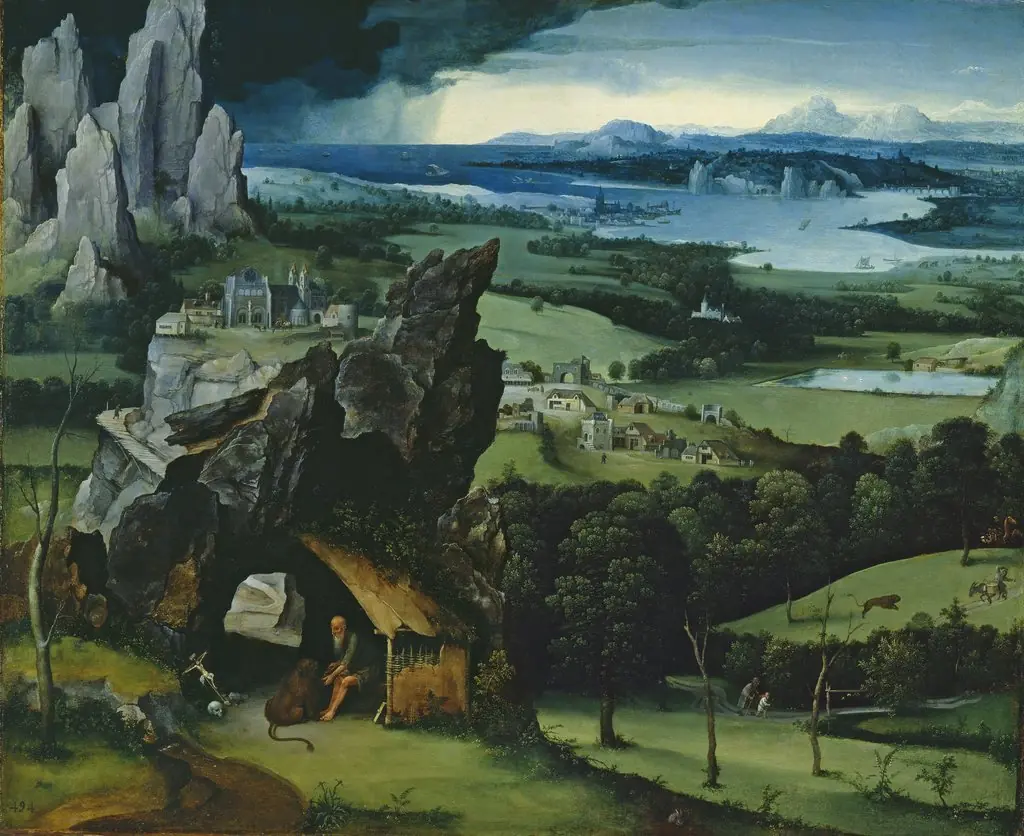 Landscape with St Jerome
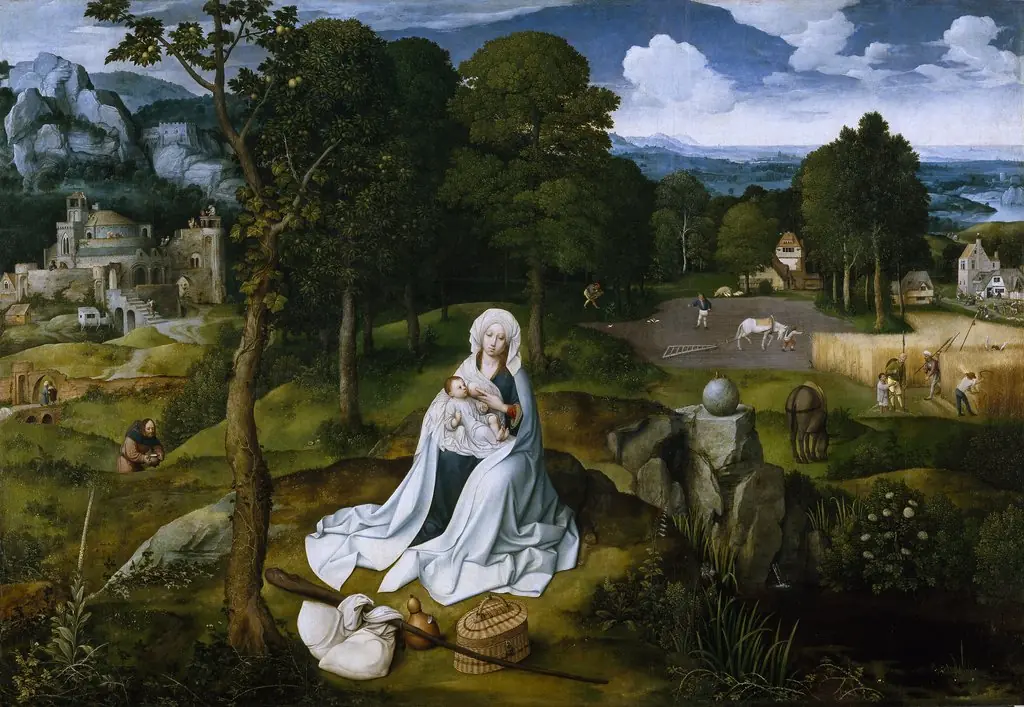 Rest during the Flight to Egypt
 Landscape with Charon Crossing the Styx
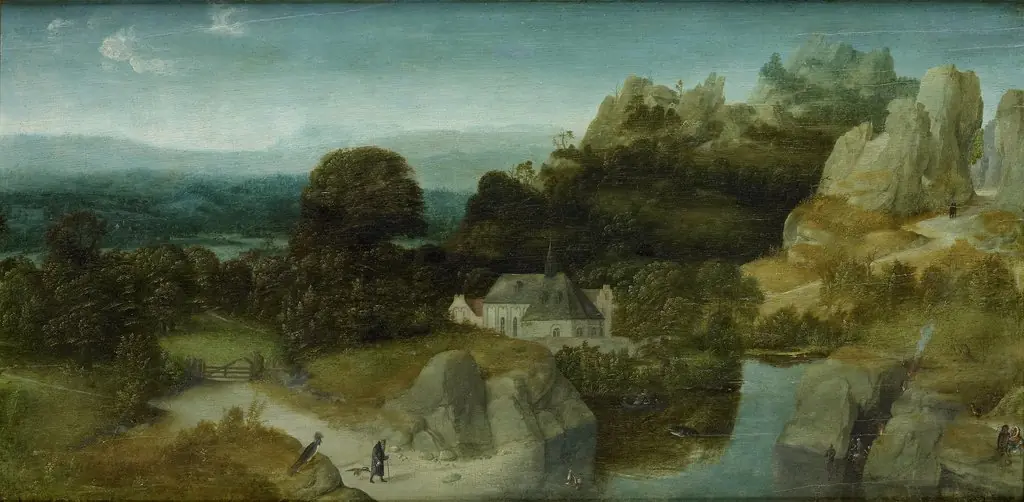 Landscape with the temptation of St Antony
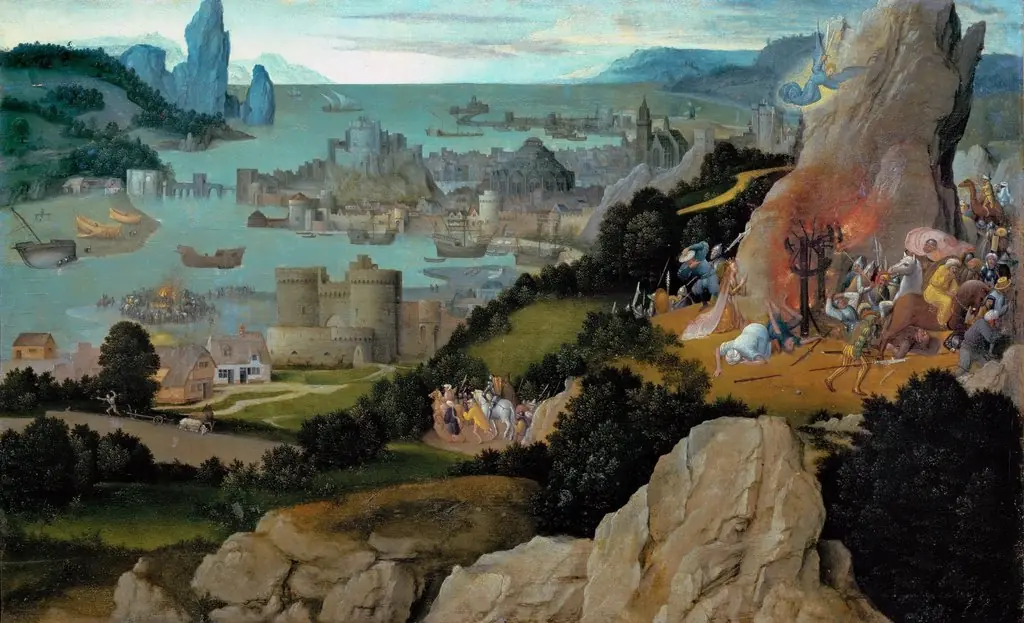 Martyrdom of Saint Catherine
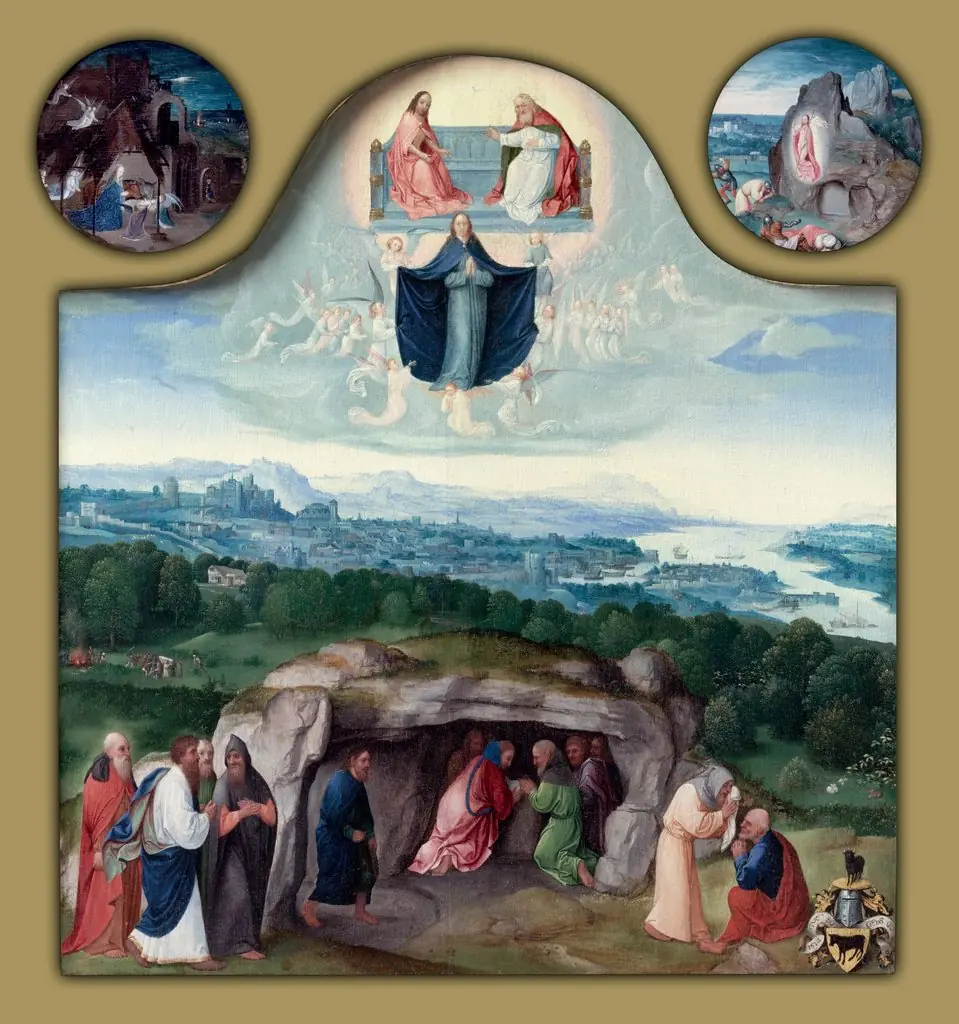 The Assumption of the Virgin, with the Nativity, the Resurrection, the Adoration of the Magi, the Ascension of Christ, Saint Mark and an Angel, and Saint Luke and an Ox
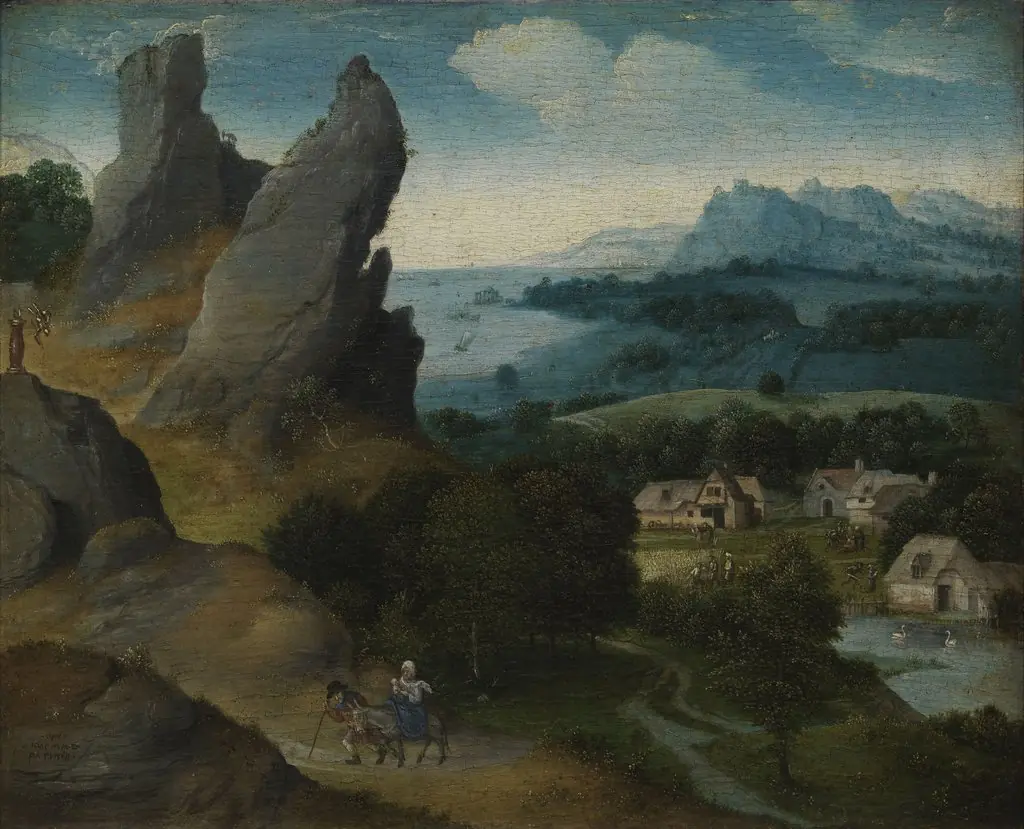 Landscape with the Flight into Egypt