Artwork
Actaeon is changed into a stag and killed by his own dogs
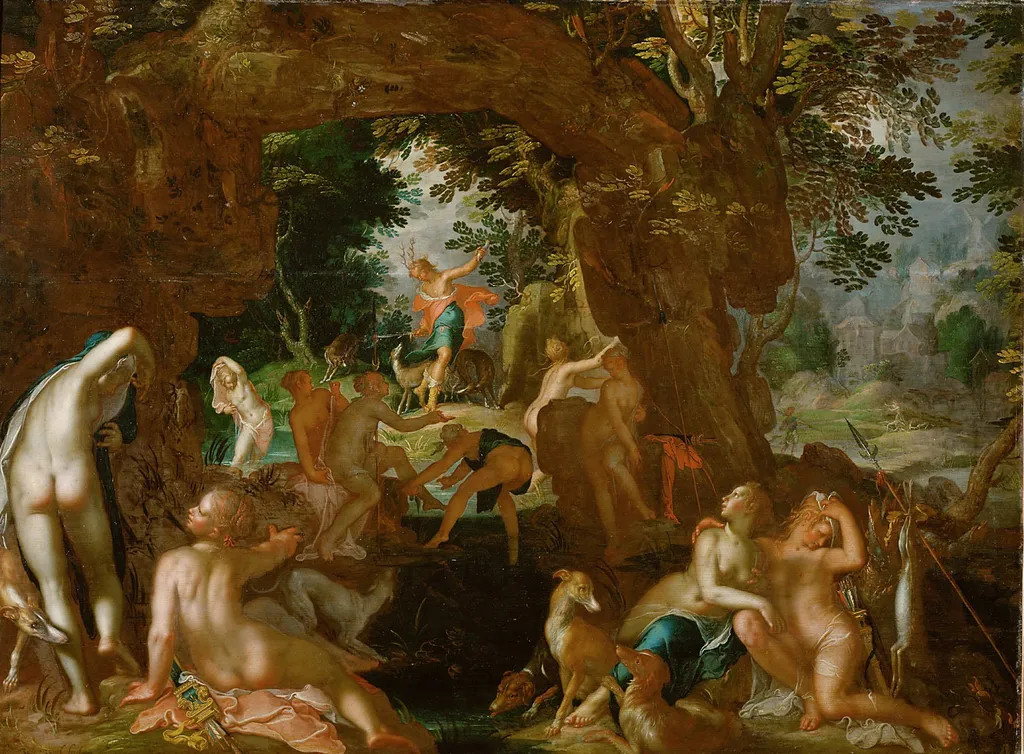
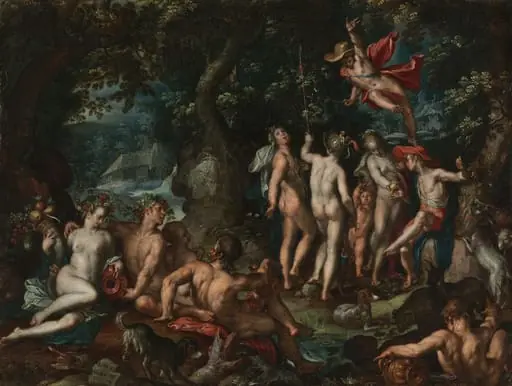
Actaeon is changed into a stag and killed by his own dogs is an oil painting by the Mannerist artist Joachim Wtewael. It dates from 1607 and is held in the collection of the Kunsthistorisches Museum.
About this work
Subject & Meaning
The painting illustrates the mythological episode in which the hunter Actaeon, having glimpsed the goddess Diana bathing, is transformed into a stag and torn apart by his own hounds. Wtewael renders the moment of metamorphosis and violent death, with Diana shown as the divine agent of the punishment and Actaeon as the transgressor undone by his own dogs. The subject, drawn from Ovid's Metamorphoses, was a popular moralizing theme in late sixteenth- and early seventeenth-century Dutch art, where it served as a cautionary emblem of the dangers of forbidden sight, lust, and human overreach against the divine.
By depicting Diana and Actaeon together as the principal actors, the work frames the encounter between mortal hubris and retributial divine power, with the hounds functioning as instruments of that retribution.
Technique & Style
The palette relies on cool silvers and blues for Diana’s retinue, offset by warm earth tones and scarlet accents in Actaeon’s garments and the forest floor.
The painting is executed in oil on oak panel, a common support for Northern European cabinet-sized works of the period. Wtewael’s handling combines smooth, enamel-like passages with delicate, almost miniature precision in rendering flesh, drapery, and foliage. The composition is tightly controlled, with figures arranged in a shallow, stage-like space that emphasizes narrative clarity and decorative pattern.
Jewels, furs, and foliage are rendered with jewel-like finish, while the dogs’ wiry bodies and panting mouths introduce a contrast in handling that heightens the scene’s violent climax.
The palette relies on cool silvers and blues for Diana’s retinue, offset by warm earth tones and scarlet accents in Actaeon’s garments and the forest floor. Brushwork remains largely invisible in the finished surfaces, aligning with the refined Mannerist sensibility of early seventeenth-century Utrecht.
History & Provenance
The painting was completed by Joachim Wtewael in 1607, as indicated by the artist’s dated inscription on the work.
The painting entered the collection of the Kunsthistorisches Museum in Vienna, where it remains housed today. No documented commission or earlier ownership history prior to its acquisition by the museum has been established in the available sources.
The painting is held in the collection of the Kunsthistorisches Museum in Vienna. Created in 1607 by Joachim Wtewael, the work is executed in oil on an oak panel measuring 57.5 by 78 centimeters. The piece depicts the mythological subjects of Diana and Actaeon.
No specific inventory number or exhibition history for this work is provided in the available sources.
Overview
Actaeon is changed into a stag and killed by his own dogs is a 1607 oil painting by Joachim Wtewael, depicting a tragic mythological scene in a forest setting.
Context
Created during a period of shifting artistic trends towards naturalism in Dutch art, Wtewael's work retains strong Northern Mannerist traits.
Artist & collection
Artist
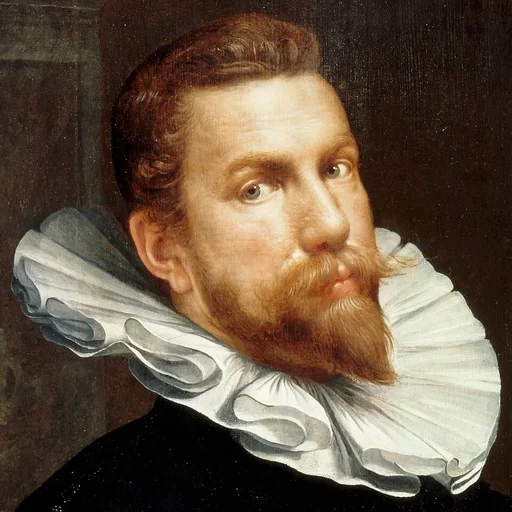
Joachim Anthoniszoon Wtewael (Dutch pronunciation:; 1566 – 1 August 1638), also known as Uytewael (pronounced ), was a Dutch Mannerist painter and draughtsman, as well as a highly successful flax merchant, and town councillor of Utrecht.