Artwork
The Feast of Venus
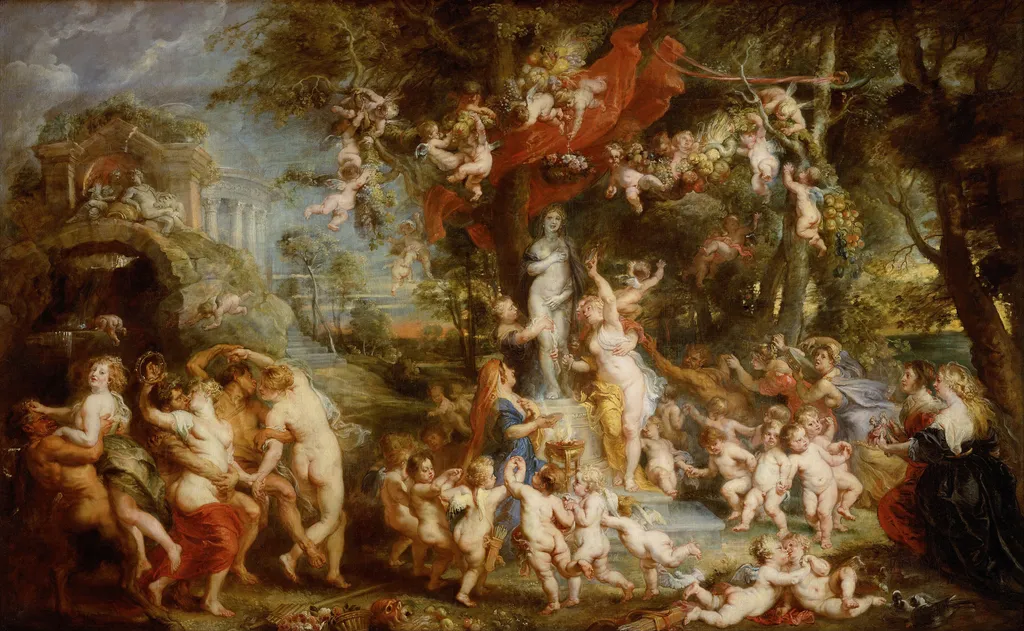
The Feast of Venus is an oil painting by the Flemish Baroque painting artist Peter Paul Rubens. It dates from 1636 and is held in the collection of the Kunsthistorisches Museum.
About this work
Subject & Meaning
At the center stands a statue of Venus in a pudica pose, encircled by attendants, dancing cupids, satyrs, nymphs, and maenads.
The painting depicts the Roman Veneralia festival honoring Venus Verticordia, the goddess whose epithet signals her power to turn hearts from lust toward chastity. At the center stands a statue of Venus in a pudica pose, encircled by attendants, dancing cupids, satyrs, nymphs, and maenads. Rubens incorporates all three classes of women described by Ovid: matrons performing rites such as washing the statue and offering incense to Fortuna Virilis, brides bearing doll-offerings, and nearly nude prostitutes holding a mirror and comb for the goddess. The imagery draws on two classical sources. From Philostratus's Imagines come the swarming cupids gathering, kissing, and tossing apples in a fragrant garden. From Ovid's Fasti come the ritual washing of the statue, myrtle boughs, and incense offerings. Rubens adds wheat sheaves and grape clusters, attributes of Ceres and Bacchus, flanking the grotto, embodying the adage that without food and wine, love grows cold. The nymphs and satyrs before the grotto represent pure erotic desire, while the pairing of Cupid and Psyche with doves in the foreground transforms that sensuality into an allegory of conjugal bliss, uniting voluptuousness with the propriety of marriage.
Technique & Style
The Feast of Venus is executed in oil on canvas, a medium consistent with Rubens's mature practice. The canvas measures 217 by 350 cm, a broad horizontal format that accommodates the densely populated mythological scene. Rubens organizes the composition around a central statue of Venus Verticordia in a pudica pose, encircled by attendants, dancing cupids, satyrs, nymphs, and maenads. He combines elements drawn from Philostratus's Imagines and Ovid's Fasti with inventions of his own, producing a spirited allegory in which voluptuous sensuality is joined with the propriety of marriage. Stylistically, the work is characterized by dynamic figural movement, a swirling mass of amoretti (some rendered female and wingless), and richly varied flesh tones set against the cool stone of the central statue. Rubens models the nymph at the far left on his young wife Helena Fourment, lending the painting an intimate, portrait-like immediacy within its larger mythological framework. The inclusion of attributes of Ceres and Bacchus, wheat sheaves and grape clusters, and the bacchanalian grouping before the grotto reinforce the erotic character of the scene.
History & Provenance
The Feast of Venus was painted by Peter Paul Rubens between 1635 and 1636. It entered the collection of the Kunsthistorisches Museum in Vienna, where it remains today.
The work was likely commissioned for a private patron or as part of Rubens’s own production rather than for a specific public commission, given the absence of a documented patron in the sources. Rubens drew on earlier models: he owned a copy after Titian’s The Worship of Venus, itself inspired by Philostratus’s Imagines, which informed the crowded scene of cupids and nymphs. Ovid’s Fasti provided additional narrative elements, including the festival’s rites and the participation of women from different social classes. The painting synthesizes these sources into an allegorical composition centered on a statue of Venus Verticordia, surrounded by dancing cupids, satyrs, and nymphs, with Helena Fourment modeled as one of the nymphs.
Context
Created between 1635 and 1636, The Feast of Venus represents a sophisticated synthesis of classical literature and earlier art history. Rubens drew direct inspiration from Titian's The Worship of Venus, a work he copied and retained in his private collection, which itself was based on Philostratus's Imagines. The composition also integrates narrative elements from Ovid's Fasti, specifically the account of the Veneralia festival honoring Venus Verticordia and Fortuna Virilis.
Scholarship identifies the painting as an allegory where voluptuous sensuality is reconciled with the propriety of marriage. Art historian Philipp Fehl interpreted the foreground figures of Cupid and Psyche as a symbol of love enriched by matrimony. The work further embeds classical adages, such as the Terentian phrase regarding Ceres and Bacchus, to contextualize the bacchanalian scene within a framework of traditional Roman morality and state benefit.
Own this work as a print
Artist & collection
Artist
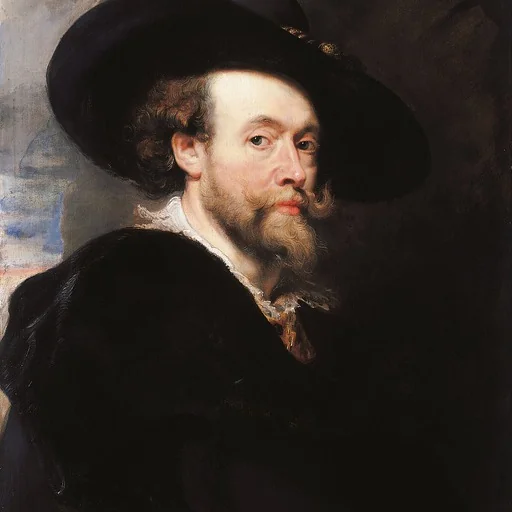
Sir Peter Paul Rubens ( ROO-bənz; Dutch:; 28 June 1577 – 30 May 1640) was a Flemish artist and diplomat.

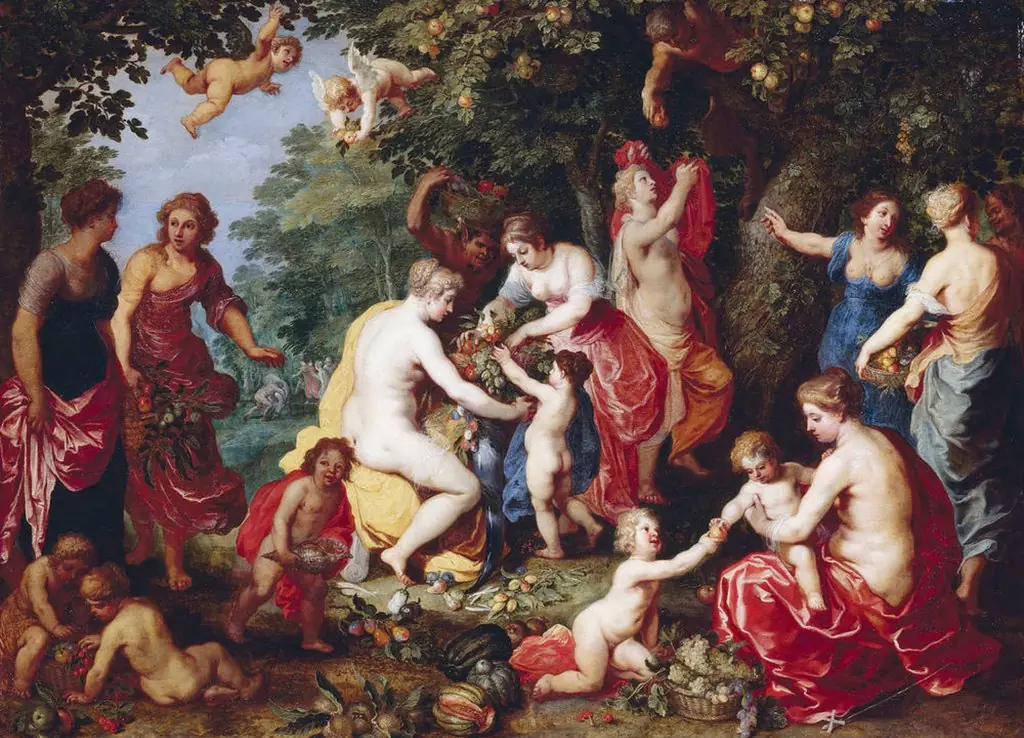 Nymphs and children under fruit trees (Naiads fill the cornucopia)
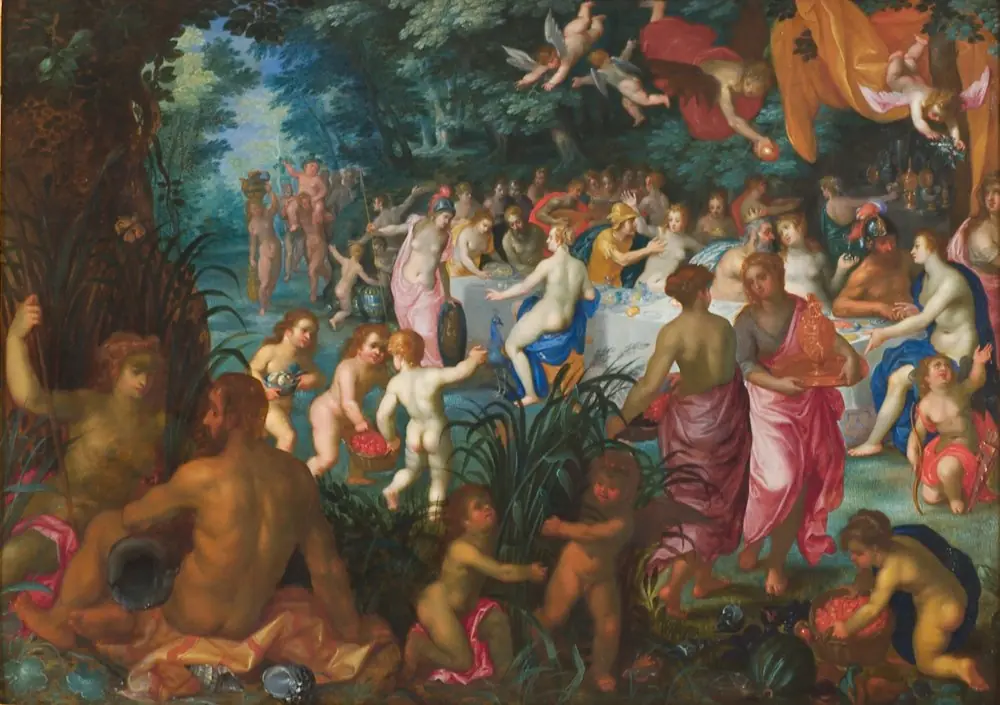 The Marriage of Peleus and Thetis
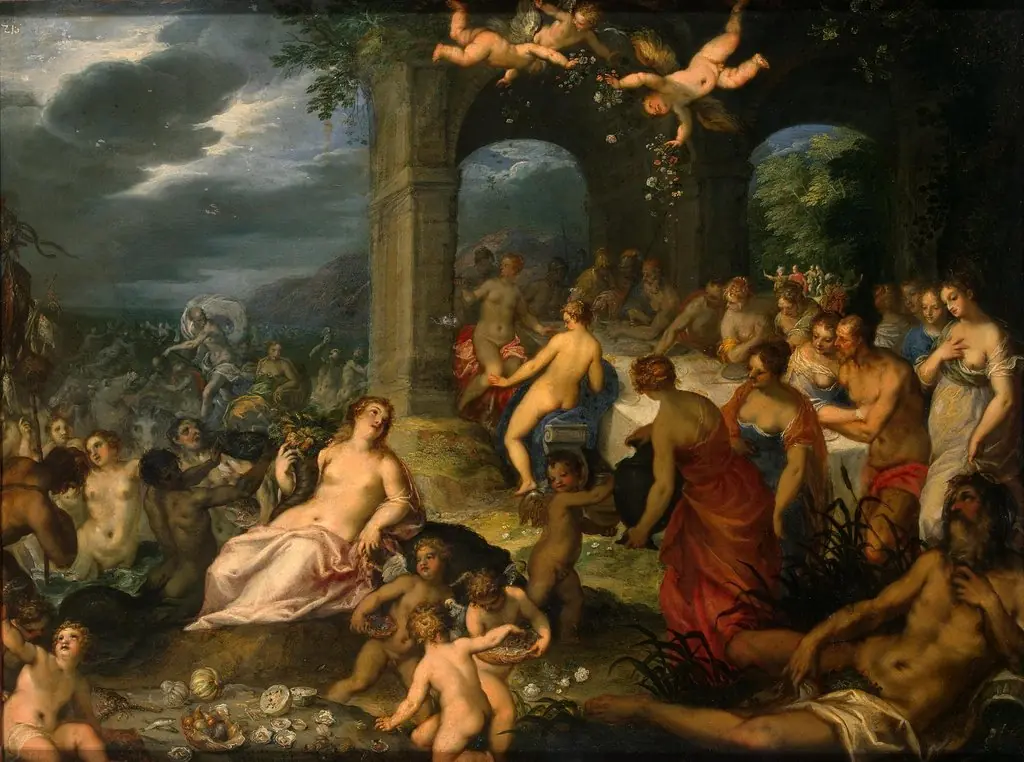 Feast of the Gods (The Marriage of Peleus and Thetis)
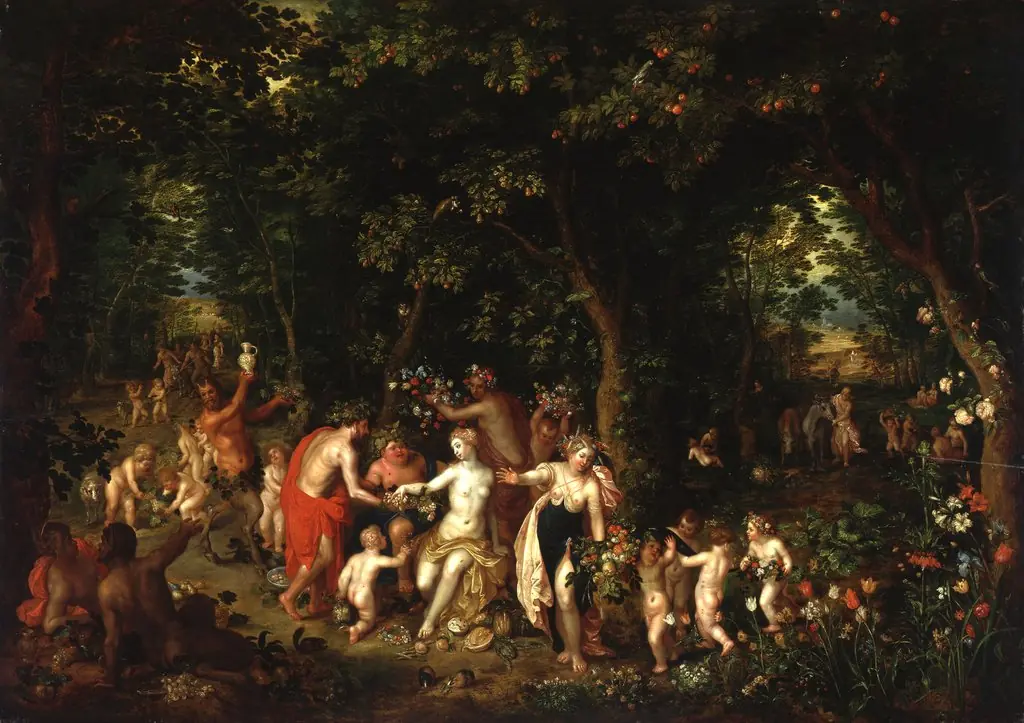 The Feast of Bacchus
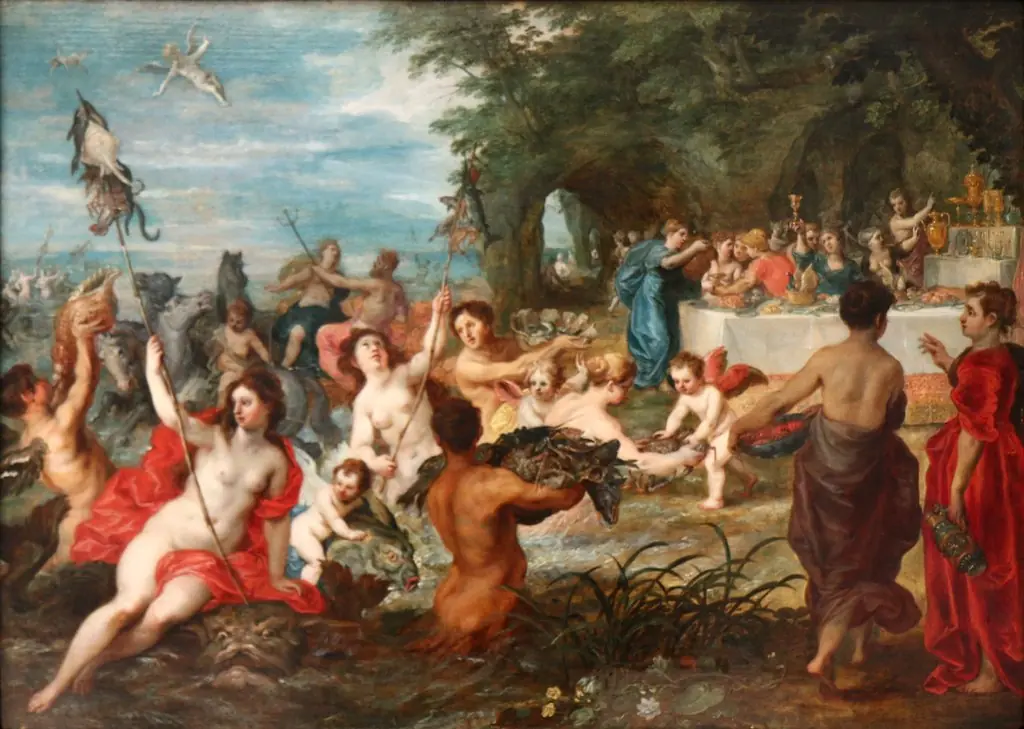 The wedding of Thetis and Peleus
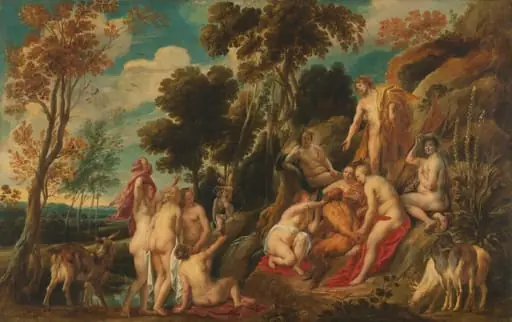 Untitled
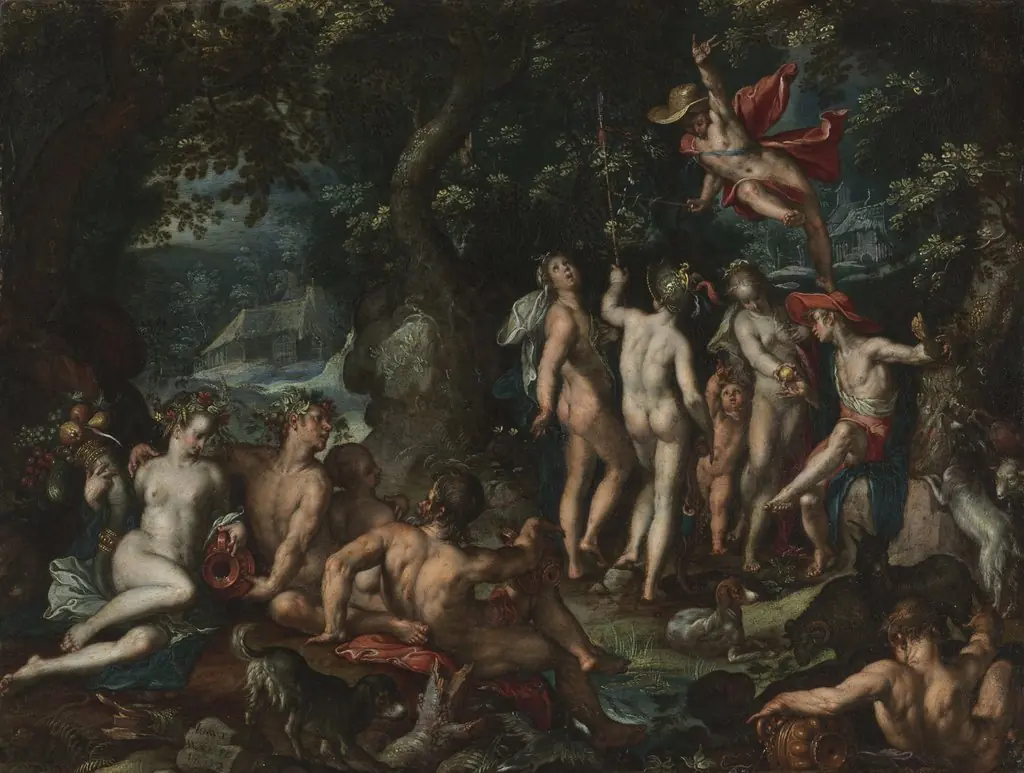 The Judgment of Paris
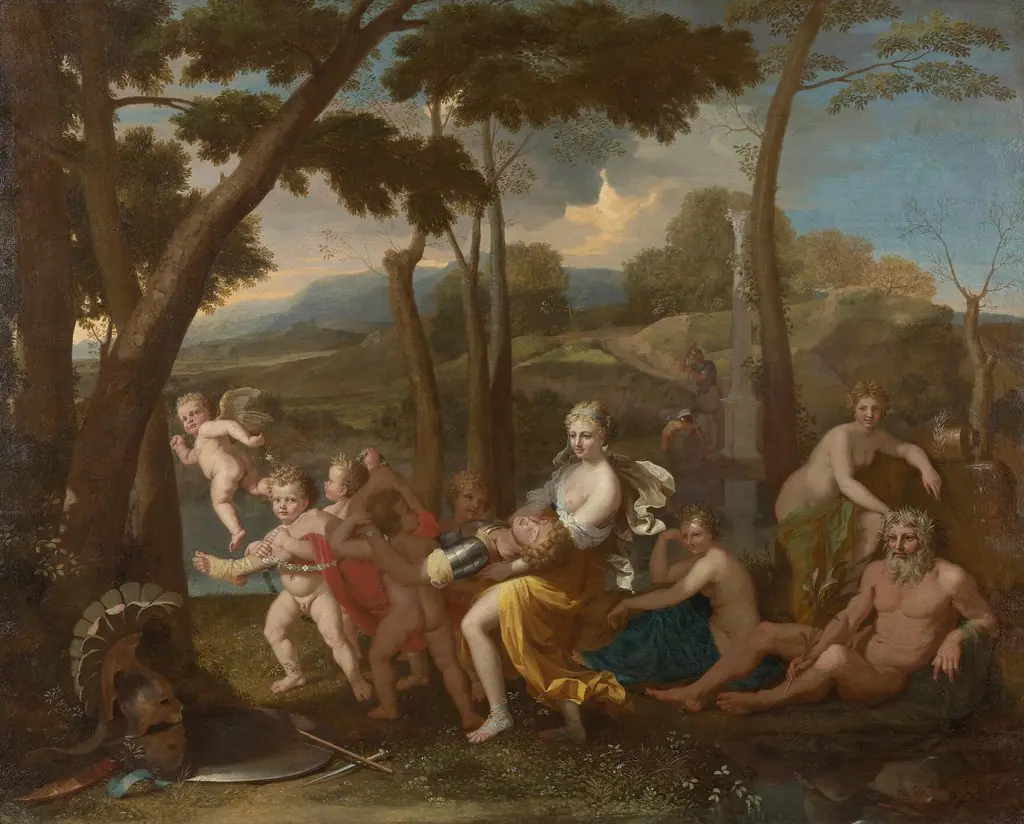 The Abduction of the Euthanized Rinaldo
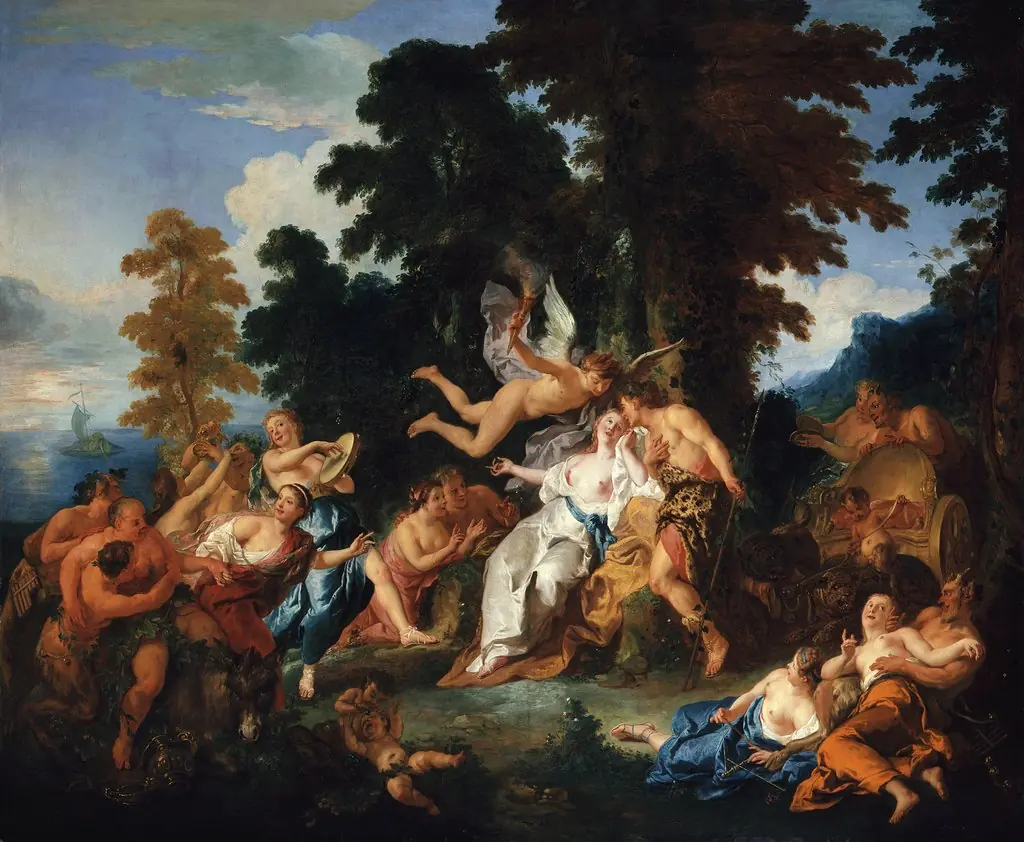 Bacchus and Ariadne
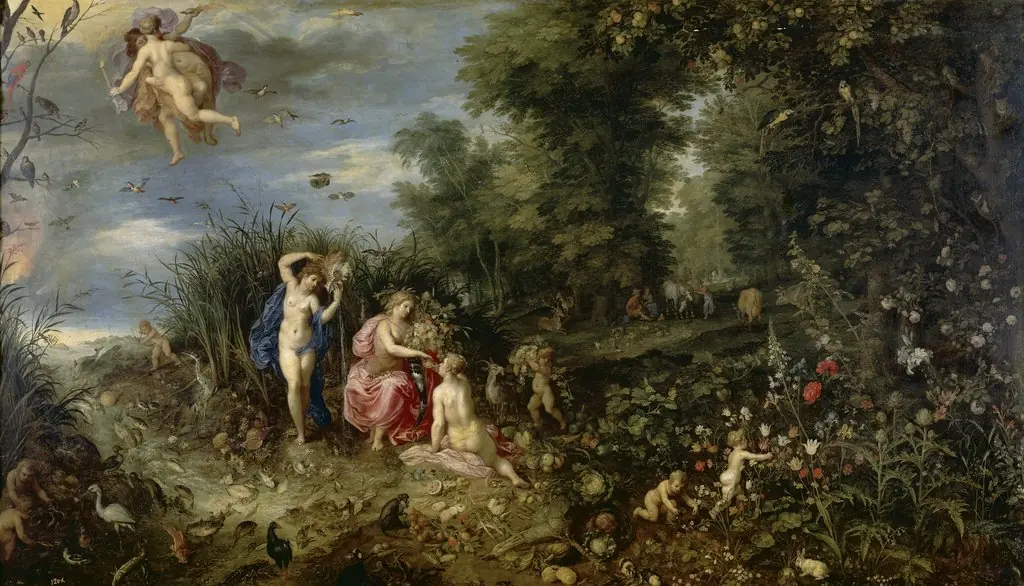 Abundance and the Four Elements
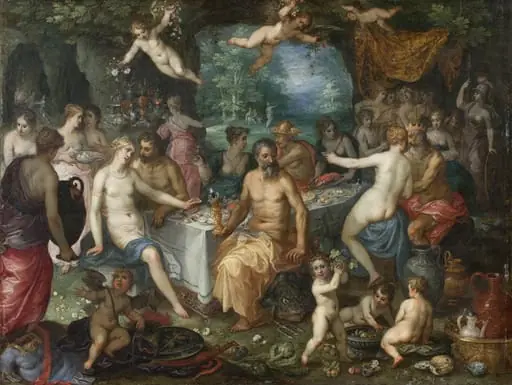 The Feast of the Gods. The Wedding of Peleus and Thetis
- The Feast of the Gods