Artwork
Feast of the Gods (The Marriage of Peleus and Thetis)
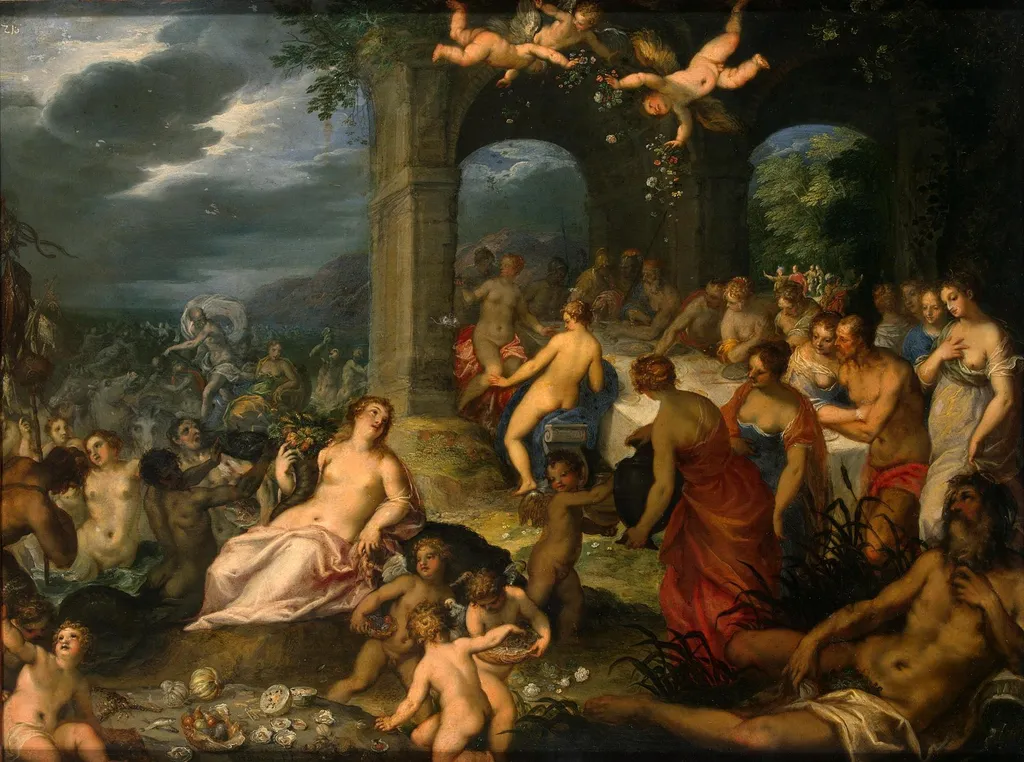
Feast of the Gods (The Marriage of Peleus and Thetis) is an oil painting by the Mannerist artist Hans Rottenhammer. It dates from 1600 and is held in the collection of the Hermitage Museum.
About this work
Overview
Created in Germany, the work exemplifies the international diffusion of mythological themes among late Renaissance artists north of the Alps.
Feast of the Gods (The Marriage of Peleus and Thetis) is a mythological painting by the German artist Hans Rottenhammer, executed in 1600. Measuring 34 by 45 centimeters, this oil on copper work depicts the wedding celebration of the hero Peleus and the sea-nymph Thetis, a foundational episode of Greek mythology. The painting is held in the collection of the Hermitage Museum in Saint Petersburg, where it remains an important example of Northern Mannerist treatment of classical subject matter. Created in Germany, the work exemplifies the international diffusion of mythological themes among late Renaissance artists north of the Alps.
Subject & Meaning
The painting represents the wedding of Peleus and Thetis, a marriage arranged by Zeus that would produce the hero Achilles. According to mythological tradition, this feast became the occasion for the discord sown by Eris, the uninvited goddess who cast the golden apple inscribed "to the fairest," thereby setting in motion the chain of events leading to the Trojan War. Rottenhammer's composition presents a crowded mythological gathering before classical stone arches opening onto a stormy sky. Numerous nude and partially draped figures populate the scene, many gathered around a long banquet table at right. Three winged putti descend from the upper center, scattering flower garlands. At left, a figure emerges from the sea accompanied by attendants, alluding to Thetis's identity as a Nereid. In the foreground, a reclining female figure draped in pinkish fabric holds flowers near several small putti bearing shells and offerings. The presence of shells, fruit, and scattered flowers in the lower left corner reinforces the marine and celebratory aspects of the narrative. Some scholarly suggestion exists that the painting might alternatively address the marriage of Poseidon and Amphitrite, though the primary identification with Peleus and Thetis remains dominant.
Technique & Style
The work is executed in oil on copper, a support that allows for exceptionally fine detail and smooth surface finish. The copper medium, measuring 34.0 by 45.0 centimeters, was favored by Northern Mannerist painters for its capacity to sustain precise brushwork and luminous color effects. Rottenhammer's technique displays smooth modeling on the figures, with particular attention to the sheen of skin and the texture of drapery. The palette is dominated by warm flesh tones, deep reds, and cool blue-grays, with strong contrasts between illuminated bodies and darker architectural and vegetal surroundings. The brushwork shows looser handling in the background sky and foliage, creating atmospheric depth behind the more meticulously rendered foreground figures. The overall finish is polished, characteristic of the refined aesthetic priorities of Northern Mannerism.
History & Provenance
Hans Rottenhammer was born in 1564 in Munich and died in 1645 in Augsburg, working within the Northern Mannerist movement throughout his career. The painting was created in 1600 in Germany, during a period when Rottenhammer was actively producing mythological and religious compositions. The work entered the collection of the Hermitage Museum, where it is currently located. Its accession history and specific exhibition record are not documented in the available sources.
Context
Rottenhammer operated within the sphere of Northern Mannerism, an art movement characterized by sophisticated artificiality, complex compositions, and the adaptation of Italian Renaissance and Mannerist models to northern European tastes. The choice of the Peleus and Thetis wedding subject places this work within a broader European tradition of mythological painting that drew upon Ovidian and Homeric sources. The Feast of the Gods theme held particular resonance for Renaissance and early modern artists as it allowed for the depiction of idealized nude figures in a narrative context, while also engaging with moral and philosophical dimensions of fate and divine intervention. The painting's relatively small scale and copper support suggest it was likely intended for private contemplation rather than public display, fitting the pattern of cabinet pictures that circulated among educated collectors in late sixteenth- and early seventeenth-century Europe.
Own this work as a print
Artist & collection
Artist
Johann Rottenhammer, or Hans Rottenhammer (1564 – 14 August 1625), was a German painter. He specialized in highly finished paintings on a small scale.

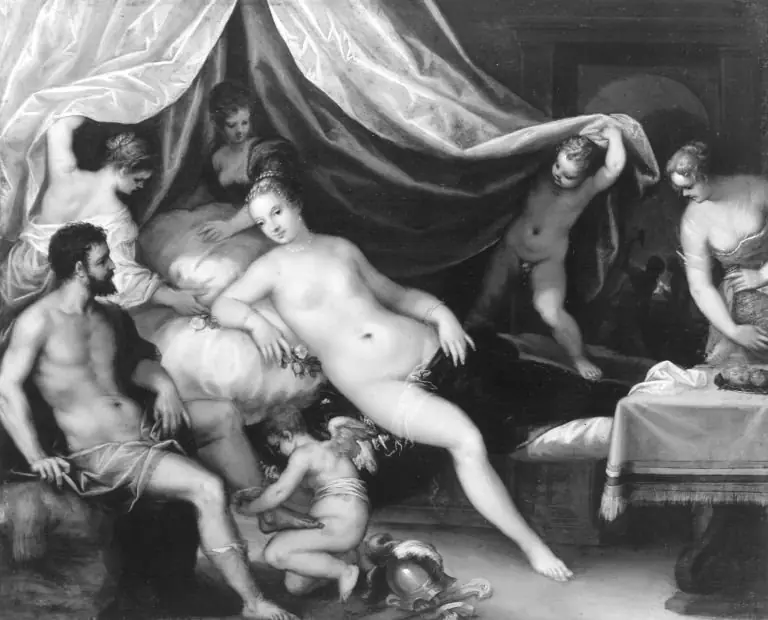
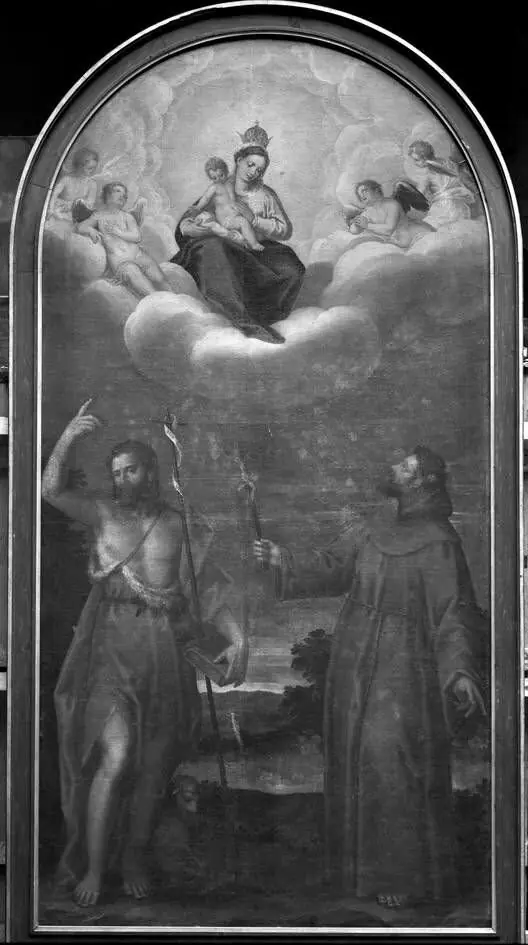
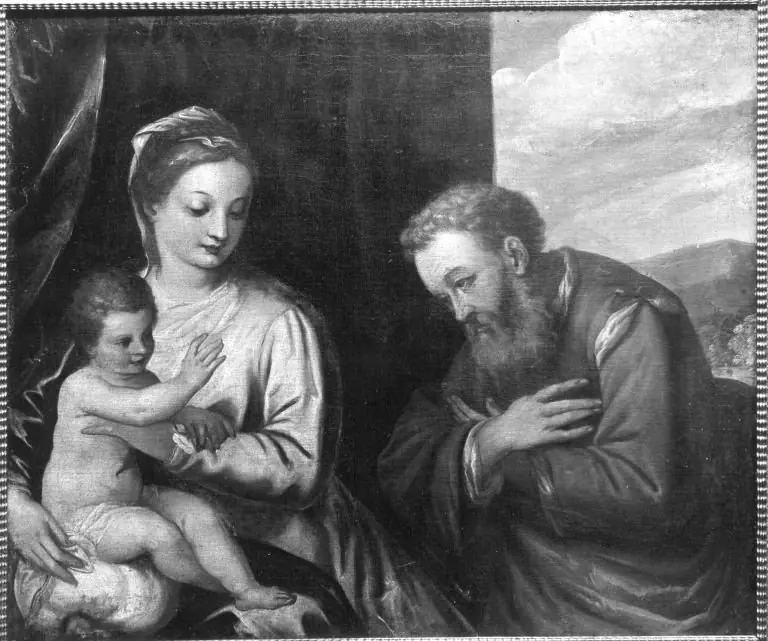
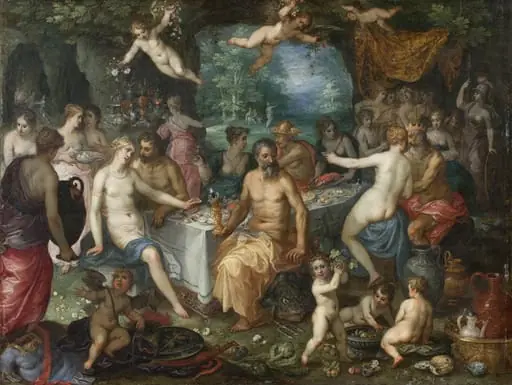
- The Feast of the Gods. The Wedding of Peleus and Thetis
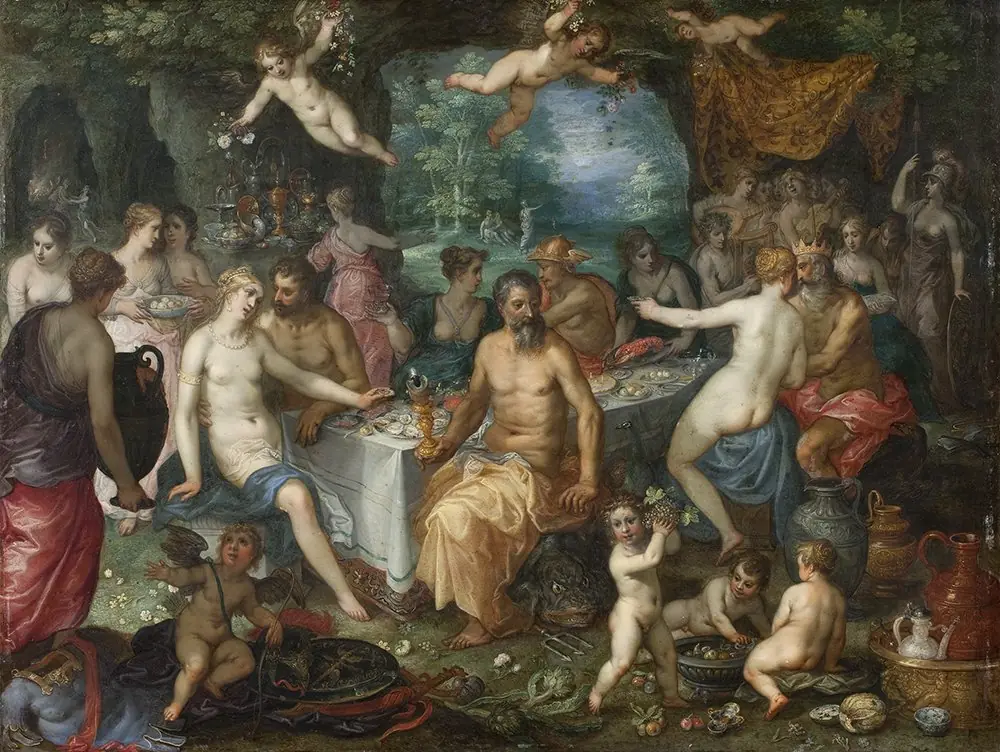 The Feast of the Gods. The Wedding of Peleus and Thetis
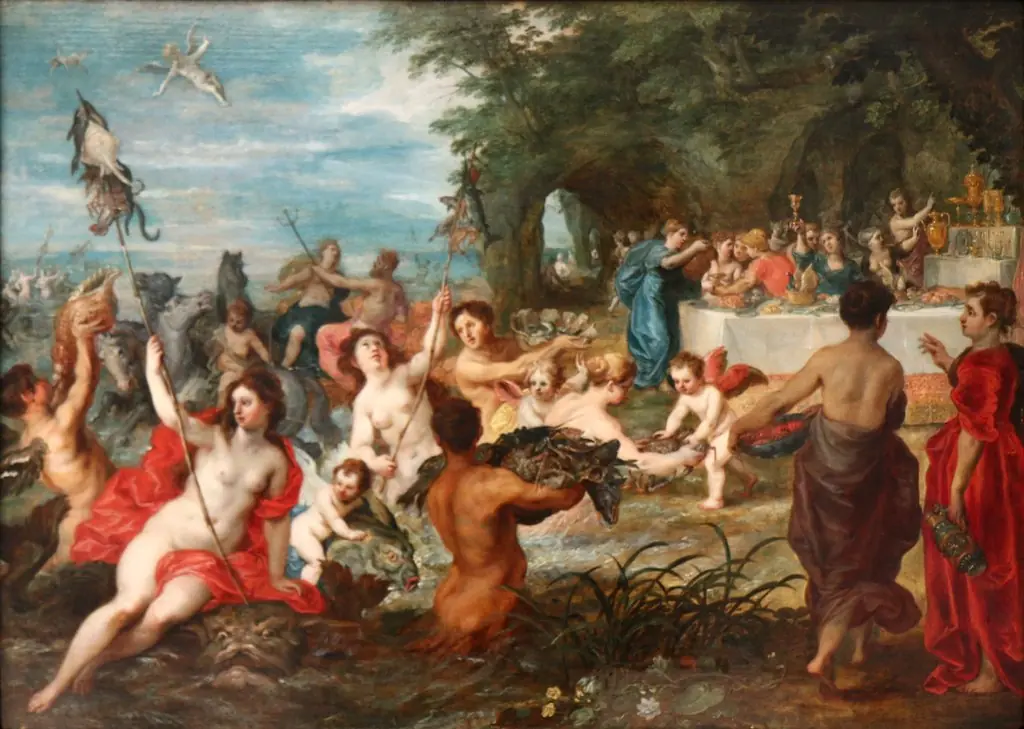 The wedding of Thetis and Peleus
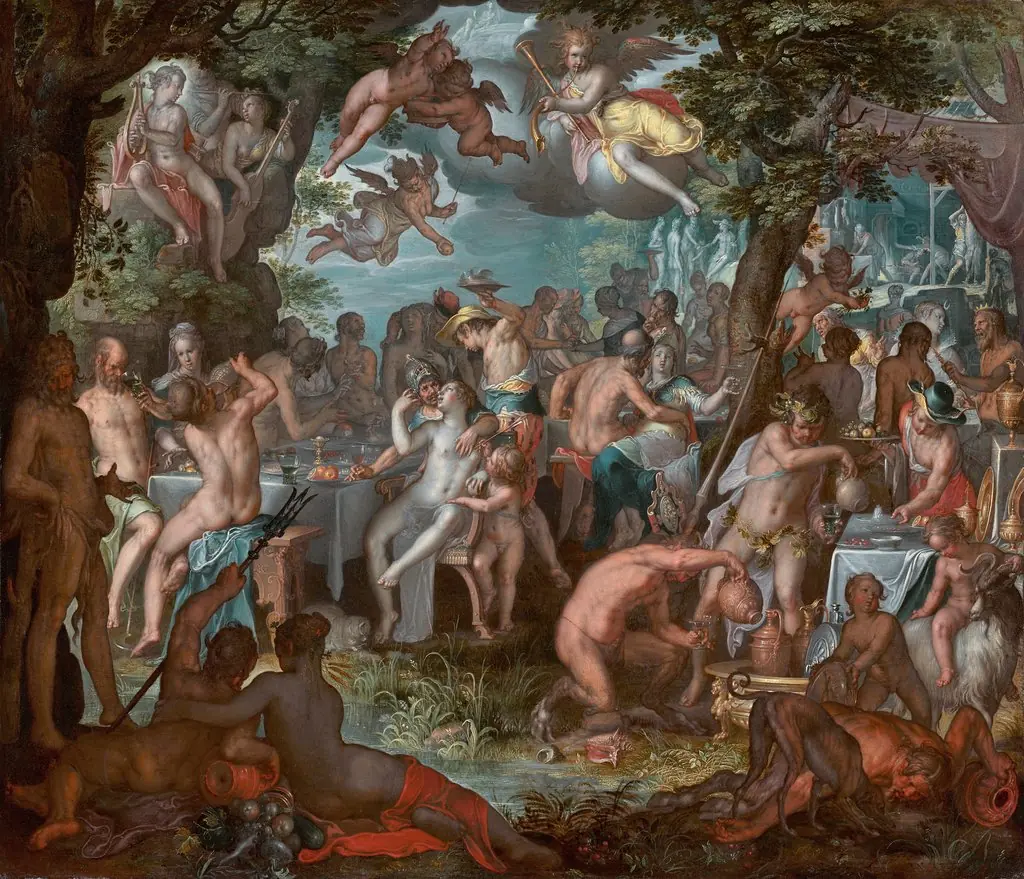 The Wedding of Peleus and Thetis
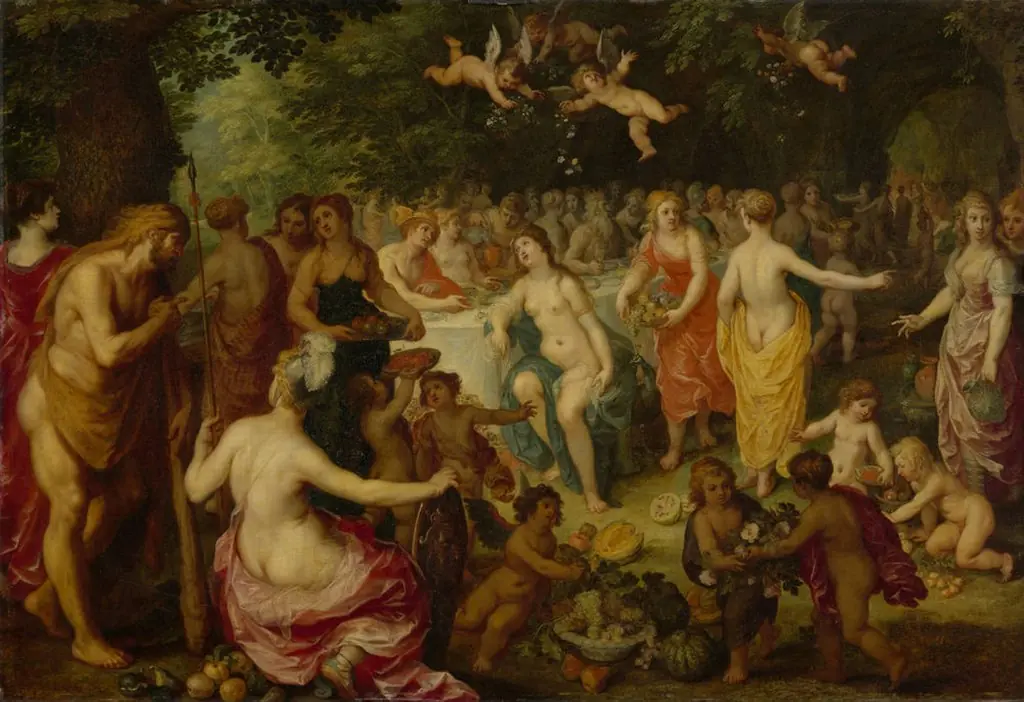 The Feast of the Gods
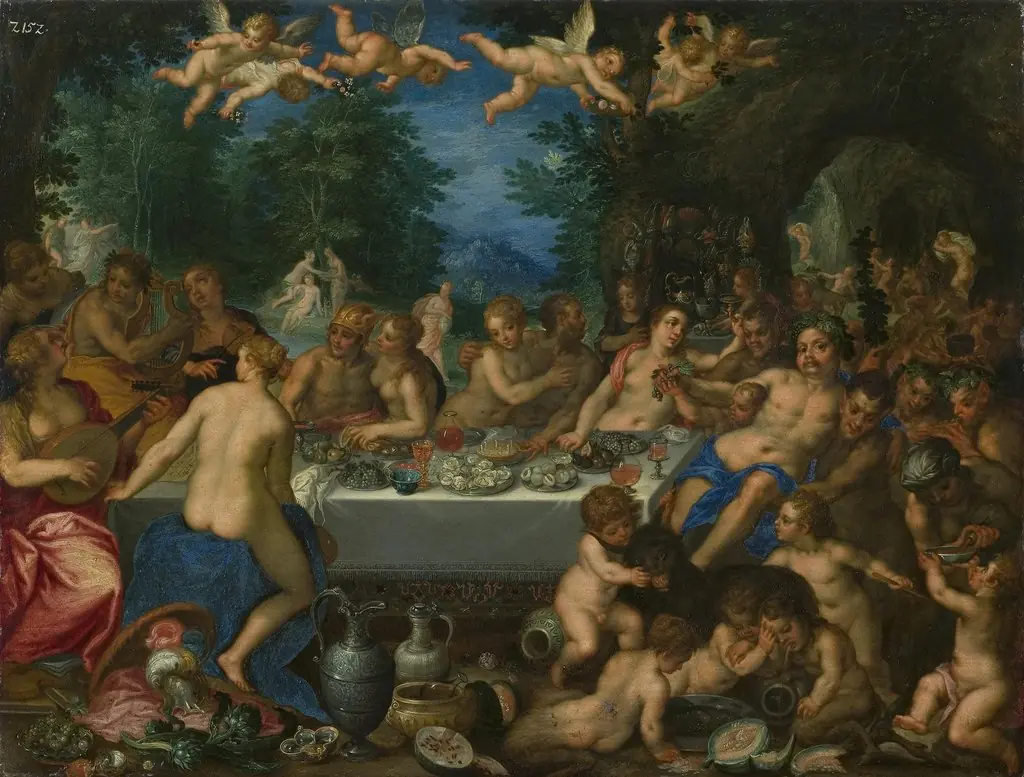 Feast of the Gods - The Marriage of Peleus and Thetis
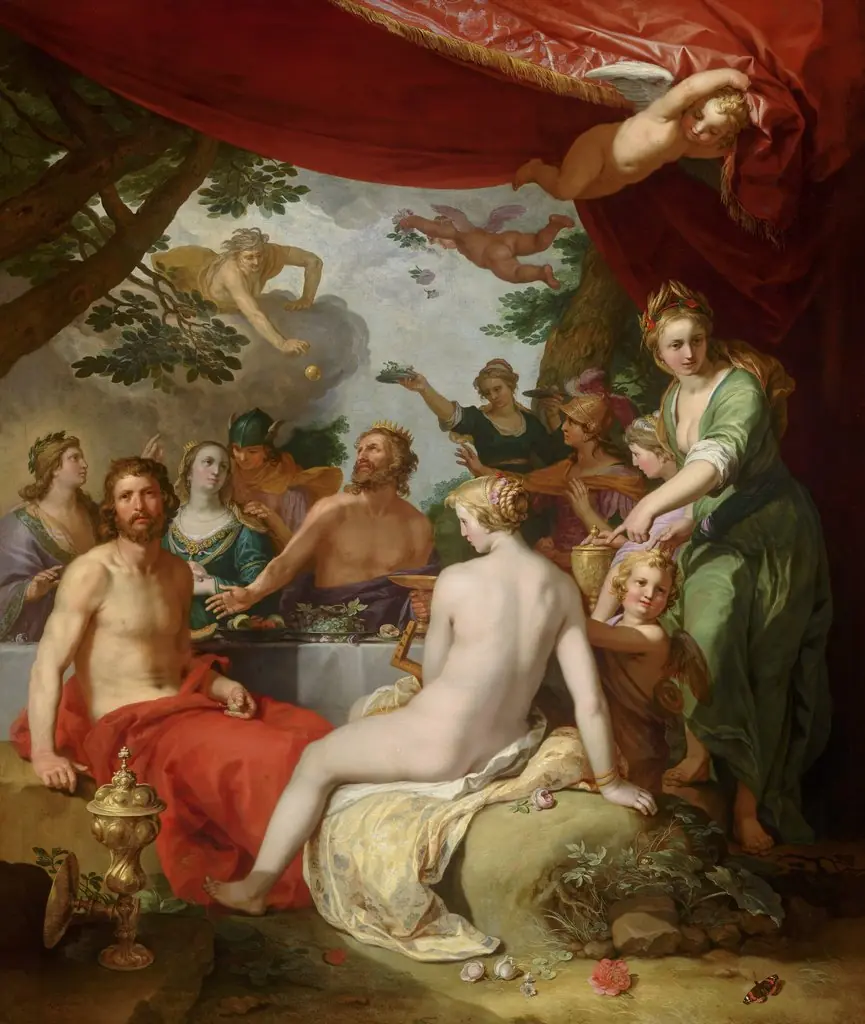 The feast of the gods at the wedding of Peleus and Thetis
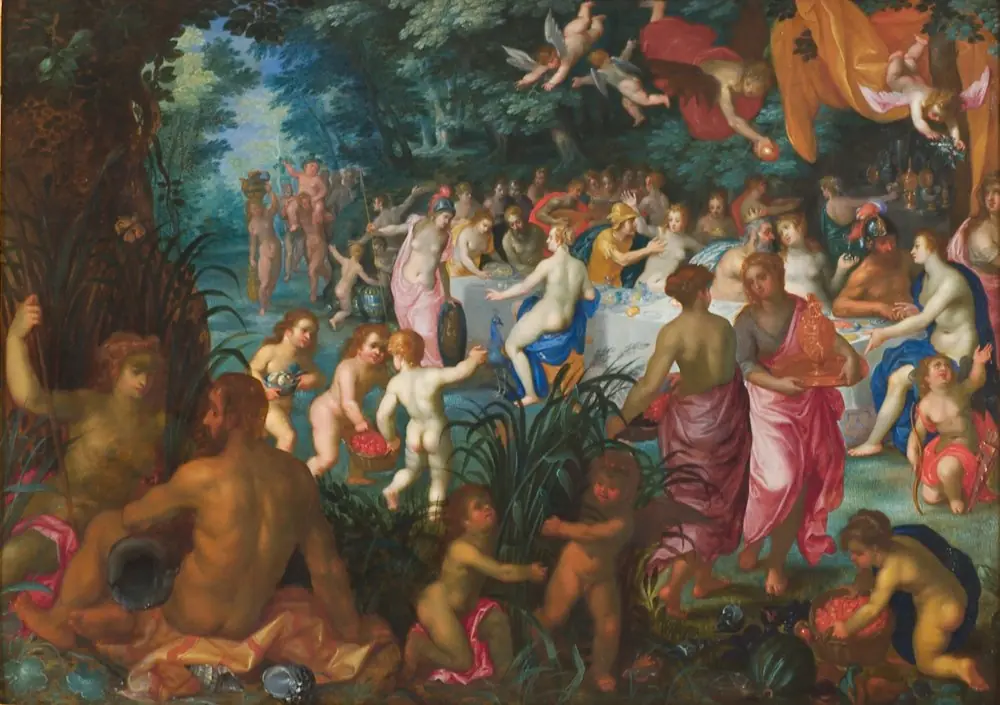 The Marriage of Peleus and Thetis
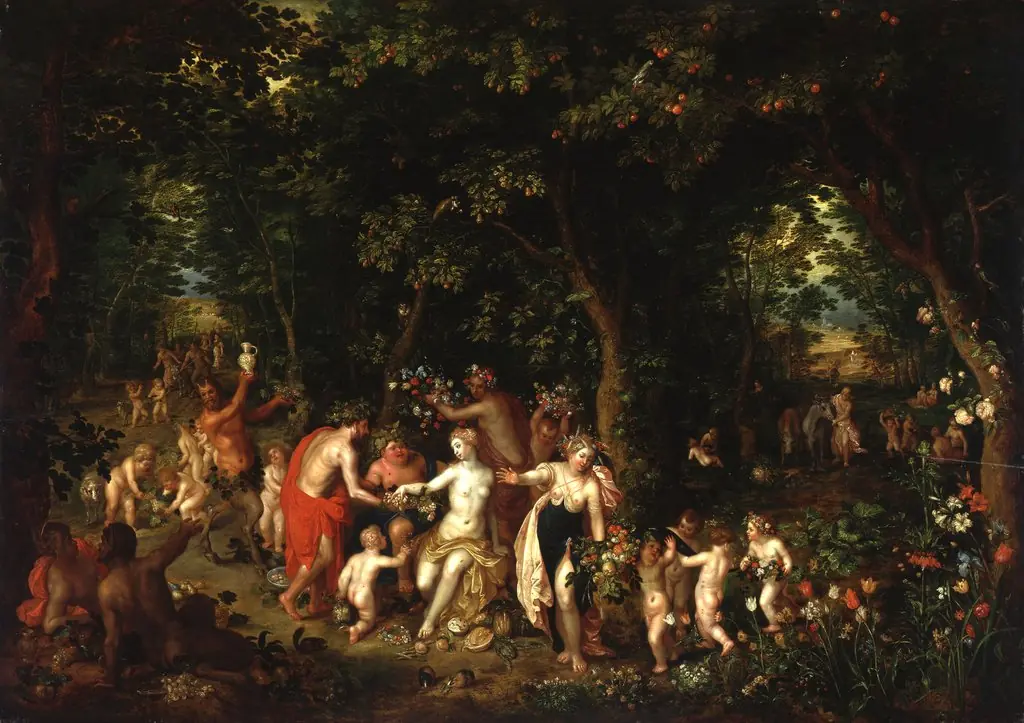 The Feast of Bacchus
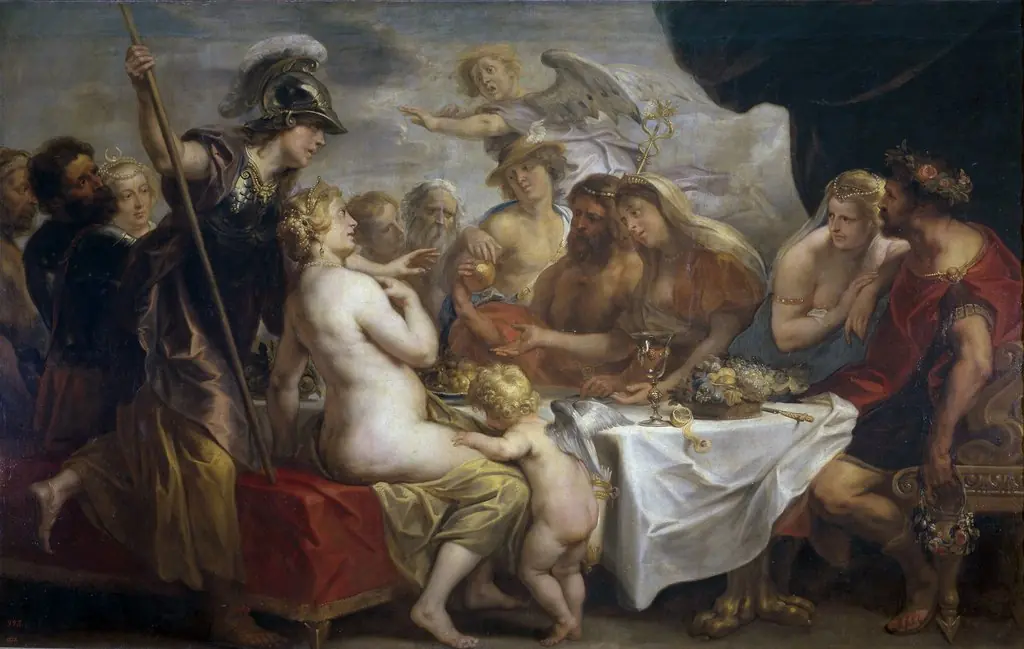 The wedding of Thetis and Peleus