Artwork
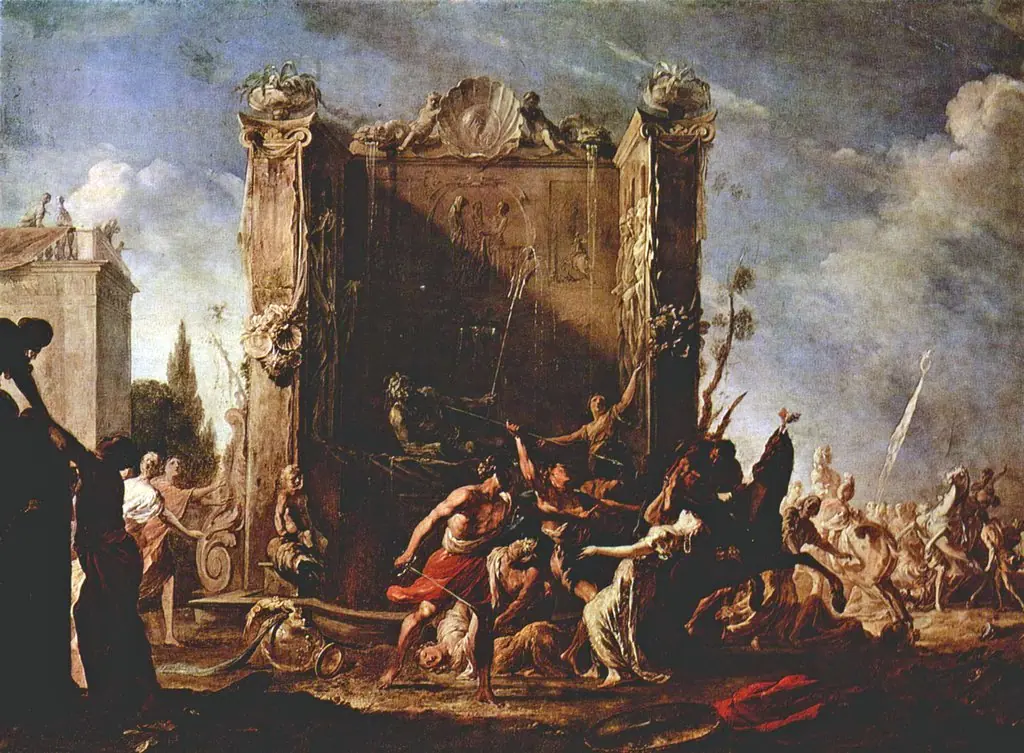
Samson's Revenge on the Philistines
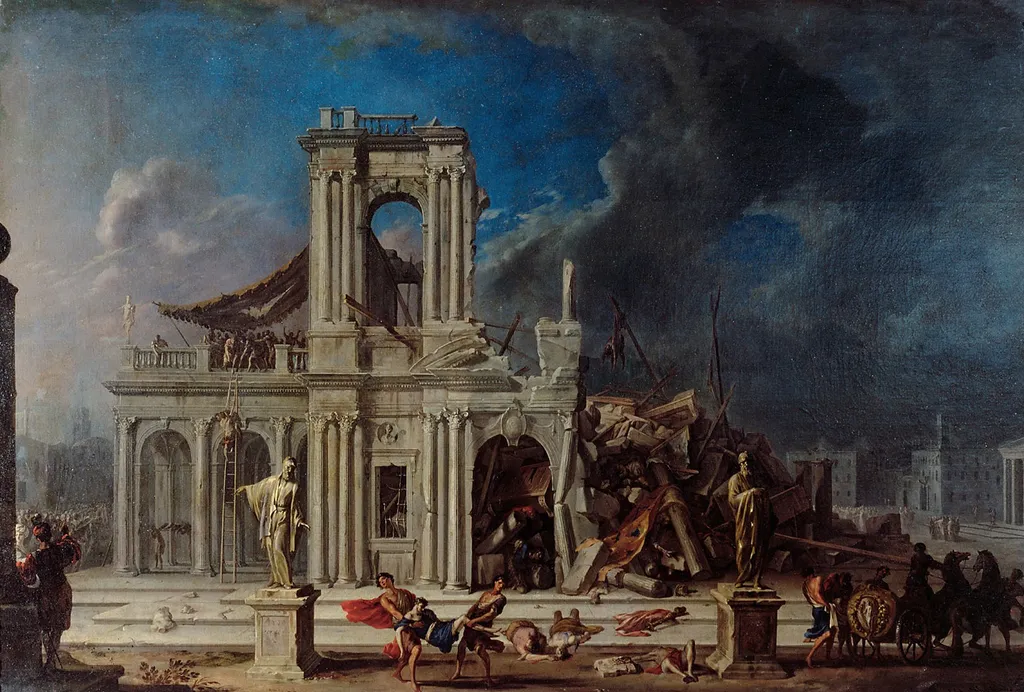
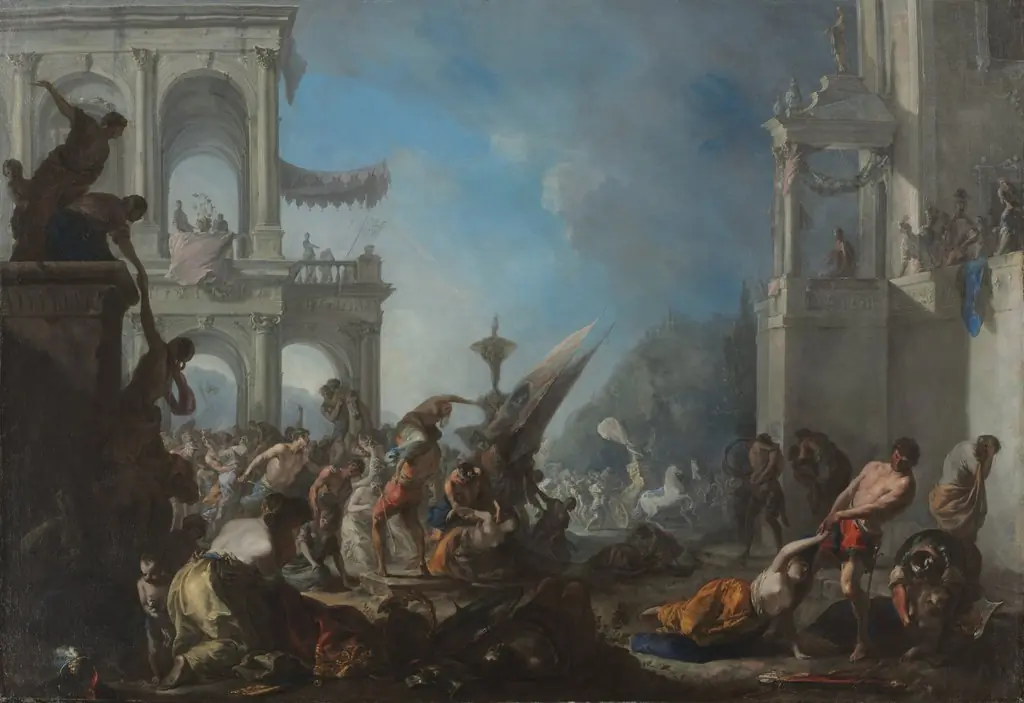
Samson's Revenge on the Philistines is an oil painting by the German Romanticist artist Johann Heinrich Schönfeld. It dates from 1656 and is held in the collection of the Kunsthistorisches Museum.
About this work
Subject & Meaning
The surrounding figures, Philistines in contemporary dress, are thrown into chaos, underscoring the catastrophic consequence of Samson’s final act of vengeance.
The painting depicts the biblical episode in which Samson, after having his eyes put out by the Philistines, pulls down the pillars of their temple, killing himself and his captors. Schönfeld’s composition centers on the muscular Samson, shown at the moment of collapse, his body straining against the collapsing architecture. The surrounding figures, Philistines in contemporary dress, are thrown into chaos, underscoring the catastrophic consequence of Samson’s final act of vengeance.
The scene emphasizes divine retribution and the cost of defiance, aligning with the religious genre classification of the work.
Technique & Style
Samson's Revenge on the Philistines is an oil painting executed on canvas by Johann Heinrich Schönfeld. The work measures 138 cm in height and 201 cm in width. Classified within the religious art genre, the piece depicts the biblical figure Samson. The medium of oil paint on canvas is characteristic of the artist's approach to this subject matter.
History & Provenance
Samson's Revenge on the Philistines by Johann Heinrich Schönfeld is held in the collection of the Kunsthistorisches Museum. The work, executed in oil on canvas, measures 138 cm in height and 201 cm in width. While the painting's current location is established, the provided records do not contain specific inventory numbers or details regarding its exhibition history.
Context
The painting Samson's Revenge on the Philistines by Johann Heinrich Schönfeld, housed in the Kunsthistorisches Museum, exemplifies 17th-century religious art through its dramatic biblical narrative. Art historical scholarship situates Schönfeld within the German Baroque tradition, where his work engages with themes of divine justice and human vengeance, reflecting broader Counter-Reformation artistic concerns. While specific critical reception details are not documented in the provided sources, the work's enduring presence in a major museum collection underscores its significance within the artist's oeuvre and the evolution of religious painting in European art history.
Legacy
Schönfeld's Samson's Revenge on the Philistines influenced religious painting through its dramatic Baroque composition and vivid portrayal of biblical violence, becoming a visual reference for later artists depicting Samson's vengeance. Its inclusion in the Kunsthistorisches Museum collection ensured continued scholarly attention to Schönfeld's work and preserved the painting as an exemplar of 17th-century German religious art, reinforcing its reputation as a significant, if not widely celebrated, achievement in the genre.
Overview
Samson's Revenge on the Philistines is an oil painting by Johann Heinrich Schönfeld, created around 1656. It is a religious work held at the Kunsthistorisches Museum.
Artist & collection
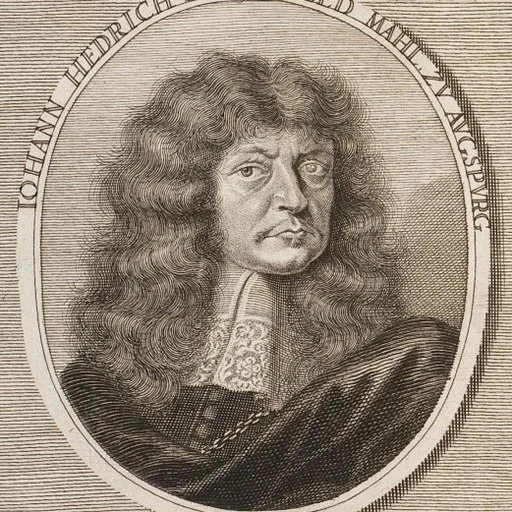
Artist
Johann Heinrich Schönfeld (1609–1684) was an artist, born in Biberach an der Riß.

- Marine
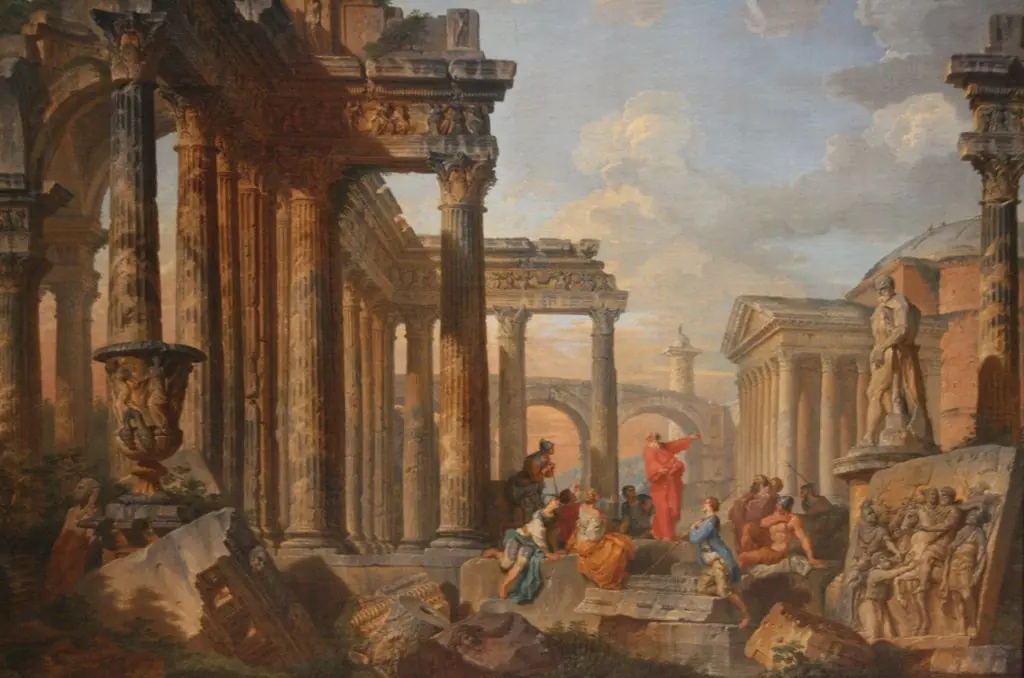 Roman Ruins with a Preacher
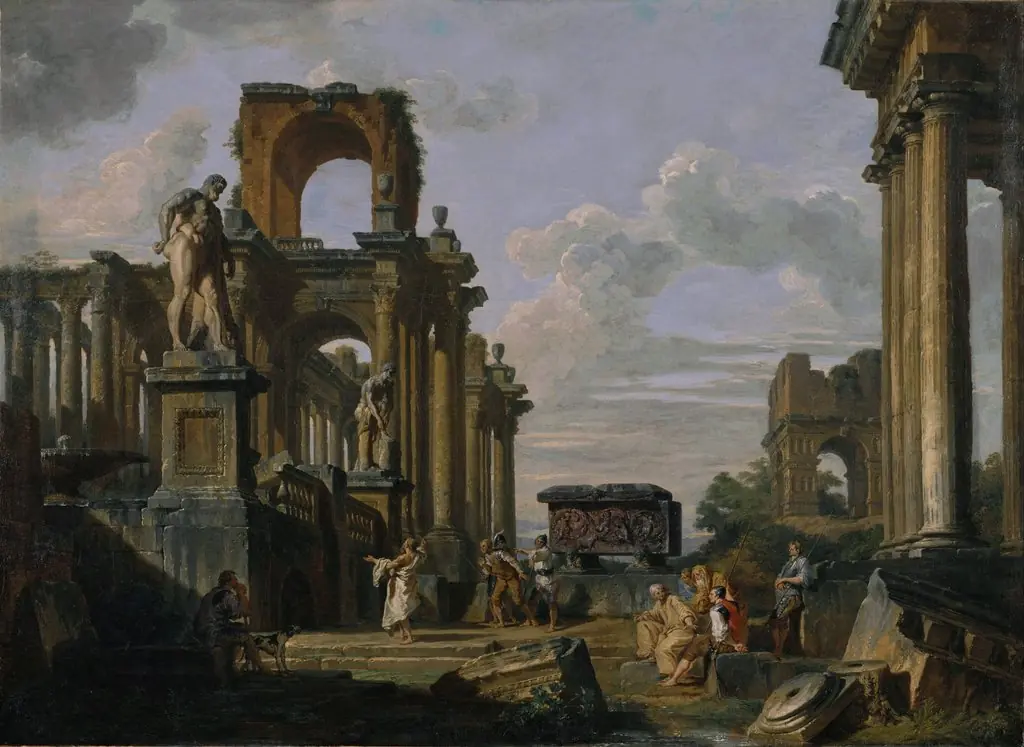 An Architectural Capriccio of the Roman Forum with Philosophers and Soldiers among Ancient Ruins, including the Arch of Janus Quadrifrons, the Sarcophagus of Santa Constanza, the Farnese Hercules and the Cincinnatus
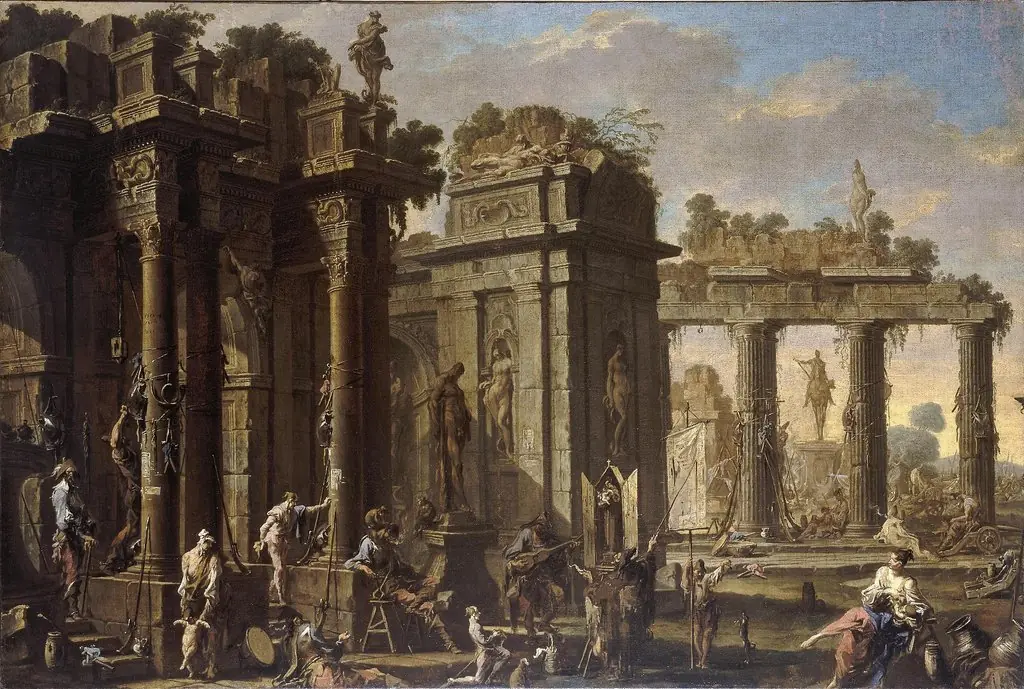 Banditti at Rest
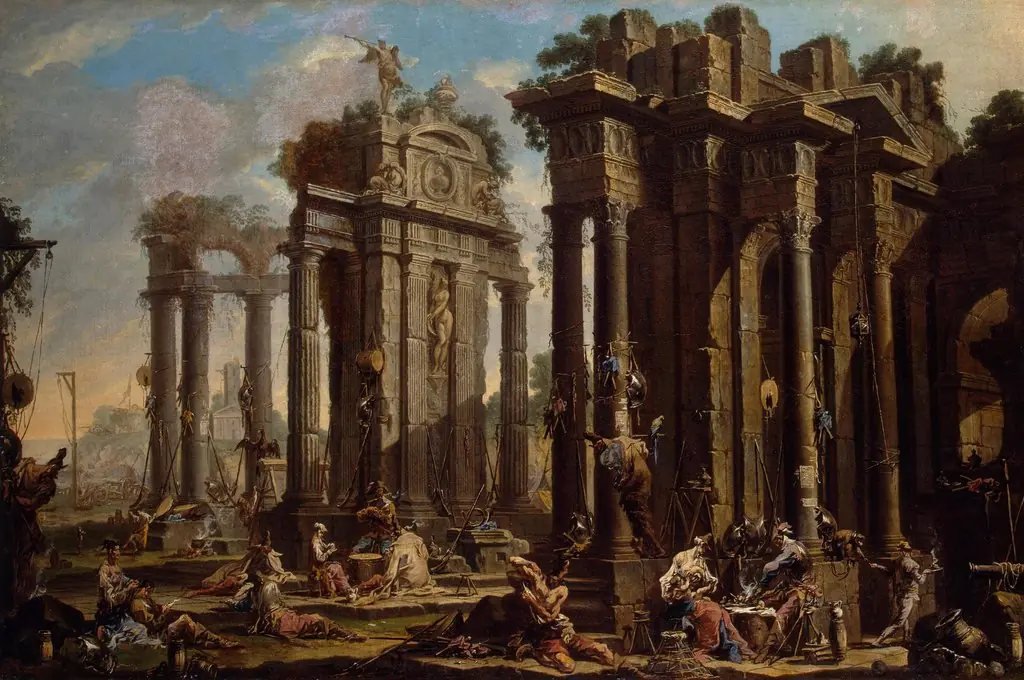 Halt of the Brigands
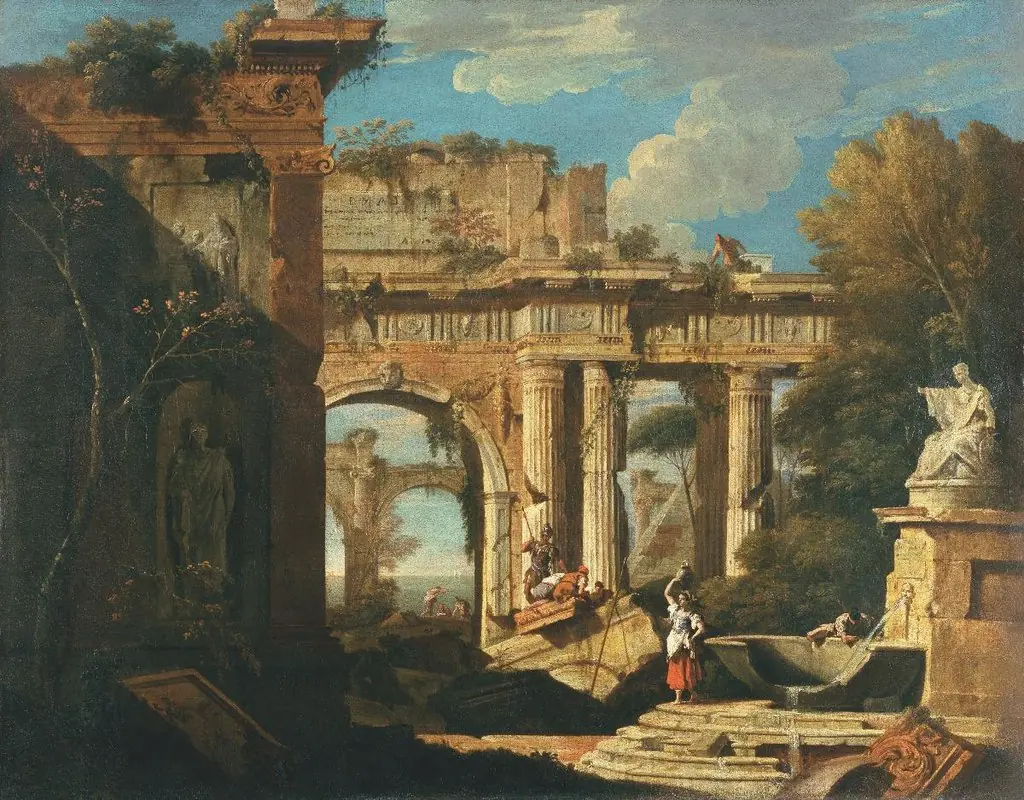 Capriccio con rovine romane
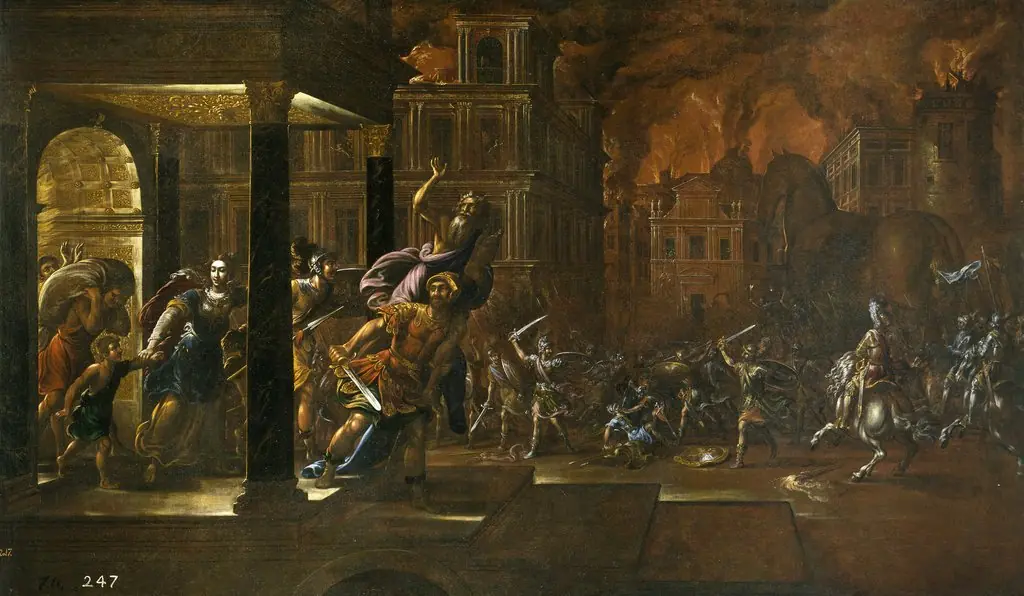 Aeneas flees the burning Troy with his family
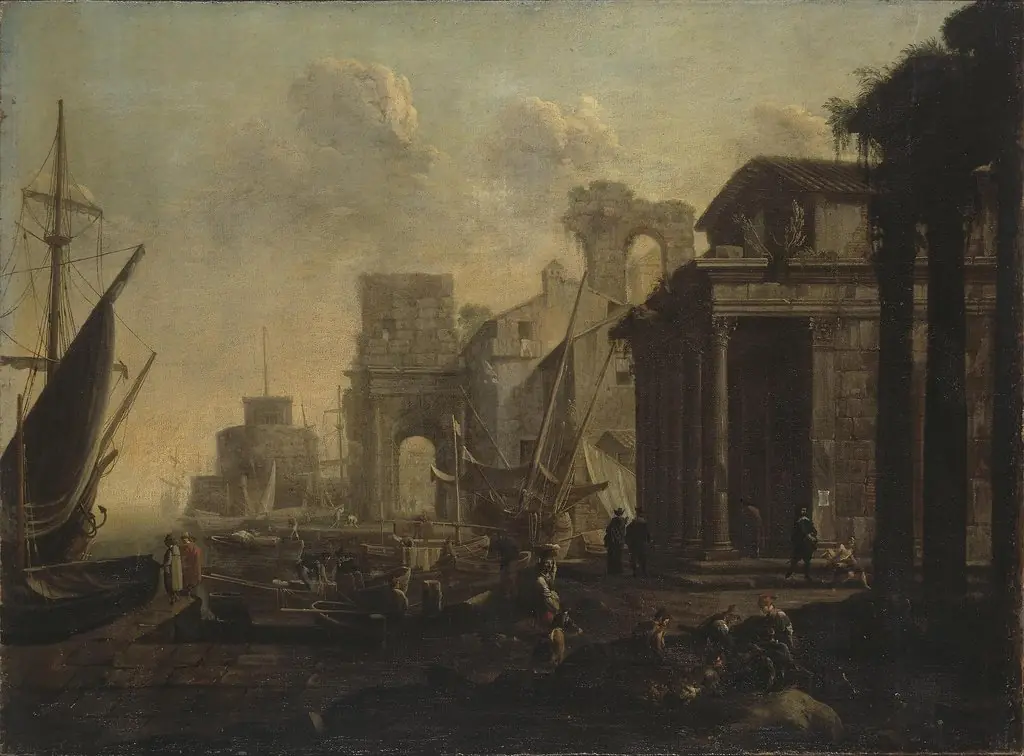 Harbour
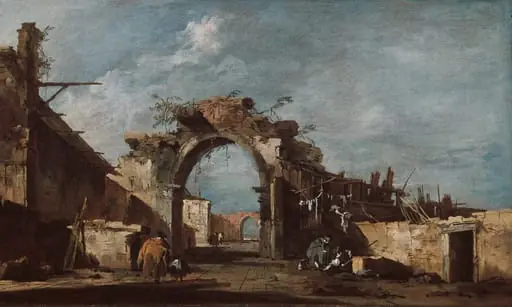 Ruined Archway
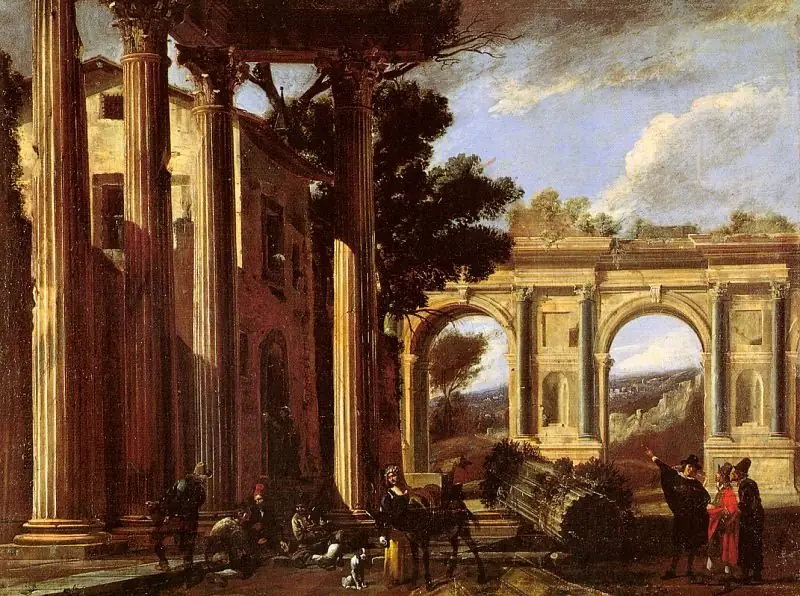 Architectural View
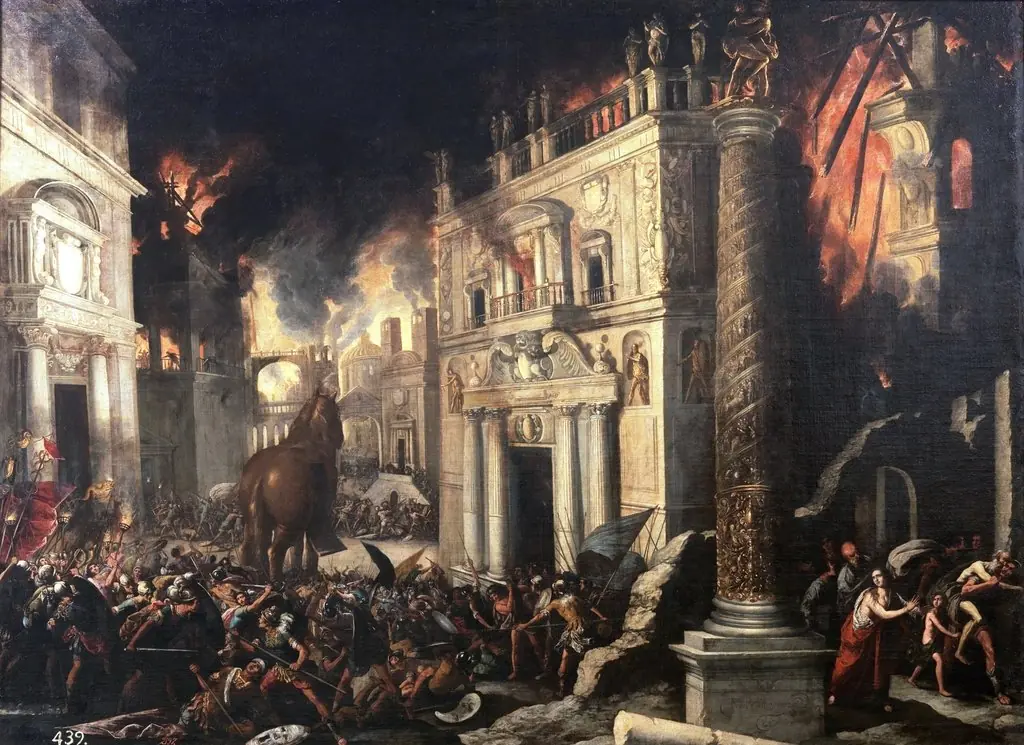 El incendio de Troya
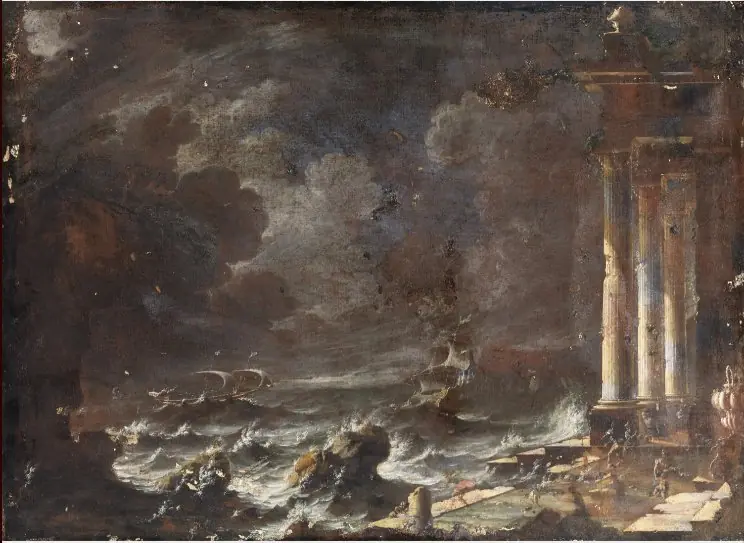 A Coast Scene with Ruins and Shipwrecks