Artwork
Kaiser Karl VI. (1685-1740) besichtigt die Gemsstrecke in Eisenerz
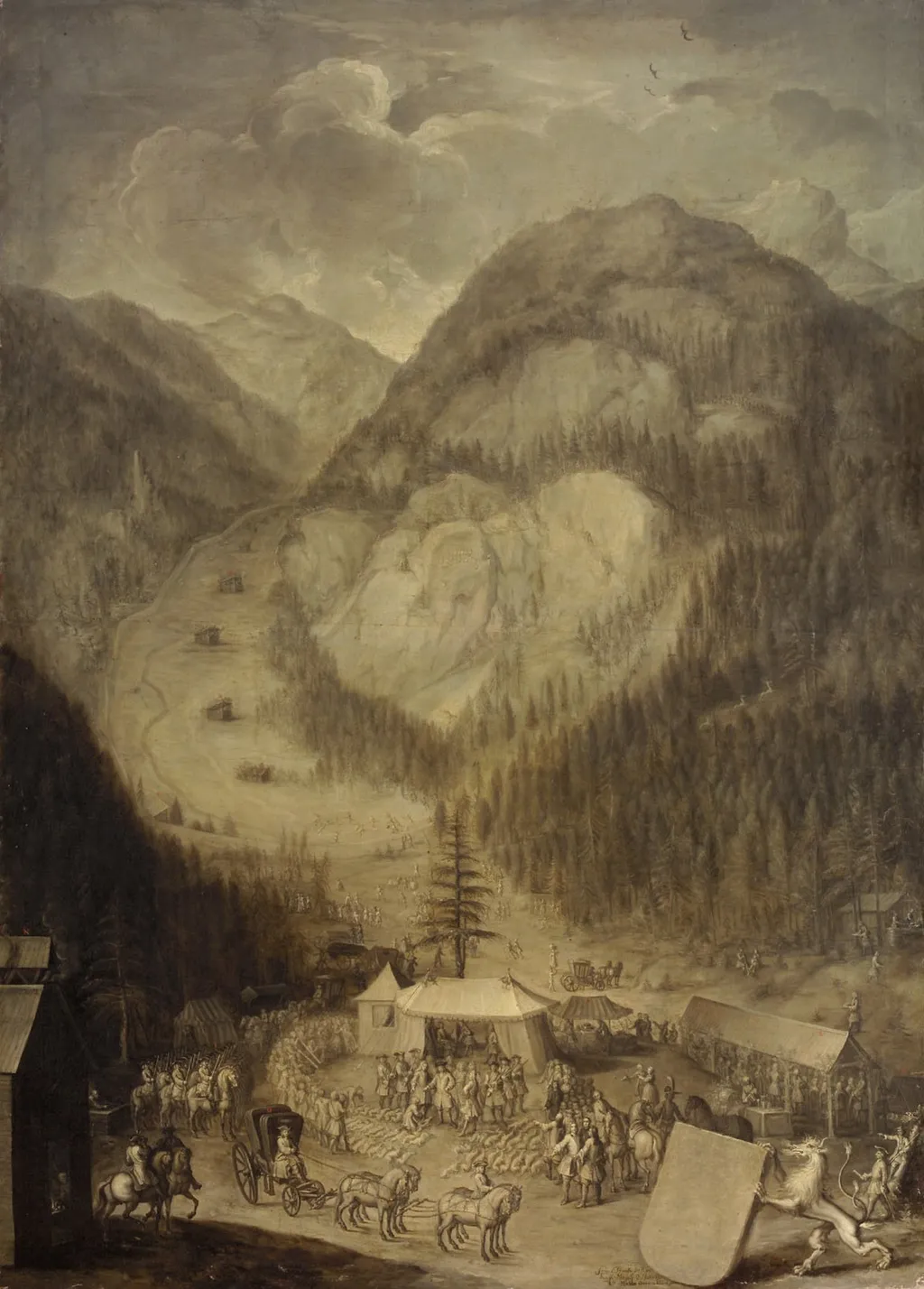
Kaiser Karl VI. (1685-1740) besichtigt die Gemsstrecke in Eisenerz is an unspecified painting by the Rococo painting artist Johann Veit Hauck. It dates from 1738 and is held in the collection of the Kunsthistorisches Museum.
About this work
Subject & Meaning
The painting shows Emperor Karl VI (1685-1740) observing a mining pit, emphasizing his interest in natural resources and statecraft.
The painting shows Emperor Karl VI (1685-1740) observing a mining pit, emphasizing his interest in natural resources and statecraft. The subject is drawn from imperial tours that symbolized authority over both territory and industry in the early 18th century. This scene reflects the broader Enlightenment-era fascination of Habsburg rulers with scientific and economic development, portraying the emperor as a pragmatic sovereign overseeing economic progress.
History & Provenance
Johann Veit Hauck painted Kaiser Karl VI. (1685-1740) besichtigt die Gemsstrecke in Eisenerz in 1738, depicting Emperor Karl VI surveying a gemstone route in Eisenerz. The work entered the collection of the Kunsthistorisches Museum, where it remains on display.
The painting was created as a landscape genre piece, reflecting imperial patronage of geographic exploration during the early 18th century. Its dimensions are 169 cm in height and 122 cm in width.
Overview
Johann Veit Hauck's 1738 landscape painting, Kaiser Karl VI. (1685-1740) besichtigt die Gemsstrecke in Eisenerz, depicts a dynamic outdoor gathering amidst a mountainous backdrop. The work is part of the collection at the Kunsthistorisches Museum.
Technique & Style
Hauck employed soft, nuanced lighting and shadow (reminiscent of chiaroscuro techniques) to create depth, particularly in the rocky cliffs, trees, and the layered composition of people, animals, and vehicles.
Context
The work reflects 18th-century European artistic tendencies in landscape and scene composition, capturing a moment of imperial presence in a natural, Alpine setting.
Legacy
While specific lasting impacts or widespread reproductions of this piece are not prominently documented, it remains a notable example of Hauck's work and a visual record of imperial life in the era.
Artist & collection

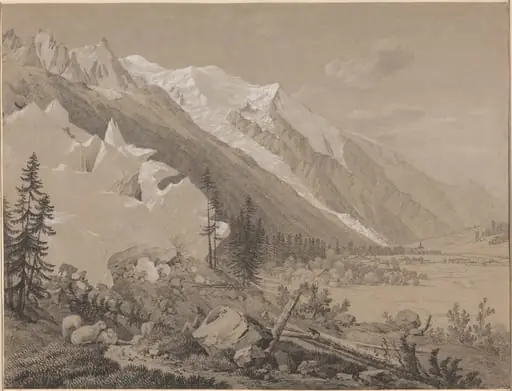
- Vue du Mont Blanc
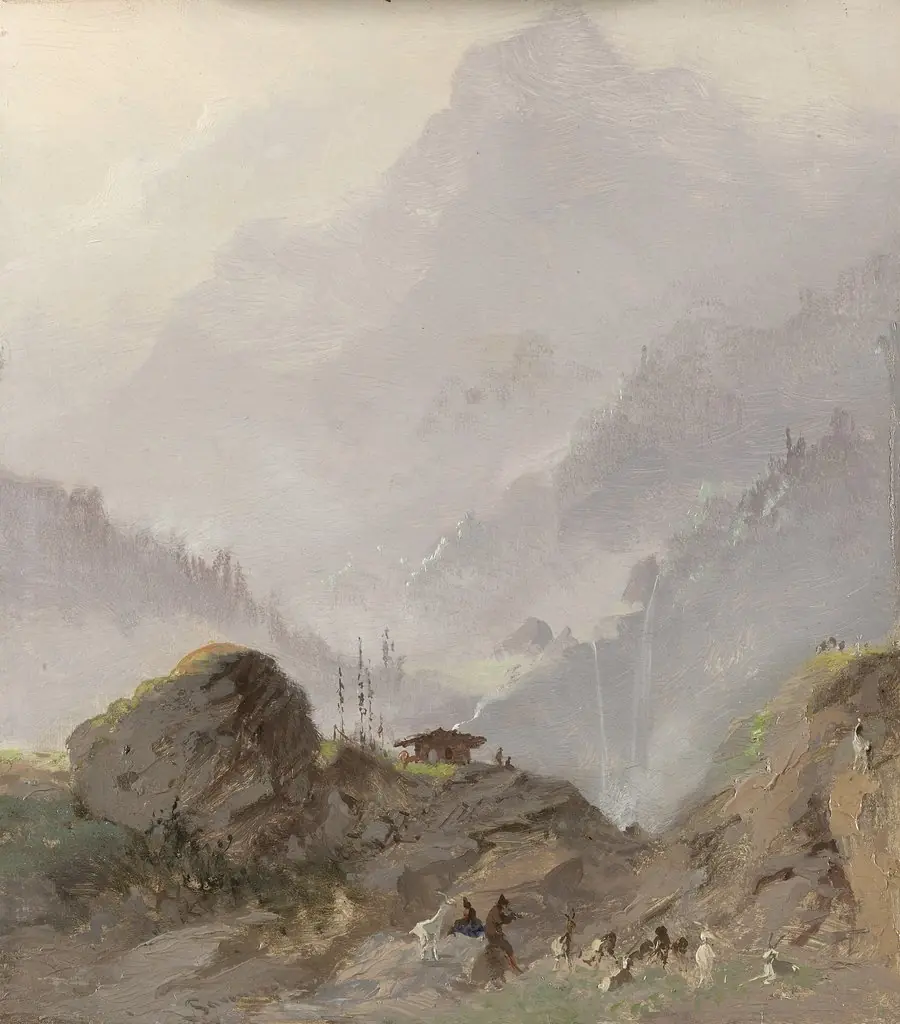 Alpine Landscape in Tyrol with Chamois Herd
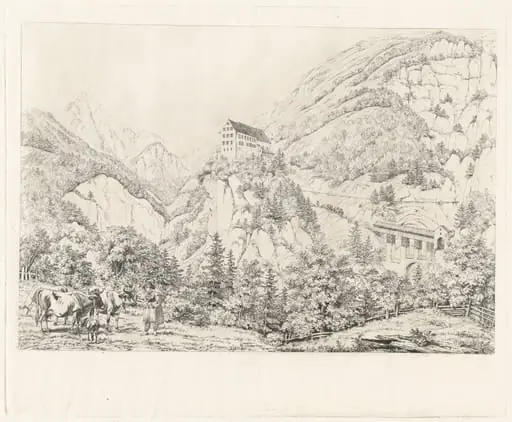 The Georgenberg in the Tyrol
 Eingang ins Lauterbrunnental
 Parti i Valders i Norge. Aften
 Berglandschap in Tirol met gemzen
 Parti i Valders i Norge. Aften
 Untitled
 Mountain Scenery with River
 Berglandschaft mit Eremit
 Chain of Mont Blanc
 Essais de gravure à l'eau forte par Alexandre Calame, I, pl. 21