Artwork
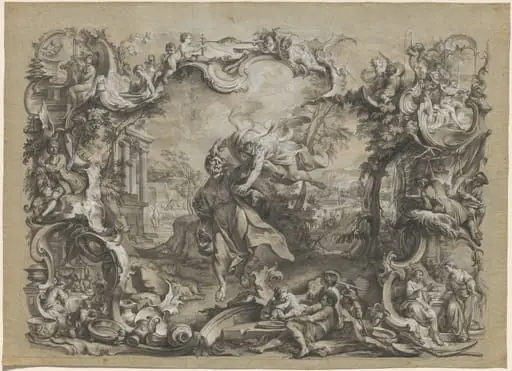
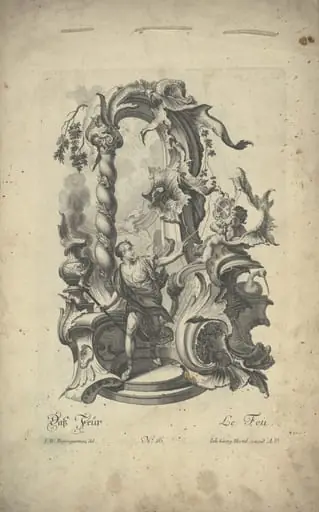
Saint Deicolus and the Boar
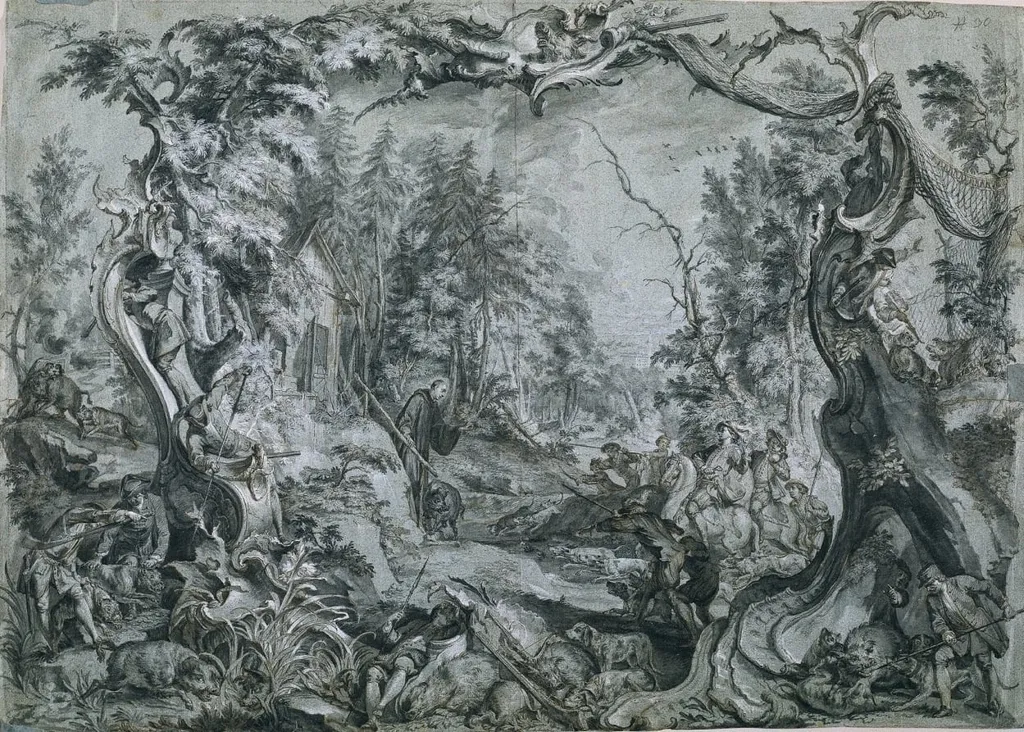
Saint Deicolus and the Boar is a drawing by the Baroque artist Johann Wolfgang Baumgartner. It dates from 1748 and is held in the collection of the Cleveland Museum of Art.
- Accession no.
- 1967.22
- Credit line
- Dudley P. Allen Fund
About this work
Overview
Johann Wolfgang Baumgartner, a German artist active in the early 18th century, created a highly finished drawing on blue paper that depicts the legend of Saint Deicolus rescuing a boar. The work is rendered as a single sheet intended as a design for a printed series that paired saints with hunting scenes.
Subject & Meaning
The composition illustrates the Irish missionary Saint Deicolus, founder of a Burgundian abbey, intervening to save a boar from the hunting party of the Frankish ruler Clotaire II. Kneeling in a forest, the saint is shown beside the fallen animal while celestial figures hover above, emphasizing the saint’s protective role.
Technique & Style
Baumgartner employs a decorative cartouche format, integrating artificial scroll‑like elements that appear to sprout from rocks and foliage. The framing mimics intricate metalwork intertwined with vegetation, a hallmark of the Rococo taste for light, ornamental surfaces. The drawing’s fine line work and careful shading give it a polished, print‑ready quality.
History & Provenance
The piece was produced as part of a suite of designs meant for engraving, combining hagiographic subjects with hunting motifs. Though the original print run is undocumented, the drawing survives as a unique preparatory work, likely retained by the artist’s workshop before entering a private collection.
Context
In early‑18th‑century Germany, artists frequently blended narrative illustration with elaborate ornamental frames, reflecting a broader Rococo fascination with decorative excess and the integration of text, image, and border. Baumgartner’s approach exemplifies this trend, turning a straightforward saintly tale into a visually playful tableau.
Artist & collection

- Forest Interior
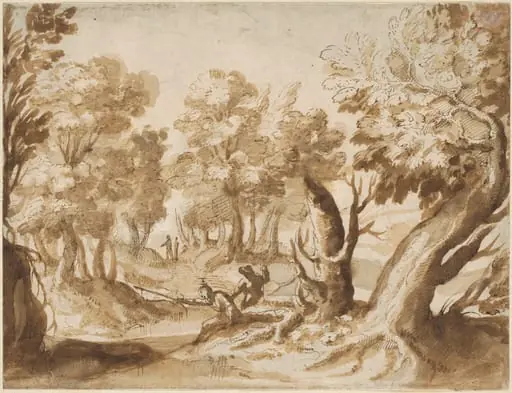 Two Figures Fishing in a Landscape
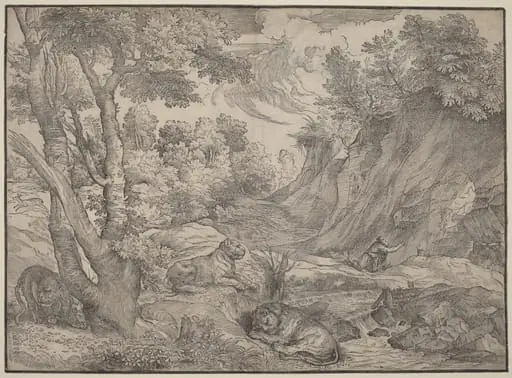 Saint Jerome in the Wilderness
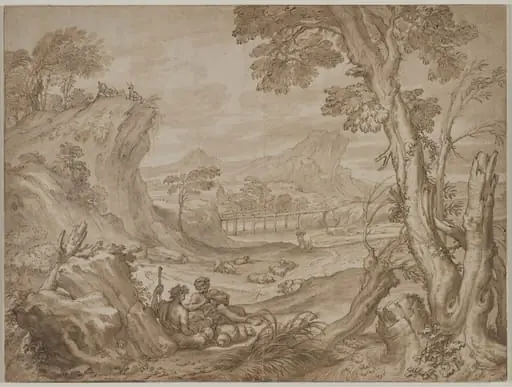 Landscape with Shepherds
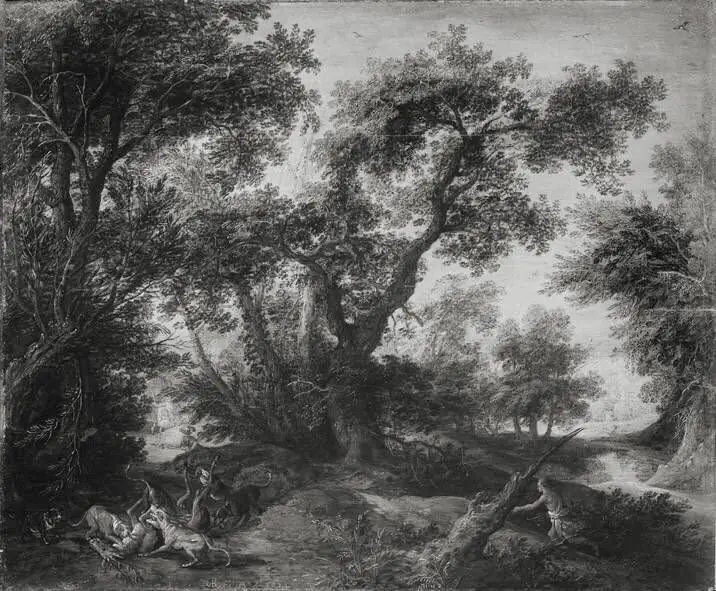 Wooded landscape with a deerhunt
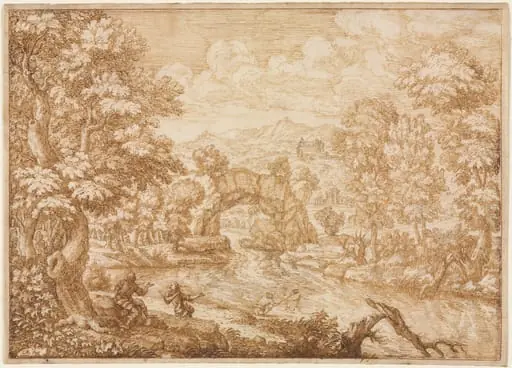 River Landscape with Arched Rock
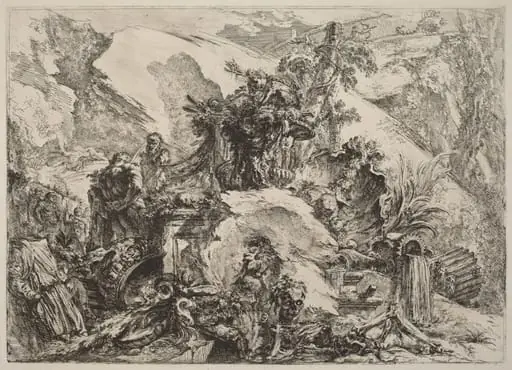 The Skeletons
 Venus and Adonis
 Landscape with Travelers Attacked by a Gang of Robbers
 The Golden Age
 The Flight into Egypt: The Donkey Led to the River
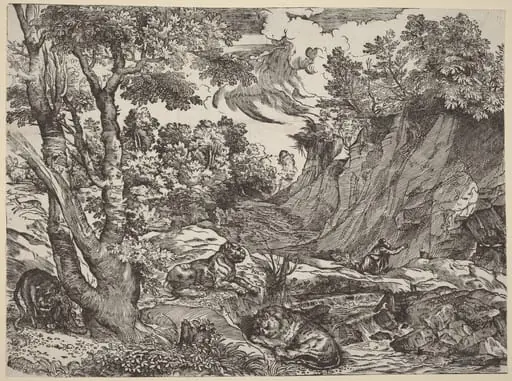 Saint Jerome in the Wilderness