Artwork
Venus and Adonis
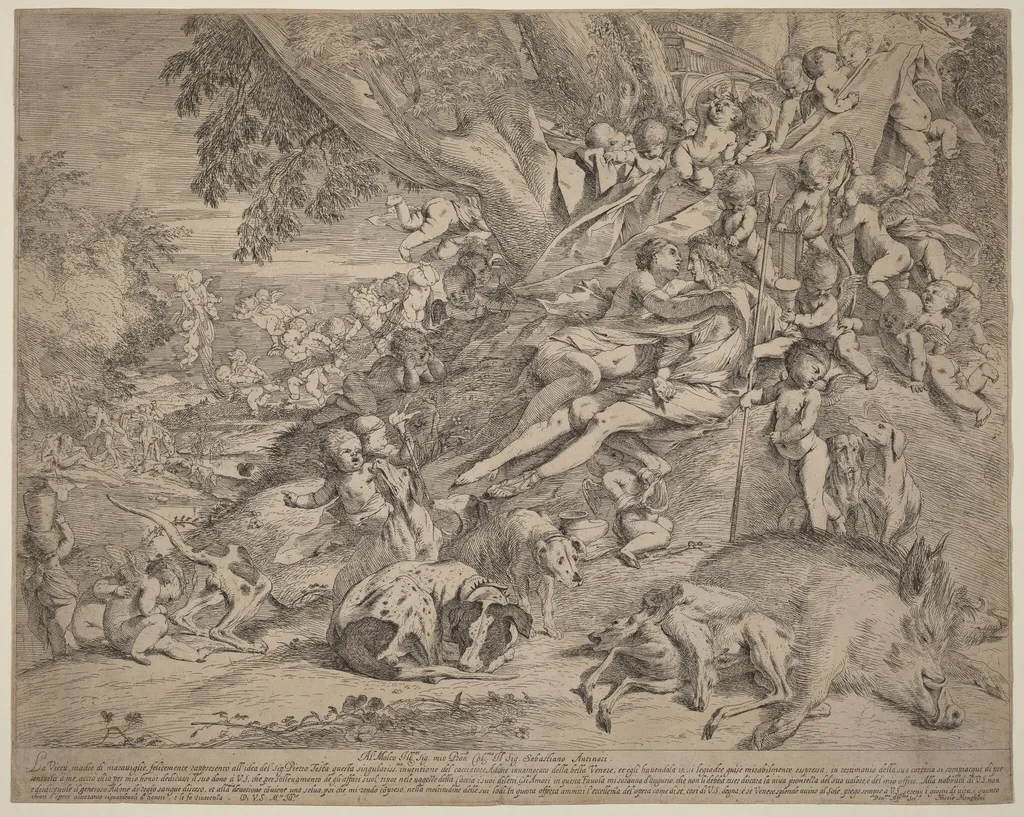
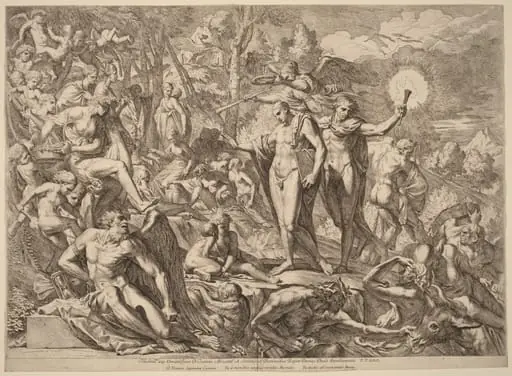
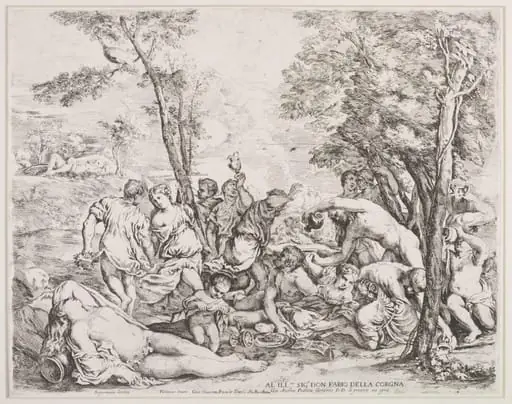
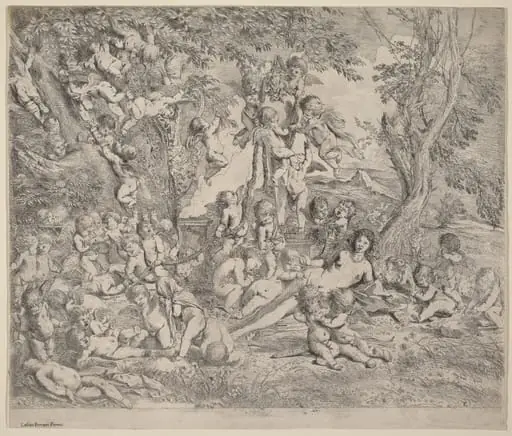
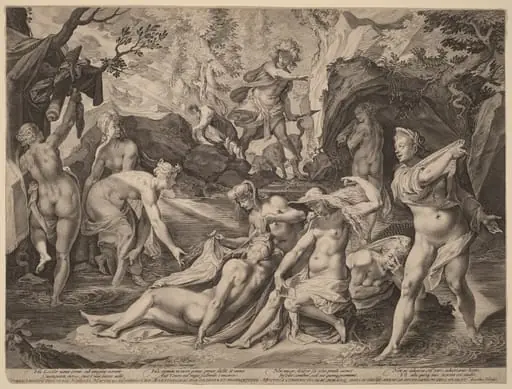
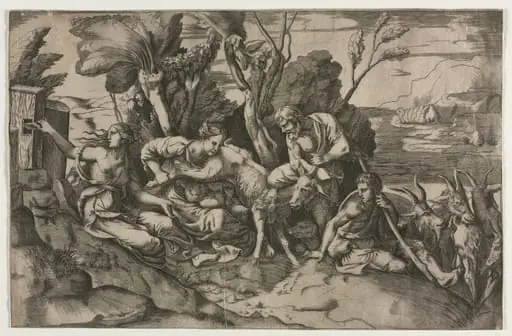
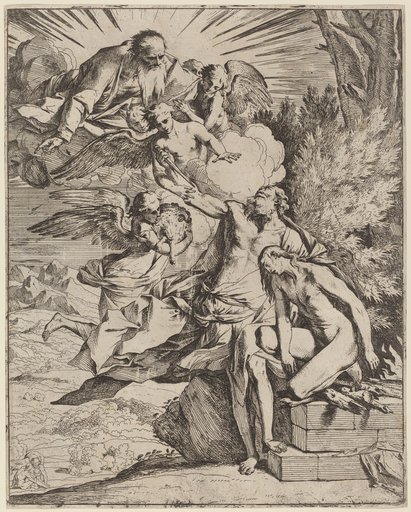
Venus and Adonis is an ink print by the Baroque artist Pietro Testa. It dates from 1634 and is held in the collection of the National Gallery of Art. Created in 1634, this etching on laid paper presents a mythological tableau set in a dense forest.
- Inscription
- Inscribed:lower center ins plate: Al'Molto Ill.re Sig. mio P.ron Col.mo Il Sig. Sebastiano Antinori. / La Virtú, madre di maraviglie, felicemente rappresentò all'idea del' sig. Pietro Testa questa singulariss.ma inventione del cacciatore Adone innamorato della bella Venere, et egli havendola in si legiadre guise mirabilmente esspressa, in testimonio della sua cortesia si compiacque di pre- / sentarla à me, acciò ch'io per mio honor dedicassi il suo dono à V.S., che per sollevamento de gli affari suol'ripor nele vagezze della Caccia i suoi diletti. Gli Amori in questa favola mi saranno d'augurio, che non li debba essere discara la viva prontezza del suo valore e del mio affeto. Alla nobbilità di V.S. non / e disdicevole il generoso Adone di regio sangue
About this work
Overview
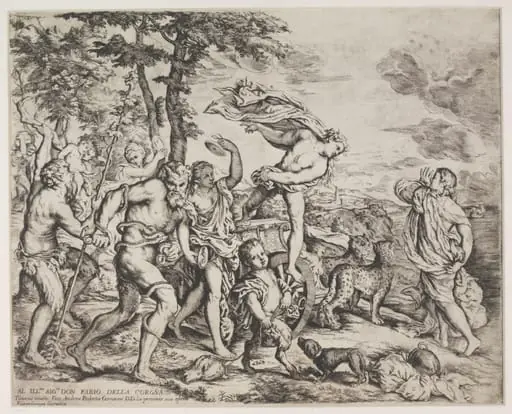
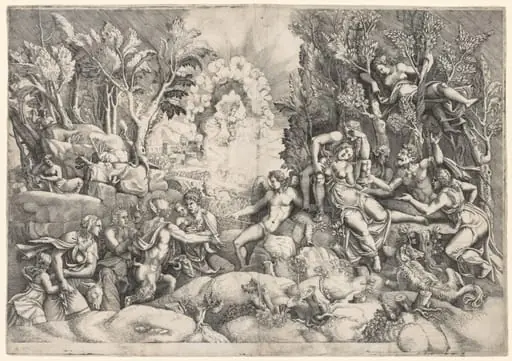
Created in 1634, this etching on laid paper presents a mythological tableau set in a dense forest. The composition is crowded, with intertwining trees, foliage, and a multitude of figures and animals that animate the scene. At its centre, a reclining female figure and a kneeling male are surrounded by dogs and onlookers, conveying a moment of narrative tension.
Subject & Meaning
The image draws on the classical story of Venus and Adonis, portraying the goddess of love alongside the mortal hunter at a pivotal instant. The surrounding creatures and tangled vegetation emphasize the natural setting of the myth, while the gestures of the figures suggest a blend of intimacy and impending tragedy that characterizes the ancient tale.
Technique & Style
Executed through etching, the artist employs fine, intersecting lines to render texture in both foliage and flesh, giving the forest a palpable density. Overlapping silhouettes create depth, and the careful modulation of line weight produces a dramatic chiaroscuro effect without reliance on tonal washes, reflecting the High Baroque emphasis on movement and complexity.
History & Provenance
The work originates from the studio of Pietro Testa, an Italian printmaker active in Rome during the High Baroque period. Testa was associated with a circle of scholars and artists devoted to classical antiquity, particularly the patronage of Cassiano dal Pozzo. The print has survived in several impressions, documenting Testa’s engagement with mythological subjects.
Context
In 17th‑century Rome, the revival of classical themes was encouraged by intellectual networks that gathered around patrons like dal Pozzo. Testa’s etching reflects this environment, merging scholarly interest in antiquity with the dynamic visual language of the Baroque. The piece exemplifies how print media disseminated mythological narratives to a broader audience beyond painted commissions.
Own this work as a print
Artist & collection
Artist
Pietro Testa (1612 – 1 March 1650) was an Italian High Baroque artist active in Rome.