Artwork
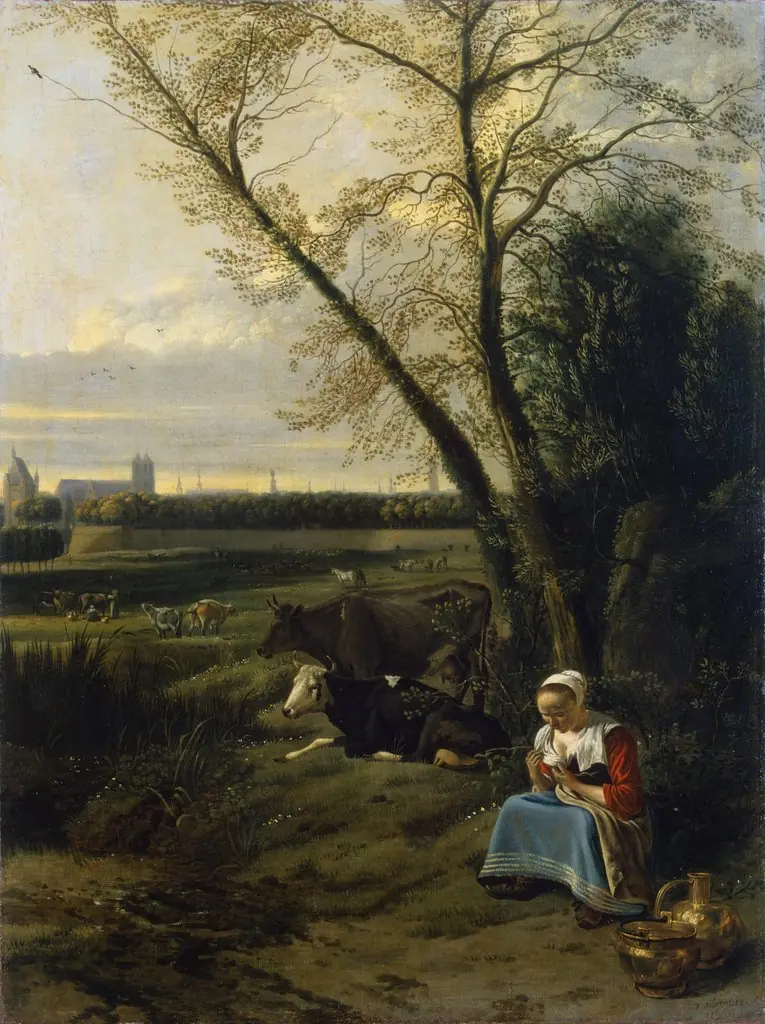
Pasture with two sleeping shepherdesses
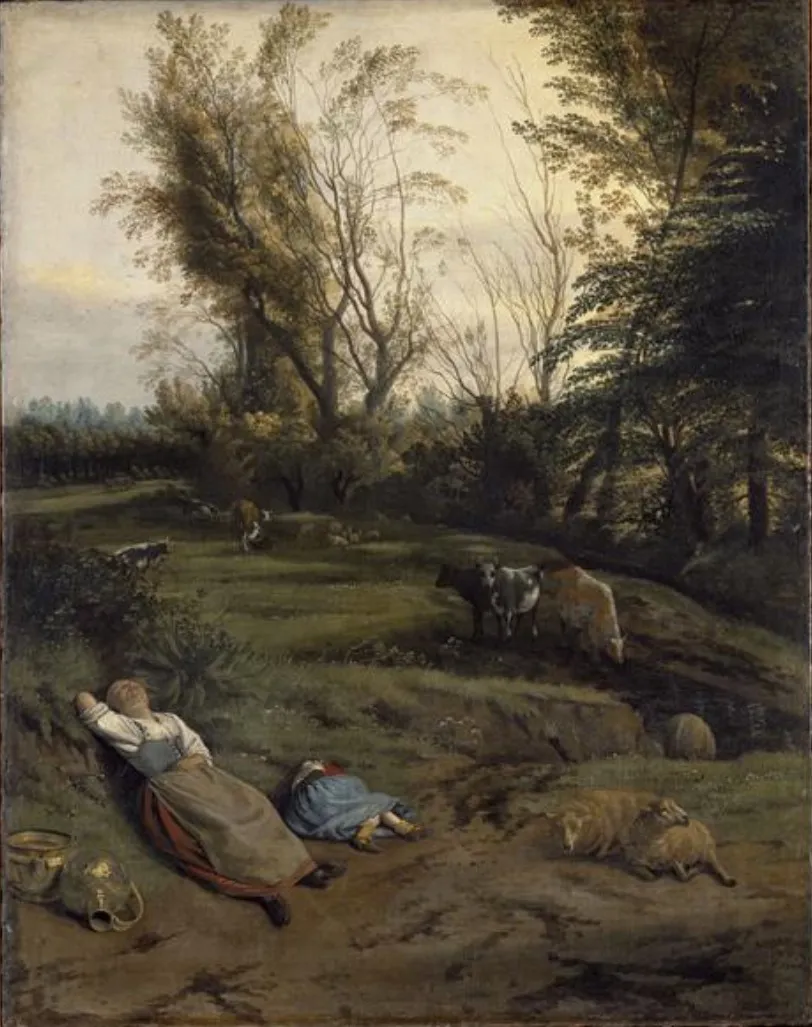
Pasture with two sleeping shepherdesses is an oil painting by the Dutch Golden Age artist Johannes Siberechts. It dates from 1650 and is held in the collection of the Bavarian State Painting Collections.
About this work
They are dressed in long skirts and blouses, with one lying on her back and the other on her side.
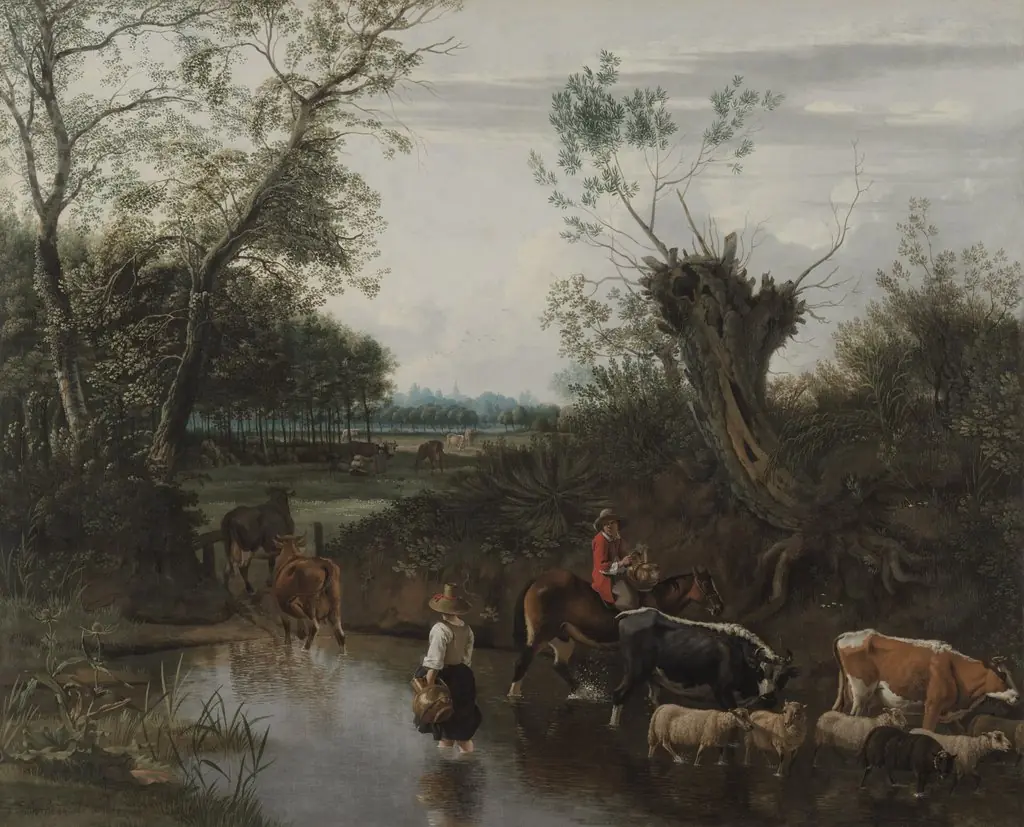
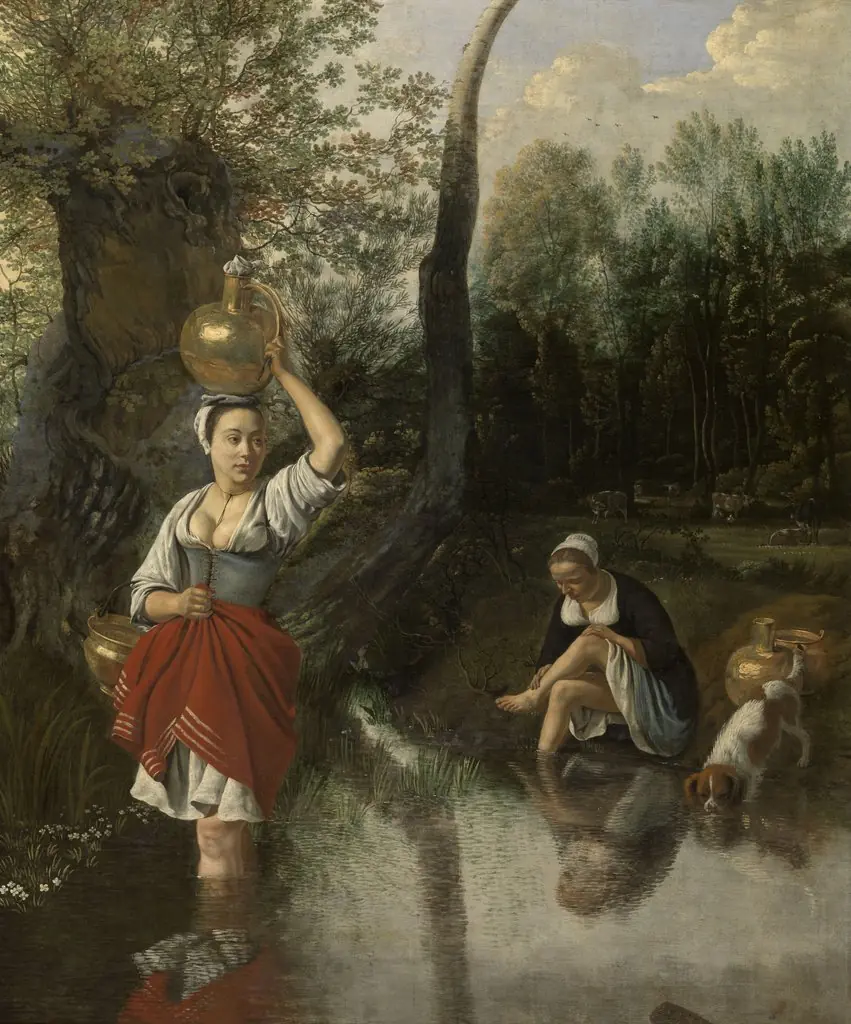
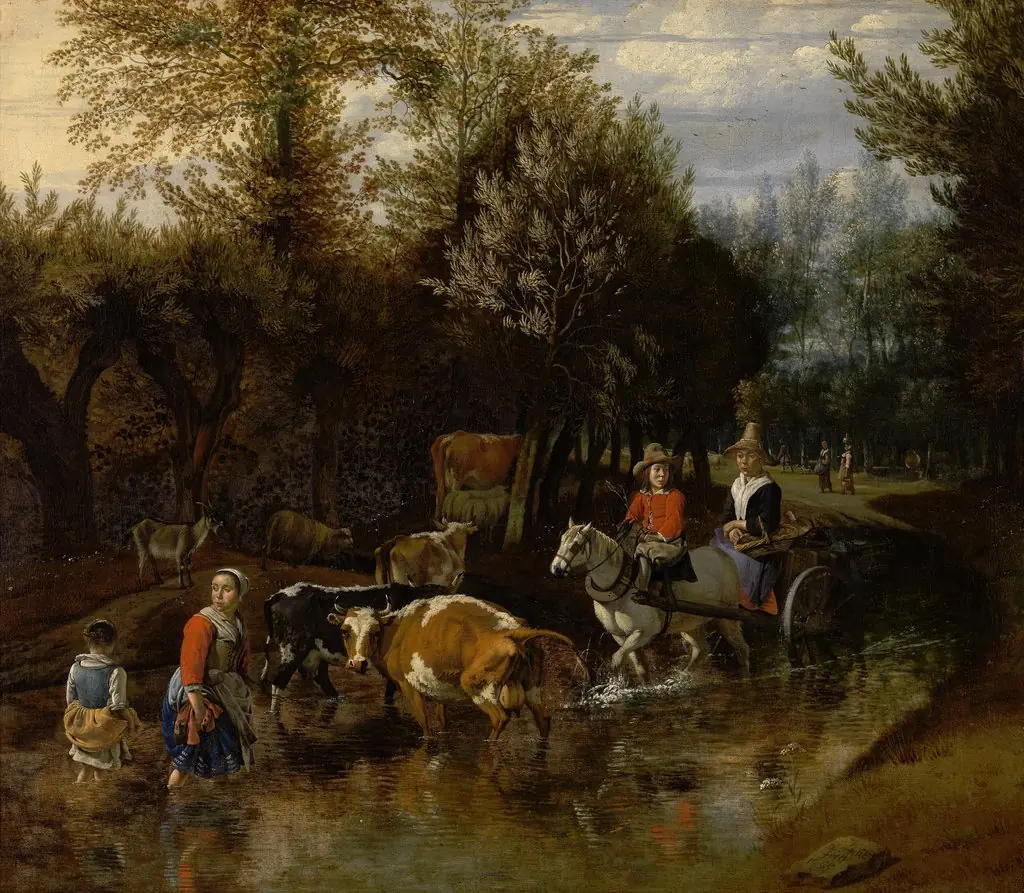
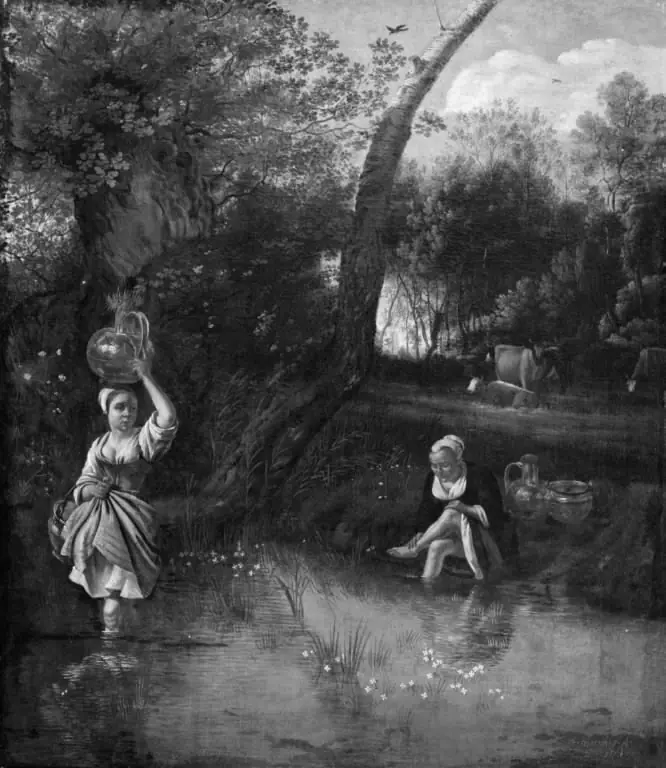
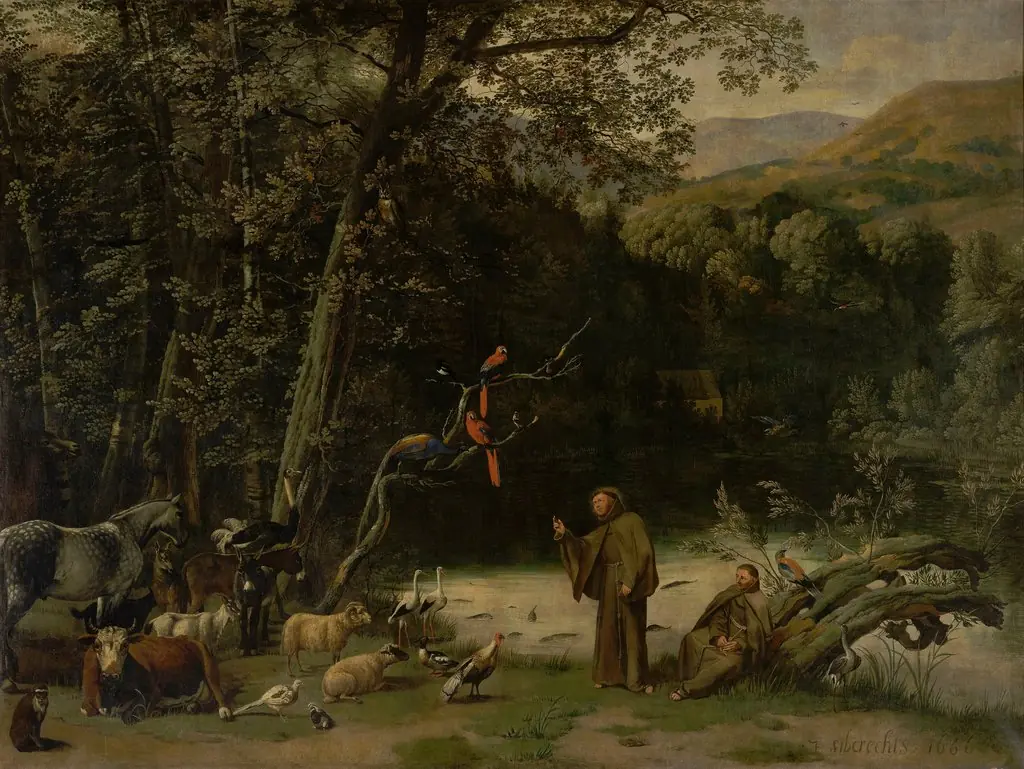
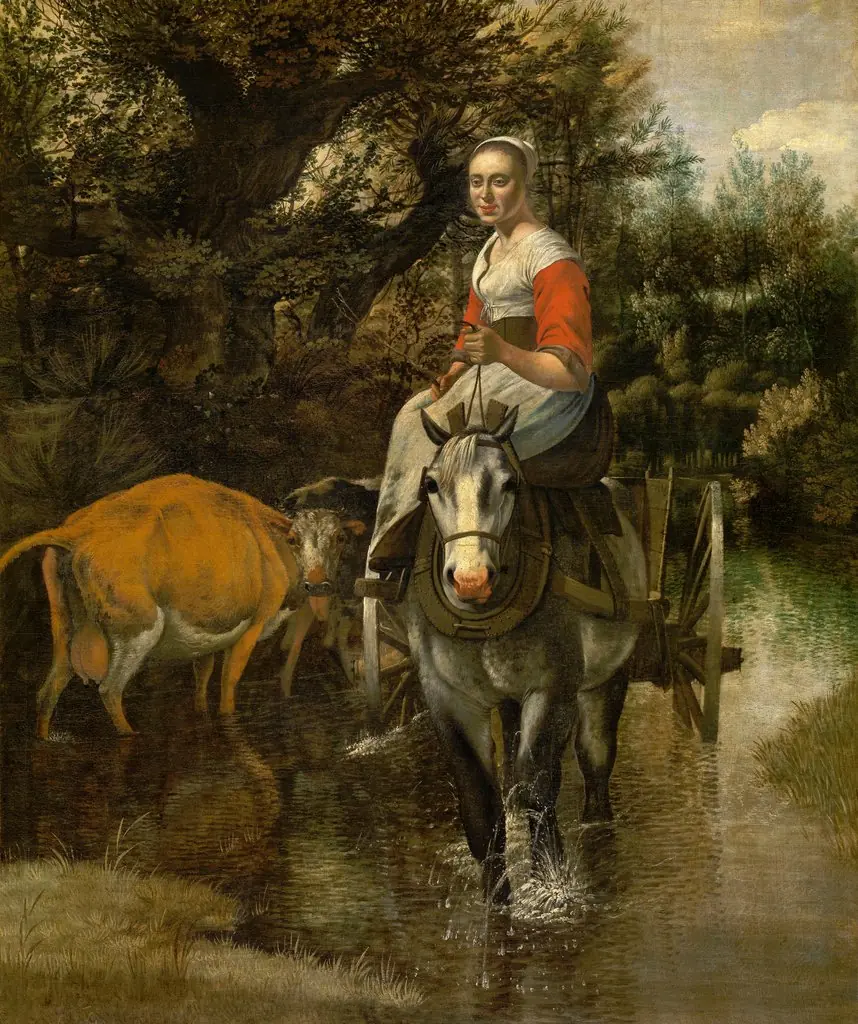
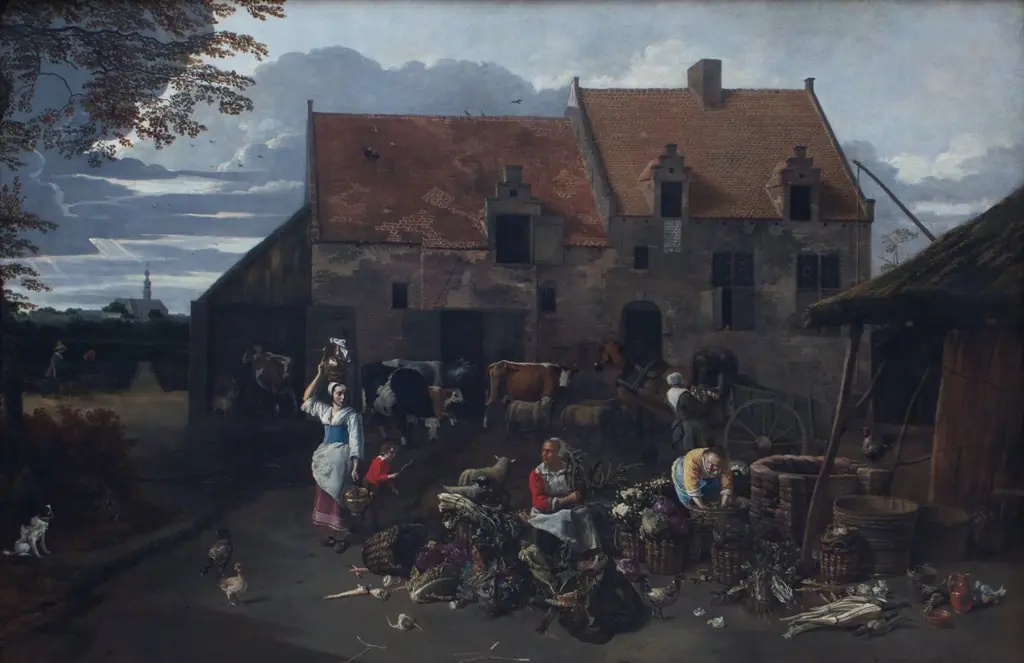
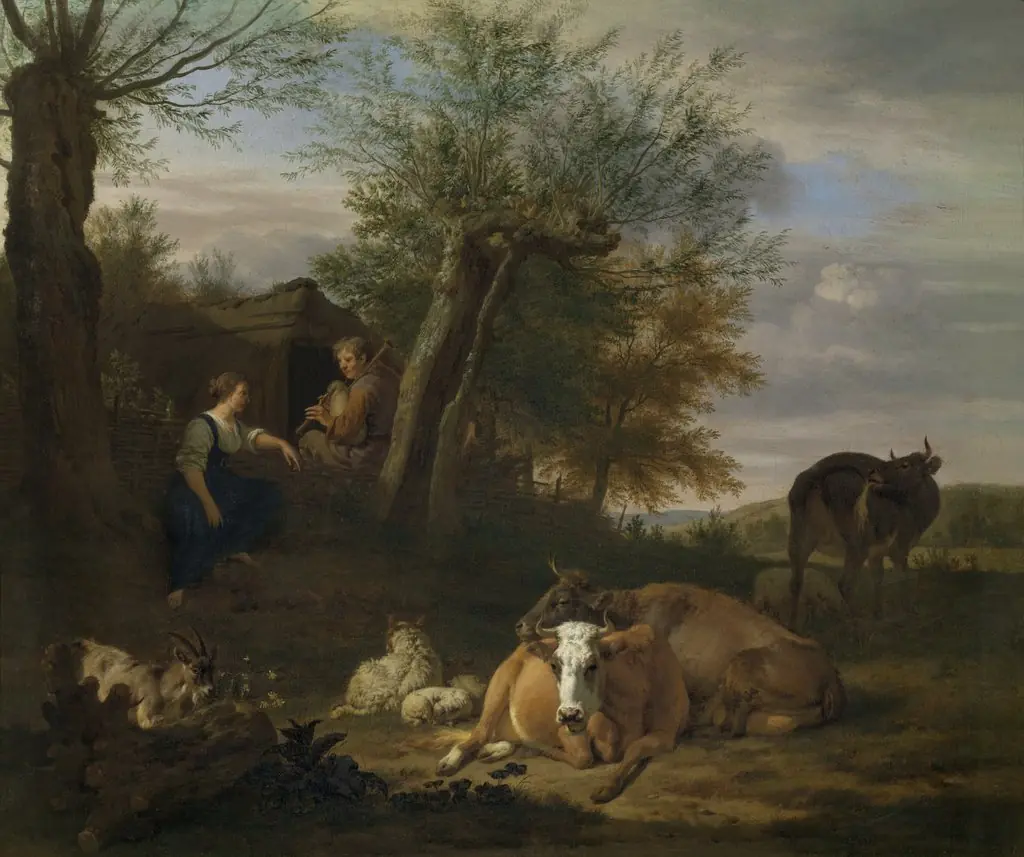
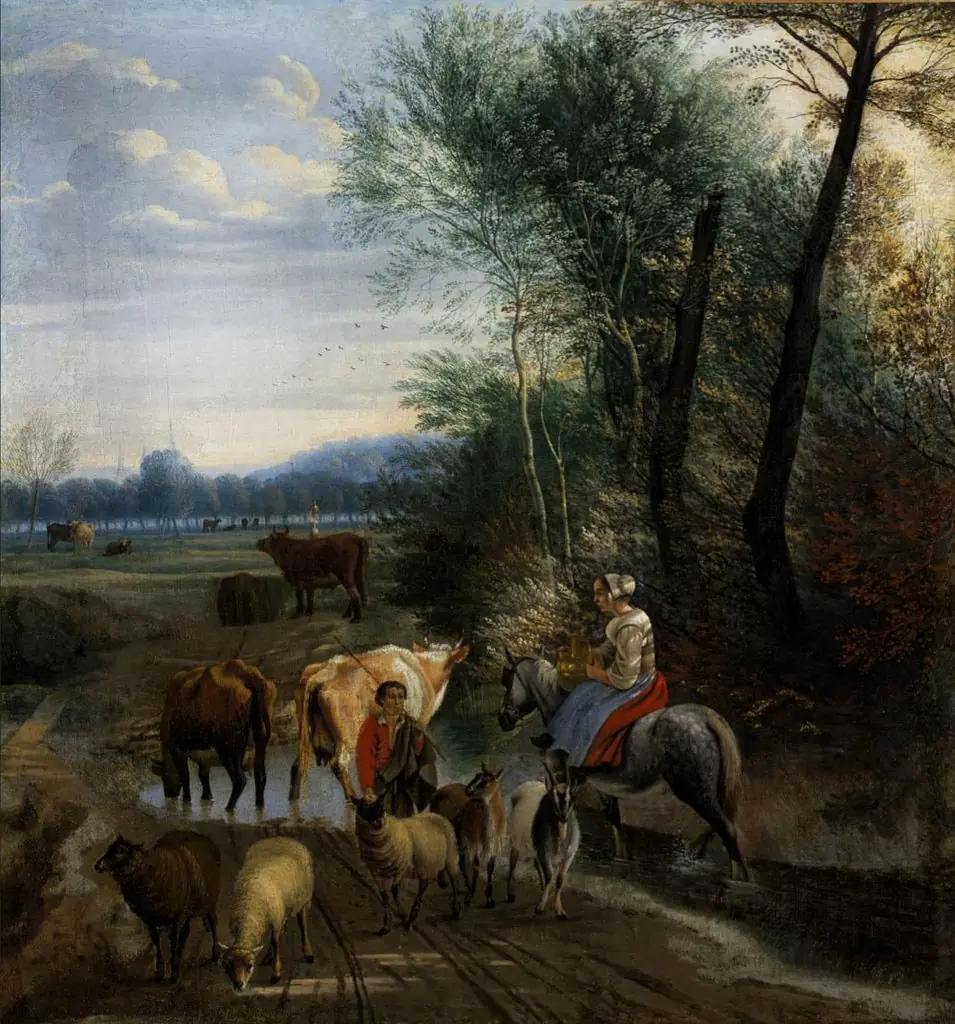
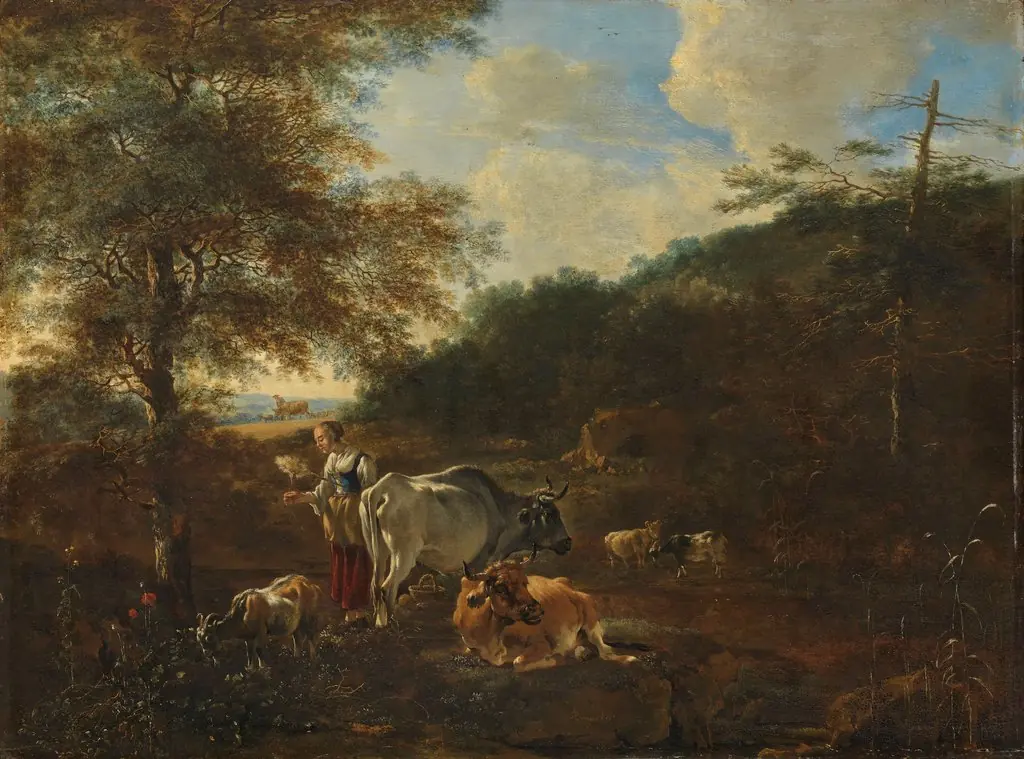
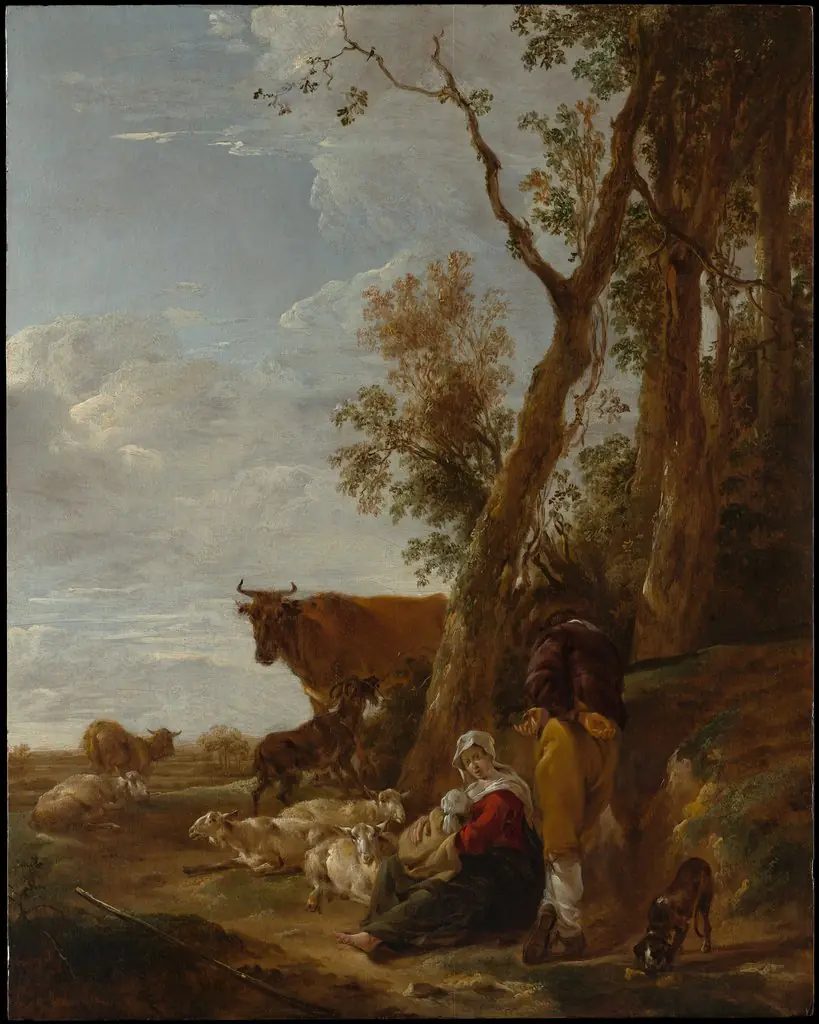
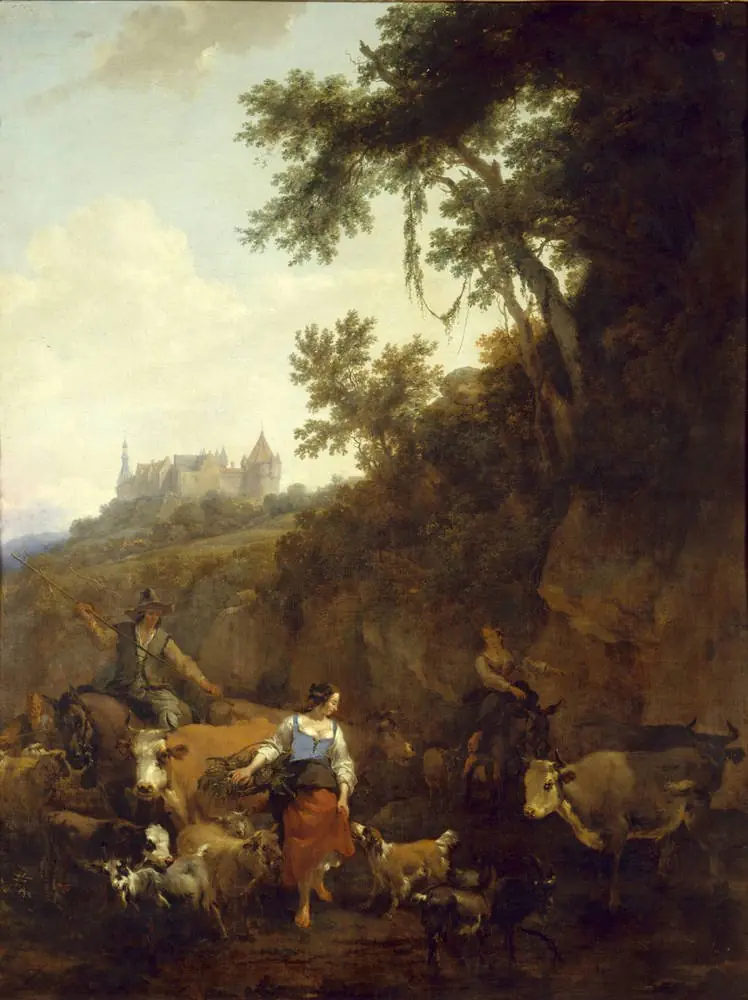
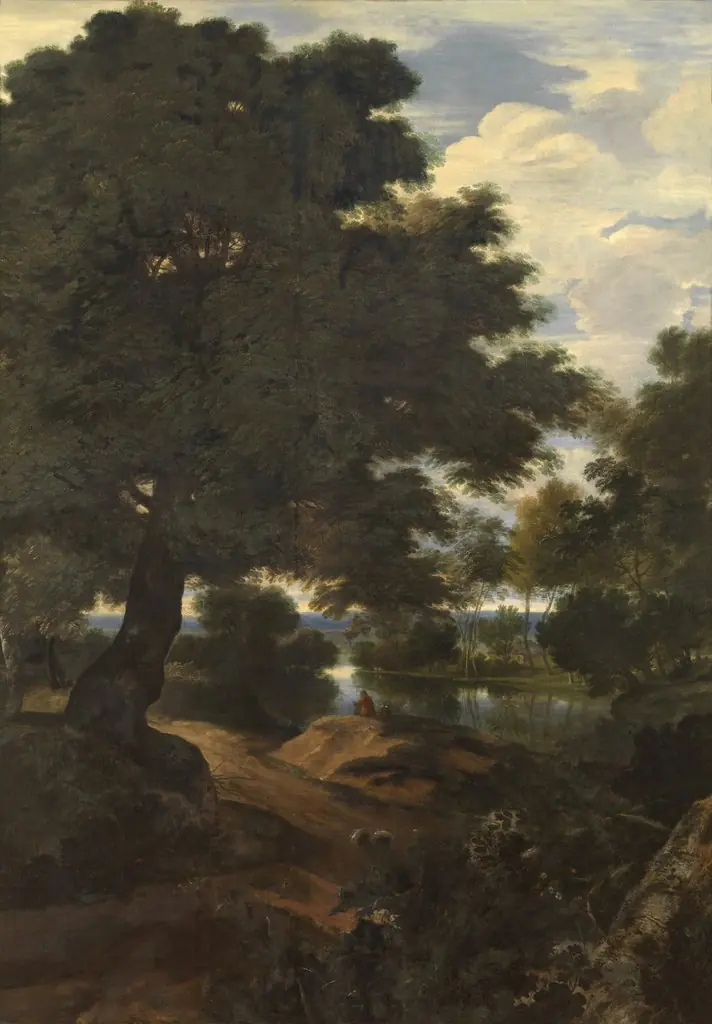
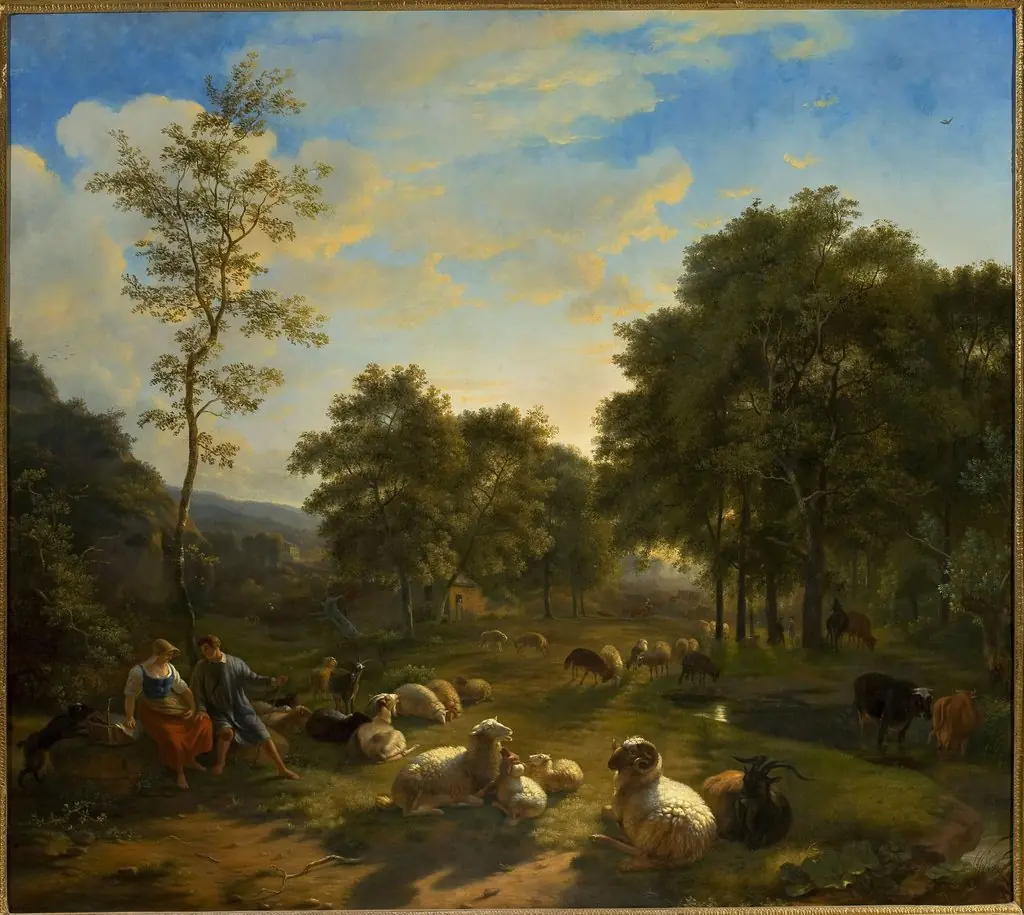
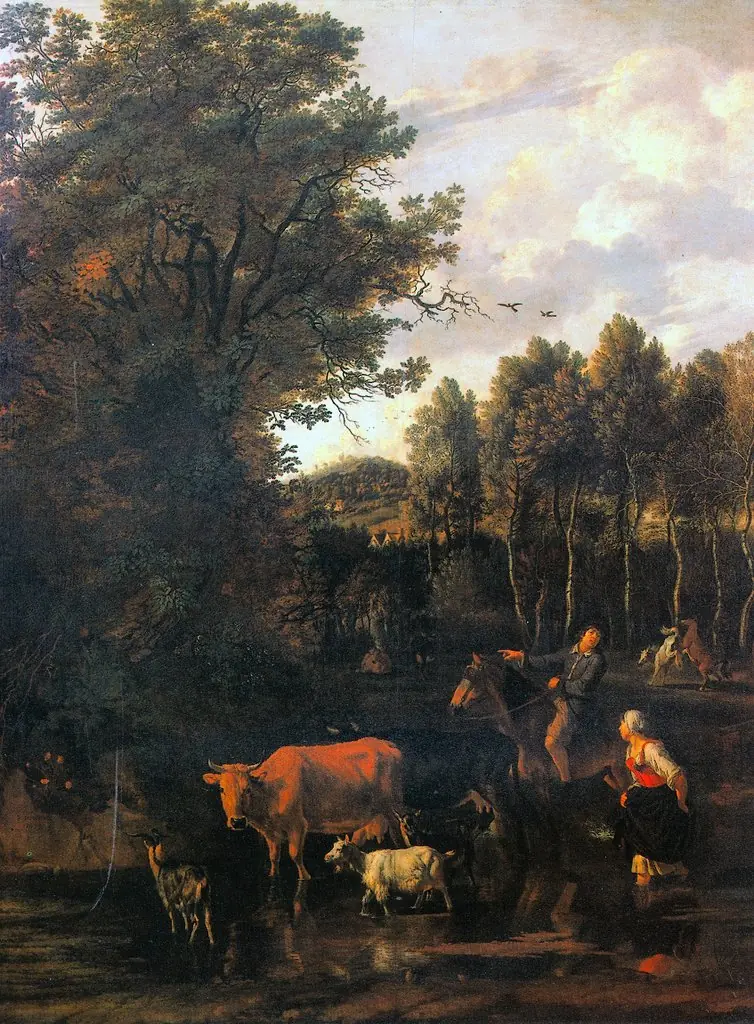
This painting shows a serene landscape with two shepherdesses sleeping on the ground. They are dressed in long skirts and blouses, with one lying on her back and the other on her side. A few animals, including a cow and a dog, are scattered around them.
In the background, there are trees and a cloudy sky. The overall atmosphere is peaceful and idyllic. The artist has used warm colors to create a sense of comfort and tranquility.
The painting is a beautiful example of a landscape scene from the 17th century. To learn more about the artist's use of light and shadow, look up the technique of chiaroscuro.
Overview
Painted around 1650 by the Flemish artist Johannes Siberechts, this oil on canvas depicts a quiet rural scene in the Flemish countryside. Though Siberechts later moved to England, this work reflects his early period, rooted in the traditions of Northern European landscape painting. It is now part of the Alte Pinakothek’s collection in Munich, representing a moment when landscape art gained prominence beyond religious or mythological themes.
Subject & Meaning
Two shepherdesses rest peacefully in a grassy pasture, one reclining on her back, the other curled on her side. Their stillness, alongside grazing cattle and a resting dog, evokes a moment of natural repose. The scene carries no overt narrative, instead emphasizing harmony between humans and the land.
The absence of labor suggests an idealized vision of rural life, valued for its simplicity and quiet dignity rather than its hardship.
Technique & Style
Siberechts employs soft, warm tones to unify the composition, with gentle transitions between earth, sky, and foliage. Light falls evenly across the scene, avoiding dramatic contrasts, yet still modeling forms subtly. Brushwork is restrained, favoring atmospheric cohesion over fine detail.
The composition is balanced and open, guiding the eye from the foreground figures to the distant trees and hazy horizon, reinforcing the painting’s tranquil mood.
History & Provenance
Created during Siberechts’ formative years in Flanders, the painting predates his relocation to England in the 1670s. It remained within European collections, eventually entering the Alte Pinakothek in Munich, where it has been preserved since the 19th century. Its journey reflects broader patterns of 17th-century Flemish art being collected by German institutions, valued for its observational clarity and pastoral themes.
Context
While often associated with the Dutch Golden Age, this work stems from the Flemish tradition, which shared similar interests in landscape and everyday life. Unlike Dutch urban scenes, Siberechts’ focus on rural solitude aligns with a broader European fascination with nature as a refuge from urbanization. The painting reflects a time when landscape art was increasingly seen as worthy of independent contemplation, not merely as background for religious or historical subjects.
Legacy
Siberechts’ work contributed to the evolution of landscape painting in Northern Europe, influencing later artists who sought to capture the quiet rhythms of rural existence. Though not widely celebrated in his lifetime, his emphasis on naturalism and serene composition helped bridge the gap between early Netherlandish topographical views and the more poetic landscapes of the 18th century.
Artist & collection
Artist
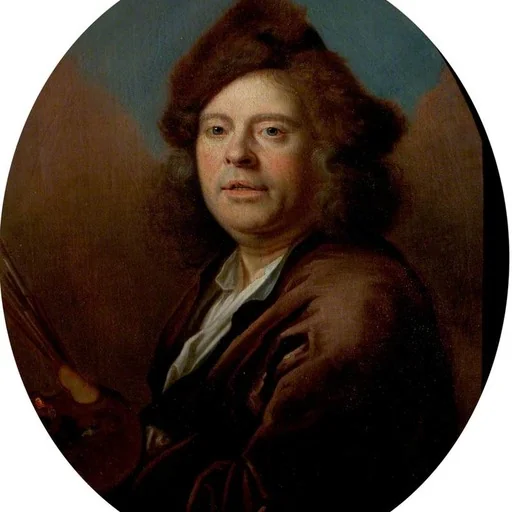
Jan Siberechts (1627–1703) was a Flemish landscape painter who, after a successful career in Antwerp, emigrated in the latter part of his life to England.