Artwork
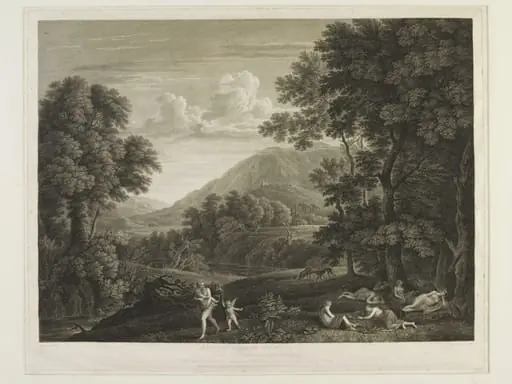
Philip Baptising the Eunuch
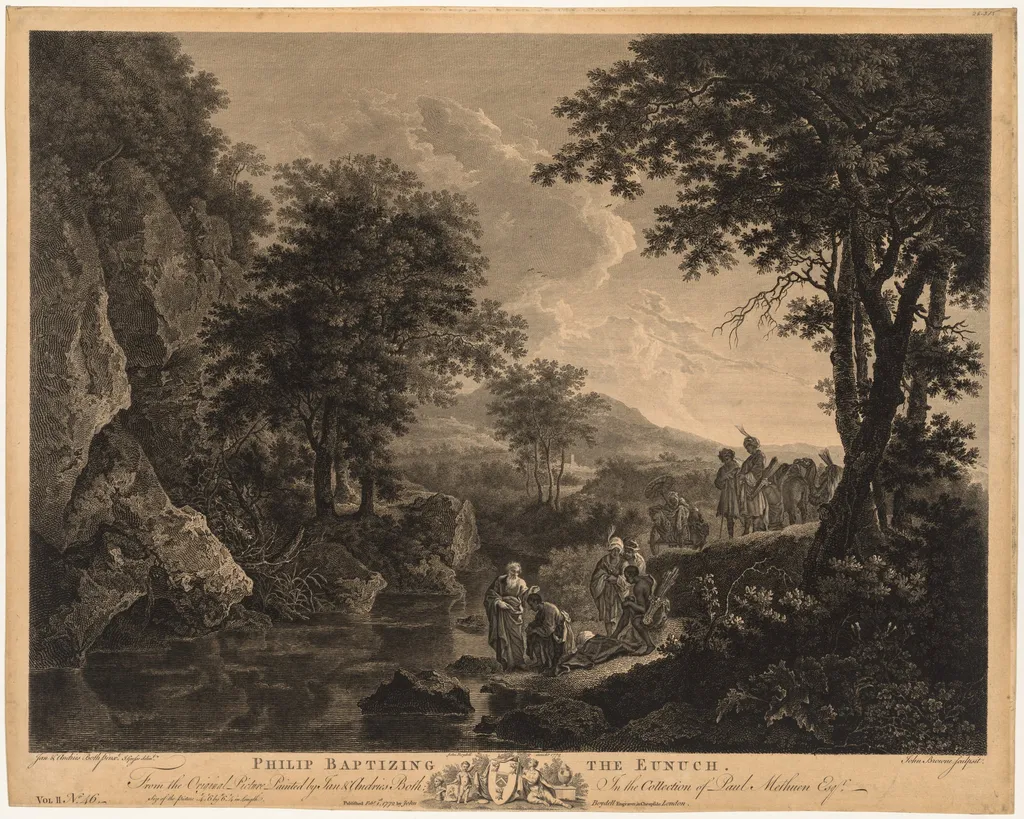
Philip Baptising the Eunuch is a print by the Romanticist artist John Browne. It dates from 1772 and is held in the collection of the Cleveland Museum of Art.
- Accession no.
- 1926.315
- Credit line
- Gift of Mrs. E. A. Boynton, in memory of Judge W. W. Boynton
About this work
Overview
Created in 1772 by John Browne, this print depicts the biblical moment when Philip baptizes the Ethiopian eunuch, as described in the Acts of the Apostles.
Created in 1772 by John Browne, this print depicts the biblical moment when Philip baptizes the Ethiopian eunuch, as described in the Acts of the Apostles. The work is part of the collection at The Cleveland Museum of Art. Unlike oil paintings, it was produced as a reproductive print, likely intended for wider dissemination among religious audiences. Its composition emphasizes quiet solemnity rather than dramatic intensity.
Subject & Meaning
The scene illustrates the conversion of a high-ranking official from Ethiopia, symbolizing the spread of Christianity beyond Jewish communities. Philip, guided by divine instruction, performs the baptism in a natural setting, affirming the universality of faith. The inclusion of onlookers suggests communal witness, reinforcing the theological message of inclusion and divine calling across cultural boundaries.
Technique & Style
Browne employed fine, controlled lines to render figures and landscape, characteristic of 18th-century reproductive engraving. Soft gradations of tone suggest atmospheric depth, while the arrangement of figures creates a balanced, contemplative rhythm. The treatment of fabric and foliage is detailed but restrained, avoiding theatricality in favor of dignified clarity consistent with devotional illustration of the period.
History & Provenance
The print was made during a period when biblical narratives were commonly reproduced in print form for private devotion and educational use. It entered the Cleveland Museum of Art’s collection through established acquisition channels, likely as part of a broader 19th-century interest in religious art. No record of earlier ownership or exhibition history is widely documented.
Context
In late 18th-century Britain, religious imagery in print was widely circulated, often based on paintings by established artists. Browne’s work reflects this trend, adapting visual conventions from earlier religious compositions into an accessible medium. While not aligned with the emerging Romantic movement’s emotional intensity, it shares its interest in natural settings as vessels for spiritual meaning.
Legacy
Though not widely known today, the print exemplifies how biblical stories were visually transmitted in pre-industrial societies. Its preservation in a major museum underscores its role as a cultural artifact of devotional practice. It remains a quiet testament to the role of print in shaping religious understanding among lay audiences in the 1700s.
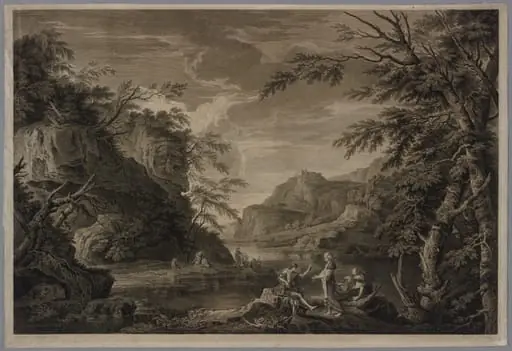
Own this work as a print
Artist & collection

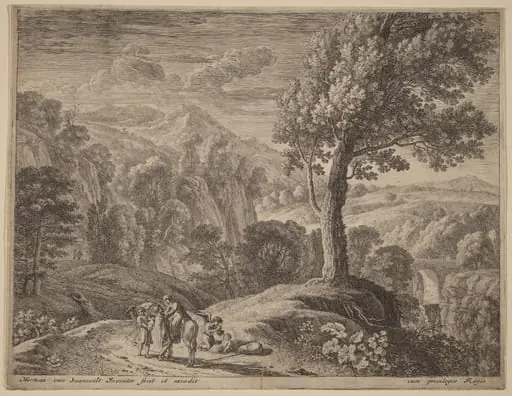 The Large Tree and the Cascade
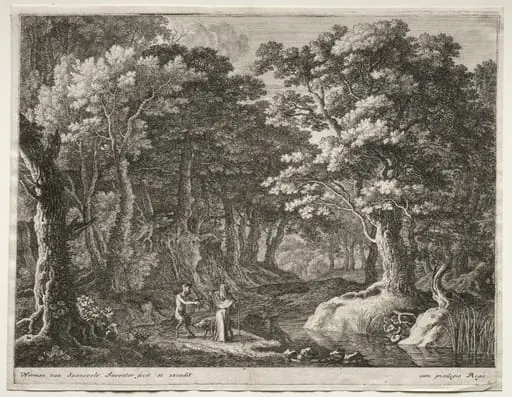 The Penitents: The Temptation of St. Anthony
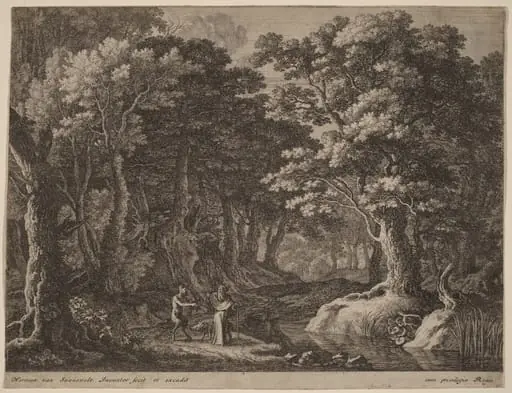 Devil Tempting St. Anthony
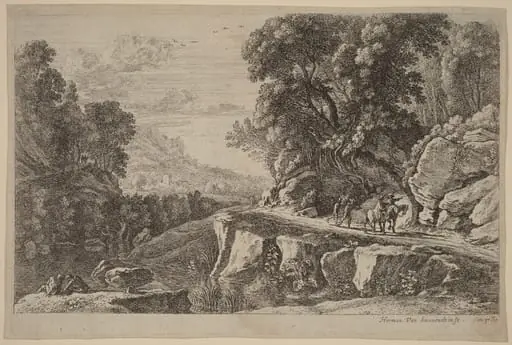 The Two Horsemen
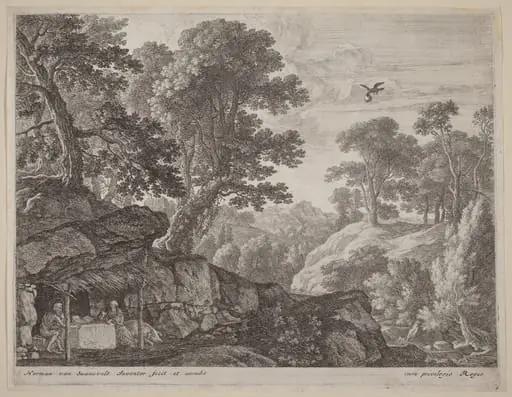 Saint Paul and Saint Anthony by the Entrance to the Cave
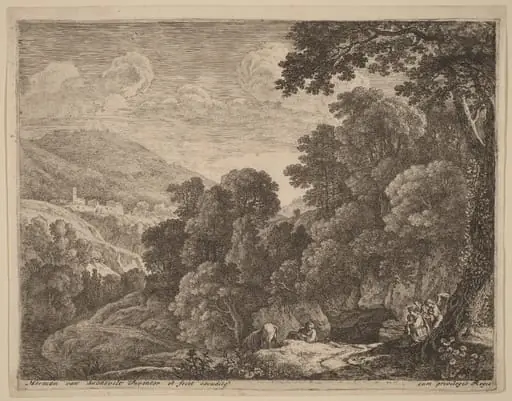 The Cave
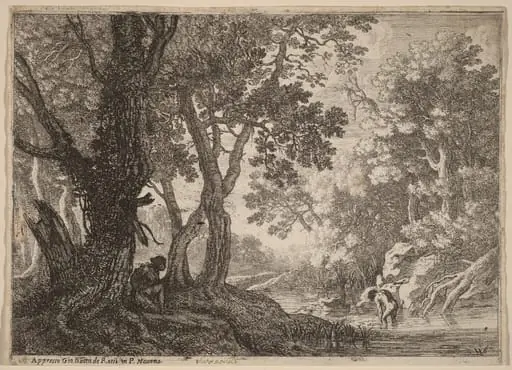 Salmacis and Hermaphroditus
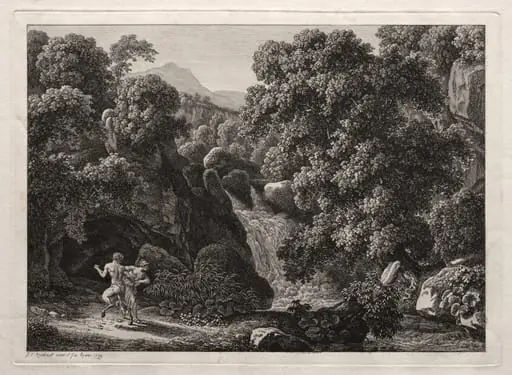 Heroic Landscape: The Satyr and the Nymph
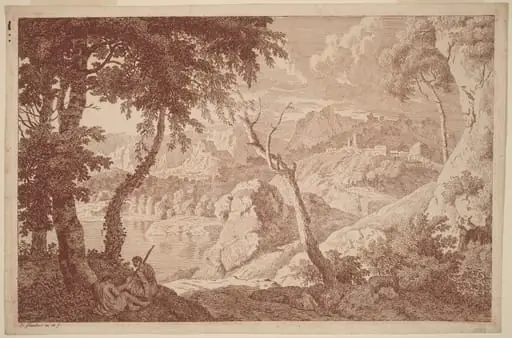 Mountain Landscape with Two Men Resting
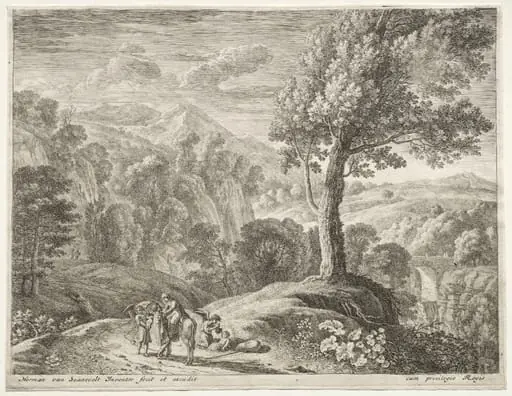 The Flight into Egypt: The Large Tree and the Cascade