Artwork
Salisbury Cathedral from the Meadows
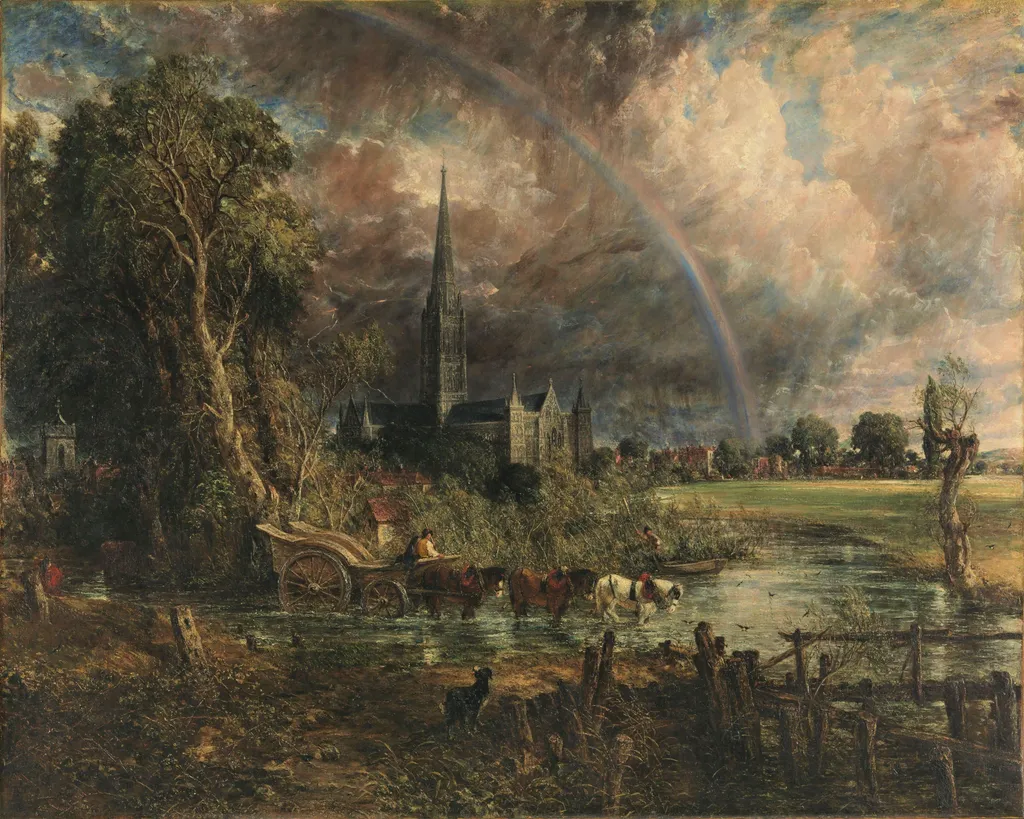
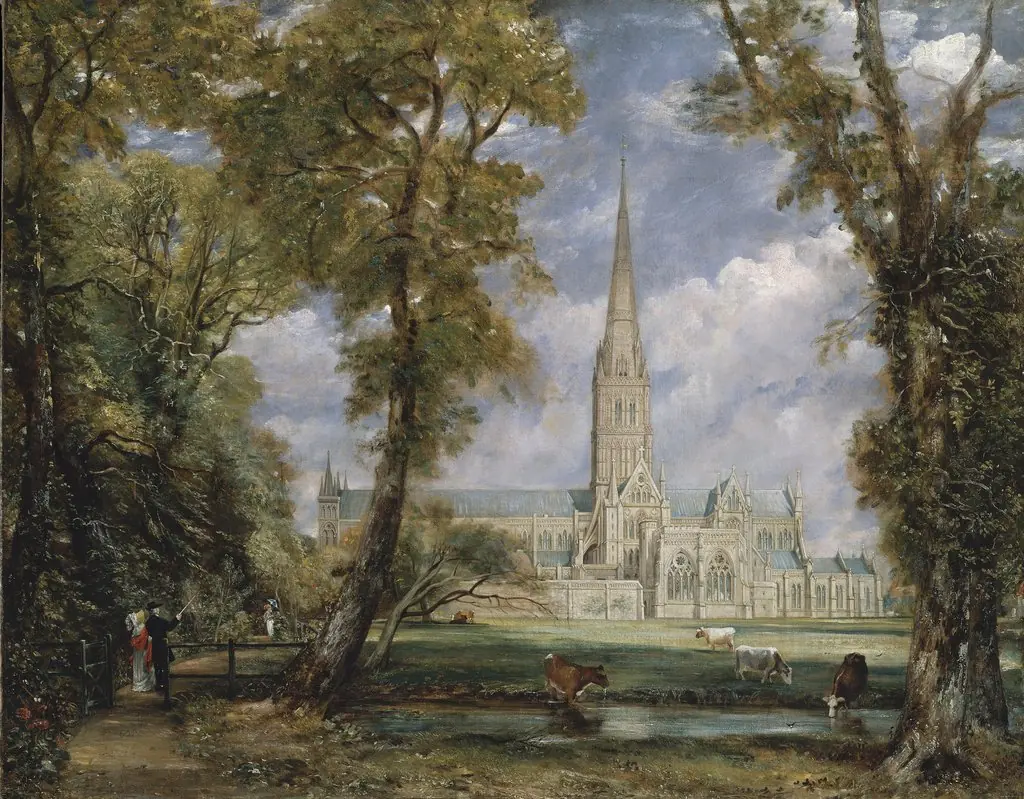
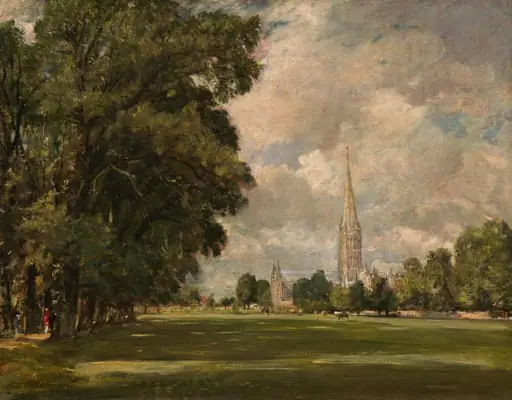
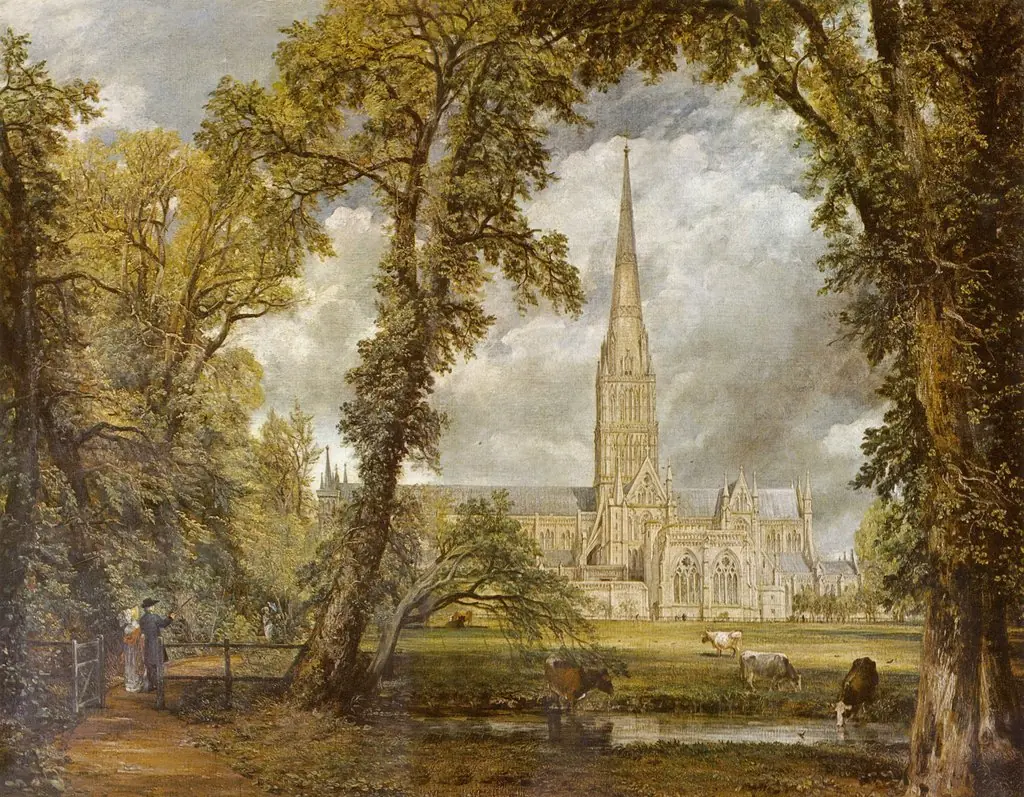
Salisbury Cathedral from the Meadows is an oil painting by the Impressionist artist John Constable. It dates from 1831 and is held in the collection of the Tate.
About this work
Subject & Meaning
The grave marker stands for death; the ash tree for life; the church for faith and resurrection; and the rainbow for renewed optimism.
The painting depicts Salisbury Cathedral viewed across the River Nadder, with three horses pulling a cart through the water, accompanied by cattle and a sheepdog. Constable later appended nine lines from James Thomson's poem The Seasons to clarify the work's meaning: the rainbow symbolises hope after a storm, following the death of the young Amelia in her lover Celadon's arms.
The imagery carries layered symbolism. The grave marker stands for death; the ash tree for life; the church for faith and resurrection; and the rainbow for renewed optimism. Constable described the sky as "the source of light in Nature," and its turbulent appearance reflects his emotional state following his wife Maria's death in 1828.
The painting has also been read politically, as a clash between industrialisation and nature expressed through elemental conflict. Constable considered this canvas the fullest expression of his art.
Technique & Style
Salisbury Cathedral from the Meadows is an oil painting on canvas executed in 1831 by John Constable, measuring 151.8 cm in height and 189.9 cm in width.
The handling is characteristic of Constable’s late practice, combining broad, atmospheric sky passages with meticulous detail in foliage and architecture. The composition is structured through layered recession: a foreground of water, meadow grasses, and a cart drawn by three horses; a middle ground of trees and riverbank; and a distant view of the cathedral under a turbulent sky. Constable’s layered wet-into-wet technique and scumbled cloud work create a palpable sense of atmospheric change, with the rainbow acting as a focal bridge between storm and calm.
The palette is subdued yet luminous, dominated by greens, greys, and the prismatic hues of the rainbow, underscoring the interplay of natural light and weather.
History & Provenance
John Constable painted this oil on canvas in 1831, shortly after the death of his wife Maria. He first exhibited it at the Royal Academy in 1831 and continued refining it through 1833 and 1834. The work was acquired by Tate in May 2013 for £23.1m as part of a partnership with several national and regional institutions, ensuring its retention in the UK. It now hangs permanently at Tate Britain alongside Turner's Caligula's Palace and Bridge (1831).
The painting is held by Tate, with accession number T13896. It was purchased by Tate in 2013 with assistance from the National Lottery through the Heritage Lottery Fund, The Manton Foundation, the Art Fund (with a contribution from the Wolfson Foundation), and Tate Members, in partnership with Amgueddfa Cymru-National Museum Wales, Colchester and Ipswich Museum Service, National Galleries of Scotland, and Salisbury and South Wiltshire Museum.
Constable exhibited the work at the Royal Academy Exhibition of 1831. After a five-year tour of Britain, the painting returned to Tate Britain for permanent display in 2018, where it hangs in the Clore gallery.
Context
Art historians Leslie Parris and Ian Fleming-Williams have identified Salisbury Cathedral from the Meadows as the climax of John Constable's artistic career. The work, completed in 1831, is frequently cited as the painting that best embodied the full scope of his artistic vision. It represents a personal statement of turbulent emotion following the death of his wife, with the sky and rainbow serving as metaphors for grief and renewed optimism, respectively.
The composition also invites political readings regarding the clash between industrialization and nature. The painting's historical significance was further highlighted by the dramatic incident at the 1831 Royal Academy Exhibition, where Constable, acting as the 'hangman,' altered the display arrangement to the detriment of J.M.W. Turner's work, causing a permanent rift between the two artists. This event underscores the work's central place in the narrative of British Romantic landscape painting.
Legacy
Salisbury Cathedral from the Meadows is widely regarded by art historians as the pinnacle of Constable’s career, with Leslie Parris and Ian Fleming-Williams characterizing it as the climax of his artistic output. The painting has exerted a lasting influence on landscape painting, particularly through its expressive handling of light and atmosphere, which prefigured developments associated with Impressionism.
In 2013, the painting’s national significance was underscored when Tate acquired it for £23.1 million through a collaborative partnership with five UK institutions. The acquisition, supported by major grants and donations, ensured the work remained in public collections and accessible for near-constant display across Britain. After a five-year national tour, it returned to Tate Britain in 2018 for permanent exhibition alongside J. M. W. Turner’s Caligula’s Palace and Bridge, the two works having been central to a noted dispute at the 1831 Royal Academy exhibition.
Overview
John Constable completed Salisbury Cathedral from the Meadows in 1831, three years after the death of his wife Maria. The oil painting presents a tranquil rural landscape dominated by the silhouette of Salisbury Cathedral viewed across the River Nadder. It is part of the collection at Tate Britain in London, displayed in the Clore gallery.
Own this work as a print
Artist & collection
Artist
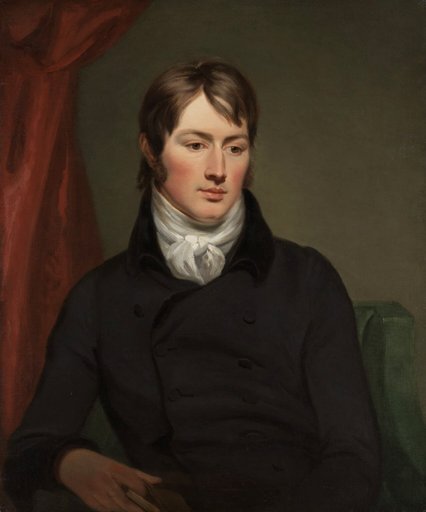
John Constable was an English landscape painter in the Romantic tradition. Born in Suffolk, he is known principally for revolutionising the genre of landscape painting with his pictures of Dedham Vale, the area on the…