Artwork
The Poor Man's Store
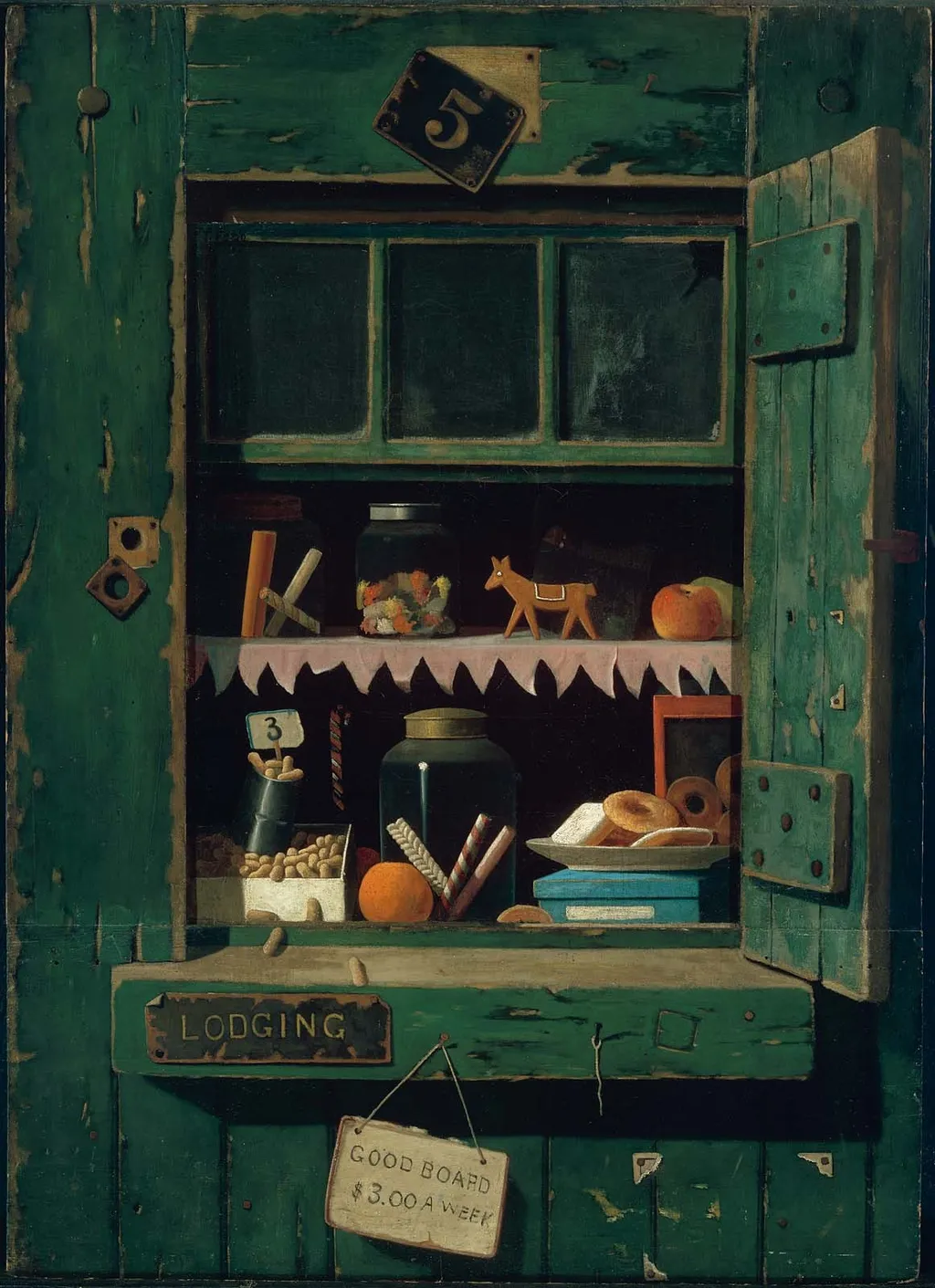
The Poor Man's Store is an unspecified painting by the American Impressionist artist John F. Peto. It dates from 1893 and is held in the collection of the Museum of Fine Arts Boston. John F.
About this work
Subject & Meaning
By focusing on everyday objects, the work underscores the value found in modest means and the unpretentious reality of rural or urban working-class commerce.
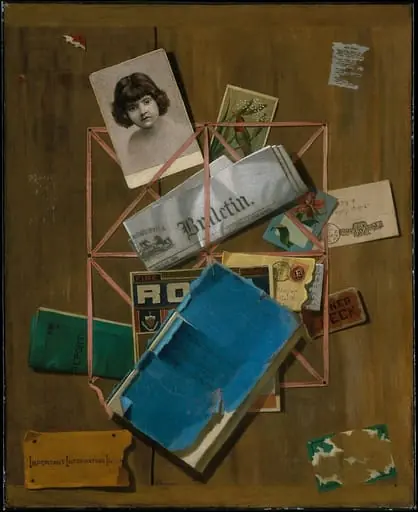
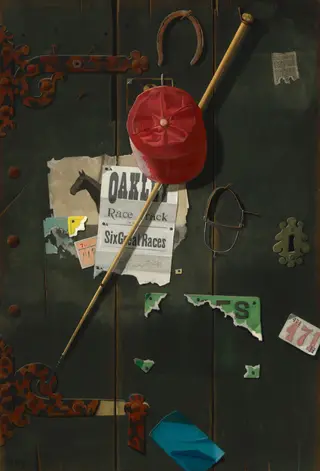
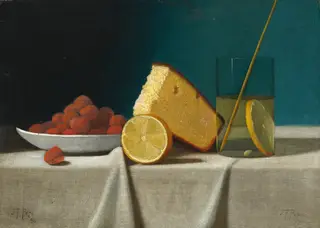
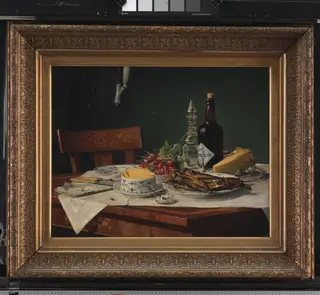
The Poor Man's Store (1885) by John F. Peto presents a window view onto a modest display of an apple, a jar, and assorted confectionery. The arrangement of these simple provisions evokes the interior of a small, humble shop, suggesting themes of frugality, everyday sustenance, and the quiet dignity of ordinary life. By focusing on everyday objects, the work underscores the value found in modest means and the unpretentious reality of rural or urban working-class commerce.
Technique & Style
The work is an oil painting executed on canvas, measuring 90.17 cm by 65.09 cm, and was created in 1885. The composition features a window, an apple, a jar, and a confection arranged on a tabletop, rendered with precise brushwork that emphasizes texture and subtle tonal variation. The handling of light across the objects produces a quiet, domestic stillness characteristic of Peto’s mature style, while the paint layer remains intact with no noted condition issues.
History & Provenance
The Poor Man's Store is an 1885 painting by John F. Peto. According to the Wikidata entry for the work, it was created in 1885 and is held in the collection of the Museum of Fine Arts Boston, where it remains located. The sources provided do not document a commission, an earlier ownership chain, intermediate collectors, acquisition dates, or any specific creation circumstances; only the artist, the date of inception, and the current institutional holding are attested.
The work is held by the Museum of Fine Arts, Boston, where it remains in the permanent collection. The Museum records Peto’s painting under accession number 1978.124. It has not been loaned to any documented special exhibitions according to institutional records available through the museum’s online collections portal.
Overview
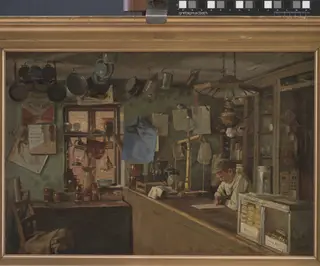
John F. Peto’s 1893 canvas, The Poor Man’s Store, presents a compact, interior view of a modest shop front. The composition centers on a weathered green door with a small window, behind which shelves hold a jar, a wooden toy horse, apples, bread and nuts. A sign beneath the window advertises lodging and a weekly board rate, anchoring the scene in everyday commerce.
Context
At the time of its execution, small retail spaces served as social hubs in many towns, and Peto’s focus on such a venue aligns with contemporary artistic trends that valued genre scenes over grand historical narratives. The inclusion of a lodging advertisement hints at the multifunctional nature of rural storefronts.
Legacy
The Poor Man’s Store continues to be cited in studies of American realism for its deft combination of illusionistic technique and social observation. The painting’s precise detail and use of light influence later realist painters who explore the visual tension between surface and perception.
Artist & collection

Artist
John Frederick Peto (May 21, 1854 – November 23, 1907) was an American trompe-l'œil ("fool the eye") painter who was long forgotten until his paintings were rediscovered along with those of fellow trompe-l'œil artist William Harnett.