Artwork
Office Board
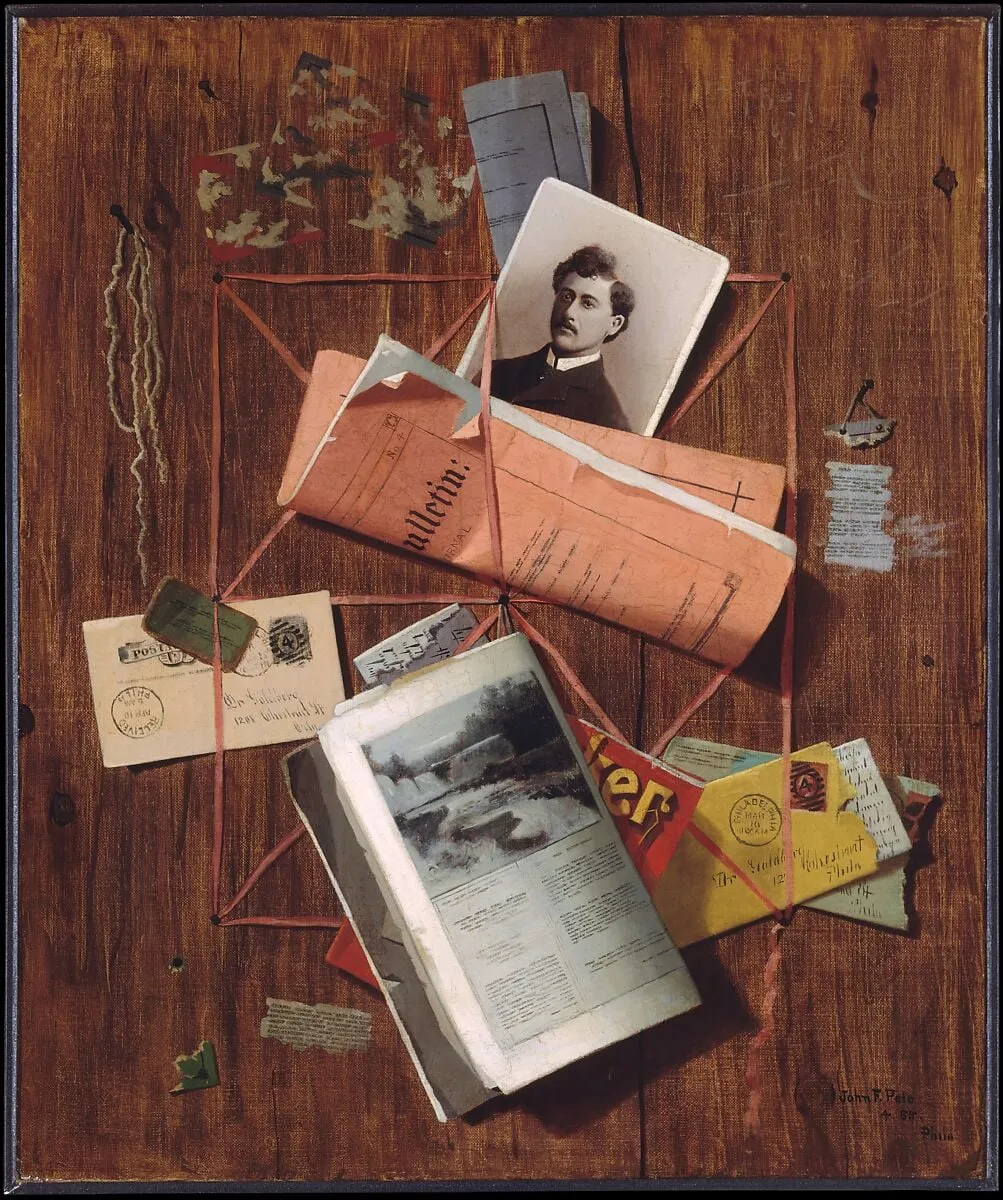
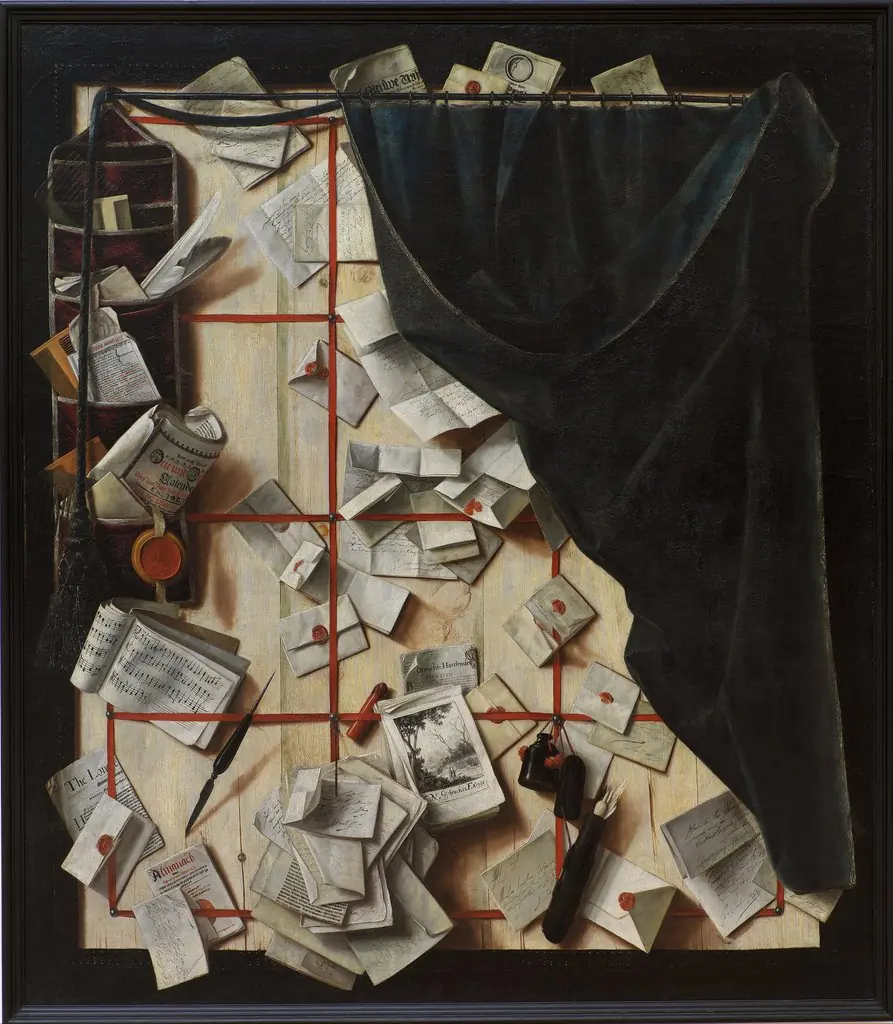
Office Board is an oil painting by the American Impressionist artist John F. Peto. It dates from 1885 and is held in the collection of the Metropolitan Museum of Art.
About this work
Subject & Meaning
Peto presents a seated male sitter surrounded by everyday objects rendered in a trompe‑l’œuvvre style, blending portraiture with still‑life illusionism.
The painting Office Board (1885) by John F. Peto presents a seated male sitter surrounded by everyday objects rendered in a trompe‑l’œuvvre style, blending portraiture with still‑life illusionism. According to the catalog entry, the work is classified as a portrait within The American Wing and is executed in oil on canvas (1). The depicted man is accompanied by meticulously painted items that appear three‑dimensional, a technique highlighted in the Wikidata record (2).
By juxtaposing the figure with these hyper‑realistic objects, Peto suggests a commentary on the material conditions and domestic interior of the period, using visual deception to foreground the tangible presence of ordinary household artifacts.
Technique & Style
The work is executed in oil on canvas, a medium noted in both the museum catalogue and Wikidata entry. Peto employs a trompe‑l’œil approach that renders the board and its contents with a convincing illusion of depth, a hallmark of his still‑life technique. The composition functions as a portrait by presenting a solitary figure through the arrangement of objects, blending genre conventions of portraiture with the meticulous rendering of texture and surface.
The canvas support is stretched and primed, allowing fine brushwork that emphasizes subtle gradations of light and shadow. No condition details are recorded in the sources.
History & Provenance
The artwork titled Office Board was created by American artist John F. Peto in 1885. Executed in oil on canvas, the piece measures 61.9 cm in height and 50.5 cm in width. While the specific commission details and the immediate chain of ownership prior to its current location are not detailed in the available records, the work is currently held by the Metropolitan Museum of Art.
It resides within the museum's American Wing collection. The painting is classified as a portrait that incorporates trompe-l'œil and still-life elements, depicting a man. The work's inception is recorded as January 1, 1885, marking its completion during the late 19th century within the American art canon.
Overview
The painting titled "Office Board" is an oil on canvas work that meticulously renders a collection of everyday stationery and documents affixed to a wooden surface. The artwork invites viewers to observe a seemingly commonplace arrangement of items, capturing the details of a typical workspace. Through its precise execution, the piece transforms a simple subject into a focused study of form and texture, characteristic of its genre.
Artist & collection

Artist
John Frederick Peto (May 21, 1854 – November 23, 1907) was an American trompe-l'œil ("fool the eye") painter who was long forgotten until his paintings were rediscovered along with those of fellow trompe-l'œil artist William Harnett.




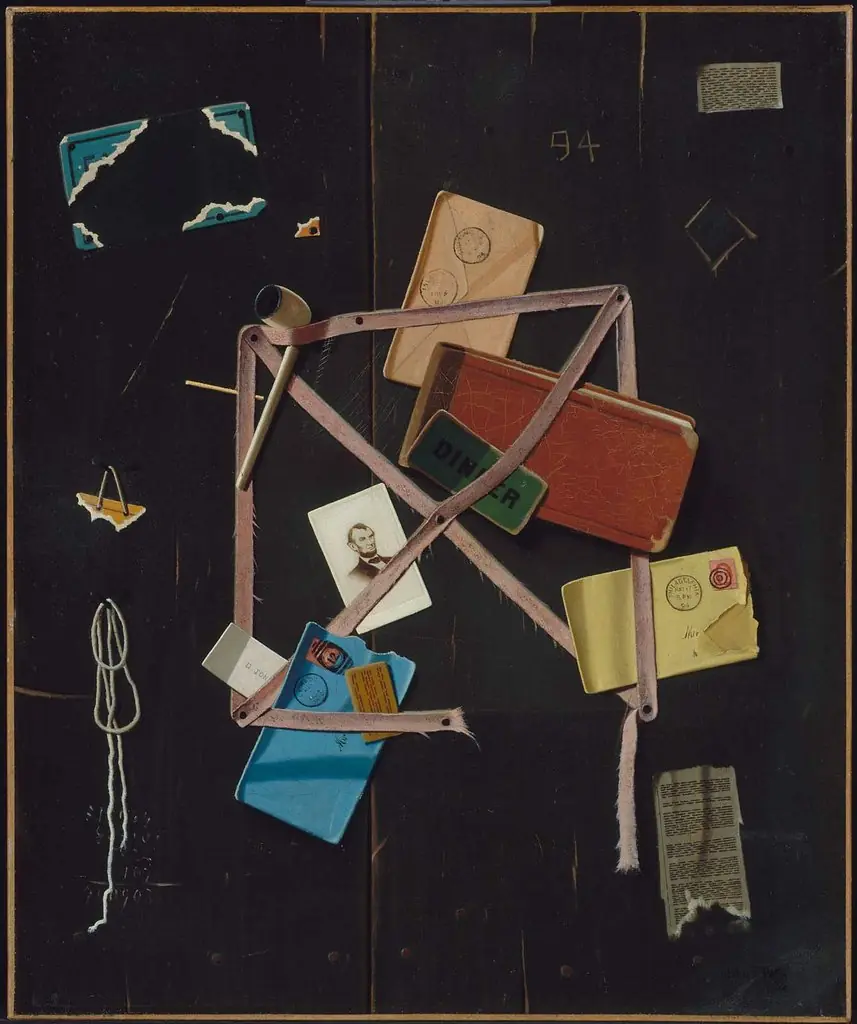 Old Time Letter Rack
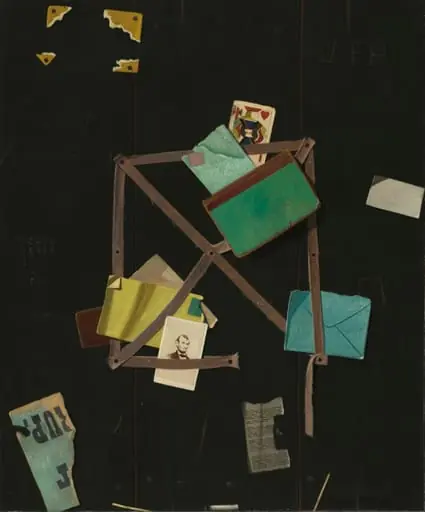 Card Rack with a Jack of Hearts
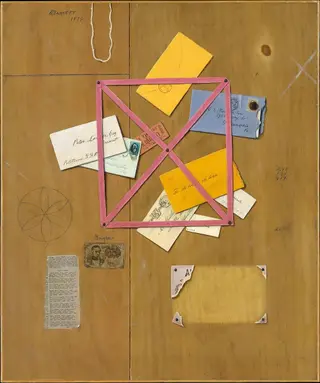 The Artist's Letter Rack
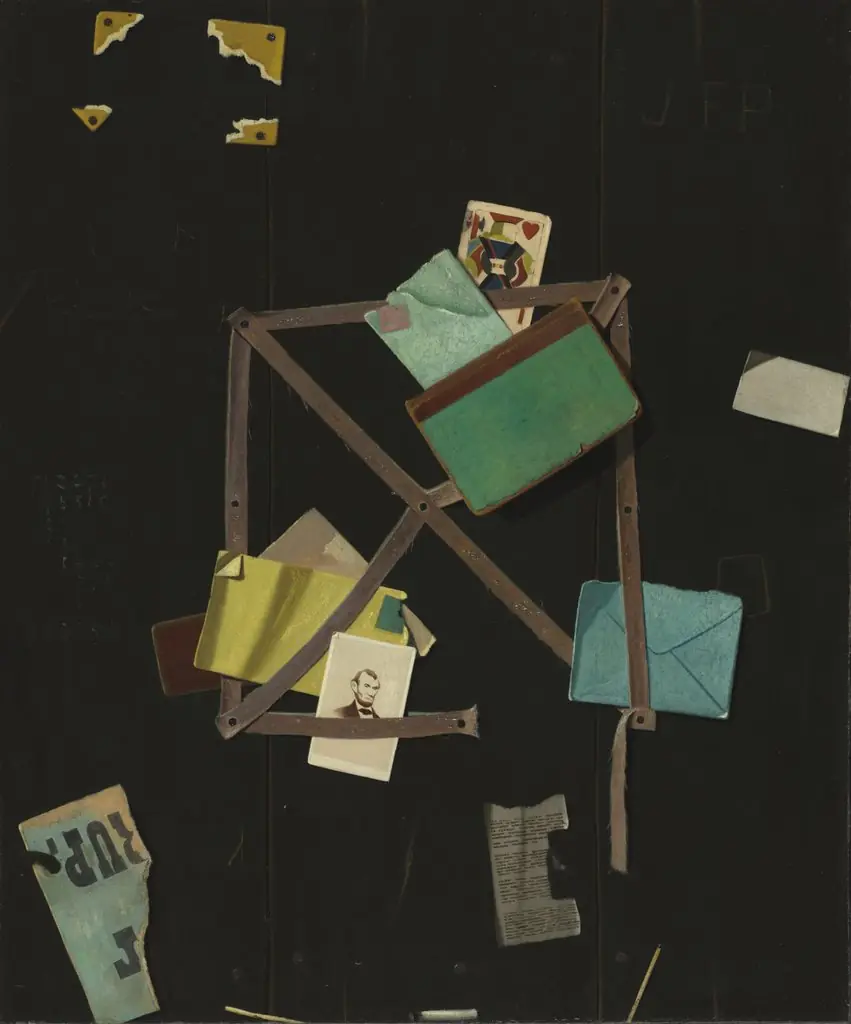 Card Rack with a Jack of Hearts
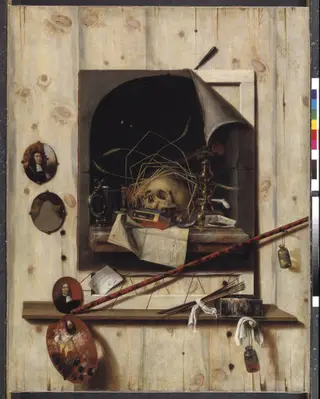 Trompe l'oeil with Studio Wall and Vanitas Still Life
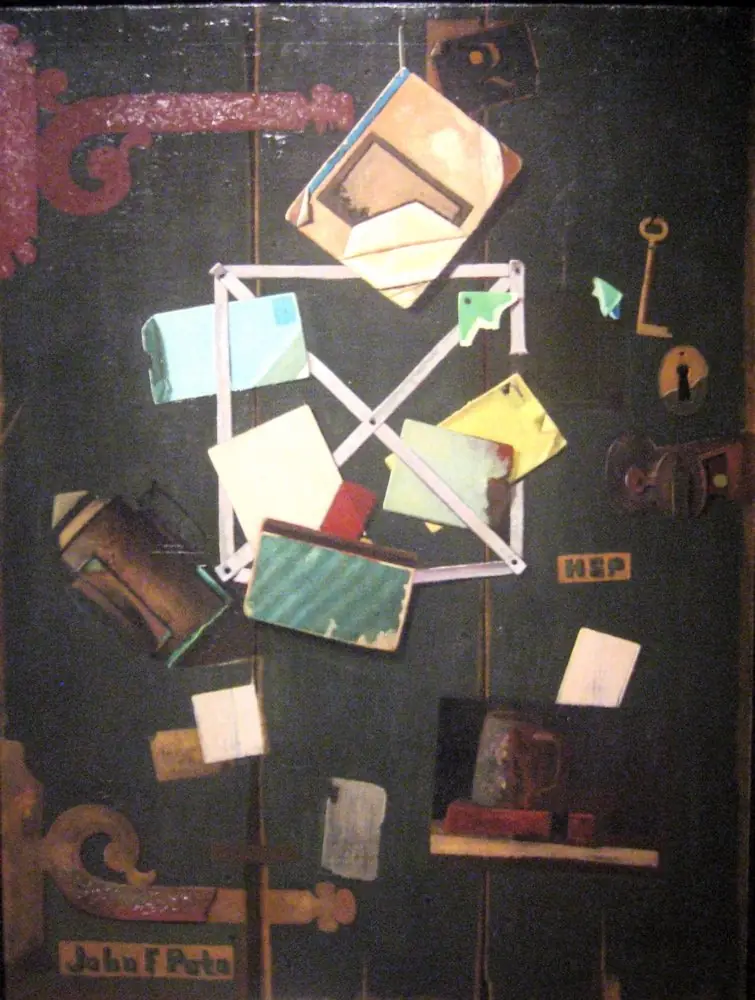 HSP's Rack Picture
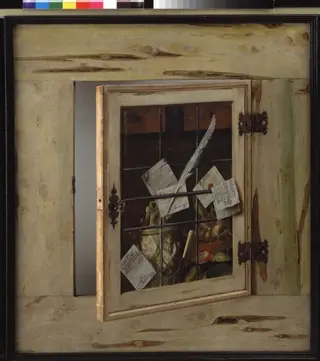 Trompe l'Oeil. A Cabinet of Curiosities with an Ivory Tankard
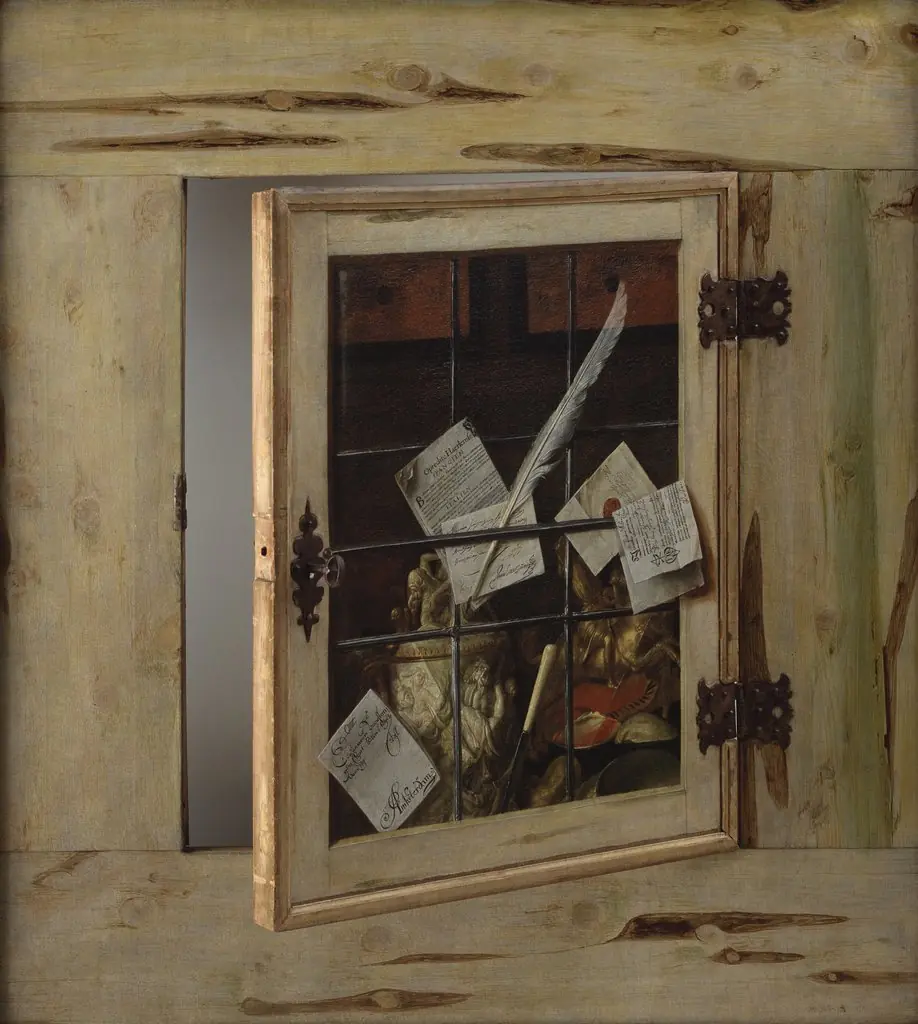 A Cabinet of Curiosities with an Ivory Tankard
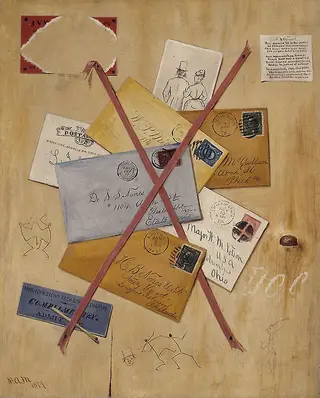 Rack Picture for Dr. Nones
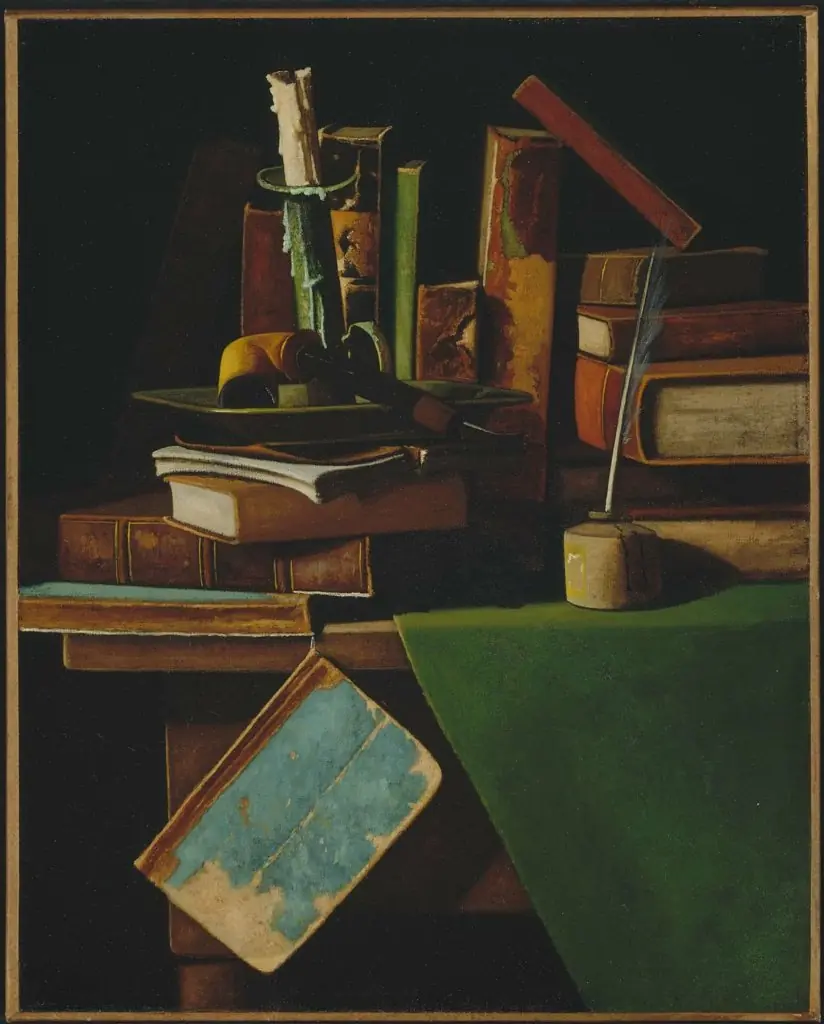 Student's Materials
 Trompe l'oeil. Board Partition with Letter Rack and Music Book