Artwork
Mug, Book, Biscuits, and Match
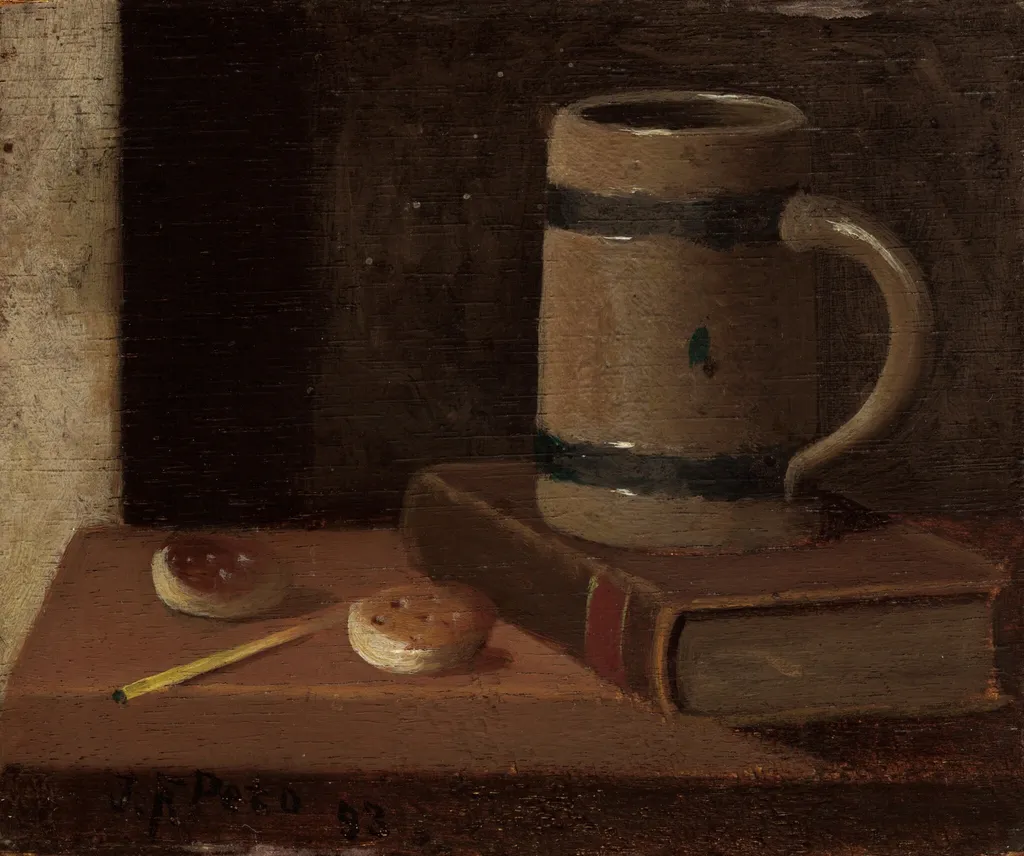
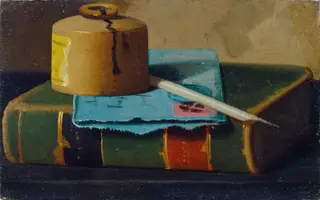
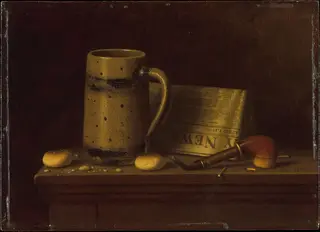
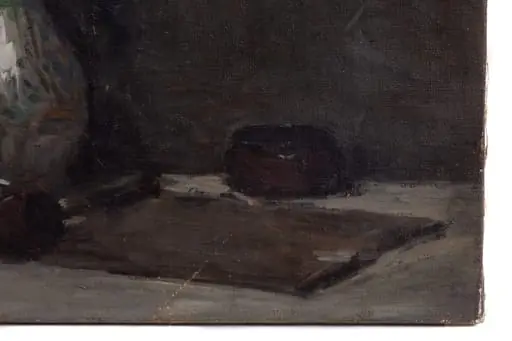
Mug, Book, Biscuits, and Match is an oil painting by the Impressionist artist John F. Peto. It dates from 1893 and is held in the collection of the National Gallery of Art.
- Inscription
- Inscribed:lower left: J.F. Peto 93
About this work
Subject & Meaning
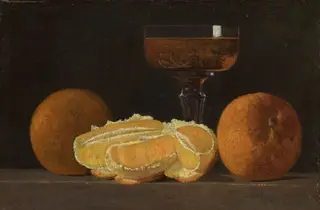
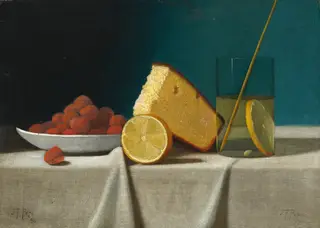
The painting presents everyday items, a mug, a book, biscuits, and a match, arranged on a tabletop, suggesting the quiet dignity of ordinary domestic moments.
The painting presents everyday items, a mug, a book, biscuits, and a match, arranged on a tabletop, suggesting the quiet dignity of ordinary domestic moments. The objects function as symbols of simple comfort and domestic routine, reflecting the artist's interest in ordinary life. Light falls across the scene, emphasizing texture and materiality while reinforcing a sense of stillness.
The composition draws attention to the quiet presence of these common household items, inviting contemplation of their symbolic resonance within daily life.
Technique & Style
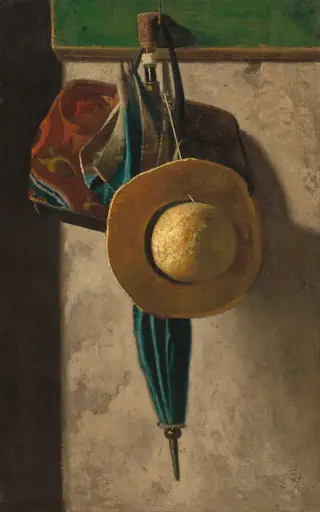
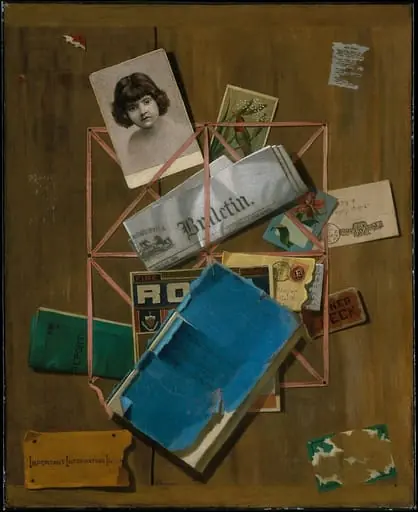
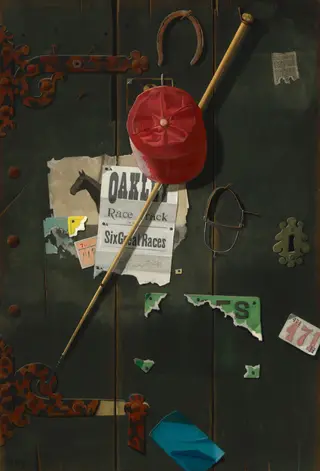
The work is an oil painting on wood panel, measuring 10 by 12.07 centimeters, created in 1893 by John Frederick Peto. Executed in oil paint, the piece exemplifies the trompe l’oeil technique, rendering everyday objects, including a mug, a book, biscuits, and a match, with meticulous detail that emphasizes their material textures and spatial depth. Its surface bears a subtle patina consistent with age, while the composition maintains a quiet, domestic stillness characteristic of the artist’s mature style.
The painting entered the National Gallery of Art collection through the bequest of Paul Mellon in 1999, with a life interest reserved for his wife, Rachel Lambert Mellon.
History & Provenance
Painted in 1893, the still life was created by John Frederick Peto in oil on wood panel. By 1999 it was held by Paul Mellon, Upperville, Virginia, who bequeathed it to the National Gallery of Art, Washington, D.C., with a life interest retained by his wife, Rachel Lambert Mellon. Upon her death in 2014, the bequest vested and the work entered the Gallery’s holdings.
The painting is held by the National Gallery of Art, Washington, D.C. It entered the collection as a bequest from Paul Mellon in 1999, with a life interest retained by his wife, Rachel Lambert Mellon, until her death in 2014. The work is recorded with accession number 1999.1.169 in the Gallery’s holdings.
It has not been recorded in any major temporary exhibitions in the sources provided.
Legacy
John Frederick Peto's work Mug, Book, Biscuits, and Match (1893) contributed to a revival of American trompe l'oeil still life painting in the 20th century, influencing artists interested in quiet domestic realism and subtle illusionistic detail. The painting's presence in the National Gallery of Art's collection has ensured ongoing scholarly attention to Peto's contribution to the genre, particularly through exhibitions that highlight his role alongside contemporaries such as William Harnett. Its provenance from the Mellon family underscores its significance within American art history and its integration into a major public collection.
Overview
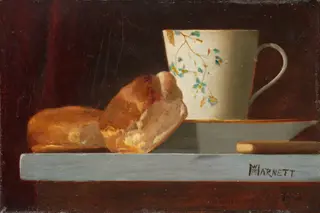
John Frederick Peto’s 1893 oil on wood, titled Mug, Book, Biscuits, and Match, presents a modest still‑life arranged on a dark wooden shelf. A large brown mug, half‑filled with liquid, occupies the foreground, while two biscuits rest in a shallow dish beneath it, one split open. A solitary matchstick lies nearby, and a red cloth is partially visible beneath the dish, all rendered against a muted, shadowy background.
Context
Peto worked during a time when American artists often explored the visual potential of everyday objects, aligning with a broader 19th‑century interest in realism and the study of light. His focus on simple, unadorned subjects parallels the work of contemporaries who sought to elevate the mundane through careful observation and controlled composition.
Own this work as a print
Artist & collection

Artist
John Frederick Peto (May 21, 1854 – November 23, 1907) was an American trompe-l'œil ("fool the eye") painter who was long forgotten until his paintings were rediscovered along with those of fellow trompe-l'œil artist William Harnett.