Artwork
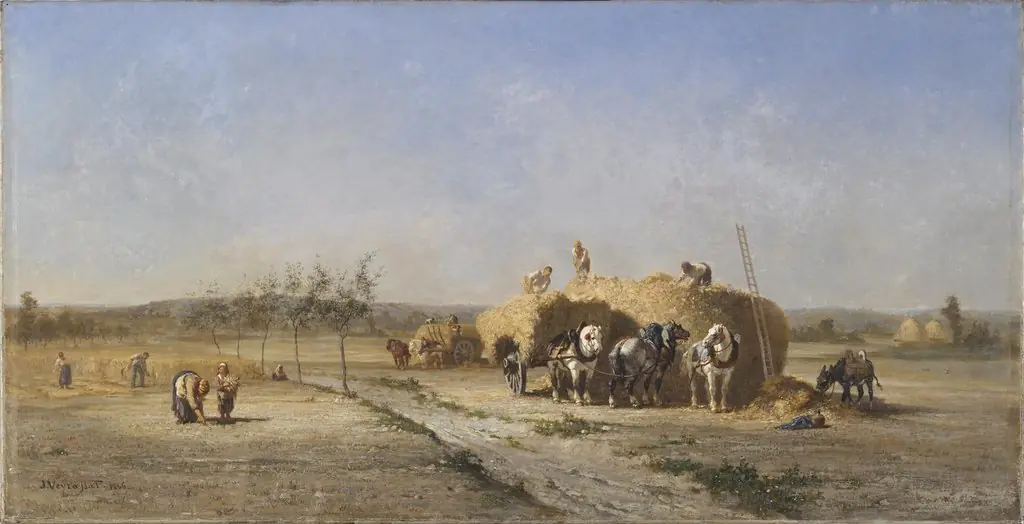
Harvest on the Roman Campagna
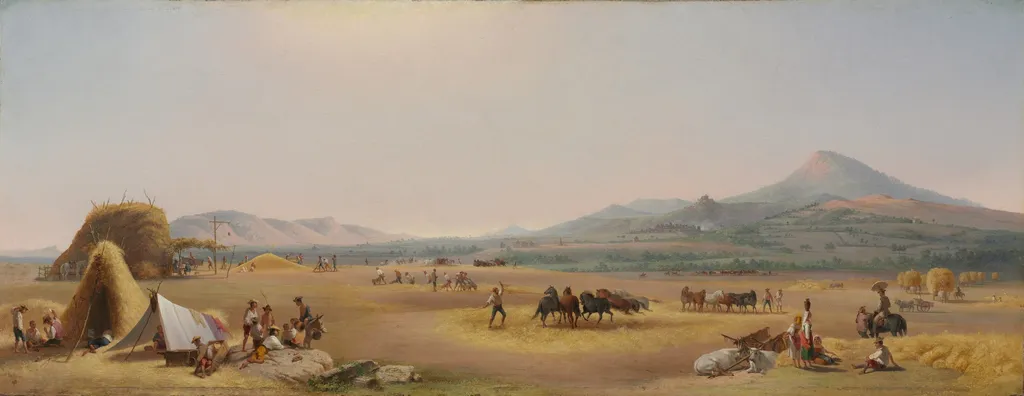
Harvest on the Roman Campagna is an oil painting by the Hudson River School artist John Gadsby Chapman. It dates from 1868 and is held in the collection of the Cleveland Museum of Art.
About this work
Technique & Style
The formal treatment reflects academic landscape conventions of the period, with careful handling of light and atmospheric perspective to render the terrain.
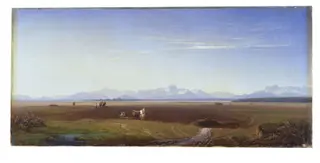
Harvest on the Roman Campagna is an oil-on-canvas work painted by John Gadsby Chapman in 1868. The painting measures 35.5 cm in height by 91.4 cm in width and is executed in oil paint applied to a stretched canvas support, a conventional technique for mid-nineteenth-century American landscapes. Its composition portrays a sunlit vista of the Roman countryside, emphasizing a distinct mountain and a solitary tree that anchor the scene.
The formal treatment reflects academic landscape conventions of the period, with careful handling of light and atmospheric perspective to render the terrain. The work has been part of the Cleveland Museum of Art's collection since its acquisition.
History & Provenance
Harvest on the Roman Campagna was created in 1868 by the American painter John Gadsby Chapman. Executed in oil on canvas measuring approximately 35.5 x 91.4 cm, the painting depicts a rural scene of the Roman countryside. It is held in the collection of the Cleveland Museum of Art, where it is catalogued under accession number 417.1915. No earlier ownership records or commission details are documented in the available sources.
Context
Harvest on the Roman Campagna is an 1868 oil-on-canvas painting by John Gadsby Chapman, an American artist (1808-1889). The work, measuring 35.5 x 91.4 cm, depicts a pastoral landscape with a mountain and tree and was created in the Roman Campagna. It entered the collection of the Cleveland Museum of Art, illustrating how 19th-century American painters engaged with European subjects and the tradition of landscape painting in the Italian countryside.
Overview
John Gadsby Chapman, an American artist, completed Harvest on the Roman Campagna in 1868. This oil painting captures a scene of agricultural labor within a vast landscape. The work is part of the collection at The Cleveland Museum of Art, representing a moment in 19th-century American landscape painting.
Subject & Meaning
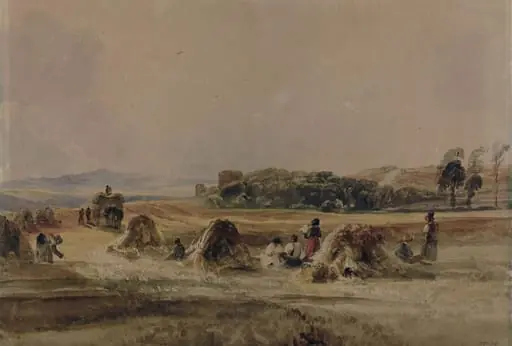
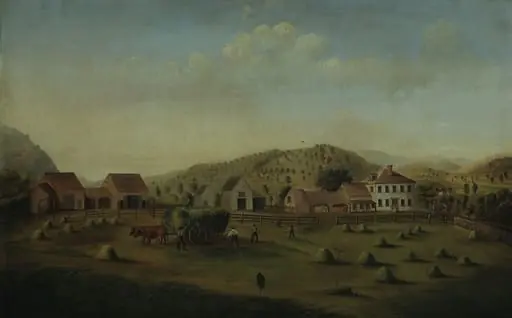
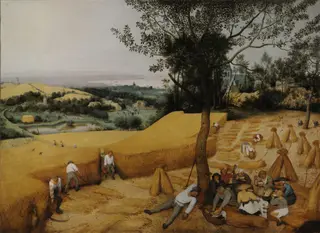
The painting depicts a wide, level field under a soft, pale sky. In the foreground, figures and horses are actively engaged in harvesting hay, bundling it and transporting it by cart. Further back, temporary shelters and a large haystack indicate a pause in labor, with some individuals resting in the shade. The expansive scene extends to a distant mountain range on the horizon.
Artist & collection

Artist
John Gadsby Chapman (December 3, 1808 – November 28, 1889) was an American artist famous for Baptism of Pocahontas, which was commissioned by the United States Congress and hangs in the United States Capitol rotunda.