Artwork
Leete Farm, West Claremont, New Hampshire
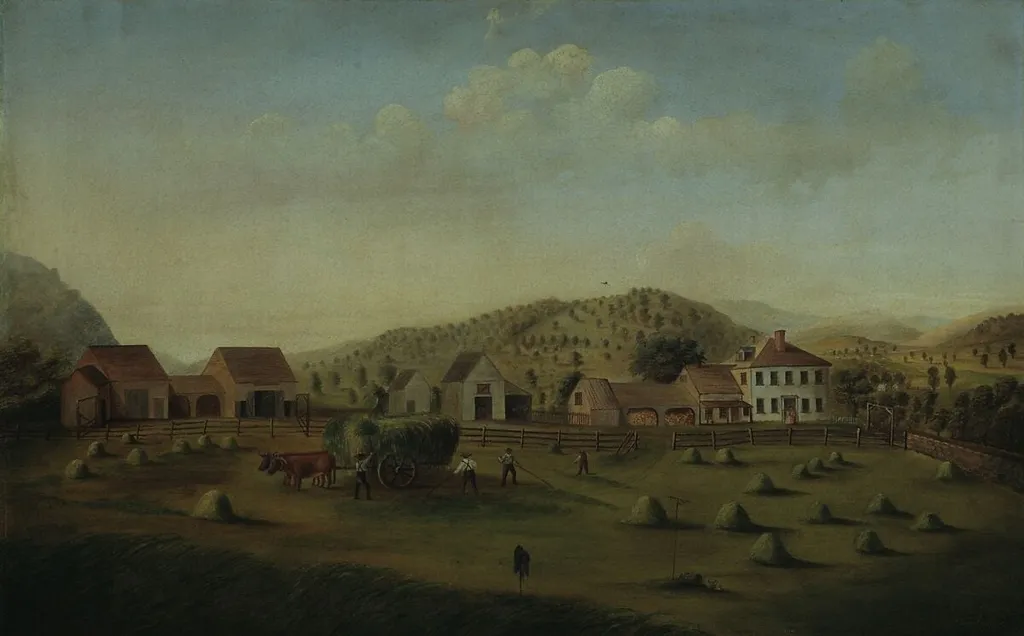
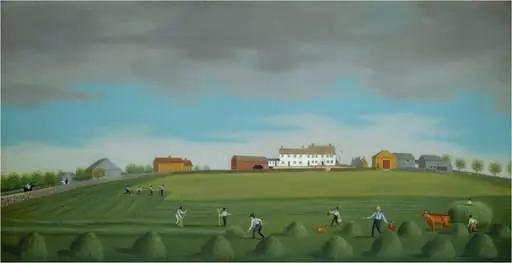
Leete Farm, West Claremont, New Hampshire is an oil painting by the American Folk Art artist Francis Alexander. It dates from 1822 and is held in the collection of the Metropolitan Museum of Art.
About this work
Subject & Meaning
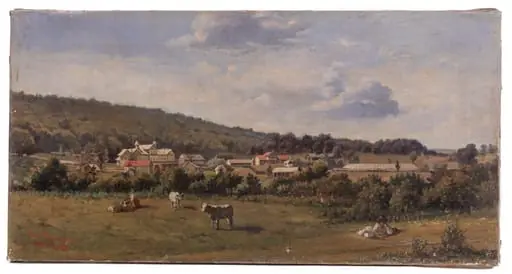
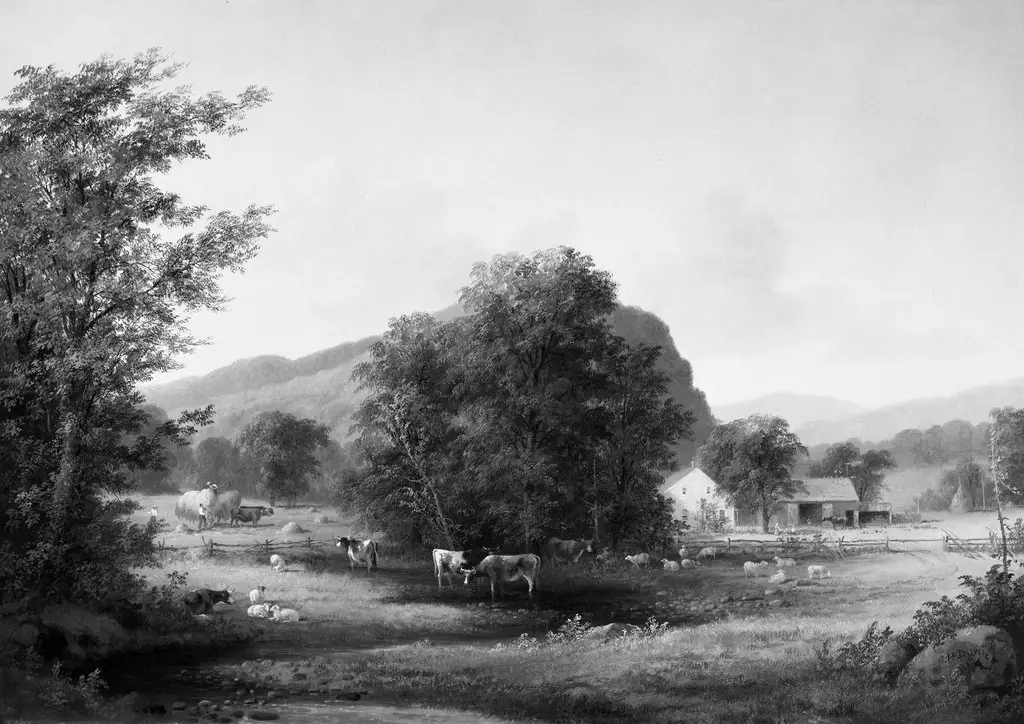
The painting Leete Farm, West Claremont, New Hampshire, rendered by Francis Alexander in 1822, presents a working farmstead set against a gentle hill.
The painting Leete Farm, West Claremont, New Hampshire, rendered by Francis Alexander in 1822, presents a working farmstead set against a gentle hill. Cattle graze near a modest house, while a solitary figure stands on the property, underscoring a connection between people and the land. The composition reflects the agrarian ideal of New England, emphasizing self‑sufficiency, harmony with nature, and the dignity of rural labor.
By locating the scene in West Claremont, the work also alludes to the regional identity of New Hampshire’s early settlement patterns, portraying a pastoral vision that celebrates both the physical labor and the quiet stewardship of the owner.
Technique & Style
Francis Alexander’s Leete Farm, West Claremont, New Hampshire (1822) is executed in oil paint on a horizontally oriented canvas measuring 43.2 by 69.2 centimeters []. The support, a tightly woven, medium-weight linen, was commercially primed with a smooth, off-white ground, allowing the artist to build up thin, translucent glazes for distant foliage while employing thicker, opaque impasto in the foreground cattle and figures []. Stylistically, Alexander adheres to the early nineteenth-century American convention of “picturesque” landscape: meticulous linear perspective organizes the farmstead, and minute details, individual leaves on trees, bricks in the chimney, are rendered with miniaturist precision, yet the overall tone remains subdued, favoring muted greens, ochres, and grays that evoke the overcast light of a New England autumn [,].
History & Provenance
Created in 1822, the oil on canvas landscape titled Leete Farm, West Claremont, New Hampshire is attributed to the artist Francis Alexander. The work depicts a rural scene featuring a house, hills, cattle, and a man. While the specific circumstances of its commission and the details of its ownership chain prior to museum acquisition are not detailed in the available records, the painting is currently held in the collection of the Metropolitan Museum of Art. The institution classifies the piece within its American Wing, where it remains part of the permanent holdings.
The painting Leete Farm, West Claremont, New Hampshire, attributed to Francis Alexander and dated 1822, is held in the collection of the Metropolitan Museum of Art. Classified within the museum's American Wing, the oil on canvas work depicts a rural landscape featuring a house, farm, cattle, hills, and a man. While the sources confirm the artwork's current institutional location and its categorization as a landscape, they do not provide specific inventory or accession numbers, nor do they list any past or current exhibitions for this piece.
Context
Francis Alexander’s 1822 oil on canvas Leete Farm, West Claremont, New Hampshire, entered the Metropolitan Museum of Art’s American Wing and is classified as a landscape genre work. The painting portrays a rural New England farmstead with a house, cattle, a man, and a hill, reflecting early‑19th‑century agrarian ideals. Scholarship on Alexander emphasizes this early commission as an example of his transition from portraiture to regional genre scenes, situating the work within the broader development of American landscape painting in the 1820s.
Critical discussion highlights its documentary value for depicting New England’s pastoral economy and notes its contribution to the museum’s narrative of early American art.
Overview
This oil on canvas painting, titled "Leete Farm, West Claremont, New Hampshire," depicts a tranquil rural scene. A white farmhouse is situated on a verdant hill, with cattle grazing nearby. The composition includes two figures: one individual in a red coat approaches the house, while another is engaged in work within the field. A soft, hazy sky contributes to the serene atmosphere of the landscape.
Artist & collection