Artwork
Berwick-on-Tweed
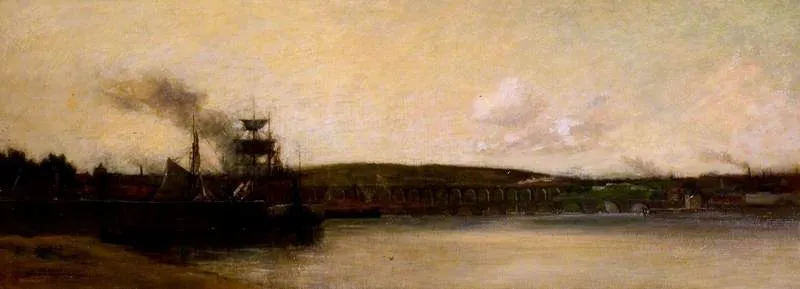
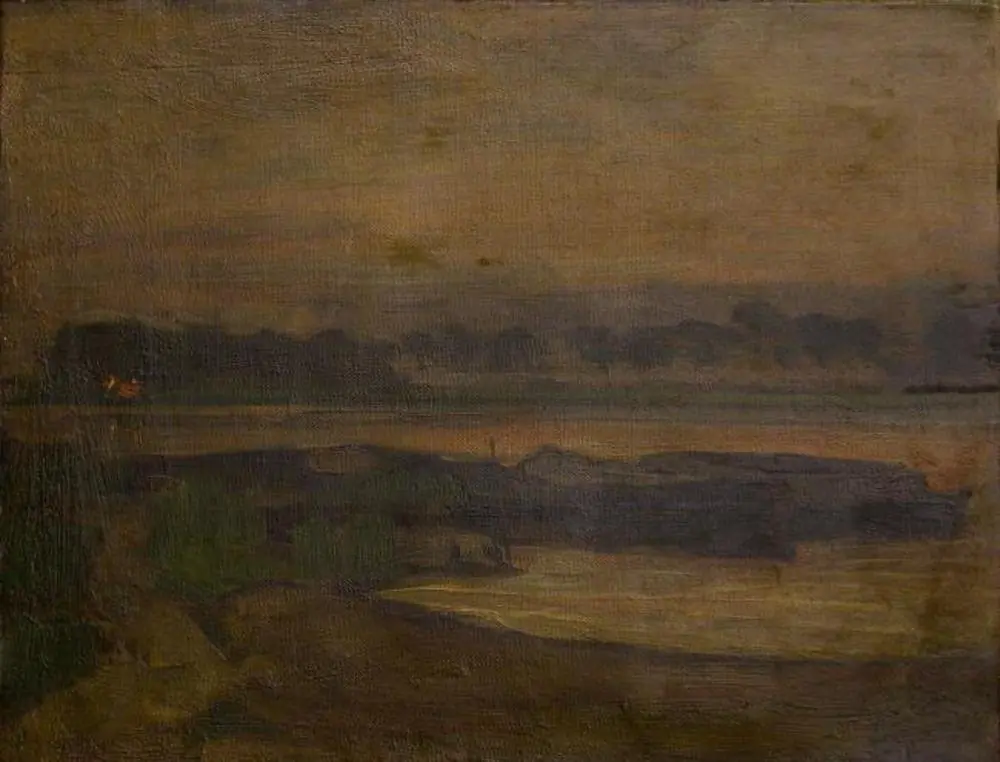
Berwick-on-Tweed is an oil painting by John Leslie Thomson. It dates from 1900 and is held in the collection of the Victoria and Albert Museum.
About this work
Overview
John Leslie Thomson, born in Aberdeen in 1851, painted Berwick-on-Tweed circa 1900 in oil on canvas. A British landscape artist active from the 1870s, he regularly exhibited in London and worked across both watercolor and oil media. The painting is held in the Victoria and Albert Museum’s collection, reflecting its place within late 19th-century British topographical art.
Subject & Meaning
The scene conveys a sense of place rooted in observation rather than narrative, aligning with the era’s interest in atmospheric realism.
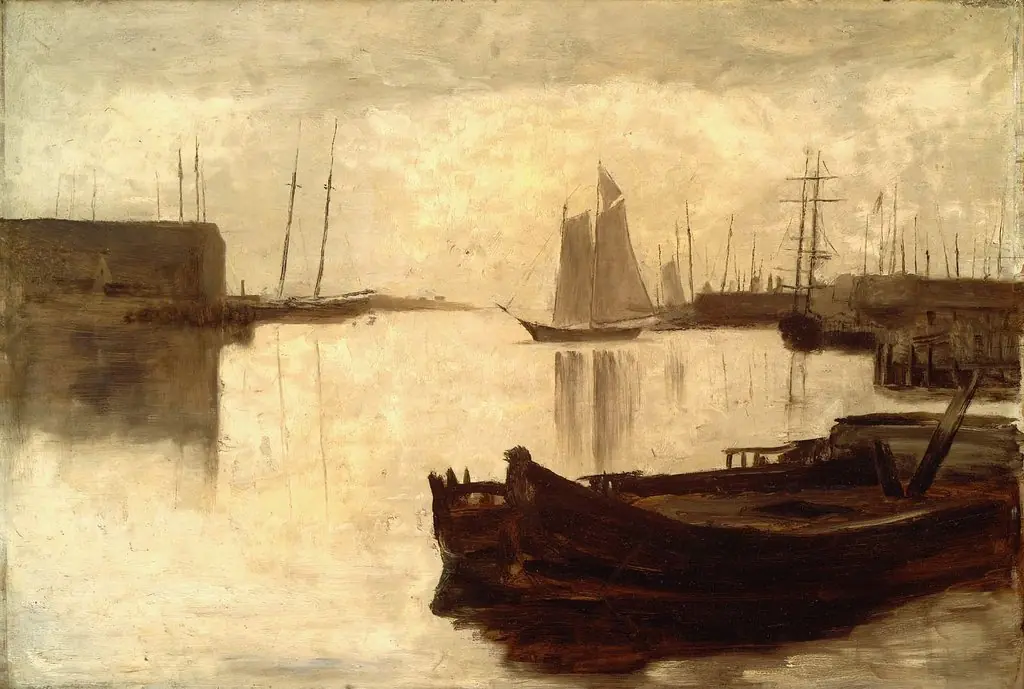
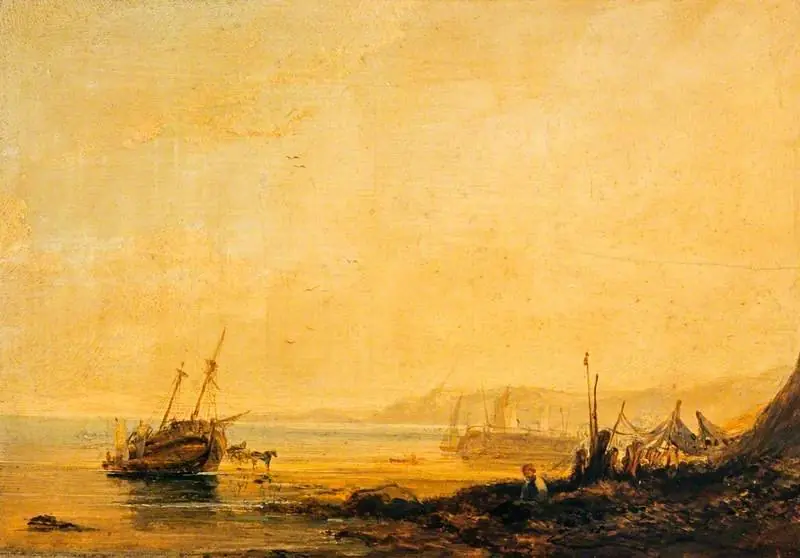
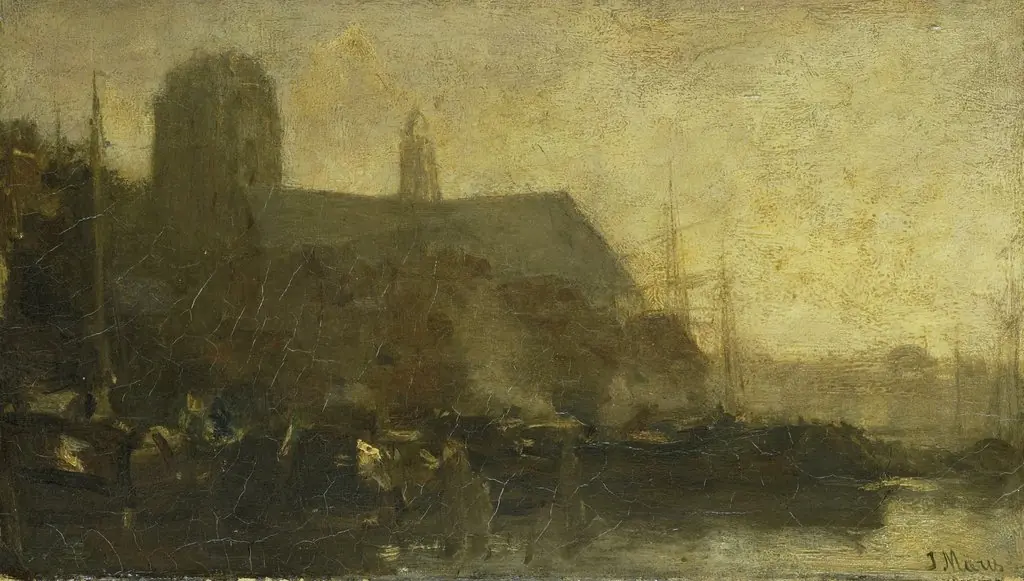
The painting presents a quiet view of the coastal town of Berwick-on-Tweed, with calm waters in the foreground and a distant horizon lined with buildings and trees. There is no human activity depicted, emphasizing stillness and the quiet endurance of the landscape. The scene conveys a sense of place rooted in observation rather than narrative, aligning with the era’s interest in atmospheric realism.
Technique & Style
Thomson employed soft, blended brushwork to render the sky and water, creating a muted tonal harmony. Buildings and foliage are suggested with subtle outlines rather than sharp detail, reinforcing the painting’s tranquil mood. Light is diffused evenly, avoiding dramatic contrasts; the handling reflects a restrained approach to naturalism, prioritizing mood over structural precision.
History & Provenance
The work entered the Victoria and Albert Museum’s collection as part of its broader effort to document British artistic responses to landscape and place. While specific acquisition details are not widely documented, its inclusion in the museum’s holdings since the early 20th century situates it within institutional efforts to preserve regional British painting of the period.
Context
Painted at the turn of the century, Berwick-on-Tweed reflects a broader trend among British artists to capture everyday coastal and rural scenes with quiet dignity. Unlike the dramatic Romantic landscapes of earlier generations, Thomson’s work embraces understated observation, echoing the influence of the Aesthetic Movement and the growing interest in place-based identity in a rapidly industrializing Britain.
Legacy
Thomson’s oeuvre, though not widely celebrated today, contributes to the understanding of late Victorian and Edwardian landscape painting outside the mainstream. Berwick-on-Tweed remains a representative example of provincial British art that valued serenity and observation over spectacle, offering insight into the quieter currents of artistic practice during its time.
Artist & collection
Artist
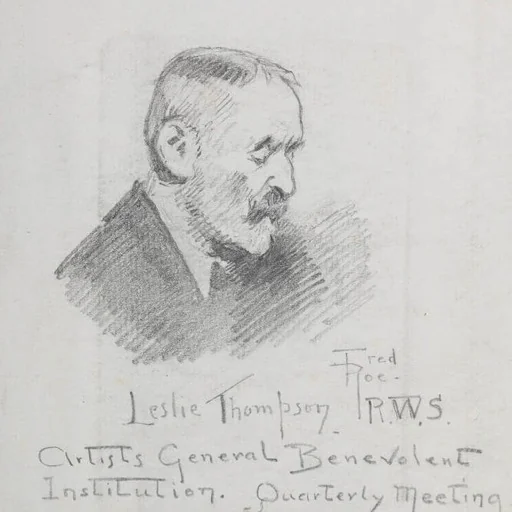
John Leslie Thomson (1851-1929) was a British artist. He was born in Aberdeen. He mainly painted coastal scenery and landscapes. He painted both in watercolour and in oils, starting to exhibit his work in London in…