Artwork
Grape and Melon Eaters
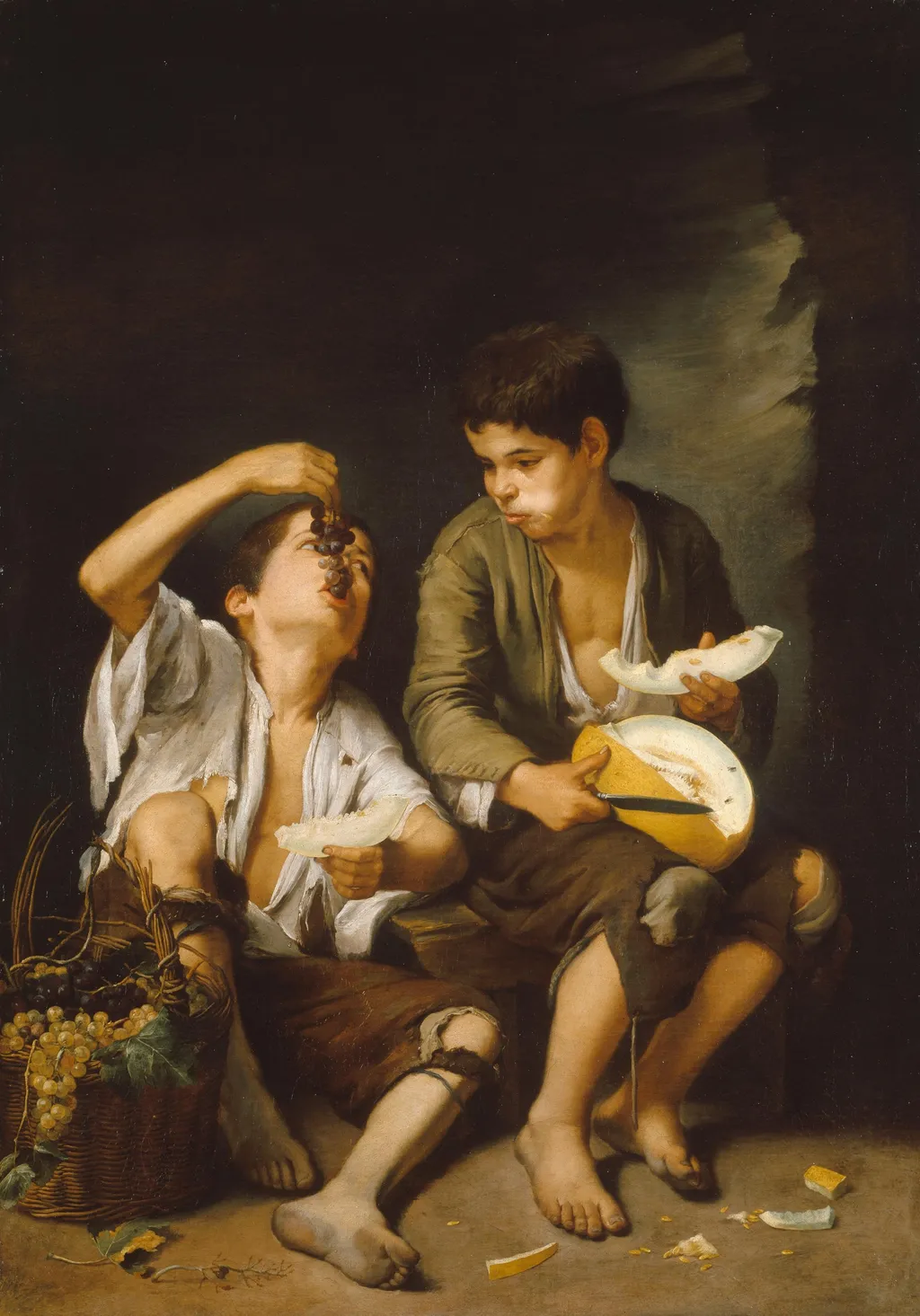
Grape and Melon Eaters is an oil painting by the Baroque artist Bartolomé Esteban Murillo. It dates from 1650 and is held in the collection of the Bavarian State Painting Collections.
About this work
Subject & Meaning
The composition demonstrates Murillo's engagement with Italian influences, particularly Caravaggio's naturalistic approach to depicting lower-class subjects.
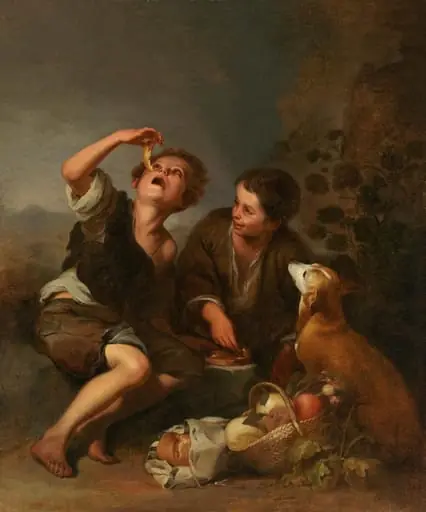
The painting depicts two barefoot street children, approximately ten years old, sharing fruit in an undefined setting. One boy eagerly consumes grapes from a cluster while holding a slice of melon, while his companion stuffs his cheeks with melon, clutching a knife and the remaining fruit. Their tattered clothing and dirty feet contrast sharply with their evident satisfaction, creating a scene that blends misery with human sympathy.
This imagery reflects the widespread poverty and homelessness in Seville during the Spanish Golden Age, exacerbated by plague and economic crisis under the Habsburg monarchy. While the work presents an innocent, everyday moment, it also serves as a moral commentary on gluttony and the plight of beggars who likely stole the food. The composition demonstrates Murillo's engagement with Italian influences, particularly Caravaggio's naturalistic approach to depicting lower-class subjects.
Technique & Style
Bartolomé Esteban Murillo executed Grape and Melon Eaters in oil on canvas, with the artwork measuring approximately 145.9 by 103.6 cm. Stylistically, the painting belongs to the Spanish Baroque movement and demonstrates Murillo’s realistic and naturalistic approach to genre scenes. The composition is structured along diagonal lines, a hallmark of Baroque aesthetics, and employs a chiaroscuro lighting scheme emanating from the left, reflecting the Caravaggist influence on the artist. Murillo utilized an ochre and greenish color palette, modulating between white and black.
Notably, his brushwork features a soft handling (duktus) that visually mitigates the harshness of the impoverished subject matter, a technique so distinctive it was historically referred to as “Murillo” style. The foreground arrangement, particularly the basket of grapes, functions as an independent still life within the scene.
History & Provenance
Created between 1645 and 1650, this oil on canvas by Bartolomé Esteban Murillo likely originated as a commission for Flemish merchants in Seville intended for the Northern European art market, with collector Nicolás de Omazur identified as a key client. The work, alongside Children Playing Dice, was acquired by Maximilian II Emanuel, Governor of the Spanish Netherlands, during the late 17th or early 18th century. These two paintings hold historical significance as the first works by Murillo to enter the collection that would eventually become the Alte Pinakothek in Munich, where they remain housed today within the Bavarian State Painting Collections.
La obra 'Trauben- und Melonenesser' (también conocida como 'Niños comiendo uvas y melón') está custodiada en la Alte Pinakothek de Múnich, que forma parte de la Bavarian State Painting Collections; su número de inventario es 605. La pintura fue adquirida a principios del siglo XVIII por el gobernador bávaro Maximiliano II Manuel, convirtiéndose en una de las primeras obras del artista en entrar en la colección, y desde entonces se exhibe en la sala XIII del museo.
Context
Bartolomé Esteban Murillo was among the earliest European painters to feature children as primary subjects in genre scenes, a theme that became highly recurrent in his oeuvre alongside his religious works. Grape and Melon Eaters exemplifies his naturalistic depiction of Seville's impoverished street children, reflecting the severe economic and social crises, plague, and absolute monarchy of the Spanish Golden Age. Critics note Murillo's ability to reconcile the boys' ragged poverty with their joyful gluttony, creating a sympathetic image that carries a moral appeal for charity despite one's own destitution.
Stylistically, the work demonstrates Murillo's knowledge of the Italian school, particularly Caravaggio's Bacchus, through its diagonal composition and chiaroscuro lighting. His soft brushwork, which softened rough milieus, became so distinctive it was named after him until the 19th century. These genre works were likely commissioned by Flemish merchants in Seville for the Northern European market, explaining their absence from Spanish collections; Maximilian II Emanuel acquired this painting for the Alte Pinakothek, marking the artist's entry into that collection.
Legacy
Grape and Melon Eaters is regarded as one of the most representative examples of Bartolomé Esteban Murillo's genre painting, alongside works such as Children Playing Dice and The Young Beggar, which together established a recurring pictorial type within his oeuvre. Its acquisition by Maximilian II Emanuel, governor of the Spanish Netherlands, made it one of the first two paintings by Murillo to enter the Alte Pinakothek in Munich, where it remains on view in room XIII and helped introduce the artist's work to northern European collections. The painting's soft handling of a harsh subject influenced the use of the term "Murillo" to describe a painterly manner that softened rough subject matter, a designation that persisted into the 19th century. Its chiaroscuro and diagonal composition also reflect the lasting impact of Caravaggesque models on Murillo's profane scenes.
Overview
Bartolomé Esteban Murillo's painting, "Grape and Melon Eaters," was created with oil paint on canvas between 1645 and 1650. This work exemplifies the Spanish artist's frequent engagement with genre scenes, a significant aspect of his artistic production alongside his more numerous religious commissions. The painting is presently located in room XIII of the Alte Pinakothek in Munich, showcasing Murillo's distinctive approach to depicting everyday life.
Own this work as a print
Artist & collection
Artist
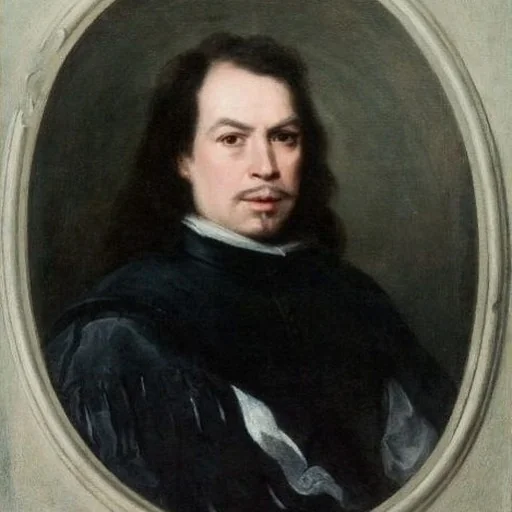
Bartolomé Esteban Murillo ( mure-IL-oh, m(y)uu-REE-oh, Spanish:; late December 1617, baptised 1 January 1618 – 3 April 1682) was a Spanish Baroque painter.

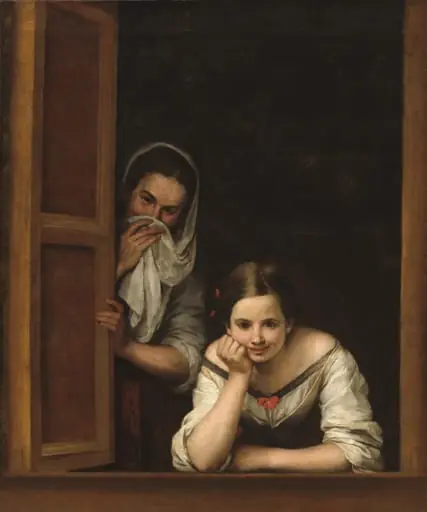
- The Little Fruit Seller
 Kaksi hedelmiä syövää kerjäläispoikaa, kopio Murillon mukaan
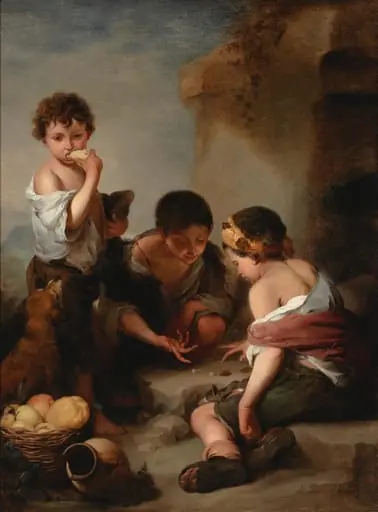 Kerjäläispojat pelaavat nopilla, kopio Murillon mukaan
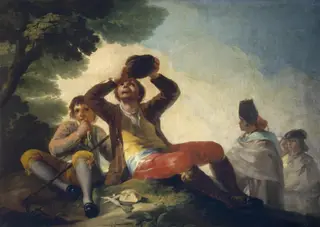 the Drinker
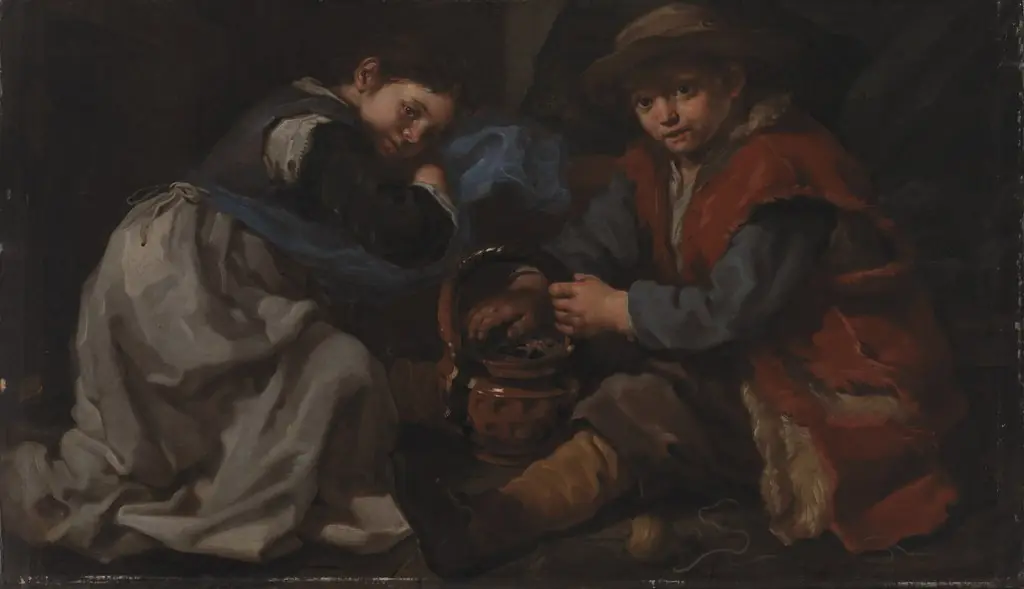 En pige og en dreng, der varmer sig ved et kulbækken
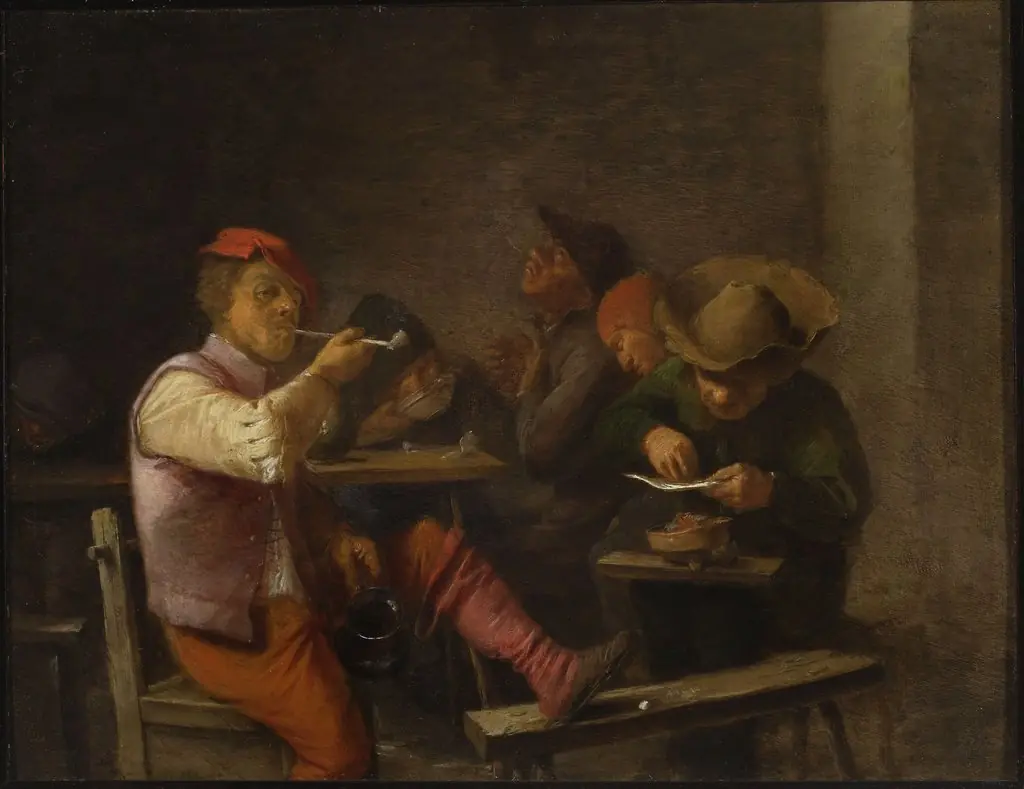 Peasant smoking tobacco in a tavern
 Boys picking fruit
 A Girl and a Boy with a Brazier
 Study for the 'The Charity of St. Elizabeth'
 The Lunch
 Three Musicians
 Musicians and Soldiers