Artwork
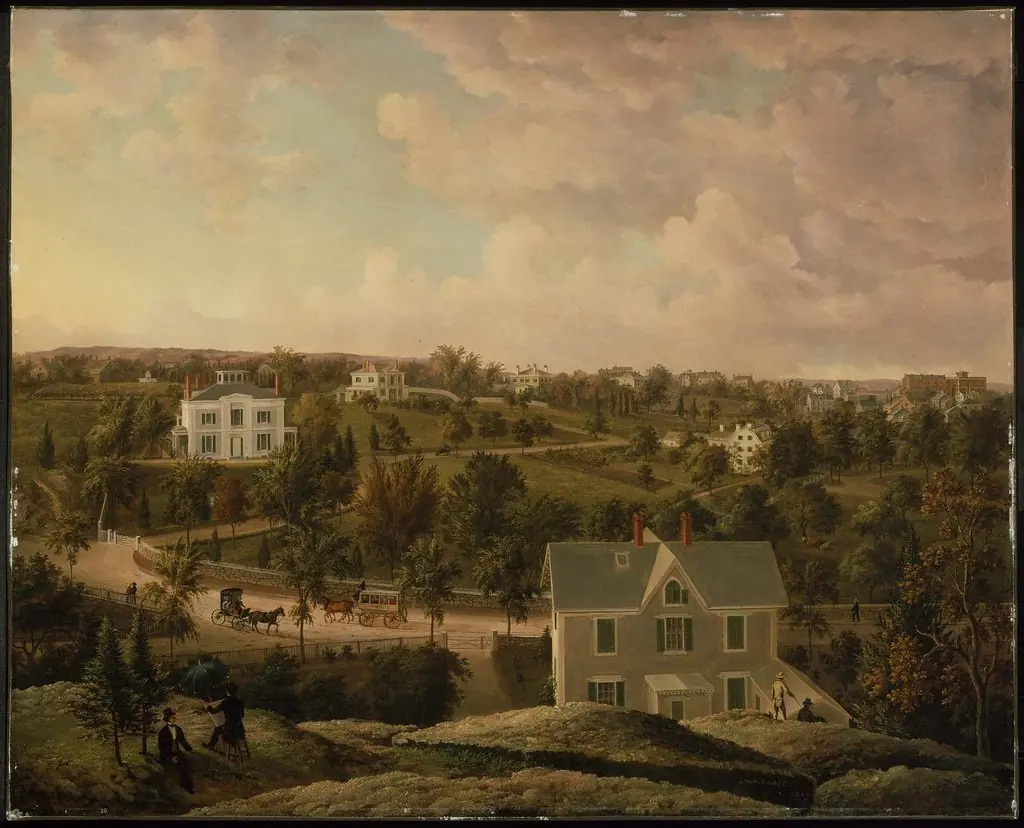
Meetinghouse Hill, Roxbury, Massachusetts
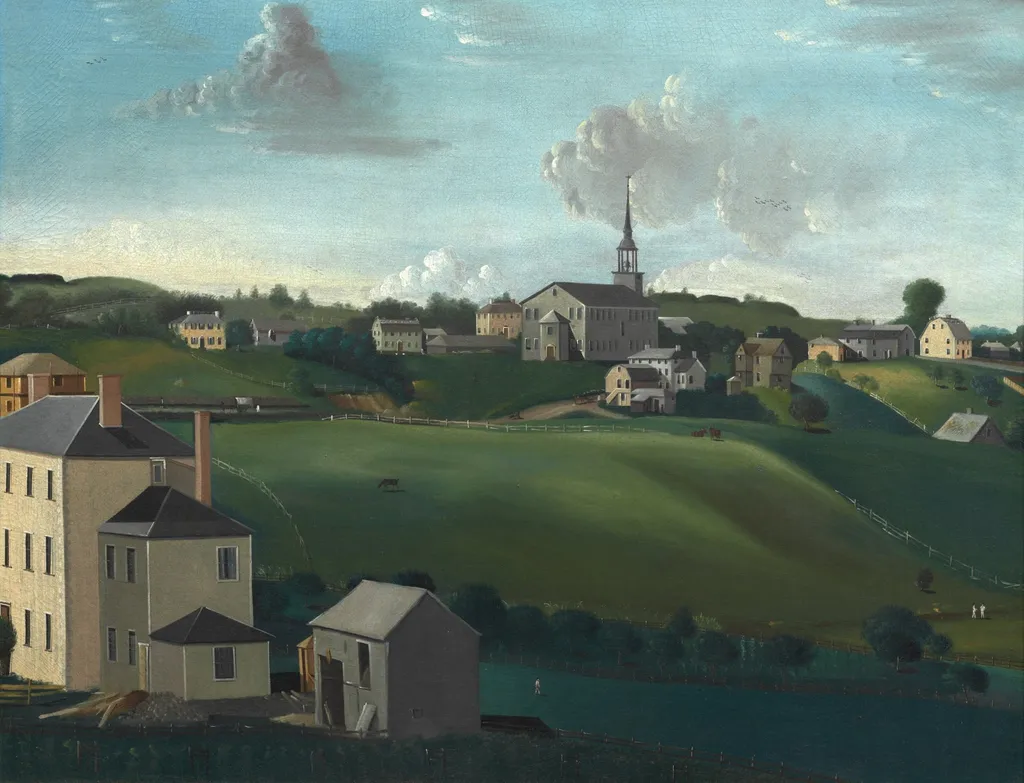
Meetinghouse Hill, Roxbury, Massachusetts is an oil painting by the American Folk Art artist John Ritto Penniman. It dates from 1799 and is held in the collection of the Art Institute of Chicago.
- Accession no.
- 59455
- Credit line
- Centennial Year Acquisition and Centennial Year Major Acquisition funds
About this work
Overview
Penniman's youthful execution of this subject highlights his early aptitude for capturing the specific qualities of the American environment.
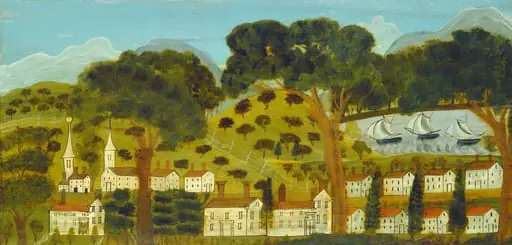
Meetinghouse Hill, Roxbury, Massachusetts is an 1799 oil on canvas landscape by the American artist John Ritto Penniman. Executed when the artist was seventeen years old, the work depicts a specific view of Roxbury, featuring a white meetinghouse situated on a hillside alongside scattered dwellings and a winding dirt road. Penniman renders the scene with a naturalistic approach to light and atmosphere, capturing the quiet character of the New England morning.
This painting holds significant art-historical importance as one of the earliest American works to portray a real, identifiable location rather than an idealized or imaginary landscape. It marks a pivotal moment in the development of American topographical painting, demonstrating an early commitment to local observation over European academic conventions. The composition balances architectural elements with the surrounding terrain, establishing a sense of place that anticipates the later traditions of American landscape art.
Penniman's youthful execution of this subject highlights his early aptitude for capturing the specific qualities of the American environment.
Subject & Meaning
The painting records a specific locale in Roxbury, presenting the settlement as a calm, early‑morning scene. The subdued illumination and soft shadows convey a sense of stillness, emphasizing the everyday character of the community rather than any grand historical narrative.
Technique & Style
Penniman employed a glazing technique, layering translucent washes of pigment to achieve depth and a luminous atmosphere. The delicate handling of light and color creates a realistic rendering of foliage and architecture, reflecting the artist’s early mastery of atmospheric effects despite his youth.
History & Provenance
Created when Penniman was seventeen, the canvas is among the earliest American works that portray an identifiable place rather than an imagined landscape. It entered the Art Institute of Chicago’s holdings through acquisition in the 20th century, where it remains on view.
Context
At the close of the eighteenth century, American artists began turning to local topography for subject matter, moving away from European idealized scenery. Penniman’s depiction of Roxbury aligns with this shift, illustrating how young painters documented their immediate environments with emerging techniques such as glazing.
Own this work as a print
Artist & collection
Artist
John Ritto Penniman (1782–1841) was a painter in Boston, Massachusetts, United States.