Artwork
Lady Agnew of Lochnaw
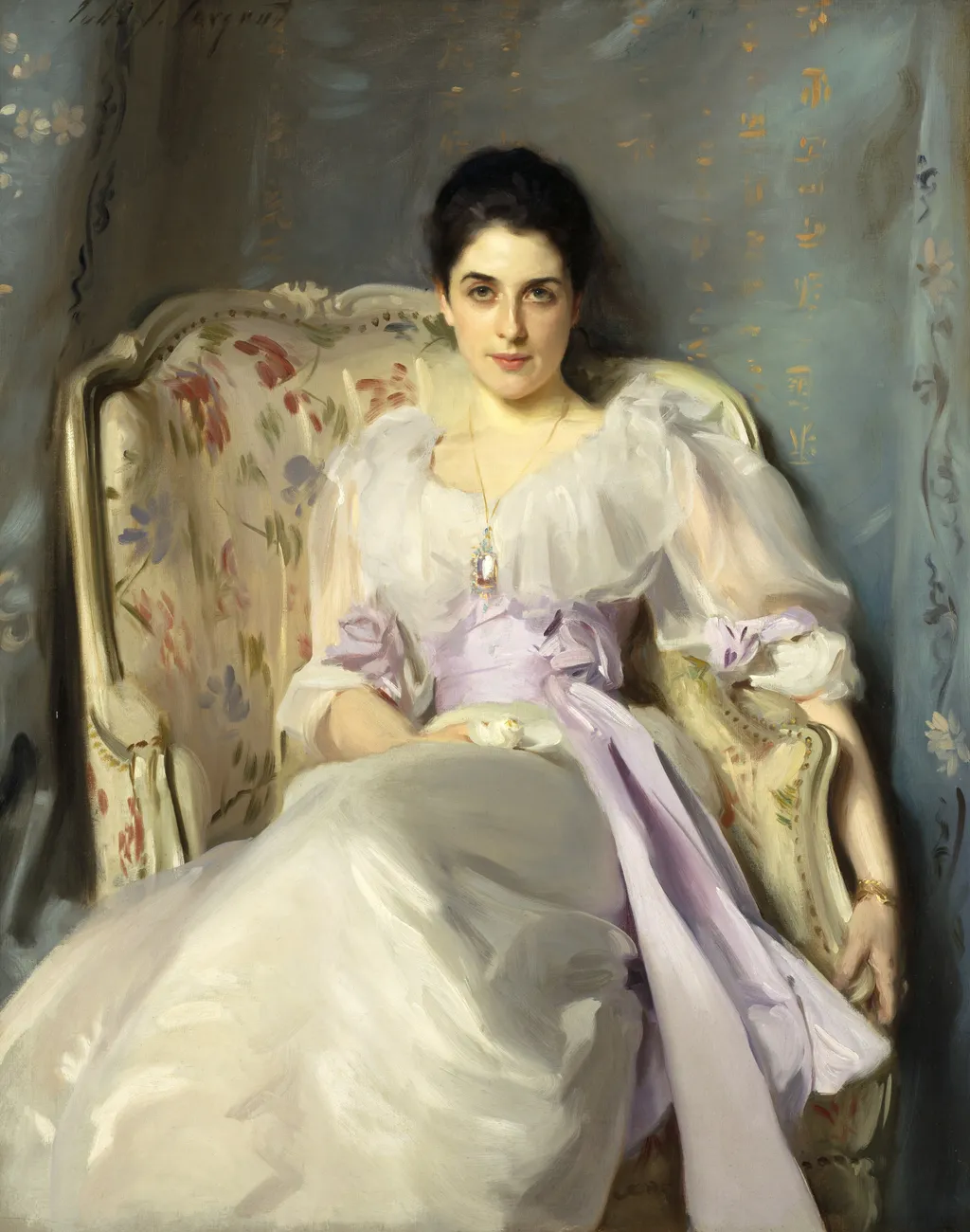
Lady Agnew of Lochnaw is an oil painting by the Impressionist artist John Singer Sargent. It dates from 1896 and is held in the collection of the National Galleries Scotland.
About this work
Subject & Meaning
The painting portrays Gertrude Agnew, the wife of Sir Andrew Noel Agnew, 9th Baronet of Lochnaw, depicted seated in an 18th‑century French Bergère chair.
The painting portrays Gertrude Agnew, the wife of Sir Andrew Noel Agnew, 9th Baronet of Lochnaw, depicted seated in an 18th‑century French Bergère chair. Her attire, a simple cream‑coloured silk dress with a mauve sash, modest jewellery, and a blue Chinese silk backdrop, reflects contemporary fashion while deliberately eschewing ostentatious display, drawing focus to her face and expression. Sargent renders her in a three‑quarter length pose, her gaze directly engaging the viewer with a quiet, challenging half‑smile that suggests an intimate conversation.
Art historians note that her languid posture may stem from convalescence after influenza, and the composition’s fluid brushwork contrasts with the finely modelled facial features, creating a sense of opulence tempered by restraint. The portrait was exhibited at the Royal Academy in 1893, contributing to Sargent’s election as an associate of the Academy, and was acquired by the Scottish National Gallery in 1925 via the Cowan Smith Bequest Fund.
Technique & Style
The portrait is an oil on canvas work measuring 127 × 101 cm, painted in 1892 by John Singer Sargent for Sir Andrew Noel Agnew. It depicts Gertrude Agnew seated in an 18th‑century French Bergère chair with a curving back that creates a languid elegance, draped in a white gown with a silk mauve sash and a blue Chinese silk wall hanging behind her. Sargent employed a loose, fluid brushstroke to render the fabric and background, while modeling the face with multiple translucent layers to achieve depth and warmth, contrasting sharply with the broader handling of the surroundings.
The composition captures a direct, appraising gaze and a half‑smile that conveys both intimacy and quiet challenge, reflecting contemporary critiques that praised its technical mastery and departure from conventional portraiture.
The painting was exhibited at the Royal Academy in 1893 and later acquired by the Scottish National Gallery in 1925 through the Cowan Smith Bequest Fund, retaining its original antique French rococo frame.
History & Provenance
Commissioned in 1892 by Sir Andrew Agnew, 9th Baronet, this portrait of his wife Gertrude was completed by John Singer Sargent that same year, reportedly requiring only six sittings. The work was exhibited at the Royal Academy in London in 1893, where it garnered significant acclaim. Although the painting remained in Lady Agnew's possession for decades, financial pressures allegedly led her to attempt selling it to the Frick Collection trustees in 1922, an offer that was rejected.
She subsequently offered the portrait to the Scottish National Gallery for £4,000, preferring it remain in Britain rather than go to New York. The gallery acquired the work in 1925 through the Cowan Smith Bequest Fund, at which point it was retitled Lady Agnew of Lochnaw at the sitter's request.
The painting is held by the Scottish National Gallery in Edinburgh, where it has been part of the collection since 1925. The museum acquired the work through the Cowan Smith Bequest Fund, following an offer from the sitter, Lady Agnew, who initially proposed a sale price of £4,000. The gallery's archives preserve two letters from Lady Agnew regarding this transaction and the subsequent retitling of the piece.
Prior to its acquisition by the gallery, the portrait was exhibited at the Royal Academy in London in 1893. It later appeared at Boston's Copley Hall in 1899 and at the Carnegie Institute in Pittsburgh in 1924. Following an extension of the gallery around 1978, the portrait was given a dedicated display space within the expanded facility.
Context
The portrait was immediately hailed at the Royal Academy exhibition in 1893, praised by The Times as not only a technical triumph but a masterpiece that abandoned Sargent’s earlier mannerisms in favor of a refined, reposeful image of a charming subject. Contemporary critics contrasted its quiet informality with the stiff conventions of Victorian aristocratic portraiture, noting Lady Agnew’s direct, quietly challenging gaze and the painting’s intimate yet subtly commanding presence.
Art historians Richard Ormond and Elaine Kilmurray later emphasized how the back of the chair frames the sitter in a curving, supportive space, producing a languid elegance that became emblematic of Sargent’s mature style. The work’s success is often cited as pivotal in securing Sargent’s acceptance as an Associate of the Royal Academy in January 1894, and it is widely regarded as a defining example of his late-nineteenth-century portrait practice.
Legacy
Exhibited at the Royal Academy in 1893, the portrait was an immediate critical triumph, described by The Times as a masterpiece and a triumph of technique. This reception significantly elevated John Singer Sargent's standing in Britain, likely securing his election as an Associate of the Academy in January 1894. The work is credited with influencing the subsequent development of portraiture by challenging Victorian conventions of modesty through its subject's direct gaze and informal pose.
Beyond the artist's career, the painting launched Gertrude Agnew into high society fame, earning her the status of a celebrated beauty. Its enduring reputation is underscored by Auguste Rodin's remark identifying Sargent as the "Van Dyck of our time" in reference to the piece. The painting remains a defining work in the artist's oeuvre and a centerpiece of the Scottish National Gallery.
Overview
John Singer Sargent’s portrait of Gertrude Agnew, Lady Agnew of Lochnaw, was painted in 1892. Executed in oil on canvas, the work measures roughly 127 by 101 centimetres. It is part of the collection of the Scottish National Gallery in Edinburgh, having entered the museum in 1925 through the Cowan Smith Bequest Fund.
Own this work as a print
Artist & collection
Artist
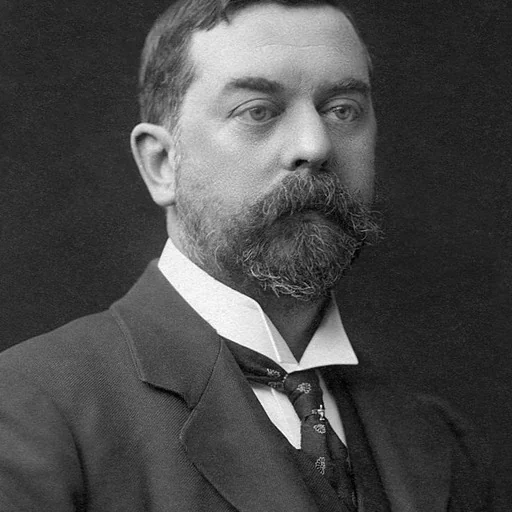
John Singer Sargent (; January 12, 1856 – April 15, 1925) was an American expatriate artist, considered the "leading portrait painter of his generation" for his evocations of Belle Époque and Edwardian-era luxury.

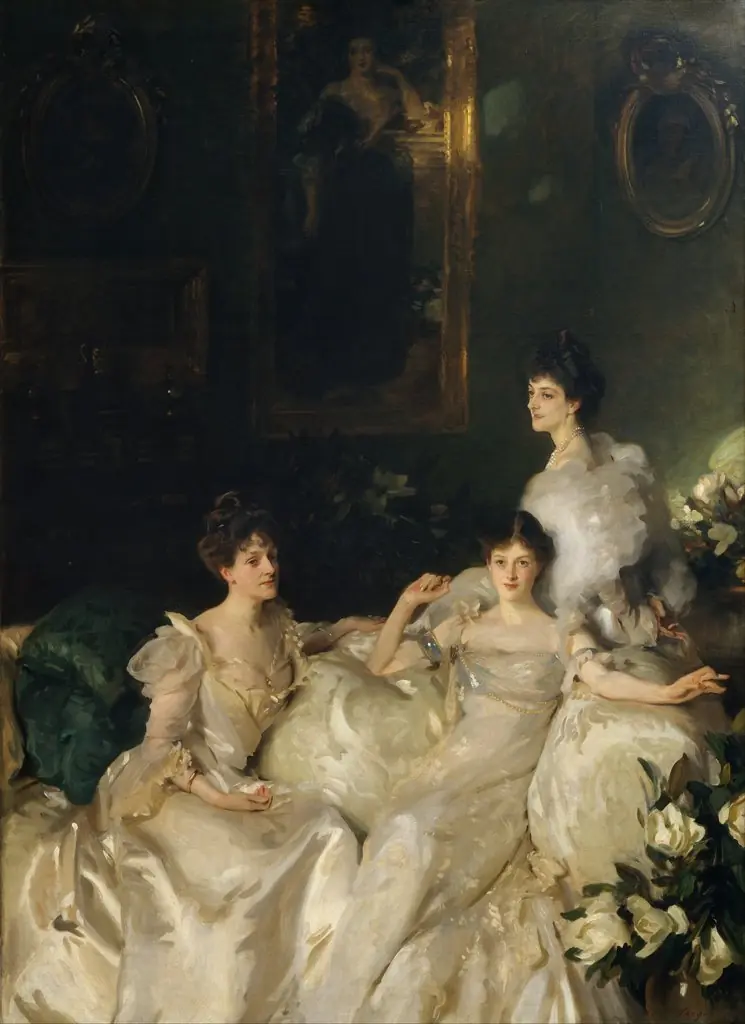
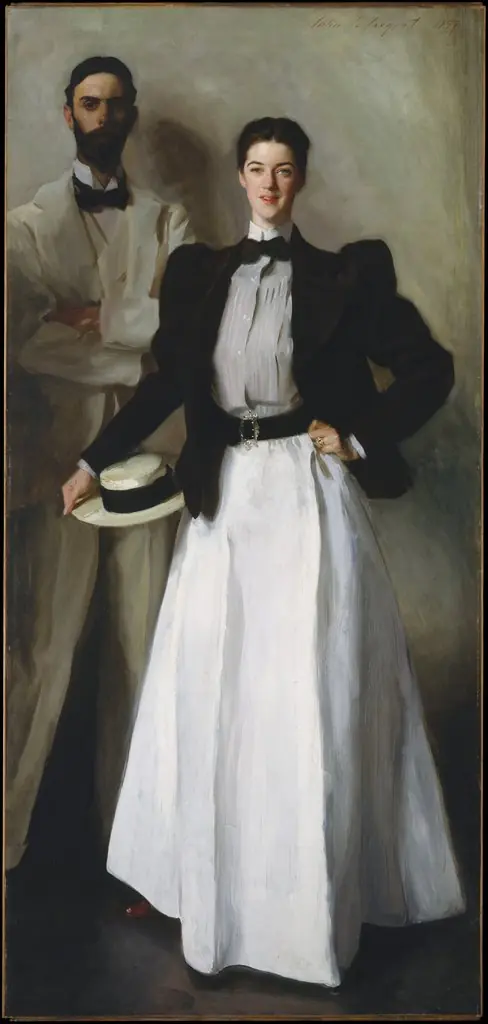
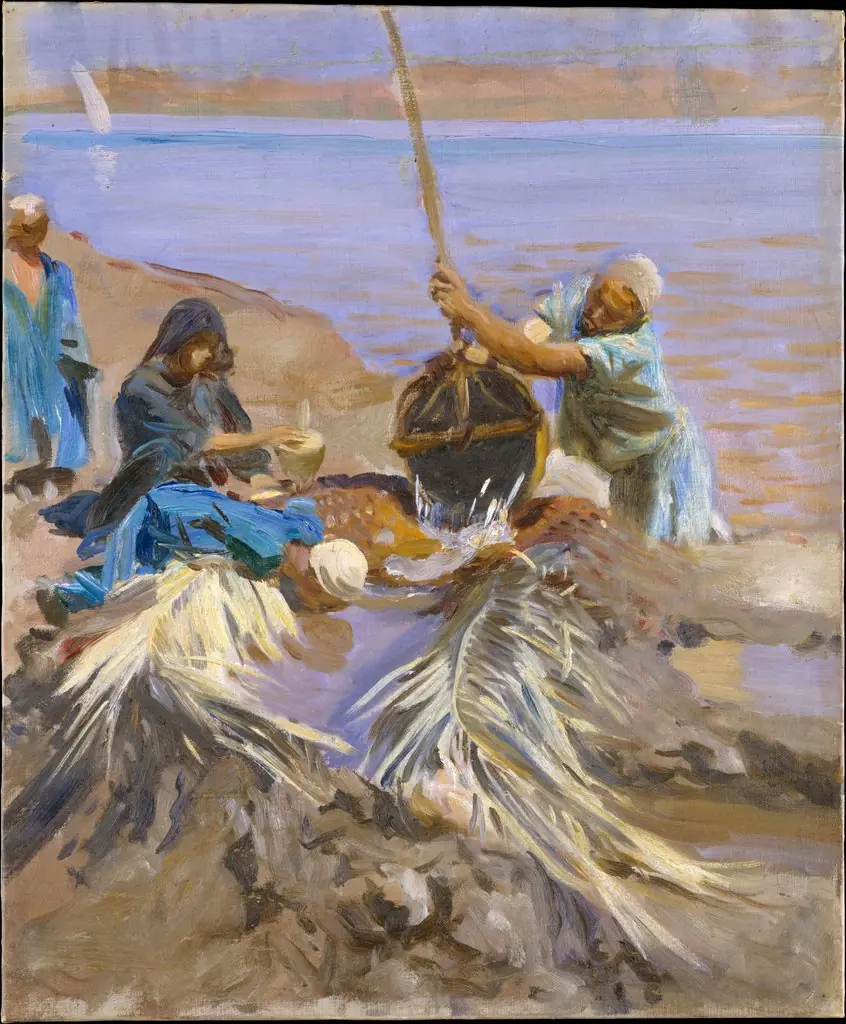
- Portrait of Cecilia Tower
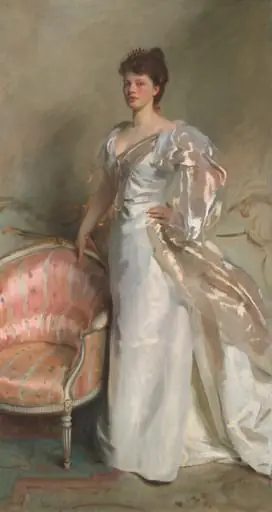 Mrs. George Swinton (Elizabeth Ebsworth)
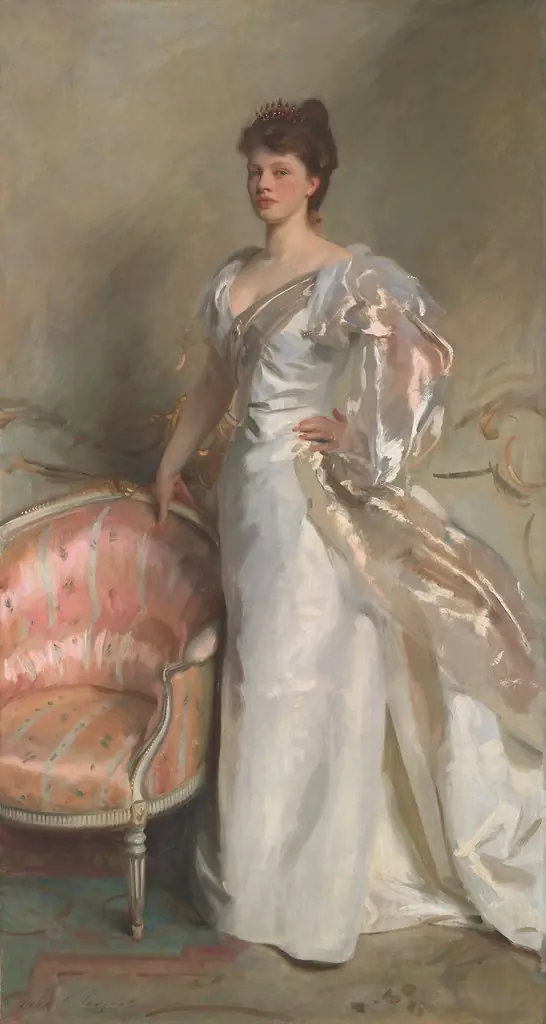 Mrs. George Swinton (Elizabeth Ebsworth)
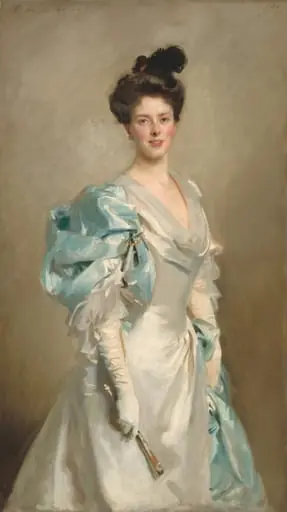 Mary Crowninshield Endicott Chamberlain (Mrs. Joseph Chamberlain)
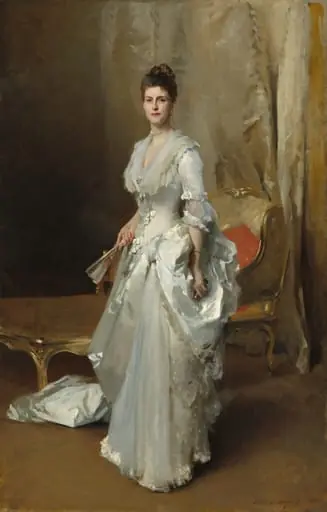 Margaret Stuyvesant Rutherfurd White (Mrs. Henry White)
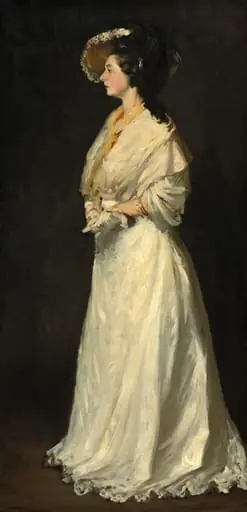 Young Woman in White
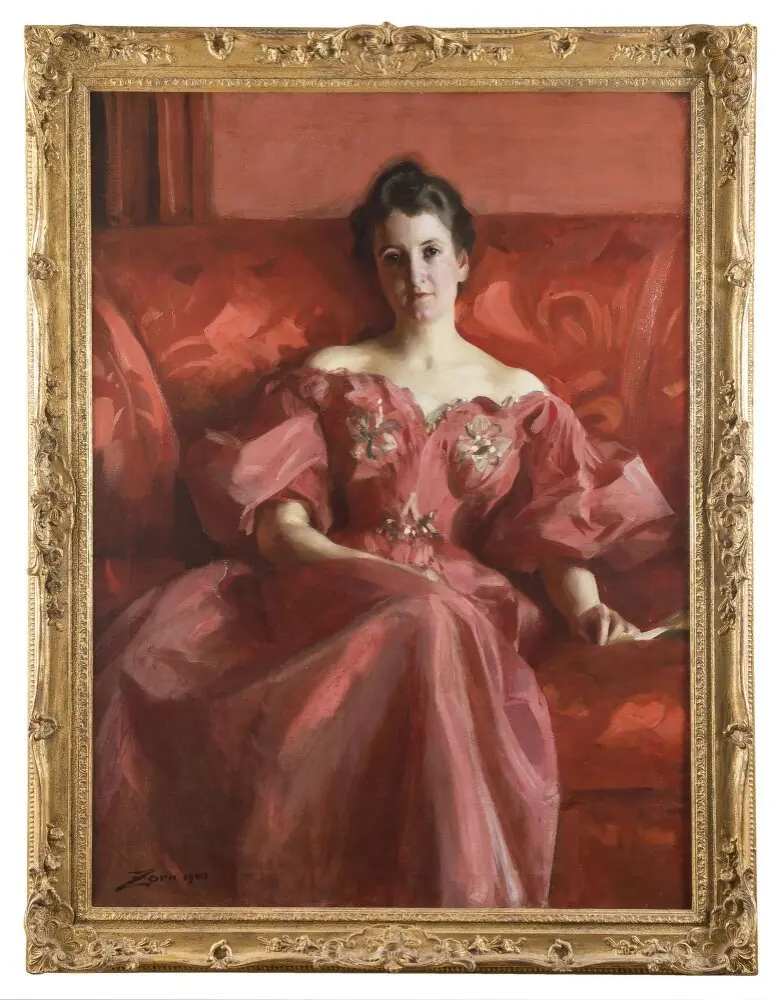 Mrs Abby Marion Deering Howe
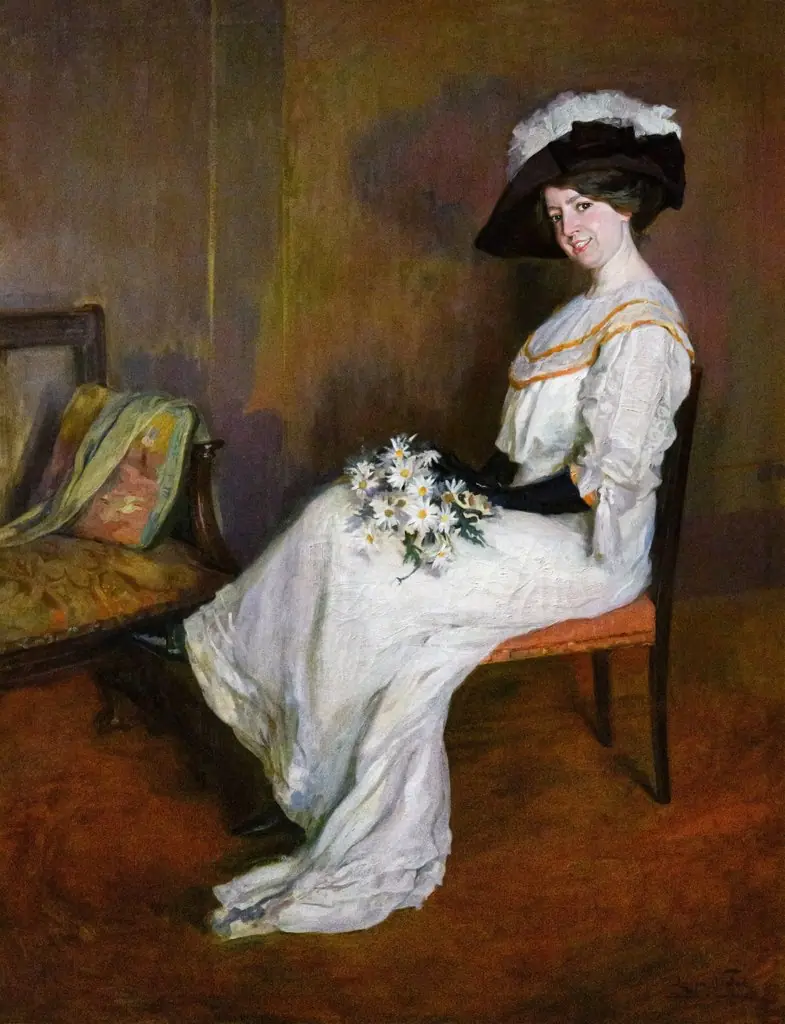 Portrait of Marta Vidal Puig
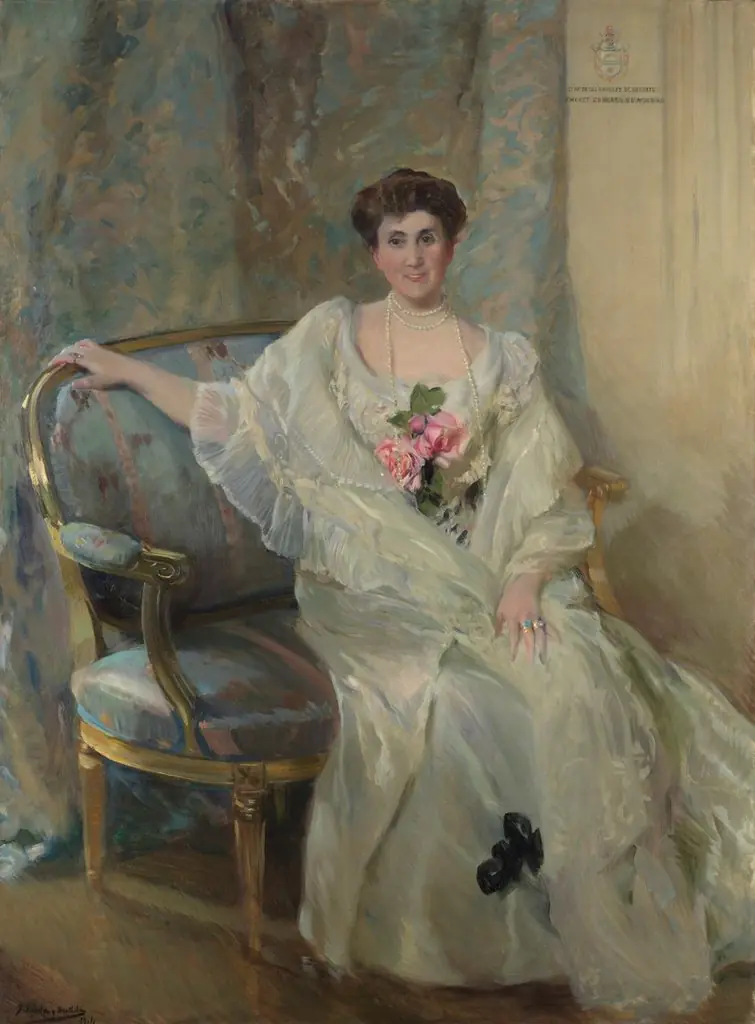 María de los Ángeles Beruete y Moret condesa viuda de Muguiro
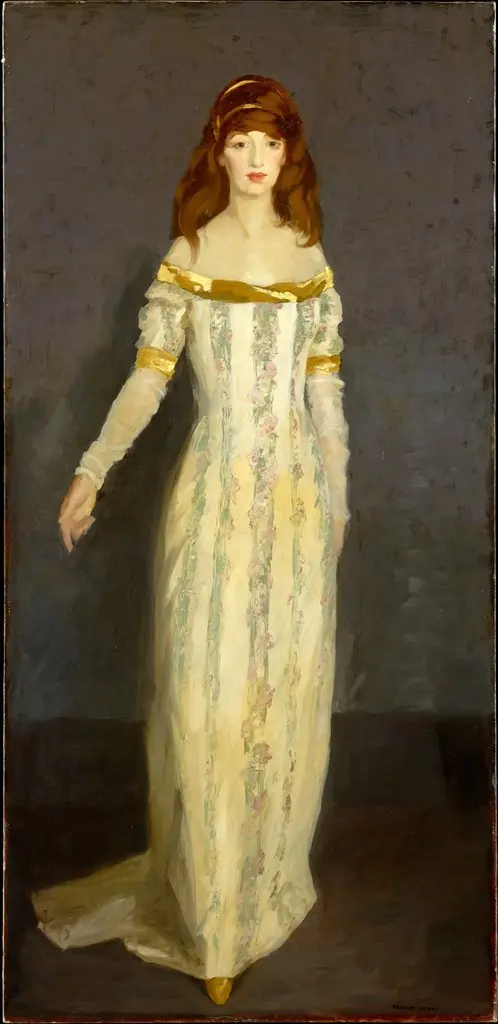 The Masquerade Dress
 Mrs Carl Meyer and her Children