Artwork
Madame X (Virginie Amélie Avegno Gautreau)
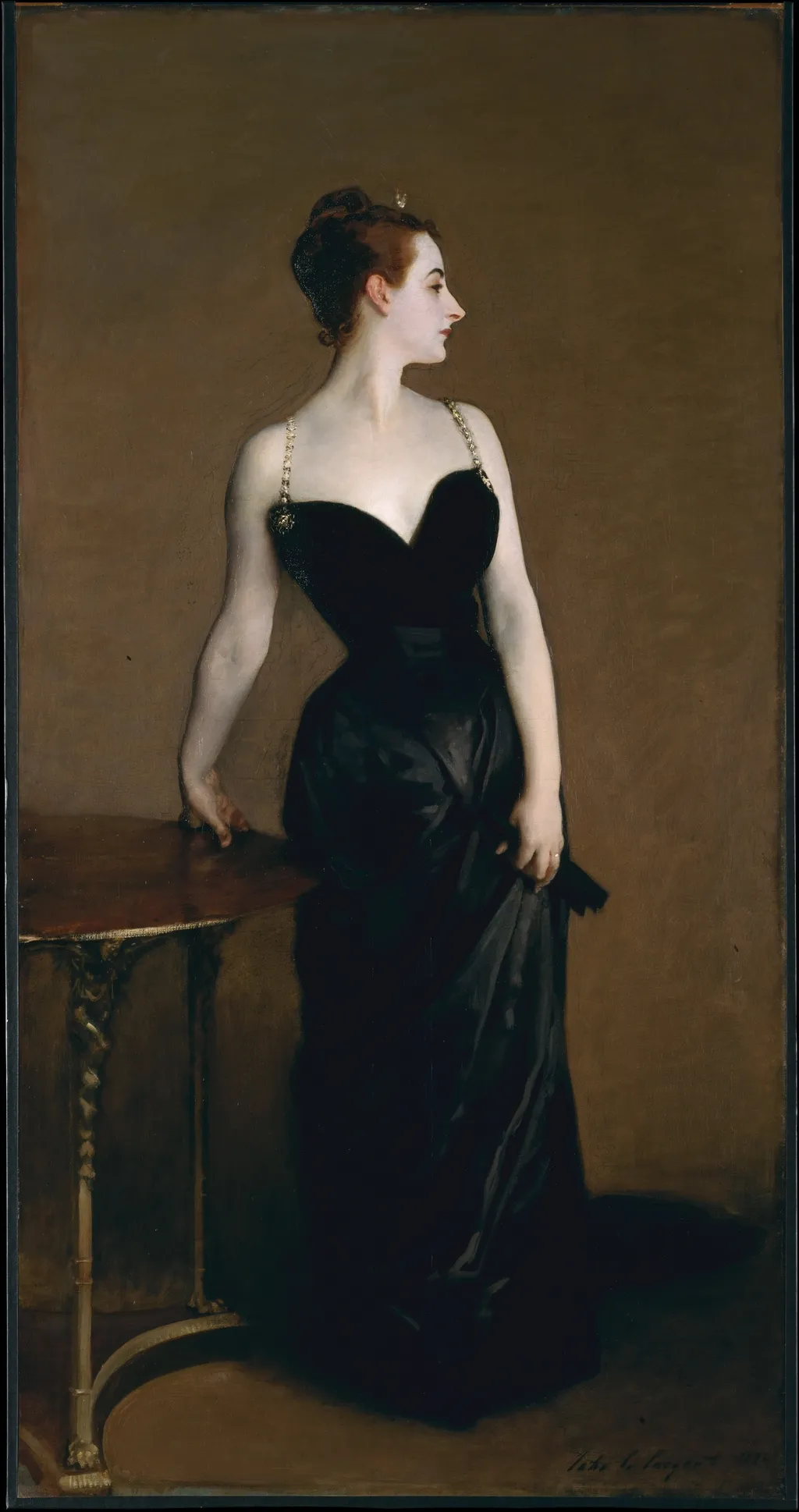
Madame X (Virginie Amélie Avegno Gautreau) is an oil painting by the Academic Art artist John Singer Sargent. It dates from 1892 and is held in the collection of the Metropolitan Museum of Art.
About this work
At the 1884 Paris Salon, viewers recoiled at the portrait of a Louisiana-born socialite whose black satin gown seemed to slip from one shoulder. John Singer Sargent had pursued Virginie Amélie Avegno Gautreau for months, hoping it would make his name; instead the ridicule drove him to London. He later repainted the strap and kept the canvas for decades, calling it 'the best thing I have done.'
Subject & Meaning
Virginie Amelie Avegno Gautreau, an American expatriate celebrated as a 'professional beauty' for her social advancement through appearance, is the subject.
Virginie Amelie Avegno Gautreau, an American expatriate celebrated as a 'professional beauty' for her social advancement through appearance, is the subject. Sargent deliberately composed a study in oppositions: her chalky white skin, accentuated by lavender powder as a sign of aristocratic artifice, contrasts starkly with the deep black satin dress that both reveals and conceals. Her body faces forward while her head turns in profile, suggesting both assertion and retreat.
The tiara may allude to the goddess Diana, reinforcing an unapproachable, statuesque quality. The original painting featured a fallen shoulder strap, heightening the erotic charge that fueled the scandal at the 1884 Salon. The portrait thus embodies the constructed nature of feminine allure and the tensions between display and decorum in Parisian high society.
Technique & Style
Executed in oil on canvas, the portrait measures approximately 208.6 by 109.9 cm, a large scale chosen by Sargent to ensure visibility on crowded Salon walls. For the subject's distinctive pale flesh, Sargent employed a palette of lead white, rose madder, vermilion, viridian, and bone black. The painting is a study in opposition: the stark contrast between the luminous white skin and the deep black satin dress against a dark brown background defines its formal character.
Gautreau's body faces forward while her head is turned in profile, a pose that creates tension in her neck and arm. Originally one shoulder strap was painted fallen, but the negative critical reaction led Sargent to repaint it secured over the shoulder. The handling is precise, with controlled brushwork emphasizing the elegant contours and the subject's aristocratic, aloof demeanor.
History & Provenance
The portrait was painted not on commission but at Sargent's request, with Virginie Gautreau accepting his offer in February 1883. After slow progress that winter, Sargent traveled to her Brittany estate in June 1883 to execute preparatory studies, and the final painting was completed in the autumn of 1884. Following the scandal at the 1884 Paris Salon, where the work was exhibited with a fallen shoulder strap, Sargent repainted the strap to its present position.
He retained the painting in his London studio until 1916, when he sold it to the Metropolitan Museum of Art in New York, months after Gautreau's death, also altering the title to 'Madame X' to obscure the sitter's identity. Its exhibition history includes the Paris Salon of 1884, where it was first shown.
Context
At the 1884 Paris Salon, Madame X provoked scandal, with critics condemning its 'cold sensuality,' the subject's stark pallor, and the fallen shoulder strap. Public reaction was harsh, and Sargent repainted the strap, but the damage to his Parisian reputation was done; he relocated to London, where the notoriety paradoxically helped him build a successful career in Britain and America. Over subsequent decades the work gained status as a masterpiece, and Sargent himself called it his best work.
Scholarship now analyzes it as a definitive study of oppositions, and it has been hailed as the 'Mona Lisa of the American art collection' at the Metropolitan Museum of Art.
Legacy
Madame X left a complex legacy. The scandal at the 1884 Salon initially damaged Sargent's Paris career but is credited with pushing him to London, where he built a thriving portrait practice in Britain and America. Sargent himself later considered the portrait his finest work, writing in 1915 that it was 'the best thing I have done.'
He kept the painting in his London studio until selling it to the Metropolitan Museum of Art in 1916, where it became a cornerstone of the collection. Beyond the museum, the painting's distinctive black dress with jeweled straps is often credited with inspiring Jean-Louis's costume for Rita Hayworth in the 1946 film Gilda, embedding it in popular culture.
Overview
Madame X is an 1884 oil painting by John Singer Sargent, depicting Virginie Amélie Avegno Gautreau, a prominent Parisian socialite. Sargent initiated the portrait, hoping it would elevate his professional standing. However, its debut at the Paris Salon of 1884 provoked widespread scandal and criticism, particularly regarding its perceived impropriety.
Despite the initial controversy, the artwork is now recognized as a pivotal piece in Sargent's oeuvre and a significant holding within American art collections.
Artist & collection

Artist
John Singer Sargent (; January 12, 1856 – April 15, 1925) was an American expatriate artist, considered the "leading portrait painter of his generation" for his evocations of Belle Époque and Edwardian-era luxury.


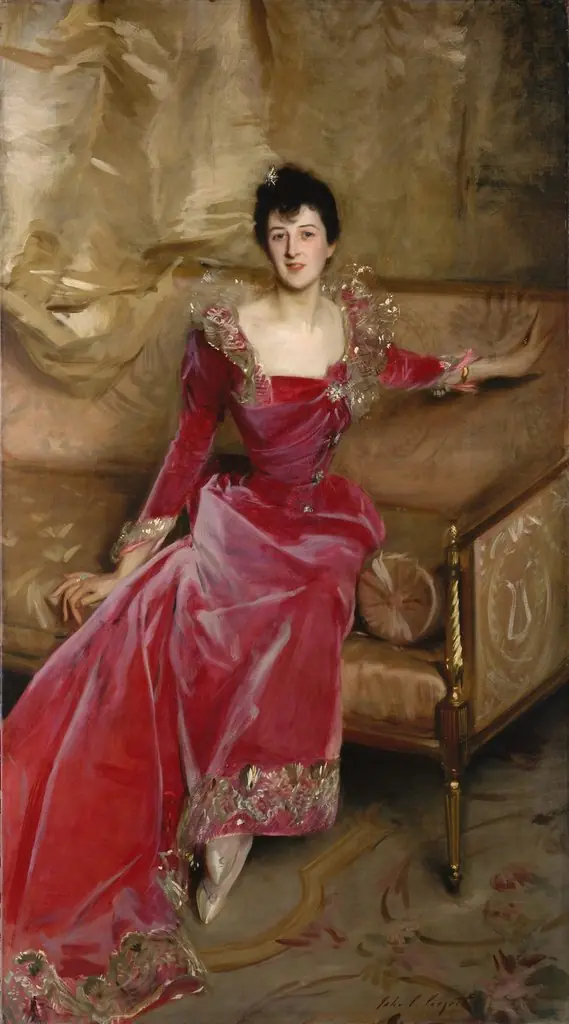
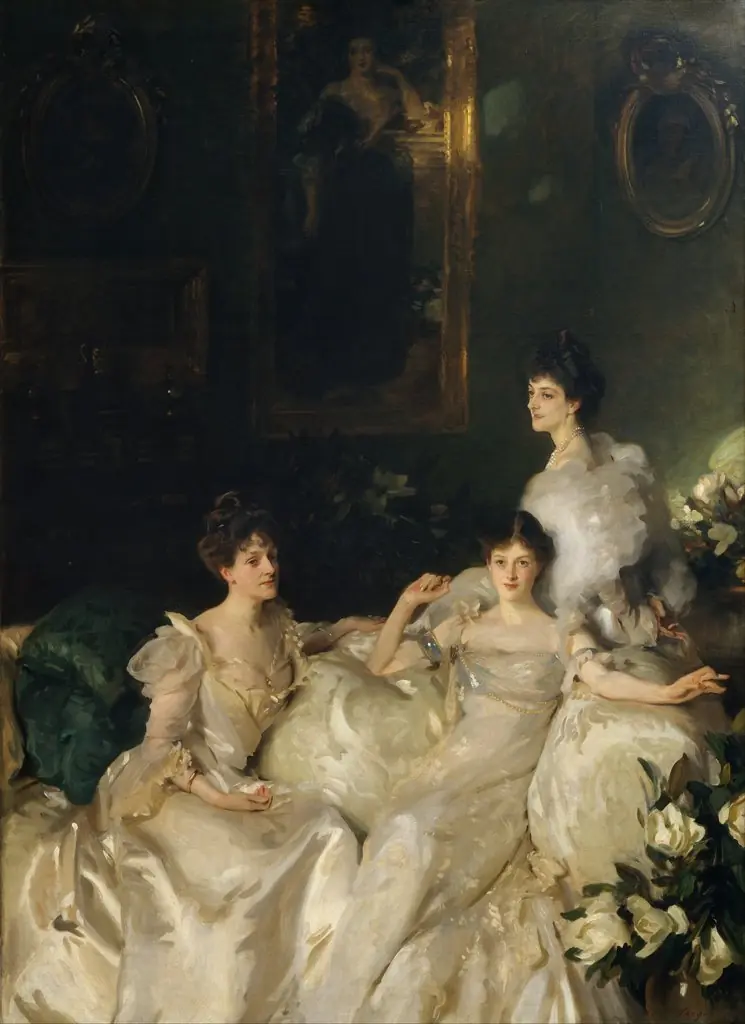
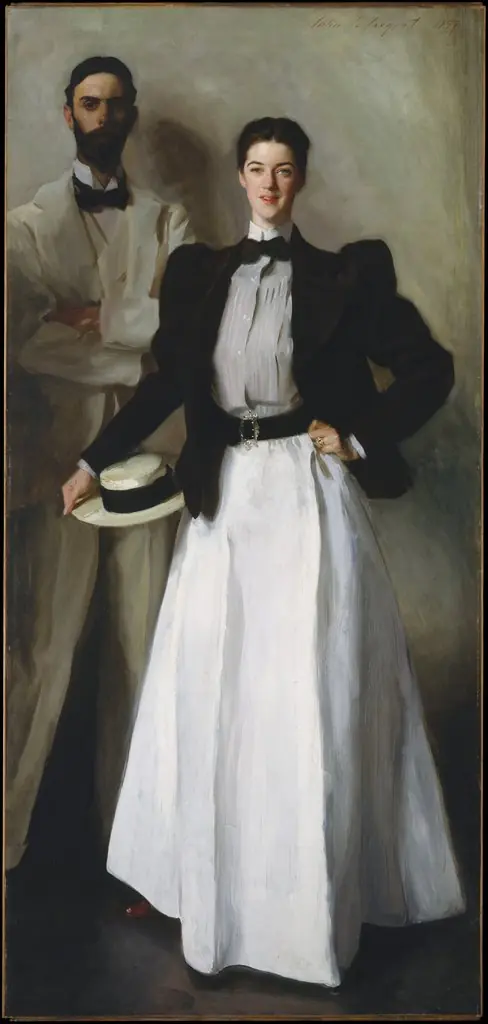

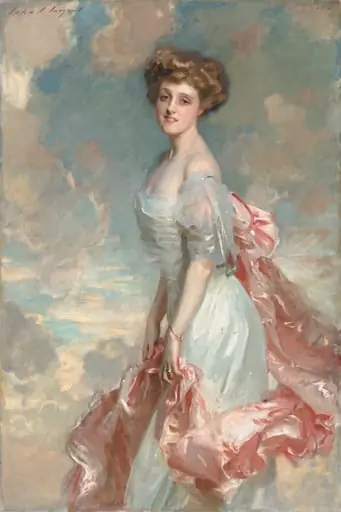
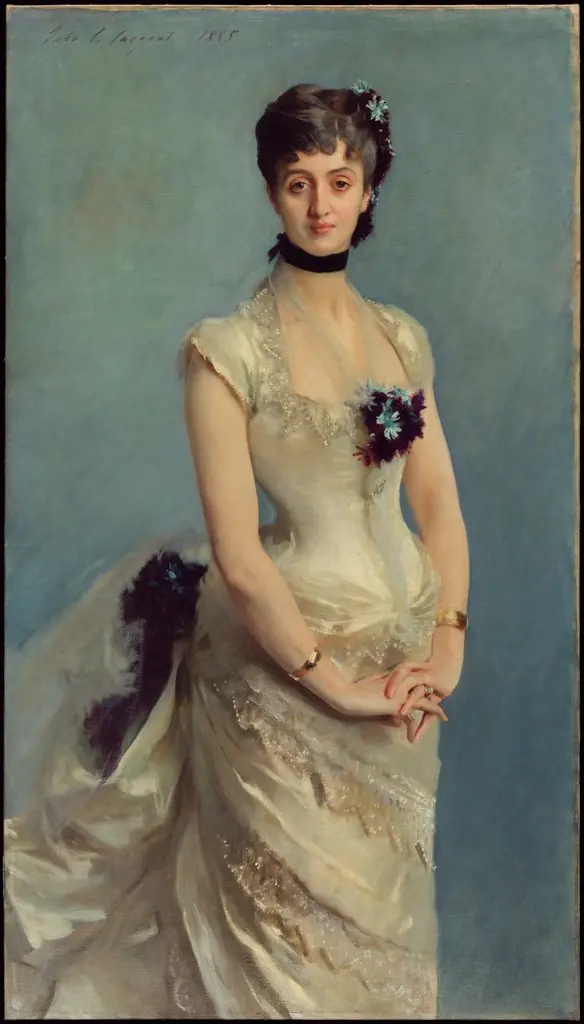 Portrait of Madame Paul Poirson
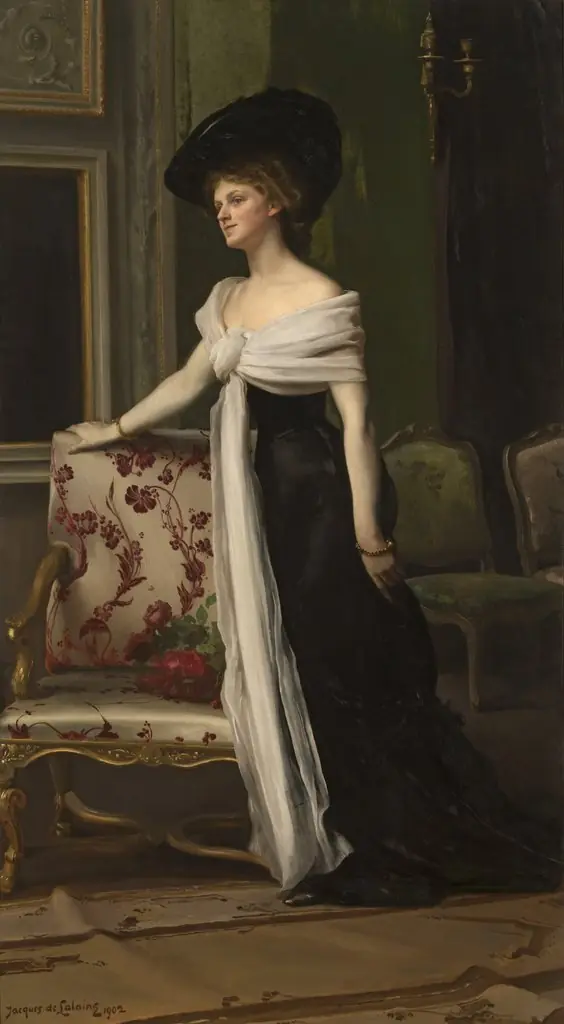 Nanette de Spoelberch, Madame Louis de Baillet-Latour
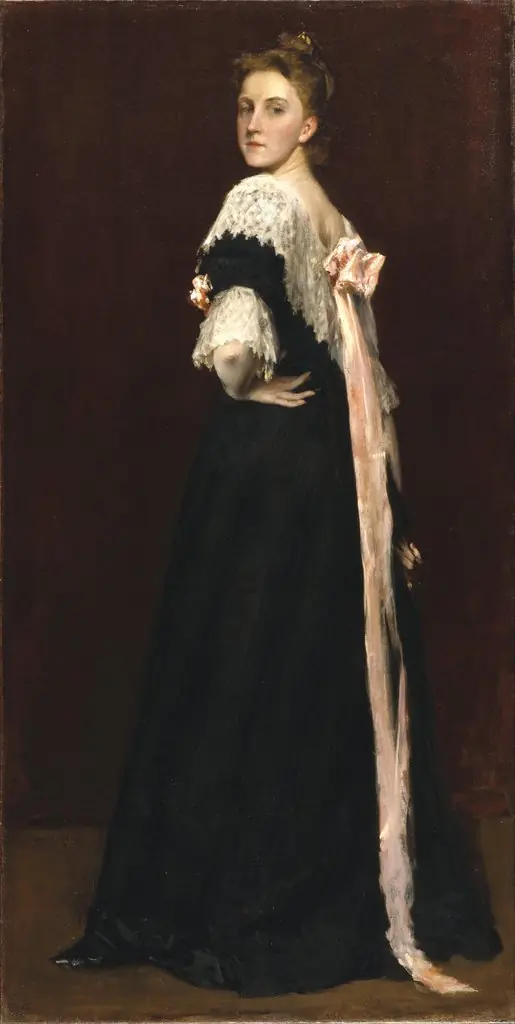 Lydia Field Emmet
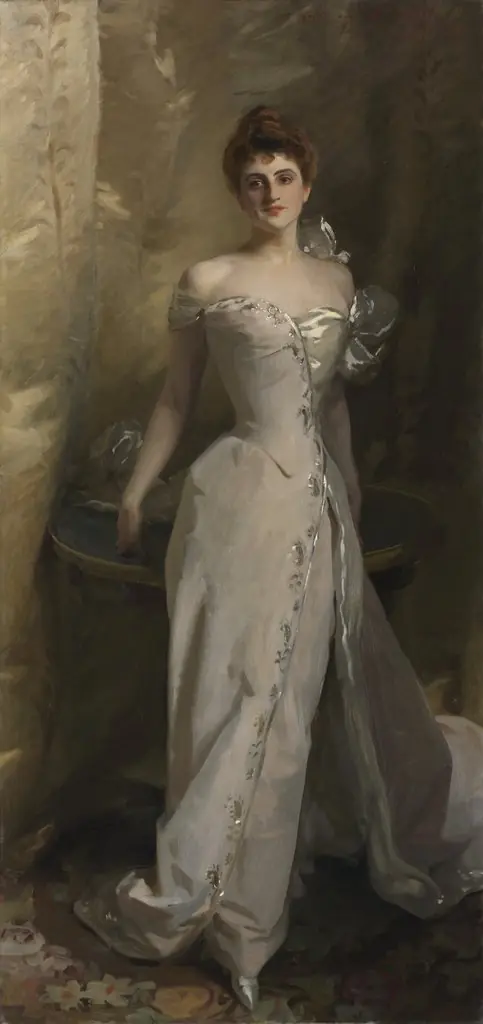 Portrait of Lisa Colt Curtis
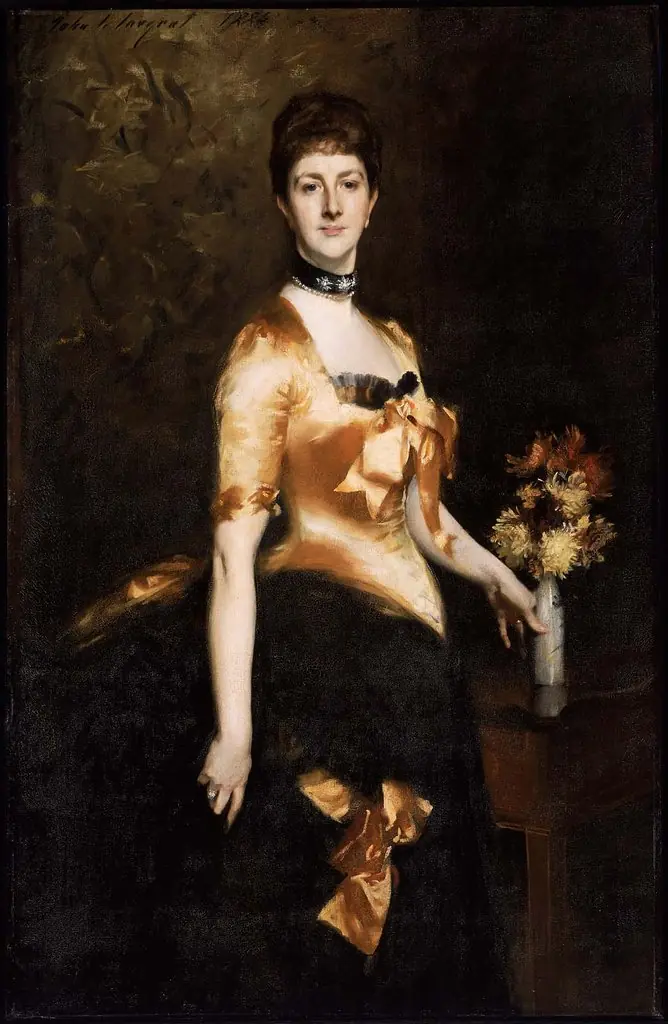 Edith, Lady Playfair (Edith Russell)
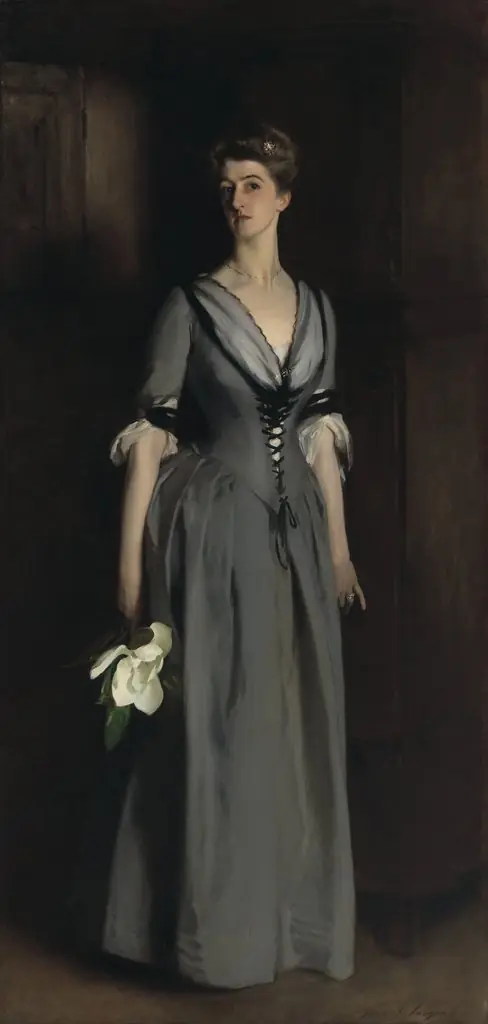 Mrs Albert Vickers (Edith Foster)
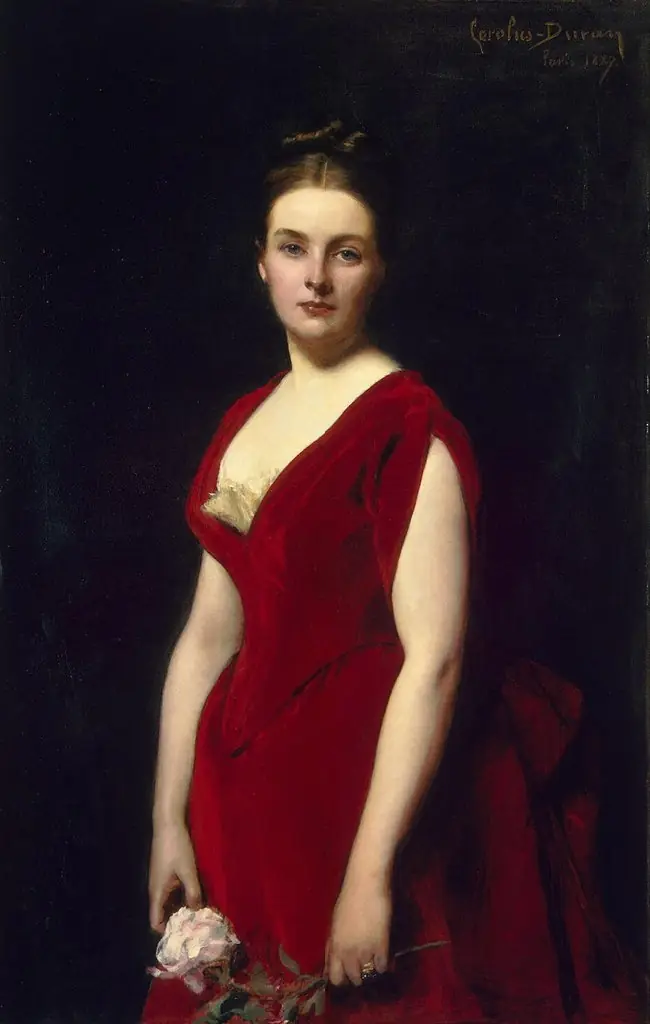 Portrait of Anna Obolenskaya
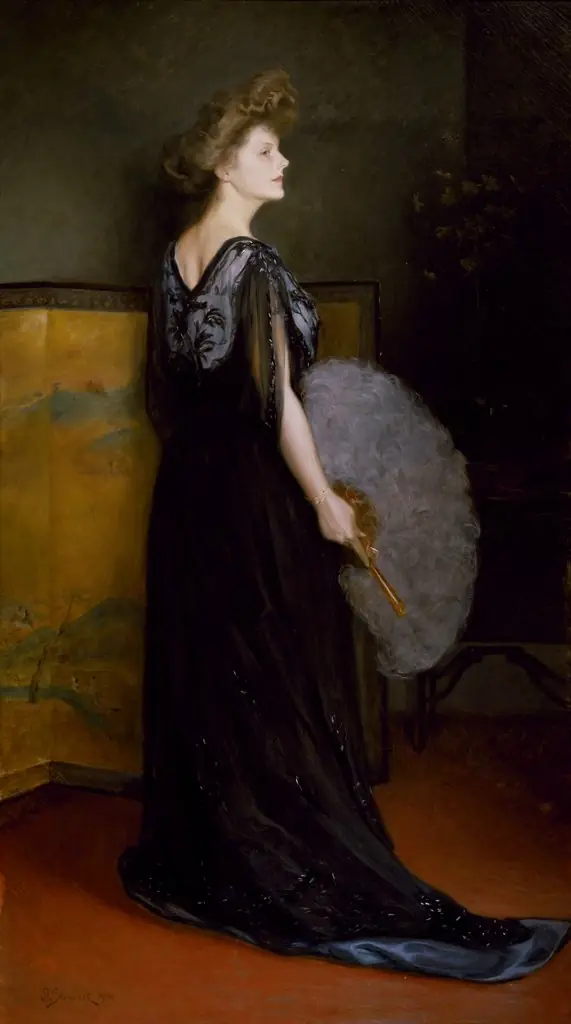 Portrait of Mrs. Francis Stanton Blake
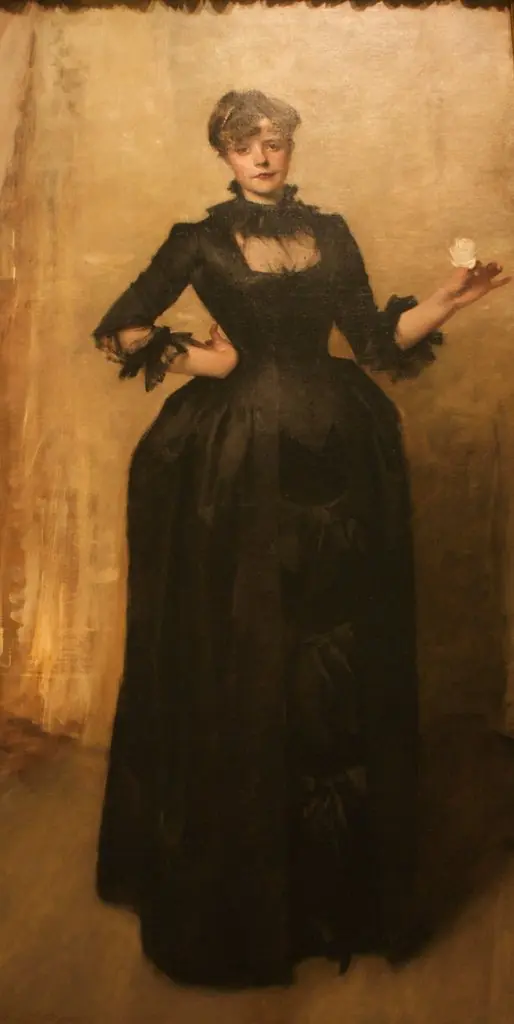
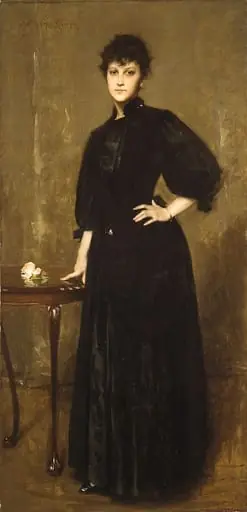 Lady in Black
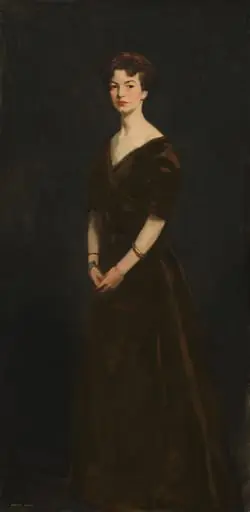 Edith Reynolds
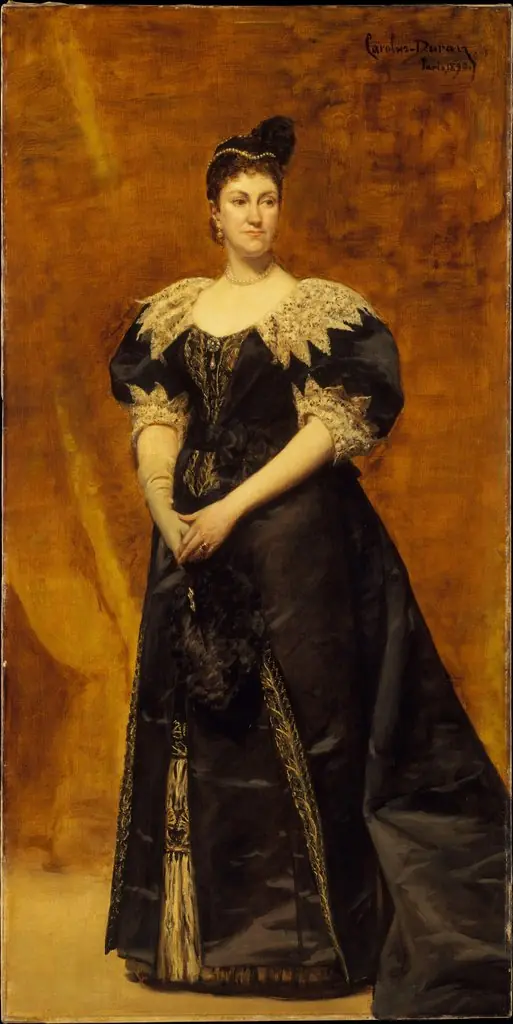 Mrs. William Astor (Caroline Webster Schermerhorn, 1831–1908)
- Madame Gaye
 Studied in the Portraiture Across Time course