Artwork
Corkscrew Hanging on a Nail
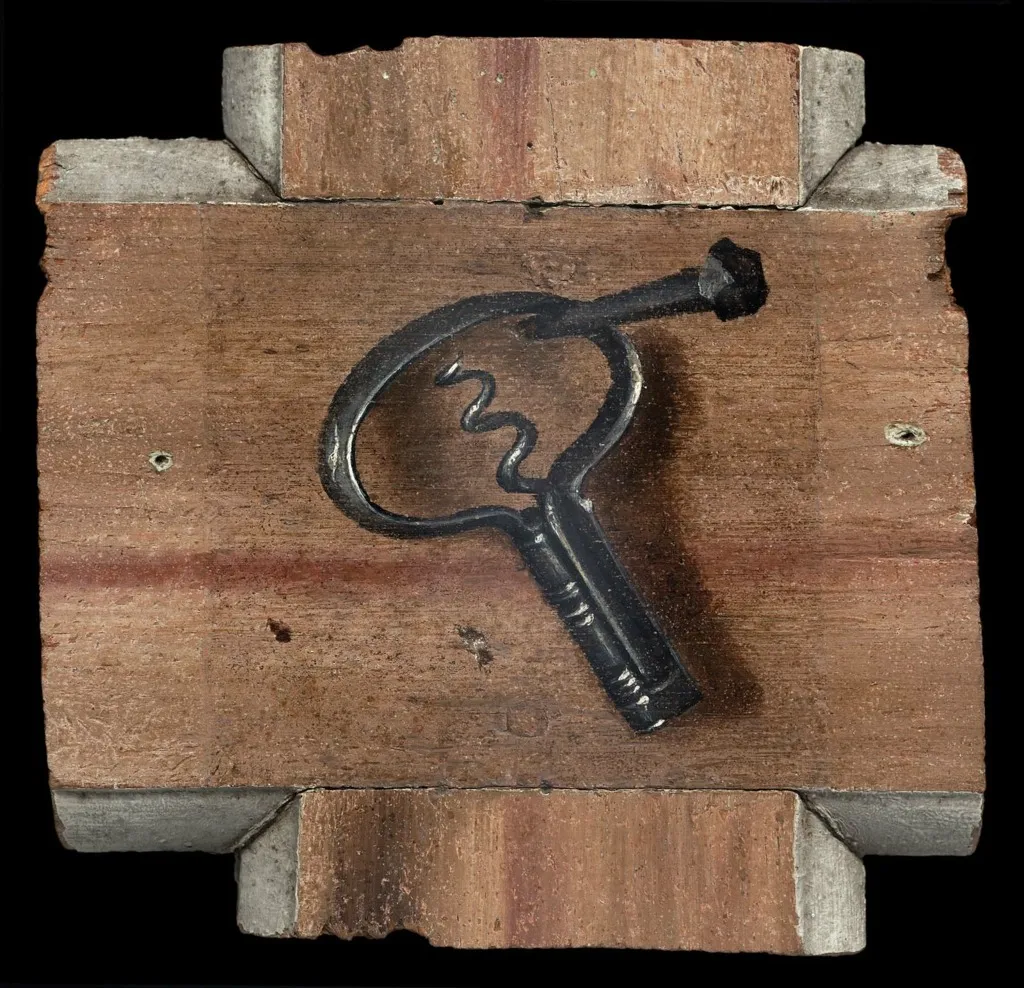
Corkscrew Hanging on a Nail is an unspecified painting by John Singleton Copley. It dates from 1786 and is held in the collection of the Museum of Fine Arts Boston.
About this work
Overview
John Singleton Copley painted Corkscrew Hanging on a Nail circa 1786 while living in London. The work is a modest still‑life that presents a single metal corkscrew suspended from a nail on a rough wooden board. Rendered in muted browns and grays, the composition focuses on the ordinary object and its material qualities rather than narrative content.
Subject & Meaning
The painting isolates a commonplace kitchen tool, turning it into a study of form and function. By suspending the corkscrew on a nail, Copley emphasizes the interplay of weight, balance, and the tactile contrast between metal and wood, inviting viewers to consider the beauty inherent in everyday objects.
Technique & Style
Copley employs meticulous brushwork to capture the corkscrew’s reflective metal surface and the grain of the wooden board. Subtle chiaroscuro models the forms, while a restrained palette of browns, grays, and muted highlights creates a quiet, almost photographic realism characteristic of his later London period.
History & Provenance
Originally executed after Copley’s move from colonial New England to London, the painting reflects his expanding interest in still‑life alongside history subjects. It entered the Museum of Fine Arts, Boston, where it remains in the permanent collection, representing a rare example of Copley’s non‑portrait work from his mature years.
Artist & collection

Artist
John Singleton Copley (July 3, 1738 – September 9, 1815) was an American-born British painter active in both the Thirteen Colonies and England.

- Obiect de cult confecționat din lemn de brad. Compusă din două cruci; o cruce pictată, prinsă printr-un cui metalic, cu o altă cruce nepictată, cu rol de suport. Pe fond verde se intuiește o pictură reprezentându-l pe Iisus răstignit. Text inscripționat în culoare albă. Linii diagonale dublate alcătuind un ”X” sunt trasate cu negru pe cele trei capete superioare ale crucii. Culorile sunt estompate. Capetele brațului scurt și capul brațului lung din partea superioară decupate în formă hexagonală. Cealaltă cruce prezintă extremitățile brațului scurt și extremitatea superioară a brațului lung rotunjite. Ambele cruci sunt formate din câte două bucăți de lemn, una mai lungă și cealaltă mai scurtă așezate perpendicular și asimetric una peste alta. Elementele din lemn îmbinate și prinse în cuie. Cromatică: maro; verde; cărămiziu; alb.
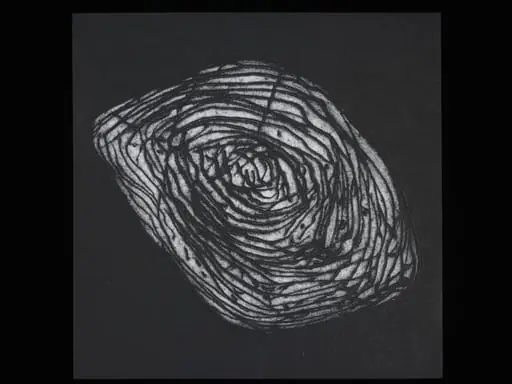 Almond Trees (Freud's Garden) 1939
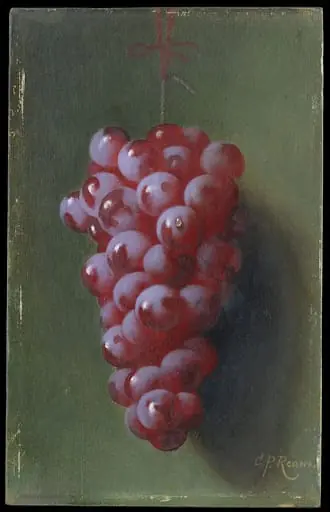 Still Life with Grapes
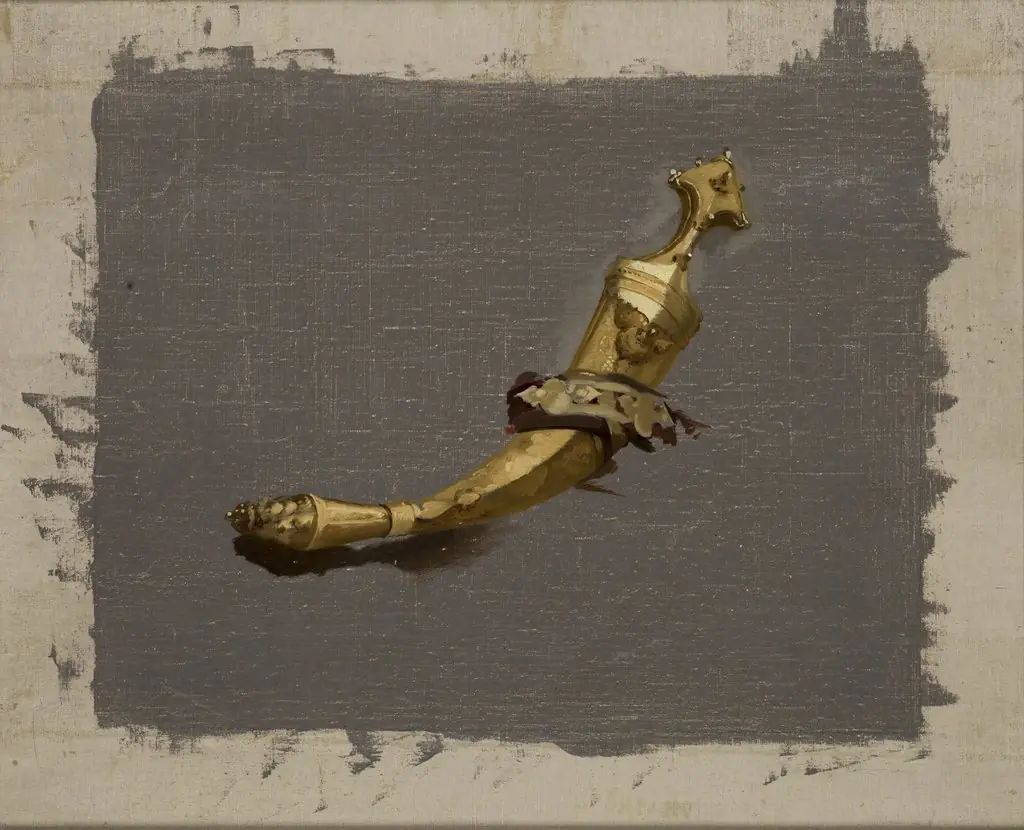 Study of a Khanjar
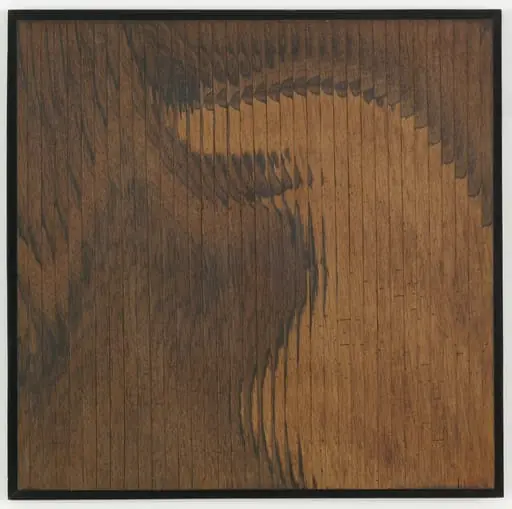 Untitled
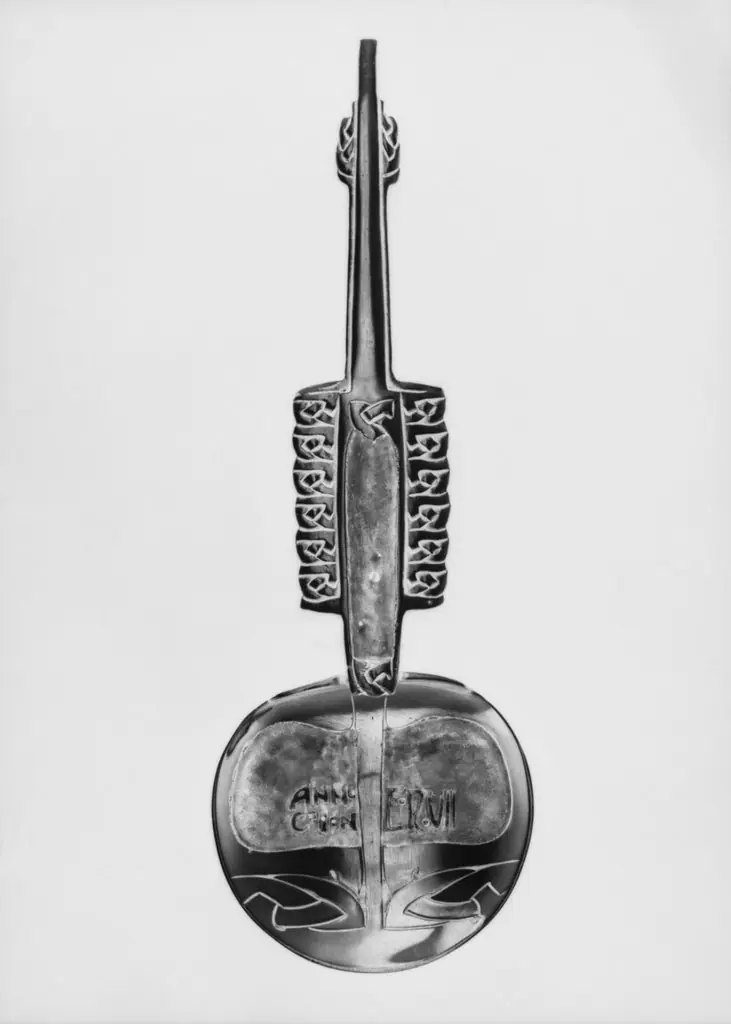 Coronation spoon
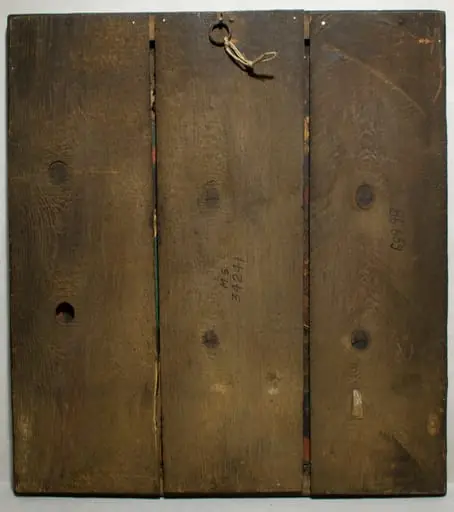 Icoasemn
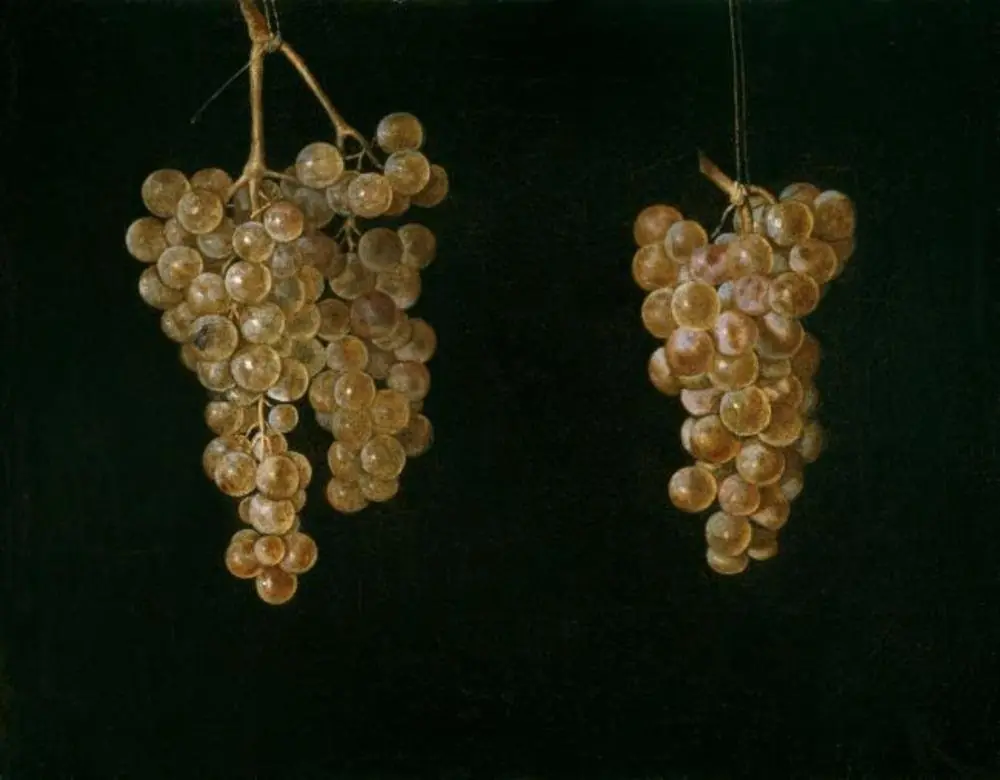 Two Bunches of Grapes with a Fly
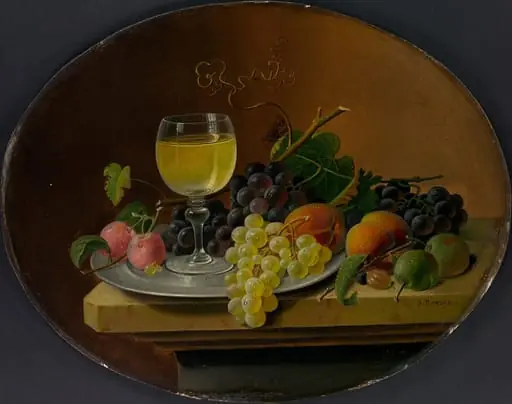 Still Life Fruit and Wine Glass
 Icoae jo
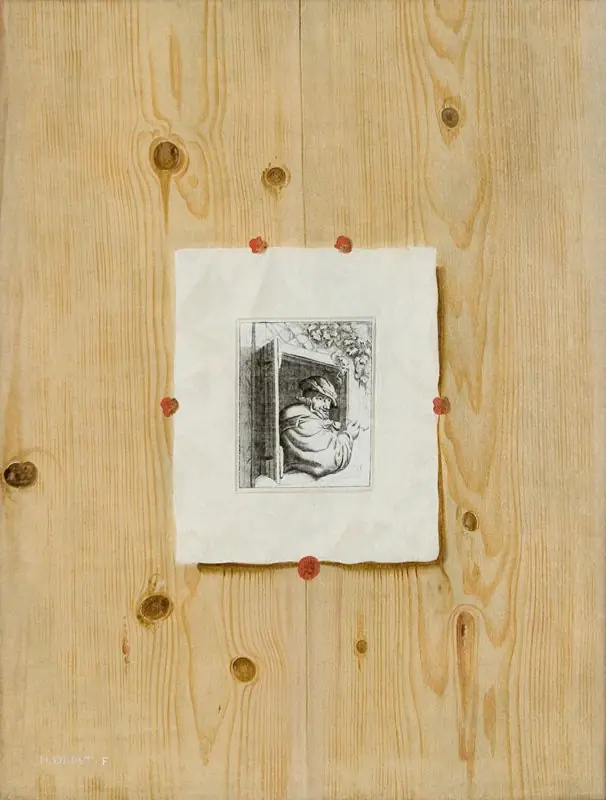 Trompe l'Oeil. Board with an Etching of a Man with a Pipe
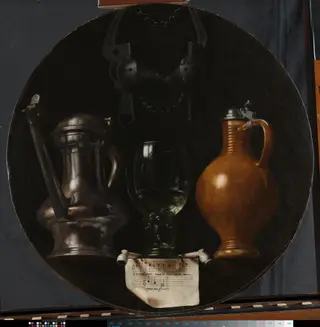 Emblematic Still Life with Flagon, Glass, Jug and Bridle