Artwork
Watson and the Shark
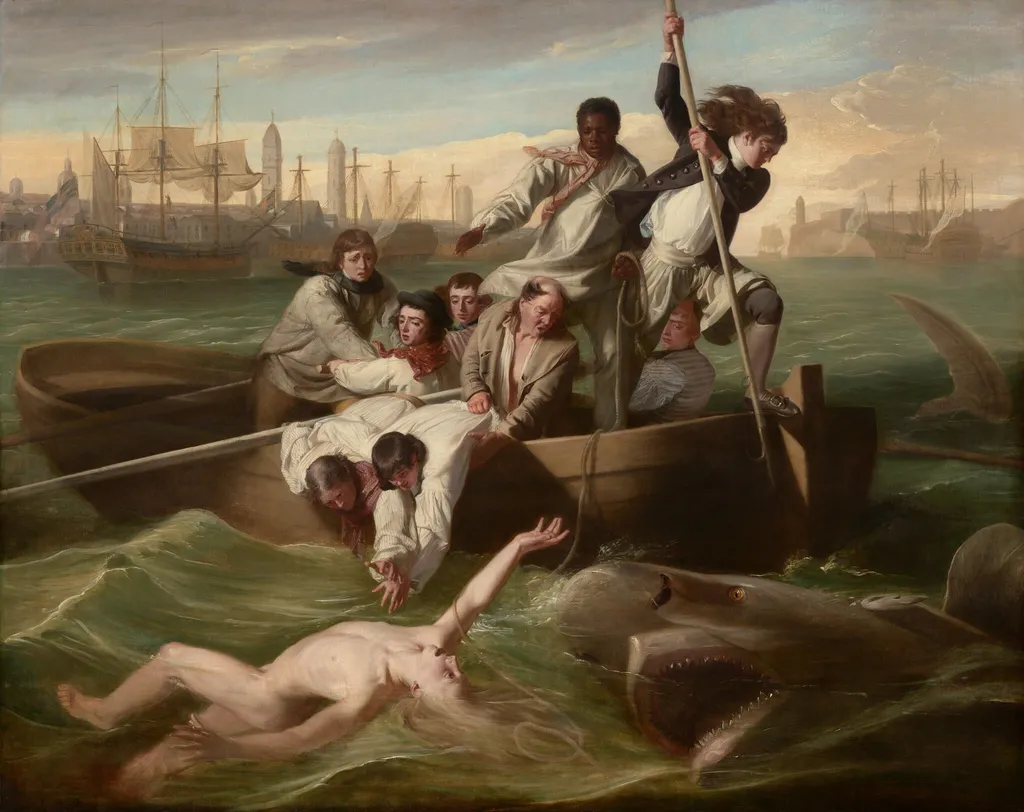
Watson and the Shark is an oil painting by John Singleton Copley. It dates from 1778 and is held in the collection of the National Gallery of Art.
- Inscription
- Inscribed:center left, inside boat: JSCopley.P.1778-
About this work
The Anglo-American painter had never seen Havana or a live shark, relying on prints and imagination to construct the dramatic scene.
In 1749, fourteen-year-old Brook Watson swam nude in Havana Harbor and a shark struck him twice, stripping flesh from his calf and severing his foot before crewmates drove it off with a boathook. John Singleton Copley immortalized that exact moment in 1778, depicting Watson floating helplessly as the predator circles and nine men in a rowboat lunge to save him. The Anglo-American painter had never seen Havana or a live shark, relying on prints and imagination to construct the dramatic scene.
Subject & Meaning
The painting depicts the 1749 shark attack on Brook Watson in Havana harbor, a historical event that resulted in the loss of his leg. Watson himself described the work in his will as 'a most usefull Lesson to Youth,' indicating its intended moral and instructive purpose. As a history painting, the subject transcends personal autobiography to become a universal narrative of survival, peril, and divine providence.
Iconographically, the shark, the struggling victim, and the urgent rescuers dramatize the moment of crisis, while the composition emphasizes heroic action and the vulnerability of man against nature. The work thus functions both as a testament to Watson's survival and as a cautionary tale about the dangers of the sea.
Technique & Style
Watson and the Shark is an oil-on-canvas painting executed by John Singleton Copley in 1778. The support is a large canvas measuring approximately 182.1 by 229.7 centimeters. The work is classified as a history painting, a genre that typically emphasizes narrative and moral instruction.
The sources do not elaborate on the artist's brushwork, handling, or the current condition of the painting. However, the medium and support are well-documented, and the scale suggests a formal composition intended for public display, consistent with Copley's practice in London.
History & Provenance
John Singleton Copley painted Watson and the Shark in London in 1778. The work was owned by Brook Watson, who bequeathed it to Christ's Hospital in his will dated August 12, 1803, to be delivered after the death of his wife. The painting was accepted by the hospital's Board of Almoners on September 28, 1819, and hung in its great hall. It remained at Christ's Hospital until it was purchased by the National Gallery of Art in 1963.
Legacy
The painting's legacy was shaped by Watson's explicit intention that it serve as a moral lesson for the boys of Christ's Hospital, a London charity school. He bequeathed it to the school in 1803, hoping the governors would hang it in the hall as 'a most usefull Lesson to Youth.' The almoners accepted the painting in 1819 and placed it in the great hall, where it remained for over a century.
In 1963, the National Gallery of Art in Washington purchased it, bringing the work into a major public collection. This transfer marked a shift from its original didactic role to canonical art-historical status, though the painting continues to be studied for its dramatic history painting and its narrative of survival.
Overview
John Singleton Copley's 1778 oil on canvas, "Watson and the Shark," captures a harrowing moment of survival. This large-scale work depicts the dramatic shark attack endured by fourteen-year-old Brook Watson in Havana Harbor nearly three decades earlier. Commissioned by Watson himself, the painting marked a significant shift for Copley, an Anglo-American artist primarily known for portraiture.
It was his first major history painting created after relocating to London, establishing his ambition in a new artistic genre.
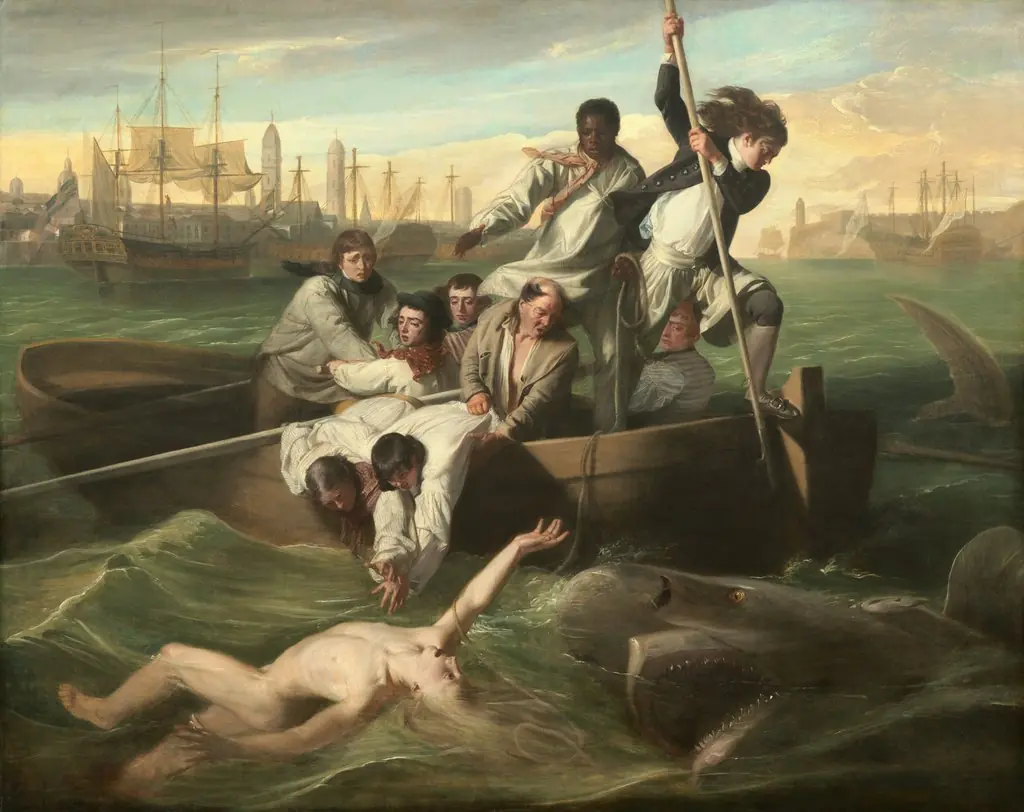
Own this work as a print
Artist & collection

Artist
John Singleton Copley (July 3, 1738 – September 9, 1815) was an American-born British painter active in both the Thirteen Colonies and England.




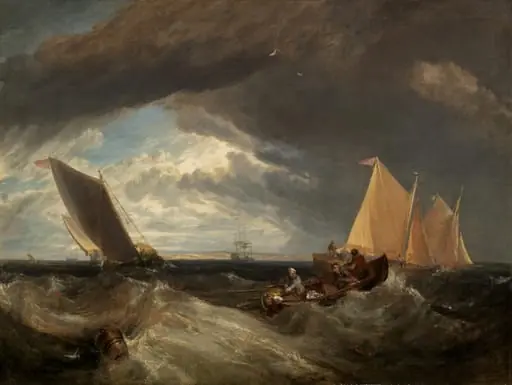 The Junction of the Thames and the Medway
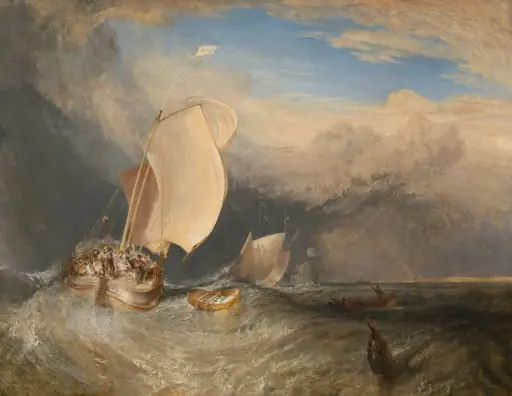 Fishing Boats with Hucksters Bargaining for Fish
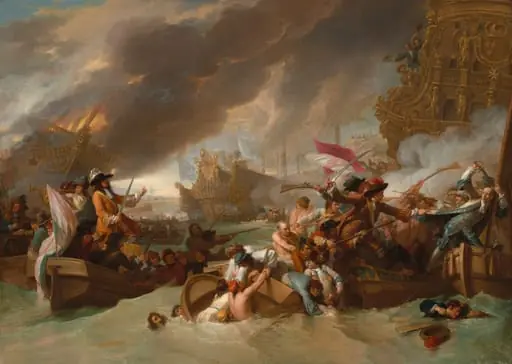 The Battle of La Hogue
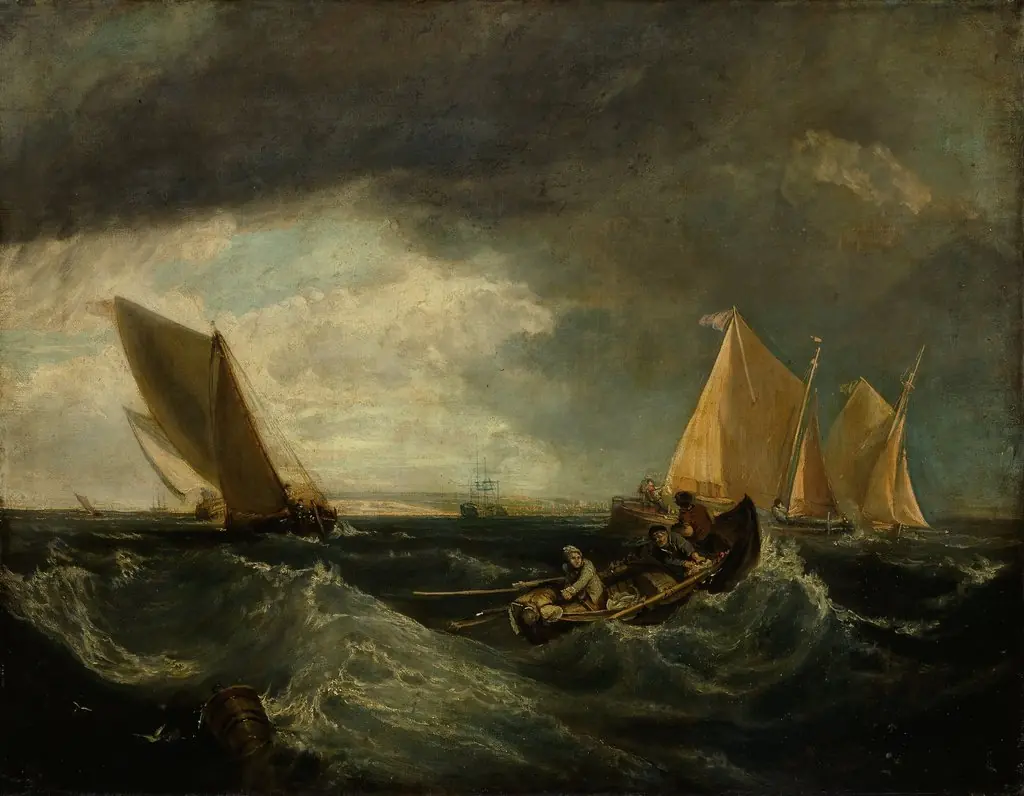 Sheerness and the Isle of Sheppey (after J.M.W. Turner)
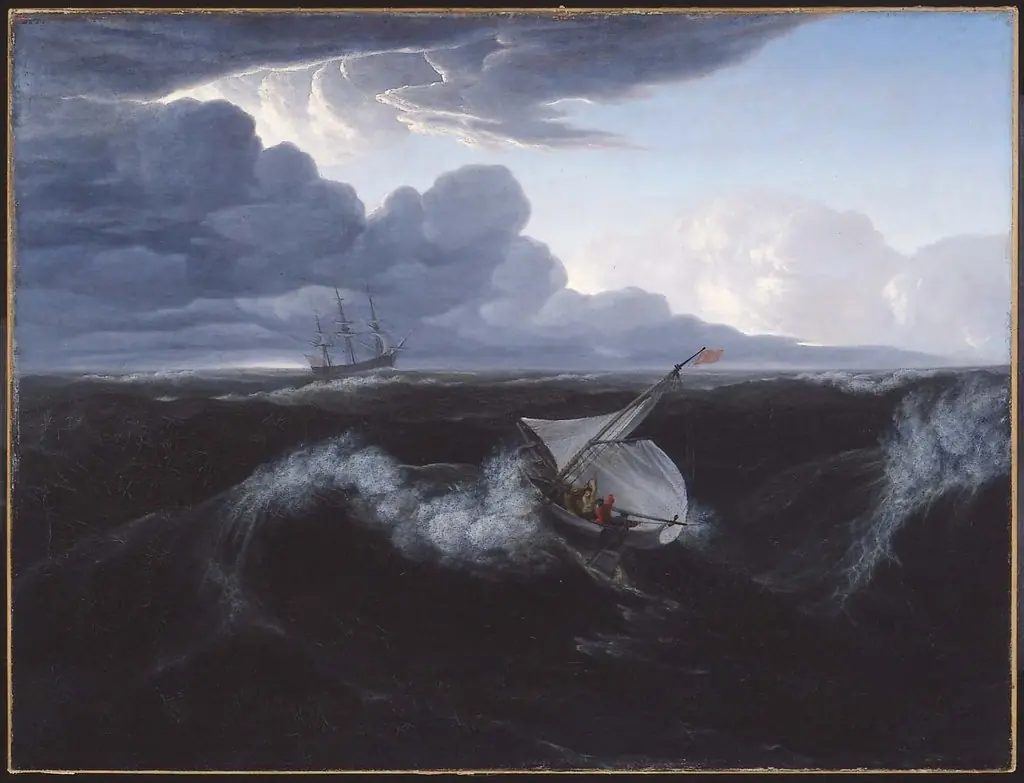 Rising of a Thunderstorm at Sea
 Héroïsme des marins du vaisseau Le Vengeur commandés par le capitaine Renaudin
 An Italian Harbour in Stormy Weather