Artwork
Title Page (Titre du cahier de six eaux-fortes)
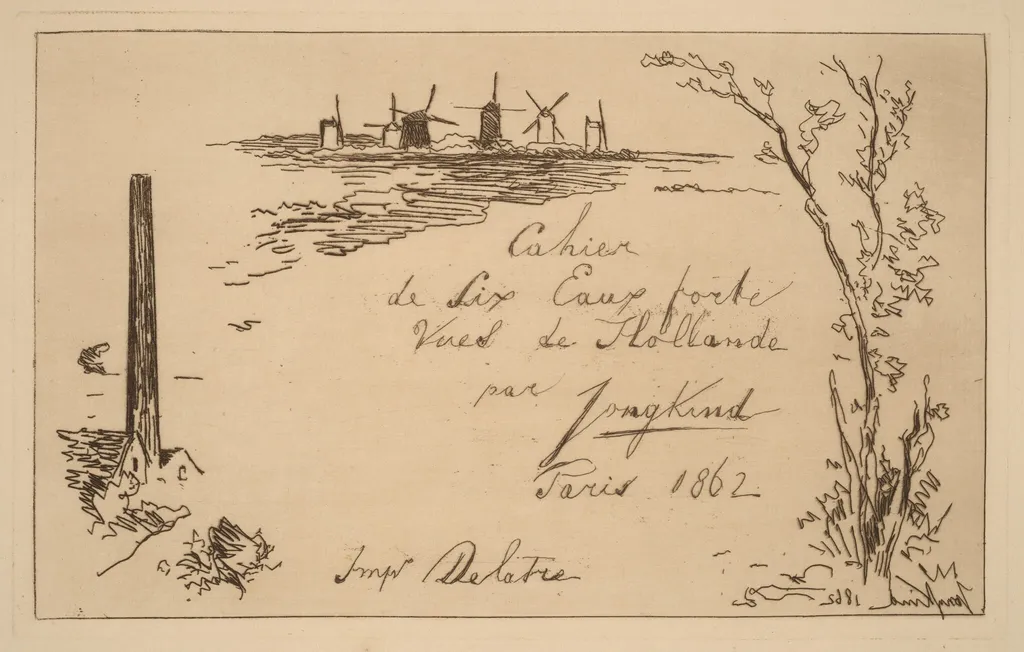
Title Page (Titre du cahier de six eaux-fortes) is an ink print by the Impressionist artist Johan Jongkind. It dates from 1862 and is held in the collection of the National Gallery of Art.
About this work
Etching uses acid to bite into metal plates, creating sharp lines, this one looks simpler than polished prints.
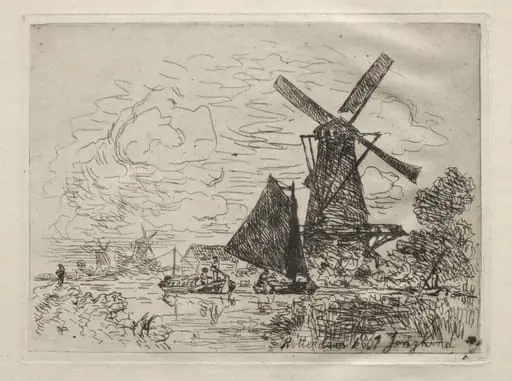
This sketch shows windmills along a flat, wet landscape with a few bare trees. The lines are loose and quick, like a hurried drawing. In the corner, there’s handwriting in French naming the artist and the place: Holland.
The page is part of a small book of six etchings made in 1862. Etching uses acid to bite into metal plates, creating sharp lines, this one looks simpler than polished prints. The artist signed it in the bottom right.
Look up etching to see how artists use acid and ink to make prints like this.
Overview
Johan Barthold Jongkind’s 1862 etching titled “Title Page (Titre du cahier de six eaux-fortes)” serves as the introductory leaf of a modest six‑plate series. Executed on laid paper, the print measures roughly the size of a typical book page and bears the artist’s signature in the lower right corner, confirming its authorship.
Subject & Meaning
The composition depicts a low‑lying Dutch terrain punctuated by windmills, a wet, reflective surface, and a handful of leafless trees. The sparse, open landscape conveys a sense of quiet, atmospheric space, while the windmills anchor the scene in a recognizable Holland setting, hinted at by the French inscription on the margin.
Technique & Style
Created through traditional acid etching, the image is rendered with swift, gestural lines that suggest a sketch‑like immediacy rather than the meticulous finish of a polished print. The artist’s hand is evident in the loose strokes, which capture the fleeting qualities of light and moisture across the flat terrain.
History & Provenance
The sheet forms the frontispiece of a limited six‑print notebook produced by Jongkind in 1862. The French caption naming the artist and the locale indicates the work’s intended audience as a French‑speaking collector or viewer, reflecting the artist’s activity in Paris during that period.
Context
Jongkind, a Dutch‑born painter active in mid‑nineteenth‑century France, frequently explored marine and riverine subjects. This etching aligns with his broader interest in atmospheric effects and the Dutch landscape, themes he pursued in both paintings and prints while contributing to the development of plein‑air techniques that would later influence Impressionism.
Own this work as a print
Artist & collection
Artist
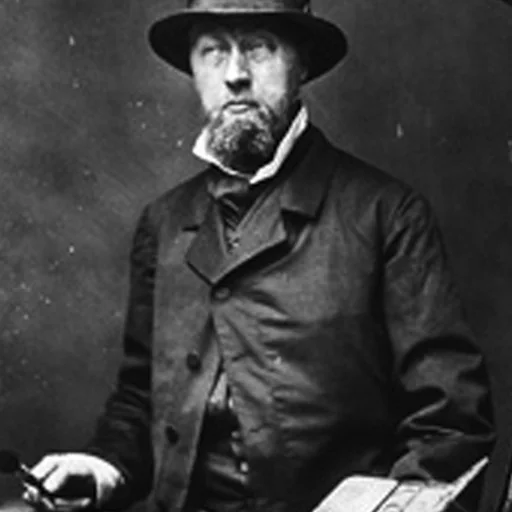
Johan Barthold Jongkind (Dutch pronunciation:; 3 June 1819 – 9 February 1891) was a Dutch painter and printmaker. He painted marine landscapes in a free manner and is regarded as a forerunner of impressionism.

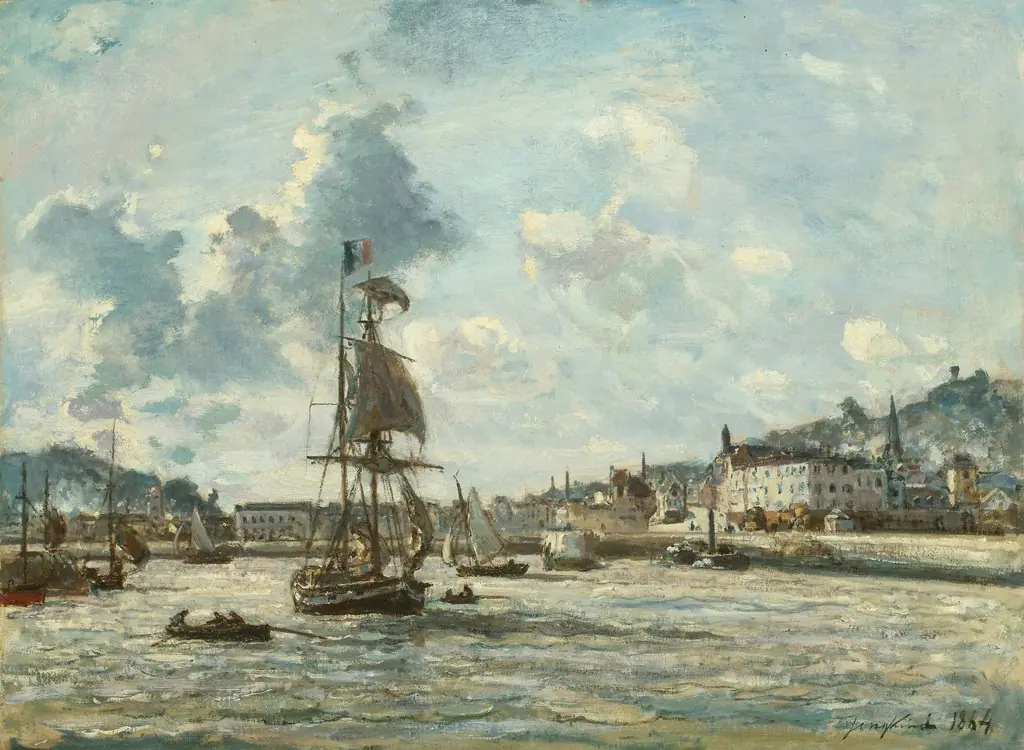
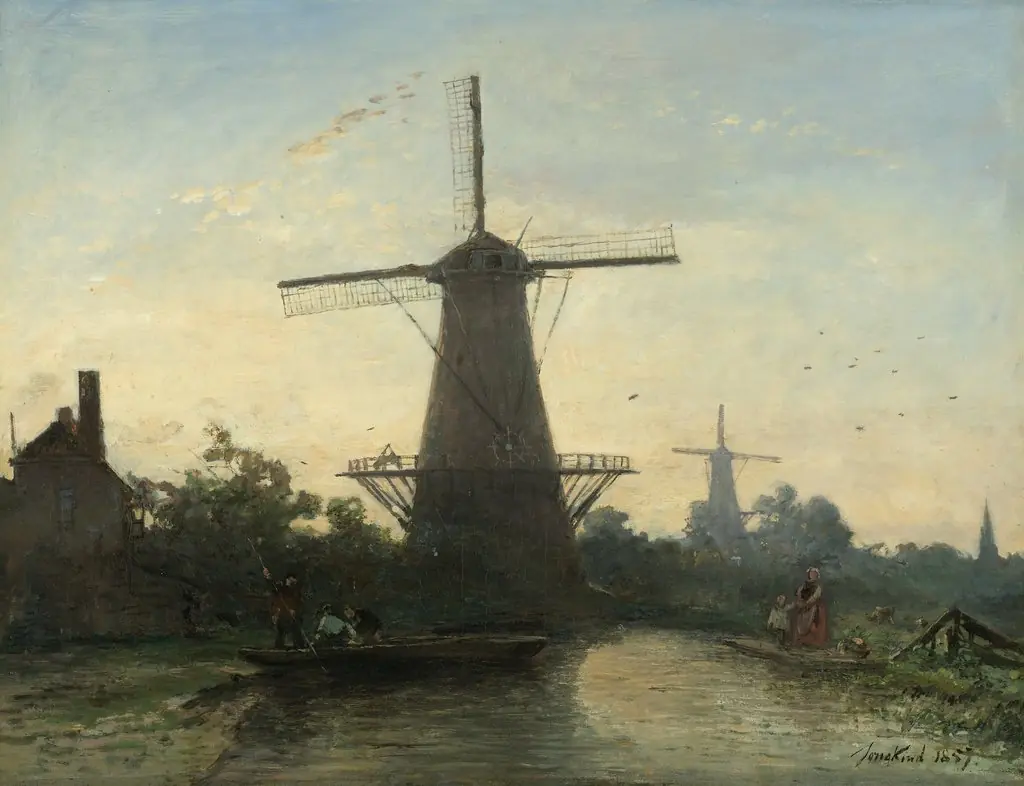
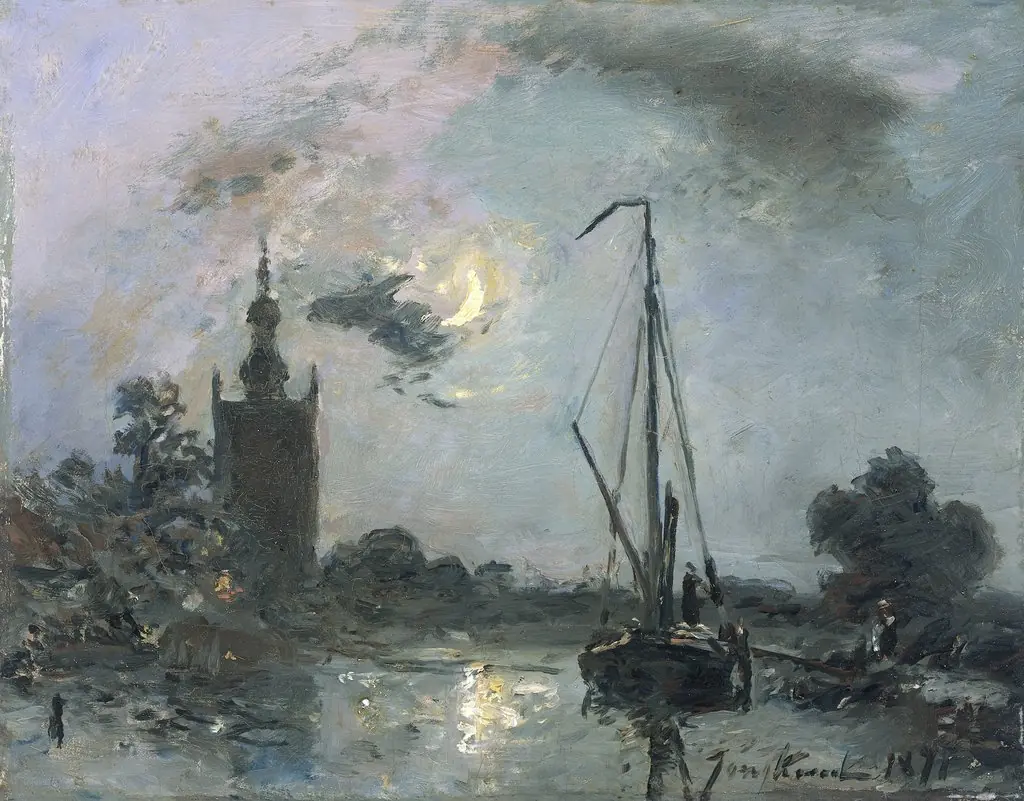
- Untitled
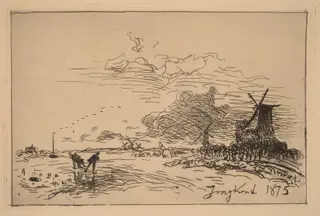 Holland Canal, near Rotterdam (Canal de Hollande, pres de Rotterdam (Hiver))
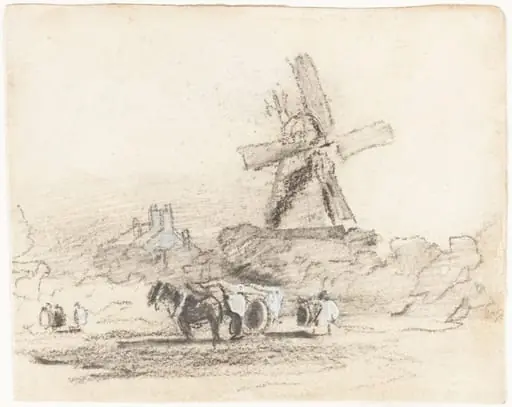 A Cart with Two Horses near a Windmill
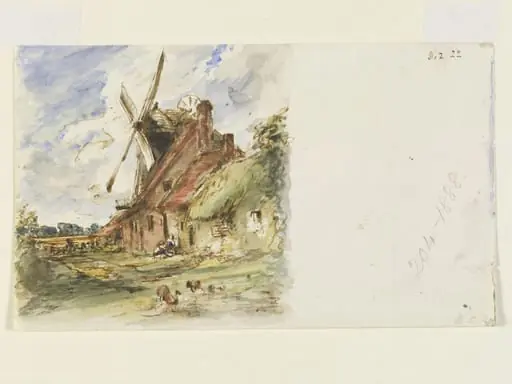 A windmill and cottages
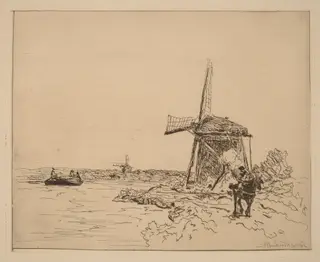 The Towpath (Le Chemin de Halage)
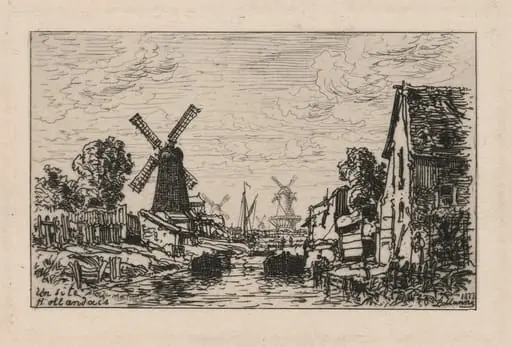 Un Site Hollandais (A Zaandam)
 Landscape with a Windmill near a Farmstead
 Windmills in Holland
 Environs de Dordrecht
 Copy of View of Amsterdam from the North West
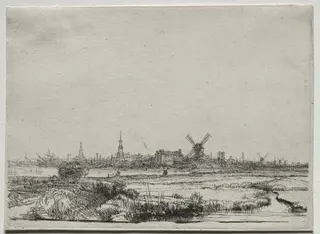 View of Amsterdam from the North West
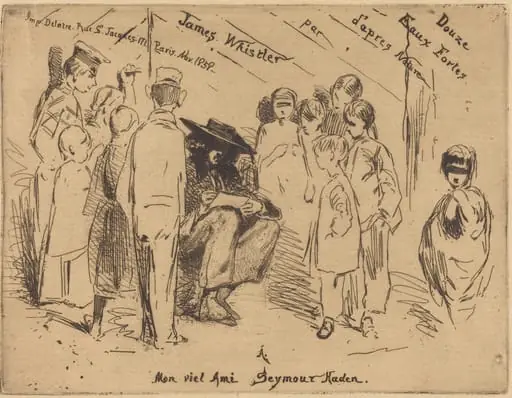 The Title Page for "Douze Eaux Fortes d'après Nature"