Artwork
Overschie bij maneschijn
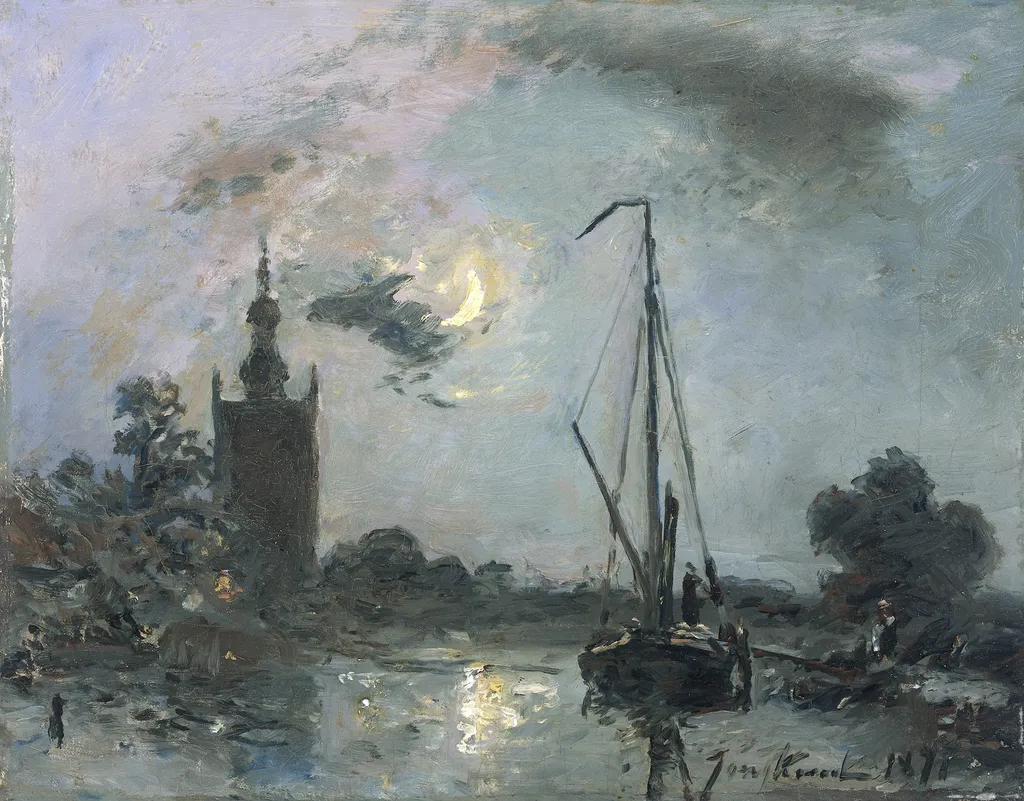
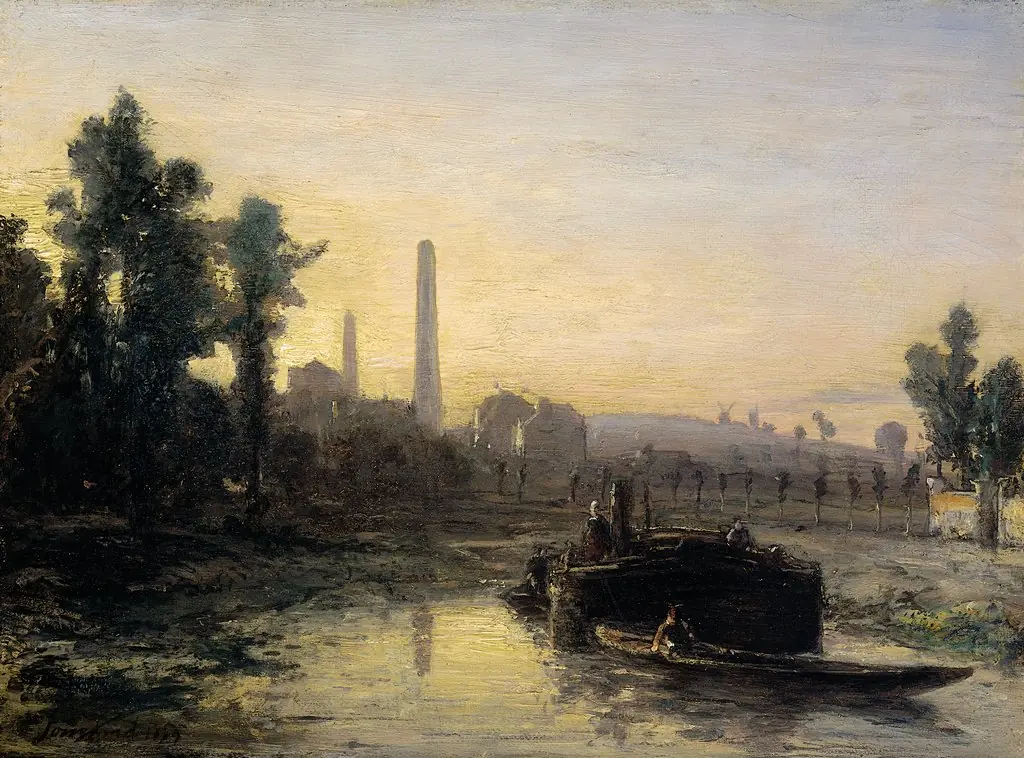
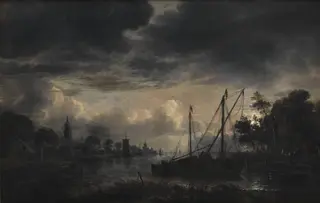
Overschie bij maneschijn is an oil painting by the Impressionist artist Johan Jongkind. It dates from 1871 and is held in the collection of the Rijksmuseum.
About this work
Subject & Meaning
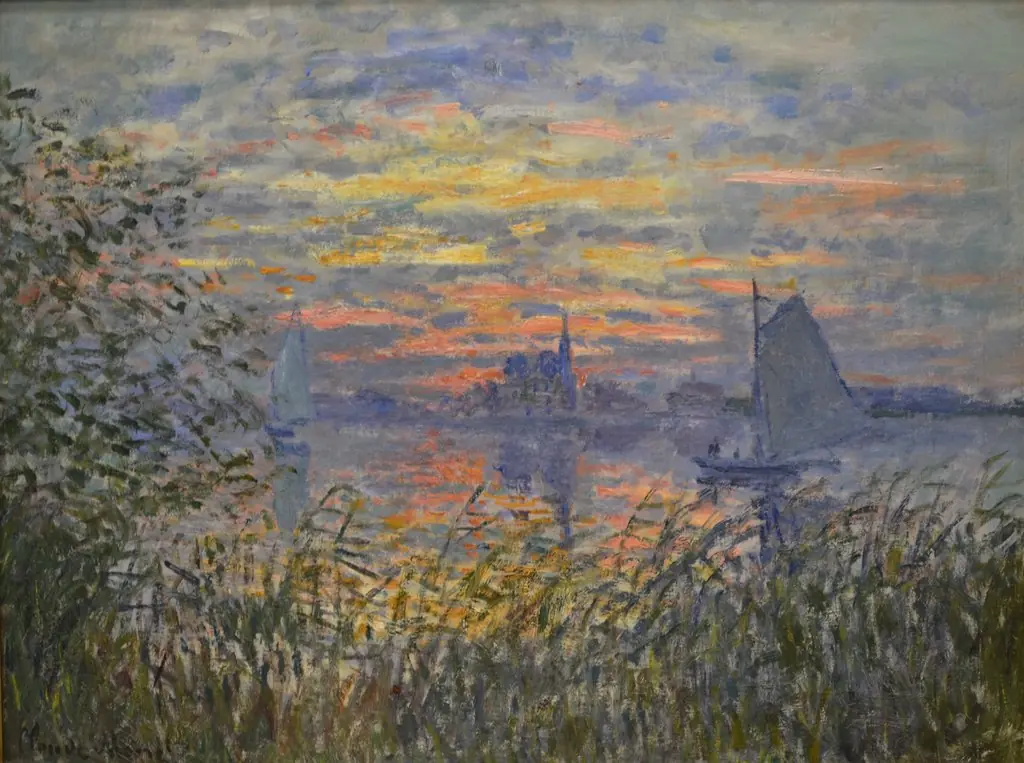
The shimmering reflection of the moon has been linked to later nocturnal works by Claude Monet, who was a noted admirer of Jongkind.
Overschie bij maneschijn depicts a nocturnal river landscape, with the characteristic church tower of Overschie visible in the background and a moored boat with lowered sails and two figures in the right foreground. The scene is illuminated by moonlight, whose reflection on the water surface forms a central motif of the composition. The moonlit night setting, combined with Jongkind's characteristic vibrating brushwork in the trees, shrubs, and sky, gives the small panel its atmospheric charge.
The work was painted in Jongkind's Parisian studio in 1871, based on an earlier sketch made during his travels in the Netherlands before 1869, after which he never returned to his homeland. Its subject reflects the strong Parisian demand for Dutch landscape scenes at the time. The shimmering reflection of the moon has been linked to later nocturnal works by Claude Monet, who was a noted admirer of Jongkind.
Overschie bij maneschijn is generally regarded as one of the artist's high points within this moonlit river genre.
Technique & Style
Painted in oil on canvas in 1871, the work measures 22 × 27.5 cm. Its nocturnal river landscape centers on the silhouetted church tower of Overschie, with a moored barge and two figures on the right. Jongkind’s handling is characterized by a light, vibrating touch applied in short, broken strokes across foliage and sky, while reflections in the water are rendered with delicate, horizontal drags. The palette remains subdued, relying on silvers and soft blues to evoke moonlight, yet the brushwork animates the scene with an atmospheric shimmer.
The composition balances a quiet, horizontal emphasis, grounded by the barge and riverbank, against vertical accents from the tower and trees. The night sky is articulated through layered, semi-transparent scumbles that suggest depth without heaveness, aligning with Jongkind’s practice of translating plein-air studies into studio paintings.
History & Provenance
Overschie bij maneschijn is een olieverfschilderij op doek dat Johan Barthold Jongkind in 1871 voltooid heeft, waarschijnlijk in zijn atelier in Parijs, gebaseerd op eerdere schetsen van het Nederlandse landschap. Het werk toont een rivierlandschap bij nacht met de kerktoren van Overschie in de verte en een aangemeerde schuit in de voorgrond, en wordt als een hoogtepunt uit zijn landschapsproductie beschouwd. Het werd in 1922 onderdeel van het nalatenschap van kunstverzamelaar Andries van Wezel, die bekend stond om zijn collectie Franse negentiende-eeuwse schilderkunst. Het schilderij behoort momenteel tot de collectie van het Rijksmuseum Amsterdam.
De exacte datum van aanvang van de eigendomsketen is niet vastgesteld, maar het is aangenomen dat Van Wezel het werk pas na Jongkinds overlijden verkregen heeft, wat wijst op een late erkenning van zijn Nederlandse landschappen binnen de Franse kunstmarkt van die tijd. Het schilderij blijft een referentie voor het impressionistische genre van nachtelijke landschappen.
Literatuur over het werk verwijst naar 'Poëzie der werkelijkheid; Nederlandse schilders van de negentiende eeuw' (2000), waarin het wordt besproken in het hoofdartikel over Jongkind door Luuk Pijl.
The painting entered the collection of the Rijksmuseum in Amsterdam, where it remains today. Earlier provenance traces the work to the 1922 bequest (legaat) of Andries van Wezel, a Jewish-Amsterdam diamond merchant and art collector whose holdings focused on French painting and included works by Monet, Corot, and Fantin-Latour. The exact date of his acquisition is not recorded, though it is presumed to have occurred after the artist's death, reflecting the belated recognition of Jongkind in his native country.
The work is referenced in the 2000 Rijksmuseum publication "Poëzie der werkelijkheid: Nederlandse schilders van de negentiende eeuw," with a contribution by Luuk Pijl on pages 129–130.
Context
Jongkind made Overschie bij maneschijn in 1871 while residing in Paris, drawing on earlier Dutch sketches to produce a nocturnal river scene that blends Dutch topographical interest with French plein air sensibilities. The painting entered the Rijksmuseum collection in 1922 through the bequest of collector Andries van Wezel, whose holdings of Monet, Corot and Fantin-Latour reflect his affinity for contemporary French art and illustrate the late recognition of Jongkind in the Netherlands. Scholarship highlights the work’s significance as a transitional piece between Jongkind’s Dutch drawing practice and his mature impressionistic landscapes, noting its influence on younger artists such as Monet and its representation of the lingering demand for Dutch subjects among Parisian collectors in the 1870s.
The painting’s composition, featuring the church tower of Overschie, a moored boat and reflected moonlight, exemplifies Jongkind’s characteristic vibrating brushwork in foliage, foliage and sky, while its market success likely contributed to his prolific output of similar nightscapes in the early 1870s.
Literature references include van Heteren, Jansen and de Leeuw’s Poëzie der werkelijkheid (2000), which documents the work’s provenance and artistic context.
Overschie bij maneschijn is classified as a landscape oil painting on canvas (22 × 27.5 cm) and is catalogued in the Rijksmuseum’s collection as a key example of Jongkind’s Dutch‑themed works produced abroad.
Legacy
Overschie bij maneschijn is widely regarded as one of Jongkind's high points in his nocturnal Dutch landscape series, despite the artist's generally high and sometimes routine-bound production in the early 1870s. Its moonlit reflections on water have been linked to later works by Claude Monet, who was a noted admirer of Jongkind and, like other early Impressionists, drew inspiration from him. The painting's presence in the 1922 bequest of the Jewish-Amsterdam diamond merchant and collector Andries van Wezel, whose holdings centered on French painting including works by Monet, Corot, and Fantin-Latour, is taken as indicative of Jongkind's affinity with the French painting tradition of his time.
The acquisition is presumed to have occurred after the artist's death, exemplifying the belated appreciation of Jongkind in his native country.
The work is discussed in the Rijksmuseum publication "Poëzie der werkelijkheid; Nederlandse schilders van de negentiende eeuw" (2000), in the contribution by Luuk Pijl on pages 129–130, and is now held in the Rijksmuseum collection.
Overview
Johan Barthold Jongkind painted Overschie bij maneschijn in 1871, using oil on canvas. The work depicts a tranquil harbor at night, illuminated by moonlight, and is held in the collection of the Rijksmuseum in Amsterdam.
Own this work as a print
Artist & collection
Artist
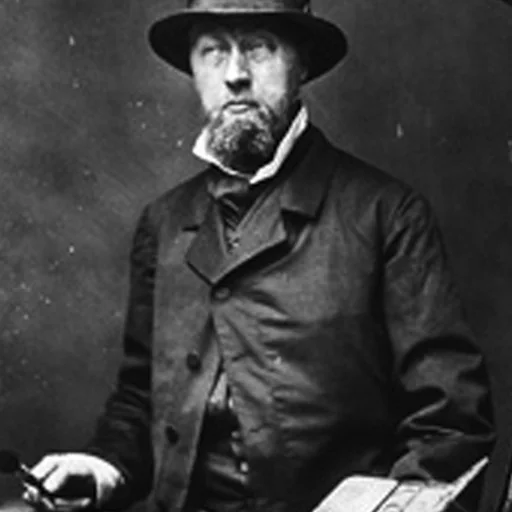
Johan Barthold Jongkind (Dutch pronunciation:; 3 June 1819 – 9 February 1891) was a Dutch painter and printmaker. He painted marine landscapes in a free manner and is regarded as a forerunner of impressionism.