Artwork
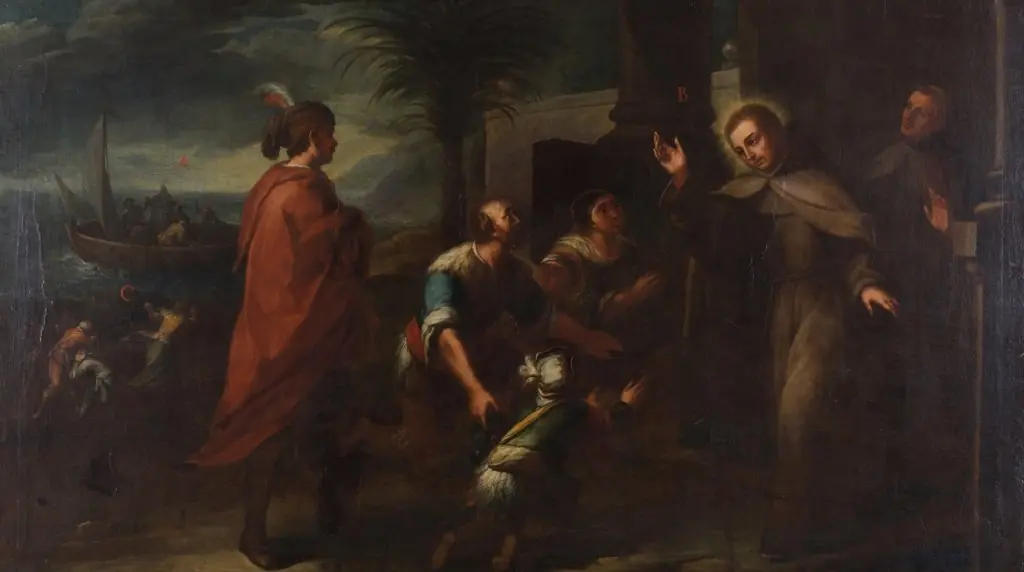
San Pedro de Alcántara confesando a Santa Teresa
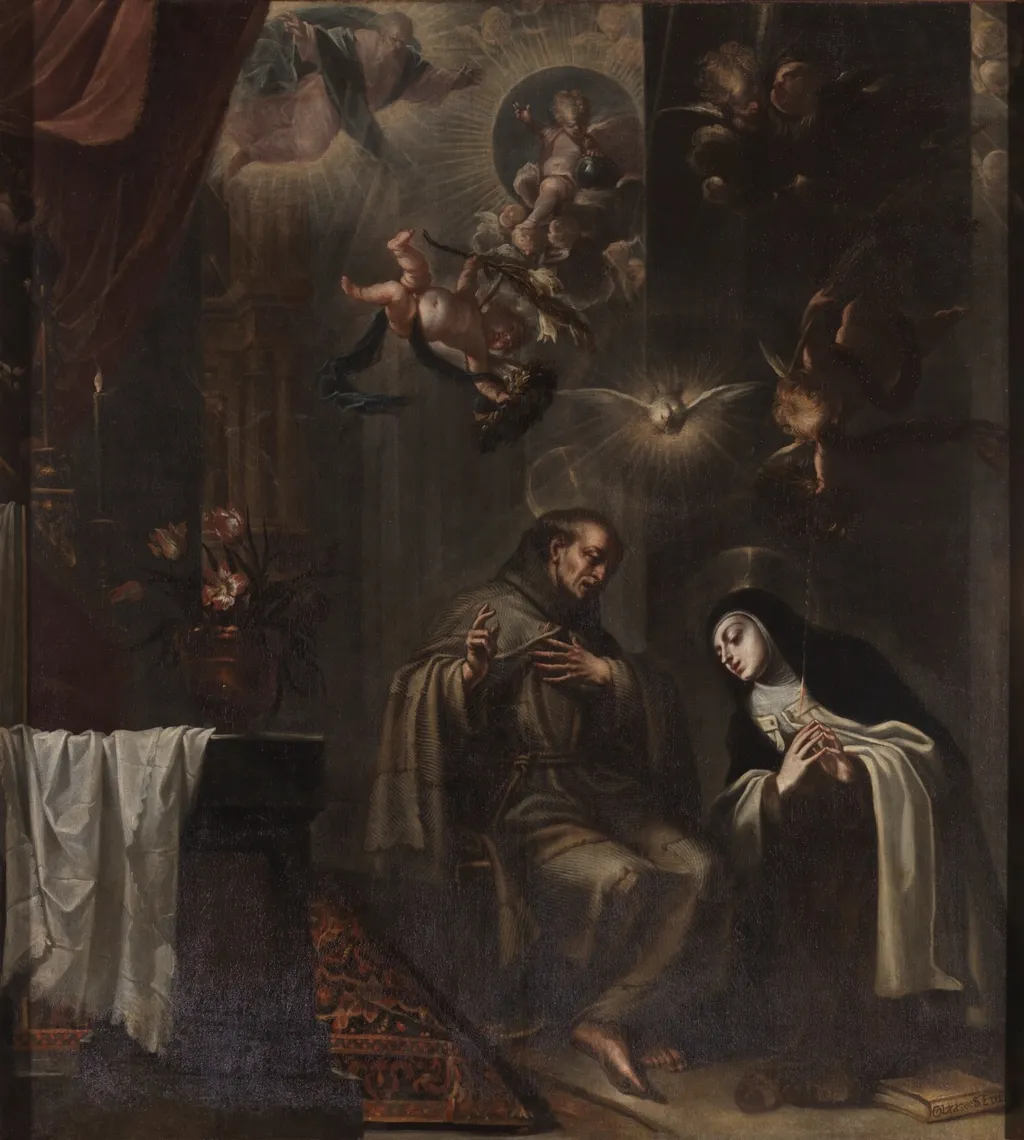
San Pedro de Alcántara confesando a Santa Teresa is an oil painting by the Early Baroque Italian artist José García Hidalgo. It dates from 1675 and is held in the collection of the Museo del Prado.
About this work
Subject & Meaning
The work depicts Saint Peter of Alcantara in conversation with Saint Teresa of Ávila, a scene rooted in the religious tradition of the Spanish Counter-Reformation. Peter, shown with a book and habit, embodies ascetic authority, while Teresa’s presence signifies mystical insight; together they represent the Dominican emphasis on contemplative reform and the transmission of spiritual wisdom.
Technique & Style
San Pedro de Alcántara confesando a Santa Teresa is executed in oil paint on canvas, a standard support for Spanish religious painting of the period.
San Pedro de Alcántara confesando a Santa Teresa is executed in oil paint on canvas, a standard support for Spanish religious painting of the period. The canvas measures 247 cm in height by 223 cm in width, giving the work a substantial, nearly square format suited to its devotional subject. The composition depicts Saint Peter of Alcantara hearing the confession of Saint Teresa of Ávila, with a book included among the depicted elements.
Painted in 1675, the work belongs to the religious genre tradition and is held at the Museo del Prado.
No further details about handling, brushwork, condition, or stylistic qualities are documented in the available sources.
History & Provenance
The painting was created in 1675 by José García Hidalgo, commissioned for the church of San Pedro de Alcántara in Ávila and later entered the collection of the Museo del Prado, where it remains on public display. Executed in oil on canvas, the work measures 247 centimeters in height by 223 centimeters in width and depicts Saint Peter of Alcántara confiding in Saint Teresa of Ávila. Its early provenance is tied to its original ecclesiastical setting before the museum acquired it, establishing a continuous ownership chain from its creation to the present.
The painting is held at the Museo del Prado. It is associated with the collections of both the Museo del Prado and the Museo de la Trinidad, reflecting its institutional provenance.
No specific inventory or accession number is recorded in the available sources, and no exhibition history is documented.
Legacy
The painting San Pedro de Alcántara confesando a Santa Teresa by José García Hidalgo was created in 1675 and is housed in the Museo del Prado. It depicts Saint Peter of Alcántara receiving the book from Saint Teresa of Ávila, reflecting Counter-Reformation themes of saintly authority and mysticism. The work is recognized as part of the religious art tradition of 17th-century Spain and has been studied for its compositional balance and devotional intensity.
Its inclusion in major museum collections has contributed to renewed scholarly interest in García Hidalgo’s role within the Spanish Baroque.
Overview
Created in 1675 by José García Hidalgo, known in his day as El Castellano, this oil on canvas portrays a devotional encounter between Saint Peter of Alcántara and Saint Teresa of Ávila. Executed within the early Baroque idiom, the work is part of the Prado Museum’s permanent collection and exemplifies the period’s focus on intense religious narrative.
Context
The work reflects the Counter‑Reformation’s emphasis on vivid, emotionally charged religious imagery. By depicting two native mystics, Hidalgo aligns Spanish devotional practice with broader Italian Baroque trends, using dramatic lighting and dynamic composition to engage the viewer’s piety.
Own this work as a print
Artist & collection
Artist
José García Hidalgo (1645 or 1646 – 1717 or 1719) was a Spanish painter, who wrote notes of his life, but omitted to state where and when he was born.

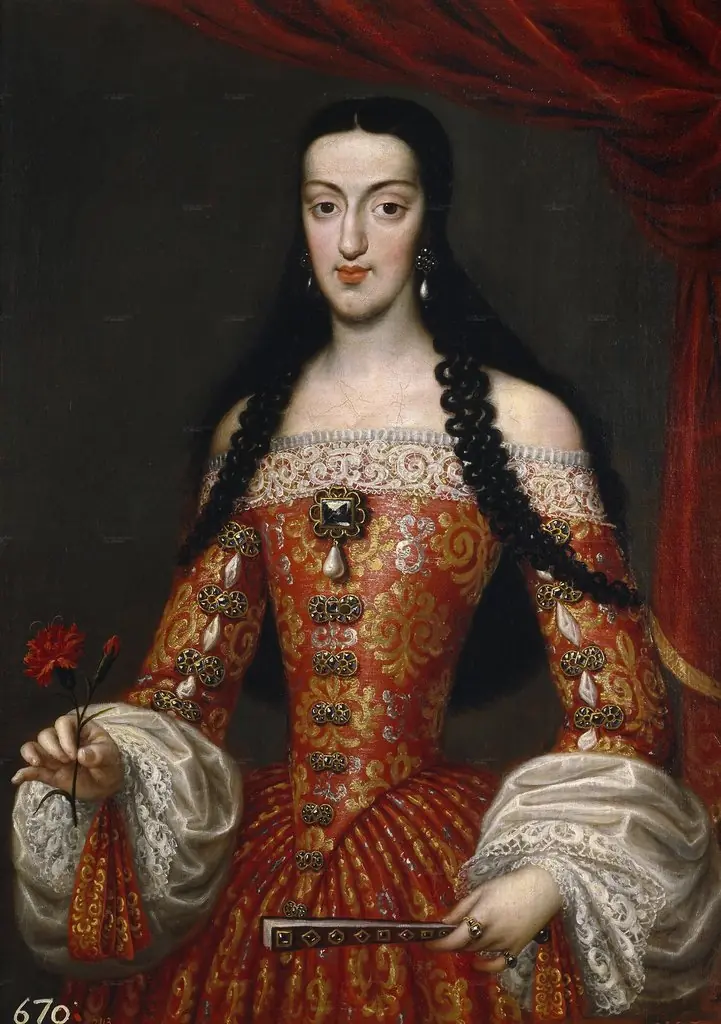
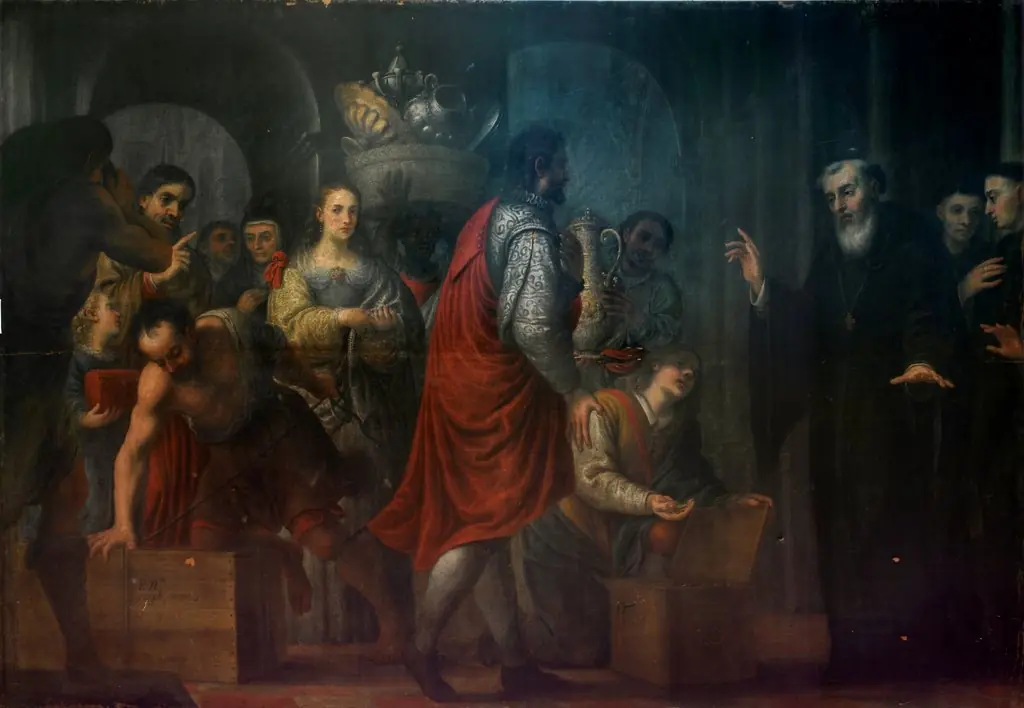
- Lactatio of Saint Bernard of Clairvaux
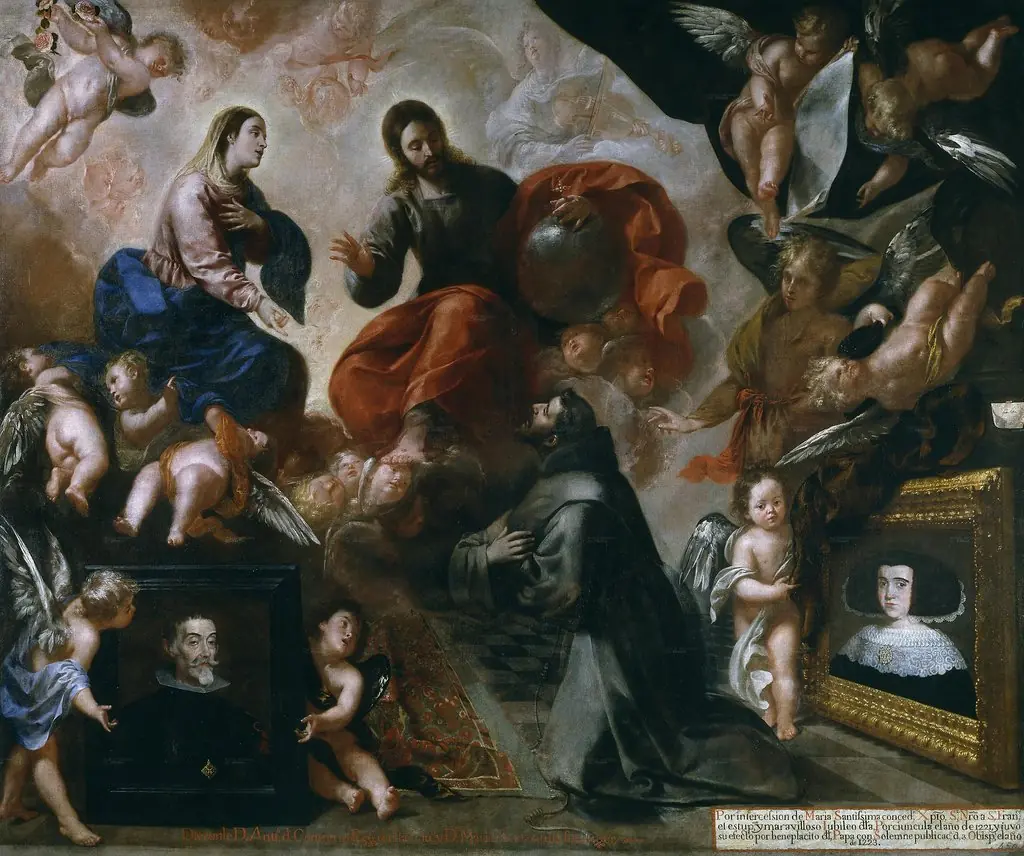 Saint Francis of Assisi in the Porziuncola with the Donors Antonio Contreras and María Amezquita
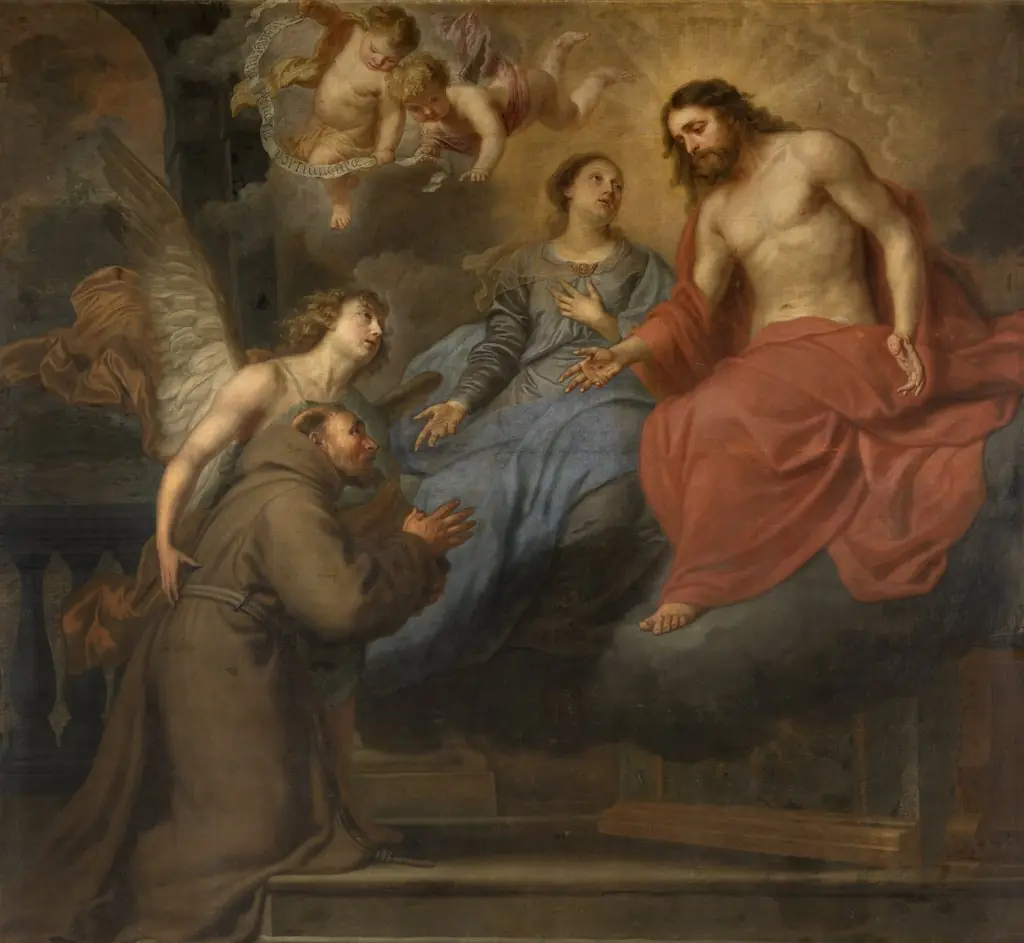 Portiuncula
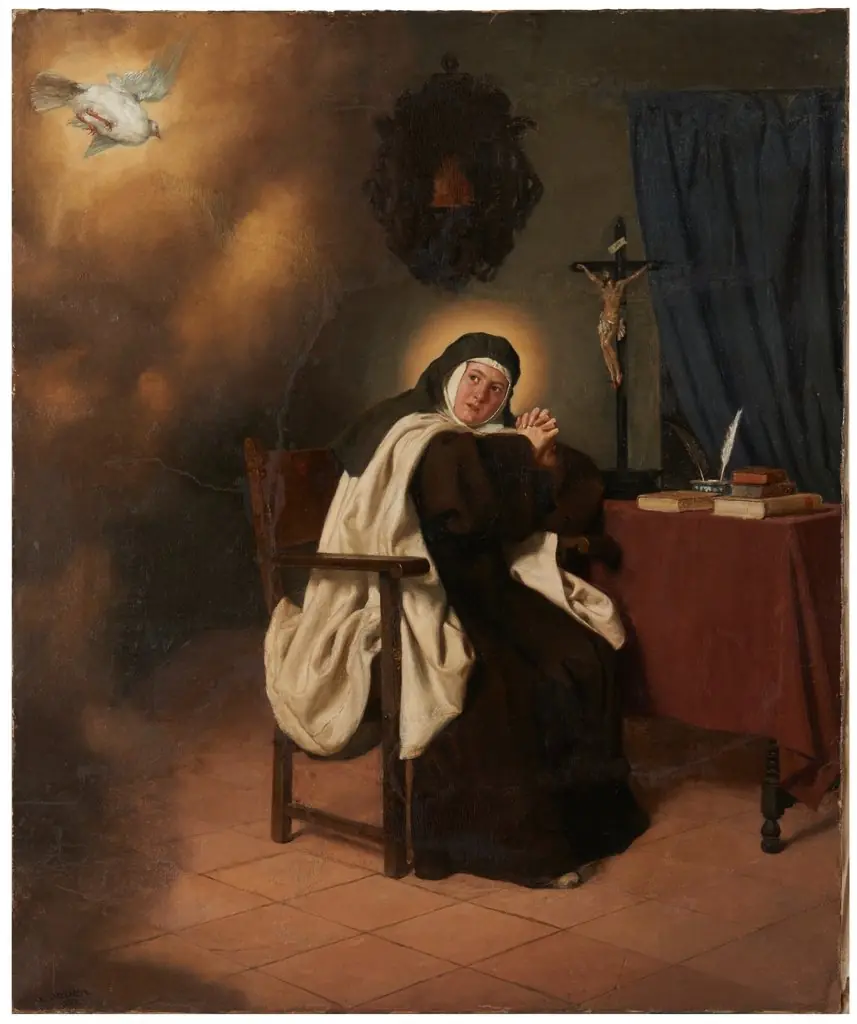 Santa Teresa de Jesús
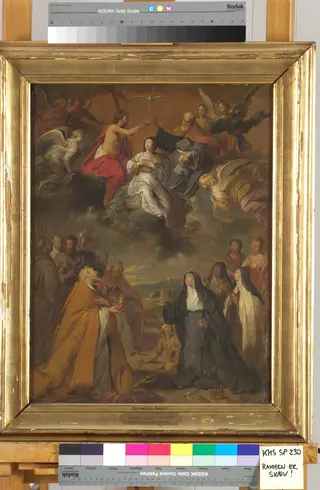 The Coronation of the Virgin
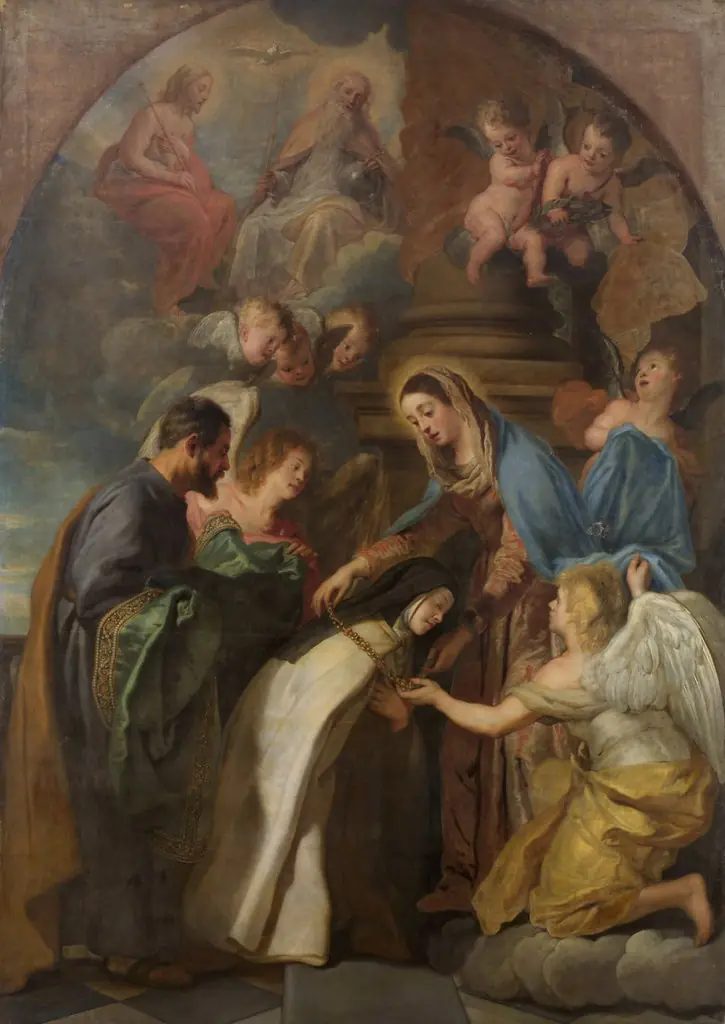 St Theresa receiving a gold chain and a mantle embroidered with gold from the Virgin
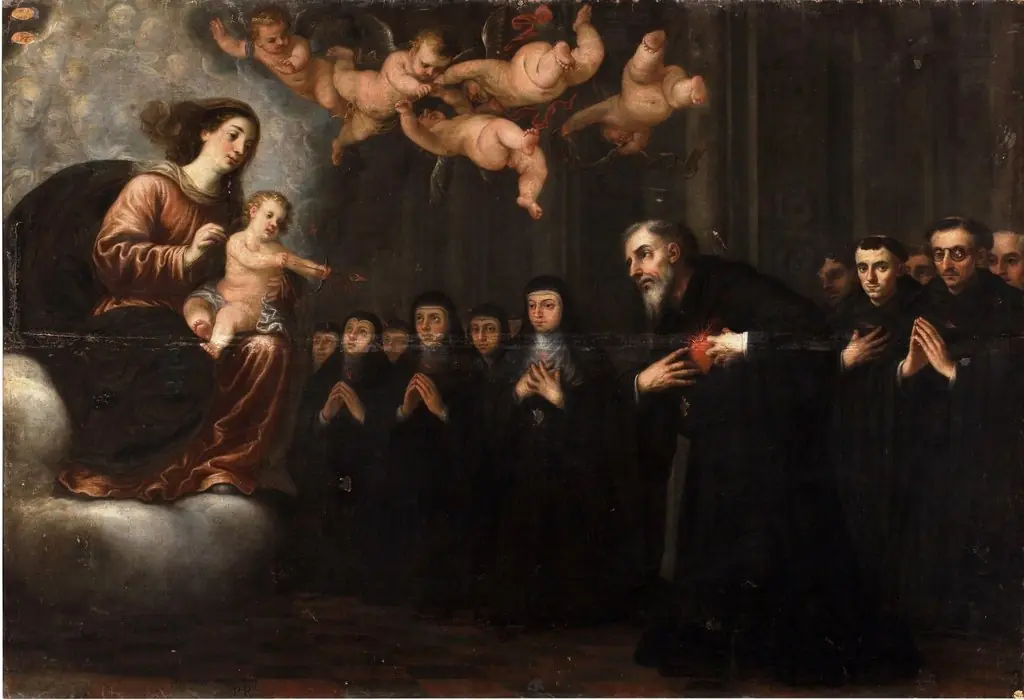 La Virgen y el Niño transverberando el corazón a San Agustín ante la comunidad de agustinos
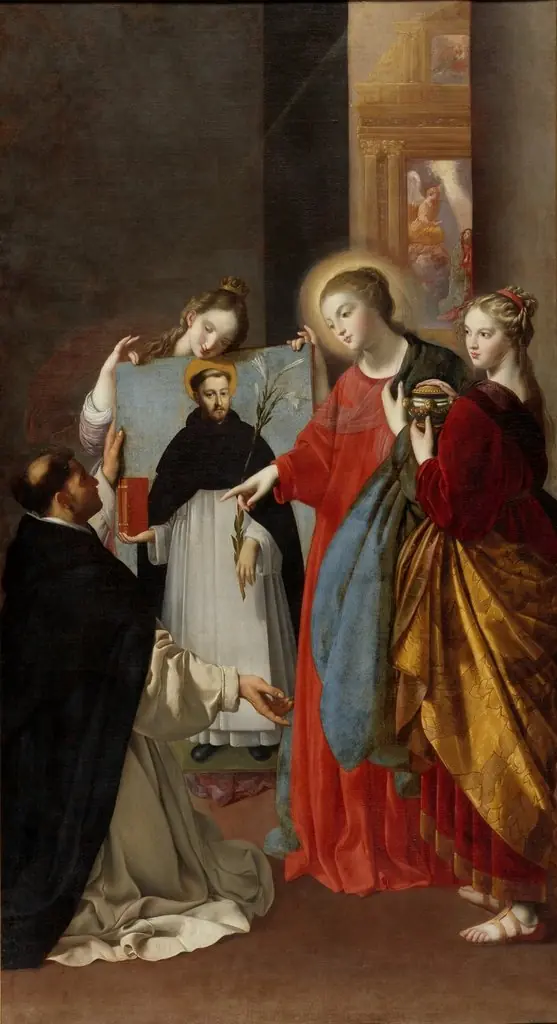 Saint Dominic in Soriano
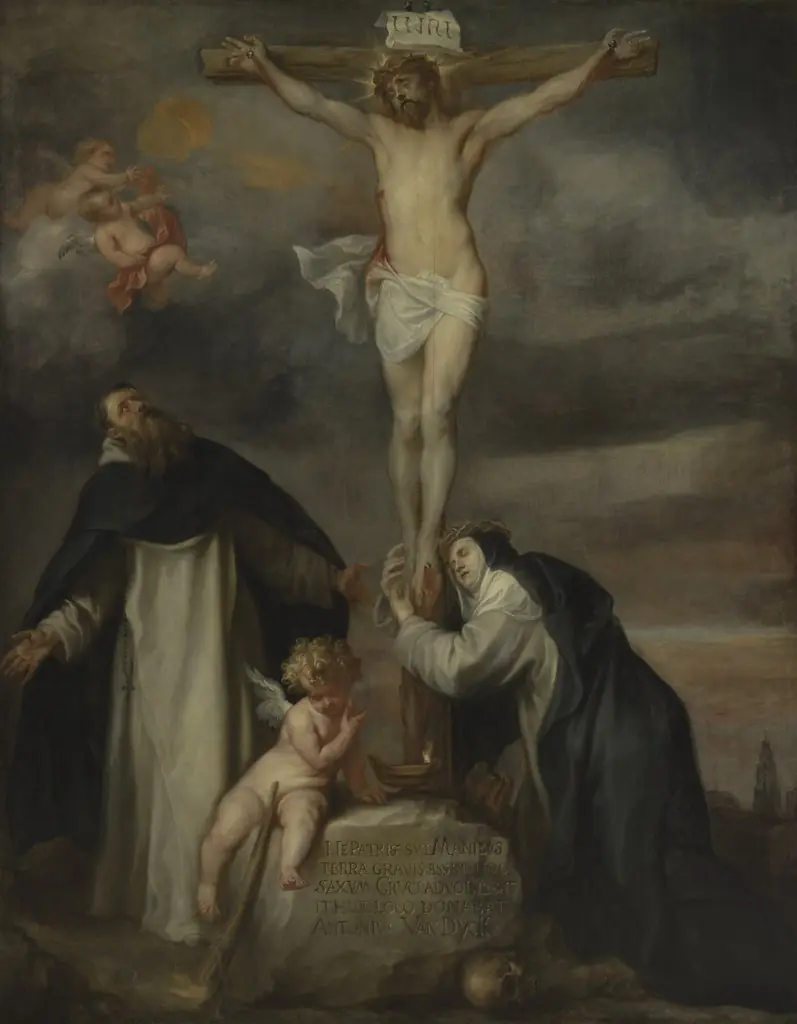 Christ on the Cross with Saint Catherine of Siena, Saint Dominic and an Angel
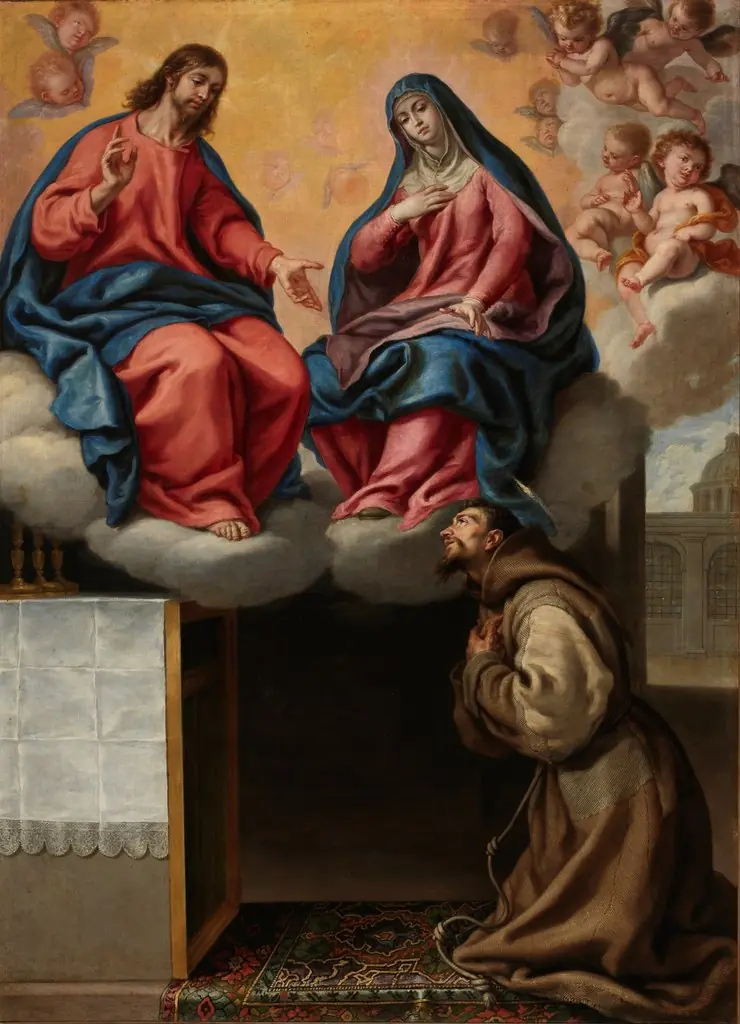 Saint Francis of Assisi in la Porziuncola
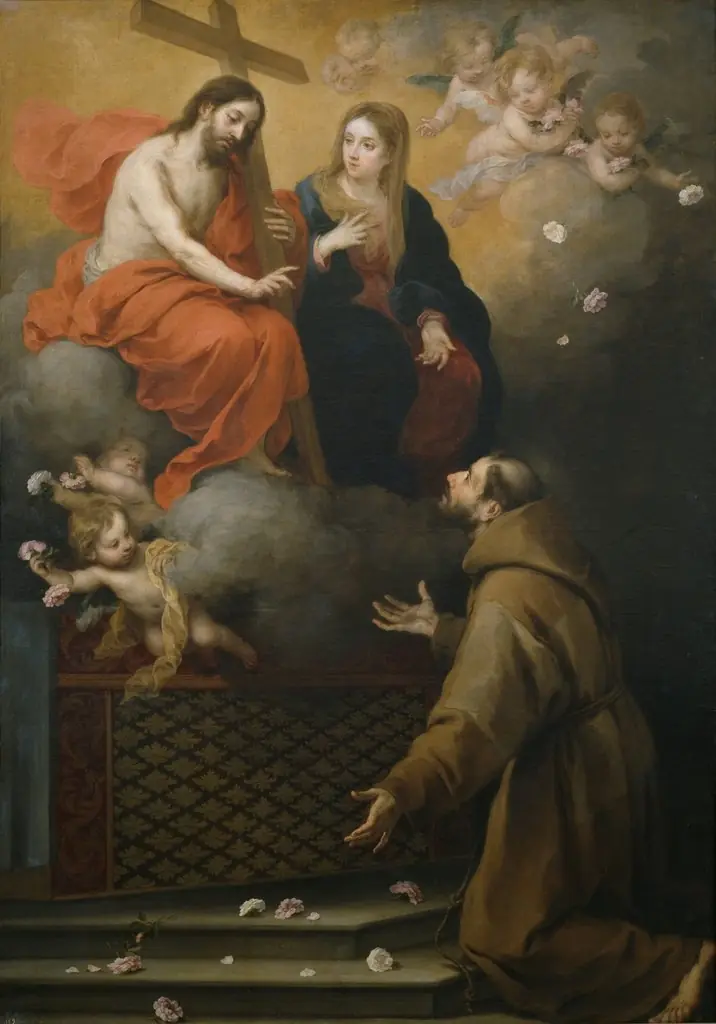 The Vision of Saint Francis in the Portiuncula
 San Diego de Alcalá en las islas Canarias