Artwork
La Virgen y el Niño transverberando el corazón a San Agustín ante la comunidad de agustinos
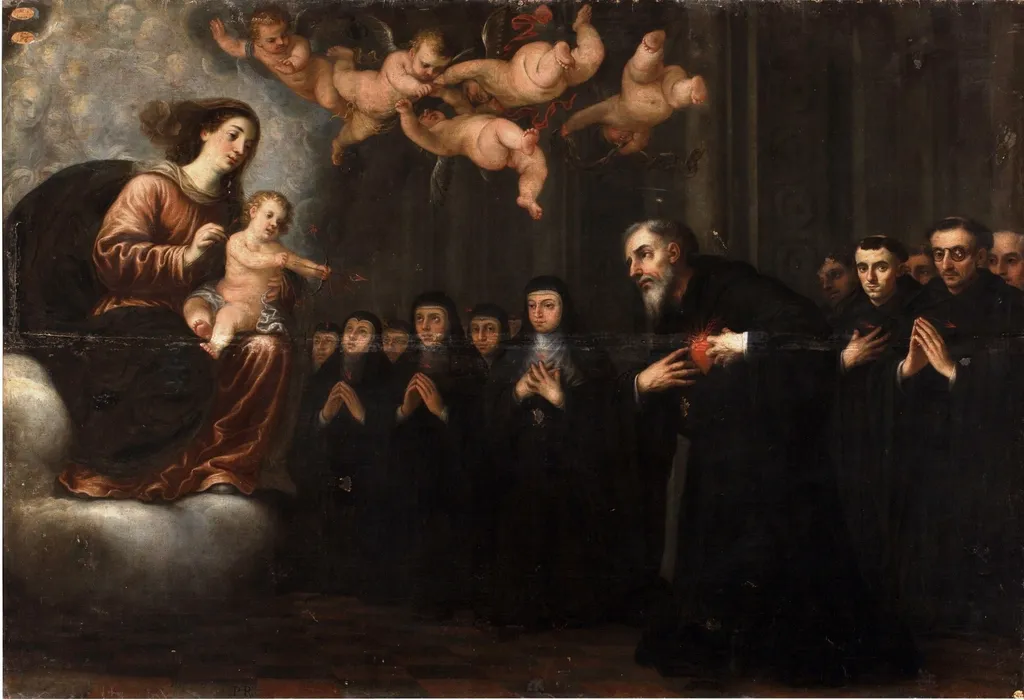
La Virgen y el Niño transverberando el corazón a San Agustín ante la comunidad de agustinos is an oil painting by the Early Baroque Italian artist José García Hidalgo. It dates from 1663 and is held in the collection of the Museo del Prado.
About this work
Subject & Meaning
This act occurs in the presence of the Augustinian community, grounding the miraculous vision within the specific religious order.
The painting depicts a religious scene centered on the mystical experience of Saint Augustine of Hippo. The composition illustrates the Virgin Mary and the Christ Child performing the transverberation of the saint's heart, a spiritual event where divine love pierces the soul. This act occurs in the presence of the Augustinian community, grounding the miraculous vision within the specific religious order.
As a work of religious art, the piece symbolizes the intense spiritual intimacy between the saint and the divine figures, representing the core devotional identity of the Augustinian order.
Technique & Style
Created by José García Hidalgo, this religious painting was executed in oil paint on a canvas support. The work measures 212 cm in height and 307 cm in width, indicating a large-scale format typical for altarpieces or significant devotional displays intended for a community setting. The medium of oil on canvas allows for the detailed rendering required by the religious genre, depicting the Virgin and Child transverberating the heart of Saint Augustine before the Augustinian community.
History & Provenance
The work is held in the collection of the Museo del Prado, Madrid, where it is recorded as oil on canvas with dimensions 212 × 307 cm.
It was included in the holdings of the Museo del Prado by at least 2024.
Overview
La Virgen y el Niño transverberando el corazón a San Agustín ante la comunidad de agustinos is a 1663 oil painting by Spanish artist José García Hidalgo, known as El Castellano. The work depicts a mystical scene of Saint Augustine receiving a divine vision, executed in the early Baroque style.
Context
While the early Baroque style was predominantly Italian, García Hidalgo's adaptation of it in Spain reflects the cross-cultural artistic exchanges of the 17th century. The painting's themes of mystical revelation and religious devotion align with the Counter-Reformation's emphasis on emotional and personal faith.
Legacy
As part of the Prado's collection, the painting contributes to the museum's rich holdings of Spanish Baroque art, offering insights into the period's religious themes and artistic techniques. However, specific details on its broader impact or influence on later artists are not prominently documented.
Own this work as a print
Artist & collection
Artist
José García Hidalgo (1645 or 1646 – 1717 or 1719) was a Spanish painter, who wrote notes of his life, but omitted to state where and when he was born.

 God the Father painting the Immaculate Conception
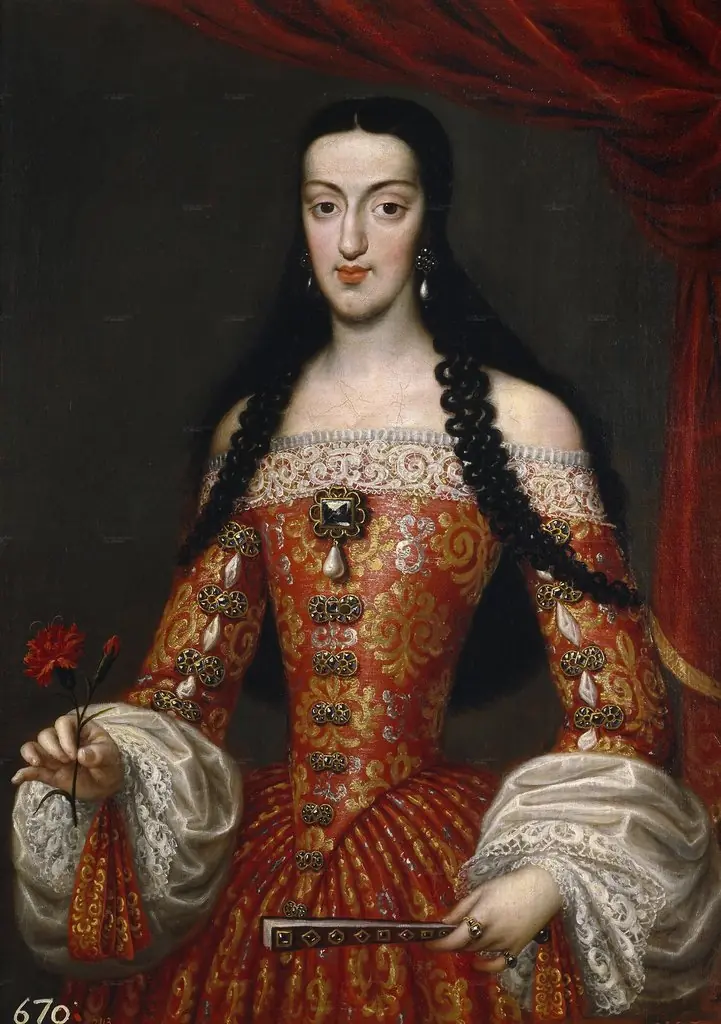 Mary Louise of Orleans, queen of Spain
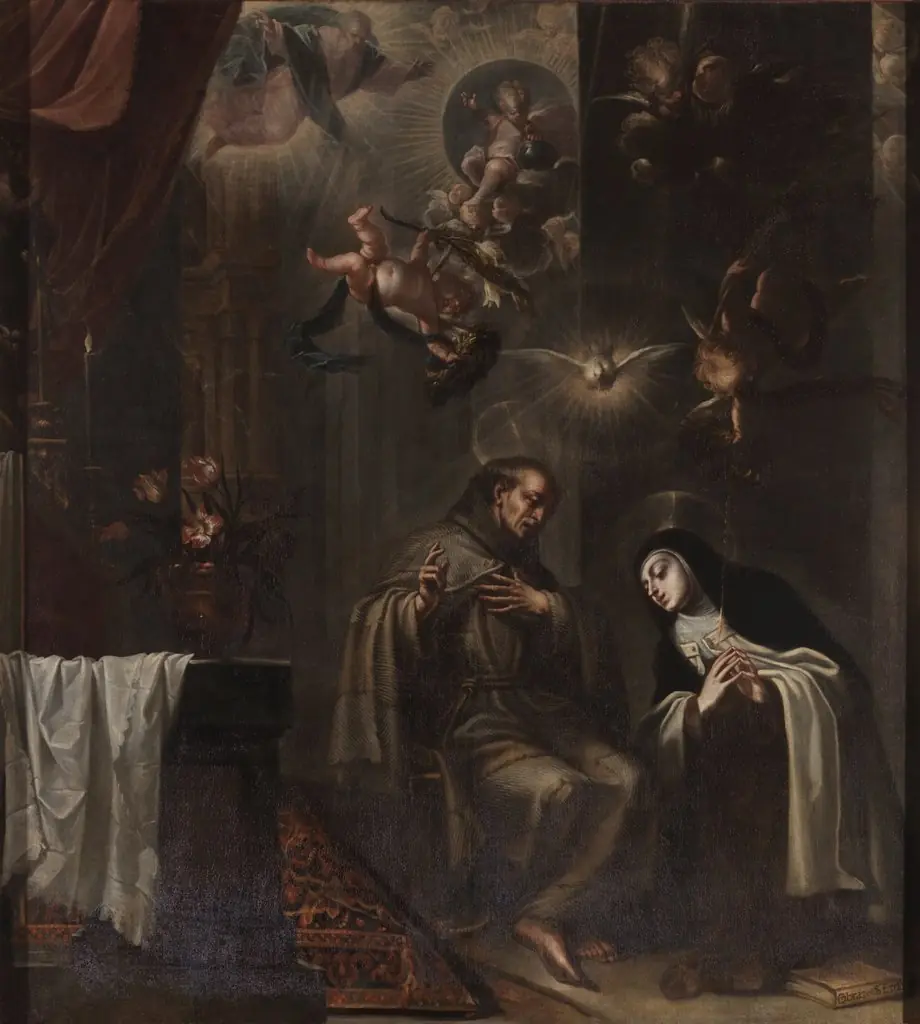 San Pedro de Alcántara confesando a Santa Teresa
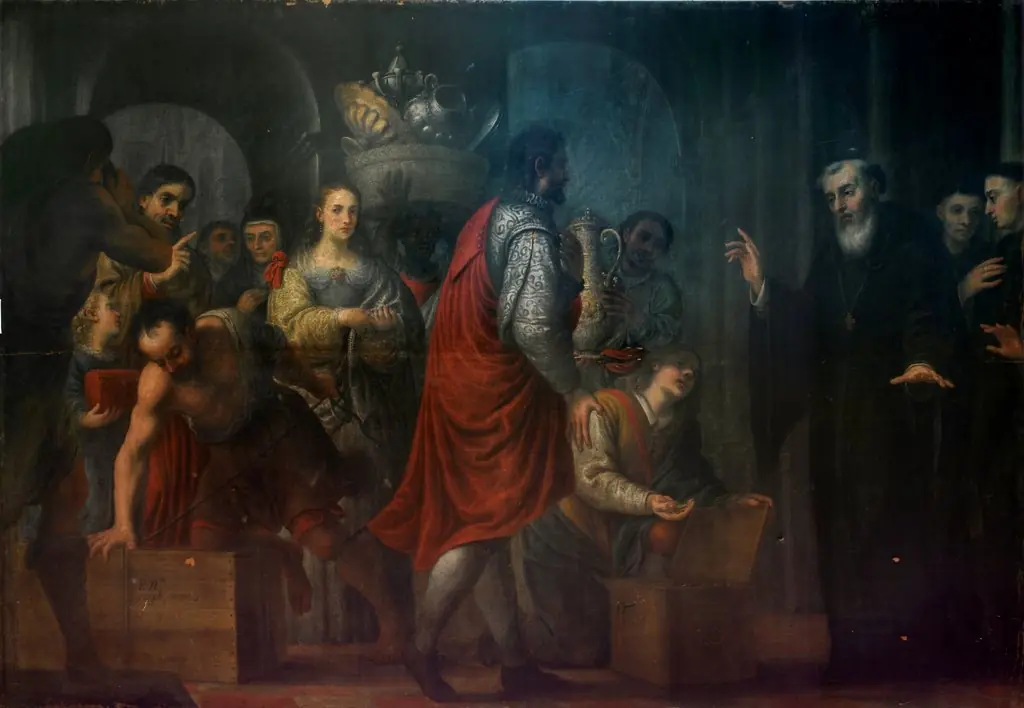 San Agustín recibiendo donaciones de los ricos para entregarlas a los pobres
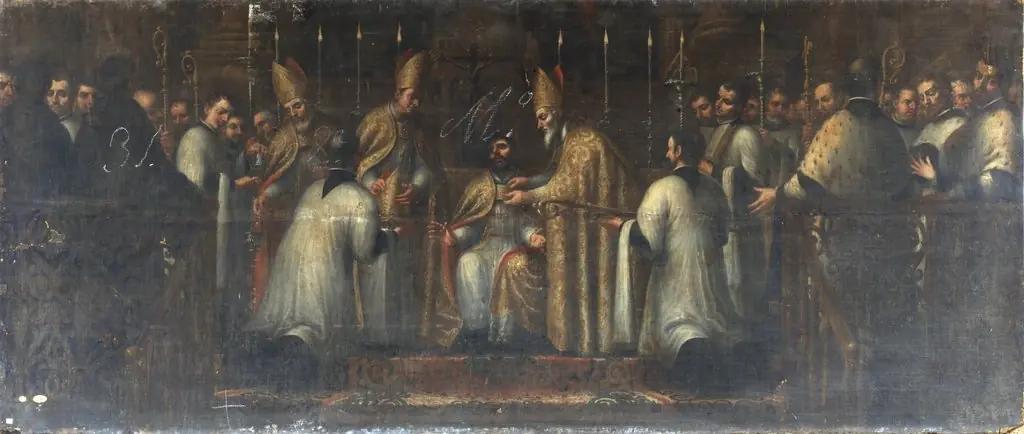 San Agustín discutiendo con el maniqueo Fortunato
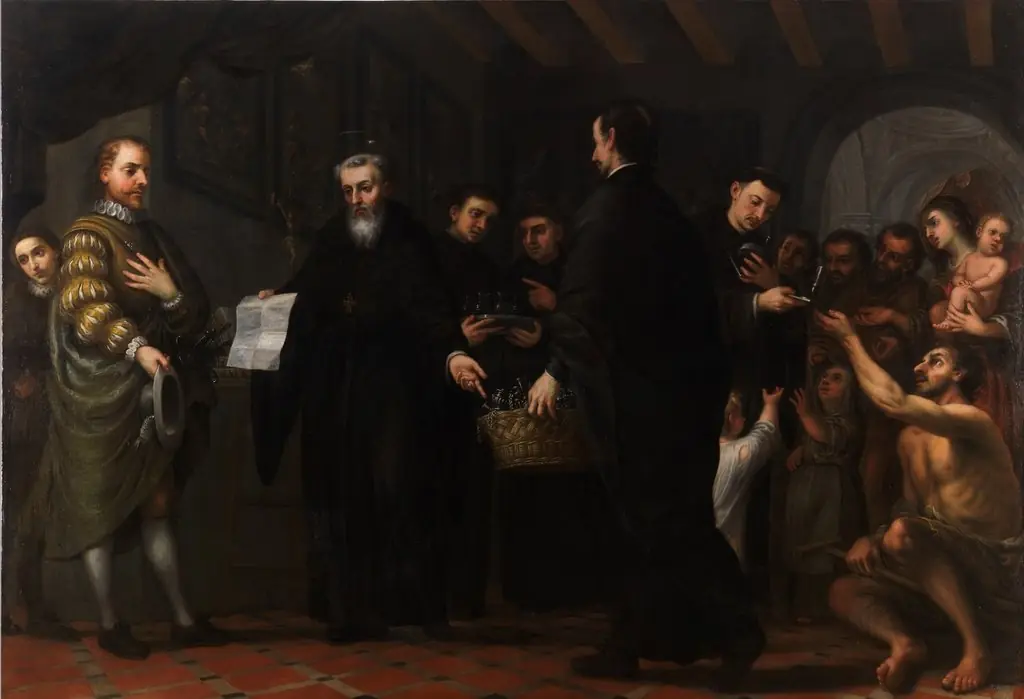 San Agustín repartiendo los bienes de los ricos entre los pobres
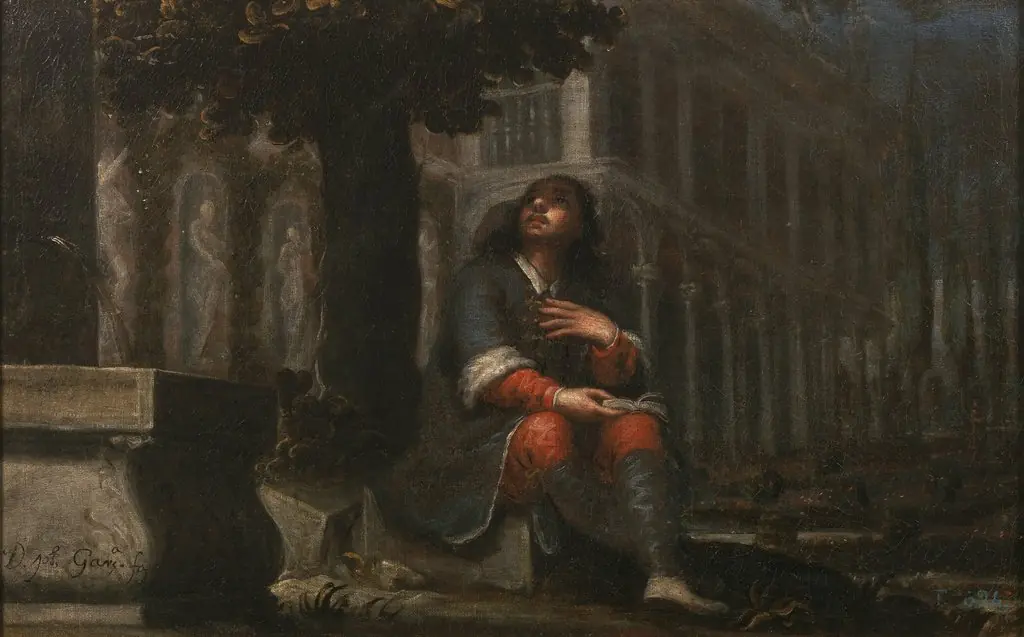 Conversion of Saint Augustin
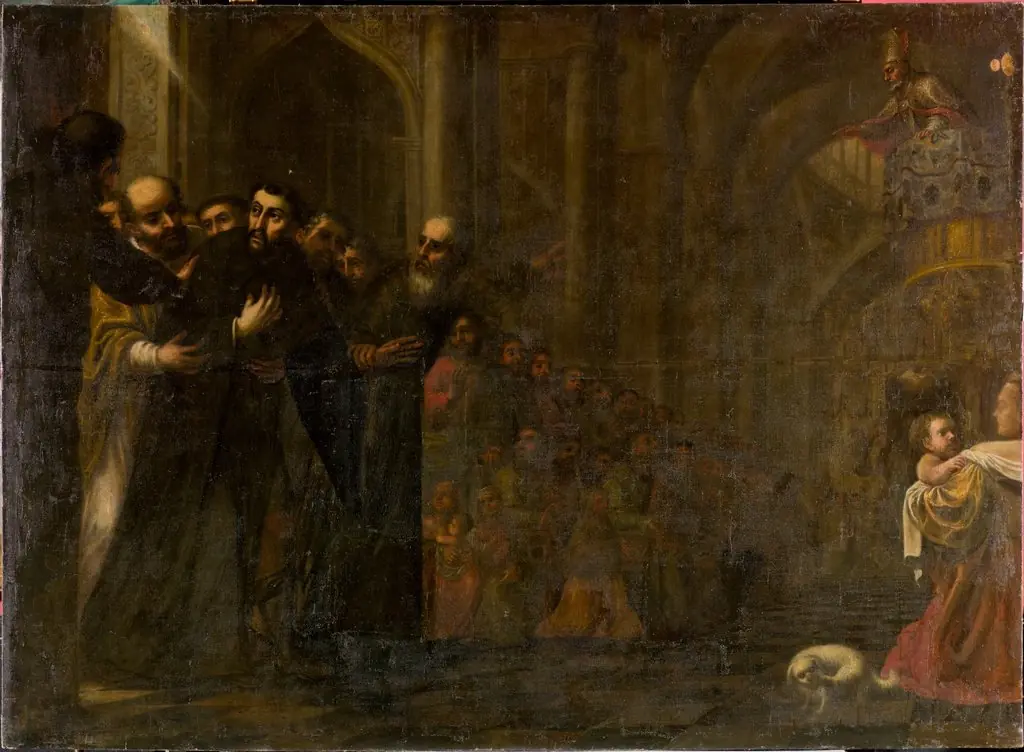 Ordenación de San Agustín
- The Virgin and Child between the Theological Virtues and Saints
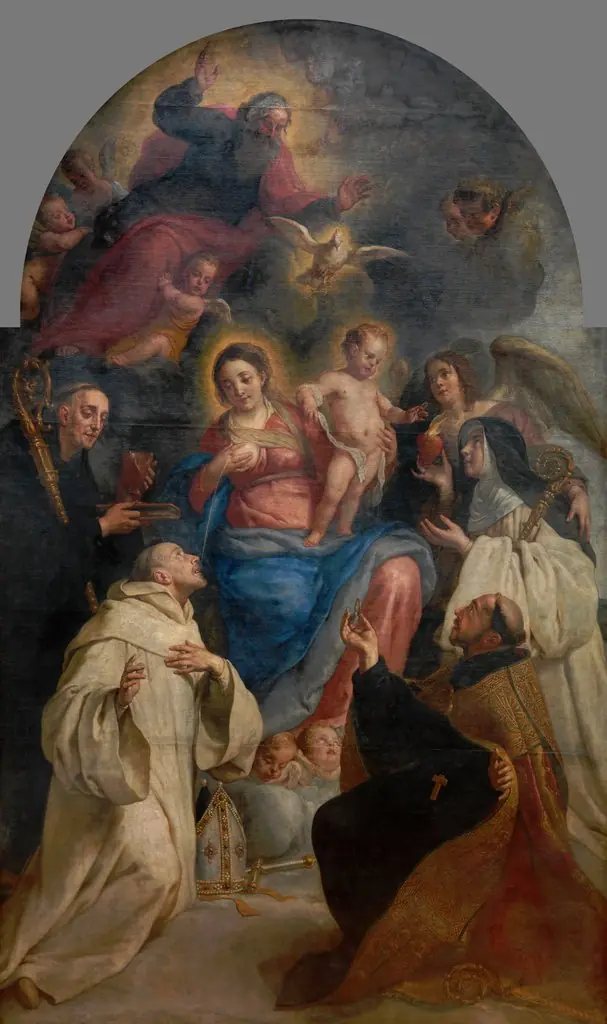 Lactatio of Saint Bernard of Clairvaux
 The Virgin Adored by Saints
 Saint Francis of Assisi in the Porziuncola with the Donors Antonio Contreras and María Amezquita
 Our Lady of Good Counsel
 Madonna of the Rosary
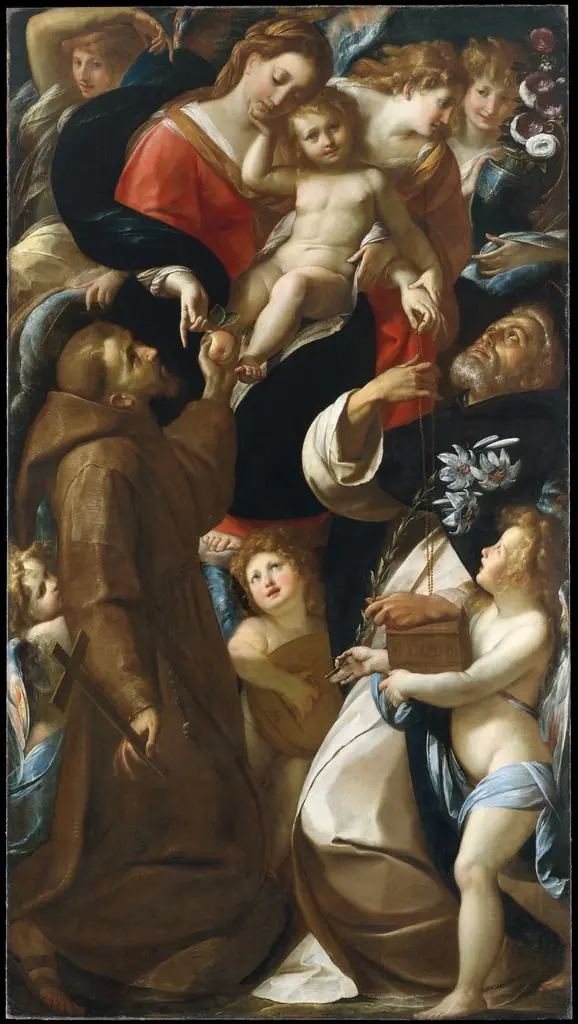 Madonna and Child with Saints Francis and Dominic and Angels
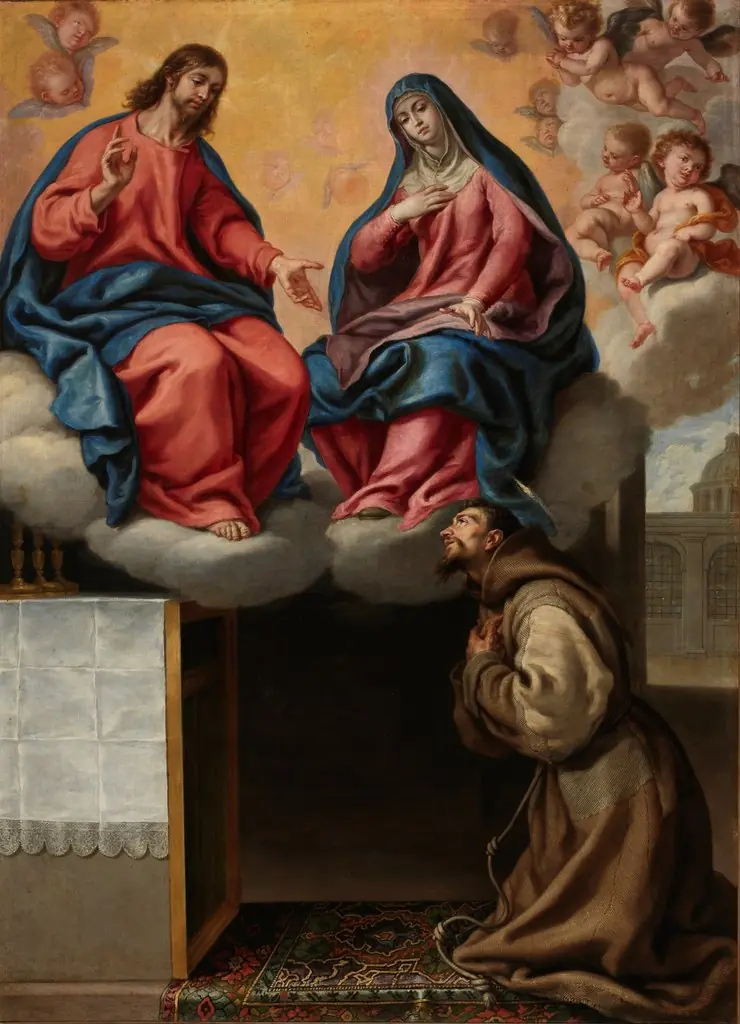 Saint Francis of Assisi in la Porziuncola
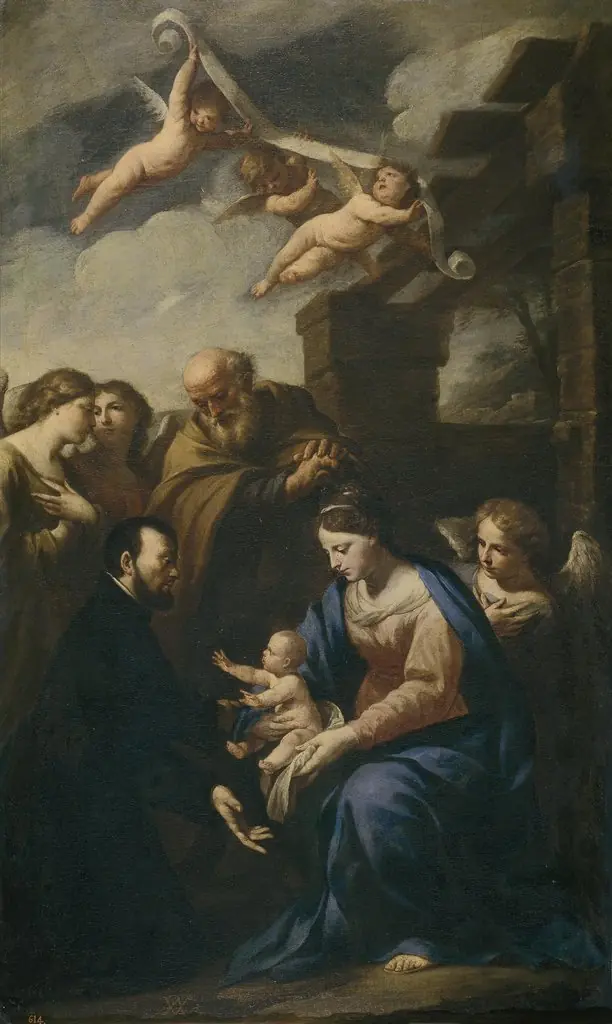 San Cayetano ante la Sagrada Familia
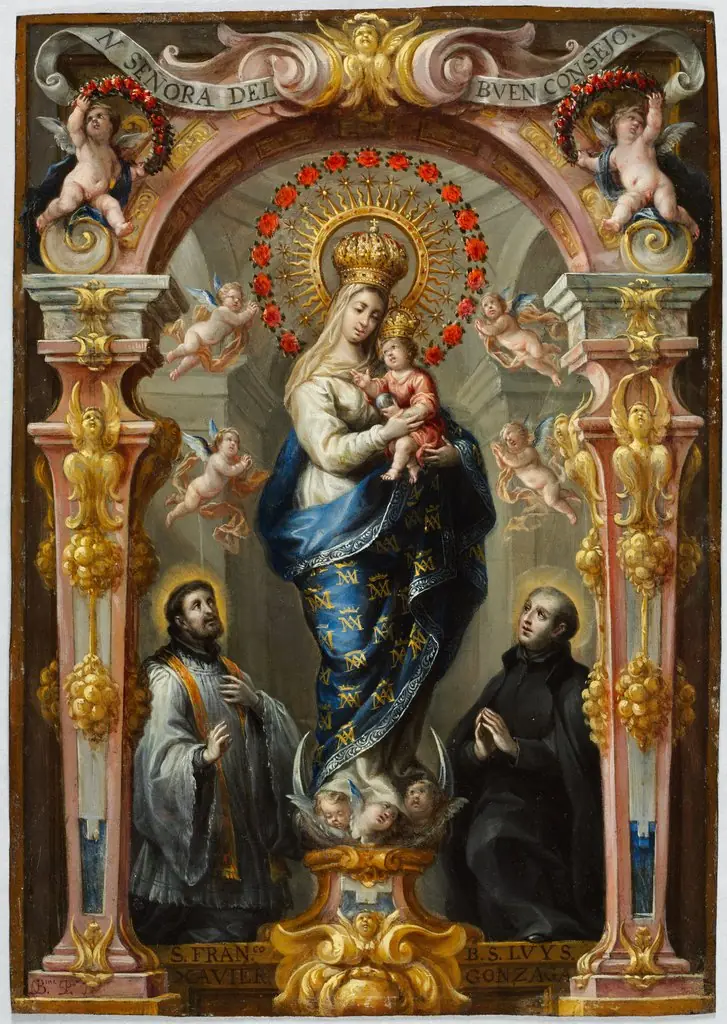 Our Lady of Good Counsel
 Visão de São Francisco de Assis e os Sete Mártires de Marrocos