Artwork
Saint Francis of Assisi in the Porziuncola with the Donors Antonio Contreras and María Amezquita
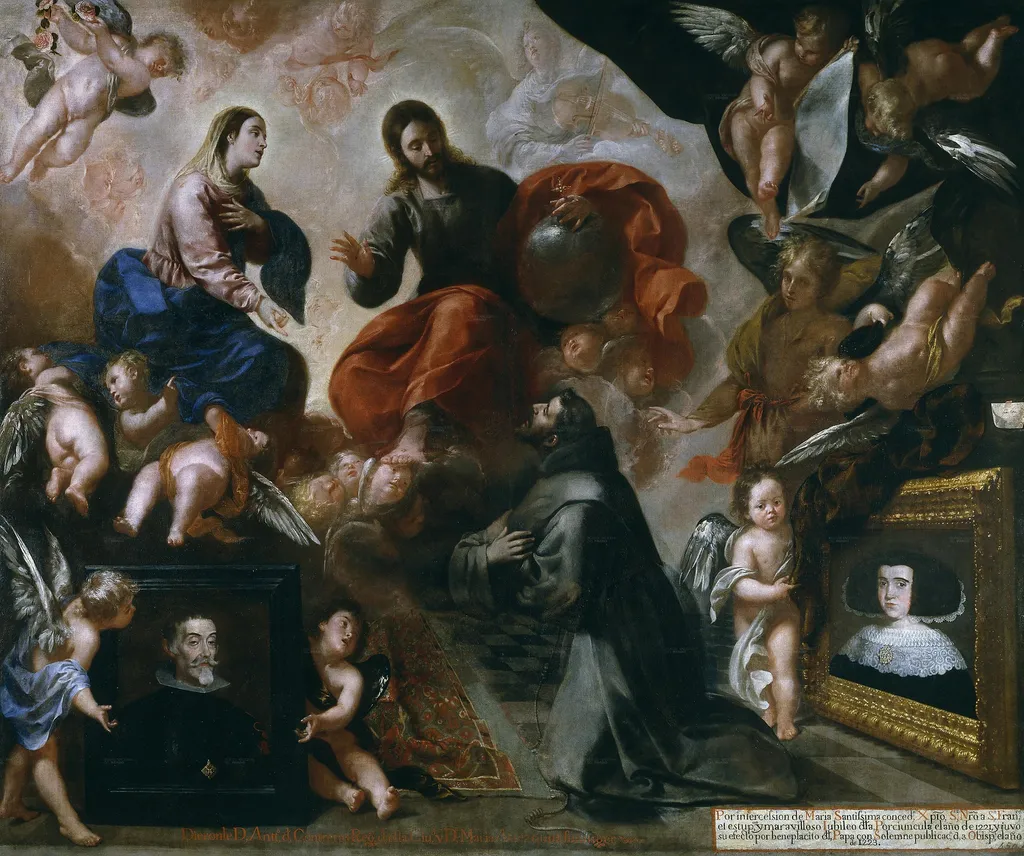
Saint Francis of Assisi in the Porziuncola with the Donors Antonio Contreras and María Amezquita is an oil painting by the Early Baroque Italian artist Francisco Caro. It dates from 1659 and is held in the collection of the Museo del Prado.
About this work
Subject & Meaning
The scene portrays the saint kneeling in prayer as the divine figures appear, emphasizing the miraculous encounter associated with the Portiuncola’s sanctity.
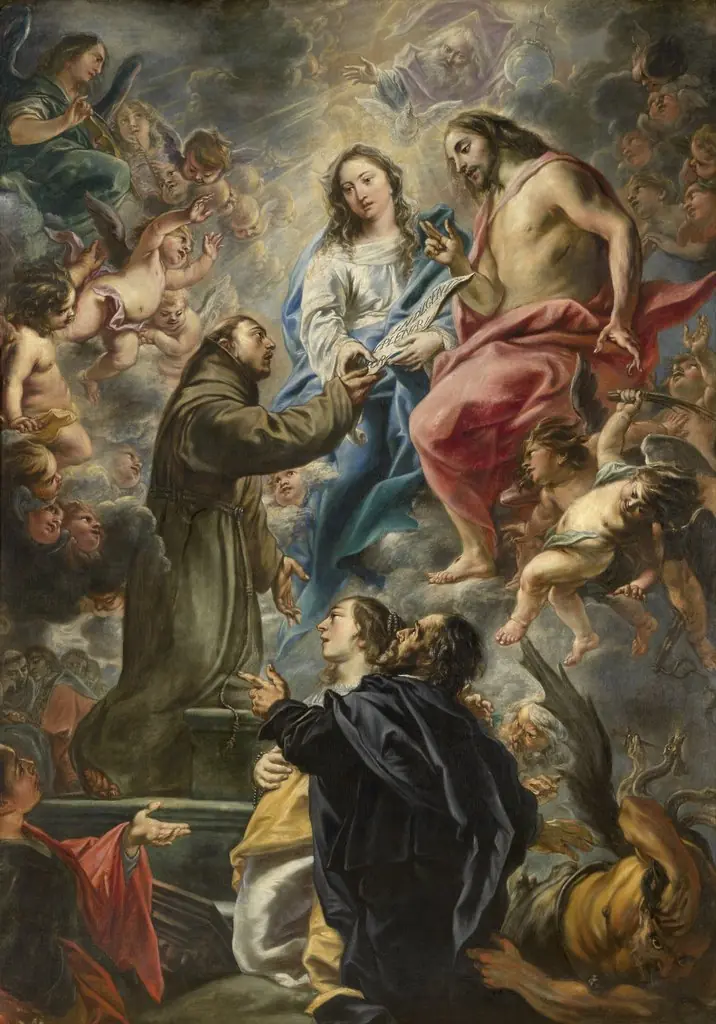
The painting depicts Saint Francis of Assisi receiving a vision of Christ and the Virgin Mary within the Portiuncula, a small chapel central to Franciscan tradition. The scene portrays the saint kneeling in prayer as the divine figures appear, emphasizing the miraculous encounter associated with the Portiuncola’s sanctity. To the left, the donors Antonio Contreras and María Amezquita are shown kneeling in reverence, their presence underscoring the work’s devotional and commemorative purpose. The composition merges sacred narrative with personal piety, reflecting Counter-Reformation ideals of spiritual vision and intercession.
Symbolically, the Portiuncula represents the humility and origins of the Franciscan order, while the apparition signifies divine approval and the saint’s sanctity. The donors’ inclusion elevates their social and spiritual status through association with the sacred event.
Technique & Style
Created in 1659, the work is an oil painting executed on a canvas support. The piece measures 273 cm in height and 330 cm in width, establishing a substantial scale for its religious subject matter. Stylistically, the composition depicts the appearance of Christ and the Virgin Mary to Saint Francis of Assisi within the Porziuncola chapel, alongside the donors Antonio Contreras and María Amezquita.
The formal arrangement integrates these sacred figures with the earthly patrons in a traditional devotional format characteristic of the artist's output during this period.
History & Provenance
The painting was created in 1659 by Francisco Caro as an oil on canvas work for private devotion. It entered the collection of the Museo del Prado and has been housed at the Museo de Arte Contemporáneo da Coruña, later known as the Museo de Bellas Artes de A Coruña, where it remains on public view.
Context
Francisco Caro's 1659 oil painting Saint Francis of Assisi in the Porziuncola with the Donors Antonio Contreras and María Amezquita depicts the legendary appearance of Christ and Mary to St. Francis in the Portiuncula chapel. The work measures 273 cm by 330 cm and belongs to the religious art genre, reflecting Counter-Reformation themes of divine vision and donor portraiture. It is housed in the Museo del Prado collection at the Coruña Fine Arts Museum, where it remains part of their holdings of Spanish Baroque religious works. Scholarly attention focuses on its devotional function and technical execution within 17th-century Spanish religious painting.
Legacy
Francisco Caro's 1659 oil painting Saint Francis of Assisi in the Porziuncola with the Donors Antonio Contreras and María Amezquita, housed in the Museo del Prado, has been recognized for its devotional intensity and precise realism, influencing later Spanish religious art in Galicia and reinforcing the visual narrative of the Franciscan mystical experience. Its depiction of the divine apparition within the humble chapel contributed to evolving iconography of the Portiuncula, a motif that appears in subsequent 17th- and 18th-century works across Iberian collections.
Overview
Francisco Caro’s 1659 oil on canvas, titled Saint Francis of Assisi in the Porziuncola with the Donors Antonio Contreras and María Amezquita, is part of the Prado Museum’s collection. The work presents a crowded devotional scene centered on a kneeling monk, surrounded by figures that include the two donors and a host of cherubic attendants, all rendered in a palette dominated by muted reds and blues.
Own this work as a print
Artist & collection

 The Virgin and Child between the Theological Virtues and Saints
 Madonna and Child with Saints Francis and Dominic and Angels
 Portiuncula
 Madonna of the people
 La Virgen y el Niño transverberando el corazón a San Agustín ante la comunidad de agustinos
 Portiuncula
 The Apparition of the Virgin to Saint Ildefonso
 Lactatio of Saint Bernard of Clairvaux
 The Judgement of a Soul
 The Coronation of the Virgin
 The Assumption of the Virgin
- Saint Francis of Assisi in la Porziuncola