Artwork
Portrait of William IV, Prince of Orange
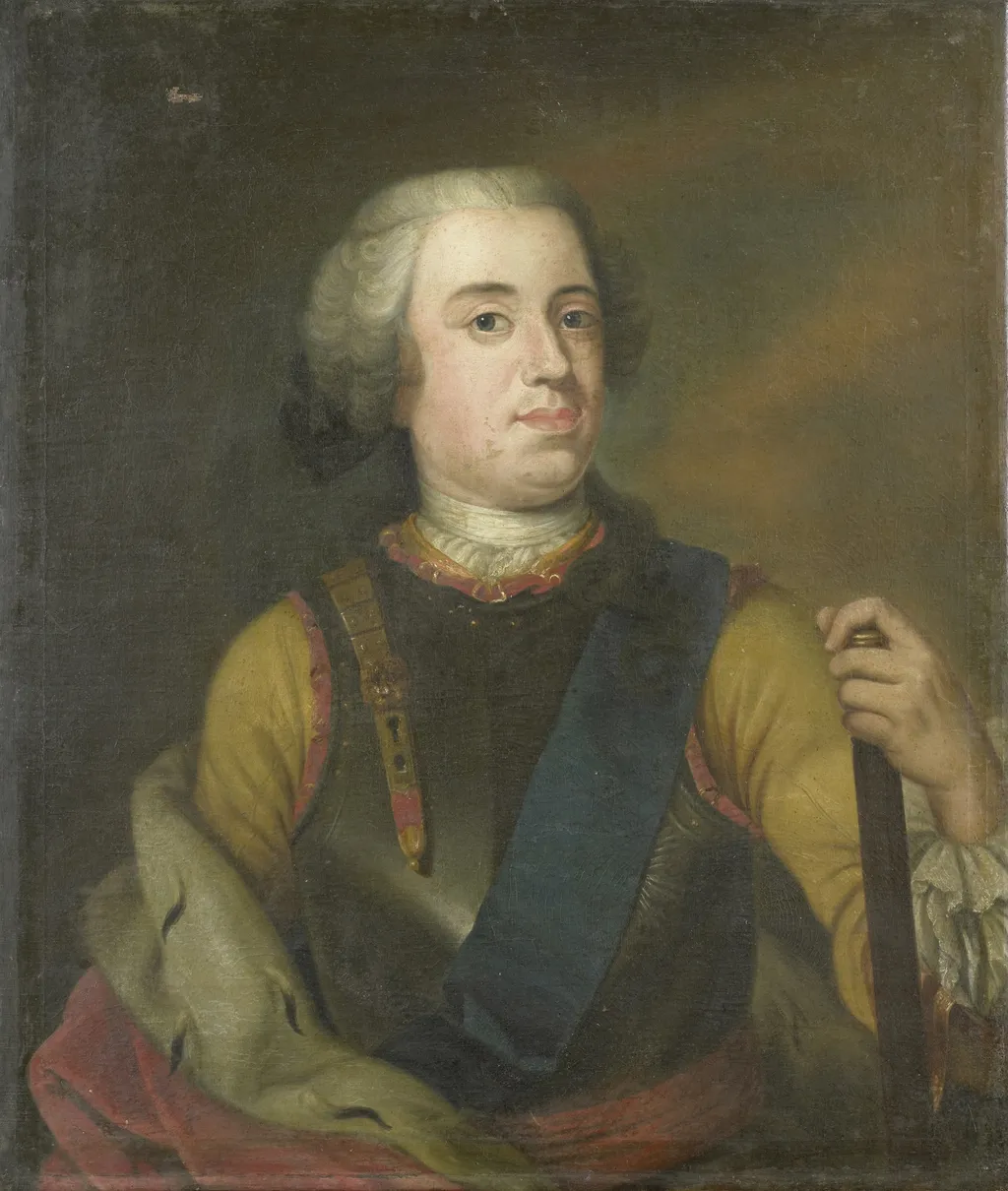
Portrait of William IV, Prince of Orange is an oil painting by the Rococo painting artist Unknown. It dates from 1745 and is held in the collection of the Rijksmuseum. The work is an oil painting portraying William IV, Prince of Orange, seated in a formal pose.
About this work
Subject & Meaning
The work's composition and material align with 18th‑century portrait conventions, emphasizing both the sitter's lineage and the artist's technical skill.
The painting portrays William IV, Prince of Orange, as a young man in formal attire, rendered in oil on canvas. It is classified as a portrait and was created in Holland in 1745, reflecting the subject's aristocratic status and the Dutch school's emphasis on dignified representation. The work's composition and material align with 18th‑century portrait conventions, emphasizing both the sitter's lineage and the artist's technical skill.
History & Provenance
The Portrait of William IV, Prince of Orange is an oil painting on canvas created in 1745 in Holland. The work is attributed to an anonymous artist and depicts the Prince in a portrait genre. It measures 81 cm in height and 69.5 cm in width. The painting is currently held in the collection of the Rijksmuseum.
The Portrait of William IV, Prince of Orange is held in the collection of the Rijksmuseum in Amsterdam. The work, an anonymous oil painting on canvas created in 1745, measures 81 cm in height and 69.5 cm in width. While the painting is part of the museum's permanent holdings, the provided sources do not list a specific inventory or accession number, nor do they document any past or future exhibition history for this piece.
Context
The portrait of William IV, Prince of Orange, painted in 1745 in Holland, depicts the subject in a formal pose typical of 18th-century Dutch portraiture, reflecting contemporary aristocratic representation. Its composition and execution demonstrate the influence of prevailing Dutch portrait conventions, situating it within the artist's broader practice of documenting elite figures. The work is housed in the Rijksmuseum collection, where it is recognized as a significant example of period portraiture.
Legacy
The portrait of William IV, Prince of Orange, painted in 1745, has been housed in the Rijksmuseum since its acquisition, where it remains part of the Dutch Golden Age collection. Its representation of royal patronage and technical mastery in oil on canvas has informed scholarly discussions of 18th-century portraiture, though no major posthumous exhibitions or dedicated monographs have been recorded in the provided sources.
Overview
The work is an oil painting portraying William IV, Prince of Orange, seated in a formal pose. He is dressed in a yellow shirt, blue vest, and a red sash, with a white neckerchief and a gold chain around his neck. The composition presents him against a dark backdrop that lightens behind his head, emphasizing his dignified presence.
Technique & Style
Executed in oil on canvas, the painting employs chiaroscuro to model the figure against the somber background, creating a subtle three‑dimensional effect. The artist renders the textures of fabric and metal, such as the velvet vest, the satin sash, and the gold necklace, with careful brushwork, while the dark tones enhance the subject’s prominence.
Artist & collection









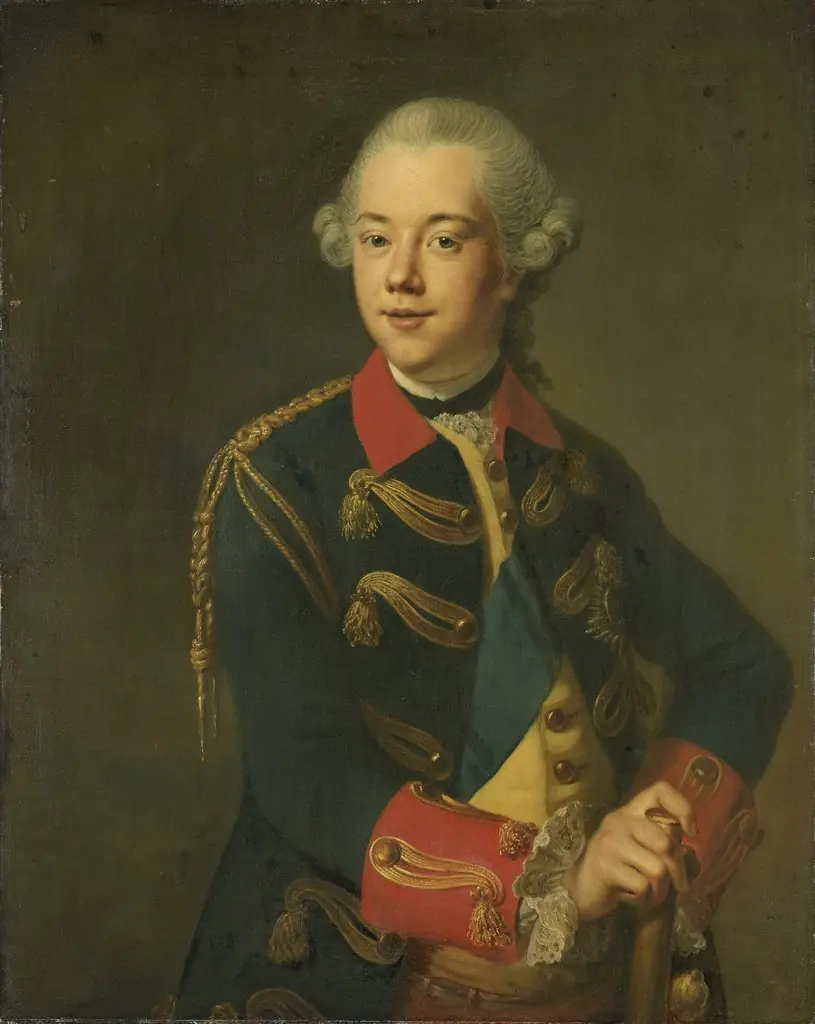
 Portrait of William V, Prince of Orange-Nassau
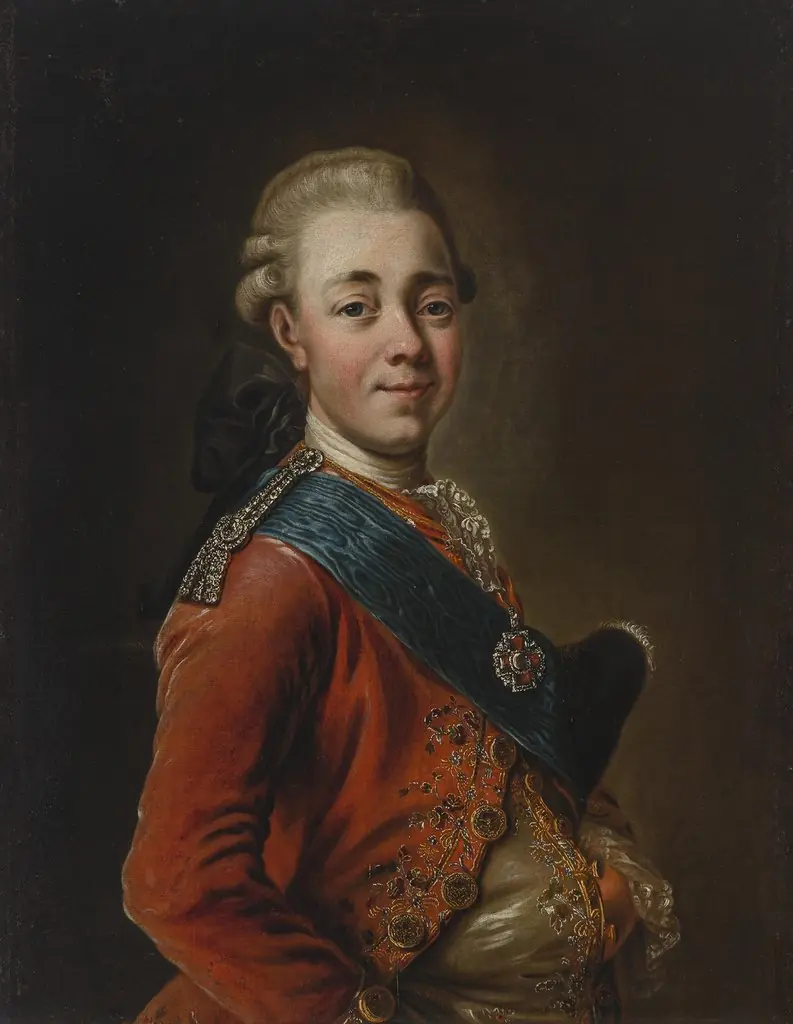 Portrait of Grand Duke Pavel Petrovich, the Future Emperor Paul I of Russia (1754-1801)
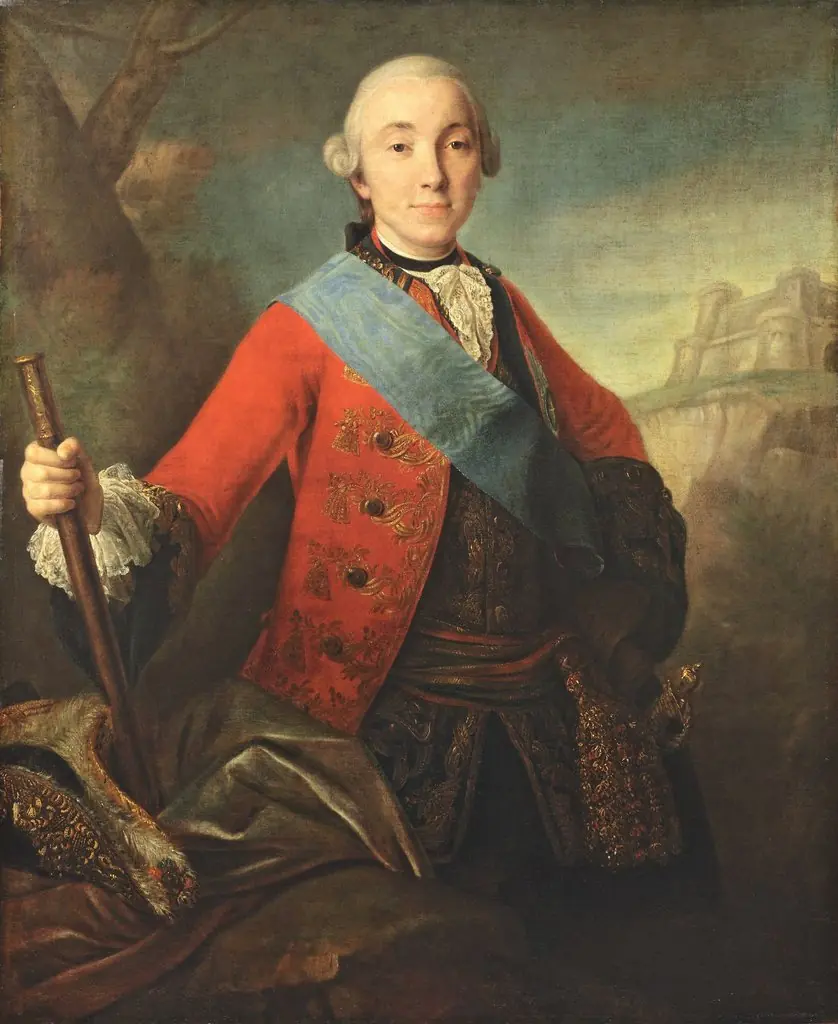 Портрет великого князя Петра Федоровича
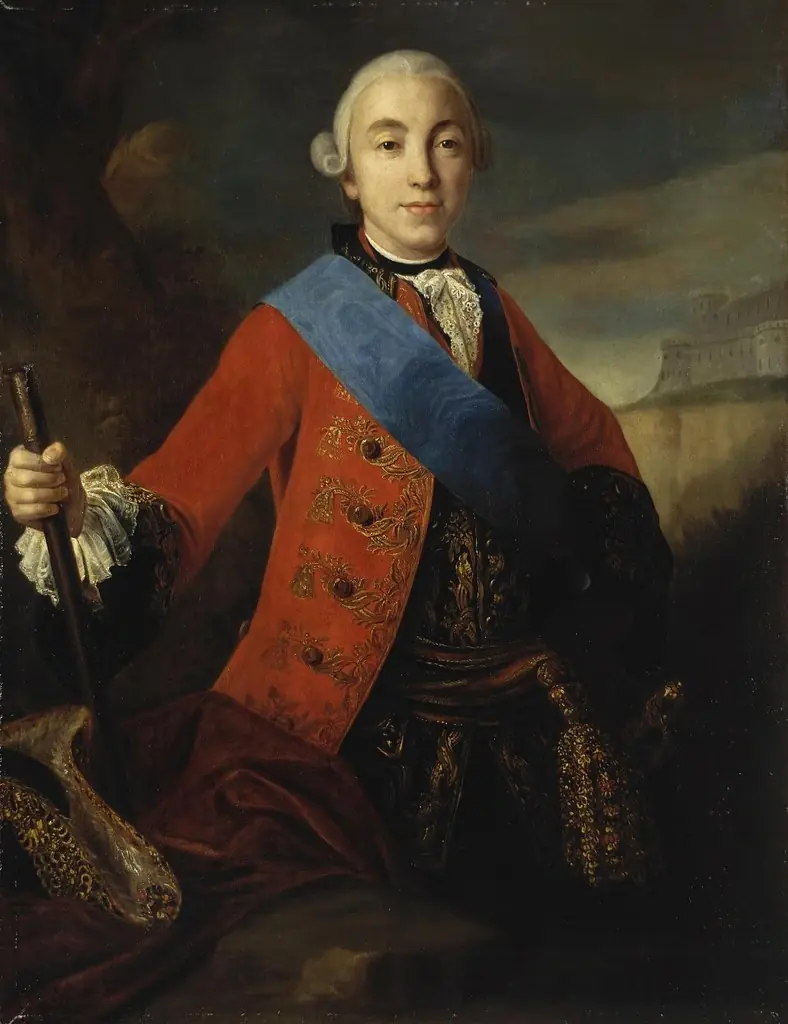 Portrait of Grand Duke Piotr Fiodorovich
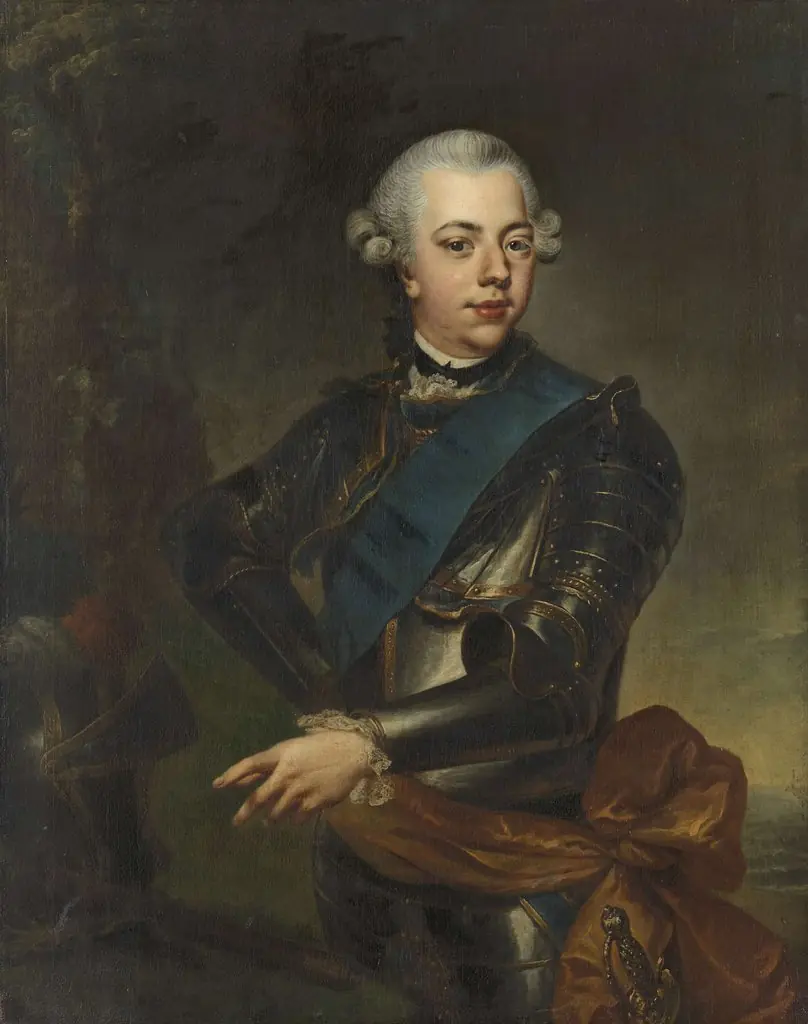 Willem V (1748-1806), prins van Oranje-Nassau
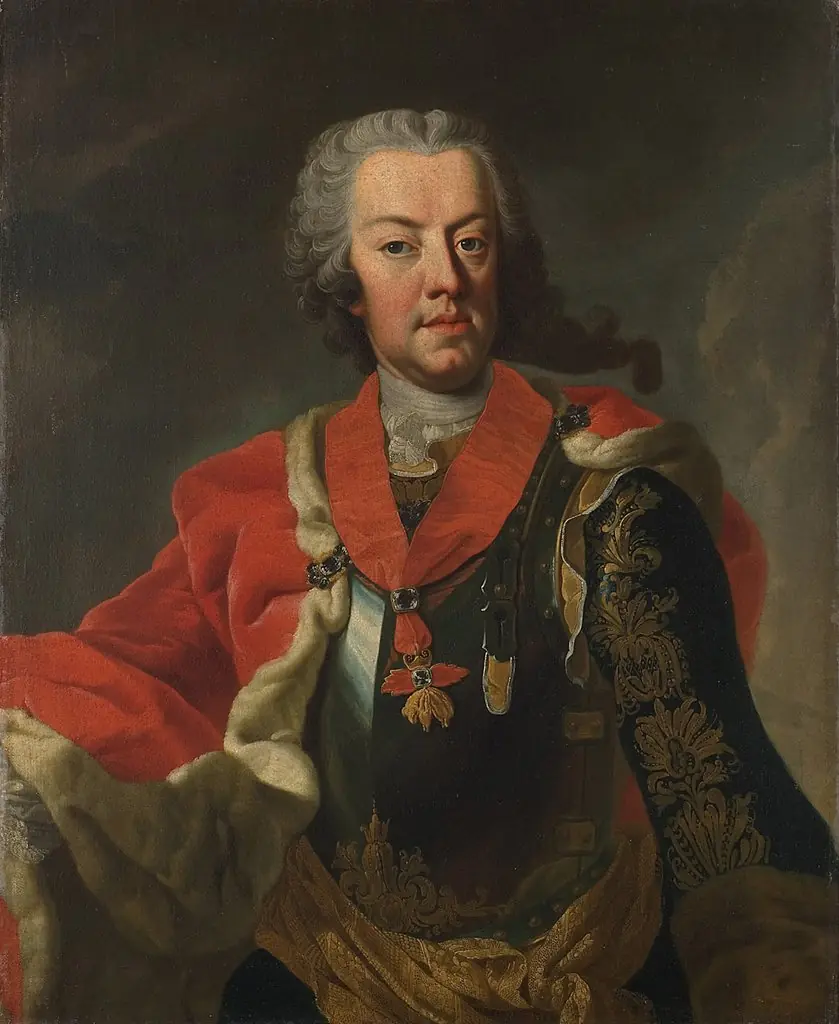 Herzog Karl Alexander von Lothringen (1712-1780), Brustbild
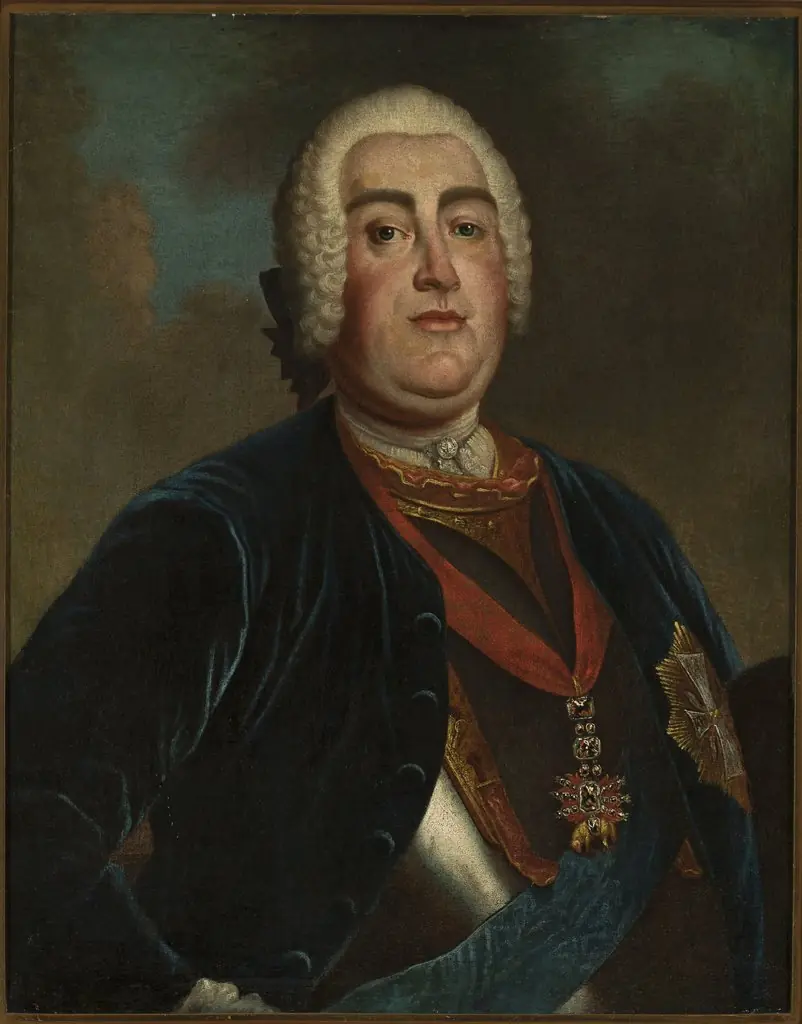 Portrait of Augustus III
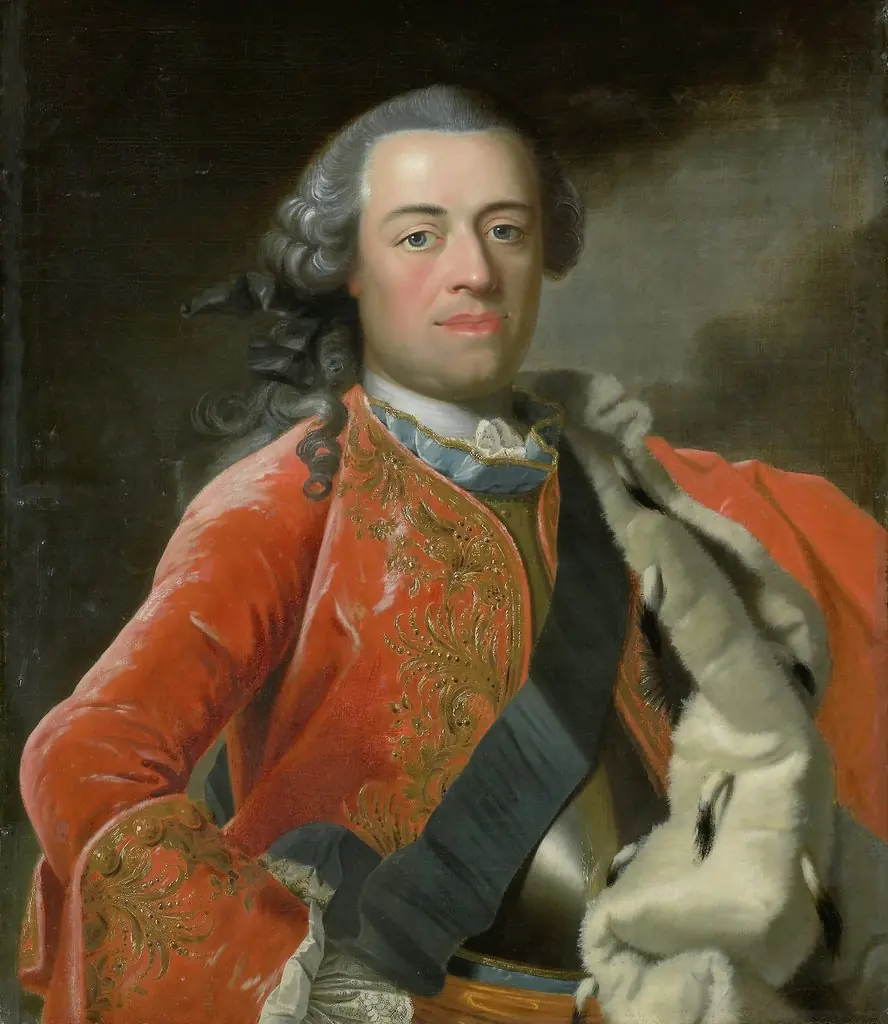 Portrait of Willem IV van Oranje-Nassau (1711-1751)
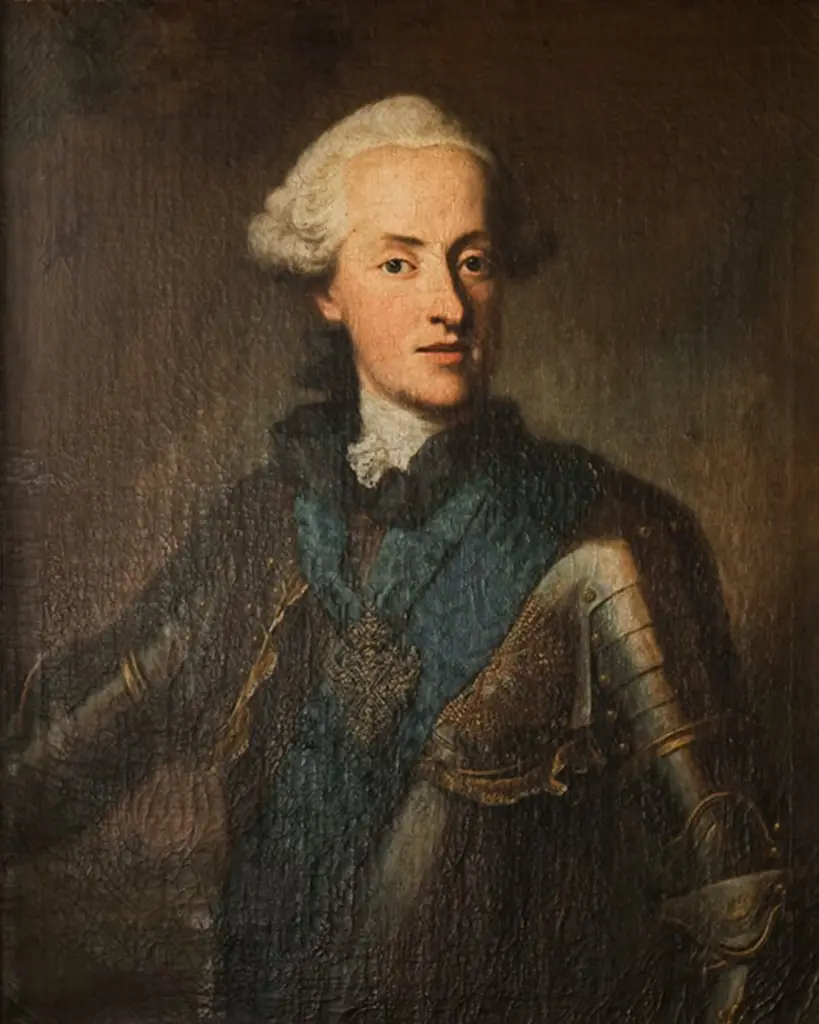 Herzog Clemens Franz de Paula von Bayern
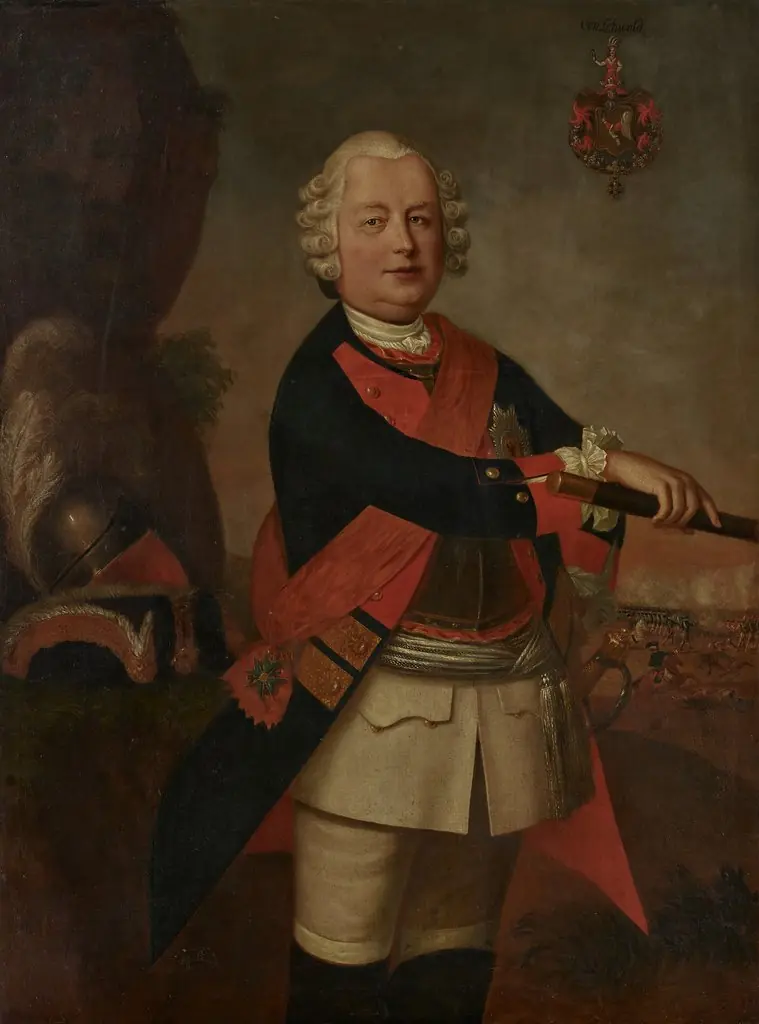 Lieutenant General Johann (Hans) von Lehwald
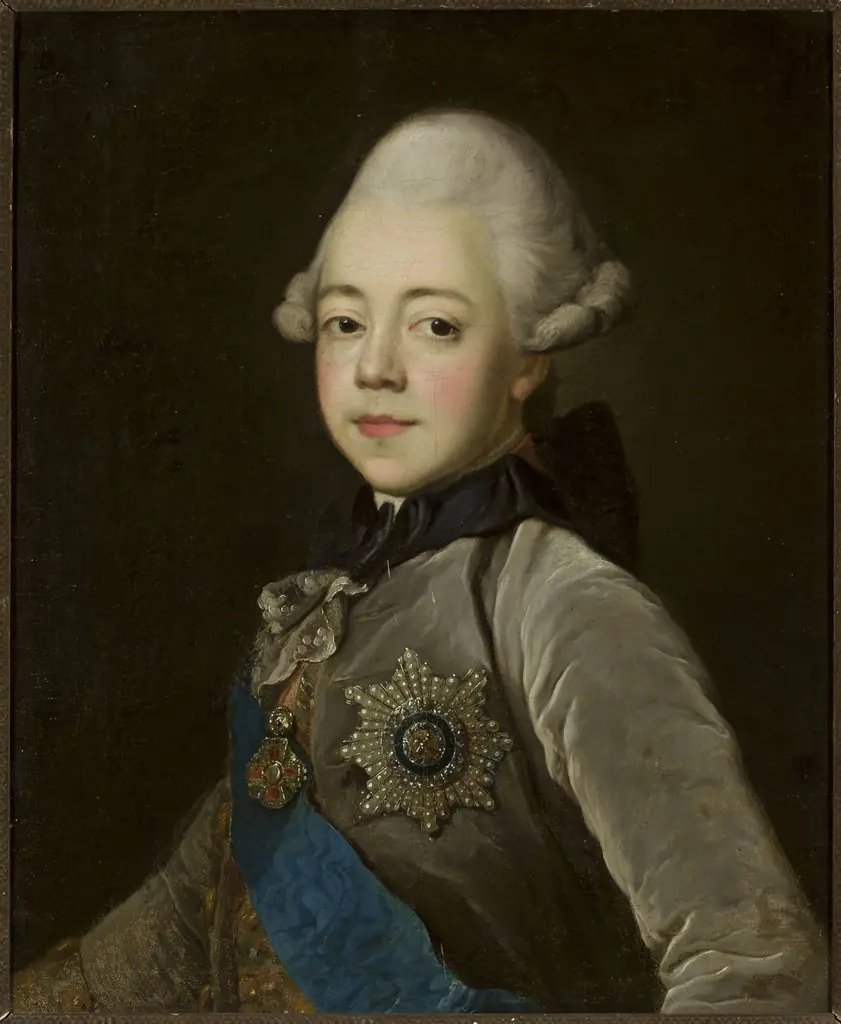 Childhood portrait of Paul I
- Portrait of William V, Prince of Orange-Nassau