Artwork
A Philosopher by Lamplight
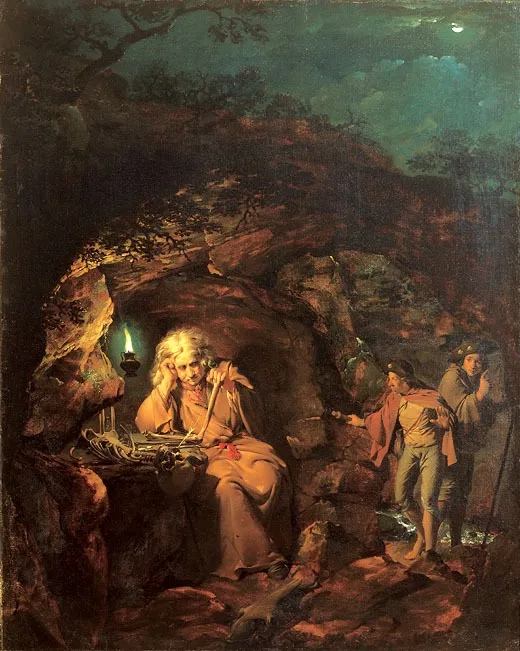
A Philosopher by Lamplight is an oil painting by the Rococo painting artist Joseph Wright of Derby. It dates from 1769 and is held in the collection of the Derby Museum and Art Gallery.
About this work
This painting is called A Philosopher by Lamplight. It's an oil paint work by Joseph Wright of Derby.
The painting was first exhibited in 1769 in London with the Society of Artists. This was one of the earliest of many lamplight or candlelight paintings for which Wright is known.
You can learn more about the technique used in this painting by looking up chiaroscuro.
Overview
The painting is an early example of the dramatic nocturnal scenes illuminated by artificial light that established Wright's reputation.
A Philosopher by Lamplight, also known as A Hermit Studying Anatomy, is an oil on canvas painting by Joseph Wright of Derby. Created circa 1769, the work measures 128.2 by 101.6 centimeters. It was first exhibited in London in 1769 at the Society of Artists. The painting is an early example of the dramatic nocturnal scenes illuminated by artificial light that established Wright's reputation. It is currently held by the Derby Museum and Art Gallery, accessioned under number 1961-508/1.
Subject & Meaning
The composition depicts an old philosopher or pilgrim seated in a rocky cave, illuminated by a small hanging oil lamp. He rests his head on one hand while holding a bone, surrounded by scattered books, papers, and a skull on a stone ledge. Two smaller figures dressed as pilgrims, identified by the scallop shells on their hats, stand at the cave entrance with trepidation, one pointing toward the seated figure. A dark, wooded landscape and a moon breaking through clouds are visible outside. The scene is rich with vanitas symbolism reflecting the ephemeral nature of human existence: the skeleton, a lamp that will consume its fuel, an hourglass, and the moon, which must be reborn every four weeks. The scallop shells also carry a dual meaning, serving as the emblem of the Darwin family, linking the work to Erasmus Darwin and the Enlightenment circles of the Lunar Society.
Technique & Style
Executed in oil on canvas, the painting employs a palette of deep browns, warm ochres, and muted greens. Wright uses sharp contrasts between the golden light of the lamp and the surrounding darkness to create a dramatic nocturnal effect, a technique that defines his celebrated candlelight and lamplight scenes. The brushwork varies across the composition, featuring a smooth finish on the central contemplative figure and rougher textures on the rocks and foliage. A gnarled tree branch extends from the upper left, framing the composition, which guides the viewer's eye from the bright lamp to the philosopher and finally to the shadowy observers at the cave entrance.
History & Provenance
The exact date of the painting's creation is unknown, but it was first exhibited in 1769. In 1801, a sale catalogue described the work as a companion piece to Wright's The Alchemist Discovering Phosphorus, noting that both are night scenes featuring an old man engaged in scientific research in the foreground with two subsidiary figures behind. The painting later entered the collection of the Derby Museum and Art Gallery in 1961, bequeathed by Colonel J. G. Burton Borough.
Context
Scholars believe the painting was based on Salvator Rosa's Democritus in Meditation. Wright's friend John Hamilton Mortimer was a follower of Rosa, making it plausible that Wright saw Rosa's original work or an engraving of it. The choice of Democritus, a Greek philosopher known for mocking human foolishness, informs the painting's mood. Despite its subtitle, A Hermit Studying Anatomy, the philosopher's attitude toward the bones does not suggest serious anatomical scrutiny. Instead, the work reflects anxieties and questions surrounding the new scientific understanding and Enlightenment philosophy of Wright's era. The moon in the painting also serves as the symbol of the Lunar Society, an organization Wright was closely associated with, although he never became a member.
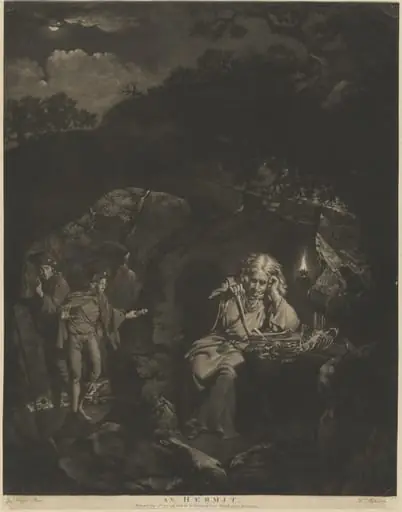
Artist & collection
Artist
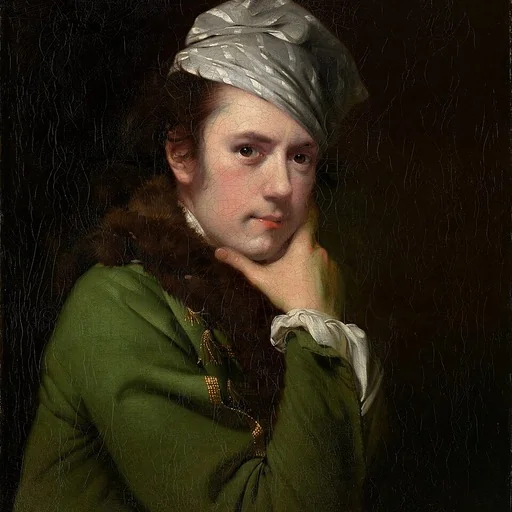
Joseph Wright (3 September 1734 – 29 August 1797), styled Joseph Wright of Derby, was an English painter who specialised in portrait painting and landscape art.

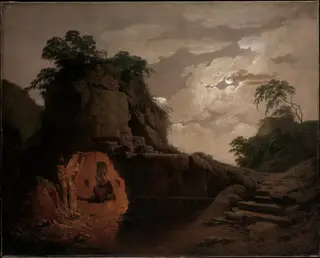
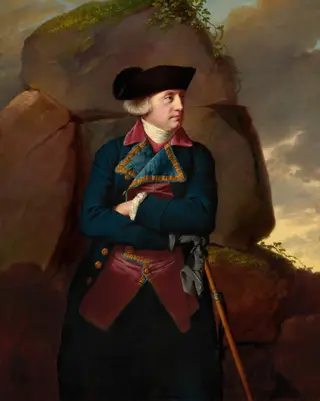
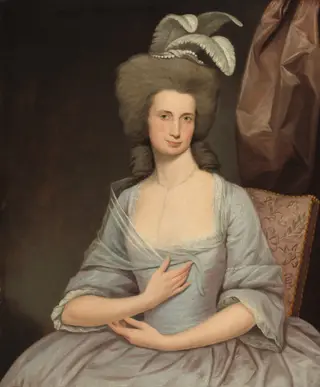
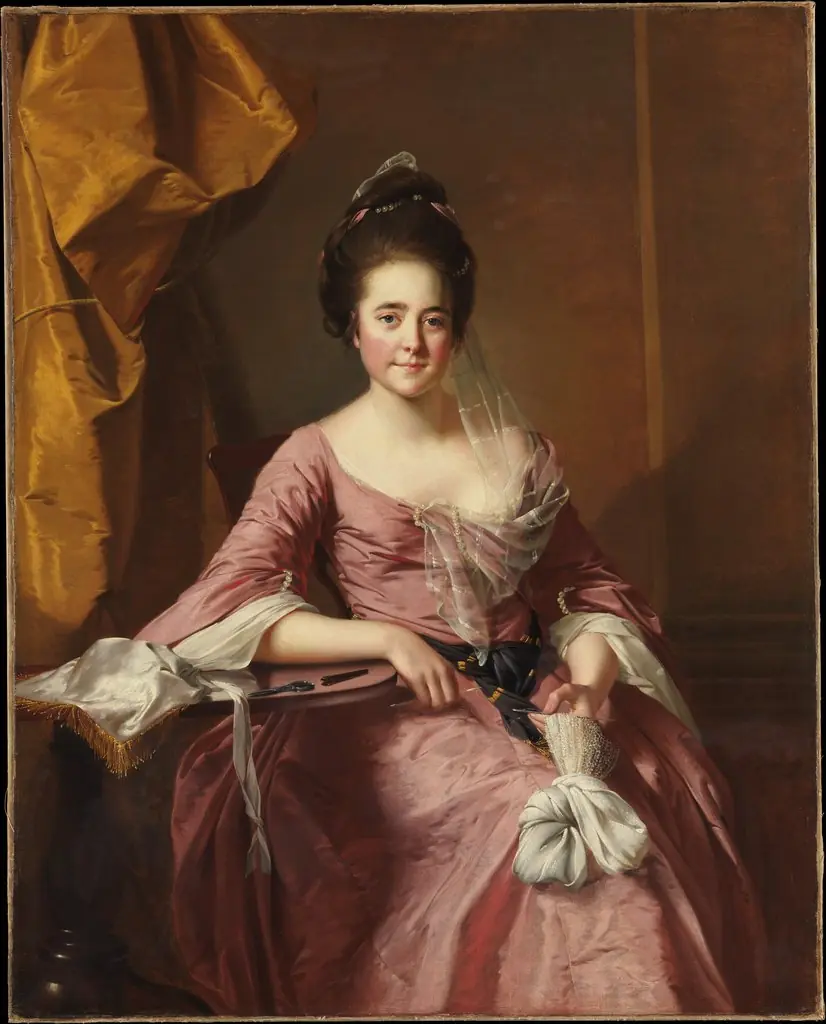
- An Hermit
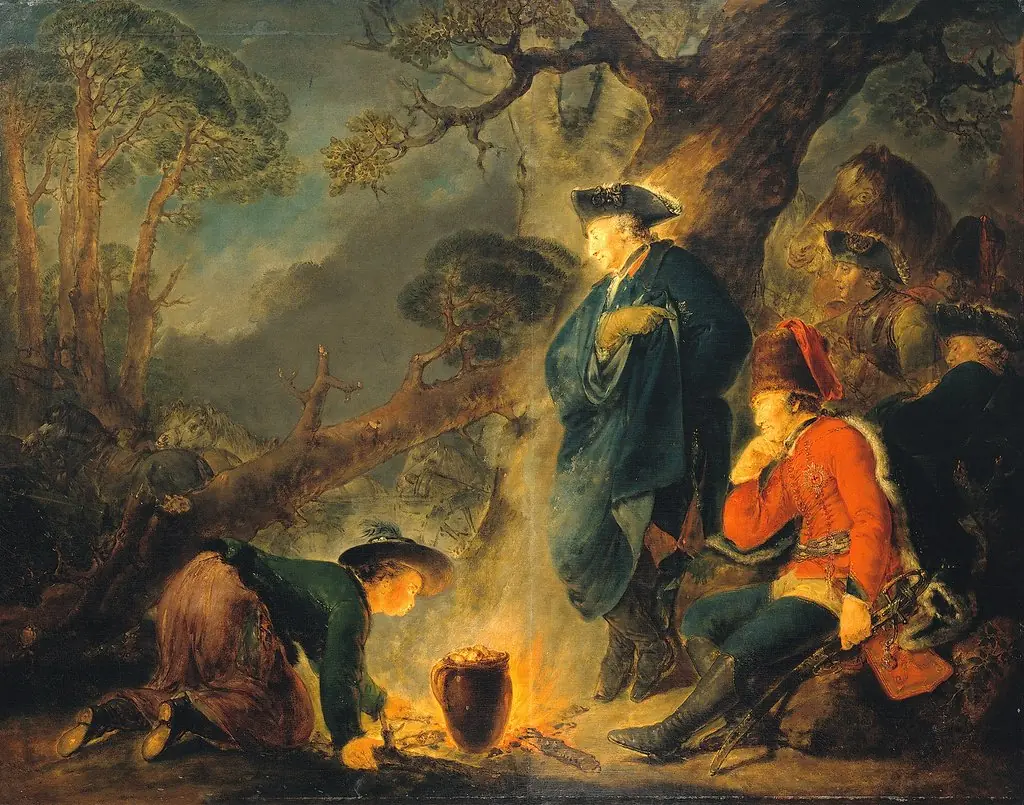 Frederick the Great before the Battle of Torgau
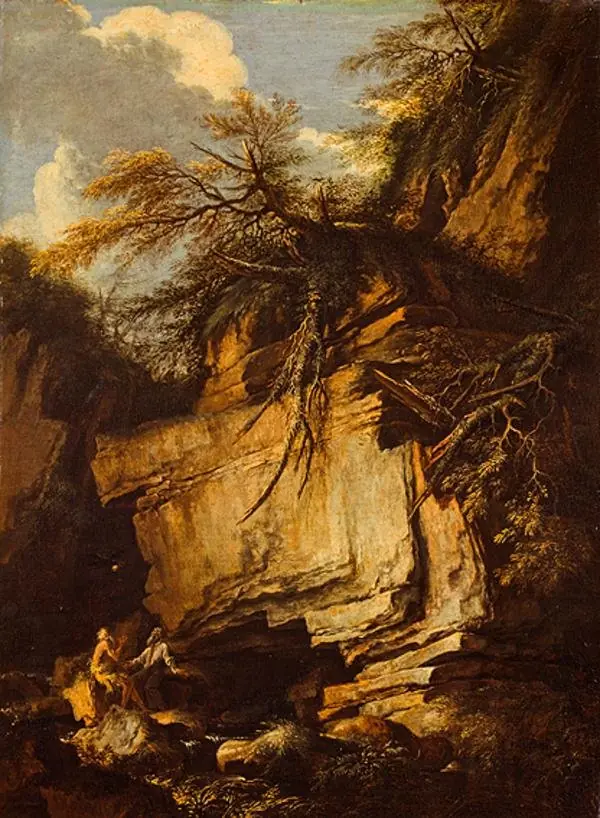 Landscape with Saint Anthony Abbot and Saint Paul the Hermit
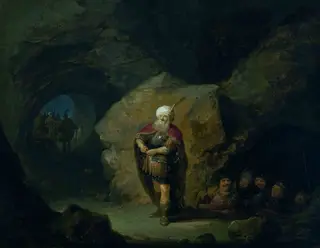 Episod din lupta lui Saul cu David
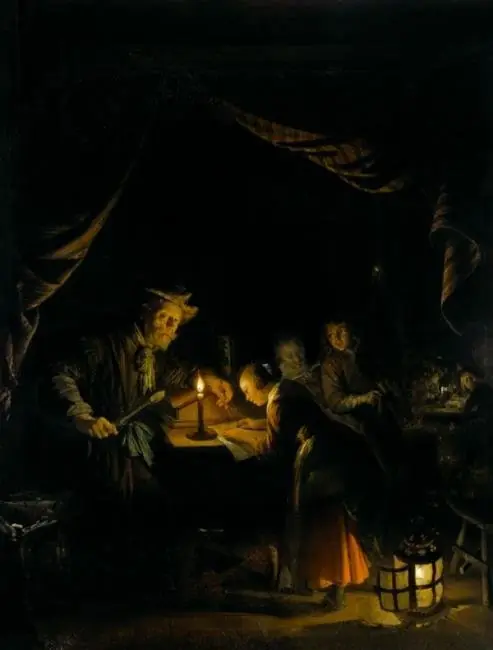 The Night School
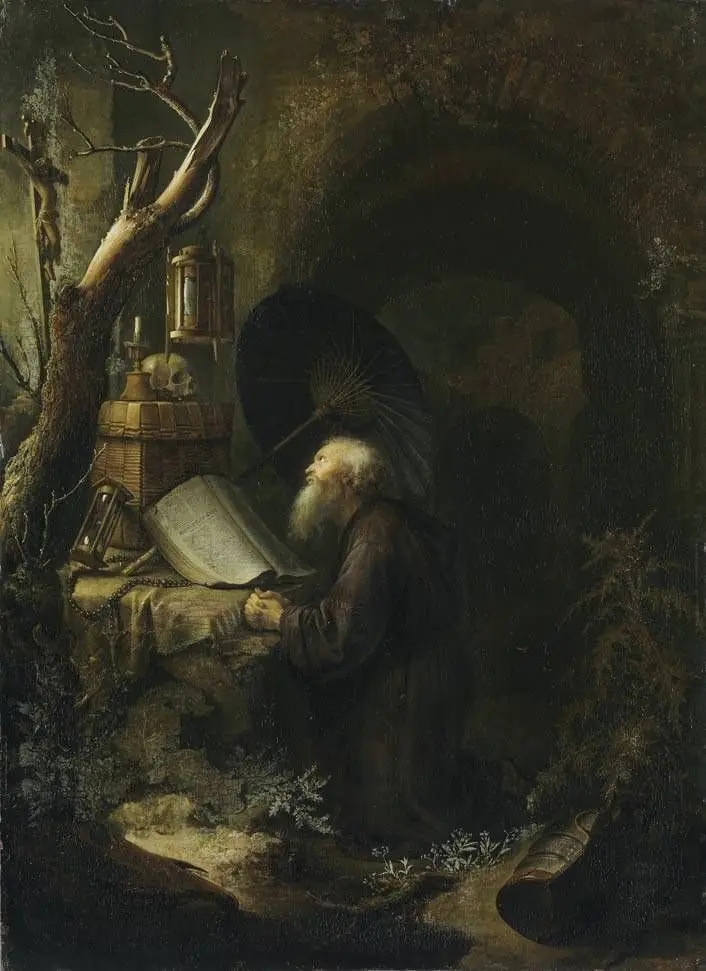 Praying hermit
 Rocky Landscape with Soldiers
 Earthstopper on the Banks of the Derwent
 Rocky Landscape with Figures
 Landscape
 A Cavern in the Campagna, Rome
 Landscape with Dido and Aeneas (Storm)