Artwork
Después del baile
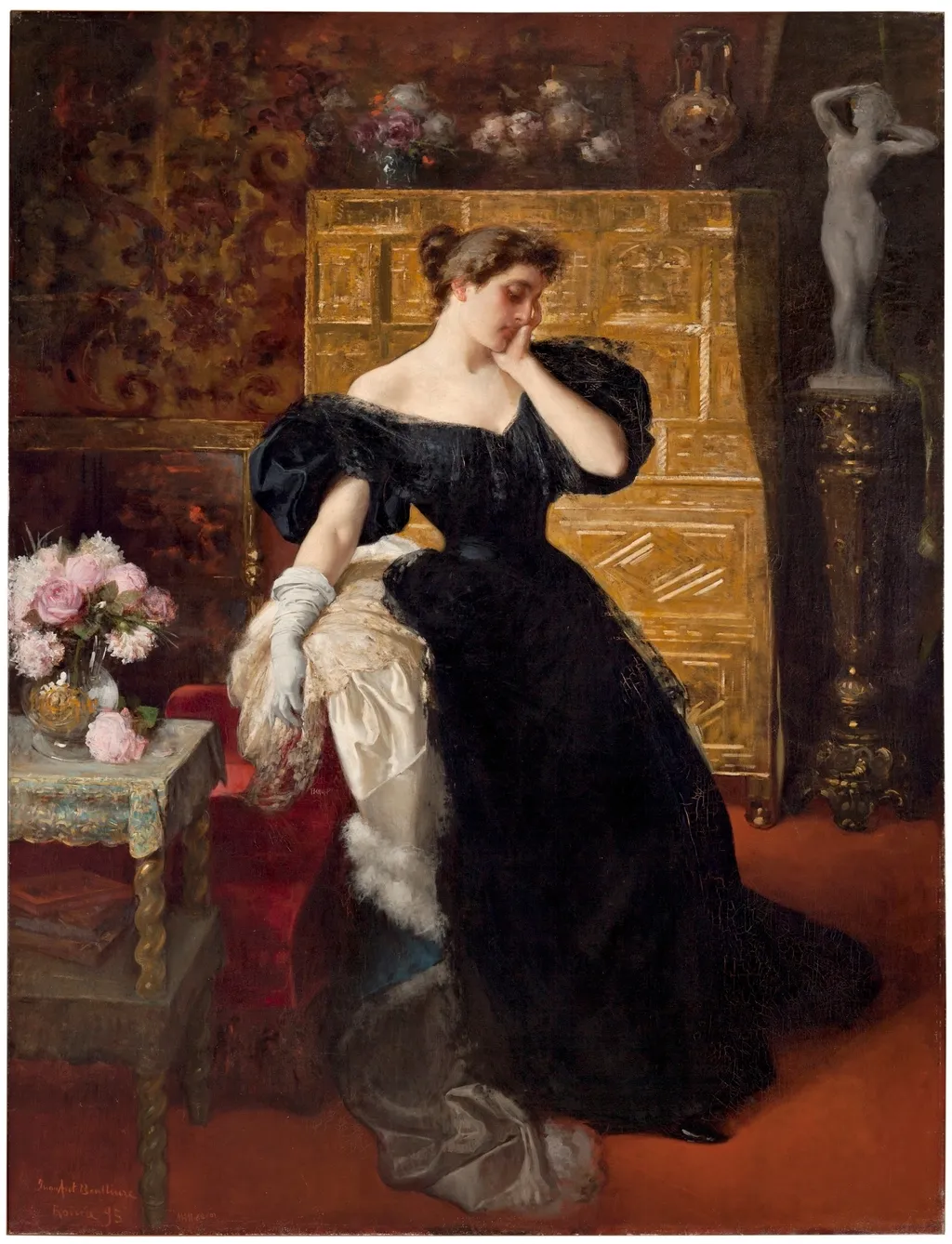
Después del baile is an oil painting by the Post-Impressionist artist Juan Antonio Benlliure. It dates from 1898 and is held in the collection of the Museo del Prado.
About this work
The woman's attire and the room's decor suggest a formal setting, possibly from the late 19th century.
This painting depicts a woman in a black dress with a white shawl, seated in a red chair. Her right hand rests on her face, and she wears white gloves. The background features a gold dresser and a statue of a nude woman on a pedestal to the right. The room is adorned with flowers and a vase on a table.
The woman's attire and the room's decor suggest a formal setting, possibly from the late 19th century. The painting's use of color and lighting creates a sense of elegance and refinement.
To learn more about the artist's use of chiaroscuro, explore the technique further.
Subject & Meaning
Después del baile presents a still-life arrangement of objects associated with the aftermath of a social gathering. The composition depicts a vase, a table, a glove, and a sculpture, rendered in oil on canvas. The inclusion of a single glove and a sculptural element alongside the vase suggests a narrative of recent festivity, where personal and decorative items are left behind or gathered as the event concludes.
The work belongs to a tradition of late nineteenth-century Spanish still life painting that used everyday objects to evoke mood and memory rather than to display abundance. By limiting the depicted items to four carefully chosen elements, the painting invites readings centered on absence and the residue of human presence, with the glove functioning as a trace of an unseen dancer or guest and the sculpture anchoring the scene with a more permanent, contemplative object.
Technique & Style
Después del baile is an oil painting executed on canvas by Juan Antonio Benlliure in 1895. The work measures 240 cm in height and 160 cm in width, presenting a substantial scale for its genre. Stylistically, the composition depicts specific still-life elements including a vase, a table, a glove, and a sculpture, arranged within the scene.
The medium of oil paint allows for the rendering of these objects with the texture and depth characteristic of the artist's technique during this period.
History & Provenance
After the dance was painted in 1895 by Juan Antonio Benlliure and has been part of the Museo del Prado's collection since its creation. The work measures 240 cm in height and 160 cm in width, executed in oil paint on canvas. It depicts a vase, table, glove, and sculpture.
El cuadro se conserva en el Museo del Prado, bajo el número de inventario que corresponde a su adquisición institucional. Ha sido incluido en varias exposiciones temporales del mismo museo, destacando la muestra "Pintura española del siglo XIX" celebrada en 2015, y ha formado parte del recorrido permanente de obras del museo desde su incorporación al patrimonio.
Context
Juan Antonio Benlliure y Gil painted Después del baile in 1895, an oil on canvas work now held by the Museo del Prado, where it remains on view. The painting portrays a vase, table, glove and a sculptural element, reflecting the genre scenes and still lifes for which the artist is noted. Though less widely discussed than his historical compositions, this domestic interior demonstrates his role in late 19th-century Spanish academic art and contributes to scholarly understandings of the period’s transitional style.
Its presence in a major national museum underscores its significance within the artist’s oeuvre and the broader cultural context of institutionalized realism.
Overview
Juan Antonio Benlliure’s 1898 oil canvas, titled “Después del baile,” presents an interior scene rendered with careful attention to detail. A woman in a black dress with a white shawl sits in a red chair, her right hand supporting her face, while white gloves rest on her lap. The composition includes a gold‑finished dresser, a vase of flowers, and a sculpted nude figure on a pedestal to the right.
Own this work as a print
Artist & collection

- Matilde Noever de Vogel
 Desperate
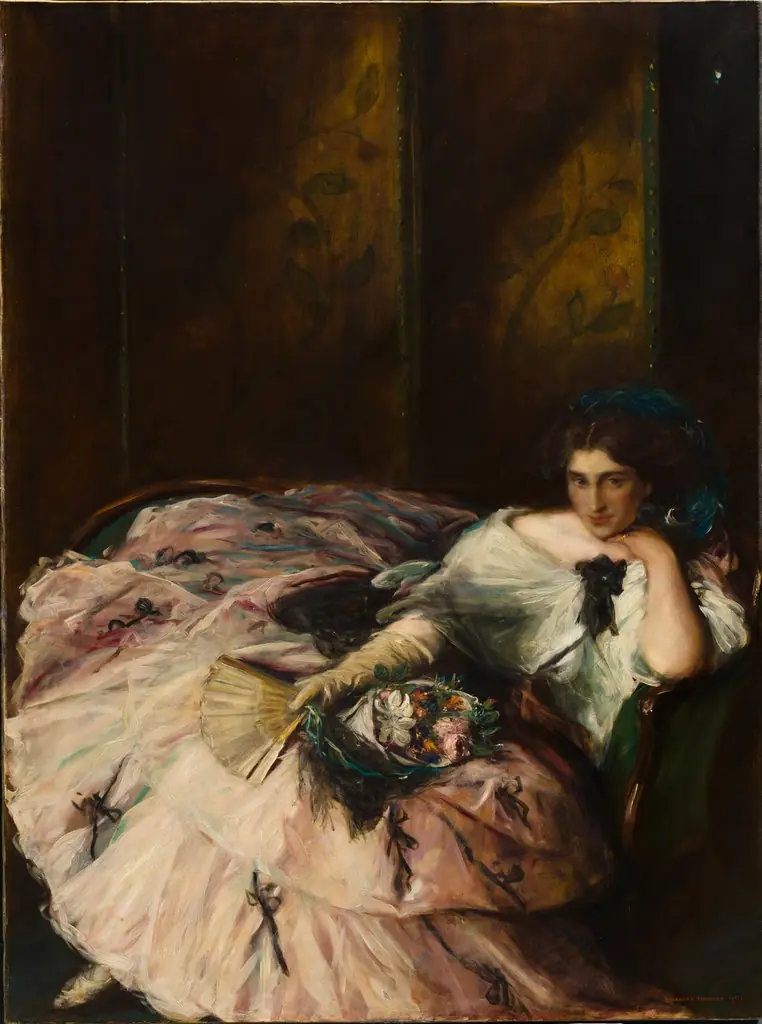 Souvenir of an "International Ball" (Portrait of Miss Kathleen Bruce)
 Souvenir of an "International Ball" (Portrait of Miss Kathleen Bruce)
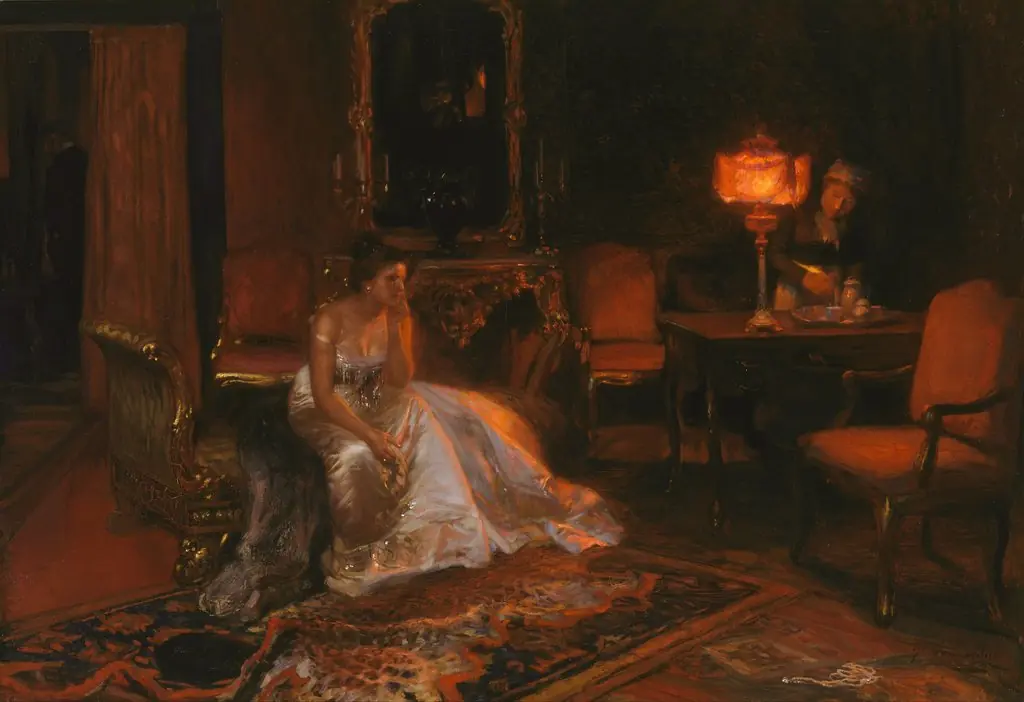 The end of a dream
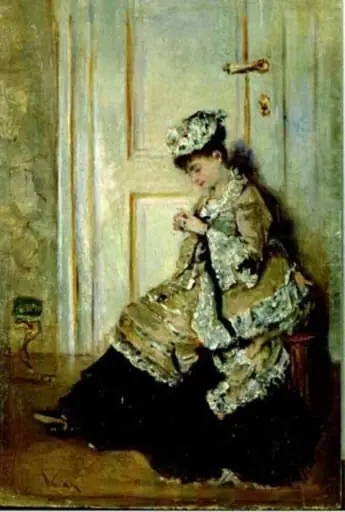 Femeie în interior
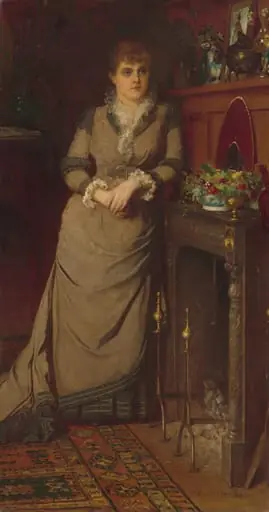 Harriet Hubbard Ayer
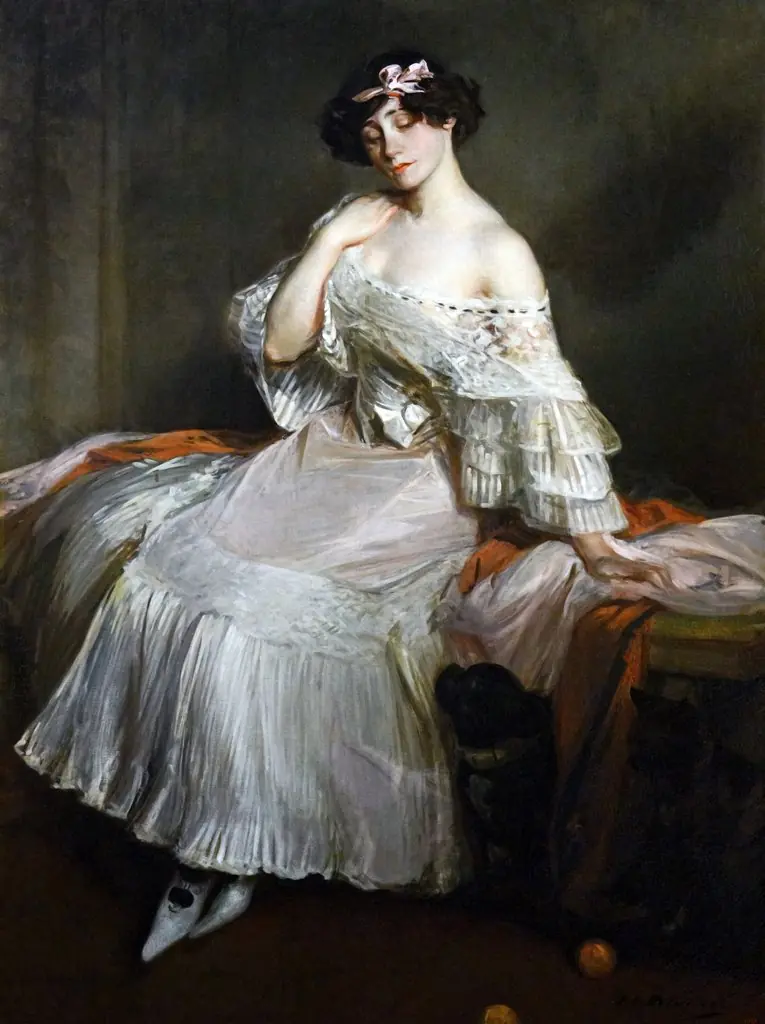 Portrait of the Novelist Colette
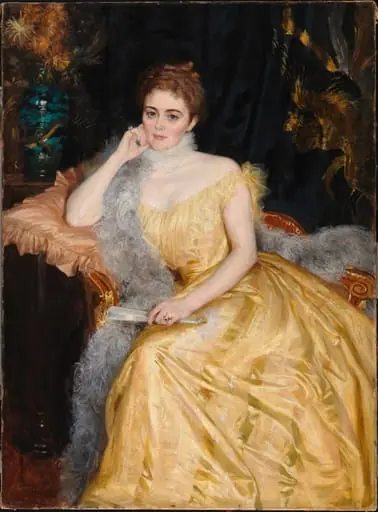 Valtioneuvoksetar Alice von Haartmanin muotokuva
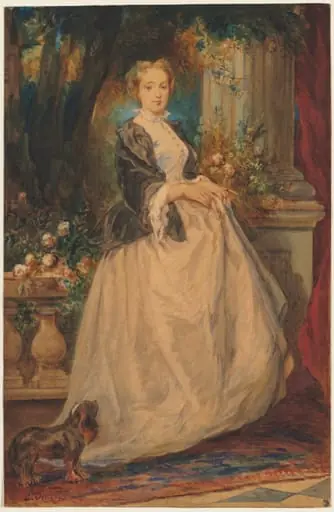 Portrait of Madame Thomas (née Camille Boucher)
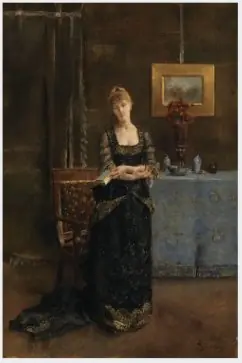 Woman in a Black Dress
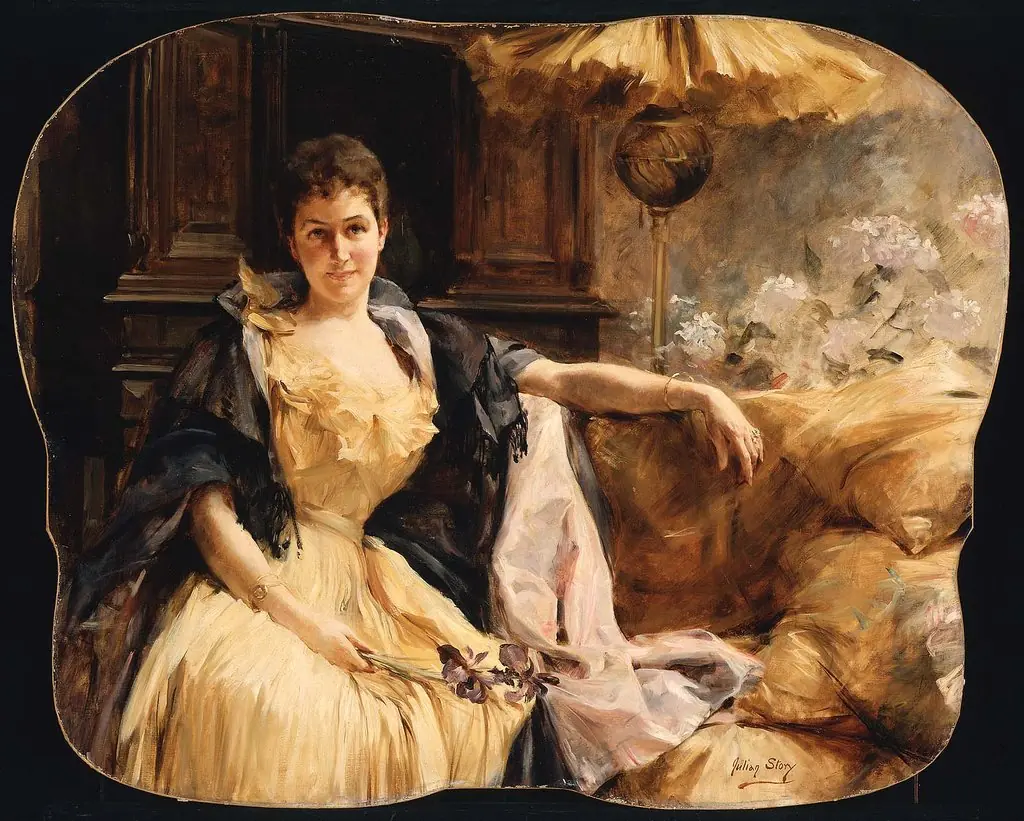 Emma Eames
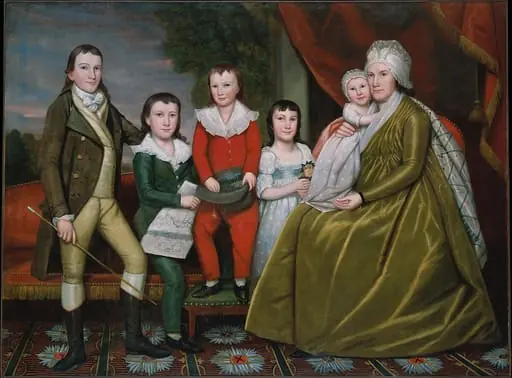 Mrs. Noah Smith and Her Children
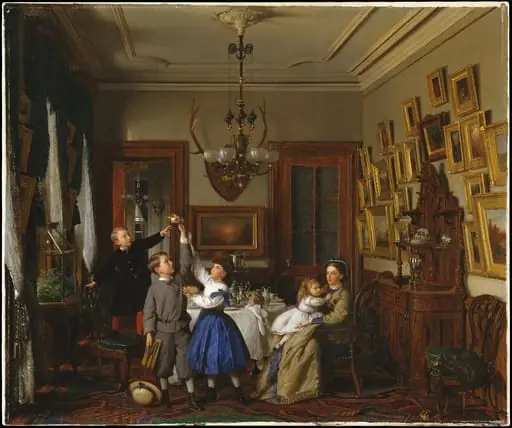 The Contest for the Bouquet: The Family of Robert Gordon in Their New York Dining-Room
 Portrait of Marianne Dorothy Harland (1759–1785), Later Mrs. William Dalrymple
 View on the Catskill—Early Autumn
 The Daughters of Catulle Mendès
 The Interior of an Atelier of a Woman Painter
 Annunciation
 Flowers in a Basket and a Vase