Artwork
The dead Christ
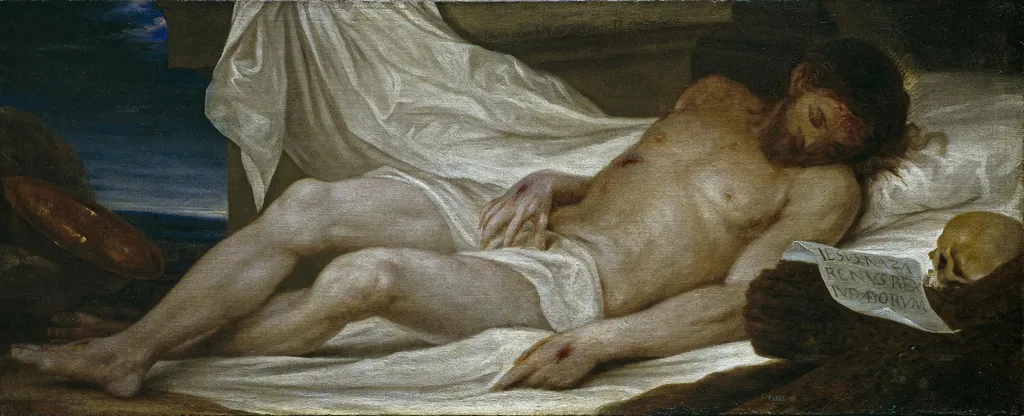
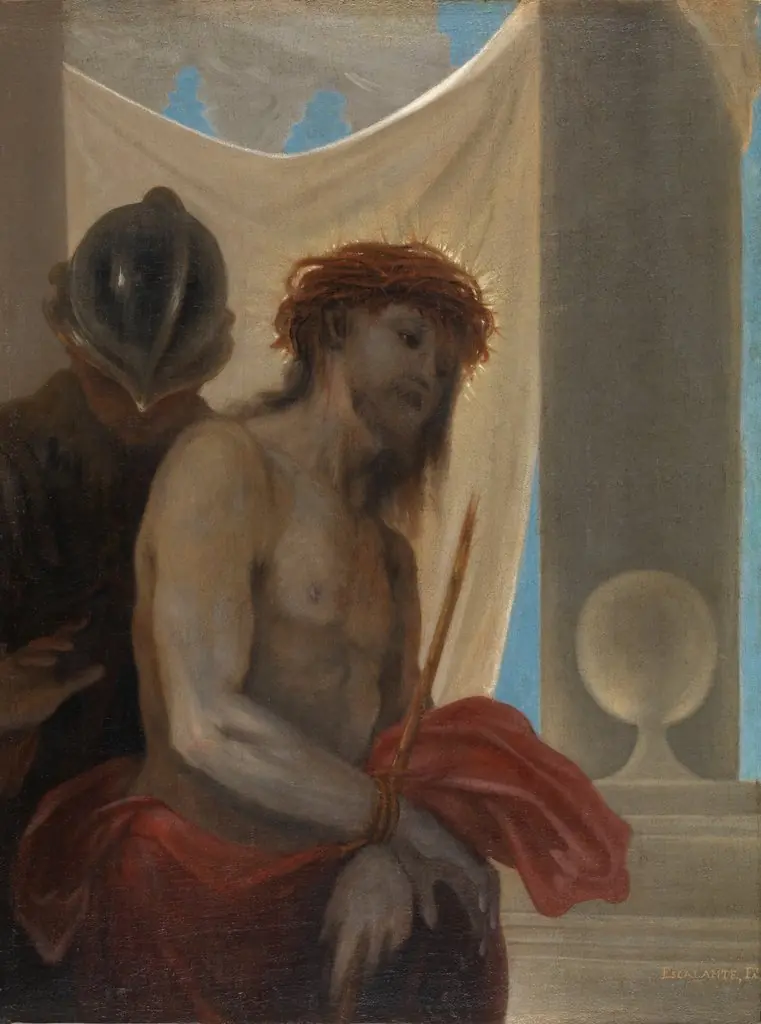
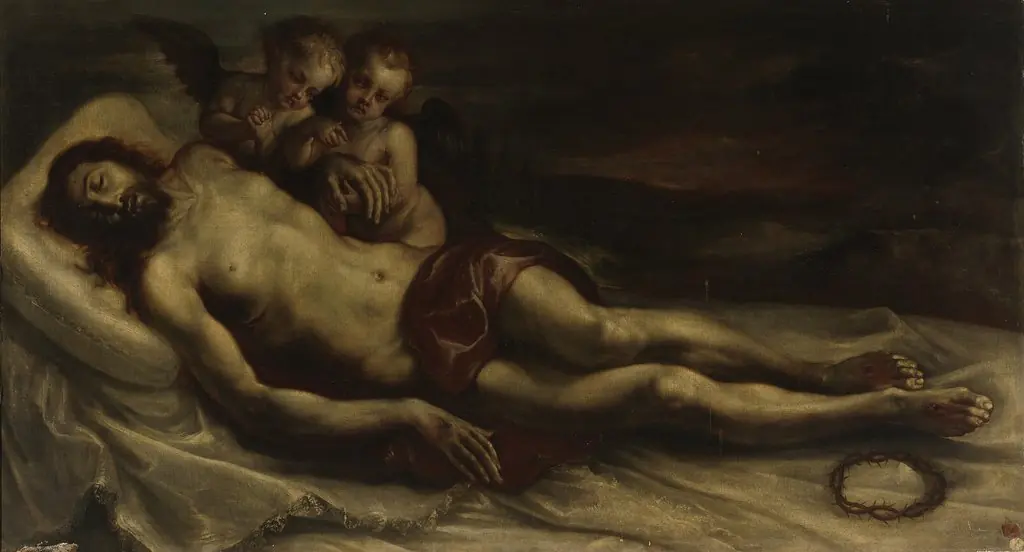
The dead Christ is an oil painting by the Early Baroque Italian artist Juan Antonio de Frías y Escalante. It dates from 1663 and is held in the collection of the Museo del Prado.
About this work
Subject & Meaning
The composition centers on Christ’s pale form, rendered with subdued lighting against a dark background, emphasizing mortality and sacrifice.
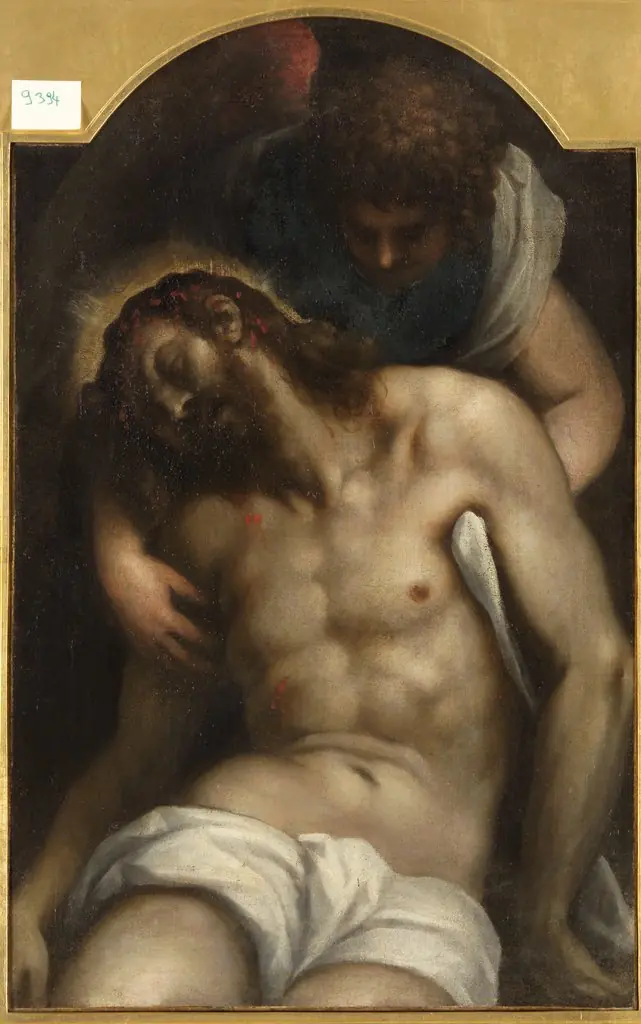
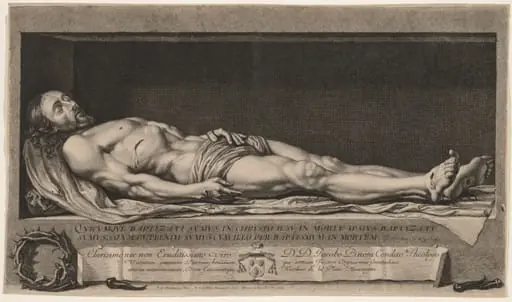
The painting depicts the dead Christ after his Descent from the Cross, shown recumbent with a wounded side and closed eyes, surrounded by a shallow space that focuses attention on the body. The composition centers on Christ’s pale form, rendered with subdued lighting against a dark background, emphasizing mortality and sacrifice. This iconography belongs to the Lamentation tradition, where the stillness and physicality of the corpse underscore themes of loss and redemption central to Counter-Reformation devotional imagery.
The work’s stark realism and restrained palette align with Spanish Baroque aims to evoke piety and contemplation, reinforcing the theological significance of Christ’s Passion within the museum’s religious-art holdings.
Technique & Style
The painting is executed in oil on canvas, measuring 84 cm in height and 162 cm in width. The handling aligns with mid-17th-century Sevillian realism, emphasizing naturalistic detail in the depiction of Christ’s corpse and the surrounding figures.
The composition focuses on the Lamentation of Christ, with subdued lighting and restrained gesture to convey solemnity. The palette is earth-toned, punctuated by muted blues and ochres, and the brushwork is smooth yet precise, typical of Escalante’s style.
History & Provenance
The painting known as The Dead Christ was created by Juan Antonio de Frías y Escalante in 1663. Executed in oil on canvas, the work depicts the Lamentation of Christ and measures 84 cm in height by 162 cm in width. The piece is currently held in the collection of the Museo del Prado in Madrid. It has been featured in exhibitions such as El Siglo de Oro. The Age of Velázquez.
The painting is held in the collection of the Museo del Prado in Madrid. It was created in 1663 by Juan Antonio de Frías y Escalante and depicts the Lamentation of Christ. The work measures 84 cm in height and 162 cm in width.
Its exhibition history includes a showing in the exhibition titled "El Siglo de Oro. The Age of Velázquez."
Overview
Created in 1663, The Dead Christ is an oil painting by Spanish Baroque artist Juan Antonio de Frías y Escalante. The work presents a lifeless figure of Jesus on a white shroud, surrounded by symbolic objects such as a skull and a written scroll. It is part of the Prado Museum’s collection and exemplifies the solemn religious imagery of mid‑seventeenth‑century Spain.
Artist & collection
Artist
Juan Antonio de Frías y Escalante
Juan Antonio de Frías y Escalante (1633 in Cordoba–1669 in Madrid) was a Spanish Baroque Golden Age painter.