Artwork
Ecce Homo
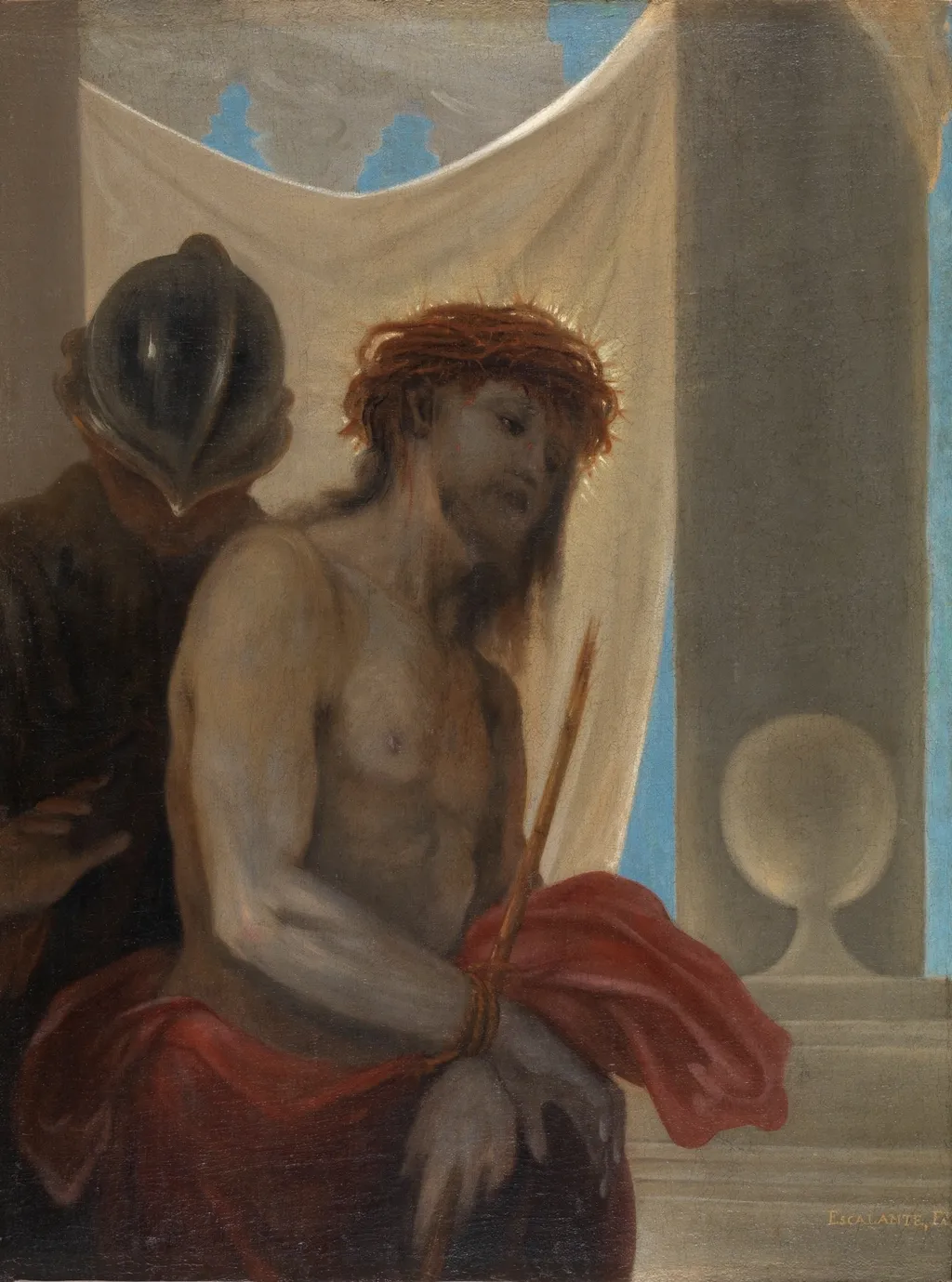
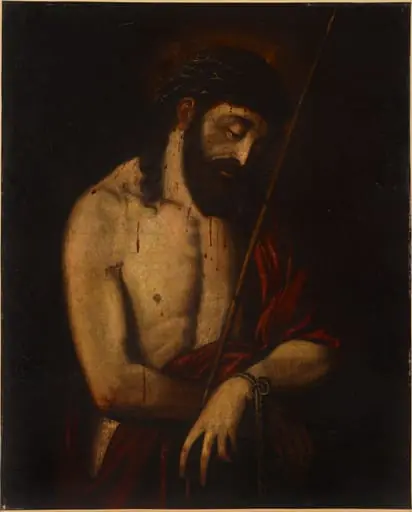
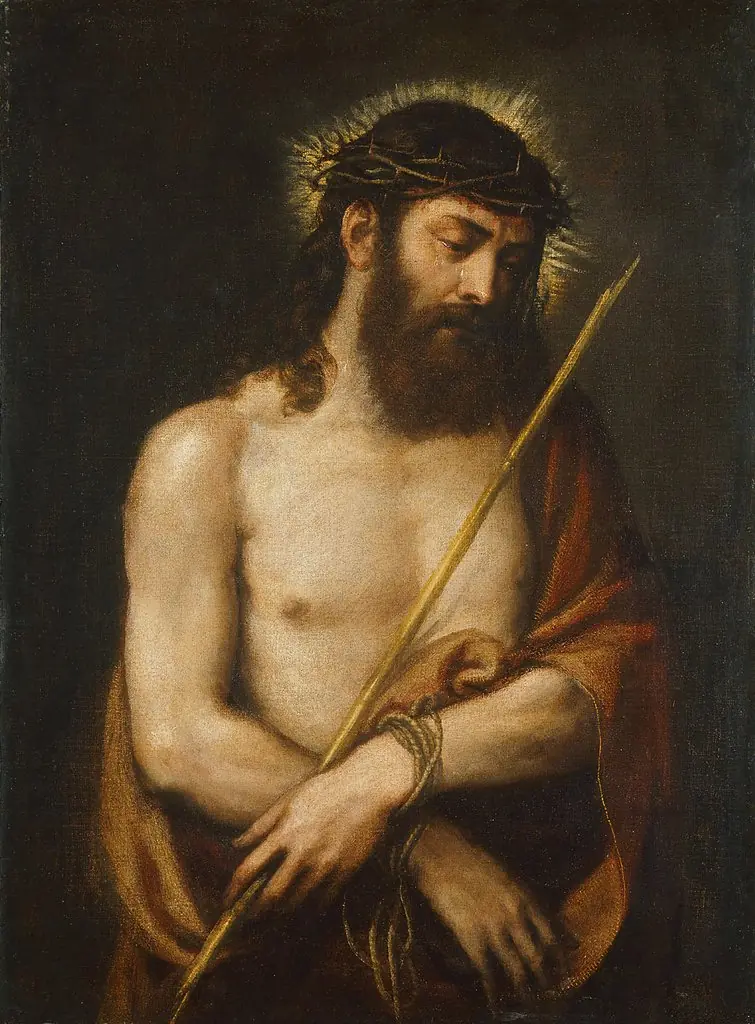
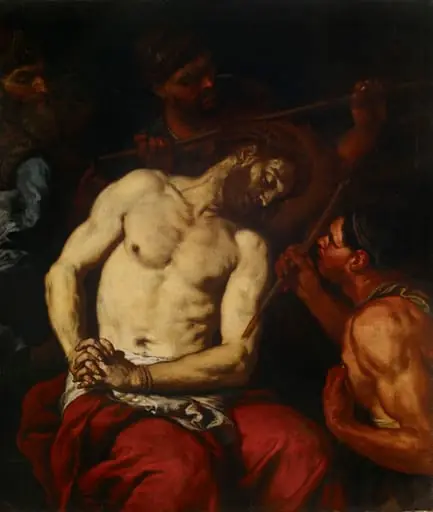
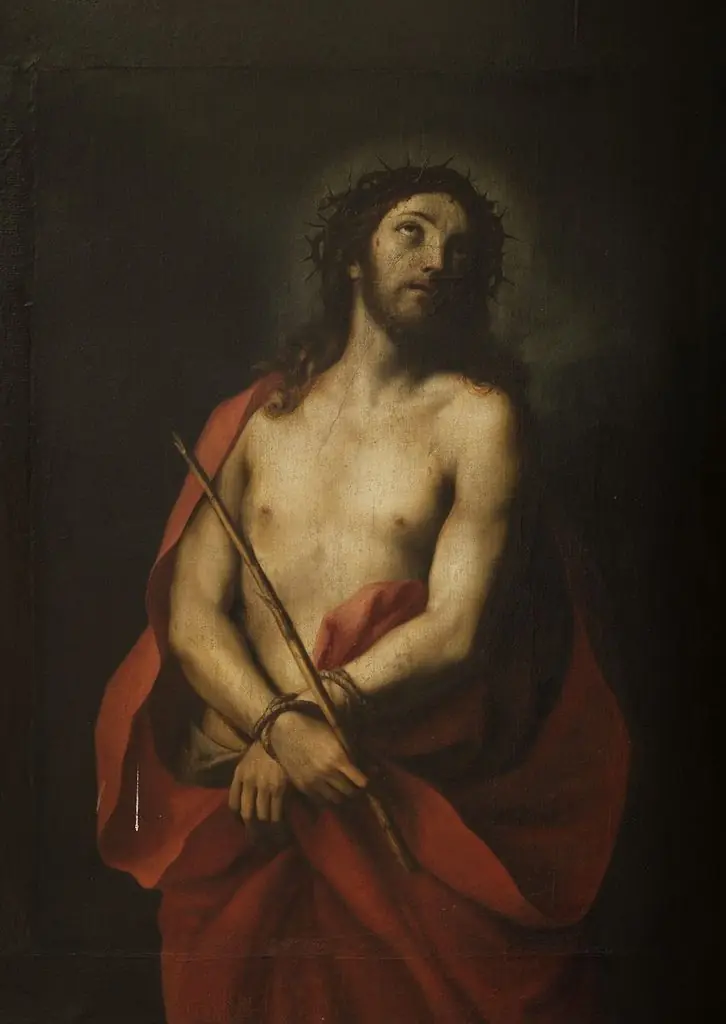
Ecce Homo is an oil painting by the Early Baroque Italian artist Juan Antonio de Frías y Escalante. It dates from 1651 and is held in the collection of the Museo del Prado.
About this work
Subject & Meaning
The painting thus conveys themes of sacrifice, injustice, and redemptive suffering within the broader context of Spanish religious art of the 18th century.
The work shows Jesus Christ in the moment of condemnation, presenting the suffering figure to the crowd as condemned by Pontius Pilate. This iconographic scene draws directly from the Passion narrative, emphasizing the humanity and agony of Christ in his final hours before crucifixion. The painting thus conveys themes of sacrifice, injustice, and redemptive suffering within the broader context of Spanish religious art of the 18th century.
The composition focuses on the central figure of Christ, rendered in oil on canvas and housed in the Museo del Prado, where it remains part of the museum’s collection of religious paintings from the early 1700s.
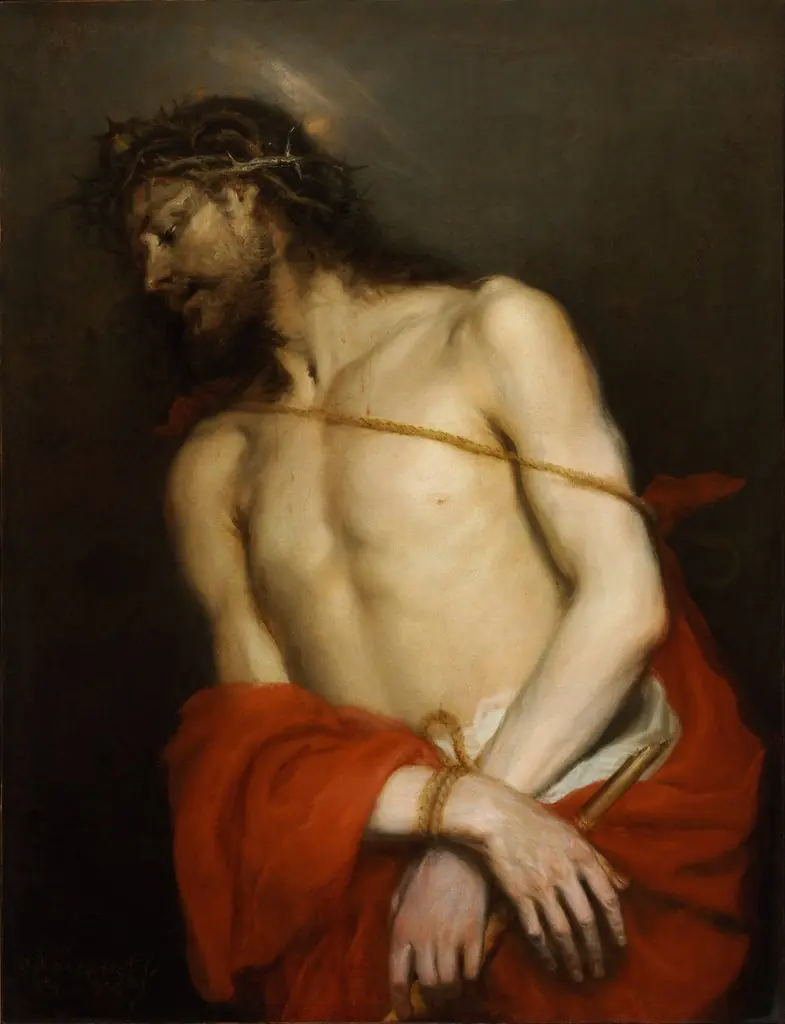
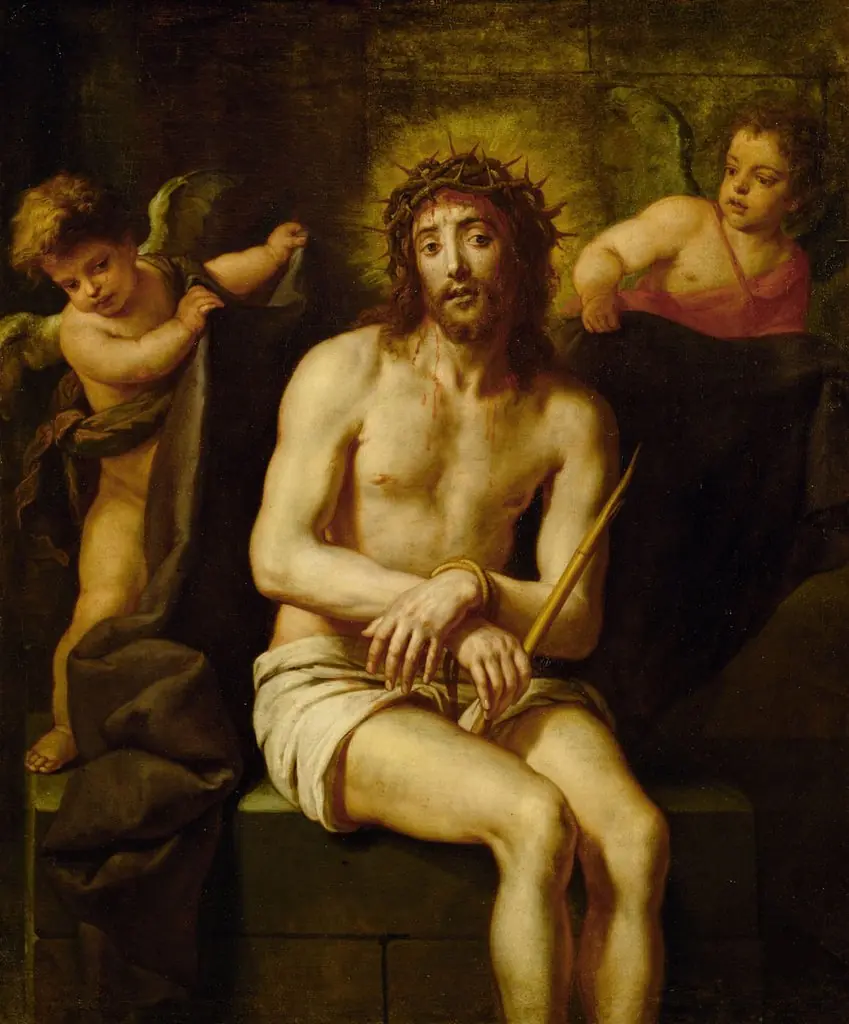
The depiction aligns with traditional iconography of Ecce Homo, highlighting the moment of mockery and the physical suffering of Jesus as he is presented to the people.
Technique & Style
Created in 1700 by Juan Antonio de Frías y Escalante, this religious painting utilizes oil paint applied to a canvas support. The work measures 105 cm in height and 82 cm in width. Stylistically, the composition focuses on the depiction of Jesus Christ as the central subject of the Ecce Homo theme. The piece is currently held within the collection of the Museo del Prado.
History & Provenance
Juan Antonio de Frías y Escalante painted Ecce Homo in 1700 as an oil on canvas religious work. The painting measures 105 cm by 82 cm and depicts Jesus Christ. It belongs to the religious art genre and was created in the early 18th century.
The work is part of the Museo del Prado collection and has been displayed in Madrid since its acquisition. Its creation history is tied to the artist’s devotional practice in Spain during the Baroque period.
The provenance is straightforward, with the painting entering the Museo del Prado’s holdings without documented earlier owners, suggesting a direct commission or purchase by the museum. Dating is confirmed by the inception date of 1700 recorded in the work’s metadata, aligning with the artist’s known activity in the late 17th and early 18th centuries. The artwork’s creation reflects the Baroque emphasis on dramatic religious imagery, particularly the Ecce Homo theme portraying Christ before crucifixion.
The piece was likely produced for devotional use within a Spanish religious context, though specific commissioning details are not recorded. Its material composition of oil paint on canvas and adherence to canonical dimensions support its classification as a Baroque-era religious painting. The work remains on display at the Museo del Prado, where it is studied as an example of Spanish devotional art from the period.
Ecce Homo is held by the Museo del Prado, where it is catalogued under the inventory number P00968. The work was created in 1700 and is recorded with accession details reflecting its inclusion in the museum’s collection. Its exhibition history includes displays within the museum’s Spanish Golden Age galleries, though specific exhibition titles are not provided in the source material.
Legacy
The painting’s impact stems from its stark portrayal of Christ’s condemnation, shaping later Spanish religious art’s emotional intensity. Its composition influenced Baroque depictions of the subject, particularly in Spanish convents where similar Ecce Homo scenes emerged in the 18th century. The work’s presence in the Museo del Prado’s collection cemented its role as a reference point for scholars studying Spanish devotional painting’s evolution.
Legacy is tied to its attribution to Juan Antonio de Frías y Escalante, establishing his reputation as a master of devotional imagery. The painting’s technical execution, especially its use of oil on canvas, informed later artists’ approaches to texture and light in sacred art.
Modern interpretations continue to reference the piece in discussions of Spanish Baroque spirituality, though its specific influence is noted primarily through stylistic parallels rather than direct lineage.
Overview
Ecce Homo is a 1651 oil painting by Juan Antonio de Frías y Escalante, a Spanish Baroque artist. It is a religious work held in the Museo del Prado.
Own this work as a print
Artist & collection
Artist
Juan Antonio de Frías y Escalante
Juan Antonio de Frías y Escalante (1633 in Cordoba–1669 in Madrid) was a Spanish Baroque Golden Age painter.