Artwork
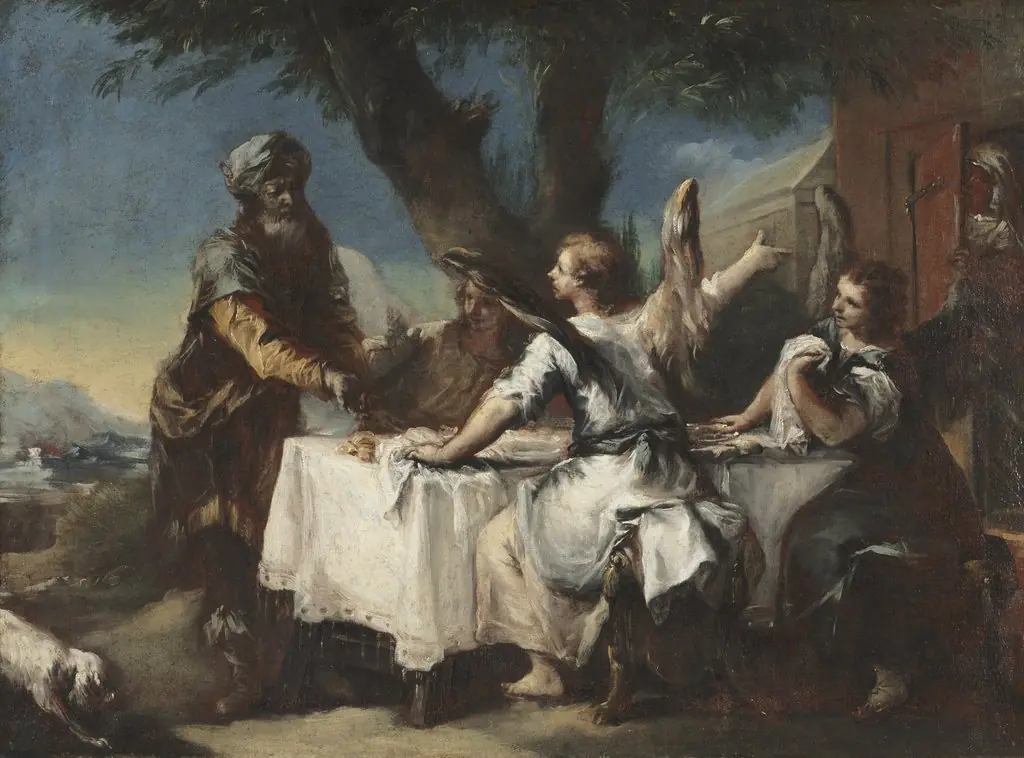
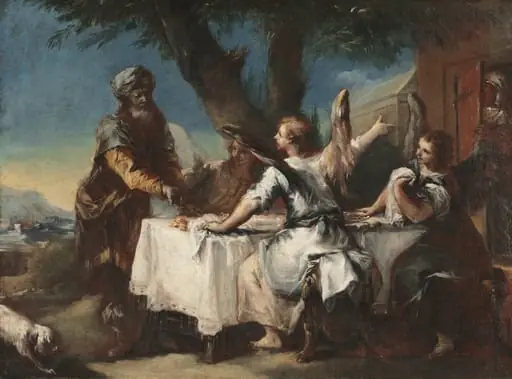
Abraham y los tres ángeles
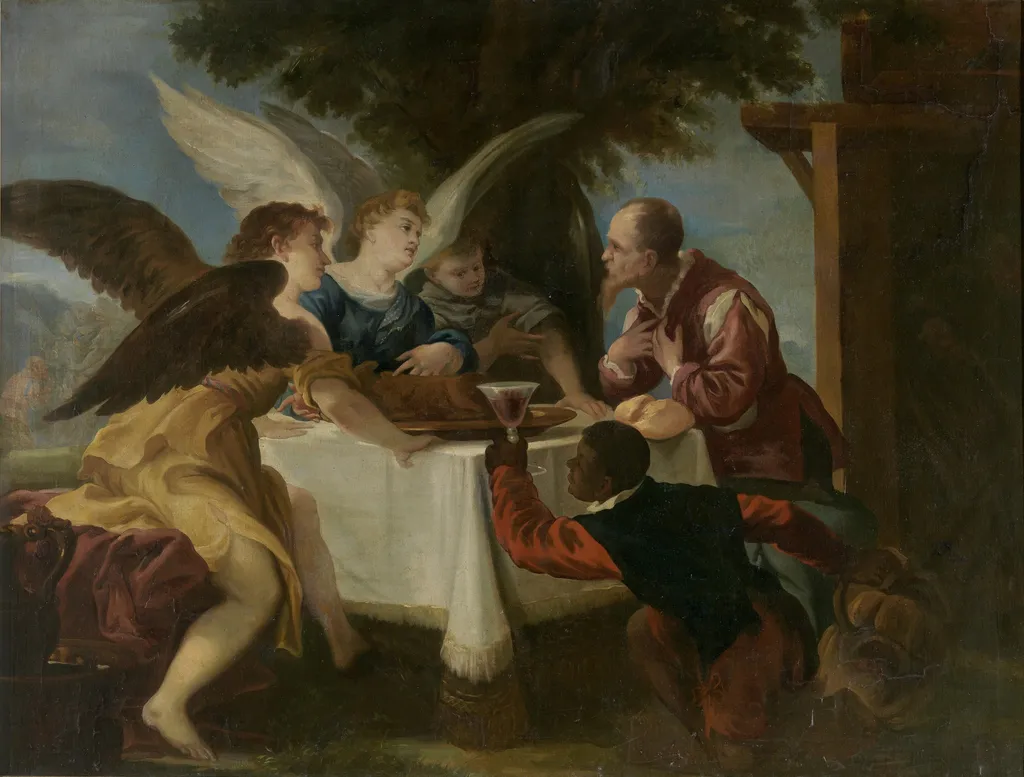
Abraham y los tres ángeles is an oil painting by the Early Baroque Italian artist Juan Antonio de Frías y Escalante. It dates from 1667 and is held in the collection of the Museo del Prado.
About this work
Subject & Meaning
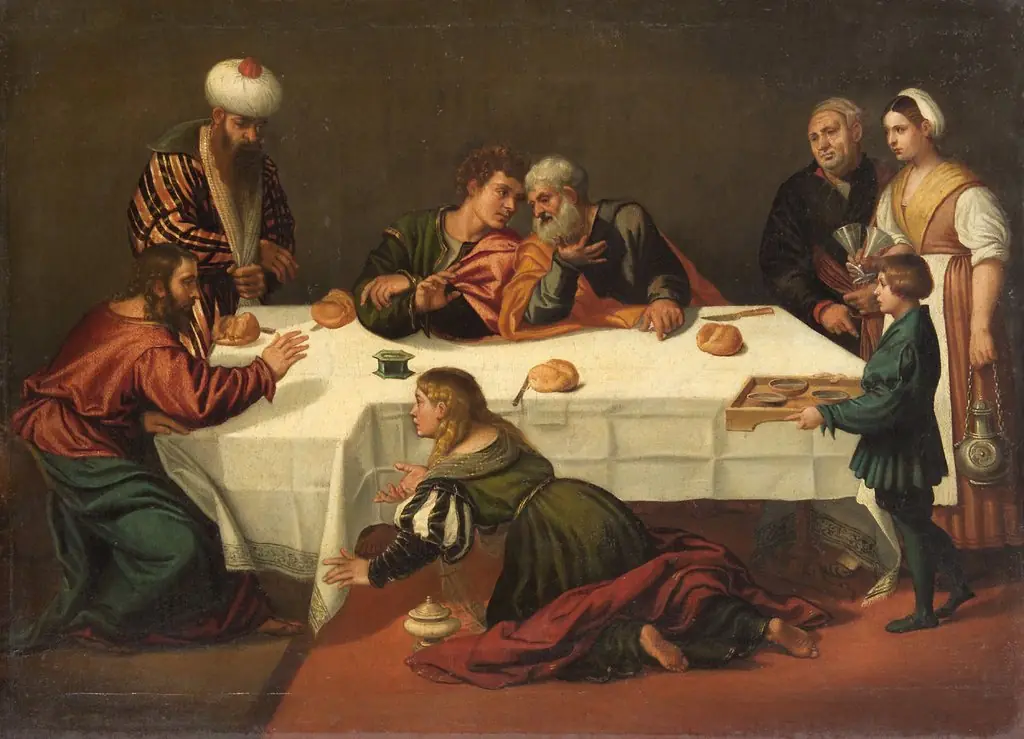
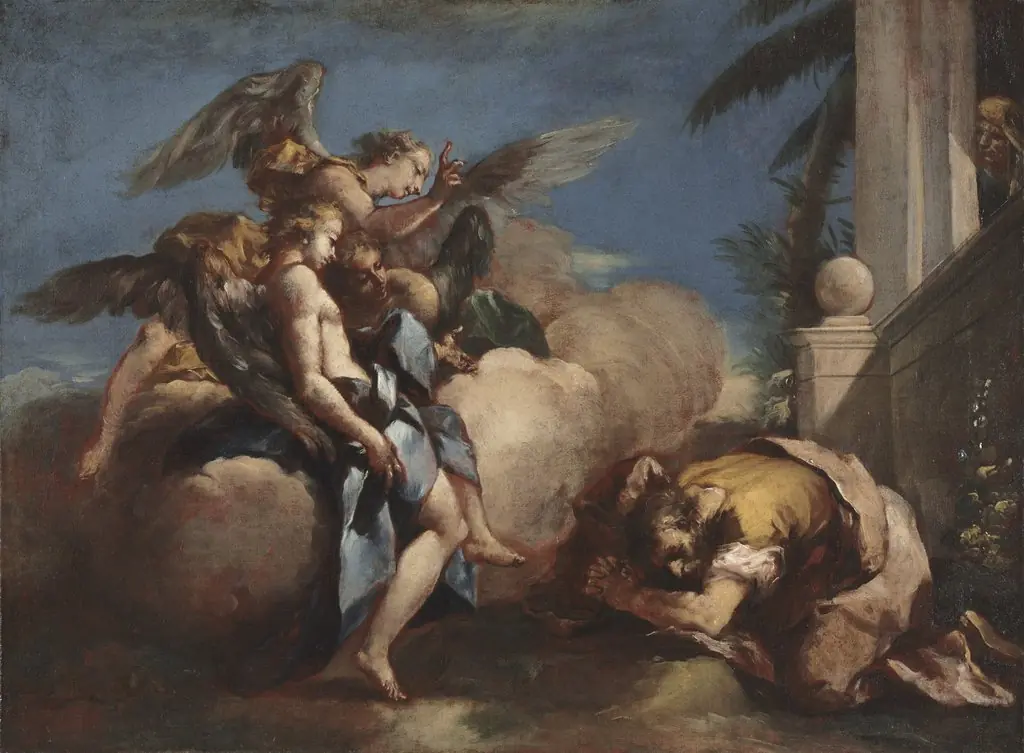
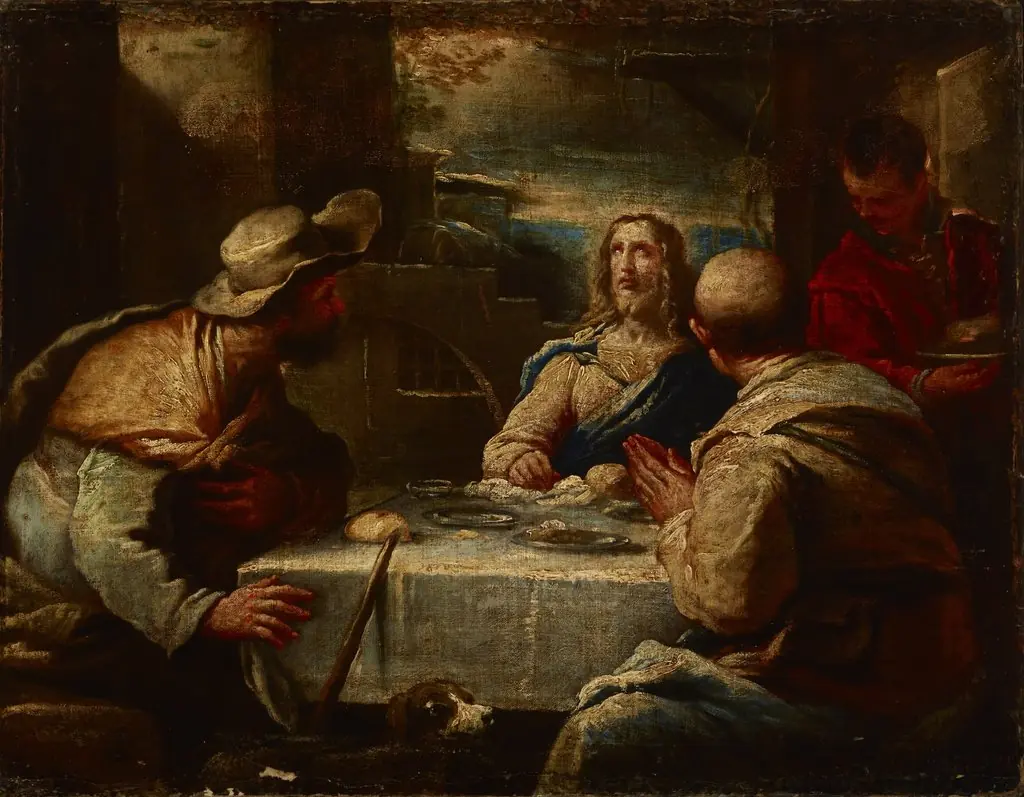
The painting shows Abraham receiving a divine manifestation at the oak of Mamre, depicted with bread, wine and a table as symbols of hospitality and covenant.
The painting shows Abraham receiving a divine manifestation at the oak of Mamre, depicted with bread, wine and a table as symbols of hospitality and covenant. It is interpreted as an illustration of the Trinity, emphasizing the appearance of the Lord to Abraham. The work is part of the collection of the Museo del Prado and the Museo de la Trinidad.
The iconography draws directly from the biblical narrative of Abraham's hospitality and the appearance of the Lord, using traditional symbols such as bread and wine to convey spiritual meaning. The composition reflects religious art of the period, highlighting theological themes associated with the patriarch Abraham.
Technique & Style
Executed in oil on canvas in 1667, the work measures 109 cm in height and 145 cm in width. The composition is structured around a table set with bread and wine, framed by the narrative of the Lord appearing to Abraham beneath the oaks of Mamre. The handling emphasizes smooth, controlled brushwork that renders drapery and flesh with subtle chiaroscuro, while the palette remains restrained, punctuated by warm earth tones and cooler highlights that define the angelic figures.
The spatial recession is shallow, with the figures arranged in a balanced grouping that directs attention to the central act of divine hospitality.
History & Provenance
Abraham y los tres ángeles is an oil-on-canvas work by Juan Antonio de Frías y Escalante, dated 1667. The painting was created as a religious composition depicting the Lord appearing to Abraham by the oaks of Mamre, with the accompanying elements of bread, wine, and a table.
Its documented institutional history places it within the holdings of the Museo de la Trinidad and later the Museo del Prado, where it is currently located. No further details about the original commission, prior private ownership, or transfer between collections are recorded in the available sources.
Context
The painting Abraham y los tres ángeles by Juan Antonio de Frías y Escalante was created in 1667 and is housed in the Museo del Prado, where it has been part of the collection since its inception. Scholars have examined its religious narrative, depicting the Lord appearing to Abraham beneath the oaks of Mamre alongside bread, wine, and a table, reflecting Counter-Reformation emphasis on divine manifestation. The work’s composition and use of oil on canvas exemplify late Baroque trends in Spanish religious art, situating it within the broader artistic milieu of 17th‑century Spain.
Its presence in major institutional collections underscores its significance in the study of Spanish Baroque painting and the development of devotional imagery.
Overview
Juan Antonio de Frías y Escalante painted Abraham y los tres ángeles in 1667. Executed in oil on canvas, the work is part of the Prado Museum’s collection. It belongs to the Spanish Baroque period, reflecting the early Baroque style that had been imported from Italy.
Own this work as a print
Artist & collection
Artist
Juan Antonio de Frías y Escalante
Juan Antonio de Frías y Escalante (1633 in Cordoba–1669 in Madrid) was a Spanish Baroque Golden Age painter.