Artwork
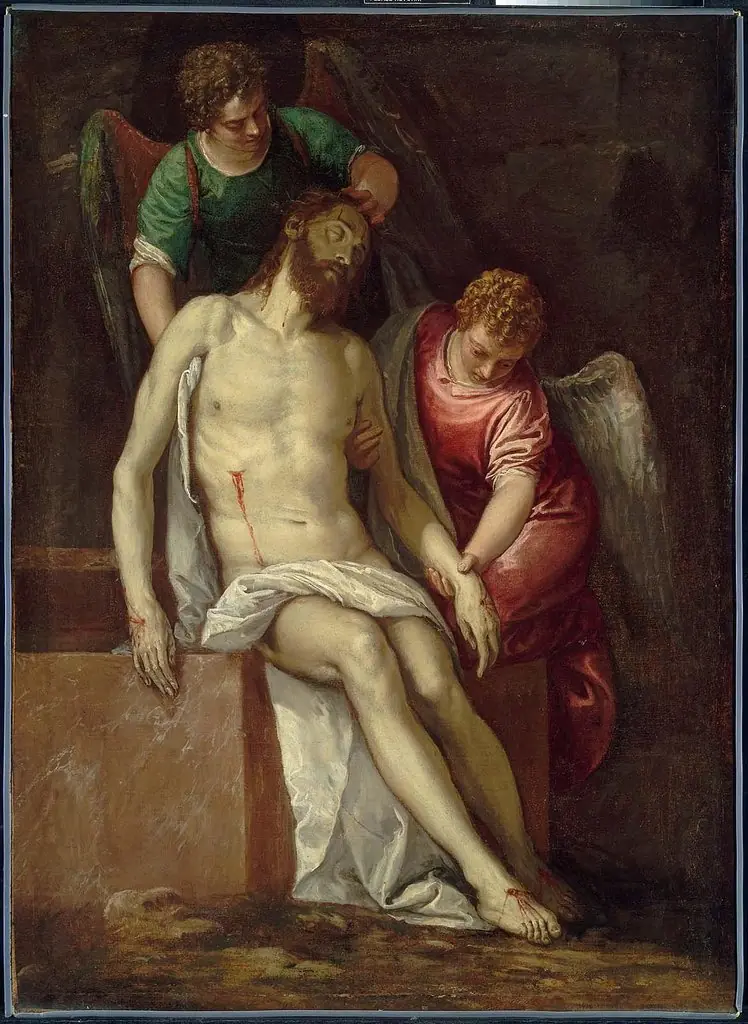
Dead Christ Supported by an Angel
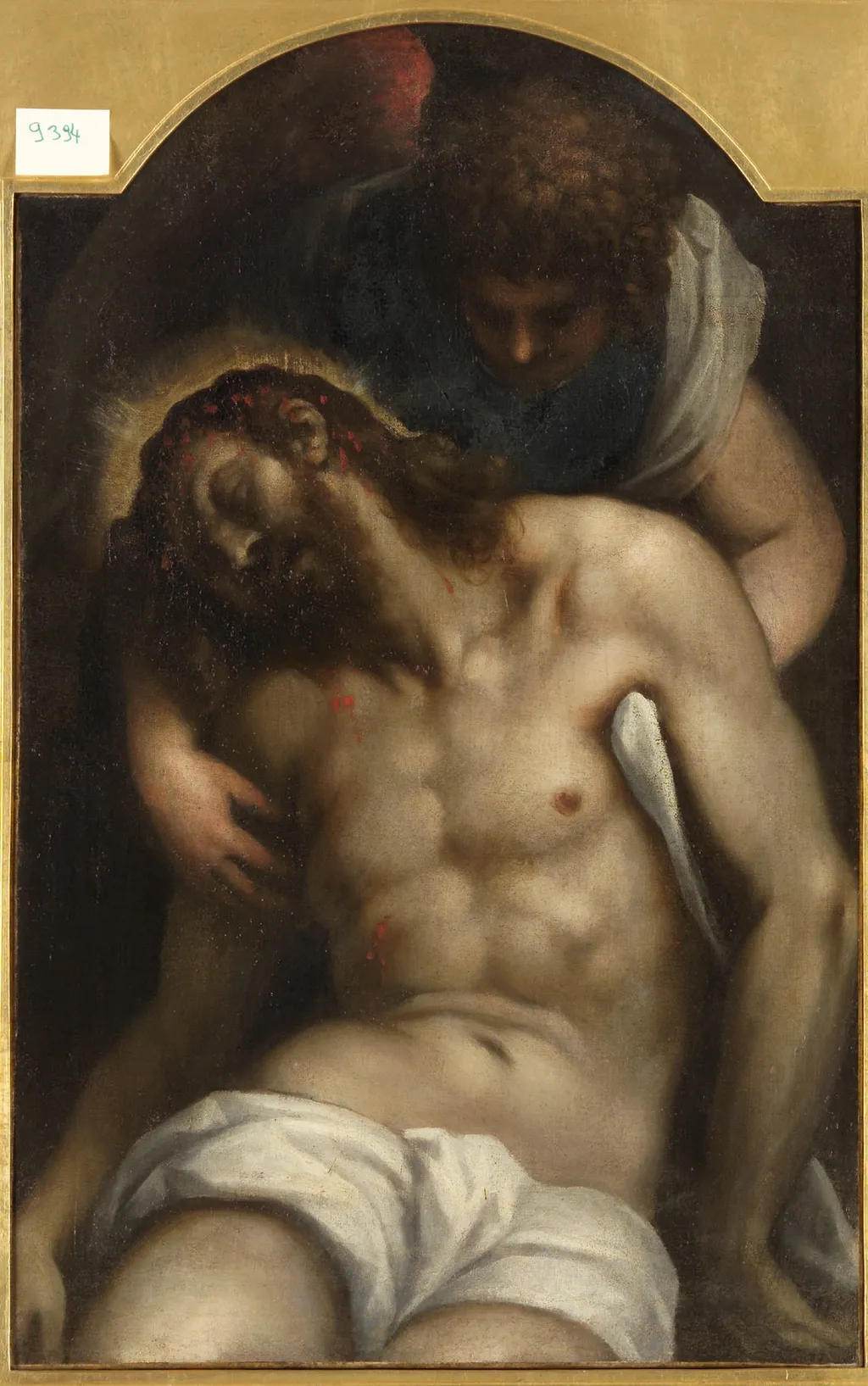
Dead Christ Supported by an Angel is an unspecified painting by the Early Baroque Italian artist Palma il Giovane. It dates from 1612 and is held in the collection of the Kunsthistorisches Museum.
About this work
Technique & Style
The painting is attributed to Palma il Giovane and is housed in the Kunsthistorisches Museum, where it remains on display.
The work is an oil painting on canvas created in 1612. It depicts the dead Christ supported by an angel and is part of the Kunsthistorisches Museum's collection, originally owned by Archduke Leopold Wilhelm of Austria. The composition shows a man, Jesus Christ, and an angel, reflecting its religious theme.
The painting is attributed to Palma il Giovane and is housed in the Kunsthistorisches Museum, where it remains on display.
History & Provenance
Dead Christ Supported by an Angel was painted by Palma il Giovane in 1612, according to the work's cataloguing data. The painting entered the collection of Archduke Leopold Wilhelm of Austria, forming part of the Habsburg governor's renowned art holdings in Brussels. It subsequently passed into the holdings of the Kunsthistorisches Museum in Vienna, where it remains today and is recorded under inventory number GG_9394.
The work is executed in oil paint on a religious subject, depicting the dead Christ supported by an angel.
No source documents a specific commission, patron, or intermediate ownership between Archduke Leopold Wilhelm and the Kunsthistorisches Museum, so the transfer history within the imperial collections is not detailed here.
Overview
Dead Christ Supported by an Angel is a 1612 painting by Palma il Giovane, a prominent Venetian school artist of the early Baroque period. The work is a religious composition depicting a poignant scene of mourning.
Subject & Meaning
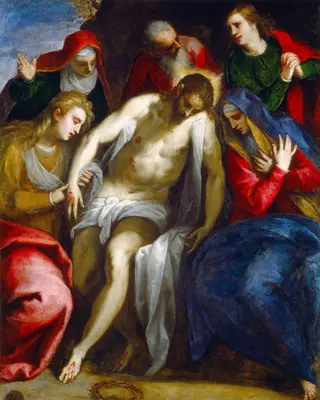
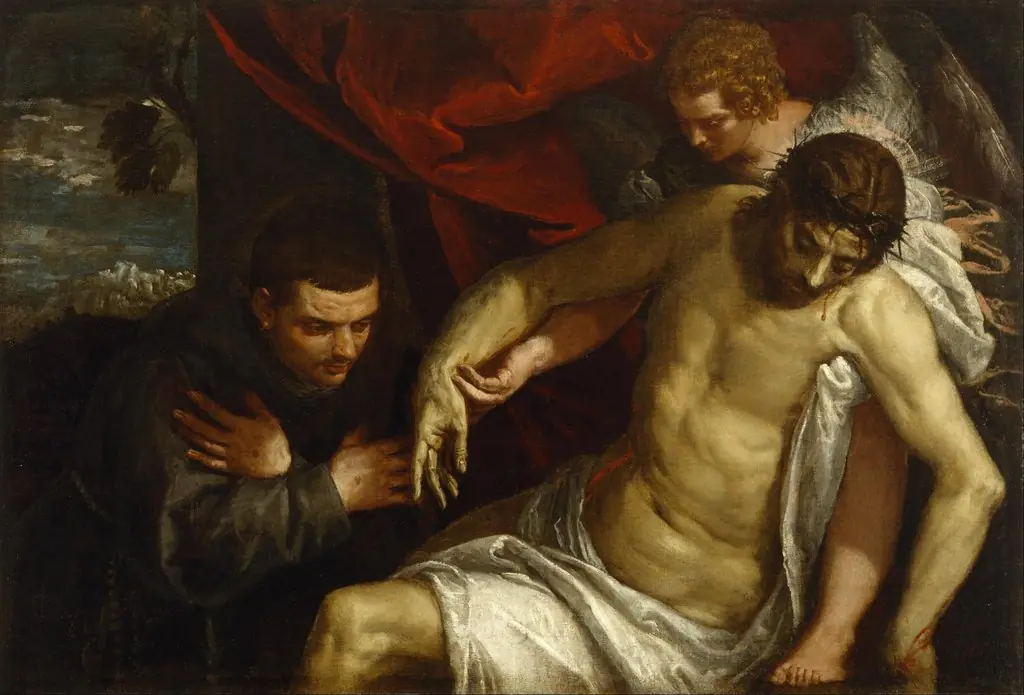
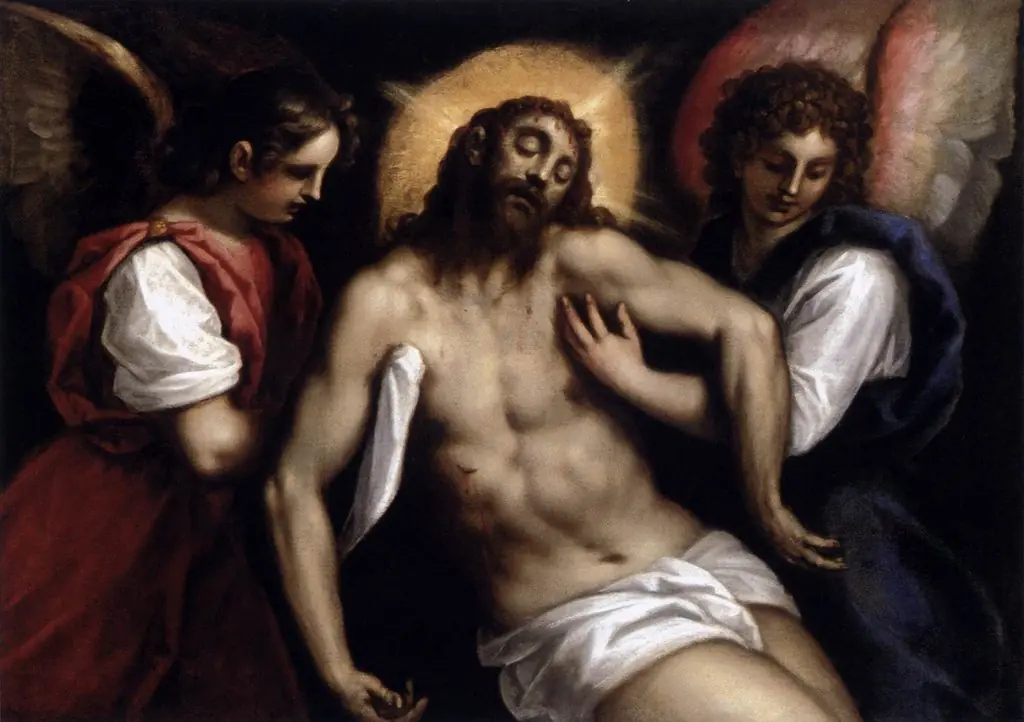
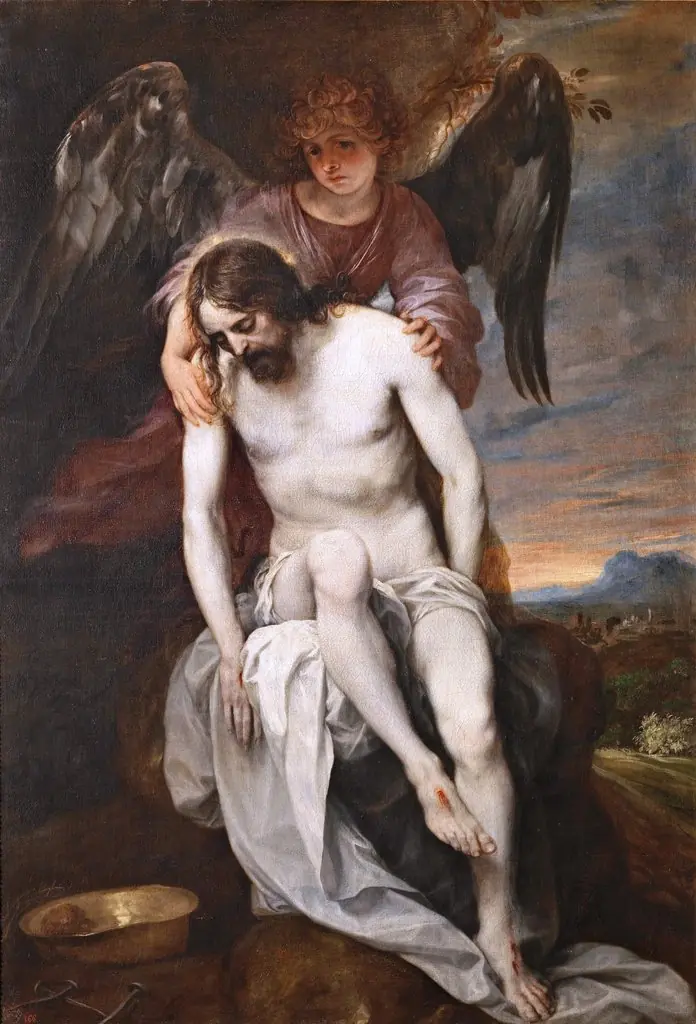
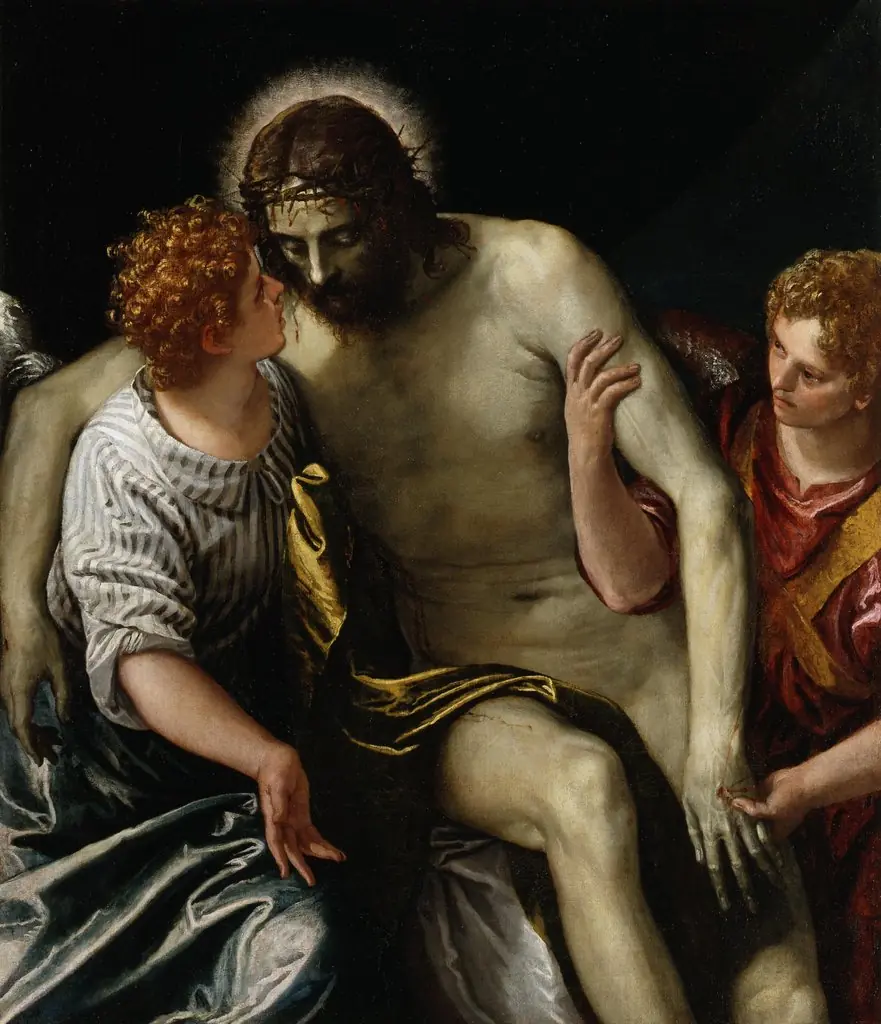
The painting portrays Jesus Christ lying on his back, supported by an angel. Christ's relaxed body, tilted head, and closed eyes convey a sense of serenity in death. The angel's embrace and the somber, dark background underscore the solemnity of the moment.
Context
Emerging in the early Baroque period, this piece reflects the artistic transition in Venice, with Palma il Giovane blending traditional Venetian elements with emerging Baroque sensibilities.
Artist & collection
Artist
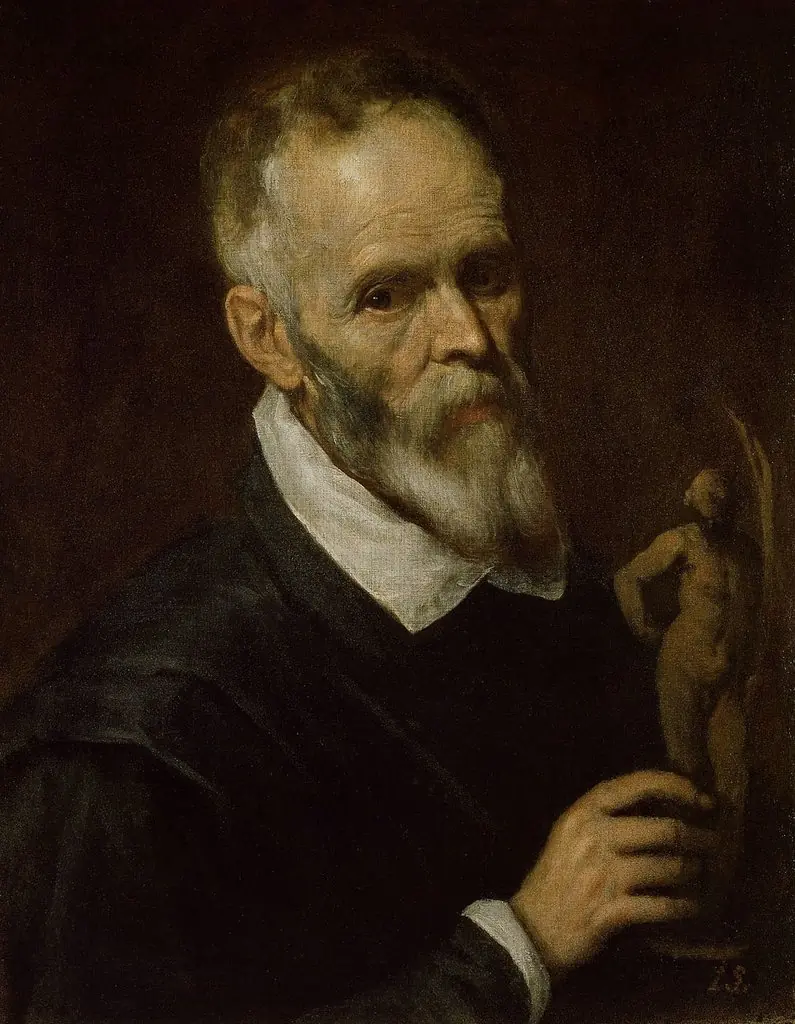
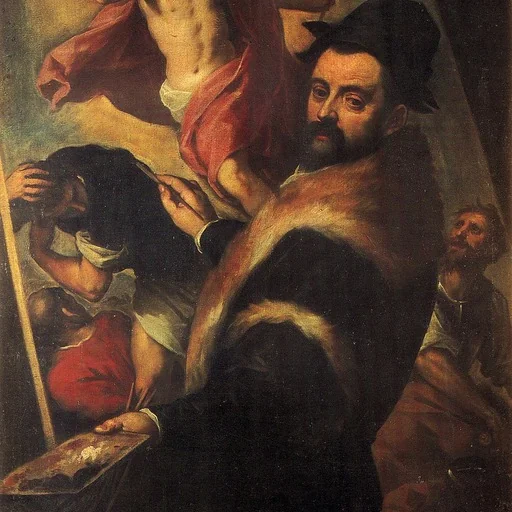
Iacopo Negretti (1548/50 – 14 October 1628), best known as Jacopo or Giacomo Palma il Giovane or simply Palma Giovane ('Young Palma'), was an Italian painter from Venice and a notable exponent of the Venetian school.