Artwork
The last supper
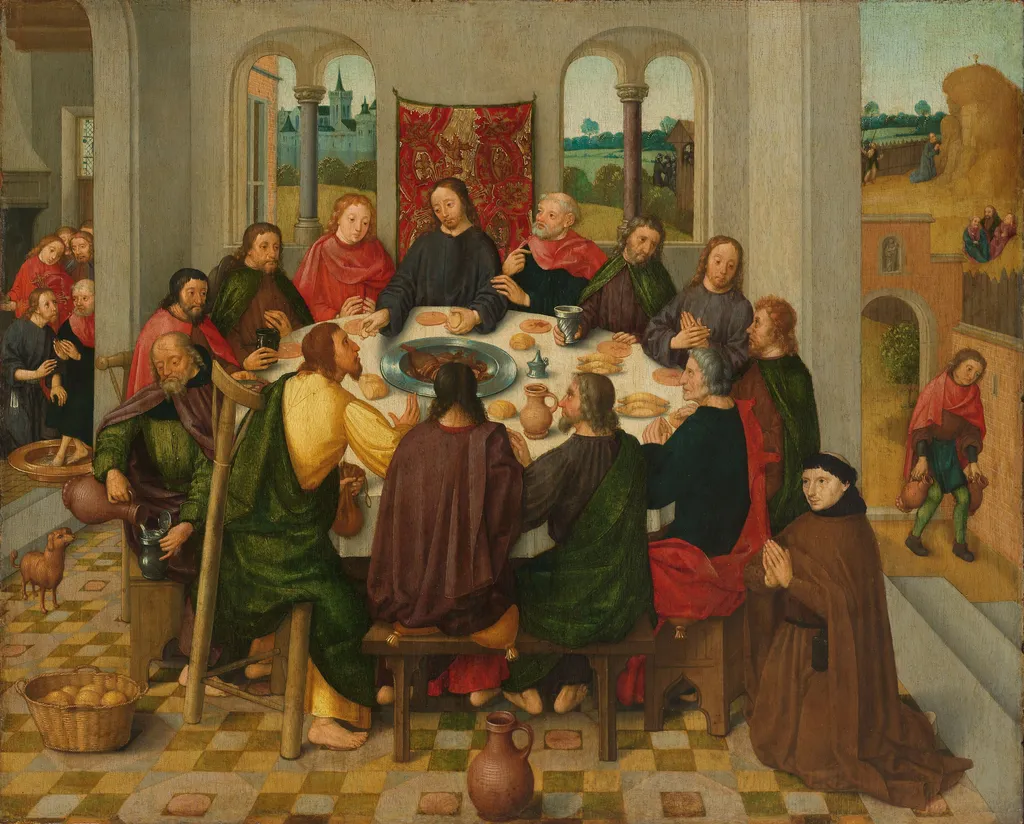
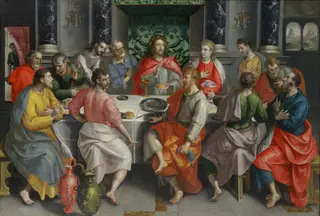
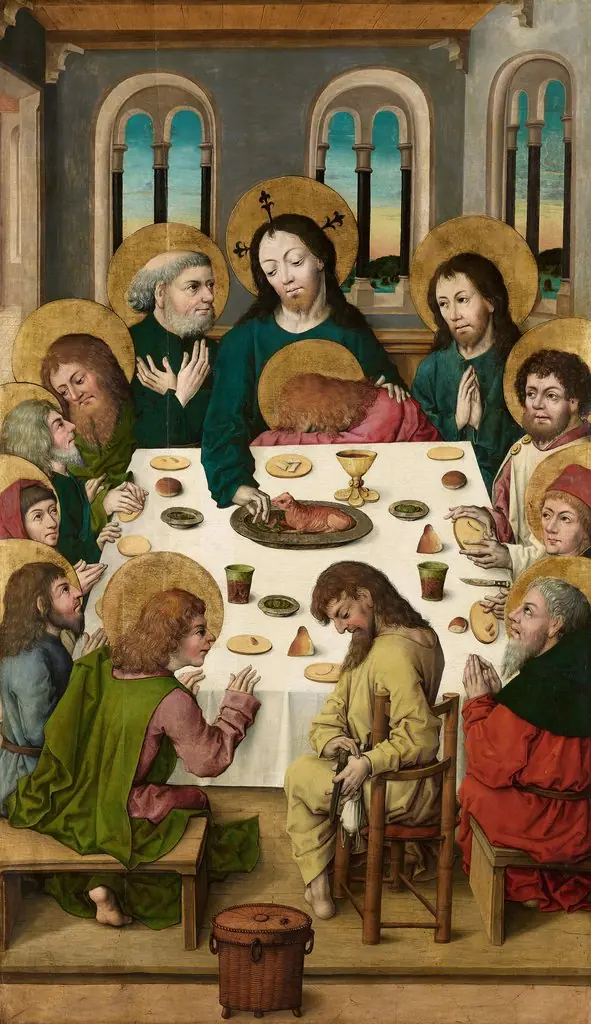
The last supper is an oil painting by the Northern Renaissance artist Master of the Amsterdam Death of the Virgin. It dates from 1500 and is held in the collection of the Rijksmuseum.
About this work
Subject & Meaning
The work's primary subject is the biblical meal shared by Jesus and his apostles immediately before his crucifixion, a central event in Christian theology.
Created around 1500 by the Master of the Amsterdam Death of the Virgin, this oil painting on panel depicts the Last Supper. The work's primary subject is the biblical meal shared by Jesus and his apostles immediately before his crucifixion, a central event in Christian theology. Classified as religious art, the image serves as a visual representation of this specific narrative moment.
The composition focuses entirely on this gathering, functioning as a devotional object that invites contemplation of the sacrament and the betrayal that occurred during the meal.
Technique & Style
The Last Supper is executed in oil paint on a wooden panel, measuring 51.7 × 63.5 cm. The work was painted around 1500 by the Master of the Amsterdam Death of the Virgin, an artist active in the early Netherlandish tradition.
As a religious painting depicting the Last Supper, the panel format and oil inexhaustible medium of oil paint would have allowed for the detailed, layered handling characteristic of Northern European painting of this period. The relatively modest dimensions suggest a devotional function, perhaps for private contemplation rather than large-scale liturgical display.
History & Provenance
The work was commissioned toward the end of the fifteenth century by René Jacques della Faille de Waerloos, who later bequeathed it to his descendants before it entered the collection of the Rijksmuseum in Amsterdam.
Painted in oil on panel around 1500, the picture is attributed to the anonymous Master of the Amsterdam Death of the Virgin. The dimensions are recorded as 51.7 cm in height and 63.5 cm in width. It remained in the custody of the della Faille family before transfer to the Rijksmuseum, where it is currently held.
The painting The Last Supper by the Master of the Amsterdam Death of the Virgin is held in the collection of the Rijksmuseum and the Amsterdam Museum. The work, created in 1500, is executed in oil paint on panel and measures 51.7 cm in height by 63.5 cm in width. While the current institutional holding is shared, the provenance records indicate that the piece was previously owned by René Jacques della Faille de Waerloos.
The provided sources do not contain specific details regarding accession numbers or a chronological list of exhibitions for this work.
Overview
Created circa 1500, this oil on panel work belongs to the Northern Renaissance and is attributed to the anonymous Master of the Amsterdam Death of the Virgin. The painting is part of the Rijksmuseum’s collection in Amsterdam and presents the biblical episode of the Last Supper, showing Christ and his twelve disciples gathered for their final meal.
Context
The painting reflects the Northern Renaissance’s interest in detailed domestic interiors and realistic spatial settings, diverging from the grand architectural schemes of Italian contemporaries. Its modest hall, stone floor, and arched windows echo the everyday spaces of the period, while the external townscape connects the sacred narrative to contemporary urban life.
Own this work as a print
Artist & collection
Artist
Master of the Amsterdam Death of the Virgin
The Master of the Amsterdam Death of the Virgin (sometimes called the Master of the Almshouse of the Seven Electors) (fl.