Artwork
The Last Supper
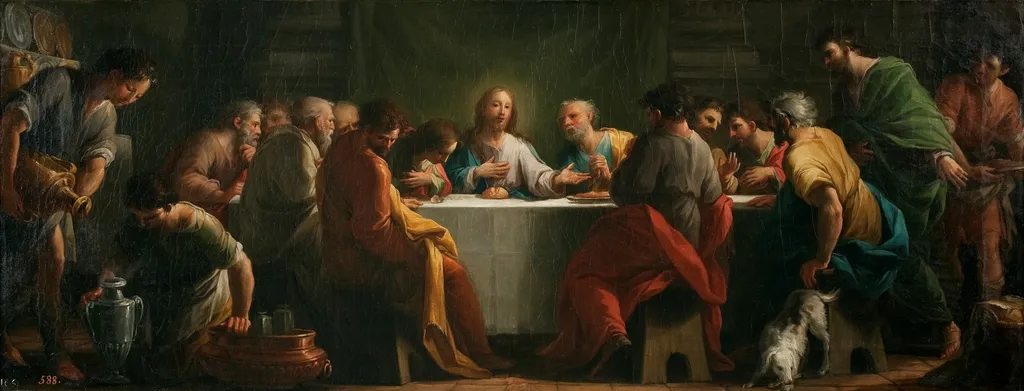
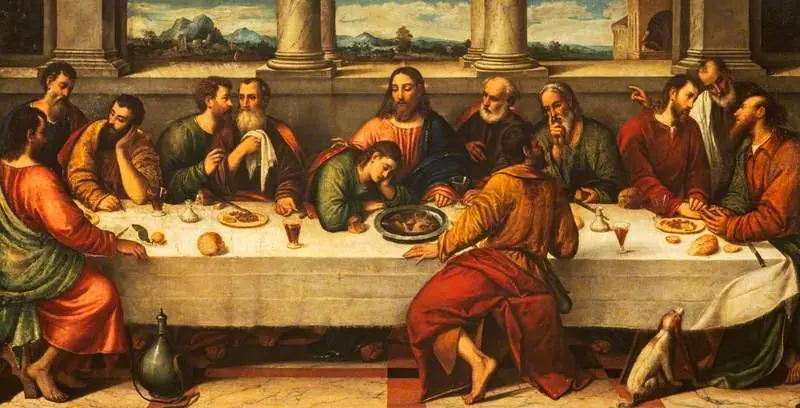
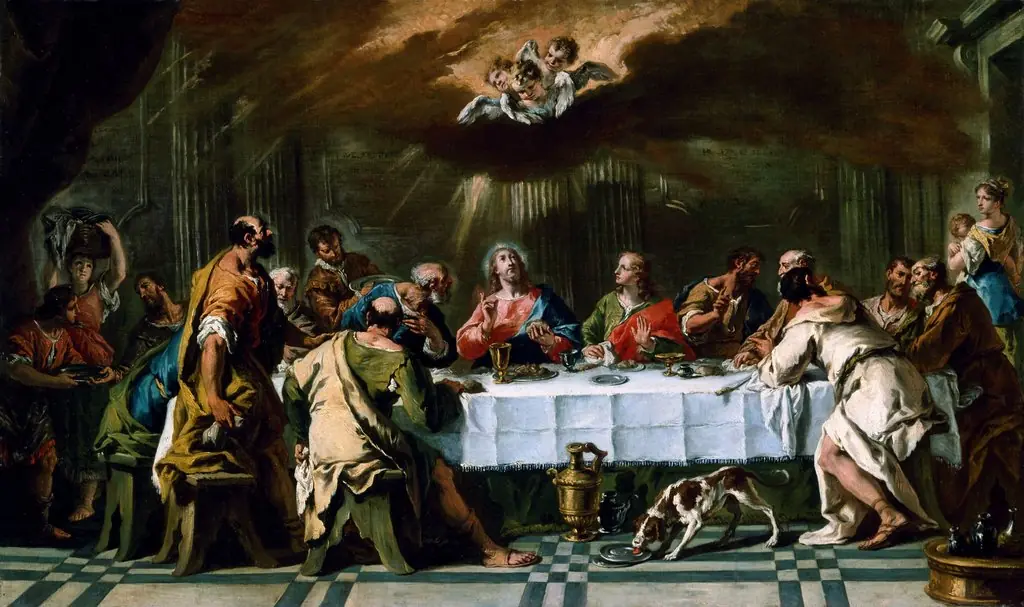
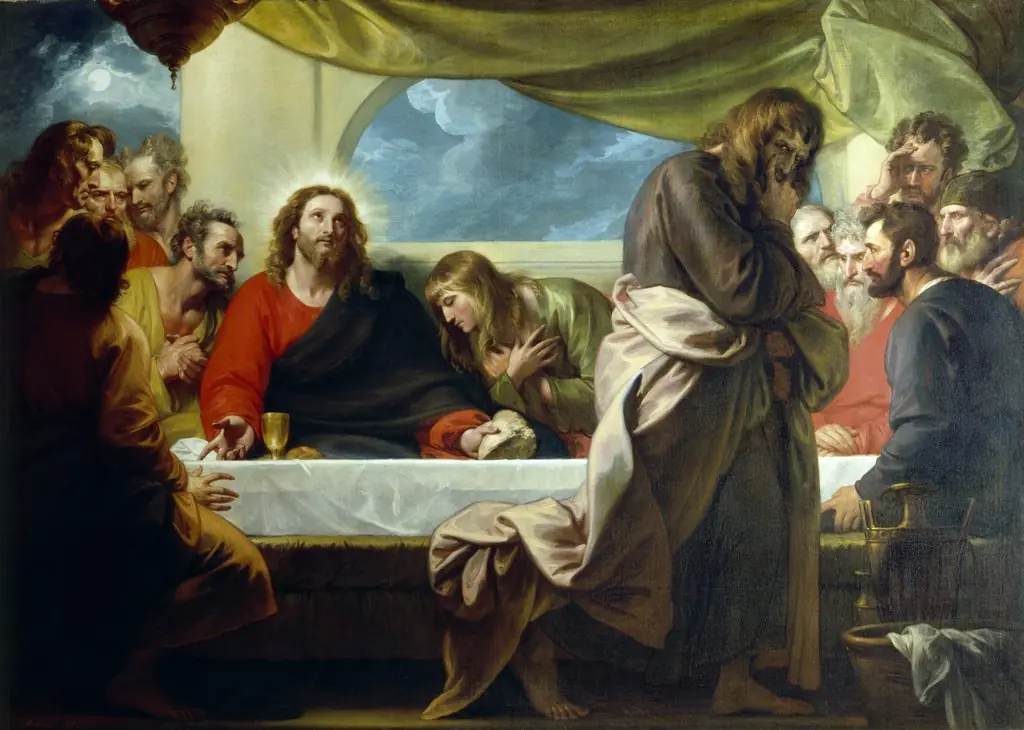
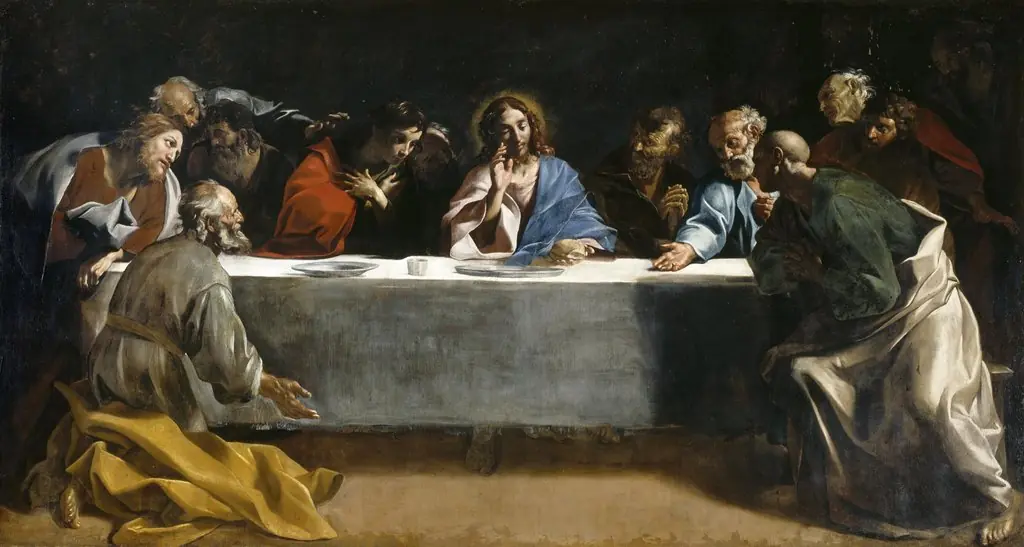
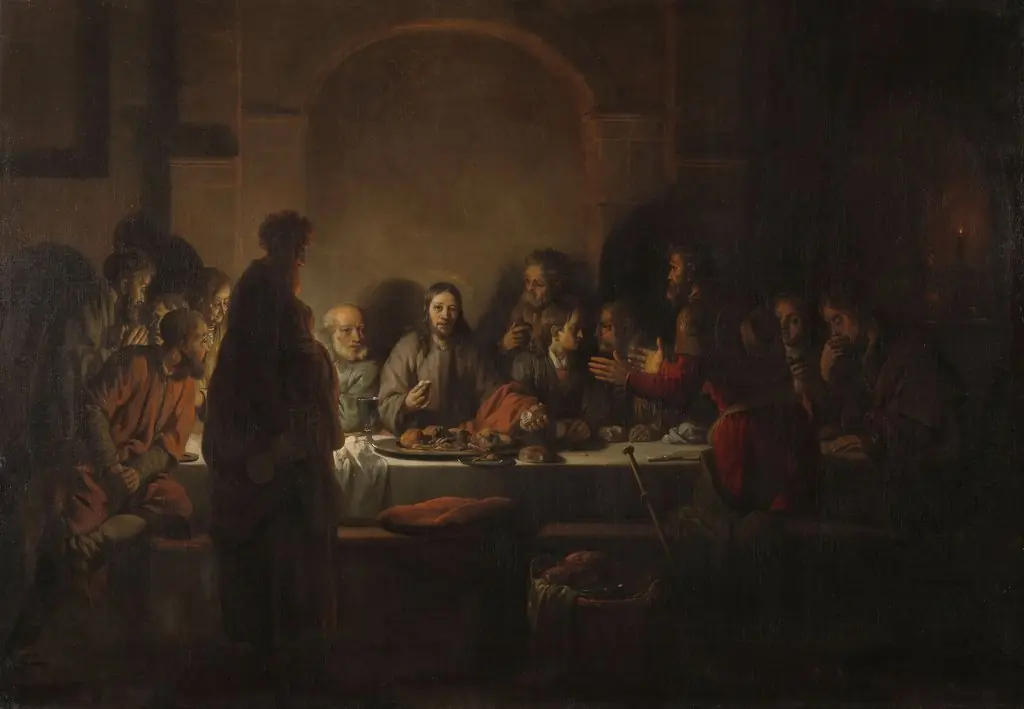
The Last Supper is an oil painting by the Spanish Baroque Tenebrist artist Mariano Salvador Maella. It dates from 1798 and is held in the collection of the Museo del Prado.
About this work
Subject & Meaning
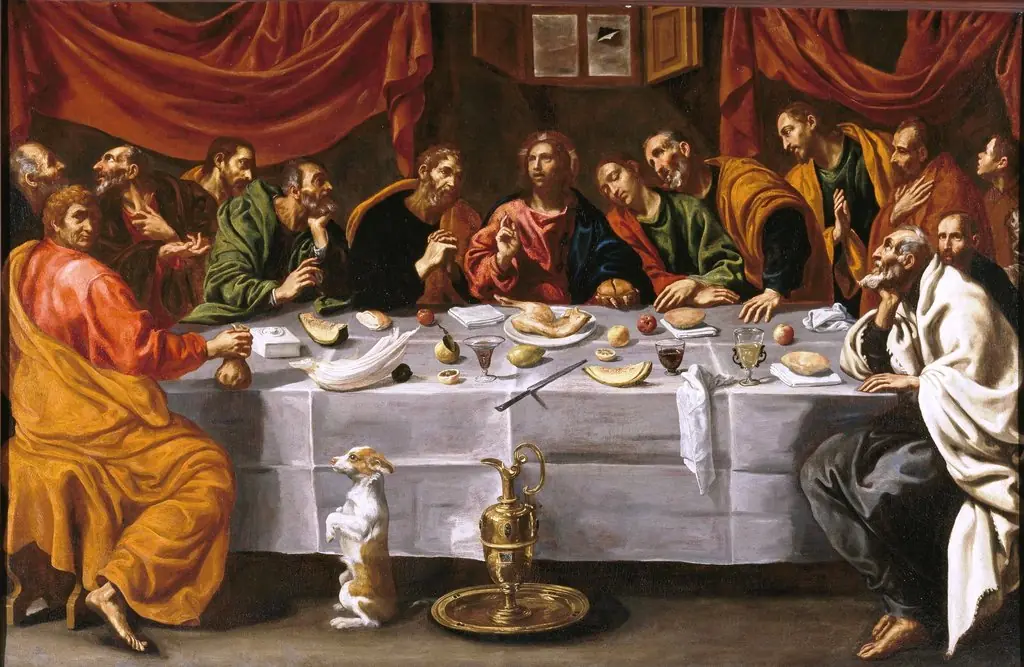
A basket is also featured among the depicted objects, contributing to the domestic setting of the final meal shared by Jesus and his apostles.
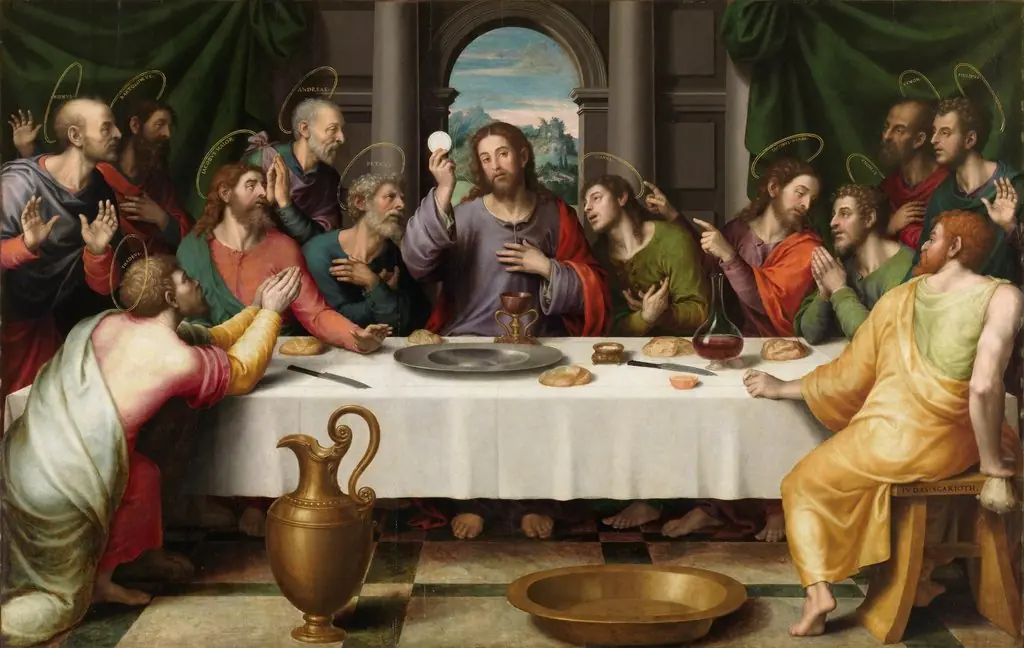
Mariano Salvador Maella's 1794 oil painting depicts the biblical event of the Last Supper, a central subject in religious art. The composition specifically highlights elements of the meal, including bread and wine, which are traditionally symbolic of the Eucharist and Christ's sacrifice. A basket is also featured among the depicted objects, contributing to the domestic setting of the final meal shared by Jesus and his apostles.
As a work housed in the Museo del Prado, the piece serves as a visual representation of this pivotal moment in Christian theology, focusing on the tangible items present at the table to convey the narrative's spiritual significance.
Technique & Style
The Last Supper by Mariano Salvador Maella is executed in oil paint on canvas, a support consistent with late eighteenth-century Spanish religious painting practice. The work is small in scale, measuring 36 cm in height by 94 cm in width, giving it a pronounced horizontal format that suits the banquet subject. Its composition centers on the ritual elements of the Eucharist, depicting bread, wine, and basketry arranged across the table.
Stylistically, the painting belongs to the religious genre tradition associated with Maella's late career, produced in 1794 and now held in the Museo del Prado. The elongated horizontal proportion emphasizes the gathering of figures along the table rather than vertical hierarchy, while the modest dimensions suggest it was likely intended as a devotional object rather than a large altarpiece.
History & Provenance
The Last Supper is a religious painting created in 1794 by the artist Mariano Salvador Maella. Executed in oil paint on canvas, the work depicts the biblical scene of the Last Supper, featuring elements such as bread and wine. The piece is currently held in the collection of the Museo del Prado. Its physical dimensions are recorded as 36 cm in height and 94 cm in width.
Legacy
The Last Supper by Mariano Salvador Maella, executed in oil paint in 1794, entered the collection of the Museo del Prado where it remains on display. Its religious composition depicting bread, wine, and basketry at the Museo del Prado has been studied as part of the evolving portrayal of biblical narratives in Spanish art, influencing subsequent religious paintings through its compositional treatment of the Eucharistic elements. The work is frequently cited in scholarship on late 18th-century religious art for its technical execution and iconographic detail, particularly in analyses of Prado holdings from the 1790s.
Overview
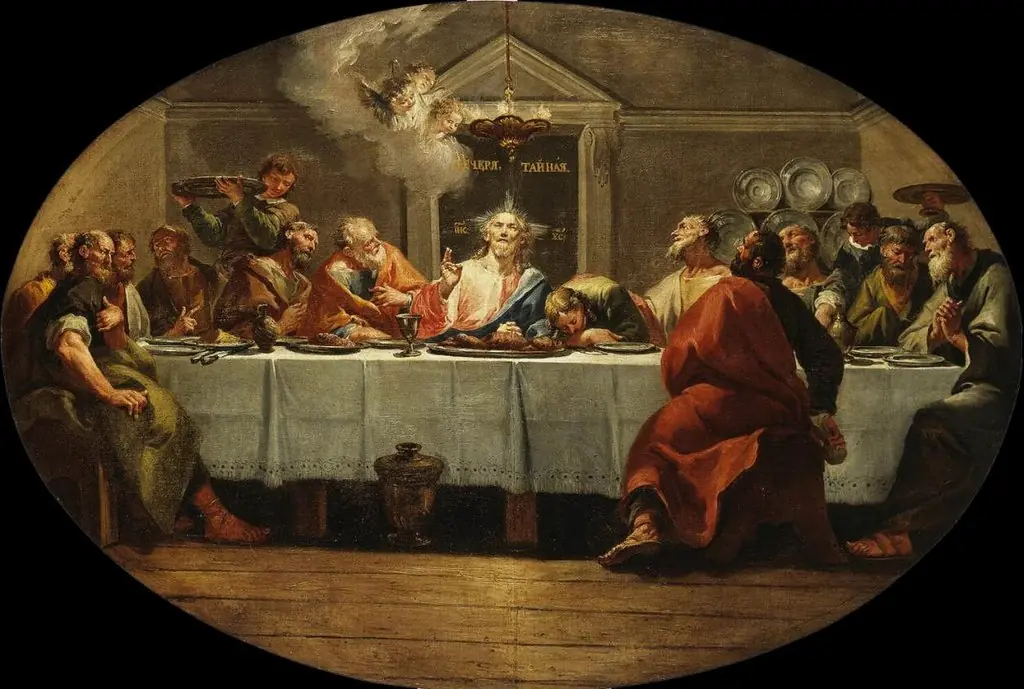
Mariano Salvador Maella’s 1798 oil painting titled The Last Supper presents a nocturnal banquet scene rendered in the dramatic chiaroscuro typical of late Spanish Baroque. A central figure in a white robe presides over a group of men gathered around a modest table, while a small dog, a basket, and a pitcher occupy the foreground. The composition is dominated by muted earth tones punctuated by occasional reds and golds on the garments.
Context
Created during a period when Spanish art was transitioning from the exuberance of the early Baroque to a more restrained, introspective aesthetic, the painting reflects the influence of earlier tenebrist masters while anticipating the neoclassical clarity that would dominate the early nineteenth century. Maella’s court appointment and royal patronage situate the work within the cultural milieu of late‑18th‑century Spain.
Artist & collection
Artist
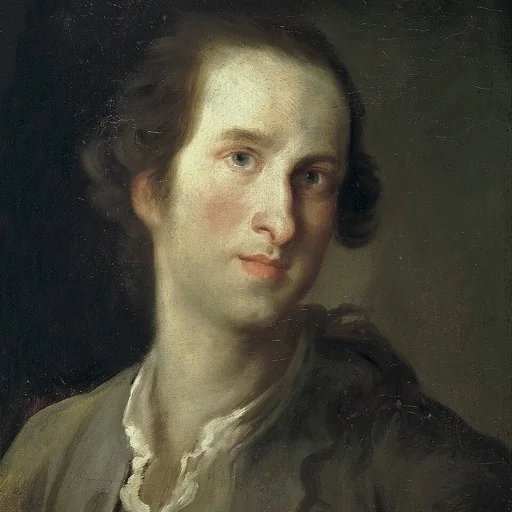
Mariano Salvador Maella Pérez (21 August 1739 – 10 May 1819) was a Spanish painter known primarily for his portraits and religious frescoes.