Artwork
The marriage at Cana
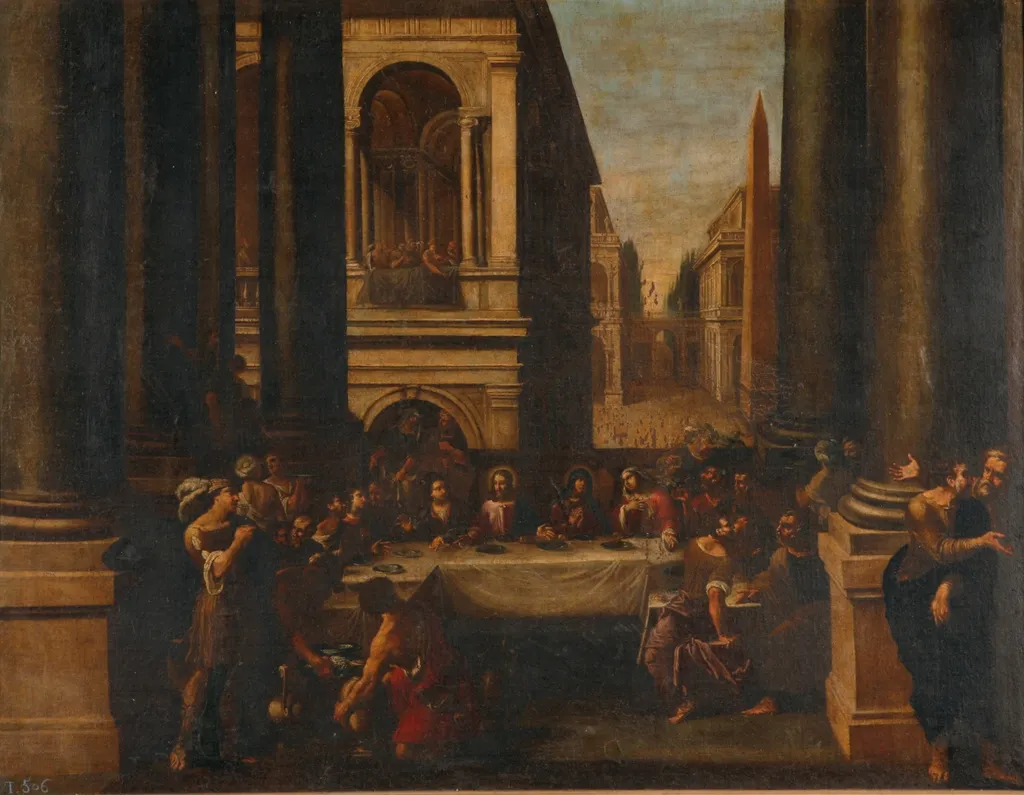
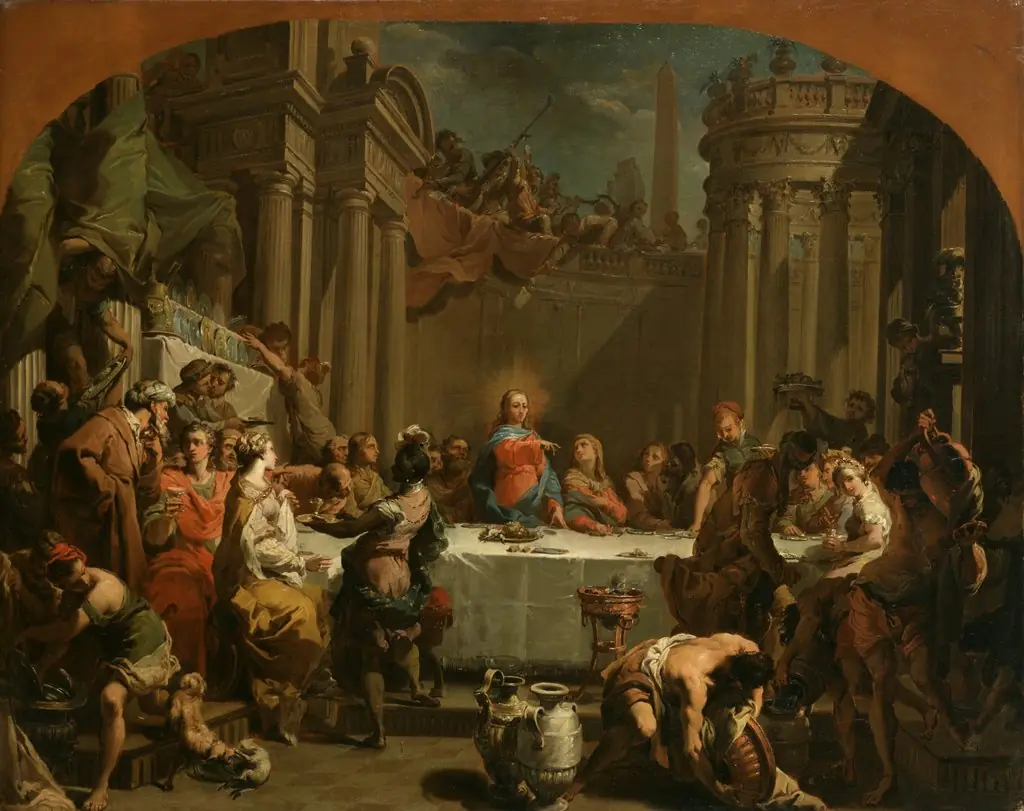
The marriage at Cana is an oil painting by the Early Baroque Italian artist Juan García de Miranda. It dates from 1701 and is held in the collection of the Museo del Prado.
About this work
Subject & Meaning
The subject matter serves as the primary focus, illustrating the moment of the first miracle of Jesus turning water into wine within a wedding context.
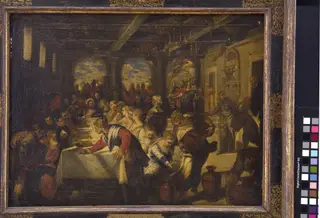
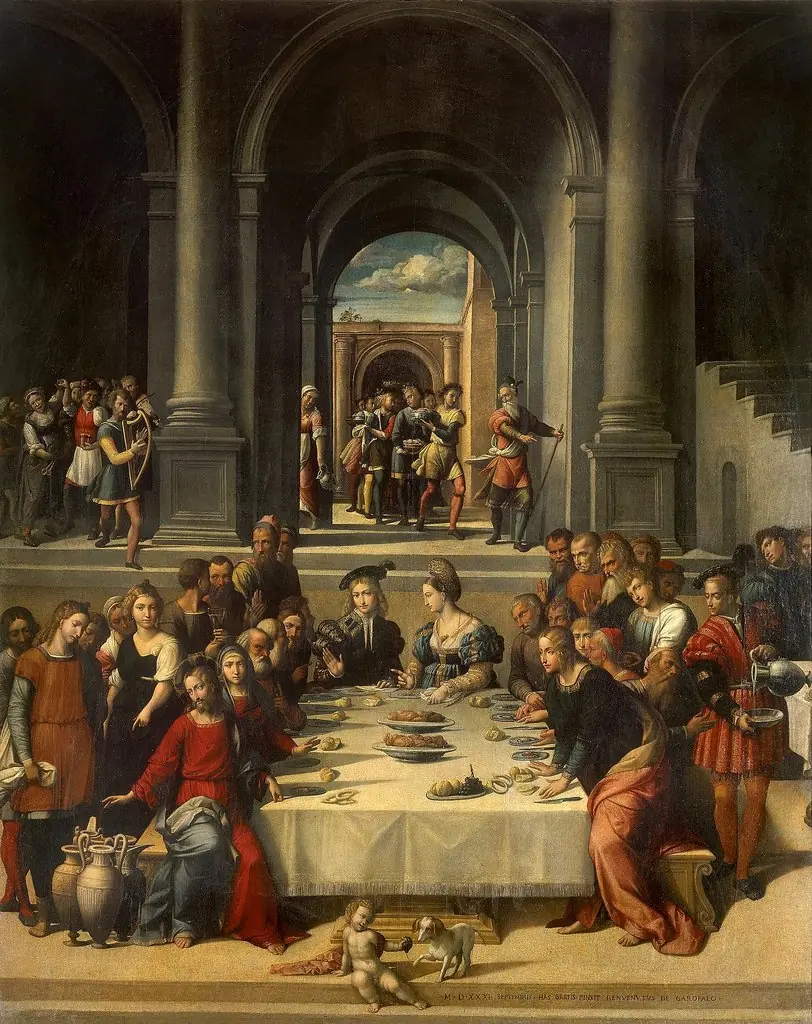
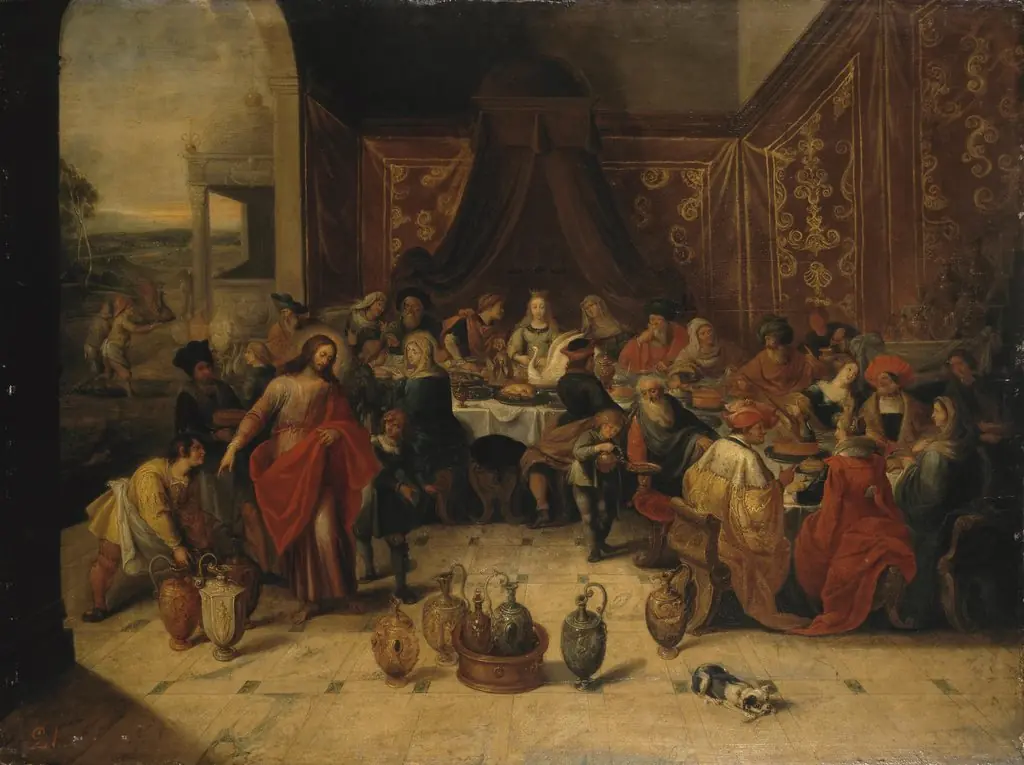
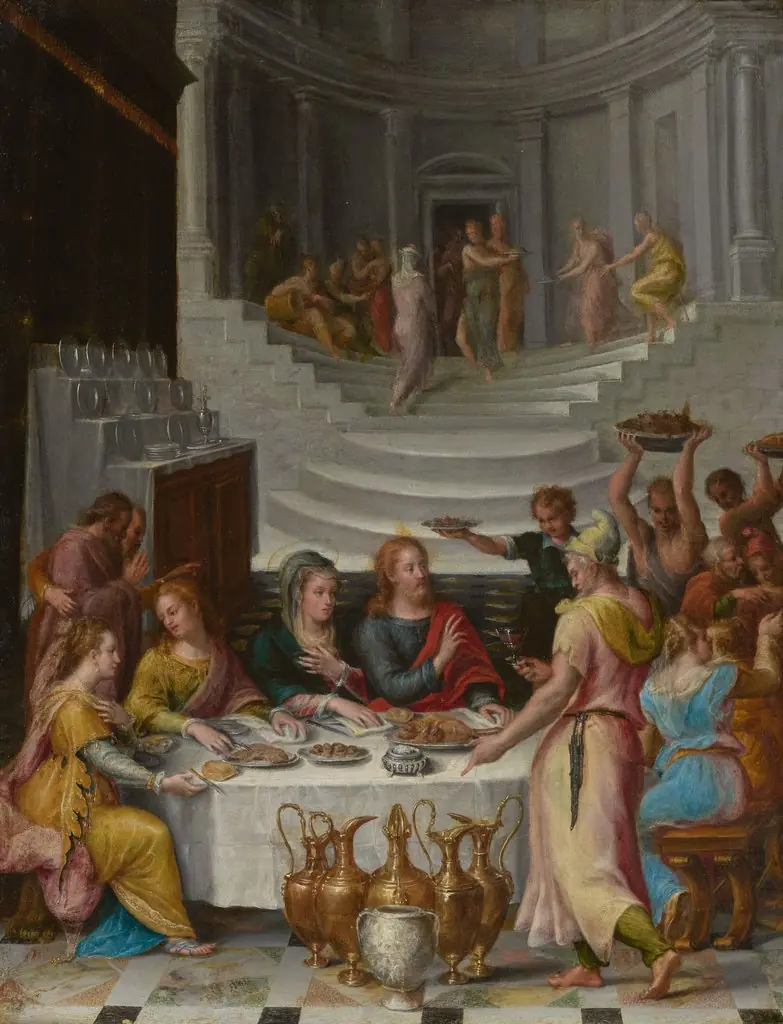
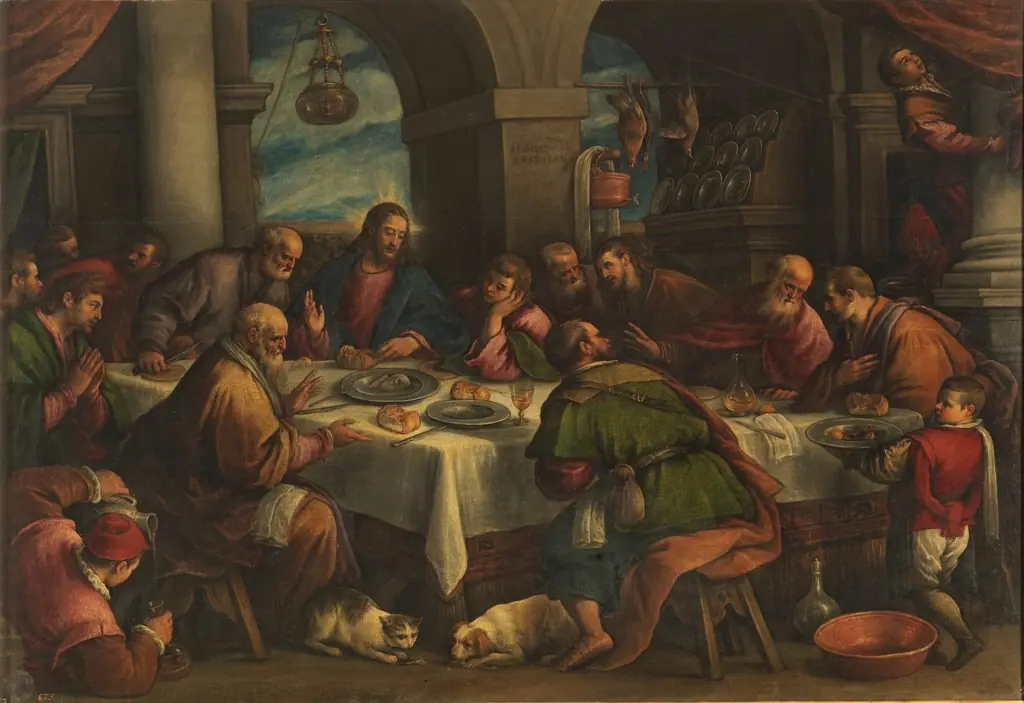
Juan García de Miranda's 1701 oil painting depicts the biblical event known as the Marriage at Cana. As a work of religious art, the composition centers on this specific miracle, presenting the scene as a festive meal. The imagery includes a table set for the celebration, highlighting the communal and joyous nature of the gathering where the event took place.
The subject matter serves as the primary focus, illustrating the moment of the first miracle of Jesus turning water into wine within a wedding context.
Technique & Style
The Marriage at Cana is an oil painting on canvas by Juan García de Miranda, executed in 1701. The work measures 126 by 163 centimeters. As a religious painting depicting the Marriage at Cana, it portrays a festive meal scene centered on a table.
The medium of oil on canvas was standard for Spanish Baroque religious commissions of this period, allowing for rich color saturation and detailed narrative rendering.
History & Provenance
Painted in 1701 by Juan García de Miranda, the work entered the Museo del Prado through the 1872 transfer of holdings from the Museo de la Trinidad. It was first recorded in the collection of the Museo de la Trinidad before that institution’s holdings were absorbed into the Prado, where it remains today.
The work is held in the Museo del Prado, Madrid, as part of its permanent collection.
It was inventoried by the former Museo de la Trinidad before its holdings were transferred to the Prado, and is currently recorded with accession details in the museum’s holdings.
Legacy
The Marriage at Cana by Juan García de Miranda, painted in 1701, has been cited as an example of early 18th-century Spanish religious art that adapts the biblical banquet theme to a domestic setting, reflecting the devotional practices of the period, and its presence in major institutions such as the Museo del Prado has contributed to renewed scholarly attention on lesser-known Castilian painters, while its compositional treatment of light and gesture has been referenced in studies of artistic influence in Iberian Baroque circles
The work is part of the collections at the Museo del Prado and the Museo de la Trinidad, locations that underscore its significance within Spanish cultural heritage, and its formal qualities, particularly the depiction of a festive meal with richly detailed figures, have informed analyses of narrative techniques in religious painting, reinforcing its reputation as a subtle yet technically refined example of the genre
Overview
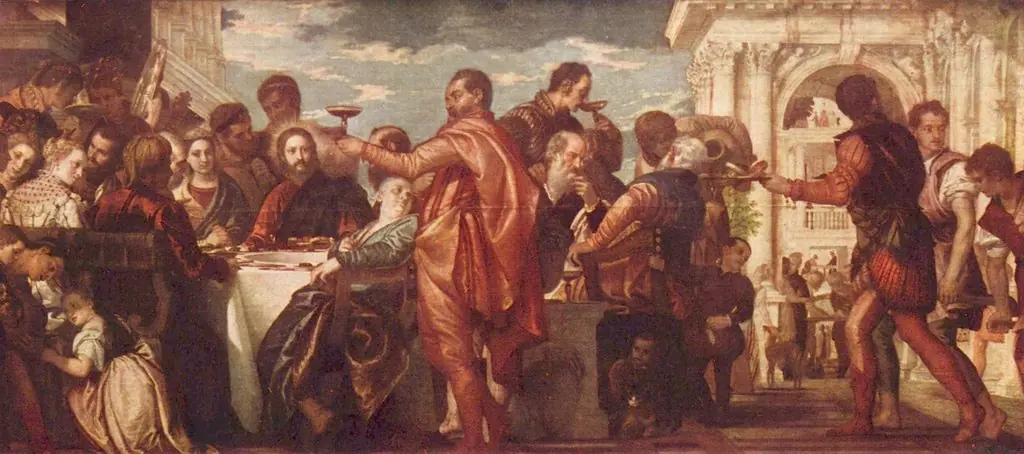
Juan García de Miranda, a Madrid‑born painter of Asturian descent, completed an oil work in 1701 that portrays the biblical wedding at Cana. The canvas presents a bustling banquet hall where guests sit, stand, and serve, while a distant arch opens onto a courtyard featuring an obelisk. The composition balances a crowded interior with a glimpse of an exterior space, creating a narrative tableau of the miracle.
Context
Executed during the Spanish Baroque period, the canvas aligns with contemporary devotional art that combined religious narrative with opulent domestic settings. Miranda, a follower of Juan Delgado and uncle to Pedro Rodríguez de Miranda, worked within a network of court painters who emphasized theatricality and emotional engagement, situating this biblical episode within a familiar, festive environment for early‑18th‑century viewers.
Own this work as a print
Artist & collection
Artist
Juan García de Miranda (1677–1749), was a Spanish painter of the baroque period, a disciple of Juan Delgado and the uncle of Pedro Rodríguez de Miranda.