Artwork
Guitar on a table
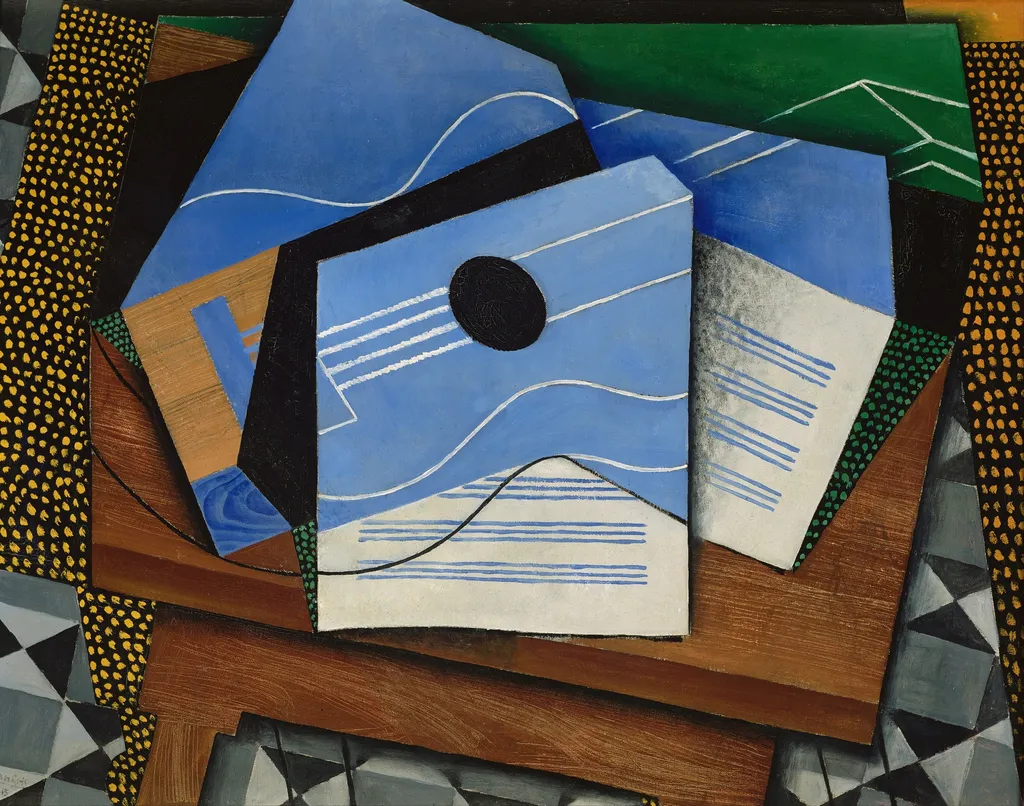
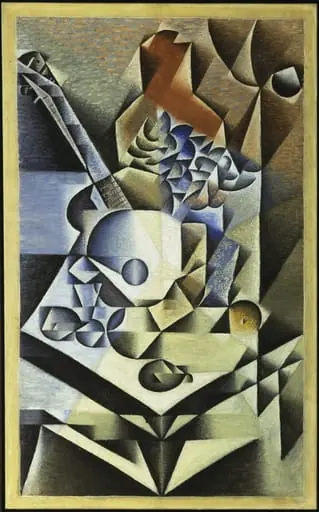
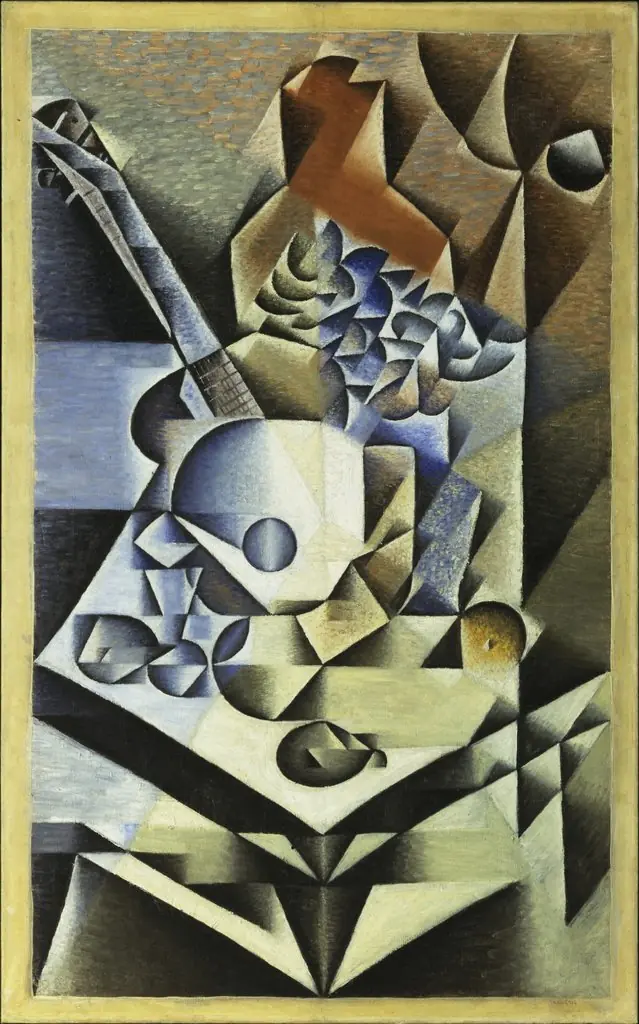
Guitar on a table is an oil painting by the Cubism Synthetic artist Juan Gris. It dates from 1915 and is held in the collection of the Kröller-Müller Museum.
About this work
Overview
Juan Gris painted Guitar on a table in 1915 using oil on canvas. The work belongs to the Cubist movement and presents a still life centered on a musical instrument. It is part of the permanent collection at the Kröller-Müller Museum in the Netherlands, where it has been held since the early 20th century. The composition reflects Gris’s interest in structured form and spatial ambiguity.
Subject & Meaning
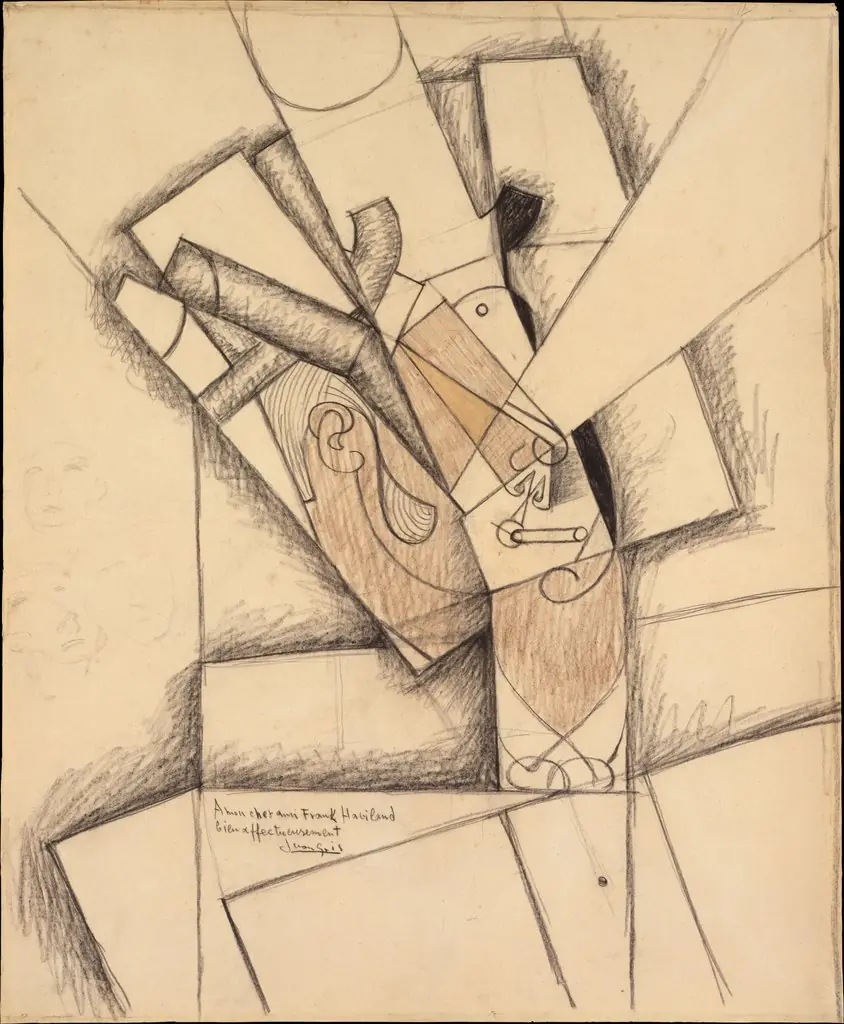
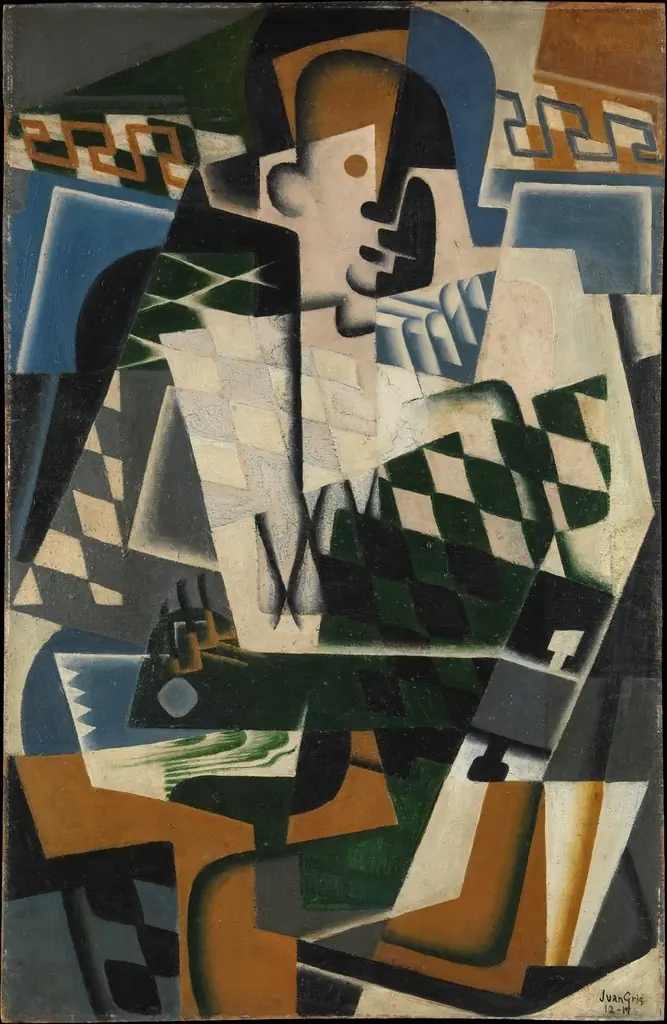
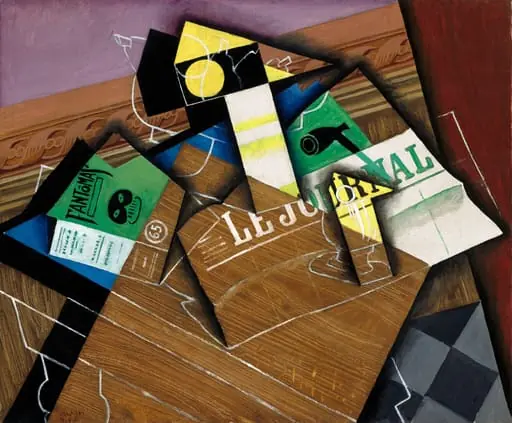
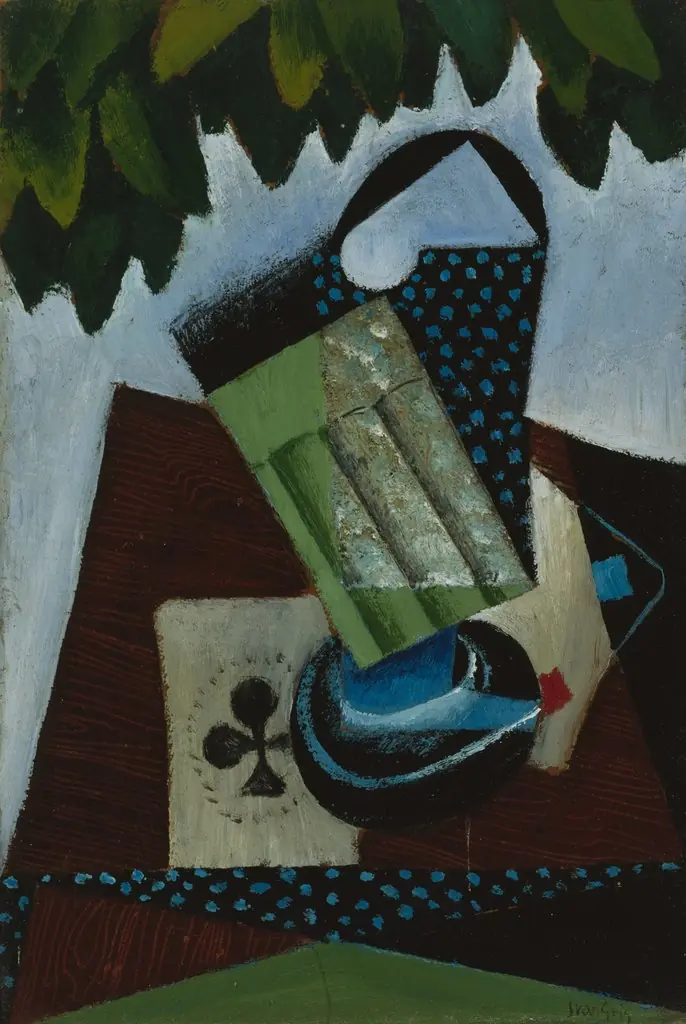
The painting focuses on a guitar placed on a wooden table, rendered not as a realistic object but as an assembly of interlocking planes.
The painting focuses on a guitar placed on a wooden table, rendered not as a realistic object but as an assembly of interlocking planes. The guitar, a recurring motif in Gris’s work, symbolizes both domestic life and cultural resonance. Its presence invites contemplation of sound through visual form, aligning with Cubism’s aim to represent multiple perspectives simultaneously rather than literal appearance.
Technique & Style
Gris employed a controlled Cubist language, using flat, angular shapes and a restrained palette of blue, black, brown, green, and yellow. The guitar’s body is defined by a light blue plane, its neck in stark black, while the strings are rendered as thin white lines. Background elements are fragmented into geometric fields, creating depth without perspective. The surface is carefully modulated to suggest texture and volume through color contrast rather than shading.
History & Provenance
Painted in 1915 during Gris’s most productive Cubist phase, the work entered the collection of Helene Kröller-Müller in the 1920s. She acquired it directly from the artist or through his circle, reflecting her keen interest in avant-garde European art. The painting has remained in the Kröller-Müller Museum since its founding, preserving its original context within a significant private collection that later became public.
Context
Created during World War I, the painting reflects the intellectual climate of Parisian Cubism, where artists like Gris, Picasso, and Braque redefined representation. While many contemporaries turned to abstraction, Gris maintained a connection to recognizable objects, using them as anchors for complex spatial experiments. This work exemplifies his methodical approach, distinct from the more spontaneous style of early Analytic Cubism.
Legacy
Guitar on a table stands as a representative example of Synthetic Cubism, influencing later developments in modern design and abstraction. Its clarity of structure and deliberate use of color helped define a more accessible form of Cubism. The painting continues to be studied for its balance between order and innovation, illustrating how everyday objects could be reimagined through disciplined formal inquiry.
Own this work as a print
Artist & collection

Artist
José Victoriano González-Pérez, better known as Juan Gris, was a Spanish painter born in Madrid who lived and worked in France for most of his active period.