Artwork
Glass and Playing Cards
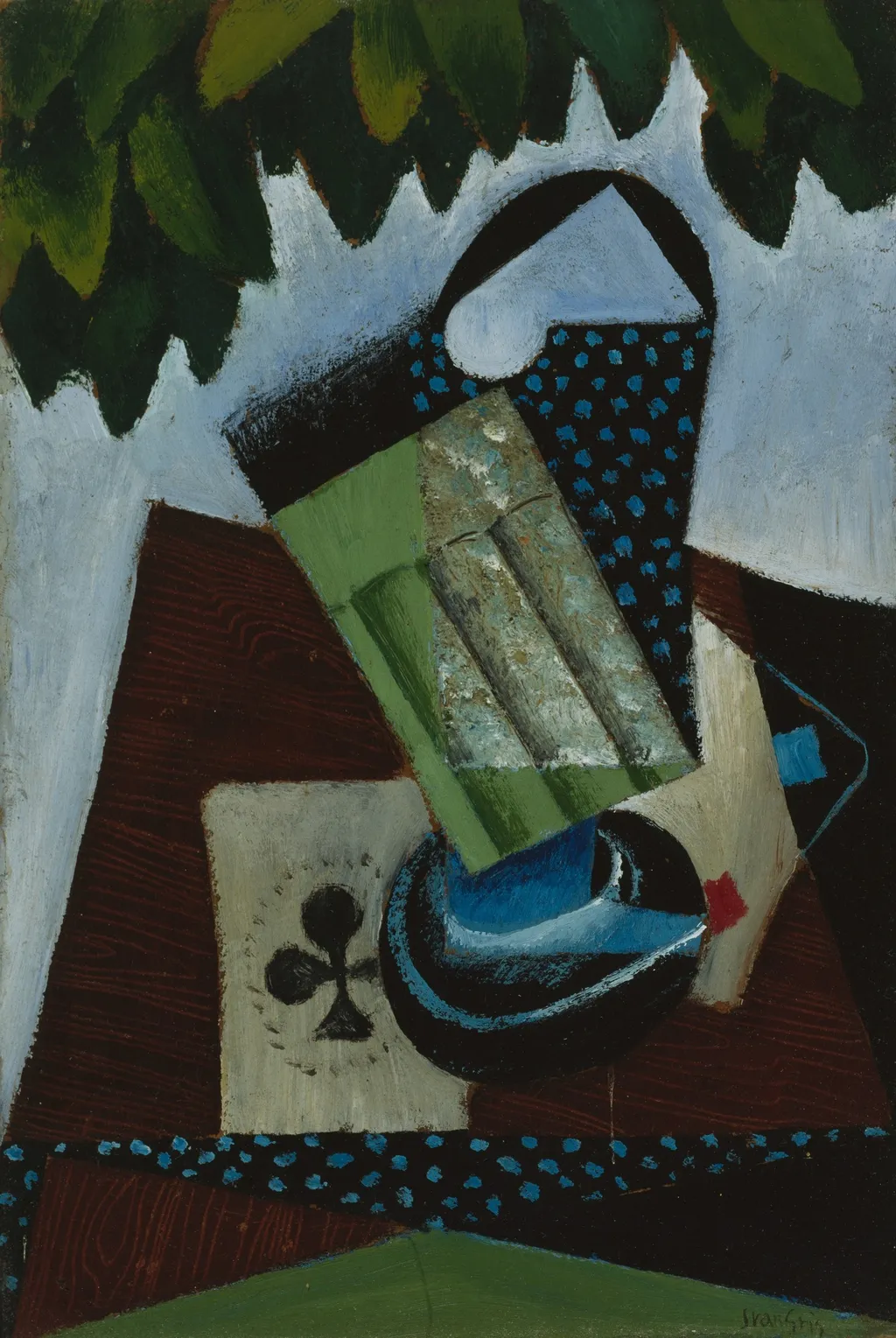
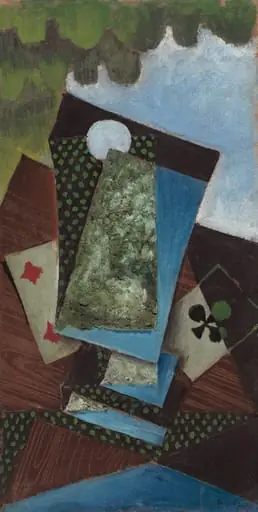
Glass and Playing Cards is an oil painting by the Cubism Synthetic artist Juan Gris. It dates from 1915 and is held in the collection of the Art Institute of Chicago.
About this work
Technique & Style
The inclusion of sand as a medium introduces a distinct textural quality to the surface, a technique characteristic of Juan Gris's work during this period.
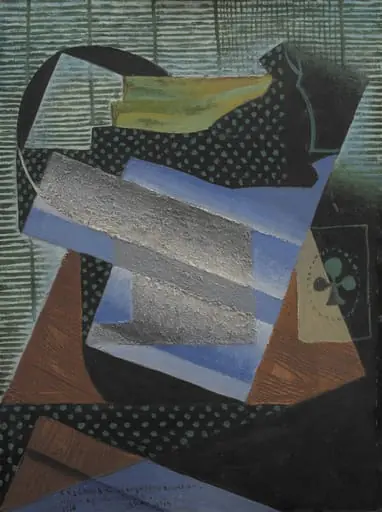
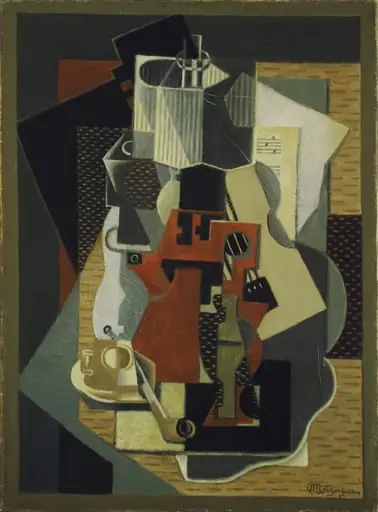
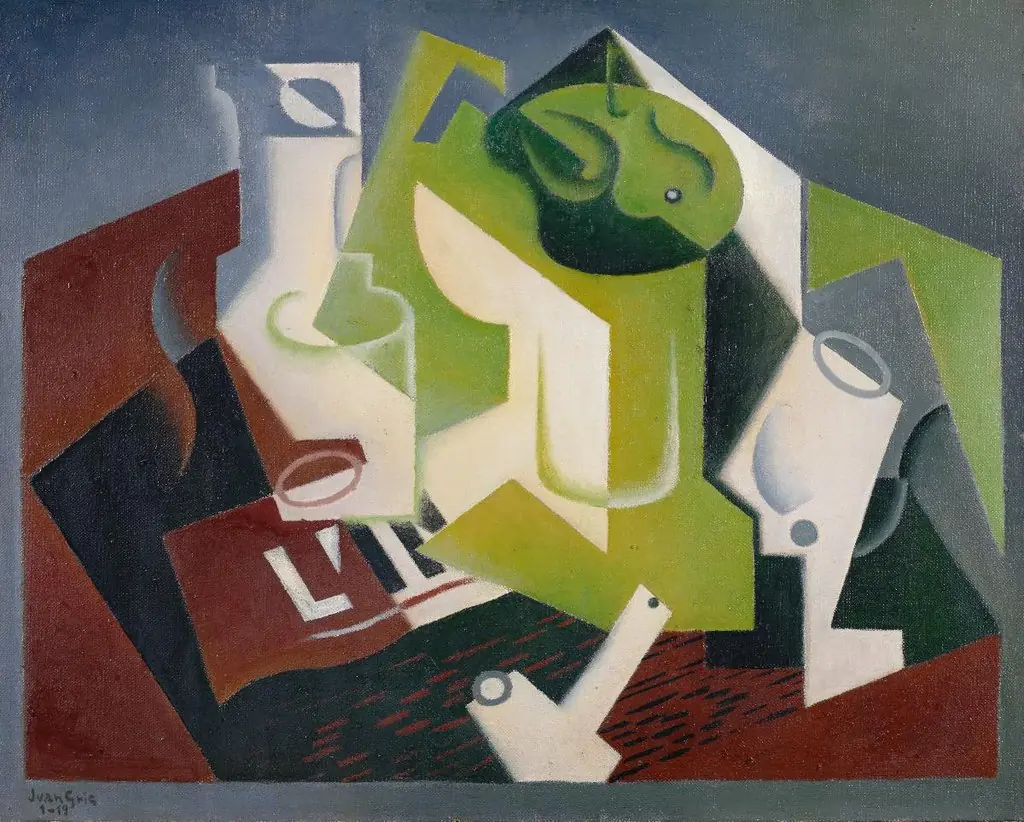
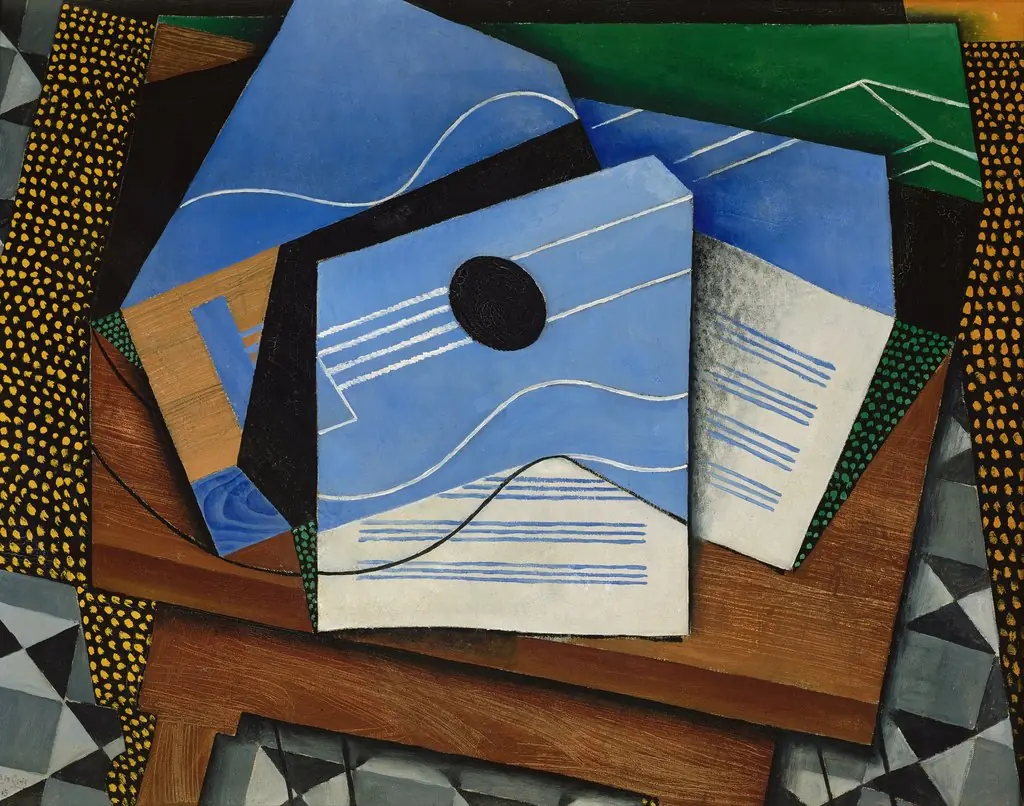
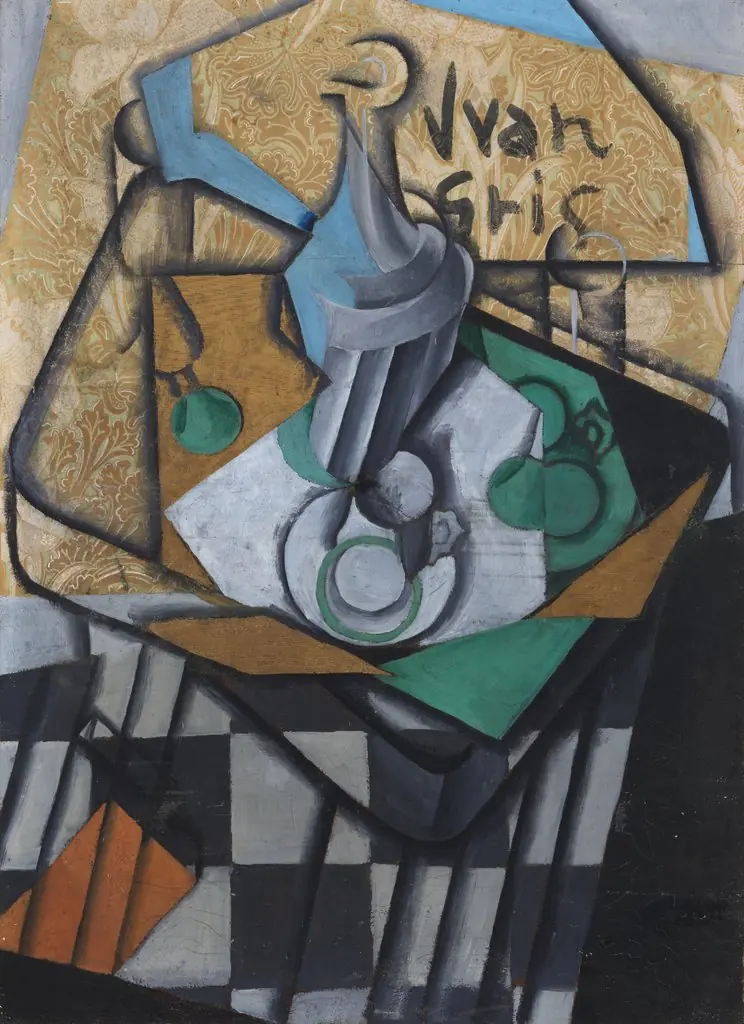
Created in 1915, Glass and Playing Cards is a still life executed in oil paint and sand applied to a cardboard support. The inclusion of sand as a medium introduces a distinct textural quality to the surface, a technique characteristic of Juan Gris's work during this period. The painting depicts a drinking glass and playing cards, rendered with a focus on geometric structure typical of the Cubist style.
The work measures 11.5 cm in height and 7.75 cm in width, presenting a compact yet materially complex composition.
History & Provenance
The work was executed by Juan Gris in 1915 as a synthetic Cubist still life, integrating oil paint, sand, and cardboard.
It entered the collection of the Art Institute of Chicago by 1915, where it has remained in continuous institutional holdings.
Juan Gris's 1915 painting Glass and Playing Cards is held in the collection of the Art Institute of Chicago. The work, created using oil paint, sand, and cardboard, measures 11.5 cm in height and 7.75 cm in width. While the entity confirms the museum location and the artwork's physical characteristics, the provided sources do not contain specific accession or inventory numbers, nor do they list any exhibition history for this piece.
Overview
Executed in 1915, Glass and Playing Cards is a still-life composition by Juan Gris. The work presents a limited assortment of objects, a drinking vessel and a single playing card, arranged on a table surface. Rendered in sand-mixed paint, the image occupies a modest scale and resides in the collection of the Art Institute of Chicago.
Subject & Meaning
The painting isolates two everyday items: a translucent glass, beaded with moisture, and a playing card marked by blue pips. Their juxtaposition suggests themes of chance, refreshment, and the ordinary elevated to visual significance. The objects’ simplicity invites contemplation of form and symbolism within mundane experience.
Context
Produced amid World War I, Glass and Playing Cards reflects the Cubist preoccupation with structure and fragmentation. Gris, alongside Picasso and Braque, redefined representation by dissecting objects into intersecting planes. The painting’s restrained palette and composition underscore the movement’s intellectual rigor.
Legacy
The work endures as a concise exemplar of Gris’s contribution to Cubism, illustrating his ability to balance abstraction with legibility. Its inclusion in a prominent museum collection ensures ongoing study, offering insight into the evolution of early 20th-century avant-garde practices.
Own this work as a print
Artist & collection

Artist
José Victoriano González-Pérez, better known as Juan Gris, was a Spanish painter born in Madrid who lived and worked in France for most of his active period.