Artwork
Margaret of Austria
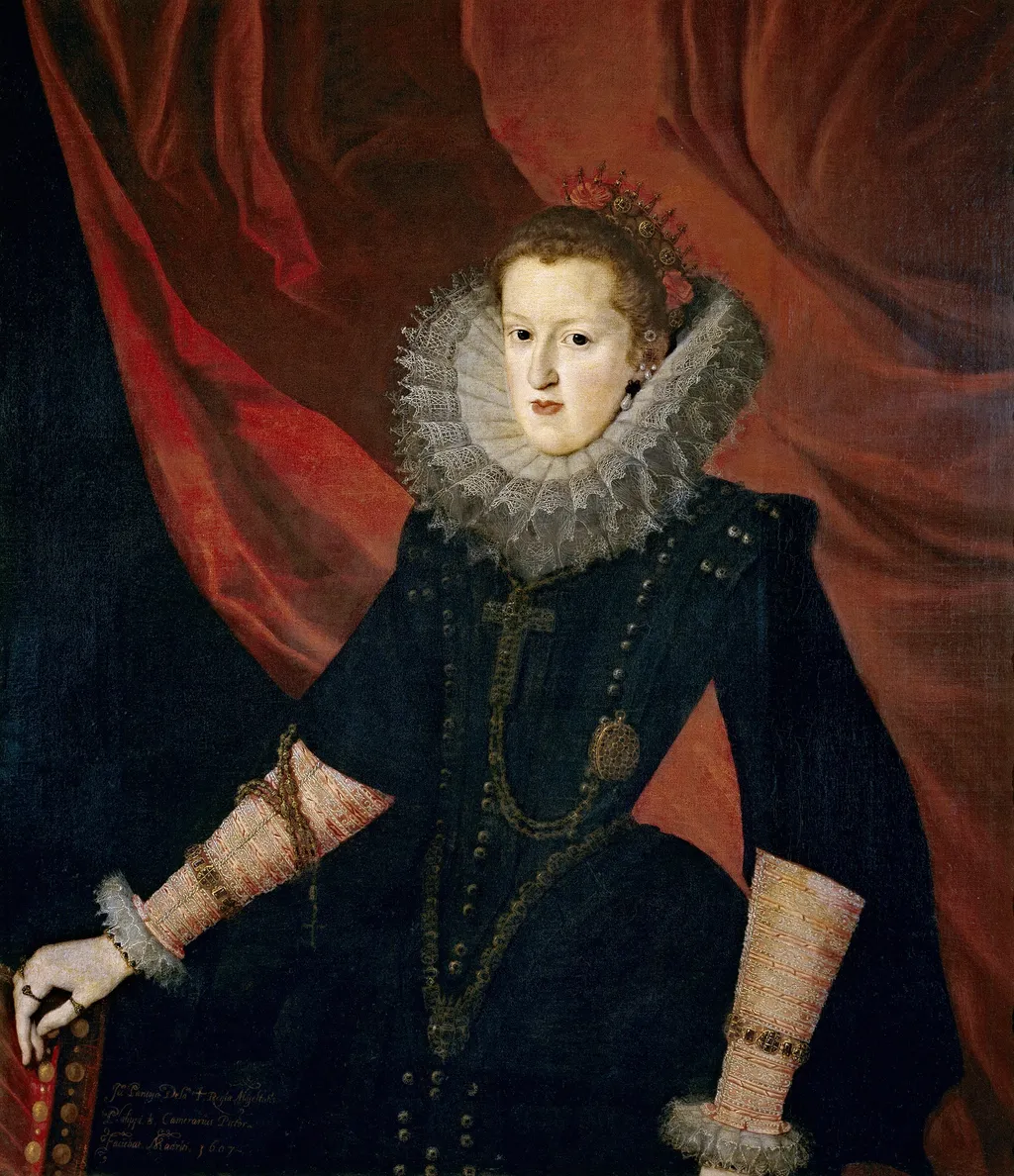
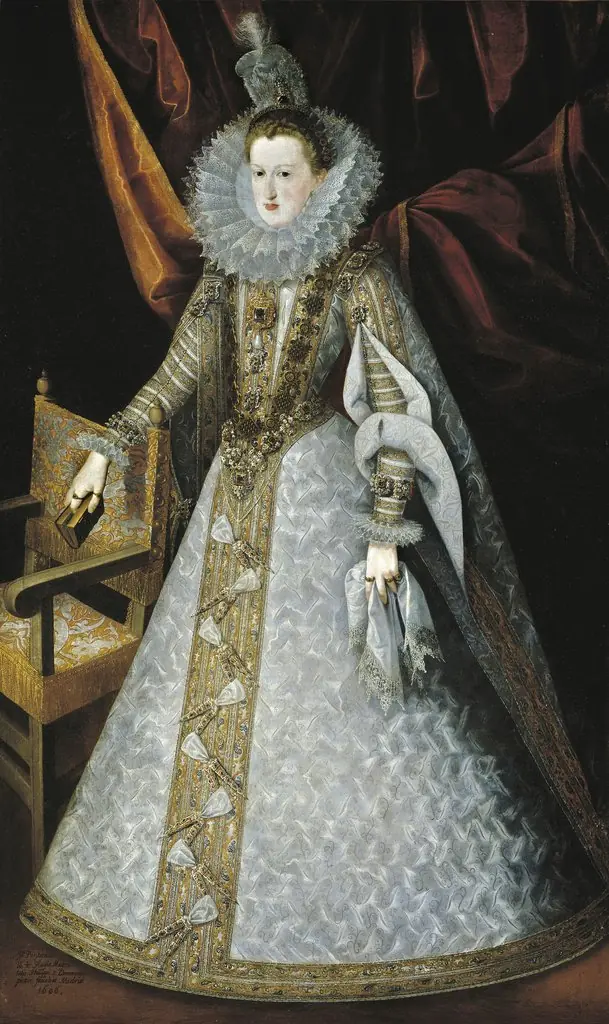
Margaret of Austria is an oil painting by the Early Baroque Italian artist Juan Pantoja de la Cruz. It dates from 1607 and is held in the collection of the Museo del Prado.
About this work
Subject & Meaning
Margaret of Austria is portrayed as Queen of Spain, her regal status indicated by the crown and richly embroidered attire.
Margaret of Austria is portrayed as Queen of Spain, her regal status indicated by the crown and richly embroidered attire. The inclusion of a gemstone underscores her noble lineage and dynastic significance within the Habsburg family. The portrait emphasizes her role as a politically astute figure, linking personal authority with imperial authority through visual symbols of sovereignty and wealth.
Technique & Style
The portrait of Margaret of Austria was executed in oil paint on canvas, a standard support for early 17th‑century Spanish portraiture. The work measures 112 cm by 97 cm, reflecting the modest scale typical of courtly likenesses intended for private display. Pantoja de la Cruz’s handling of light and drapery demonstrates a refined naturalism, while the meticulous rendering of the sitter’s jewelry and textiles underscores the ceremonial status of the subject.
These formal qualities contribute to the painting’s reputation as a paradigmatic example of Habsburg portraiture, noted for its blend of aristocratic poise and painterly precision.
History & Provenance
The work titled Margaret of Austria was painted by Juan Pantoja de la Cruz in 1607 as a portrait for the Spanish court. It entered the collection of the Museo del Prado in Madrid, where it remains on display.
The painting was commissioned by Margaret of Austria herself, reflecting her status as Queen of Spain and her influence within the Habsburg court. The work was created using oil on canvas, measuring 112 by 97 centimeters, and depicts Margaret wearing a distinctive gemstone‑adorned headdress.
The painting’s creation history is documented through contemporary records of court commissions and the artist’s workshop practices in the early seventeenth century.
The painting is held in the Museo del Prado, where it forms part of the museum's collection. According to the available records, the work is catalogued within the Prado's holdings of Juan Pantoja de la Cruz's portraits.
No specific inventory or accession number is recorded in the available sources, and no exhibition history beyond its presence in the Prado's permanent collection is documented.
Overview
Juan Pantoja de la Cruz created an oil portrait of Margaret of Austria, queen consort of Philip III, in 1607. Executed on canvas, the work exemplifies the restrained formalism typical of his court commissions, employing a subdued palette and careful modeling to emphasize the sitter’s status.
Context
Created during the early reign of Philip III, the portrait aligns with a broader program of royal imagery designed to reinforce dynastic legitimacy. Pantoja’s output at this time focused on formal, highly controlled representations of monarchs and consorts, situating Margaret within a visual hierarchy that emphasized order and authority.
Own this work as a print
Artist & collection
Artist
Juan Pantoja de La Cruz (1553 – 26 October 1608) was a Spanish painter, one of the best representatives of the Spanish school of court painters.

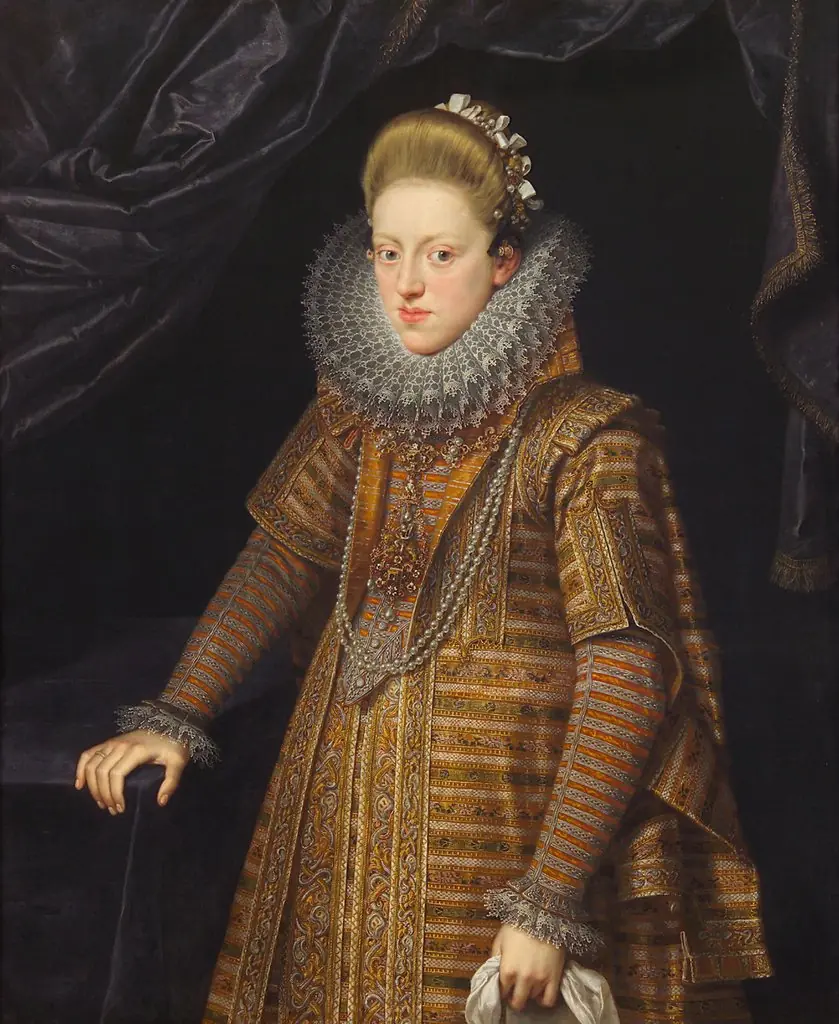 Erzherzogin Eleonore (1582-1620), Kniestück
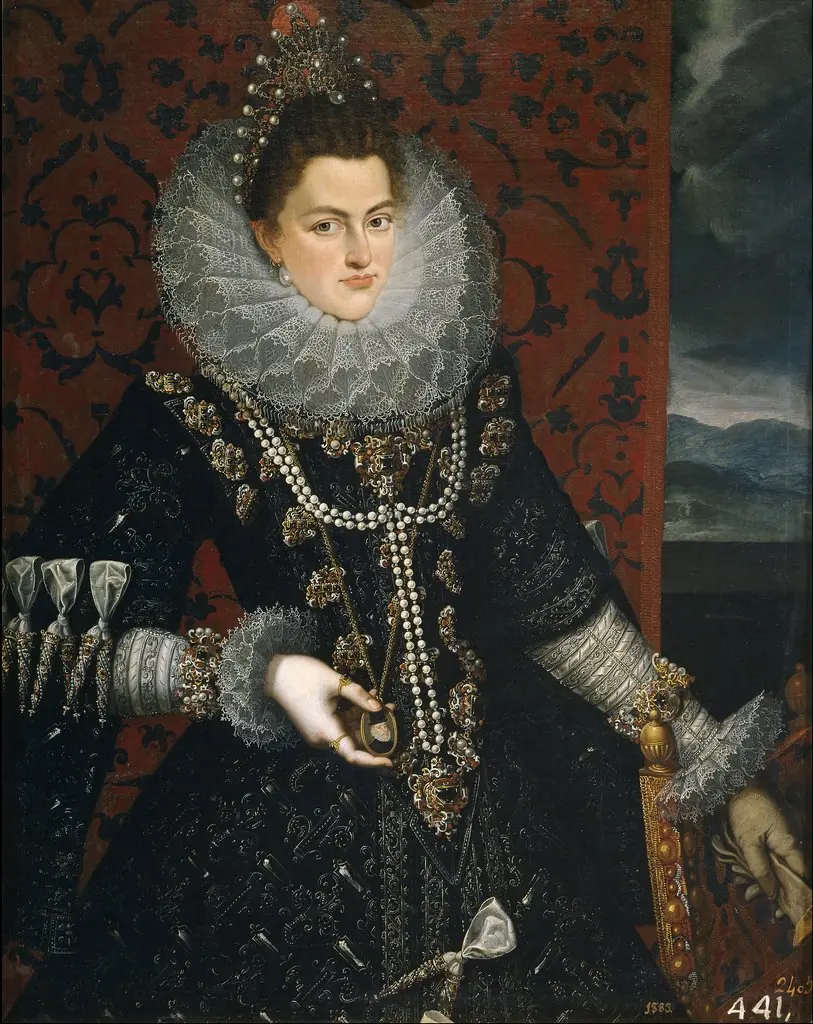
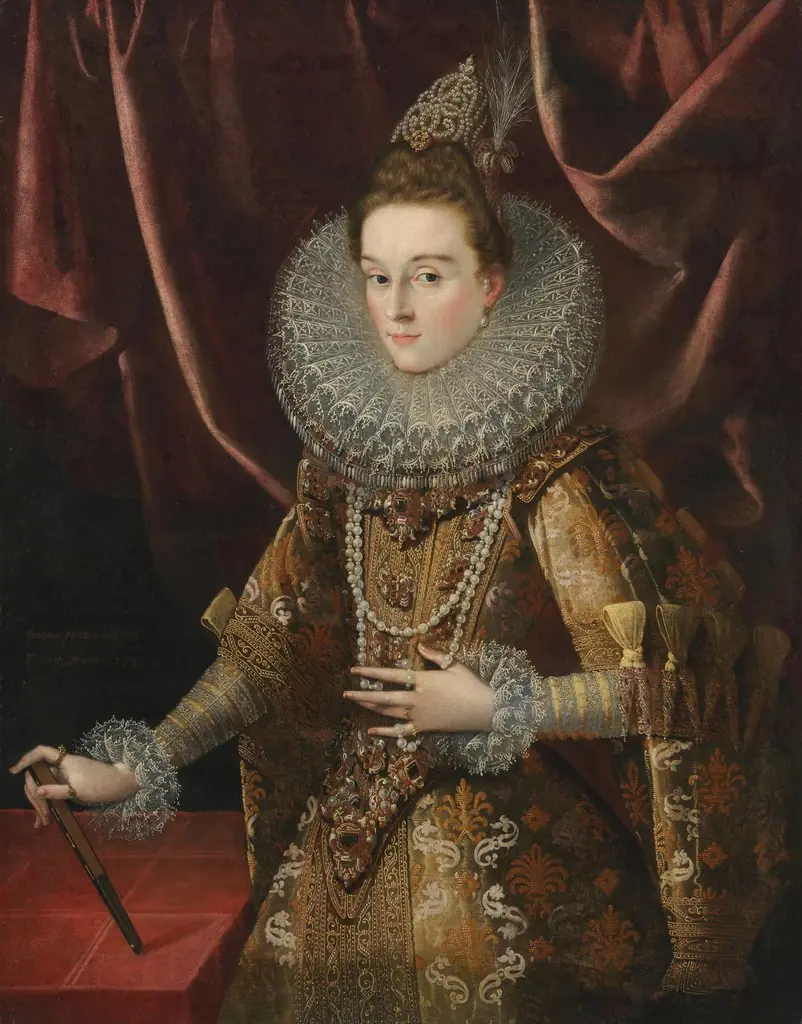 Isabella Clara Eugenia by Juan Pantoja de la Cruz
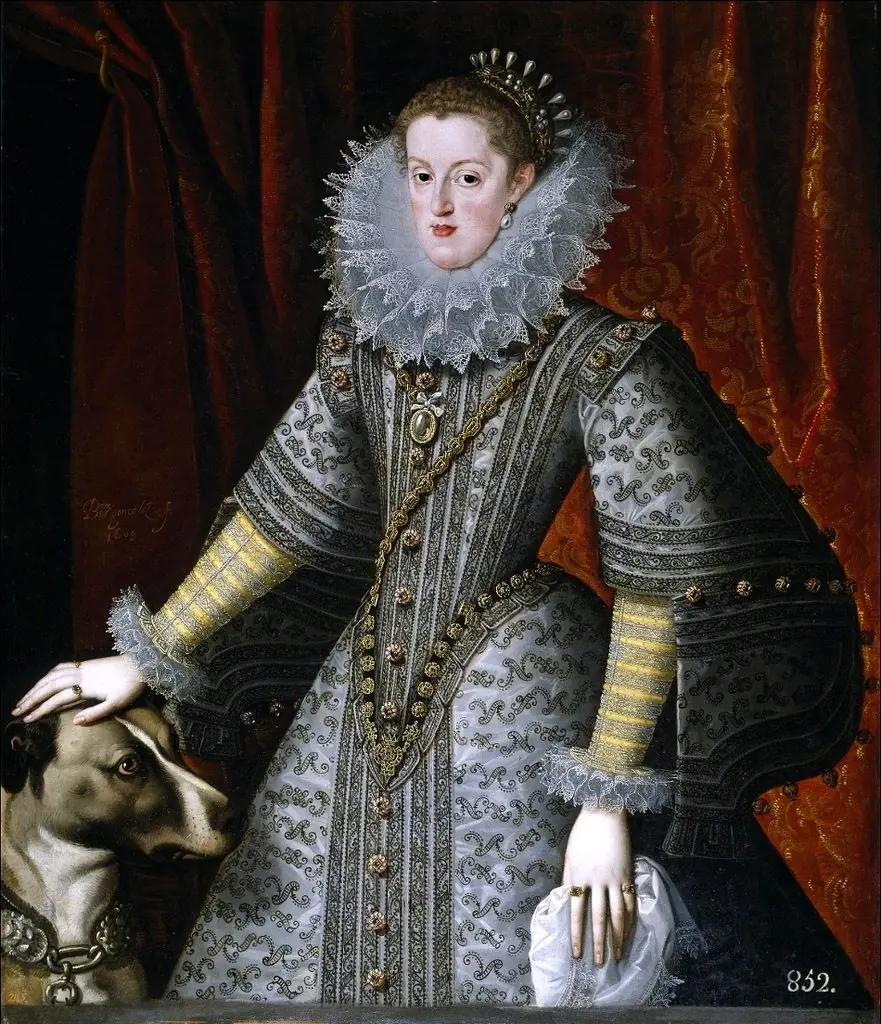
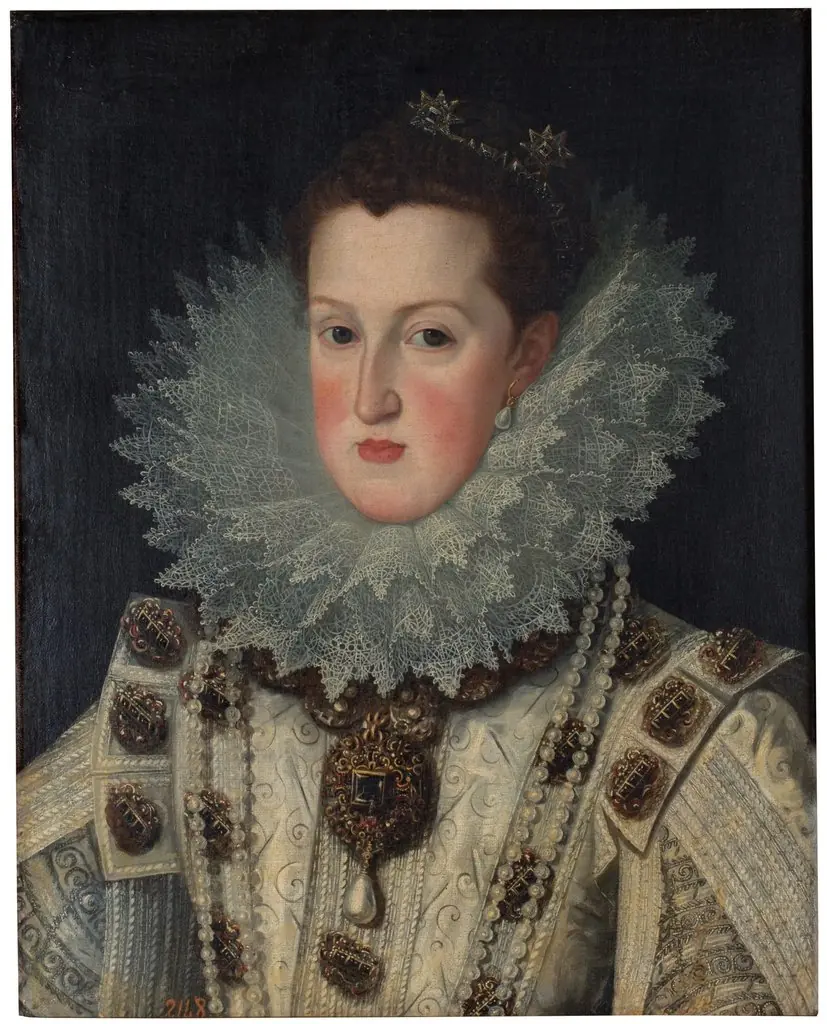 Margarita de Austria, reina de España
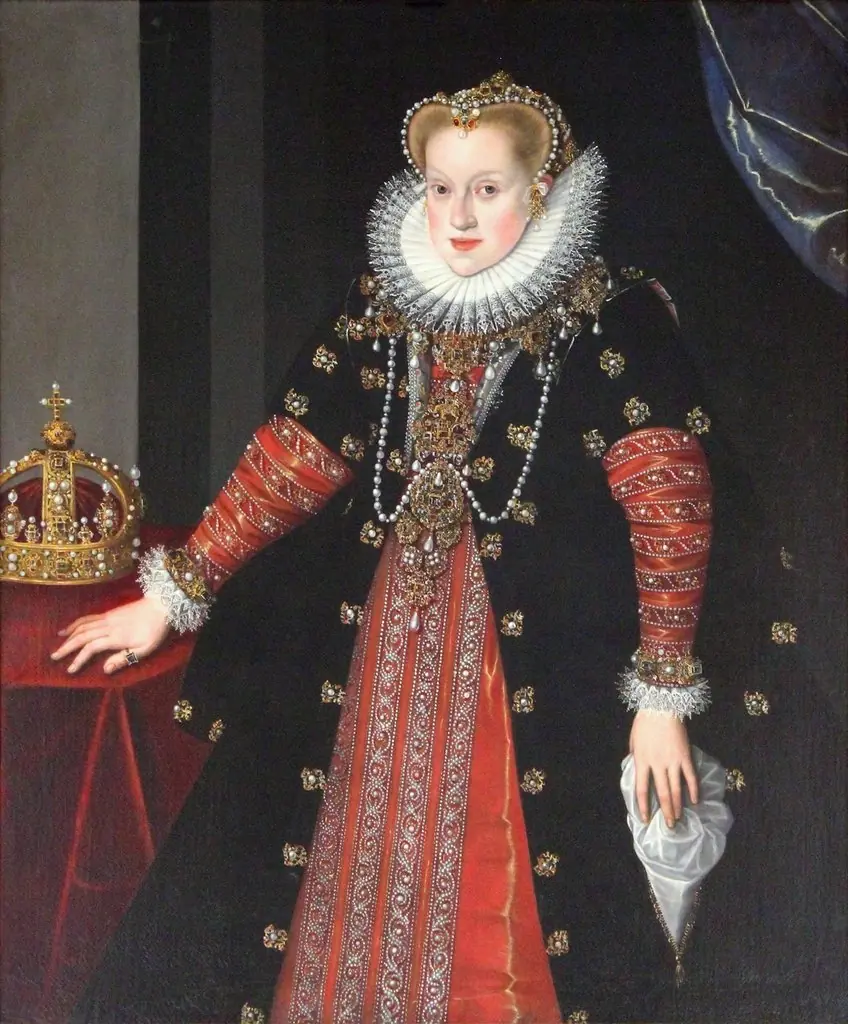 Portrait of Anne of Austria, Queen of Poland (1573-1598)
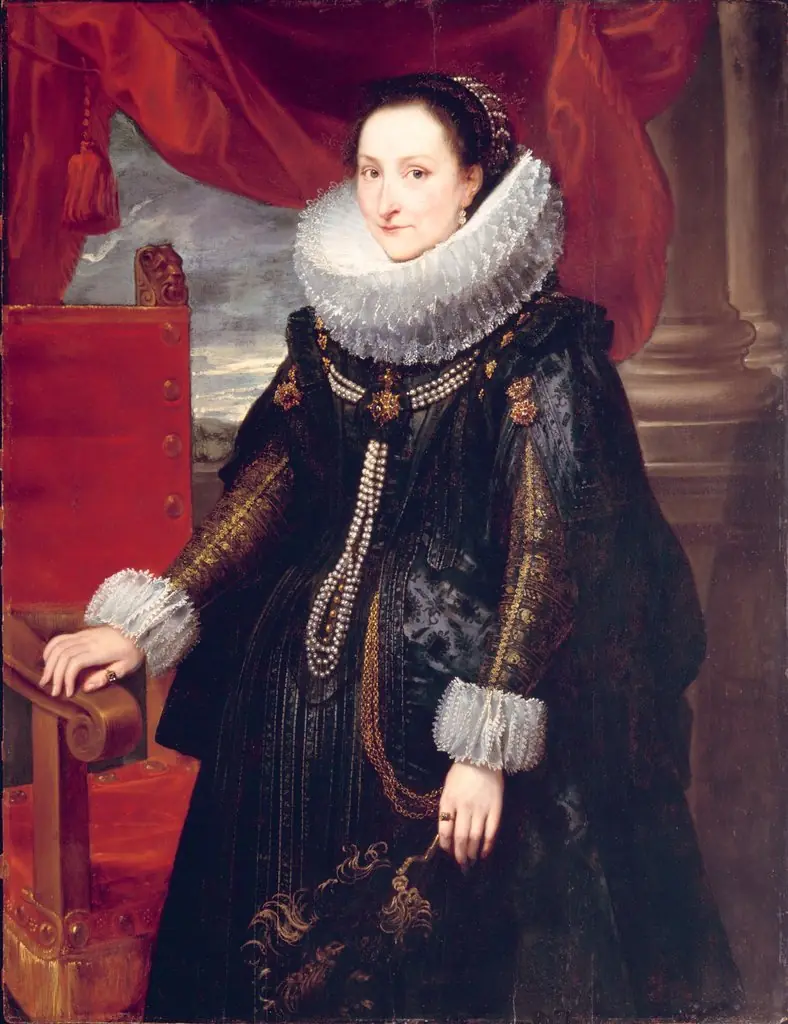 Portrait of a Woman
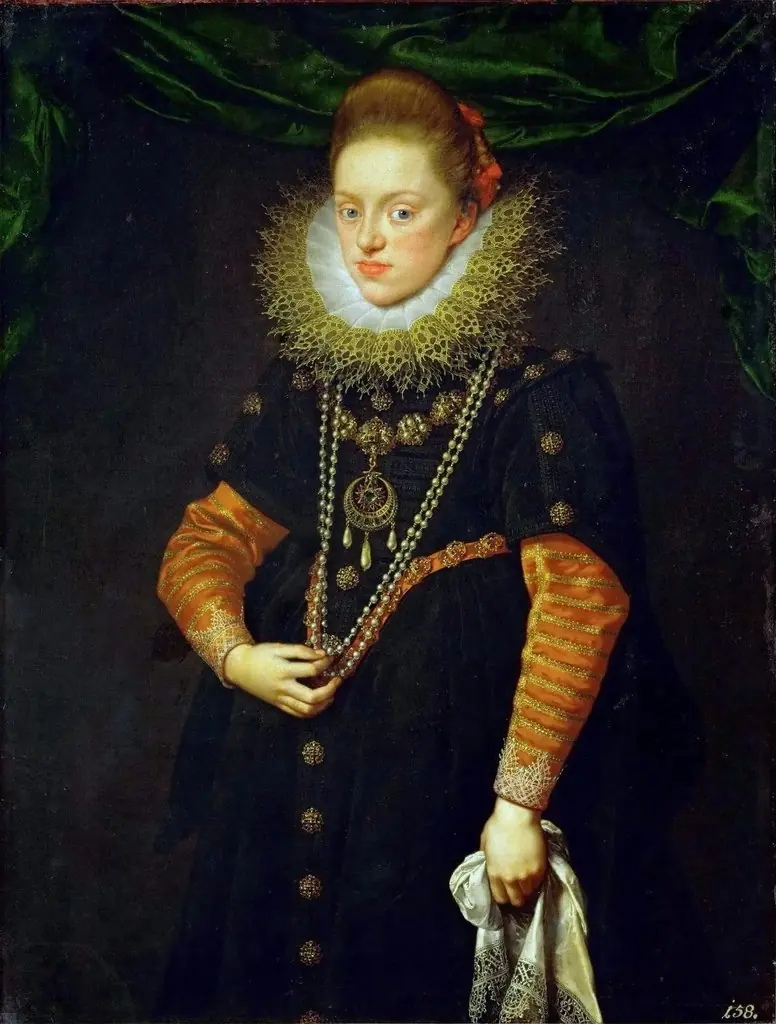 Erzherzogin Konstanze (1588-1631), Königin von Polen in schwarzem Kleid
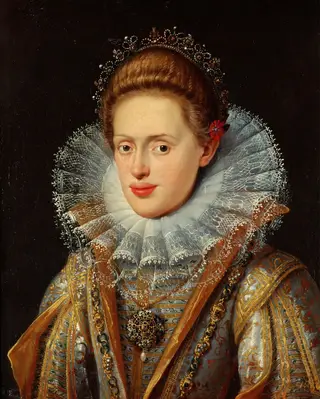 Erzherzogin Anna (1585-1618), Gemahlin von Kaiser Matthias und Tochter von Erzherzog Ferdinand II., Landesfürst von Tirol; Brustbild
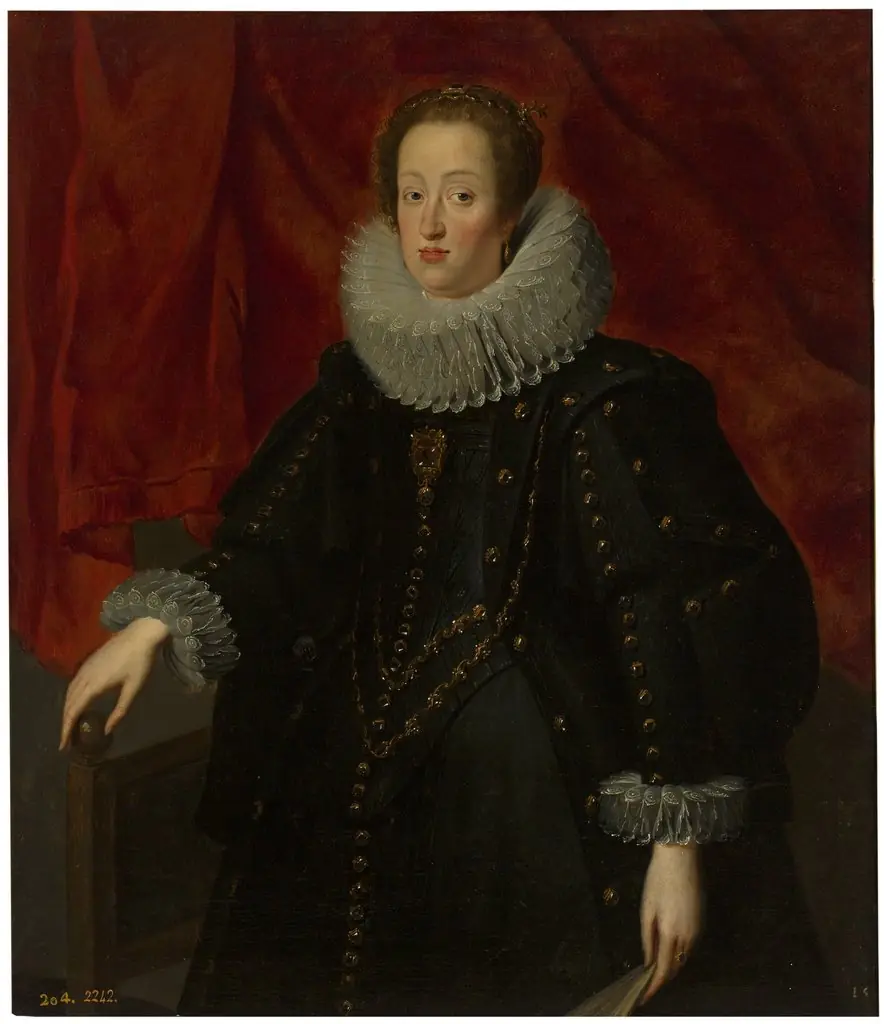 Leonor de Màntua